SovereignWatch
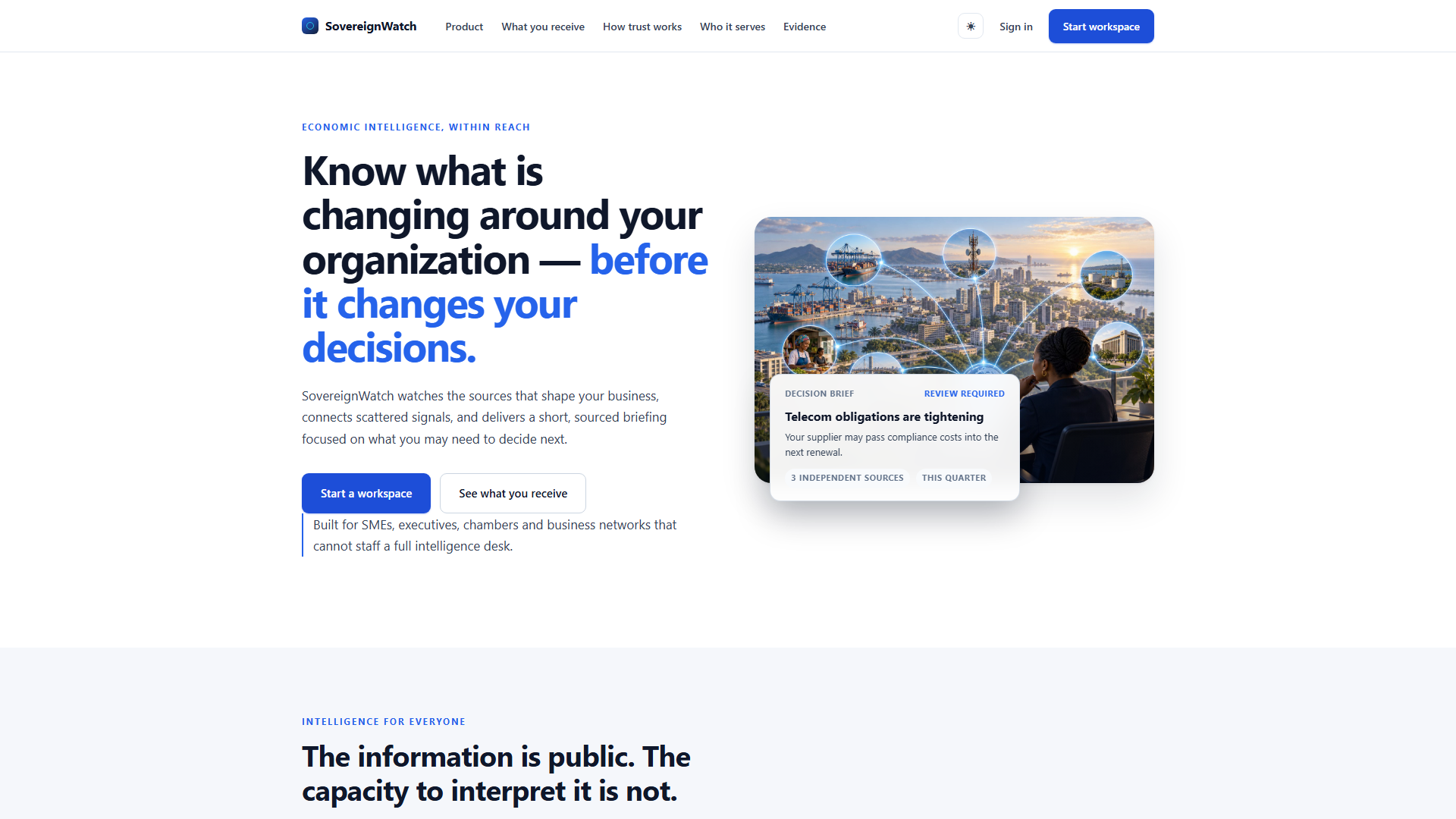
SovereignWatch started from a simple problem: important business signals are everywhere, but very few organizations have the time to continuously watch for them.
A regulatory change, a public tender, a supplier risk, a competitor move or a macroeconomic shift may matter to a company long before it becomes obvious. Large organizations can maintain dedicated intelligence teams. Most SMEs cannot.
We built SovereignWatch, a Strands-powered economic-intelligence desk on Amazon Bedrock, to make that capability more accessible.
What it does
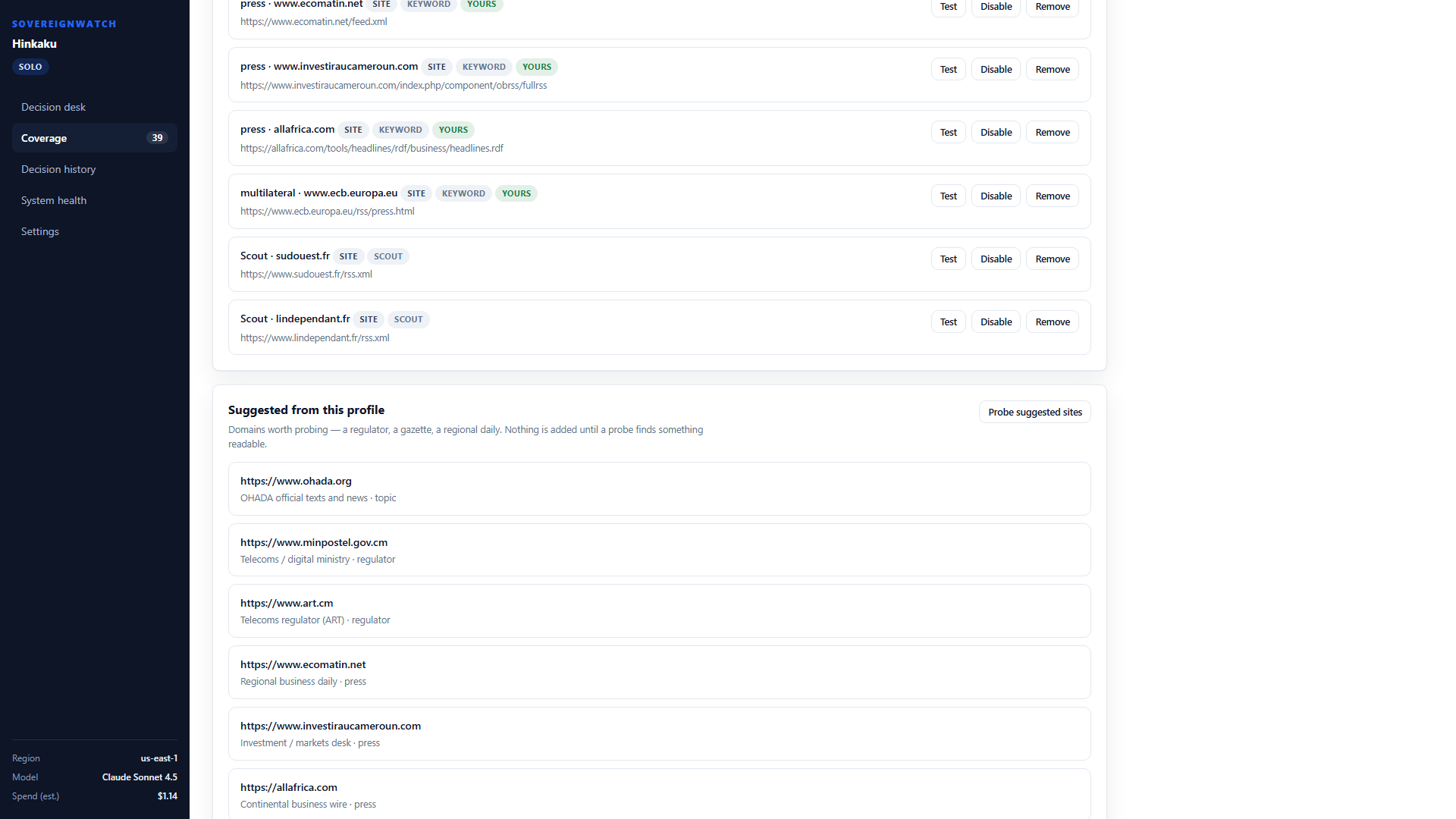
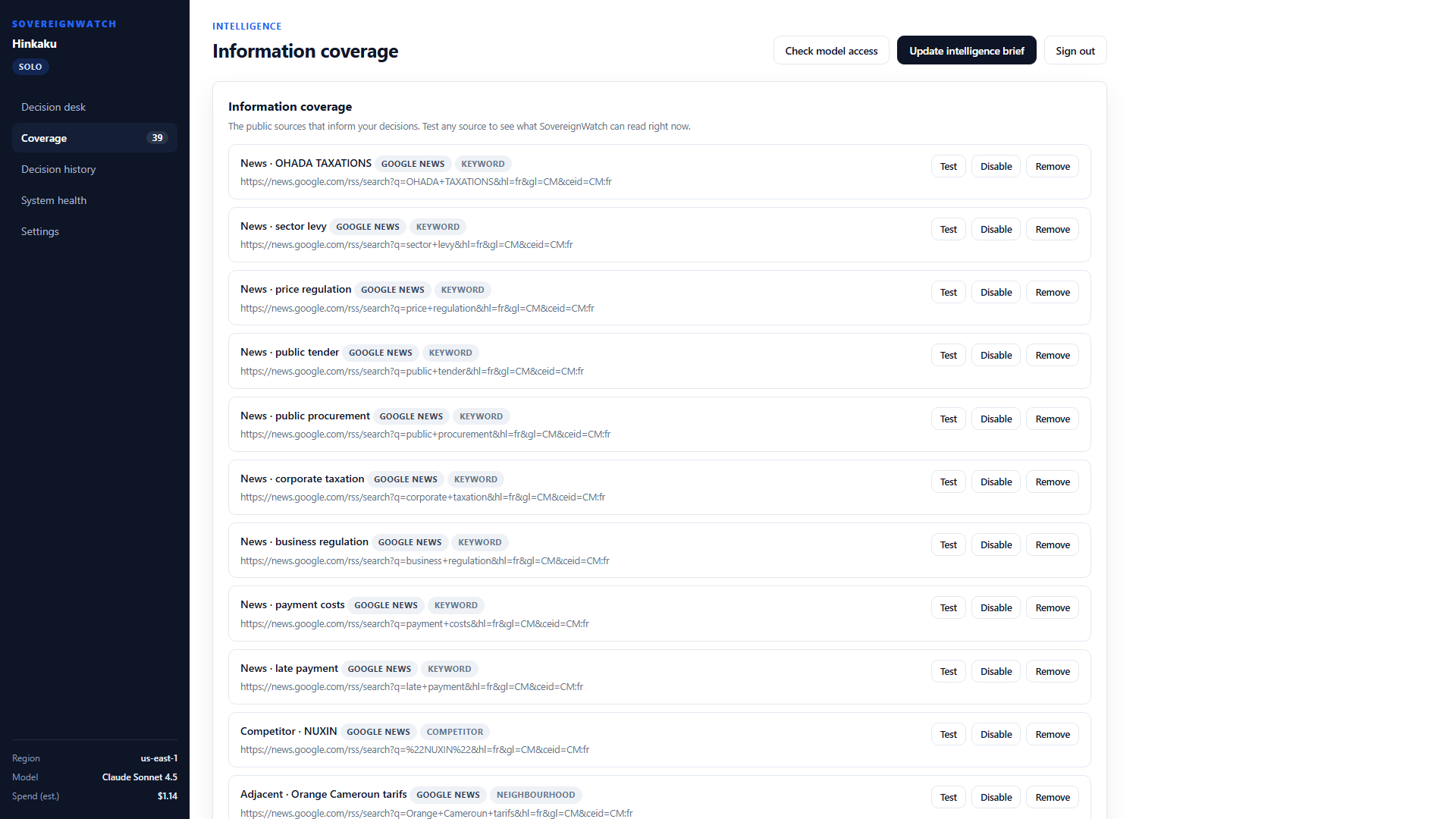
SovereignWatch continuously collects and analyses information from sources such as Google News, institutional RSS feeds, public procurement data and World Bank indicators.
Four Strands specialists examine the same evidence from different perspectives:
- Regulatory
- Market
- Risk
- Influence
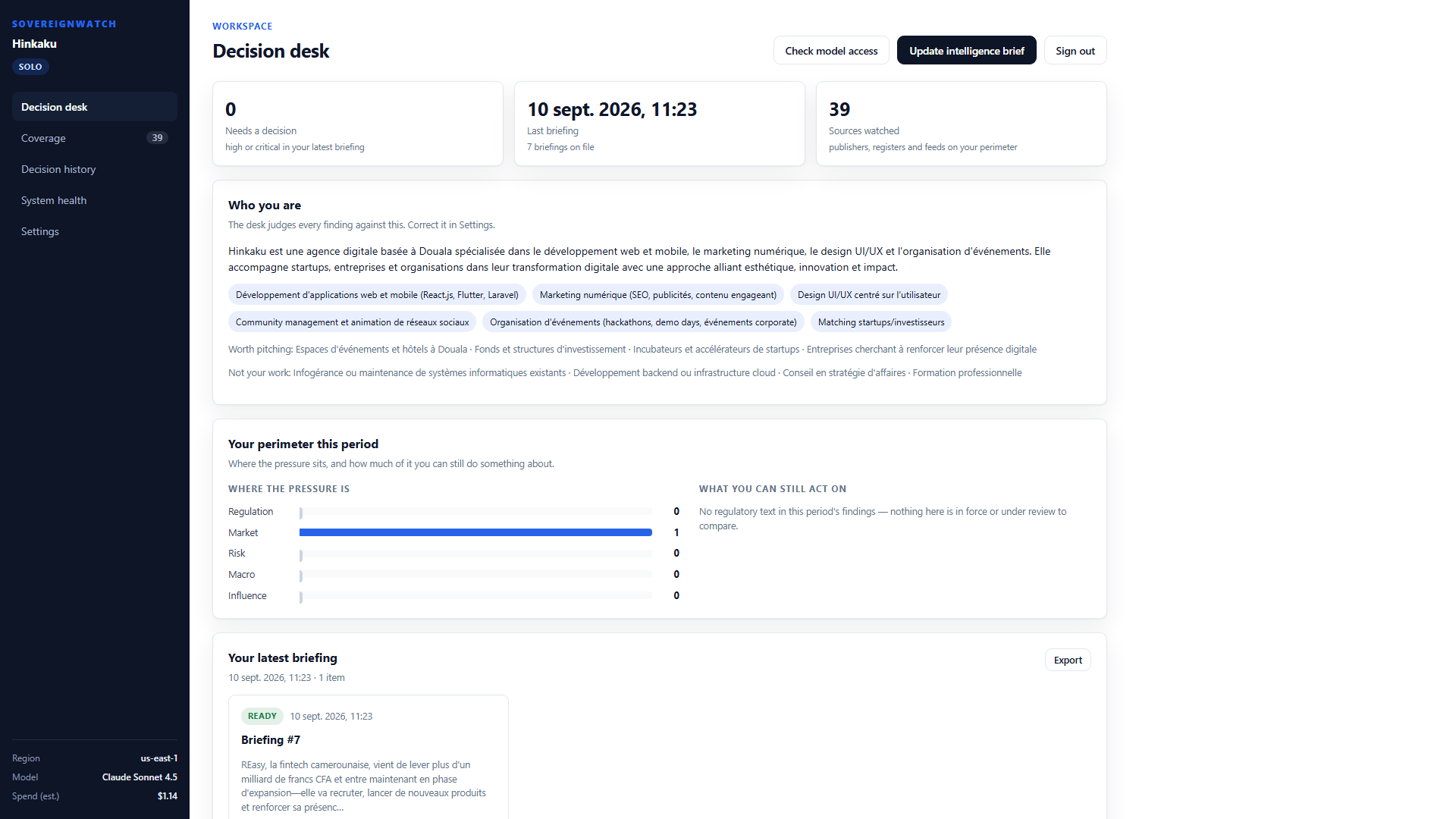
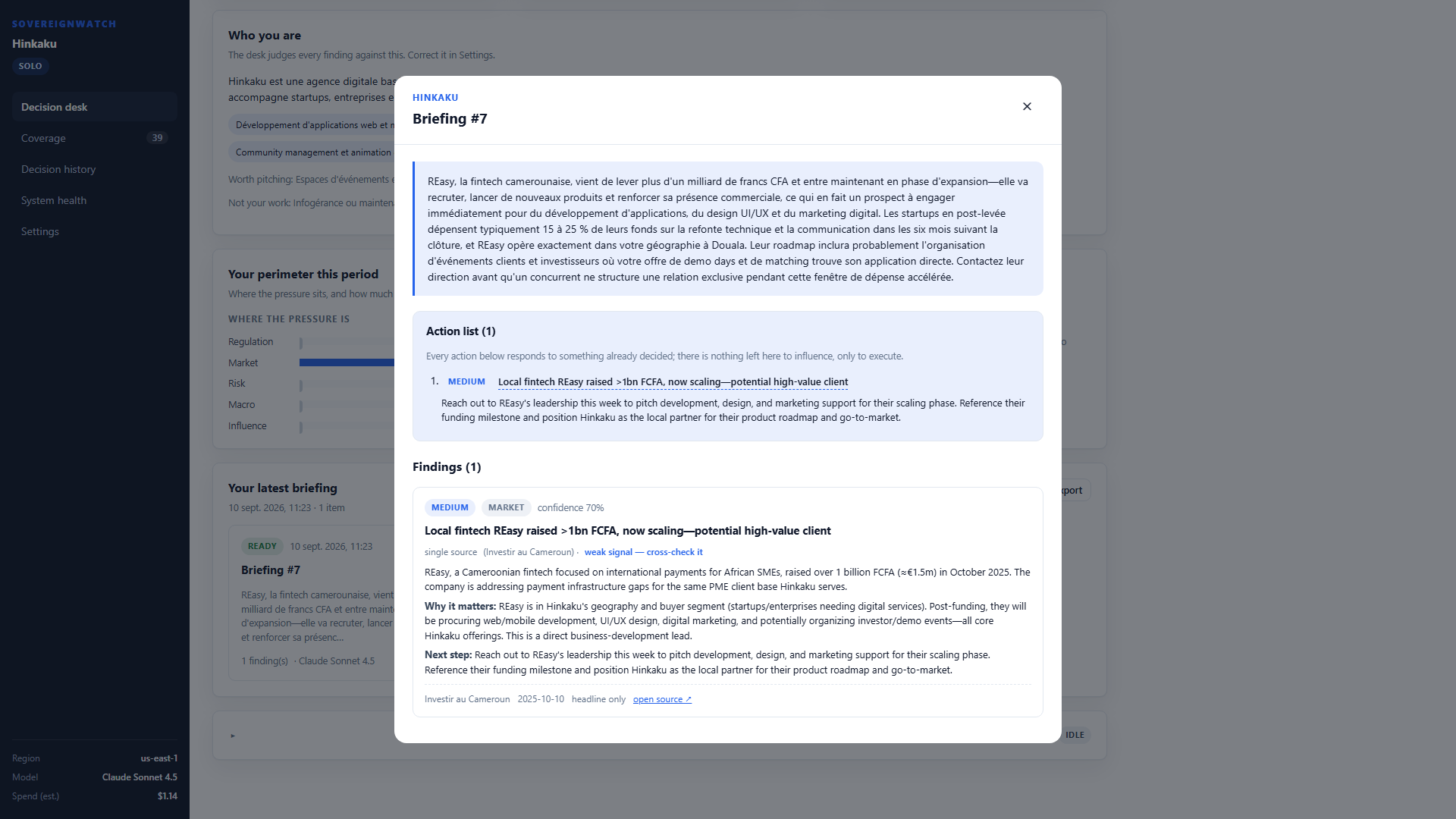
They produce structured findings explaining what happened, why it matters, the supporting evidence and what deserves attention next.
The product is deliberately not a chatbot.
It behaves like an intelligence desk:
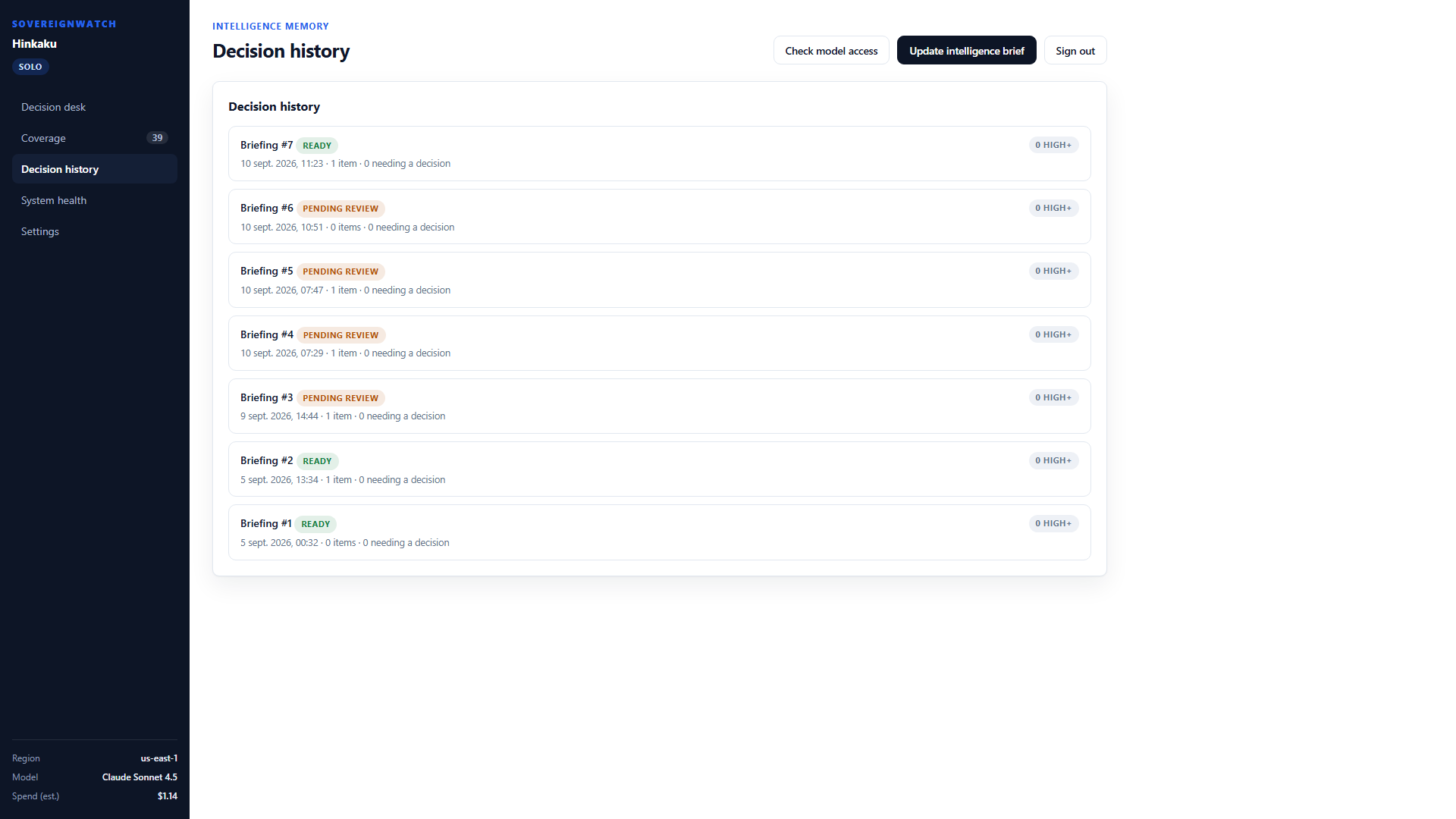
collect → rank → analyse → consolidate → brief → review
The user receives a briefing instead of having to repeatedly ask an assistant what changed.
Two ways to use SovereignWatch
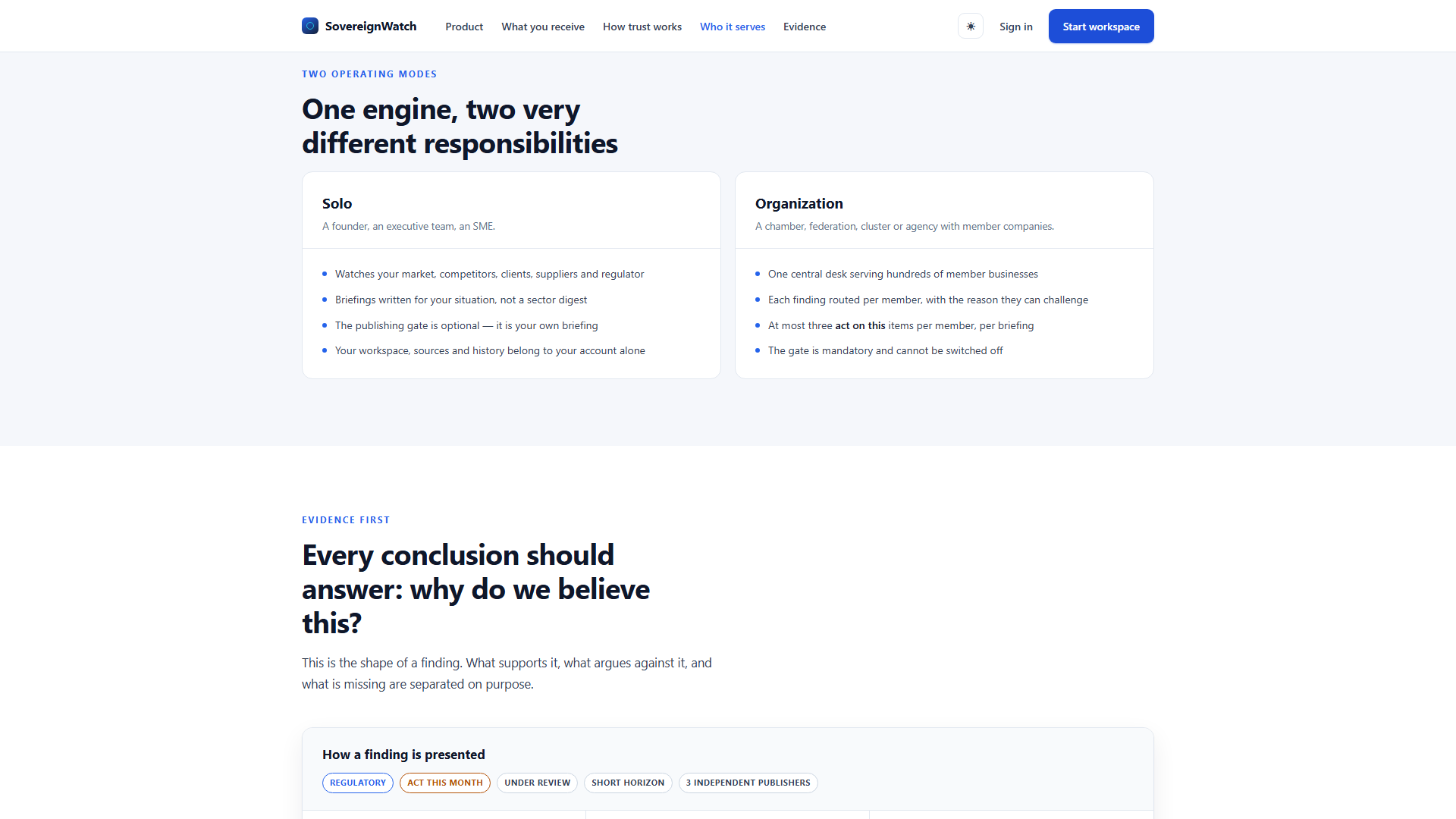
For one company
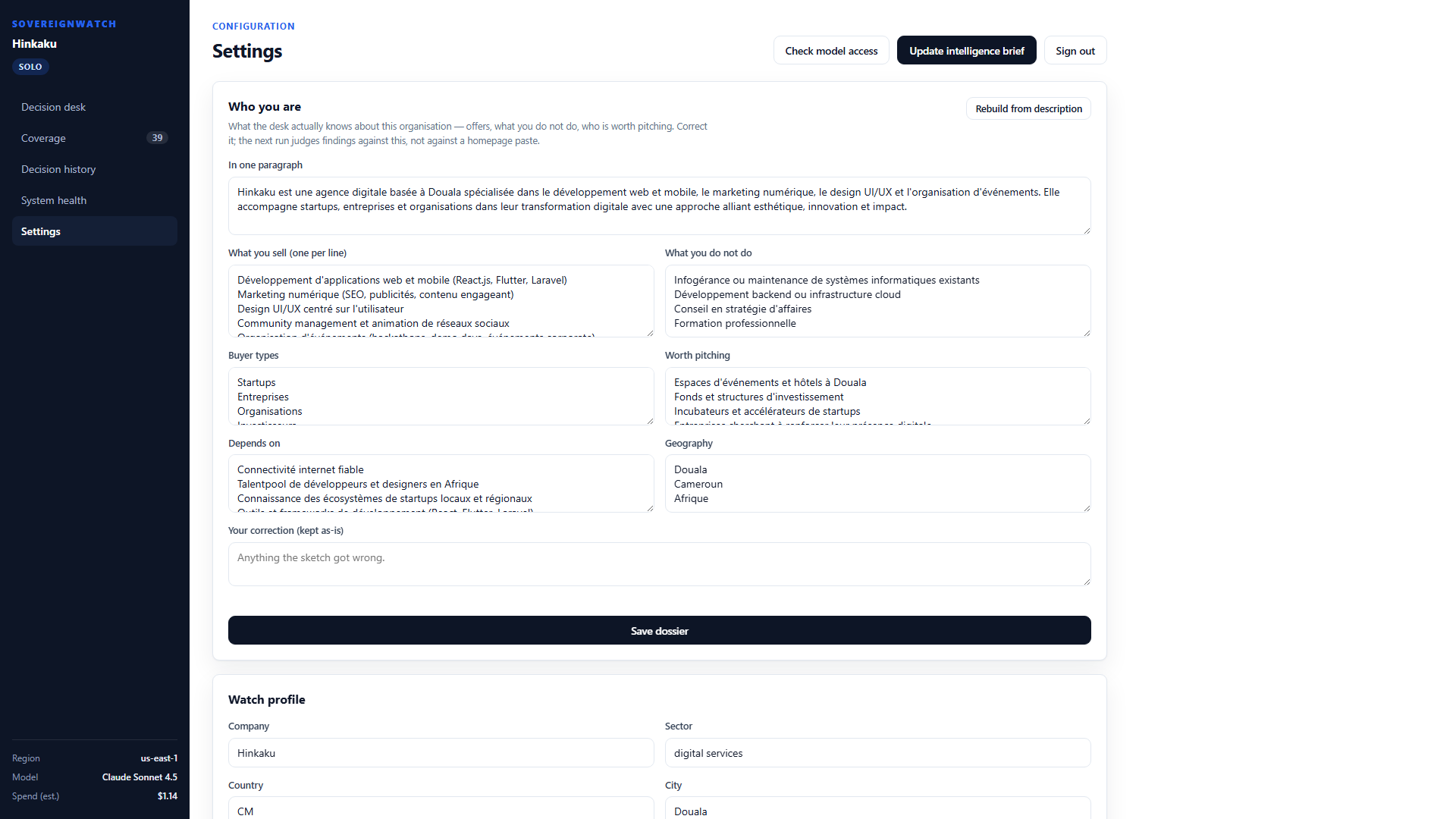
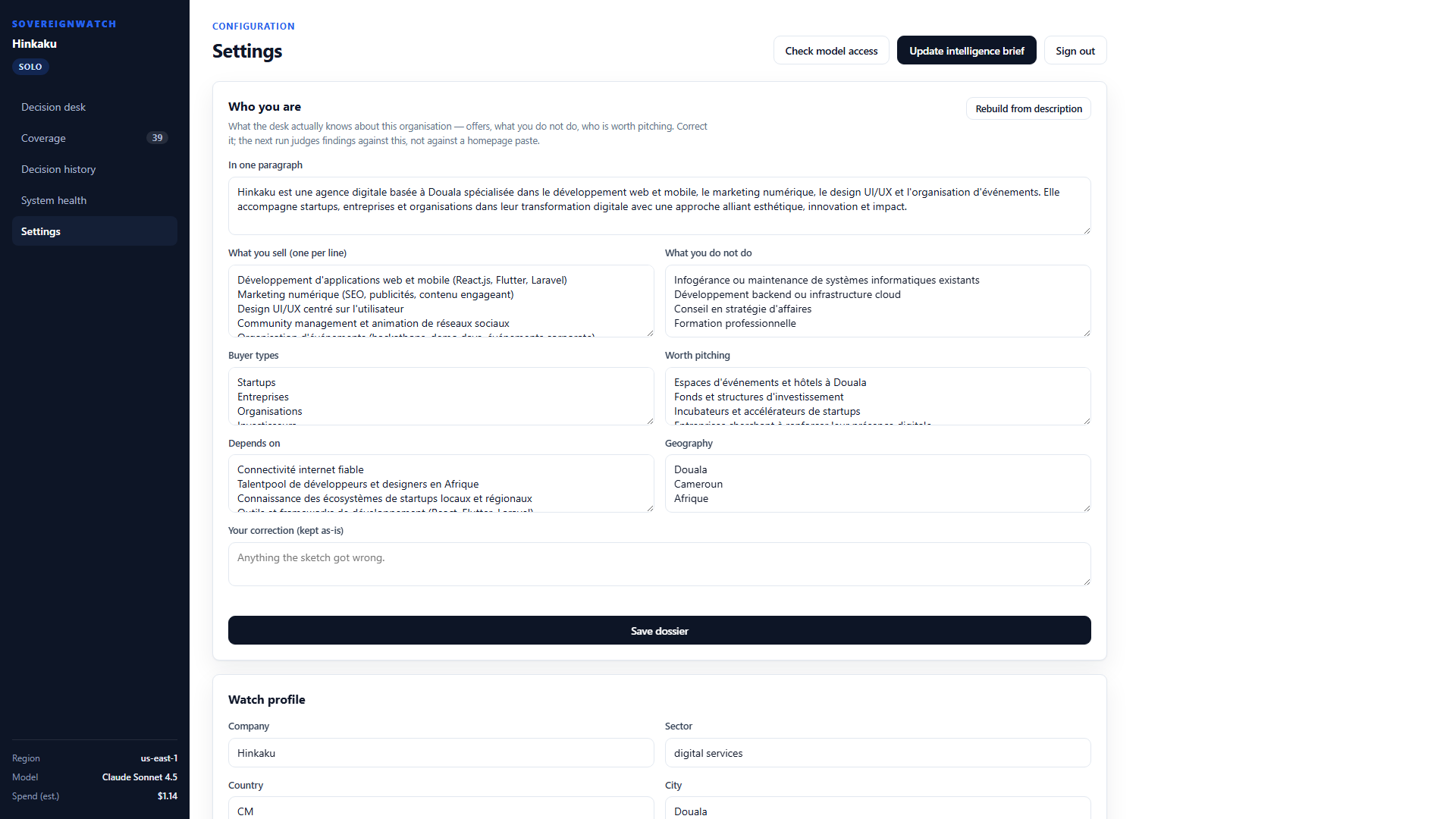
A company can create its own workspace with its sector, competitors, clients, suppliers and strategic interests.
SovereignWatch then acts as its continuous intelligence desk, filtering the external environment through that specific business context.
This mode is useful for founders, SMEs and teams that need strategic monitoring without maintaining a dedicated intelligence function.
For an organization
A chamber, cluster, investment agency or similar organization can use the same engine for multiple member companies.
A single finding may affect those companies differently, so SovereignWatch routes intelligence according to each member's exposure instead of sending the same generic newsletter to everyone.
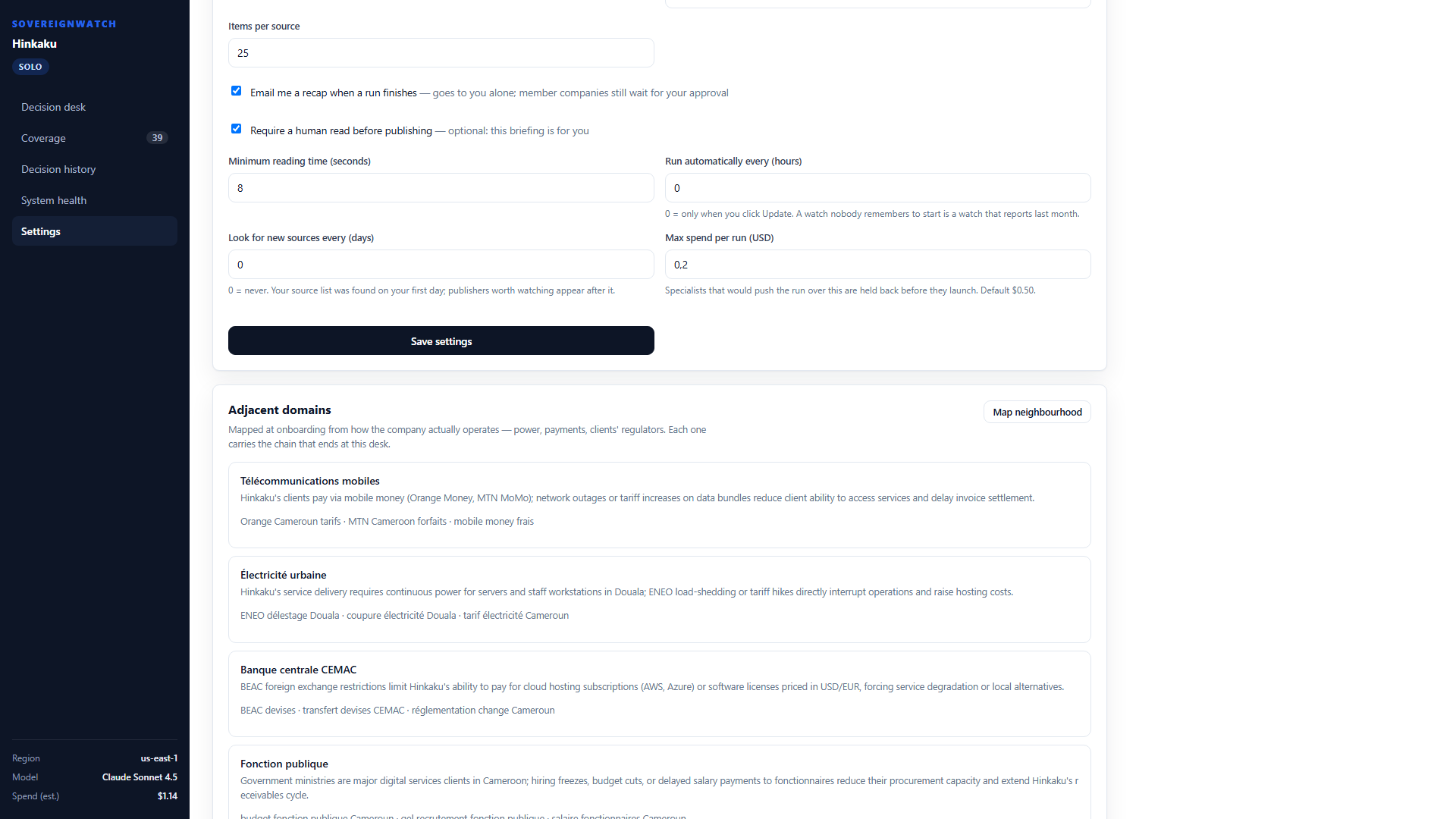
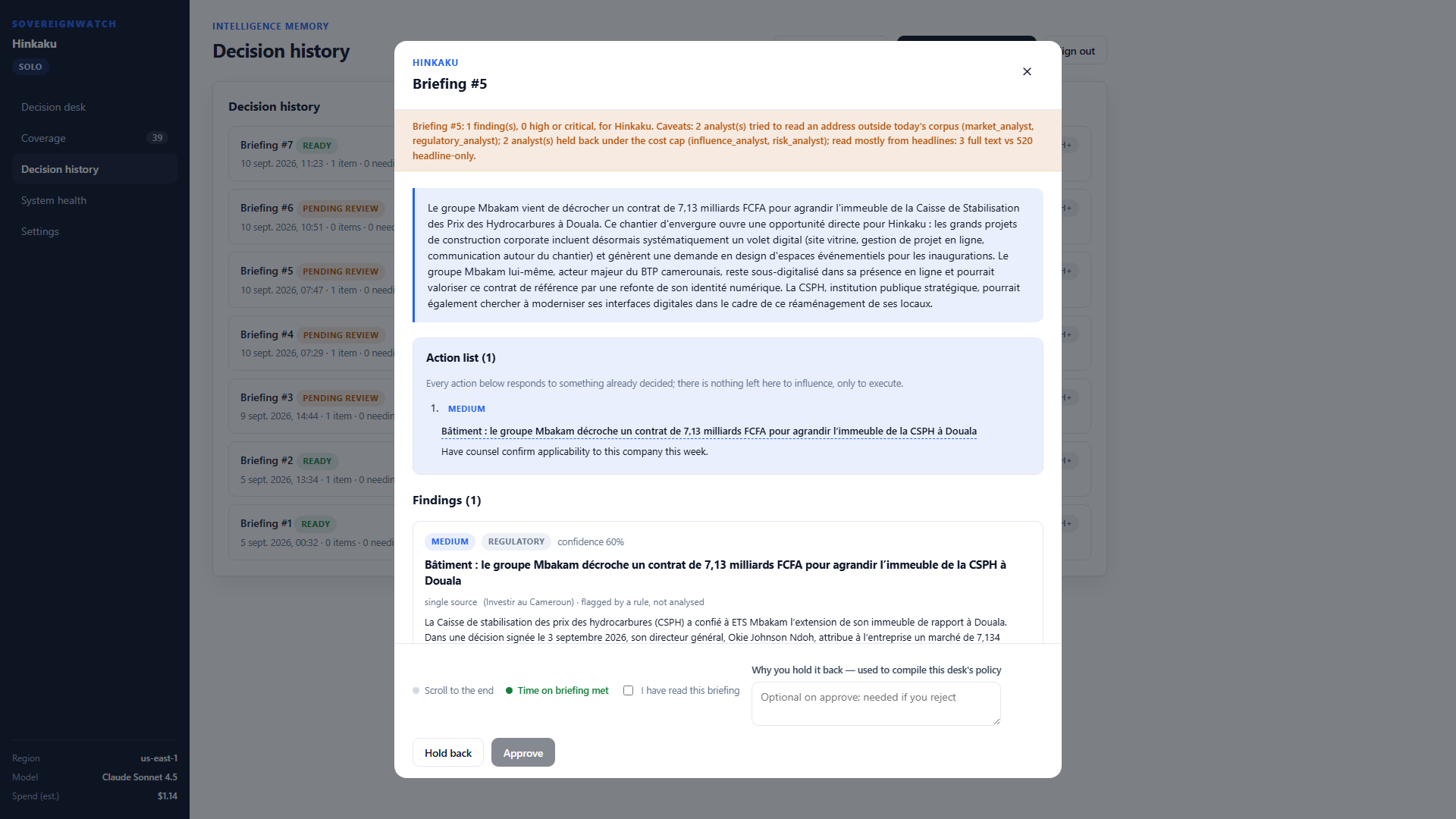
In this mode, publishing is different from analysis: nothing is sent to member companies until a human manager reviews the briefing.
That is why SovereignWatch fits the Good Neighbor Agents track: one intelligence desk can create useful capacity for an entire group of businesses while keeping a human accountable for what leaves the system.
How we built it
SovereignWatch uses the Strands Agents SDK with Amazon Bedrock for the analytical layer.
The agents handle the parts that require judgment: understanding evidence, connecting an event to the monitored business and producing actionable findings.
Other responsibilities remain deterministic:
- collection
- ranking
- persistence
- source provenance
- member routing
- review controls
- email delivery
We also deployed the agent workflow with Amazon Bedrock AgentCore Runtime.
One of our main design principles became:
Agents reason. Systems preserve evidence and control execution.
The hardest part was not making the agents run
It was knowing whether their output was actually useful.
We therefore tested SovereignWatch against a historical case: Cameroon's 2026 Finance Law.
Before running the agent, we froze a ground truth of 12 expected signals, based on 254 press articles from 40 publishers.
That gave us a question outside the agent itself:
Did it find what a human intelligence desk should have found?
The experiment exposed weak ranking rules, source limitations and false positives. In one case, removing a bad heuristic actually reduced our recall score — but made the system more honest.
That changed how we evaluated the project.
A successful run is not enough.
We also learned that human-in-the-loop must be enforceable
Our first review gate trusted values sent by the browser, including how long someone claimed to have spent reading a briefing.
That meant the control could be forged through the API.
We replaced it with server-observed review state. If the required review has not happened, approval is refused and member alerts remain pending.
That led to another principle we kept:
A control you have not attacked is a claim, not a control.
What we learned
Building SovereignWatch taught us that the difficult part of agentic intelligence is not generating a convincing briefing.
It is preserving the path from source → evidence → reasoning → human decision.
We learned to measure effects rather than appearances, keep failures visible, and separate finding information from deciding whether it should be published.
SovereignWatch is ultimately about giving organizations and individual companies a better way to understand what is changing around them — without pretending that autonomy should remove accountability.
Built With
- agent
- javascript
- python
- rss
- strands
- titan


Log in or sign up for Devpost to join the conversation.