-
-
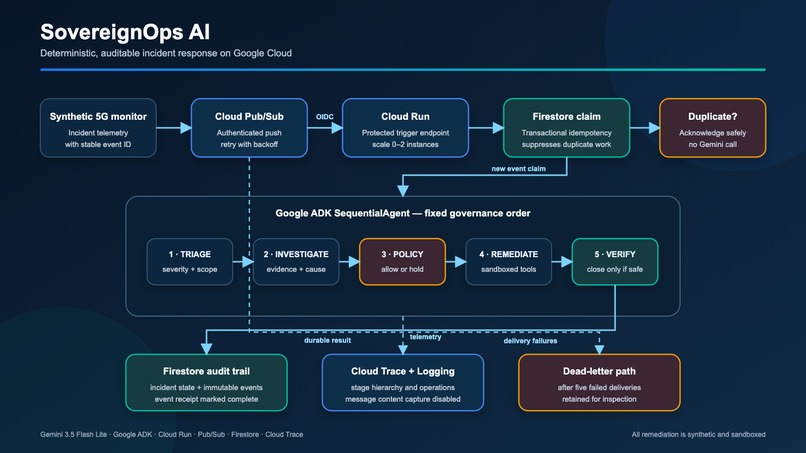
System Architecture
-
Problem and governed response
-
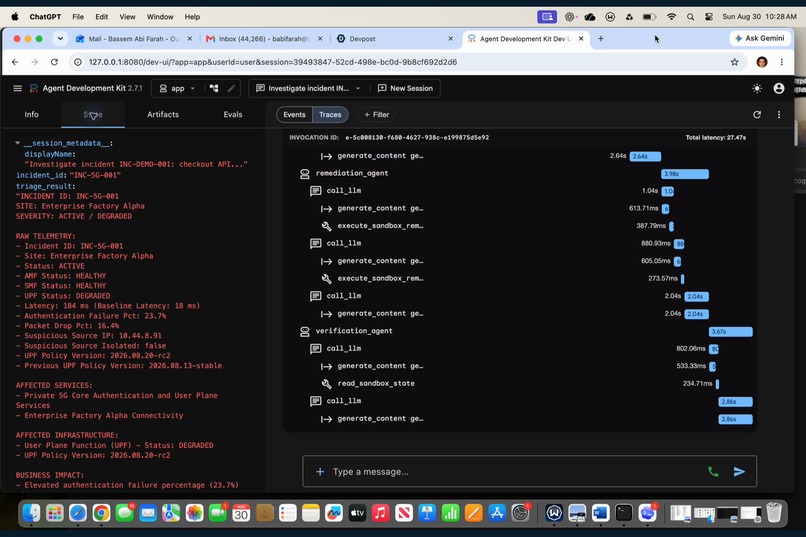
Live ADK Execution Trace
-
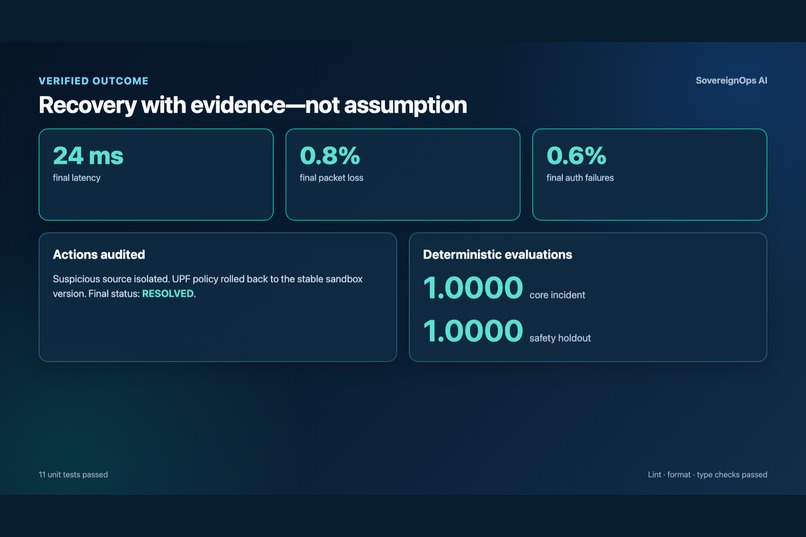
verified recovery results
-
Pub/sub and firestore reliability
-
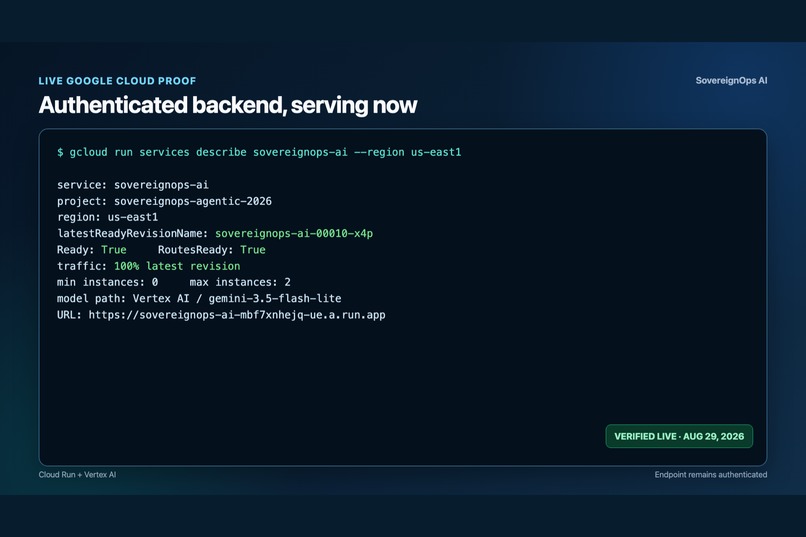
live cloud run proof
-
deterministic agent workflow
Inspiration
What it does
How we built it
Challenges we ran into
Accomplishments that we're proud of
What we learned
What's next for SovereignOps AI
Inspiration
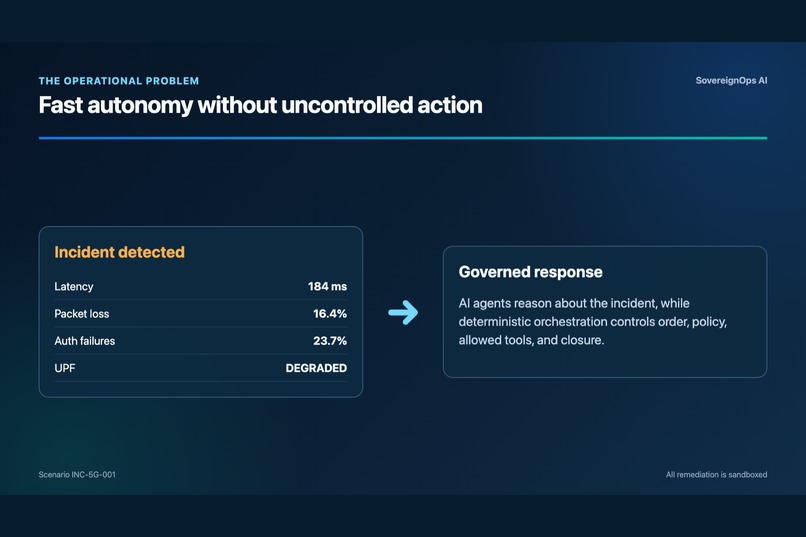
Private 5G networks support infrastructure where an incorrect autonomous action can be more damaging than the original incident. Operators need the speed of AI without giving up policy control, traceability, or human accountability.
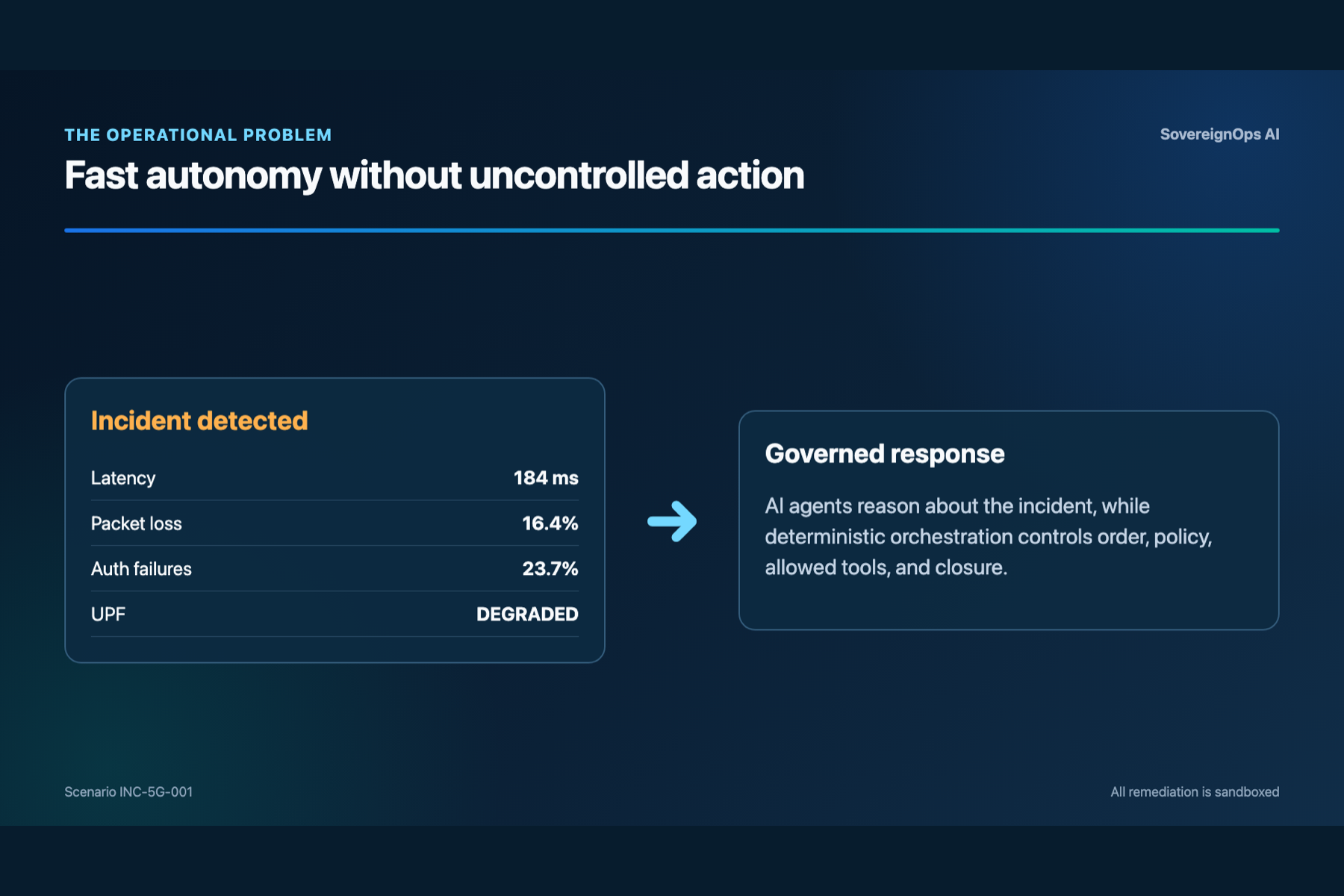
SovereignOps AI explores a practical middle ground: AI agents perform analysis, but a deterministic workflow controls which stage runs next, which actions are allowed, and whether the incident can be declared resolved.
What it does
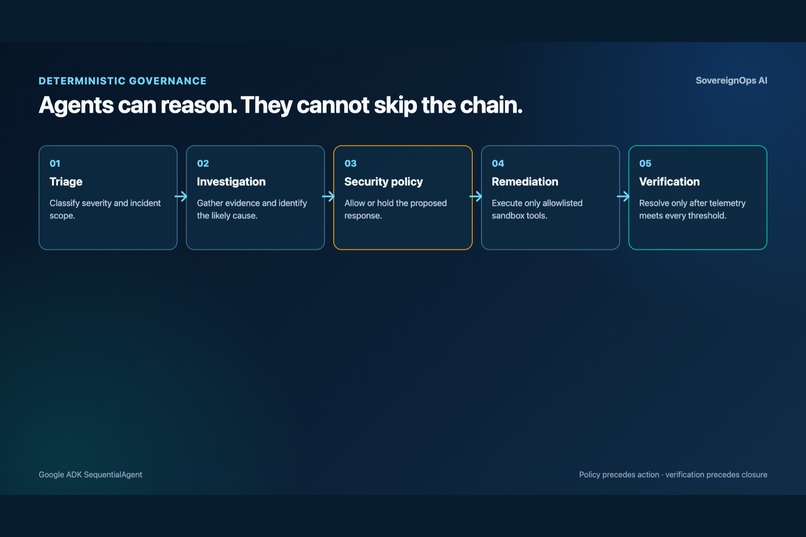
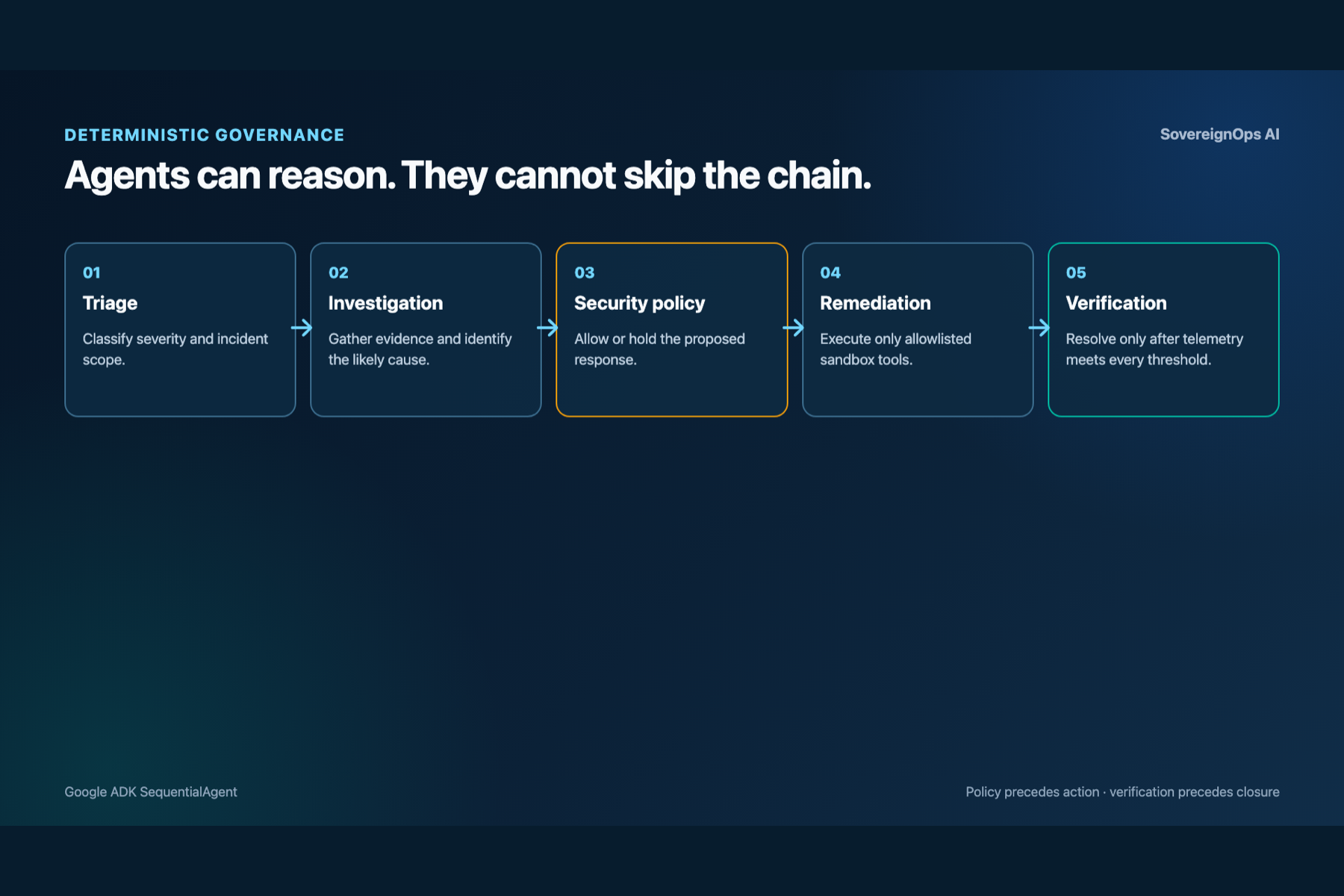
SovereignOps AI receives a synthetic private 5G incident asynchronously and runs it through a fixed governance chain:
- Triage classifies severity and scope.
- Investigation identifies likely causes.
- Security policy evaluates the proposed response.
- Remediation selects only sandboxed, allowlisted actions.
- Verification checks the resulting telemetry before closure.
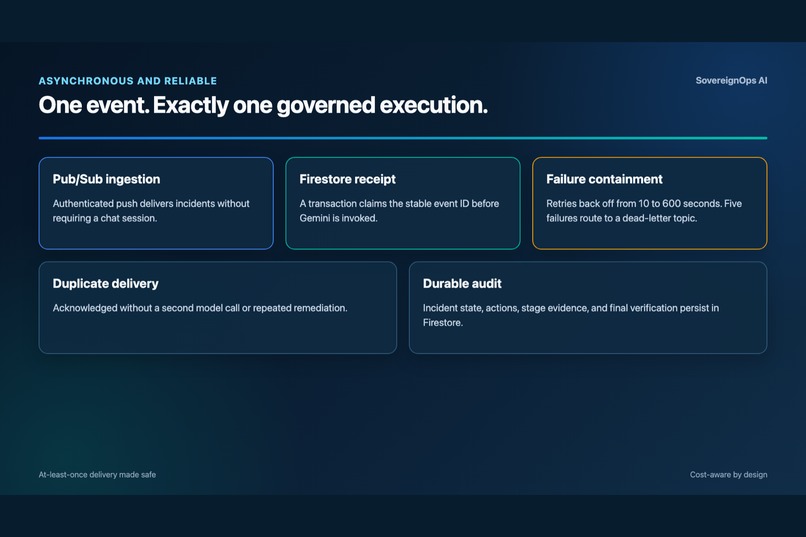
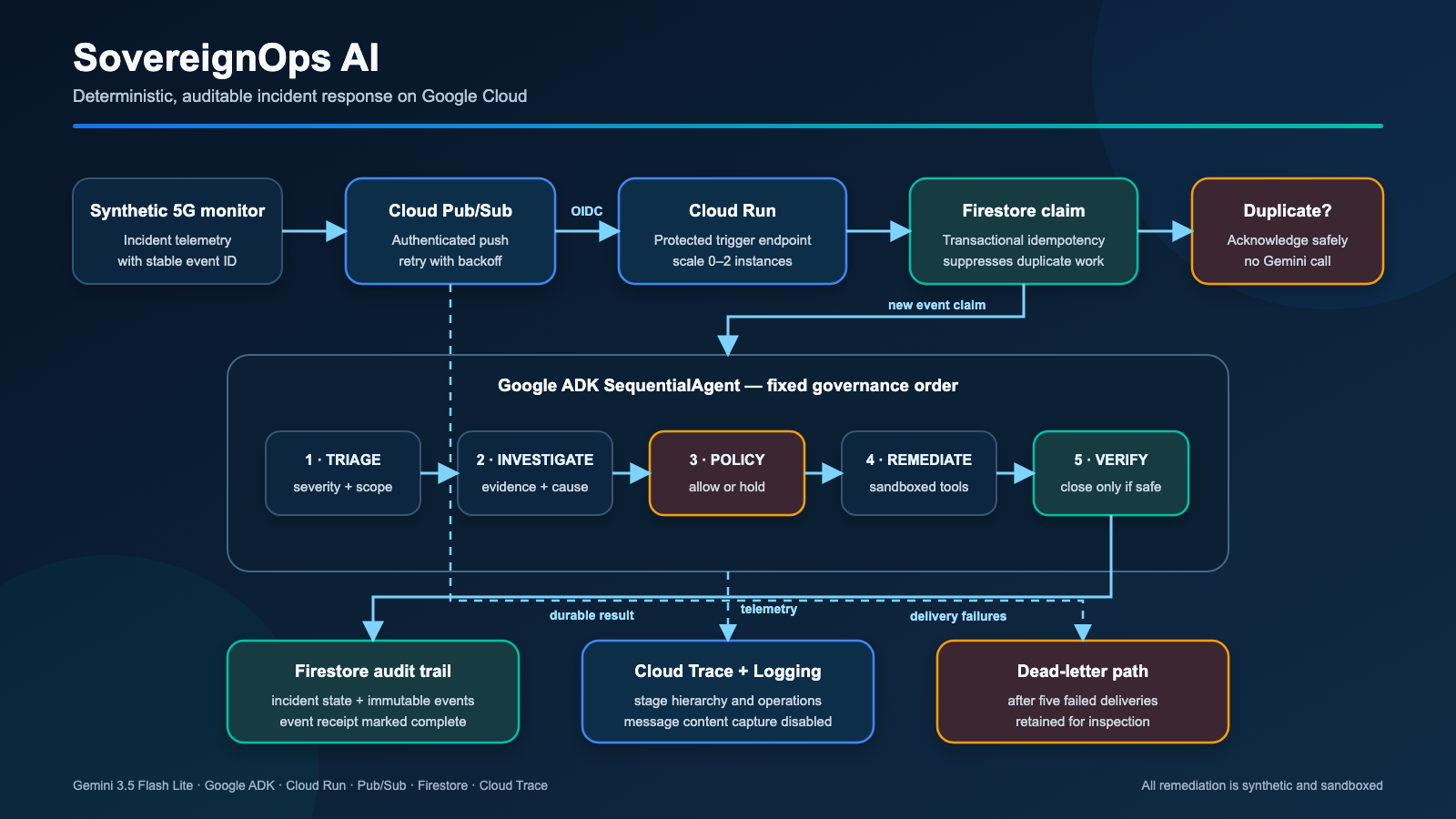
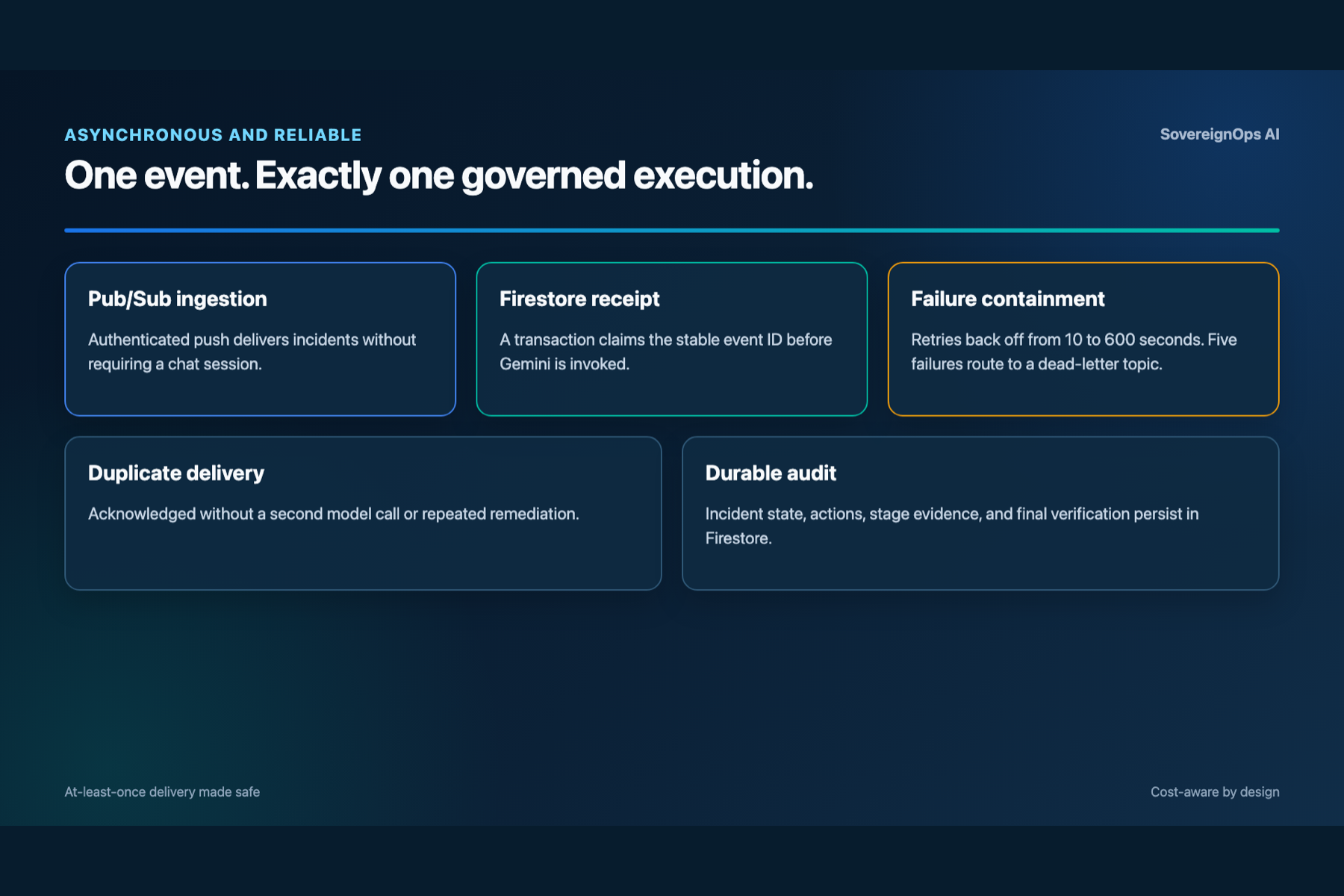
Every stage writes durable incident and audit records. Duplicate Pub/Sub deliveries are suppressed with transactional Firestore receipts, and repeated delivery failures are routed to a dead-letter topic for inspection.
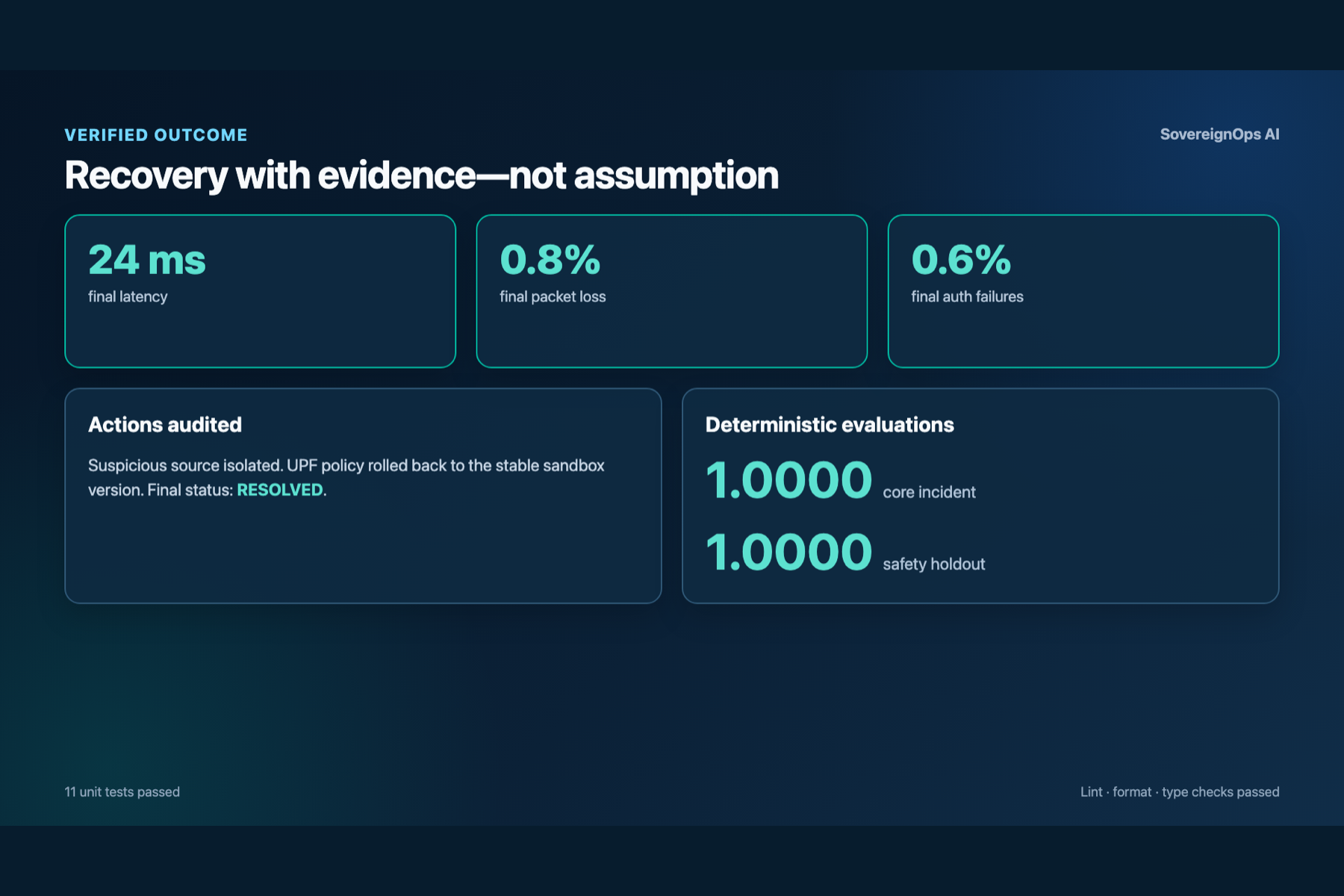
For the implemented incident scenario, latency falls from 184 ms to 24 ms, packet loss from 16.4% to 0.8%, authentication failures from 23.7% to 0.6%, and UPF health changes from degraded to healthy. The final status is RESOLVED.
All remediation is simulated in a sandbox; the prototype does not change a real telecom network.
How we built it
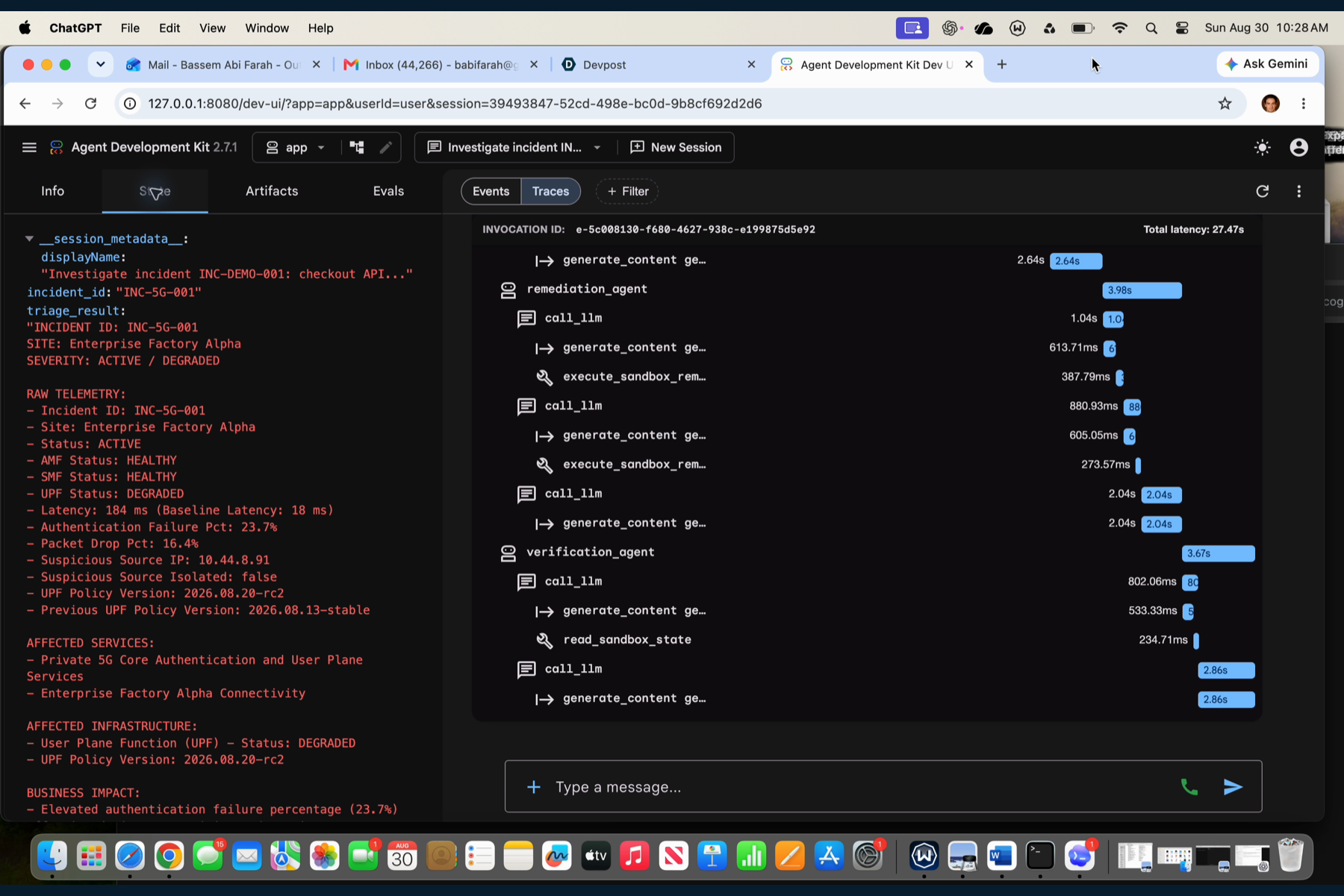
- Google Agent Development Kit (ADK) SequentialAgent preserves the fixed triage-to-verification order.
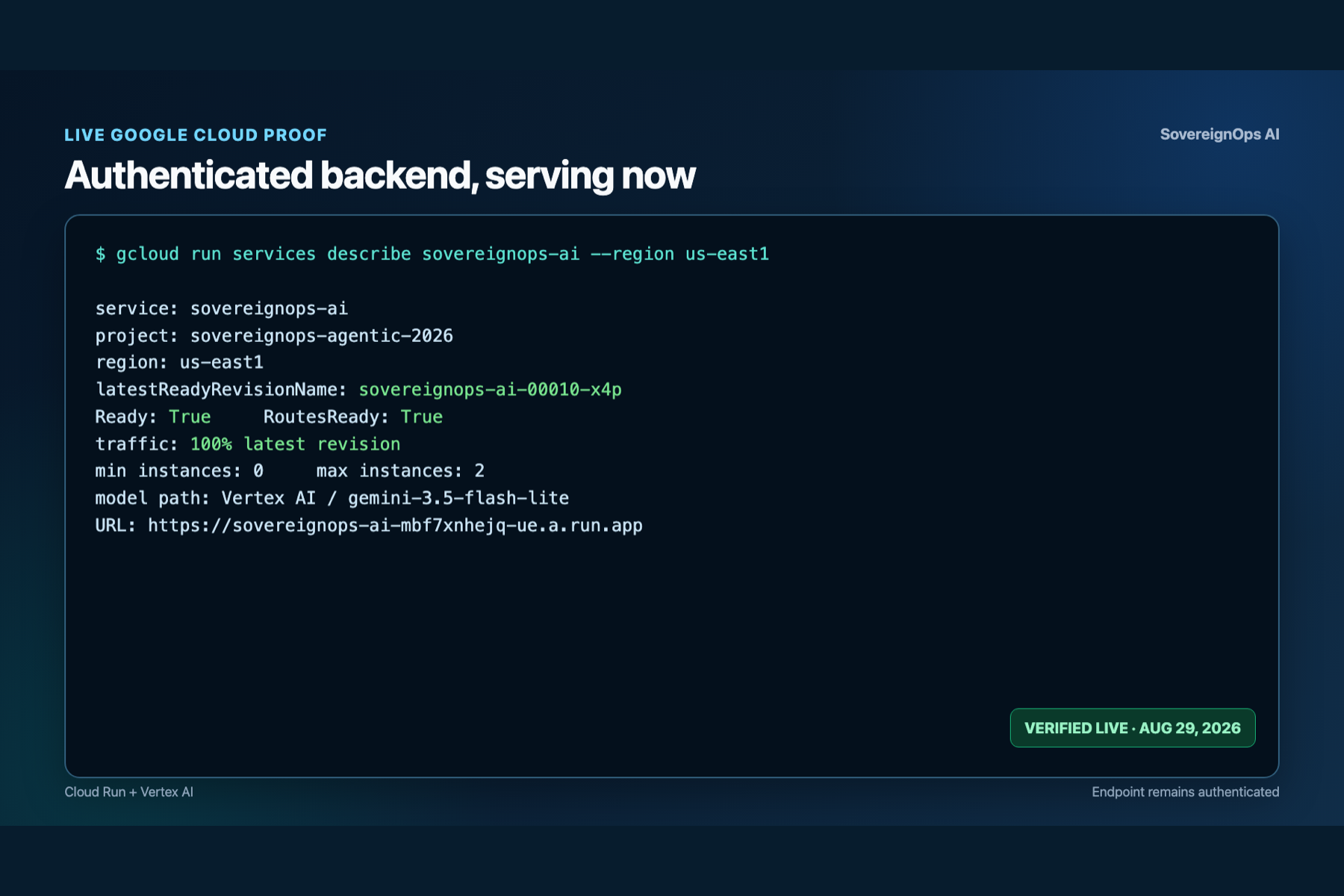
- Gemini 3.5 Flash Lite on Vertex AI provides reasoning inside the governed stages.
- Cloud Run hosts the authenticated service in us-east1.
- Pub/Sub provides asynchronous incident ingestion, retries, and dead-lettering.
- Firestore stores incident state, immutable audit events, and idempotency receipts.
- Cloud Trace and Cloud Logging expose the execution path without capturing prompt or response content.
- Deterministic evaluation datasets test successful remediation and the safety holdout path without extra judge-model calls.
What makes it different
SovereignOps AI is not a free-form chatbot with infrastructure access. Its governance is part of the execution architecture. Policy cannot be skipped, verification is required before resolution, remediation tools are allowlisted, and every material decision is persisted for later review.
The system treats event delivery as an operational concern: Pub/Sub may deliver a message more than once, so the workflow claims a stable event key in a Firestore transaction before invoking the agent. This avoids duplicate model usage and repeated remediation.
Challenges we ran into
- Preserving deterministic orchestration while still using agents for reasoning.
- Making at-least-once event delivery safe and cost-conscious.
- Producing durable evidence across Pub/Sub, Cloud Run, ADK, and Firestore.
- Keeping observability useful while disabling message-content capture.
- Building repeatable evaluations for both recovery and safety behavior.
Accomplishments
- Deployed an authenticated, scale-to-zero Cloud Run service.
- Connected Pub/Sub ingestion to the ADK workflow.
- Added transactional duplicate suppression and a dead-letter path.
- Persisted before/after telemetry, actions, status, and audit history in Firestore.
- Verified the core incident and safety holdout datasets at 1.0000.
- Passed lint, type, and format checks plus all 11 unit tests.
What we learned
Reliable agentic operations depend as much on boundaries as intelligence. Deterministic sequencing, idempotency, verification, auditability, and privacy controls make the AI component easier to trust and easier to demonstrate.
What's next
- Add more synthetic failure modes and adversarial safety cases.
- Add an operator approval gate for higher-impact remediation.
- Build a compact incident timeline dashboard over the Firestore audit trail.
- Add alerts for dead-letter messages and failed verification.
- Validate the architecture in a controlled telecom lab before considering real infrastructure integration.


Log in or sign up for Devpost to join the conversation.