-
-
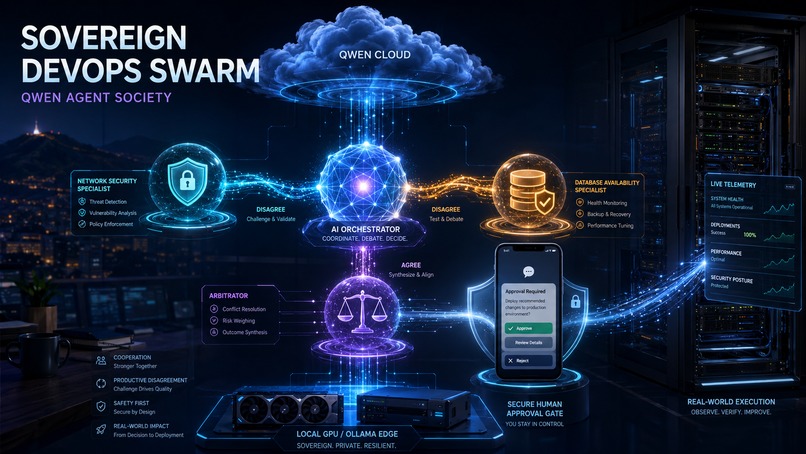
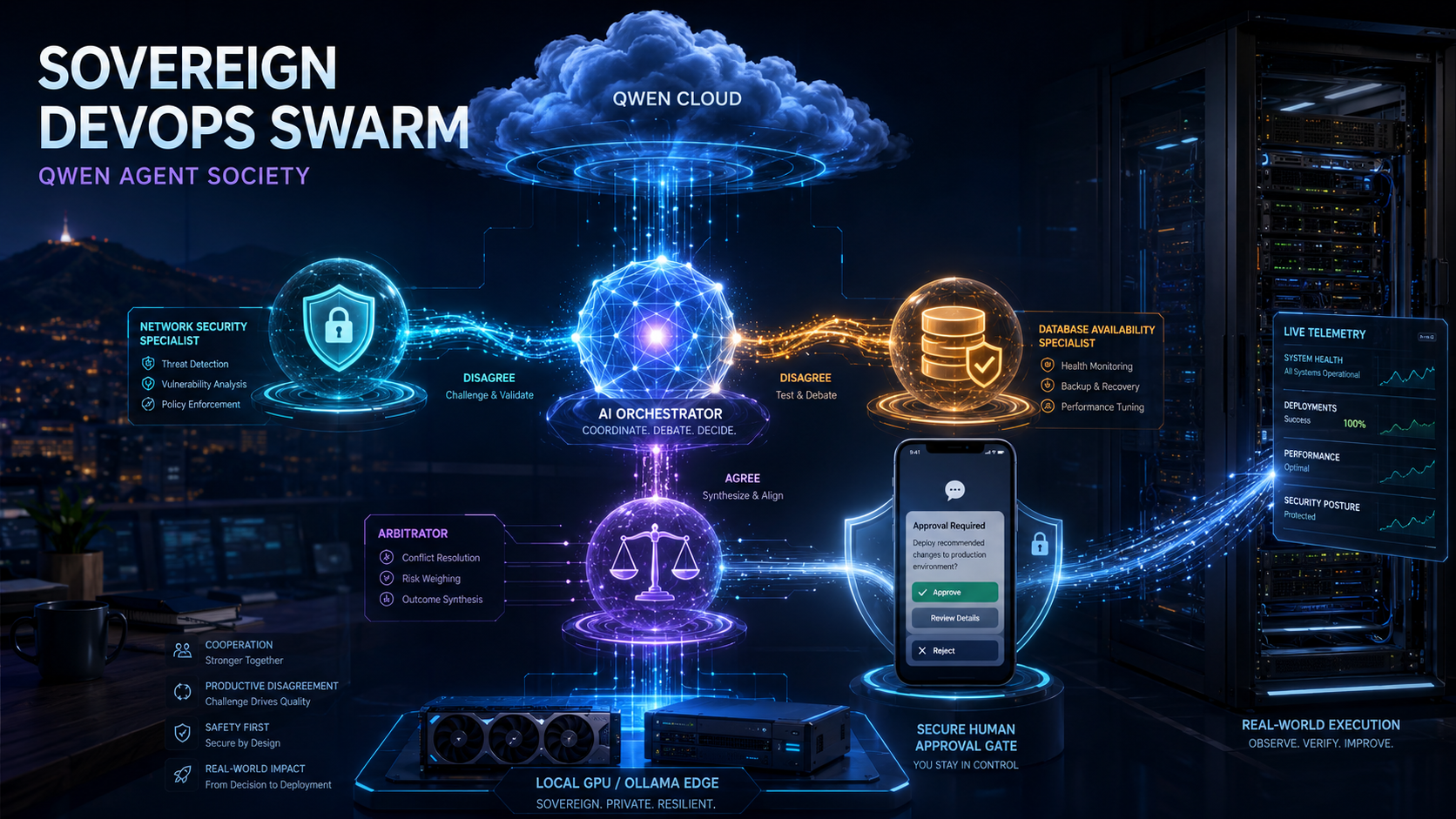
A sovereign Qwen agent society connecting cloud reasoning, local GPU inference, human approval, and real server execution.
-
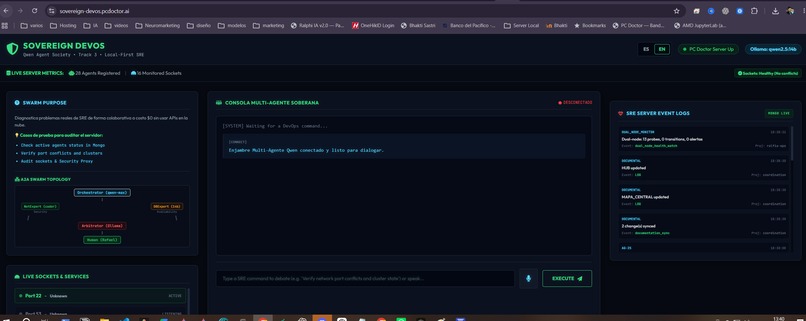
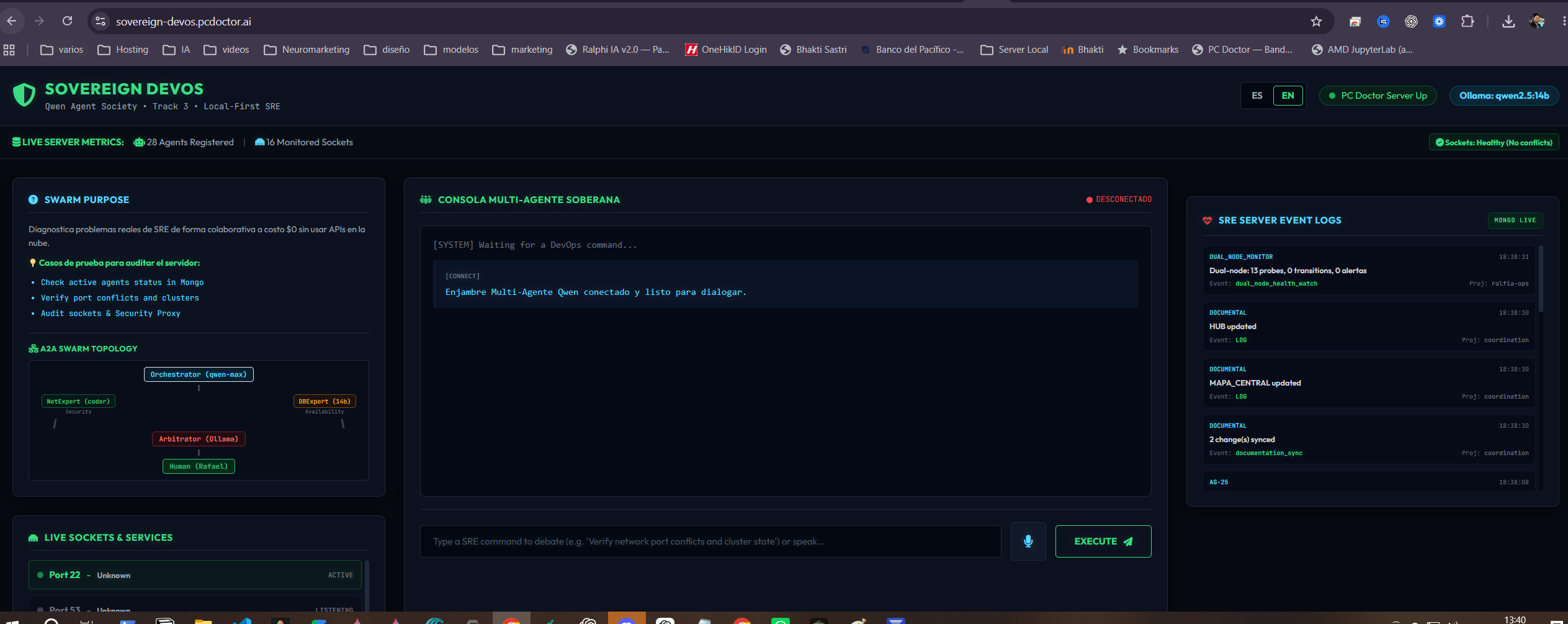
The live bilingual dashboard displays infrastructure evidence, agent activity, WebSocket events, and mission status in real time.
-
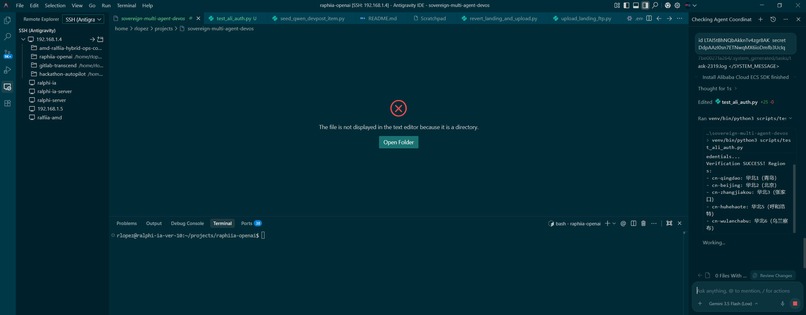
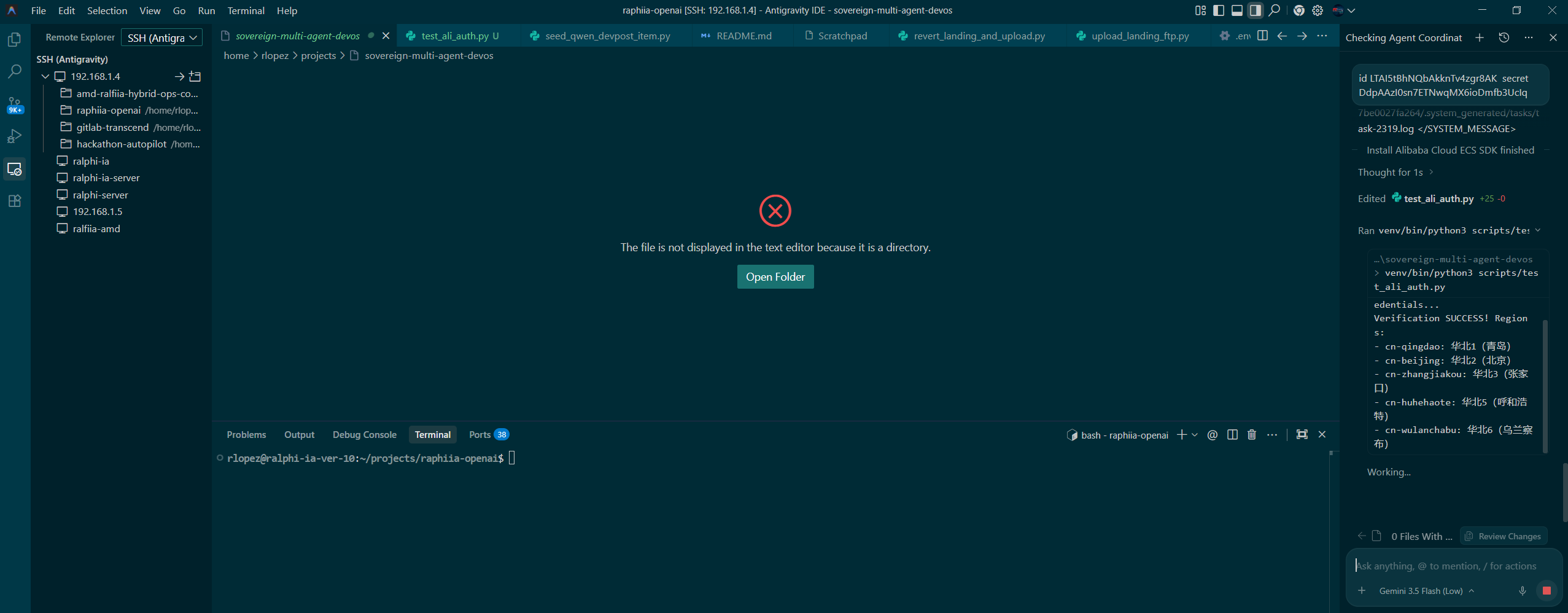
Built collaboratively with Antigravity and Codex through repository analysis, implementation, testing, security review, and deployment.
-
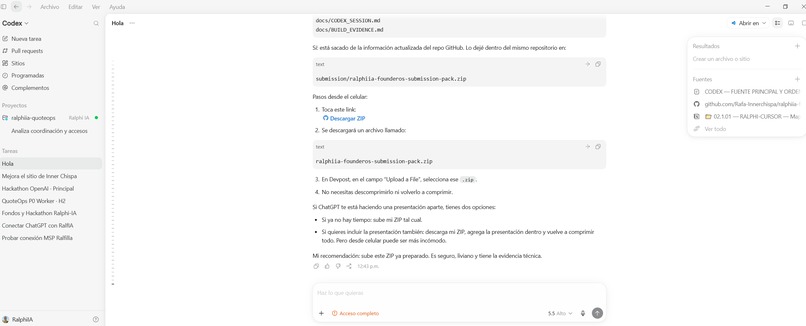
Antigravity and Codex developing and testing the Sovereign DevOps Swarm
-
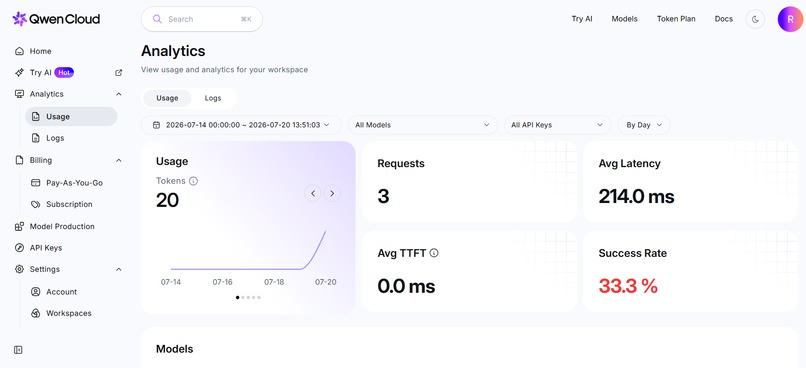
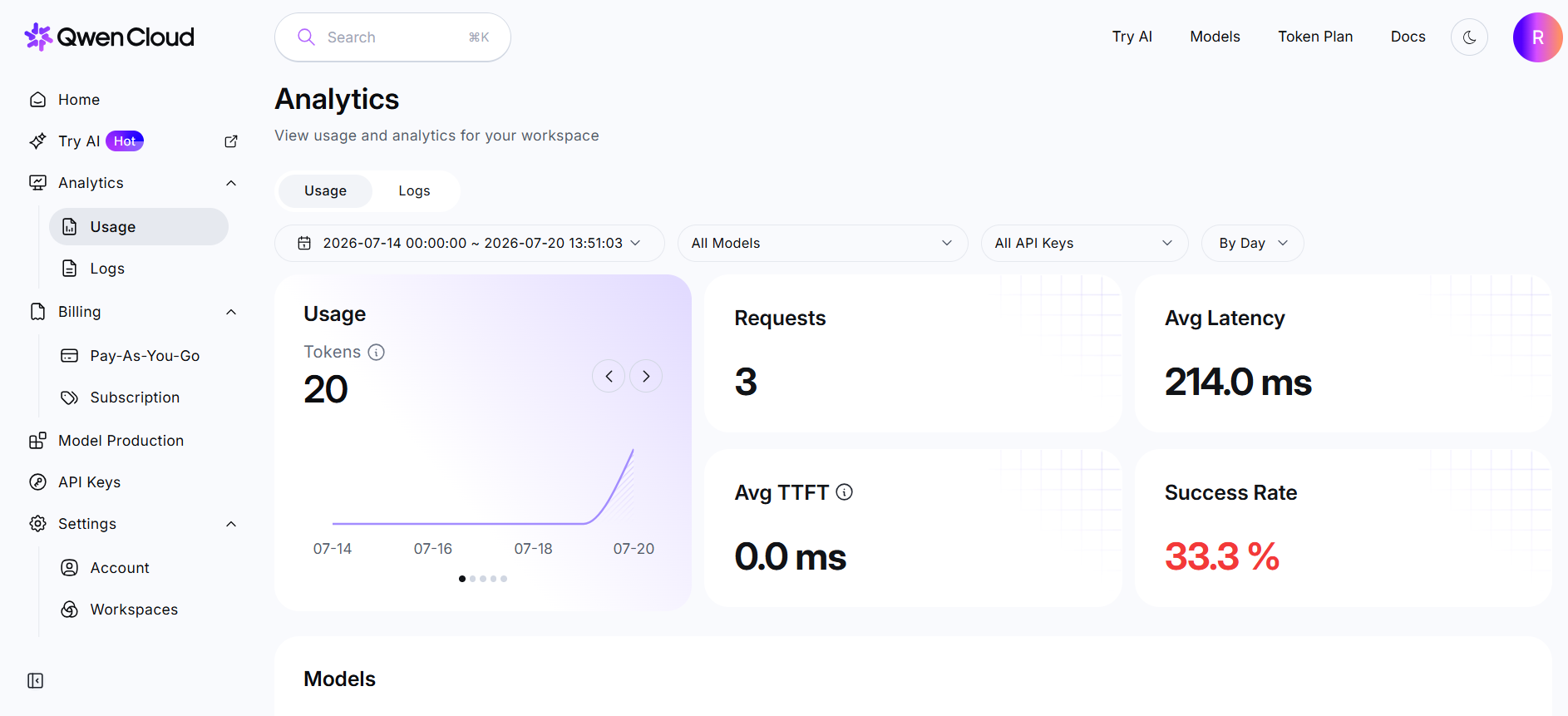
The FastAPI backend runs on Alibaba Cloud and uses Qwen Cloud through DashScope for production multi-agent reasoning.
Inspiration
Running a technology business as a founder means constantly switching between customers, sales, infrastructure, purchasing, technical support, and operational decisions. The most valuable work is often displaced by repetitive monitoring and mechanical coordination.
We did not want another isolated chatbot that produces plausible DevOps advice without understanding the real environment. We wanted a society of specialized Qwen agents that examines live infrastructure evidence, disagrees constructively, resolves operational conflicts, and prepares safe actions for a human operator.
Sovereign DevOps Swarm is part of a broader vision: giving founders the operational leverage of an AI-enabled technical team while preserving human authority, infrastructure sovereignty, and the ability to operate from a mobile phone.
What it does
An operator submits an infrastructure request such as “Check for duplicate ports.” The system:
Uses an Orchestrator to interpret the request and gather evidence from MongoDB and live network sockets. Invites NetExpert to argue for restrictive security and containment. Invites DBExpert to challenge that plan in favor of availability and database continuity. Uses an Arbitrator to reconcile both positions into a balanced SRE recipe. Locks the mission in a pending_approval state. Requests human approval through the live dashboard and WhatsApp. After approval, executes an allowlisted host diagnostic and streams real output to the WebSocket console.
The demonstration uses the safe ss -tulpn diagnostic. It does not grant agents unrestricted shell access. The interface and agent activity support English and Spanish.
How we built it
The backend uses FastAPI, Python 3.12, asynchronous HTTP clients, WebSockets, and MongoDB. The multi-agent layer is implemented by QwenMeshCoordinator, with two execution paths: Qwen Cloud through Alibaba DashScope’s OpenAI-compatible API, and local Qwen 2.5 models through GPU-accelerated Ollama.
Each agent receives a different role, objective, and system prompt. Their disagreement is intentional: the society represents competing engineering priorities instead of repeating one recommendation. The coordinator selects Qwen models by role and can fall back to local inference when cloud inference is unavailable.
Before any host operation, requests pass forbidden-pattern validation and a human approval checkpoint. Approved missions execute only a predefined diagnostic workflow. Evolution API connects the operating loop to WhatsApp, while Cloudflare Tunnel exposes the demo over HTTPS.
Challenges we ran into
Moving local Qwen inference from CPU to GPU reduced a complete debate from roughly 50 seconds to under 11 seconds. We also needed to prevent AI recommendations from becoming unrestricted server access, so we introduced typed endpoints, input validation, pending state, human authorization, and a predefined command. Finally, we made the real conflict between network security and database availability visible and assigned an Arbitrator to resolve it.
Accomplishments that we're proud of
Built a real multi-agent debate rather than a linear prompt chain. Connected reasoning to live MongoDB records and physical network sockets. Implemented distinct agents with intentionally conflicting priorities. Added arbitration and a human-controlled approval gate. Streamed agent activity and real diagnostic output through WebSockets. Integrated WhatsApp operational notifications. Reduced local debate time from about 50 seconds to under 11 seconds. Created a hybrid Qwen Cloud and Ollama execution layer. Added live English and Spanish localization.
What we learned
A useful agent society needs more than multiple model calls: it needs role separation, shared evidence, conflict detection, arbitration, explicit state transitions, and measurable outcomes. Human approval does not weaken autonomy; a carefully placed checkpoint makes agentic execution usable in a real company. Qwen Cloud and local Qwen inference are complementary: cloud provides scalable model access, while local execution provides privacy, resilience, and predictable development costs.
What's next
This SRE swarm is the first module in a broader founder operating system. The same agent-society pattern can coordinate sales, purchasing, quotations, customer support, accounting, and infrastructure remediation. The goal is to automate mechanical coordination so founders can spend more time with customers, generating revenue, and directing their organizations.
Alibaba Cloud deployment journey
During the final sprint, we provisioned a real Alibaba Cloud ECS environment in the US (Virginia) region, including a dedicated VPC, vSwitch, security configuration, and a public Linux virtual machine. We transferred the public Sovereign DevOps Swarm repository to the ECS instance and prepared the FastAPI runtime and deployment workflow there.
This final deployment exercise also produced reproducible Alibaba Cloud infrastructure code in the repository, covering credential validation, VPC and vSwitch discovery or creation, security groups, ECS provisioning, and instance startup. We added an open-source MIT license and deployment evidence so judges can inspect the work directly.
We did not complete the final public connection between the ECS-hosted backend and the existing CreatorOS frontend before the deadline. The public demo therefore continues to showcase the working sovereign/local agent flow, while the Alibaba ECS work demonstrates the cloud deployment foundation. We distinguish this honestly from full end-to-end Qwen Cloud inference running on that ECS instance.
Building under deadline pressure turned this limitation into one of our most valuable learning experiences. We learned how Alibaba Cloud RAM users, regions, VPCs, vSwitches, security groups, ECS instances, public networking, and Qwen Cloud fit together. This gives CreatorOS a concrete path beyond our two sovereign local nodes: cloud replicas, controlled failover, external workers, and hybrid Qwen inference that can scale when credits and production requirements allow.
The result is not the end of the deployment journey; it is the first real Alibaba Cloud foundation for CreatorOS.
Built With
- cloudflare-tunnel
- dashscope
- evolution-api
- fastapi
- mongodb
- ollama
- python-3.12
- qwen-2.5
- qwen-cloud
- qwen-max
- qwen-plus
- qwen-turbo
- websockets
