Inspiration
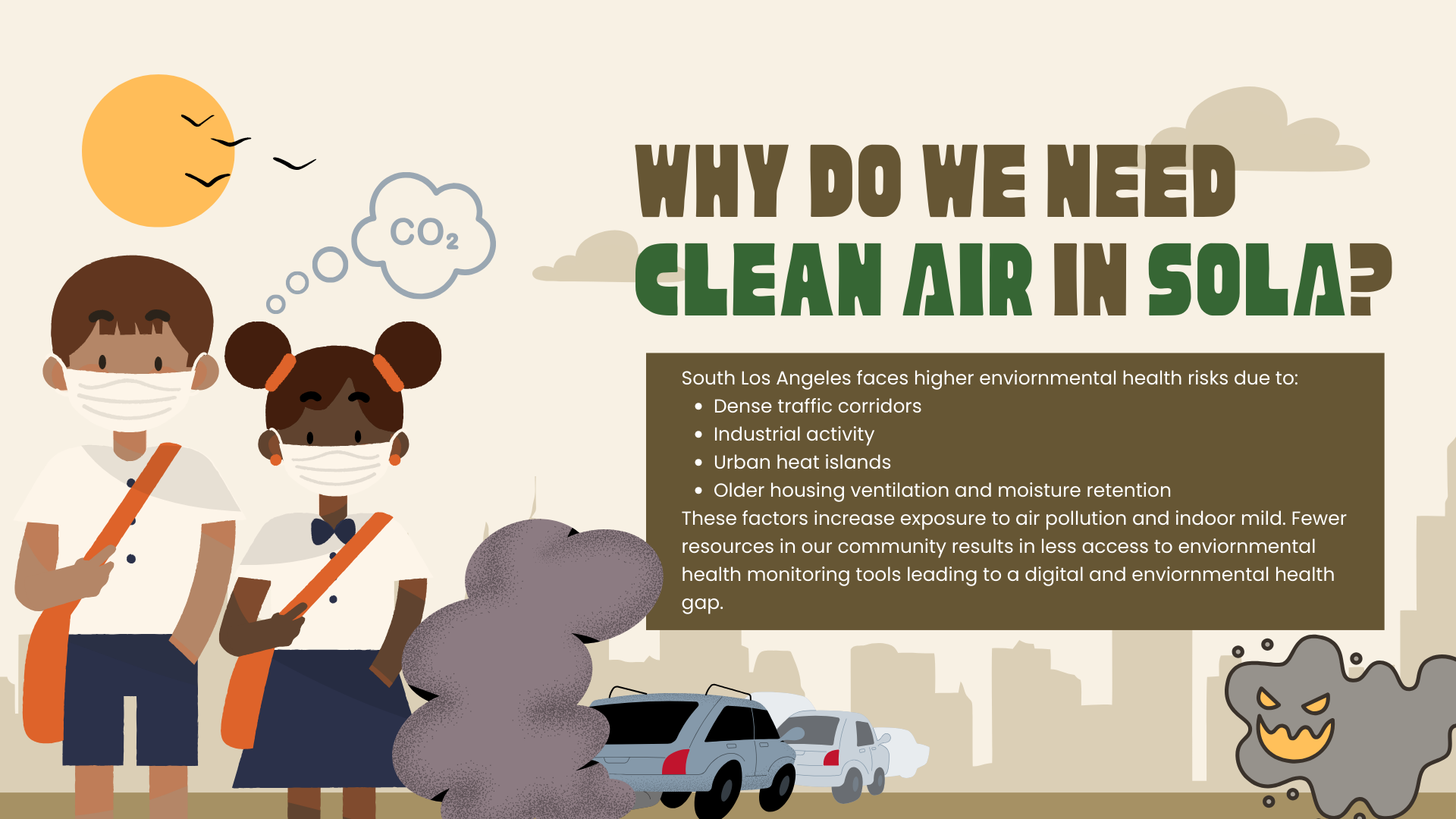
This project was inspired by my own experience growing up with asthma, nose bleeds, and allergies. In my home, mold has been a recurring issue, and I’ve seen how it affects my family’s health, especially my younger siblings. When humidity rises or mold begins to grow, it often leads to headaches, respiratory irritation, and asthma flare-ups for both me and my siblings. These experiences made me realize how difficult it can be for families to identify environmental health risks inside their homes. Many people don’t have access to tools that help them understand air quality, humidity, or mold conditions. I wanted to create something that could help communities like mine better understand the air they breathe and the environments they live in.
What it does
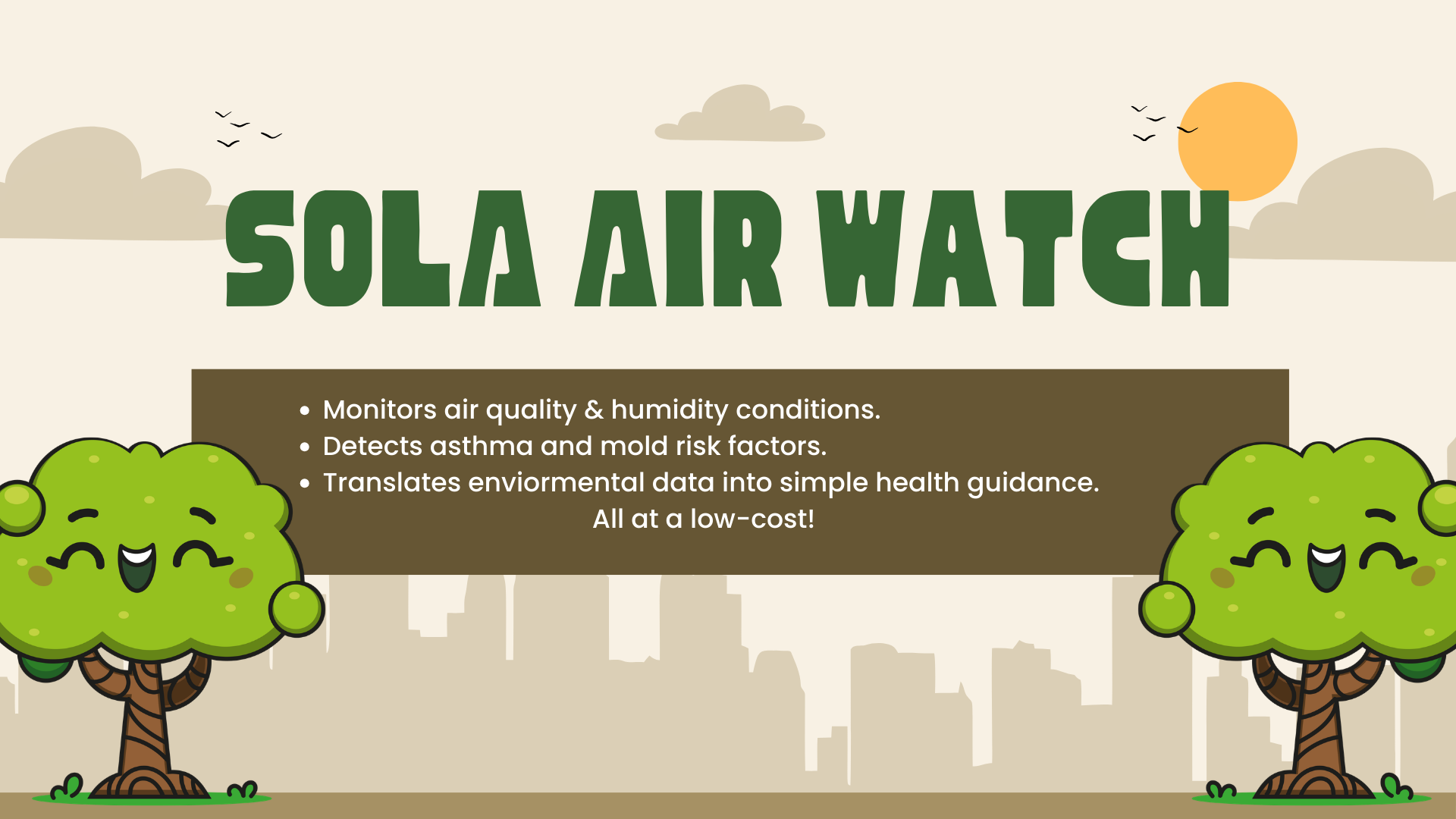
South LA AirWatch is an environmental health assistant designed to help communities understand air quality and mold risk. The system monitors environmental conditions such as:
-air quality indicators -temperature -humidity
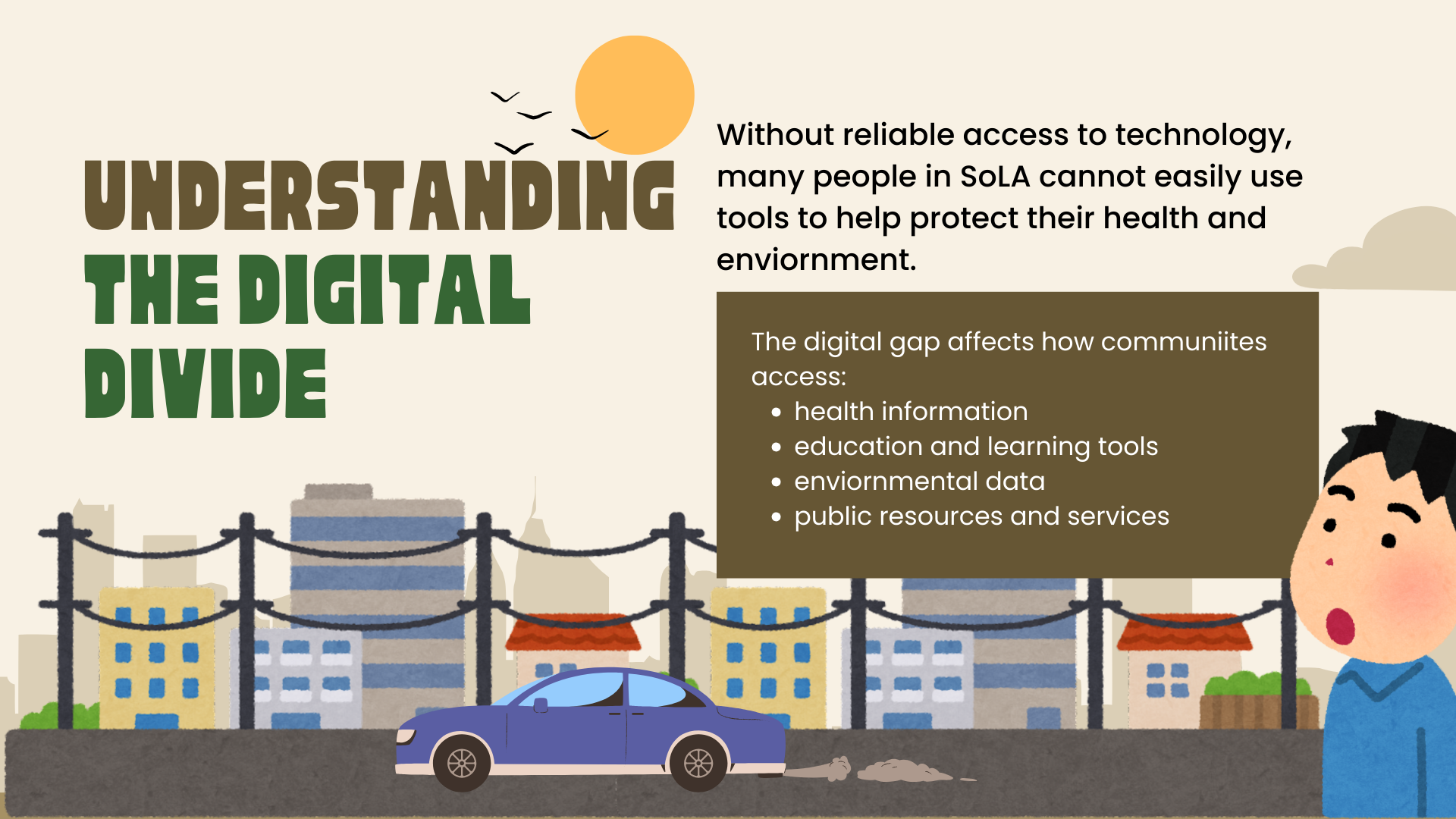
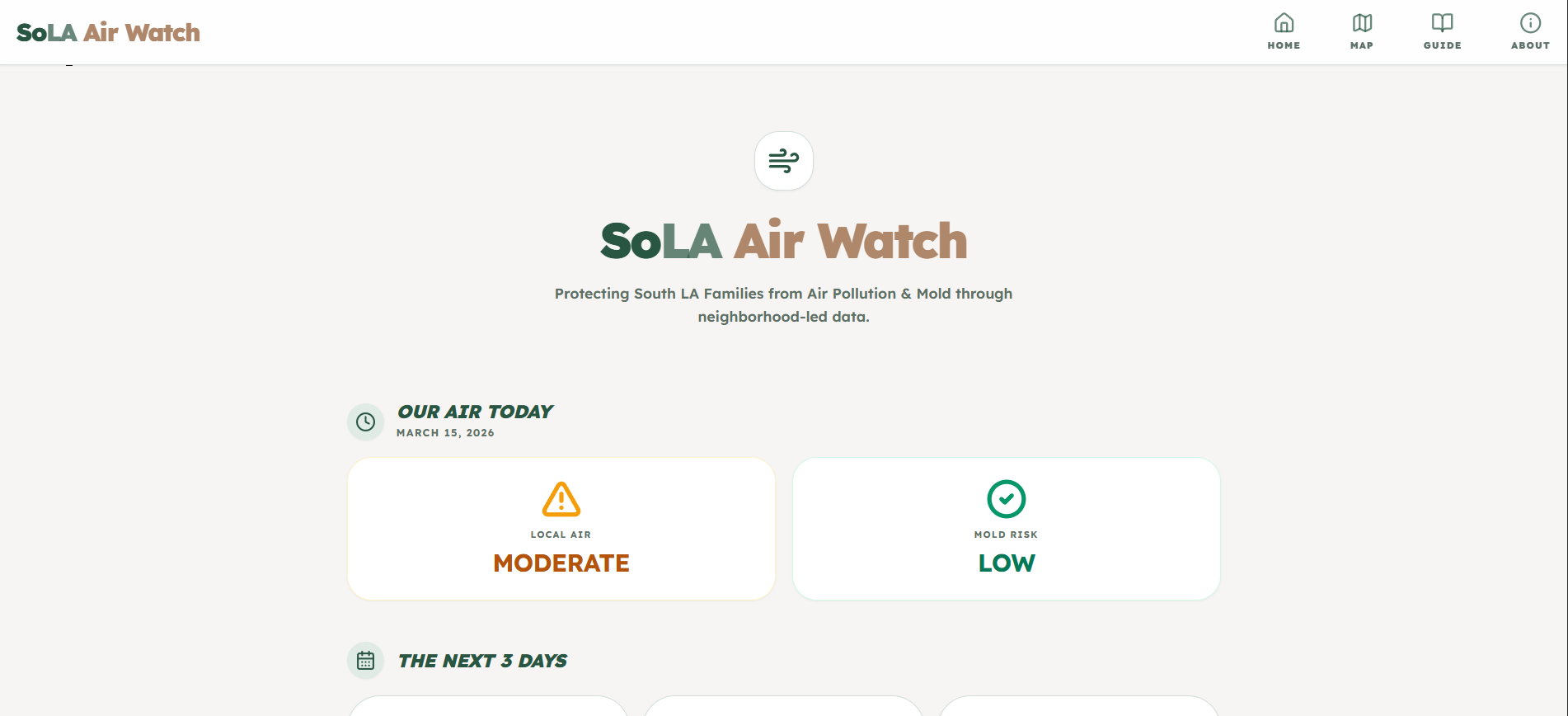
These factors can influence asthma triggers and mold growth. The app then translates this environmental data into simple health guidance so users can understand potential risks in their environment. The goal is to make environmental health information easier to understand and more accessible, especially for communities that may not have access to expensive monitoring tools.
How I built it
We built South LA AirWatch using a combination of hardware simulation and web technology. The prototype includes:
Arduino-based environmental sensors simulated in Tinkercad to monitor temperature, humidity, and air quality indicators. [did not have time to develop] A web-based interface designed to display environmental conditions and health guidance. A map-based dashboard that visualizes environmental data in an easy-to-understand format. AI-assisted development tools to help design and structure the application interface.
Together, these components create a system that connects environmental data to clear, actionable health insights.
This project was also informed by my background as a biomechanical engineering student, where I regularly work with experimental data, environmental conditions, and sensor-based measurements in lab settings. That perspective helped guide how we approached collecting environmental data and translating it into meaningful health insights.
Challenges I ran into
First off, I am a mechanical engineering student. I have never coded beyond MATLAB... Besides this, one of the biggest challenges was translating technical environmental data into information that everyday users could easily understand. Air quality measurements, humidity levels, and other environmental indicators can be complex and difficult to interpret. Designing a system that communicates this information clearly and simply required careful thinking about user experience. Another challenge was building a working prototype in a limited amount of time while integrating multiple tools such as Arduino simulation, mapping interfaces, and web development platforms.
Accomplishments that I am proud of.
I am proud of creating a working concept that connects environmental monitoring with accessible health guidance. Some key accomplishments include:
-Creating a user interface that translates environmental data into simple health insights. -Focusing on a real community issue affecting South Los Angeles. -Developing a solution that aims to bridge the digital divide in environmental health information.
Most importantly, the project turns invisible environmental conditions into information that people can understand and act on.
What I learned
Through this project I learned how environmental technology, software tools, and user-centered design can work together to address public health challenges. I also learned how important accessibility is when designing technology. Data alone is not enough, information must be communicated in a way that people can easily understand and use. This project also strengthened my experience with rapid prototyping, problem solving, and interdisciplinary thinking. Again, I am not a coder so all of this was extremely out of my element and comfort zone.
What's next for South Los Angeles Air Watch (App)
Future development for South LA AirWatch could include:
- integrating real physical environmental sensors
- expanding the environmental monitoring network across neighborhoods
- improving the AI health guidance system
- adding multilingual support to better serve diverse communities
- partnering with local organizations to deploy the system in real community settings
The long-term goal is to create a scalable environmental health tool that empowers communities with accessible information about the air they breathe and the environments they live in.


Log in or sign up for Devpost to join the conversation.