-
-
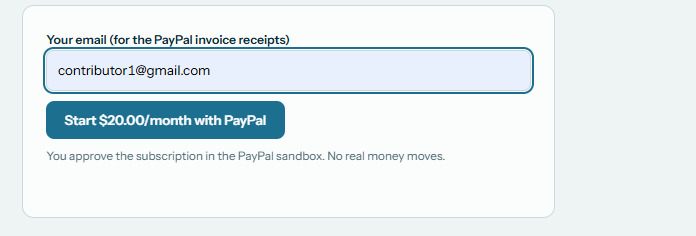
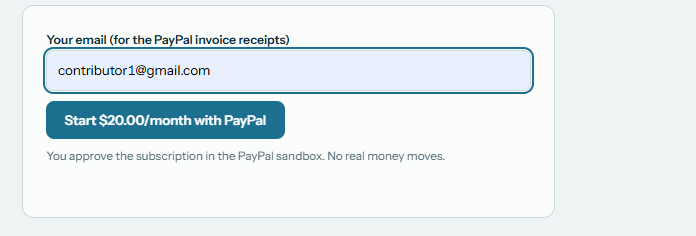
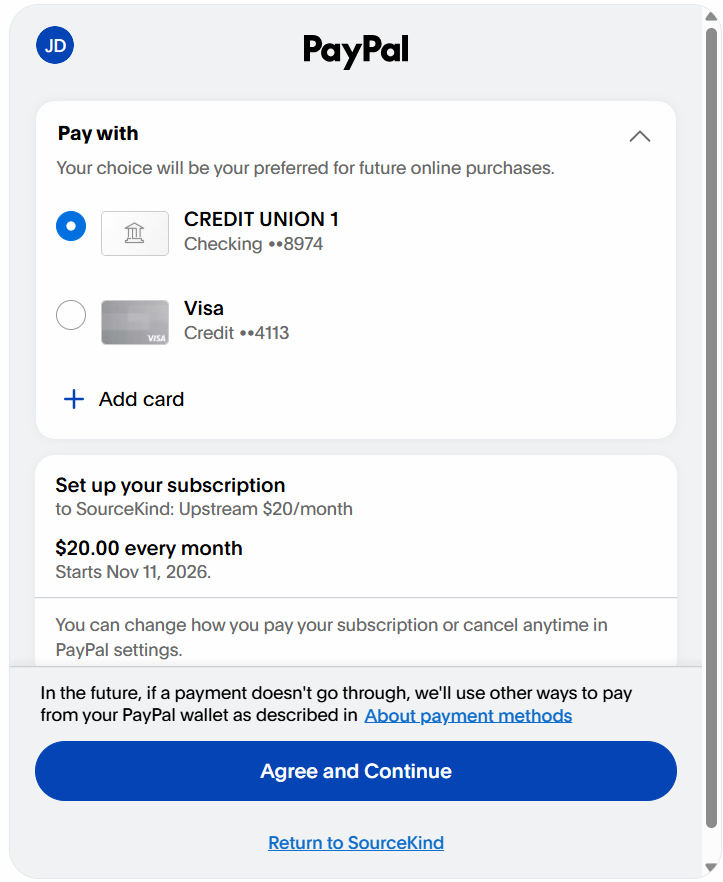
To pay login with PayPal email
-
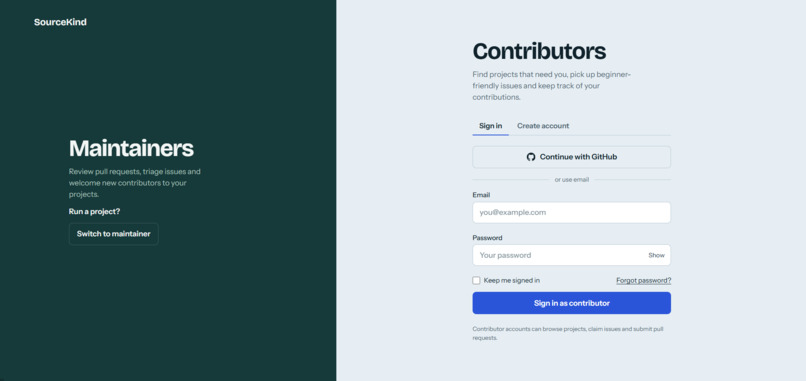
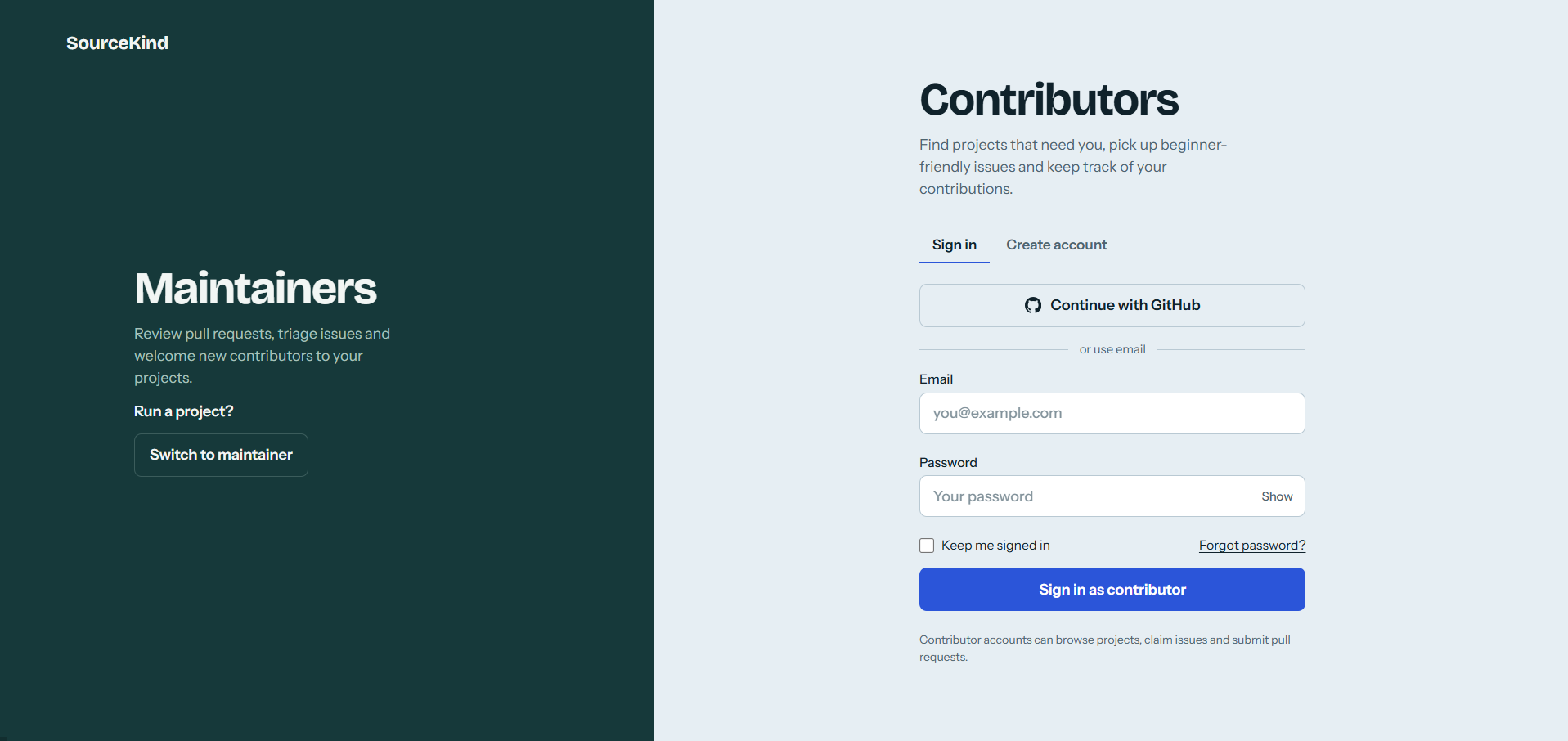
Login page
-
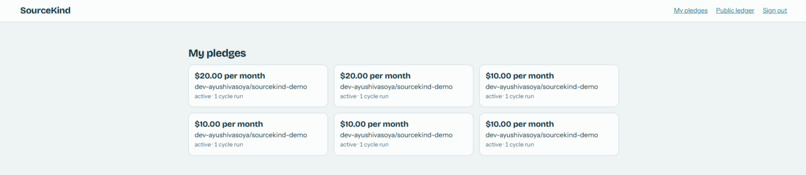
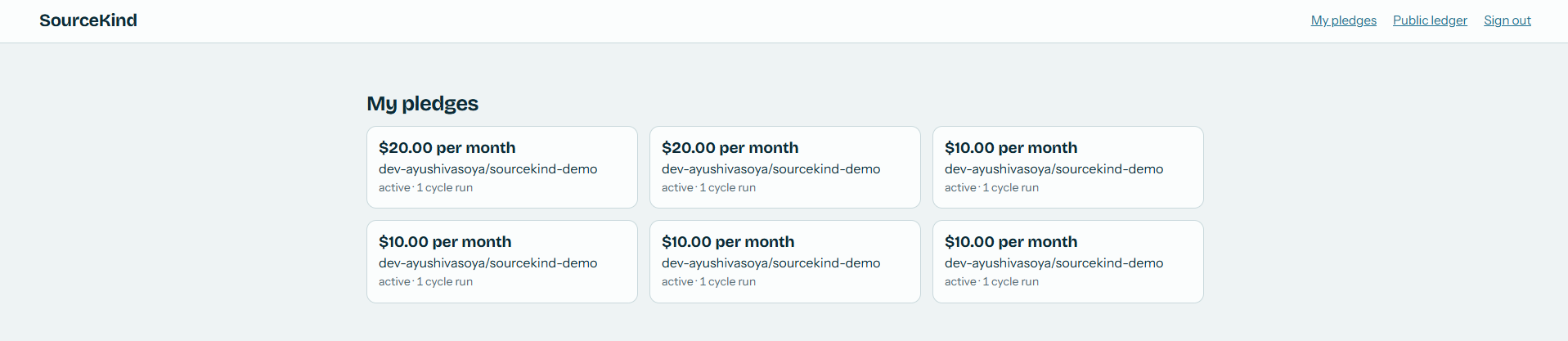
pledge page
-
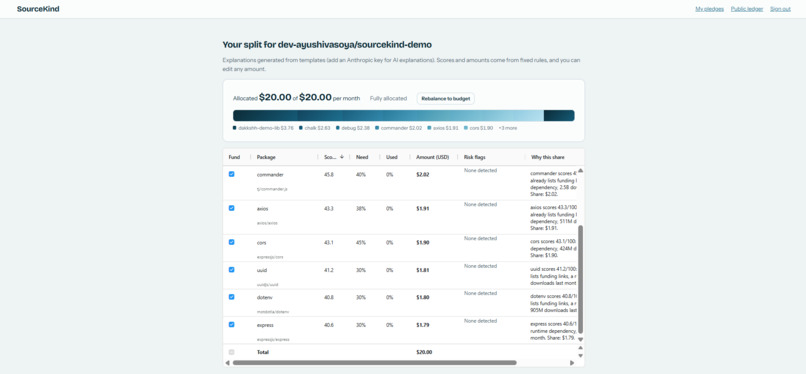
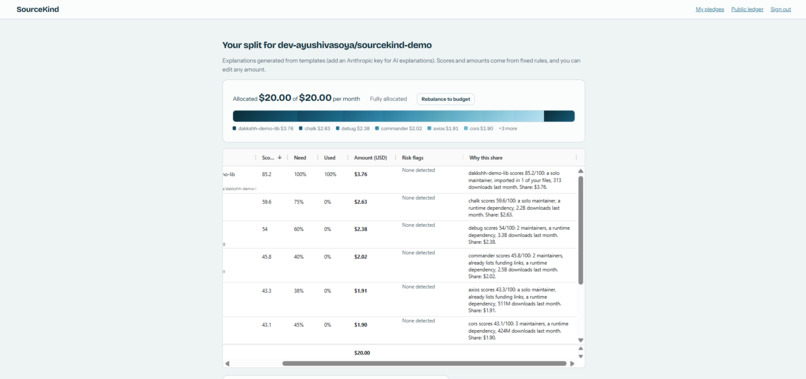
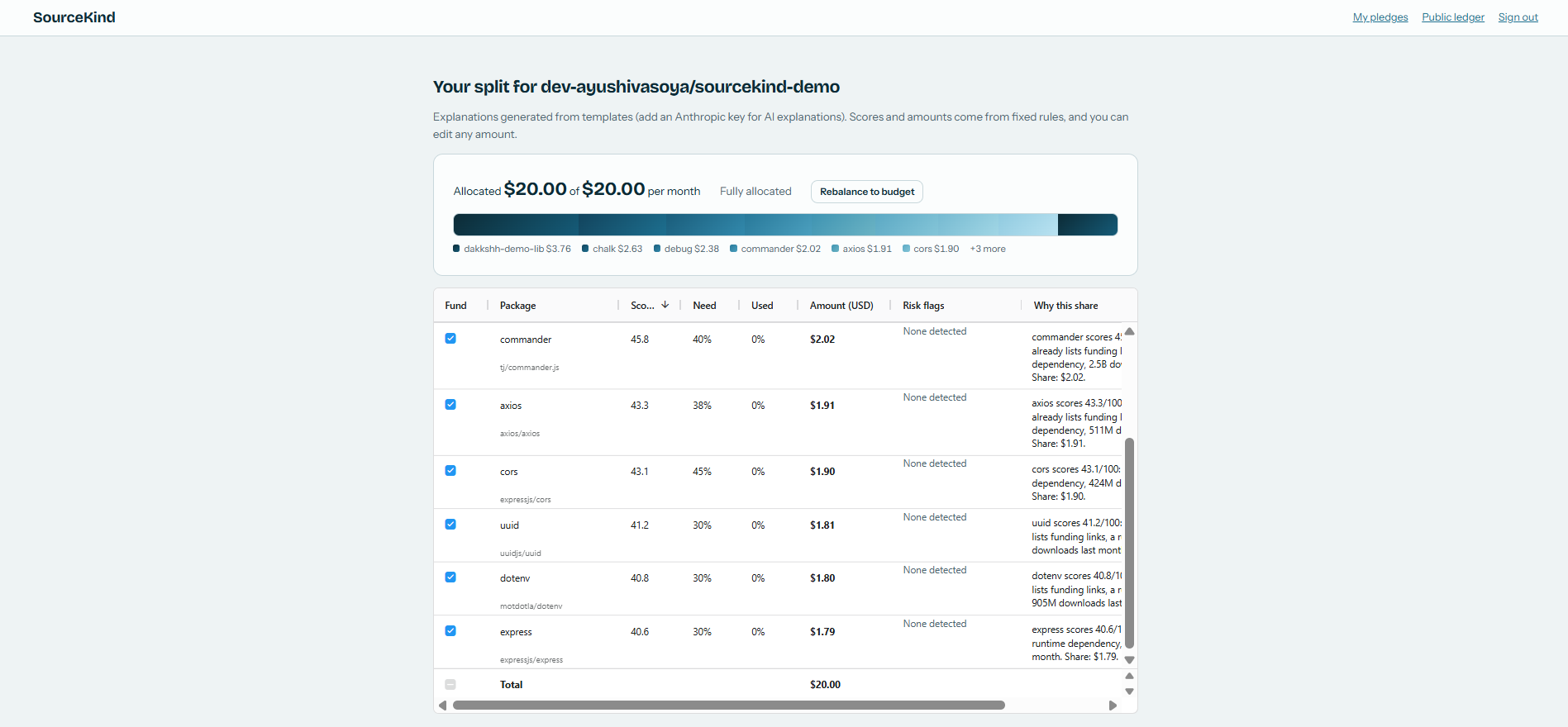
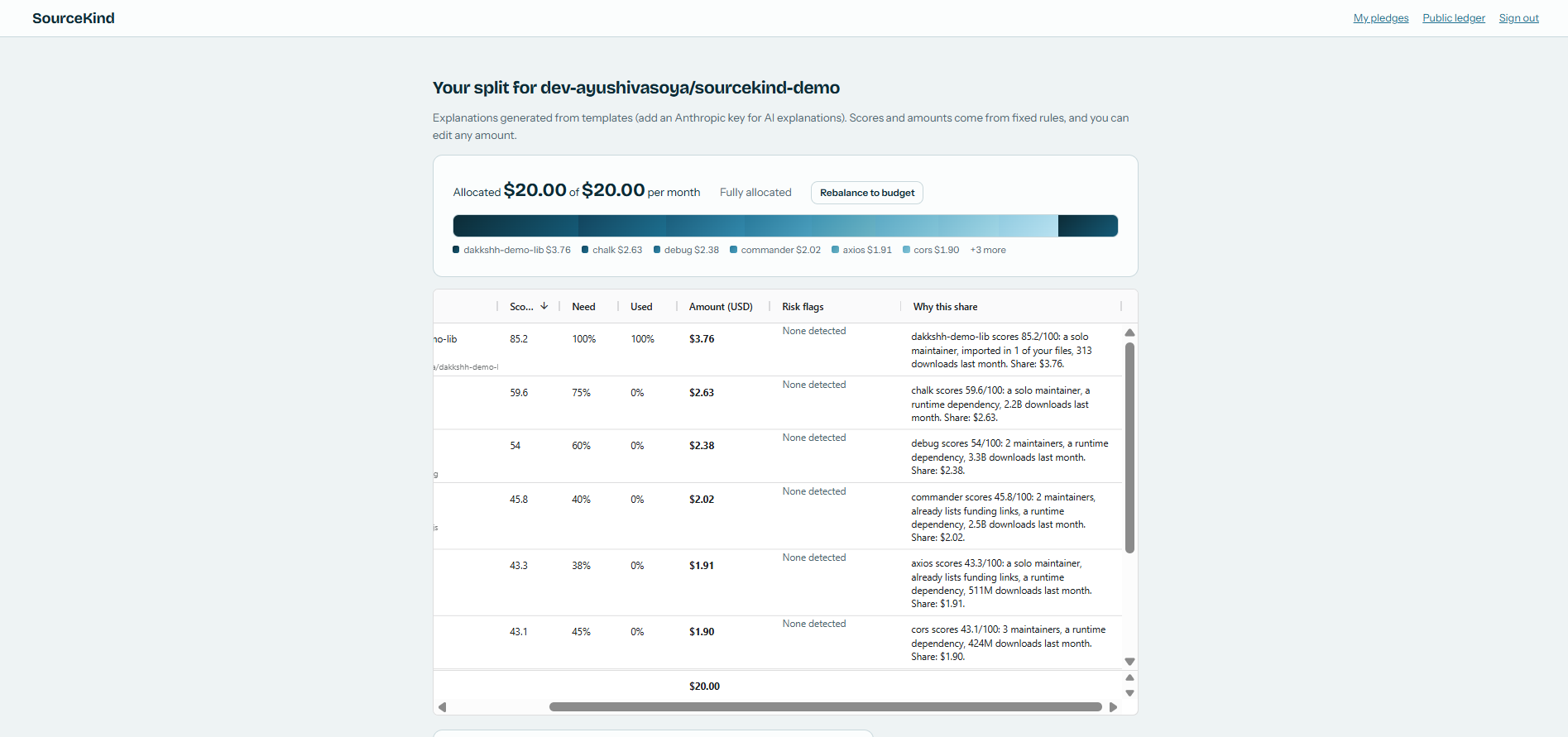
review table showing results using AG grid
-
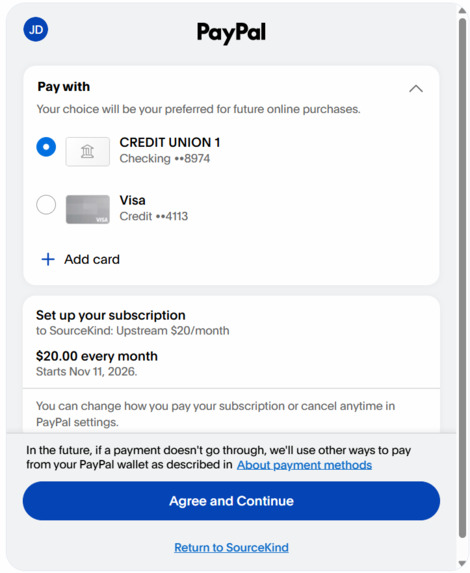
Connecting with PayPal for sending money
-
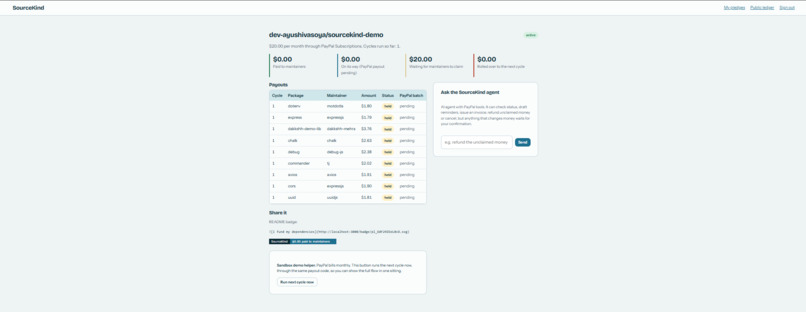
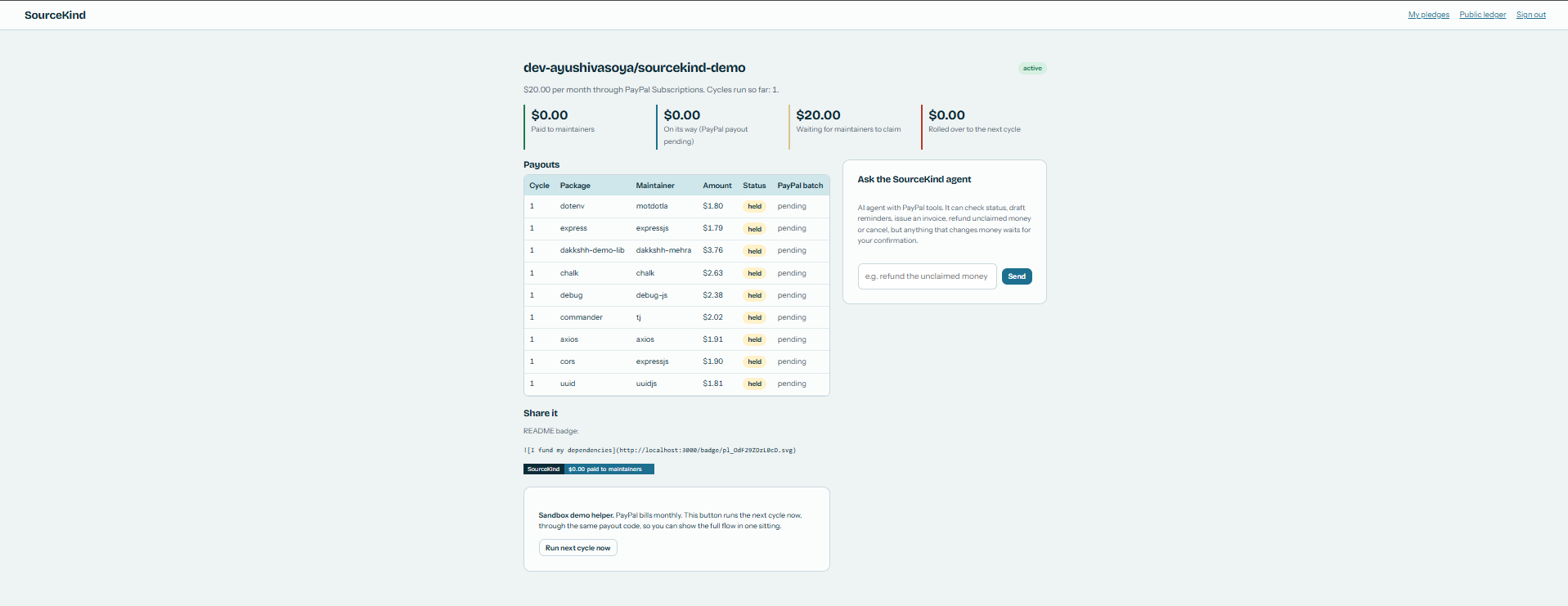
Shows transaction status
-
-
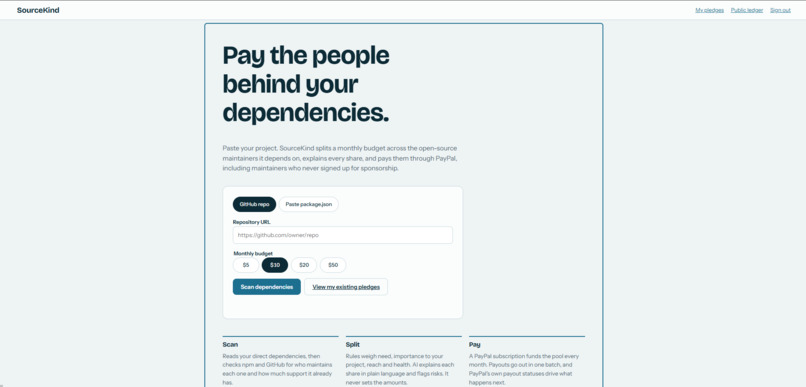
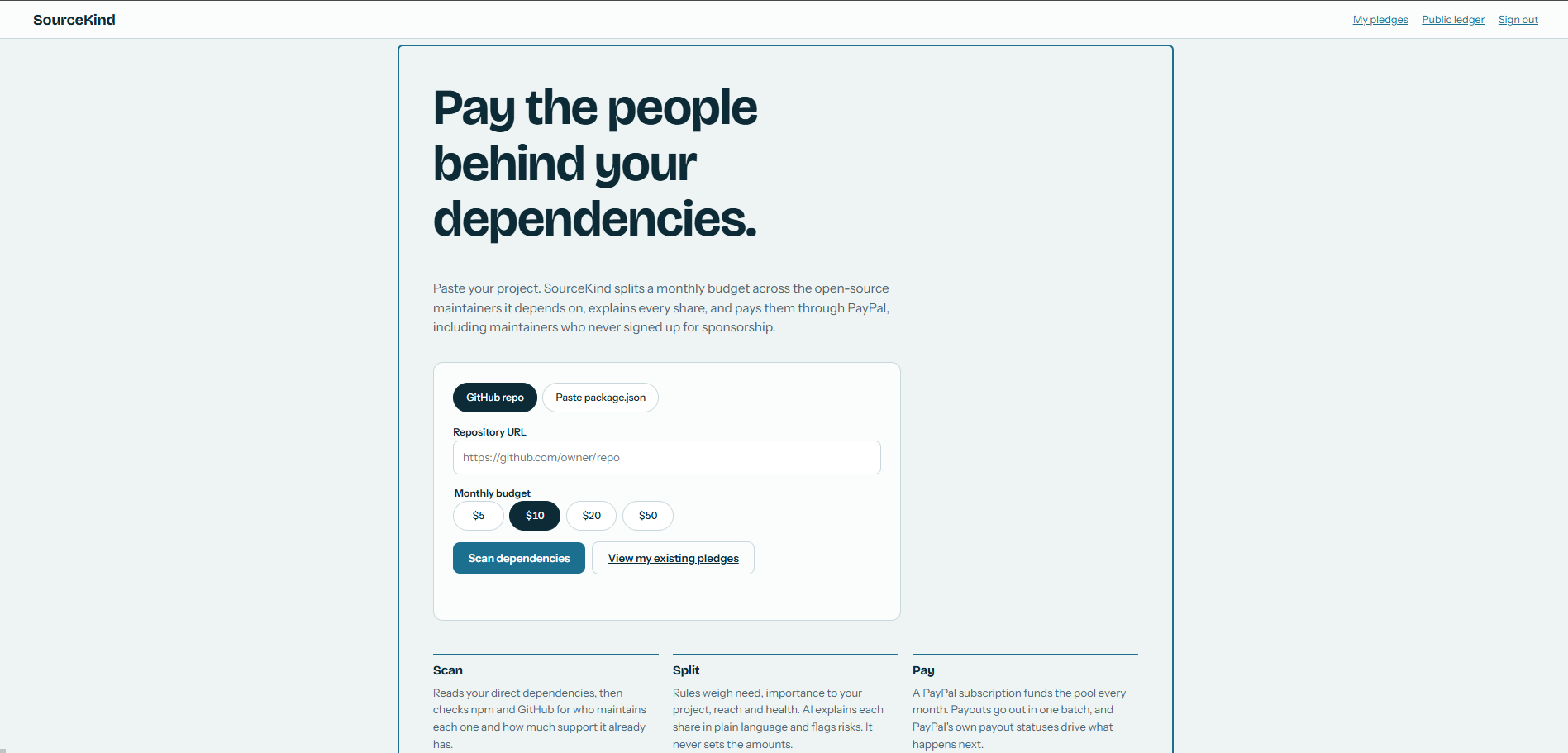
Contributors can scan dependencies
-
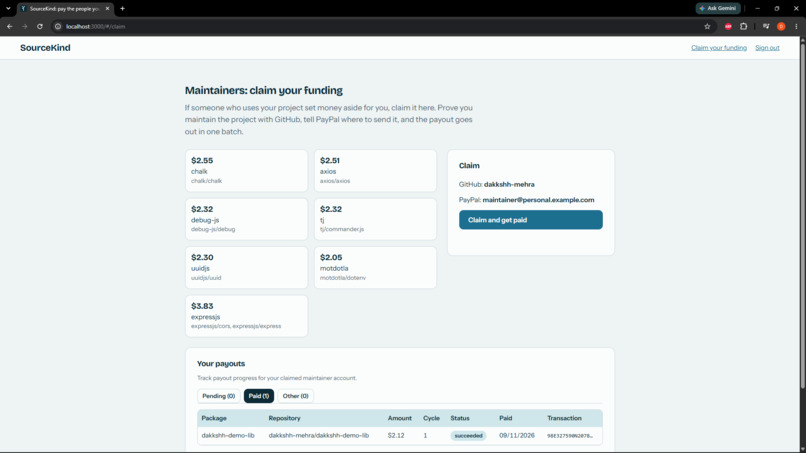
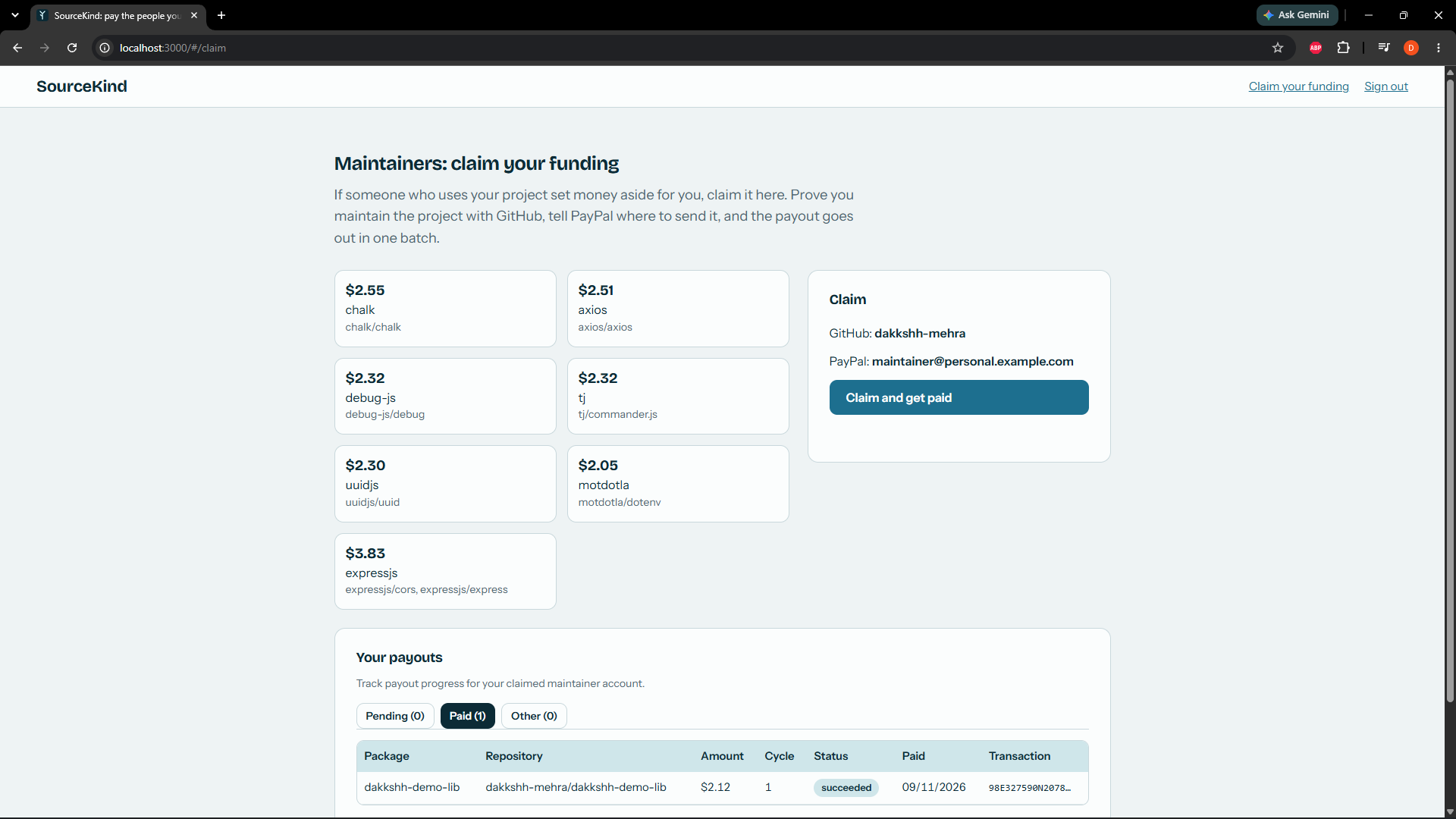
Maintainer page where they can login with paypal and claim money
-
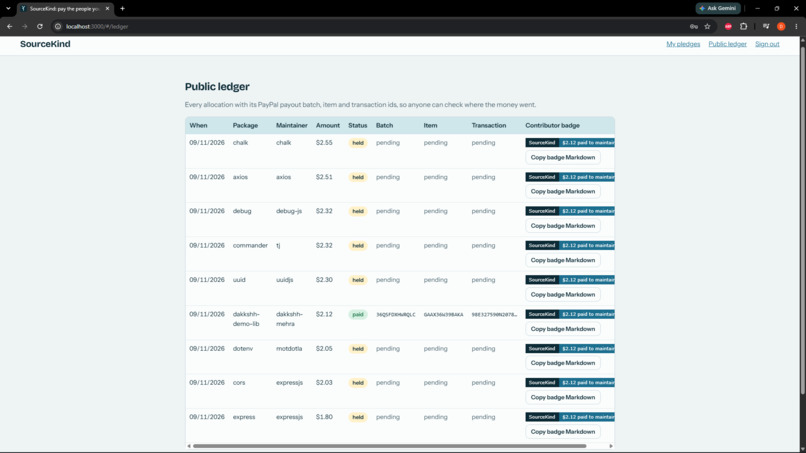
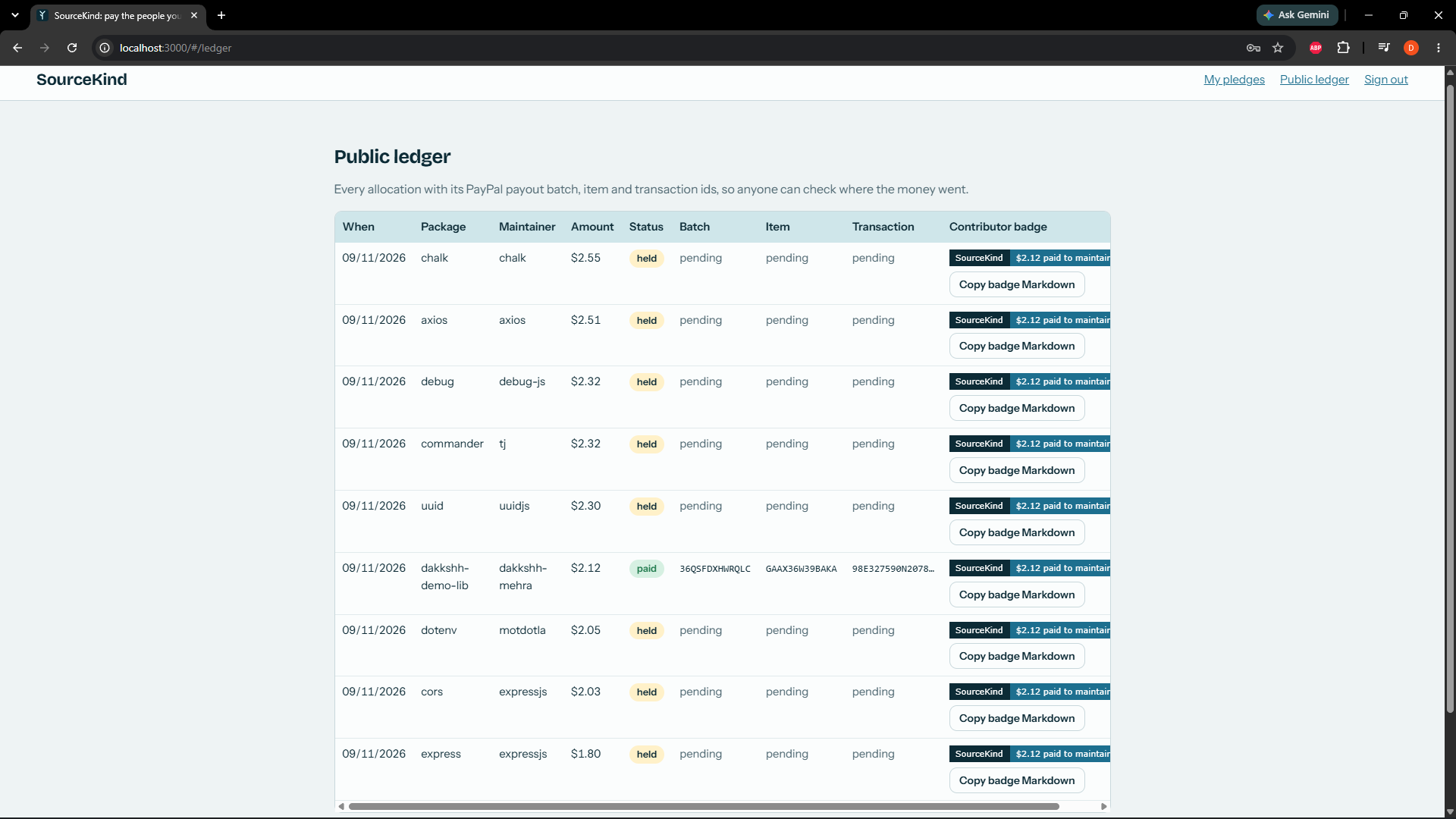
public ledger
Inspiration
Open source runs the world, but the people maintaining it are rarely paid. Sponsorship exists, but it only reaches maintainers who signed up for it, and most of the packages we depend on are maintained by someone who has never heard of GitHub Sponsors or Open Collective. We looked at our own package.json and realized we had no idea who we were relying on, let alone how to pay them.
We wanted to flip the model: instead of maintainers asking for money, the money finds them. That’s SourceKind, a way to pay the people behind your dependencies, whether or not they’ve signed up.
What it does Scan: A contributor pastes a GitHub repo (or a package.json) and picks a monthly budget. SourceKind reads the direct dependencies and looks up each maintainer through npm and GitHub. Split: Deterministic rules weigh how much the project needs and uses each package and how healthy it is. The AI only explains each share in plain language and flags risks. It never sets the amounts, and the funder can adjust any share. Fund: The contributor funds the whole pool with a PayPal subscription. Hold: Maintainers who haven’t signed up don’t miss out. Their share is held for them, and unclaimed money rolls over to the next cycle. Claim: Maintainers sign in with GitHub only, so we know exactly who we’re paying. They connect PayPal and click Claim and get paid, which triggers a PayPal Payout. Prove: Every allocation appears on a public ledger with its payout batch and transaction ID, and projects can add a README badge showing they fund their dependencies.
There’s also an AI agent with PayPal tools. It can check status, draft reminders, issue invoices, and refund unclaimed money, but anything that moves money waits for the funder’s confirmation.
How we built it PayPal Subscriptions fund the monthly pool. PayPal Payouts send each claimed share to the maintainer in one batch. Login with PayPal connects the maintainer’s account so we know where to send the money. PayPal webhooks, with signature verification and idempotent event handling, are built to drive status changes (held, sent, paid) once the app runs on a public URL. In the local sandbox, a payout status sync checks PayPal’s Payouts API directly and feeds the same handlers, so statuses and transaction IDs update without a public endpoint. GitHub OAuth gates the maintainer side. npm and GitHub APIs discover dependencies and maintainers. An LLM writes the explanations and risk flags, and powers the agent, with PayPal actions exposed as tools behind a confirmation step. A sandbox demo helper runs the “next cycle” through the same payout code, so the full flow can be shown in one sitting.
Challenges we ran into Keeping AI out of the money path. It was tempting to let the model decide the split. We chose rules for the amounts and kept AI to explanation and risk flagging, so every dollar is auditable and reproducible. Paying people who don’t know we exist. The held balance, rollover logic, and claim flow had to guarantee a maintainer can show up months later and still get paid. Identity. Matching an npm package to a real GitHub maintainer, and then to the person claiming, is why we made GitHub the only maintainer sign-in. Mapping PayPal’s asynchronous states (subscription charged, payout batch pending, item paid) to a simple status the user can trust. We routed everything through a single state handler, fed by webhook events in production and by a payout status sync in the sandbox, so users see one consistent status either way. Demoing a monthly product in minutes, which led to the sandbox helper.
Accomplishments that we’re proud of
A complete loop: paste a repo, fund it with PayPal, and watch a real sandbox payout land in a maintainer’s PayPal Activity, with the transaction ID visible on a public ledger.
What we learned
Trust is the product. Rules for money, AI for explanation, human confirmation for anything irreversible, and a public ledger for proof. We also learned how much of a payments product is really state management across asynchronous events.
What’s next for SourceKind Support more ecosystems beyond npm (PyPI, Cargo, Maven). Include transitive dependencies in the split. Add team and company pledges with recurring reports. Support maintainer teams and per-package splits. Go live with webhook delivery on a hosted URL, keeping the status sync as a safety net. Move from the PayPal sandbox to production.
Built with: Node.js, JavaScript , AG Grid Community, a lightweight JSON datastore, PayPal Subscriptions, PayPal Payouts, Login with PayPal, PayPal webhooks, GitHub OAuth, npm API, GitHub API, LLM agent,Render.

