-
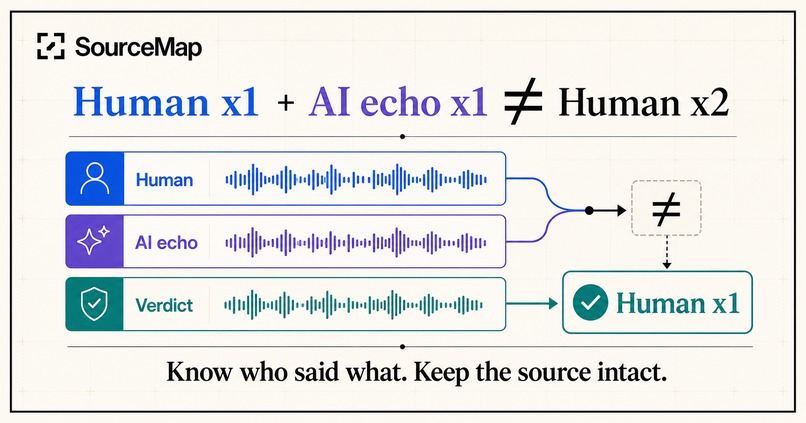
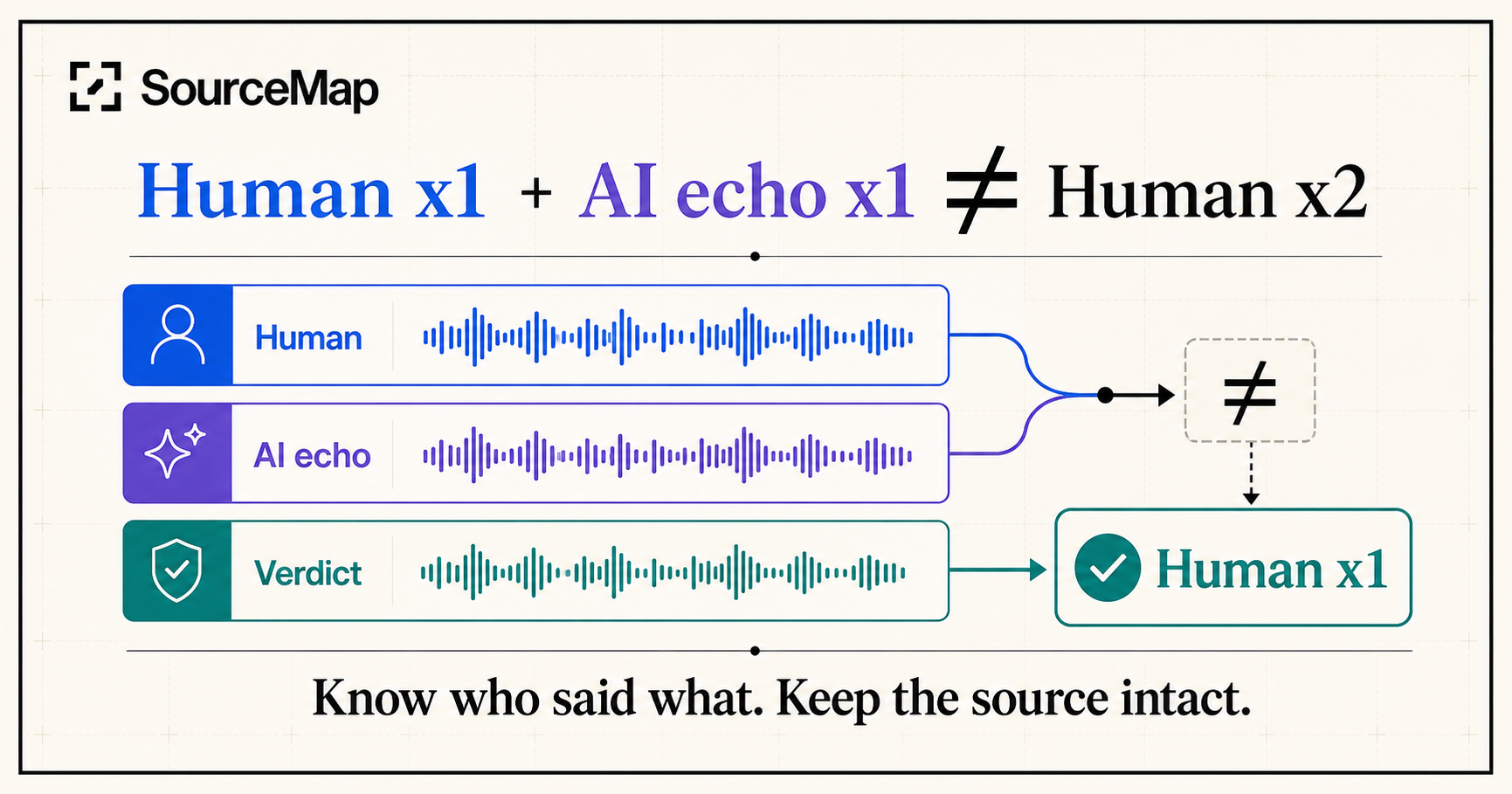
Separates human evidence from AI echoes, preserves the original source, and turns scattered records into patterns, gaps, and next actions.
Inspiration
SourceMap began as a way to make sense of my own mental-health journey. Over time, that process revealed recurring patterns, business ideas, decisions, and intellectual property hidden across years of conversations.
As newer GPT-5.6 tools and connected workflows became available, the pieces finally became usable as one system.
What it does
SourceMap helps identify:
who said what; what came from a person; what came from AI; what remains uncertain; what changed over time; and where valuable ideas or intellectual property originated.
It preserves source material before analysis and keeps human and AI contributions separate.
How we built it
We built SourceMap as a full-stack web application using GPT-5.6, the OpenAI Responses API, Structured Outputs, Codex, React, Next.js, TypeScript, Node.js, Cloudflare, JSON, and GitHub.
The public prototype demonstrates the product behavior while intentionally excluding private records, protected prompts, proprietary equations, internal scoring, and secret workflow logic.
Challenges we ran into
The main challenge was allowing AI to interpret information without letting it overwrite, blur, or inflate the original source.
Another challenge was preserving uncertainty. SourceMap must be able to say that something is unresolved instead of presenting a confident guess.
We also had to create a strong public demonstration without exposing the protected system behind it.
Accomplishments that we're proud of
We are proud that SourceMap can:
preserve original human wording; trace results back to their source; protect private records; and run as a working public prototype.
What we learned
We learned that AI becomes more useful when provenance is visible at the moment of interpretation.
We also learned that scattered ideas can become operational knowledge once they are connected by source, time, and relationship.
What's next
The next phase is expanding SourceMap into a broader operational-memory platform.

Log in or sign up for Devpost to join the conversation.