Inspiration
Learning piano alone can make it hard to tell whether you played the right notes, kept a steady rhythm, or made progress. We wanted to build a practice partner that listens and gives clear, useful feedback.
What it does
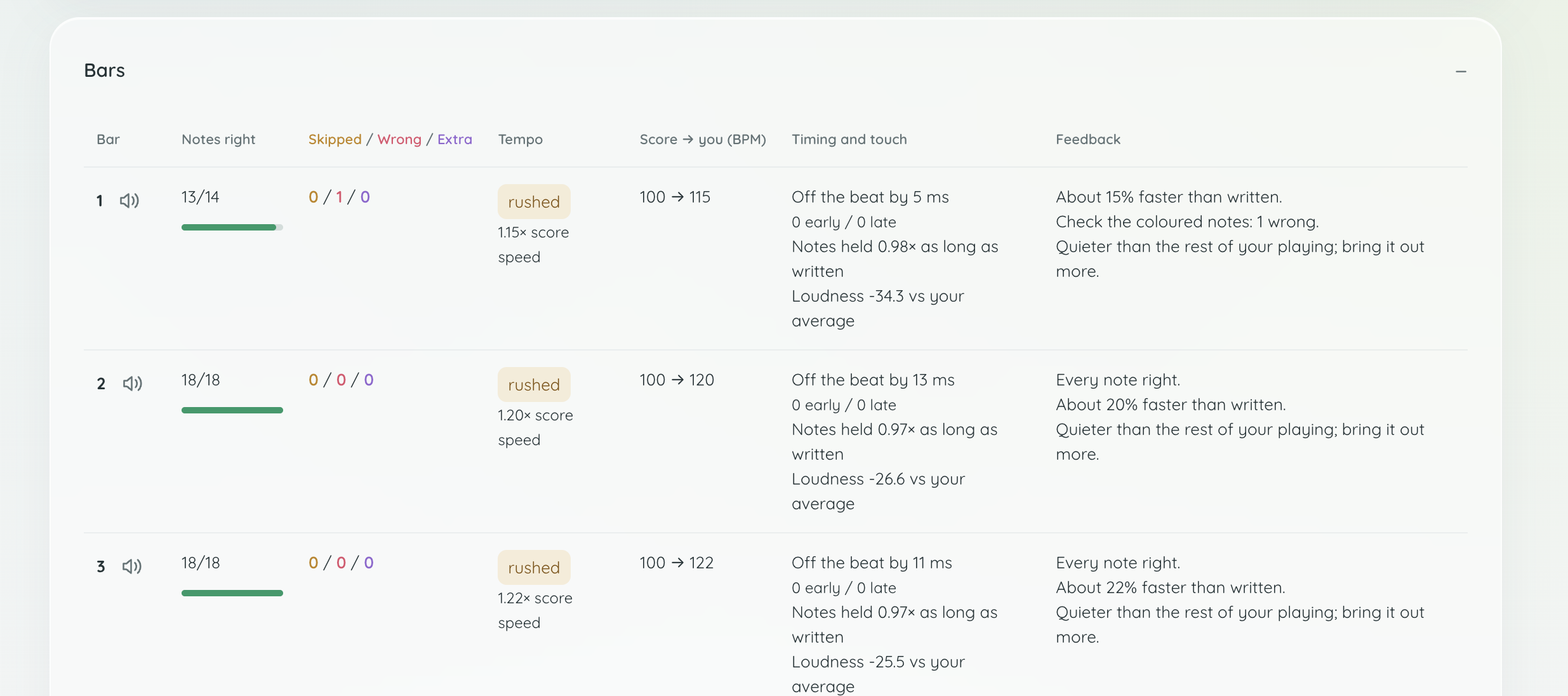
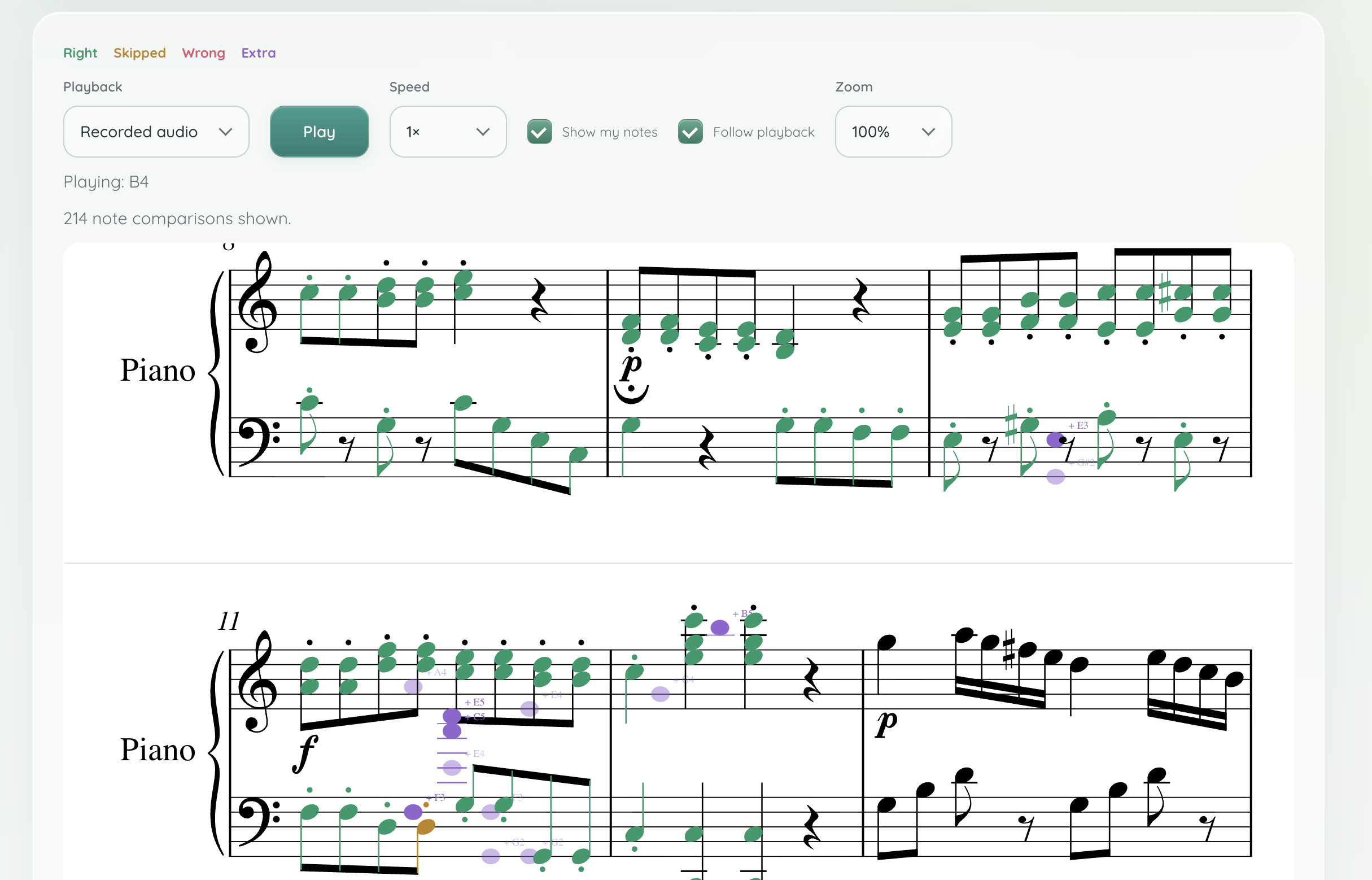
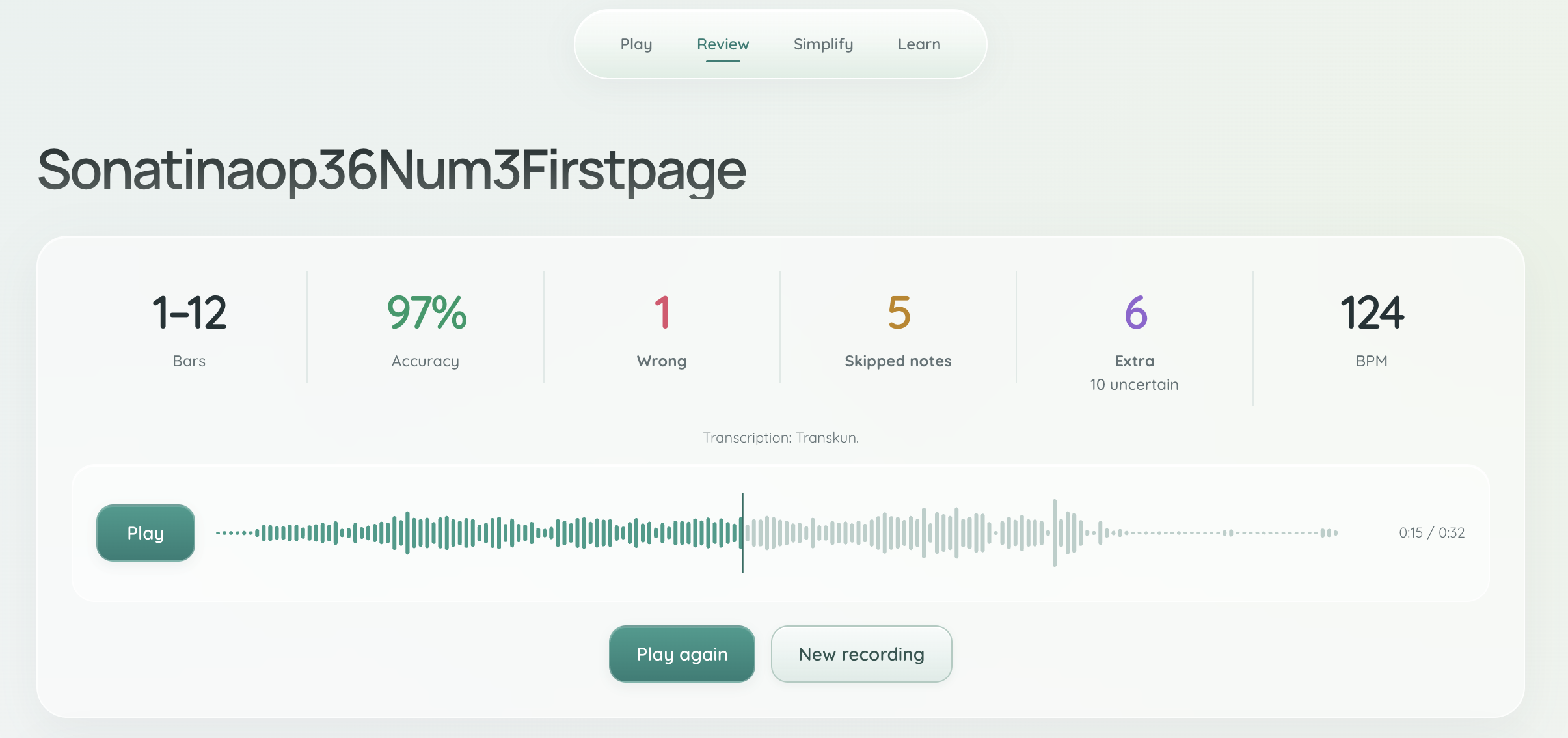
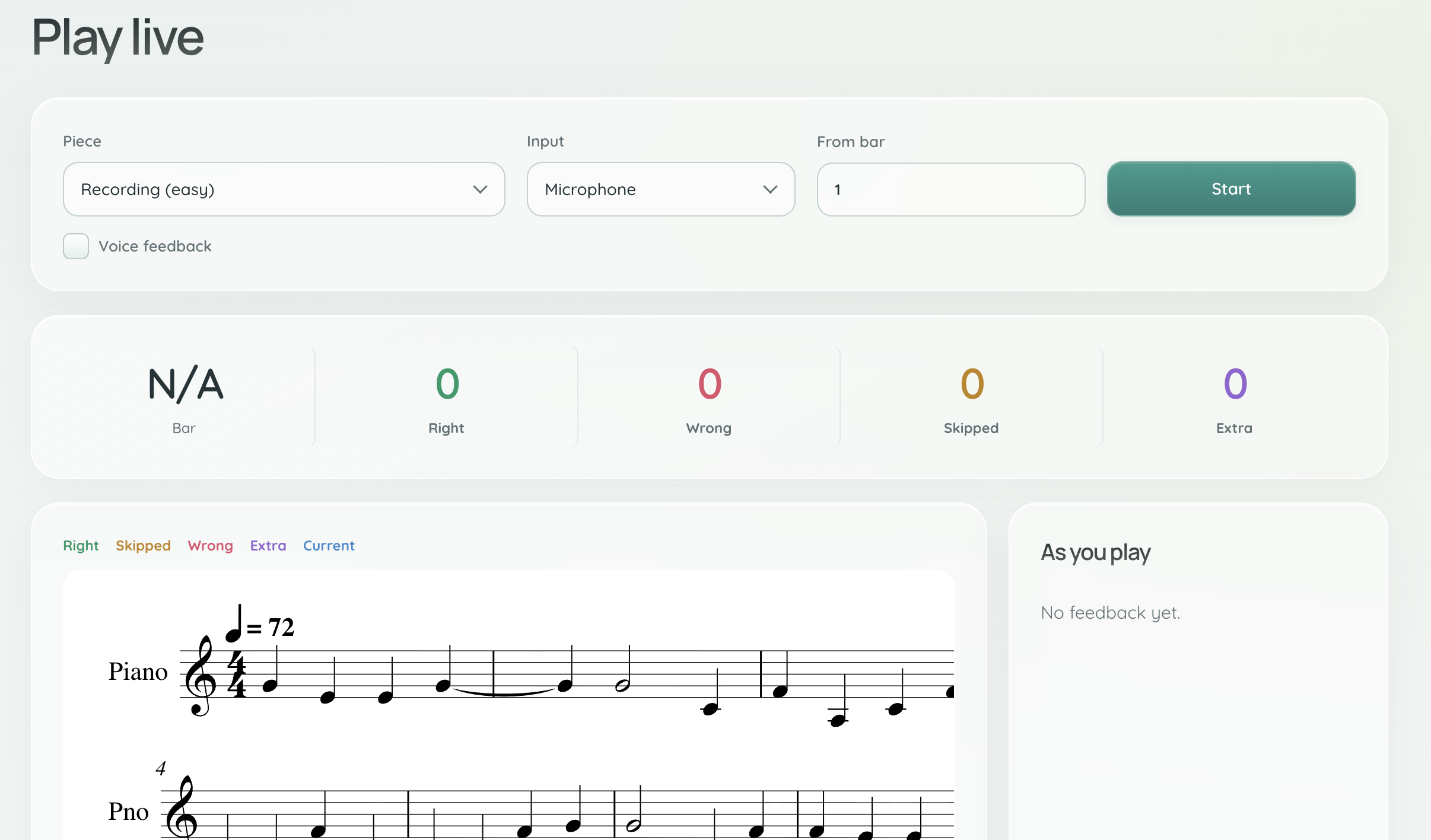
Soundwaves listens as you play from sheet music and marks notes as correct, wrong, or missed. After you stop, it reviews the full take with notes on what went well and what to work on. You can also upload a recording for review or add a piece by uploading its PDF or MusicXML.
How we built it
We use Audiveris and music21, retrained using musescore data from Apify to turn sheet music into notes, then compare those notes with notes transcribed from the performance. A sequence aligner accounts for timing differences and common playing mistakes. The web app shows feedback directly on the score, with a bar-by-bar summary and keyboard playback. Live mode rechecks the recent audio as you play so feedback can settle without flickering.
Challenges we ran into
Transcription can mistake key clicks or room noise for notes, and live audio is less reliable than a complete recording. Aligning notes also gets tricky when someone skips a passage, plays a chord imperfectly, or repeats a note. We built cleaning and alignment rules to handle these cases while keeping feedback stable during live practice.
Accomplishments that we're proud of
We built a complete path from sheet music and audio to playable, visual feedback. On our evaluated examples, the system caught 190 of 191 hand-labeled mistakes in MIDI and 190 of 191 in quiet-room audio. The live marks also agreed with the final report on 245 of 247 notes in a test clip.
What we learned
A useful practice tool needs more than accurate transcription. It needs to explain mistakes in plain language, account for a player's tempo, and keep its feedback steady enough to trust. We also learned that live feedback and final review need different strategies because they have different accuracy and latency constraints.
What's next for SoundWaves
We want to bring more of the final review’s repair rules into the live and review paths, improve performance in noisy rooms, and make it easier for learners to focus on one tricky passage at a time.

Log in or sign up for Devpost to join the conversation.