-
-
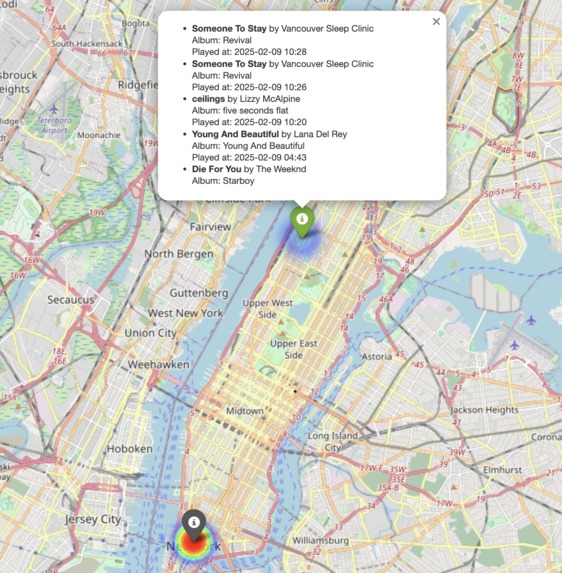
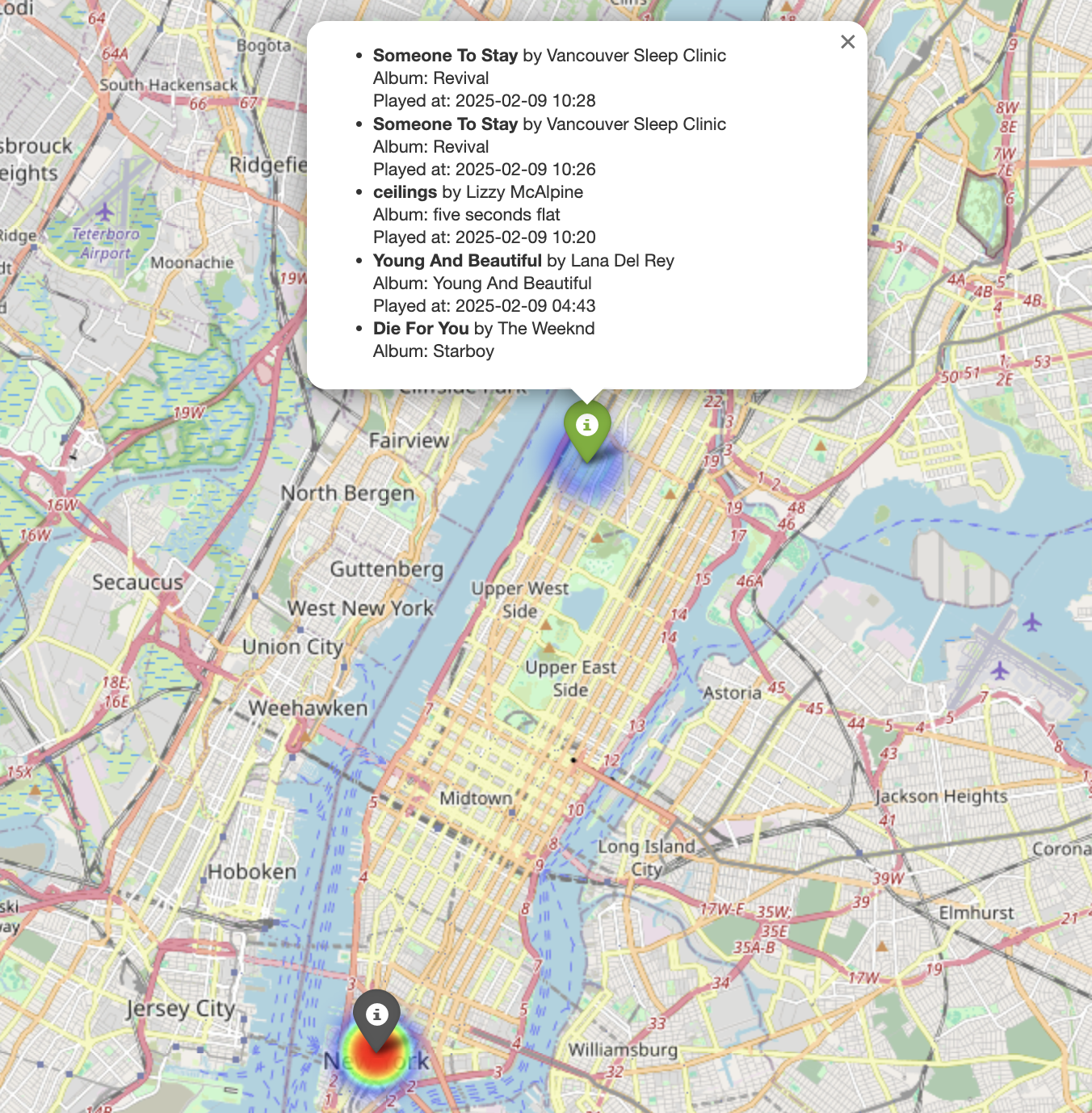
Sample of the heatmap
-
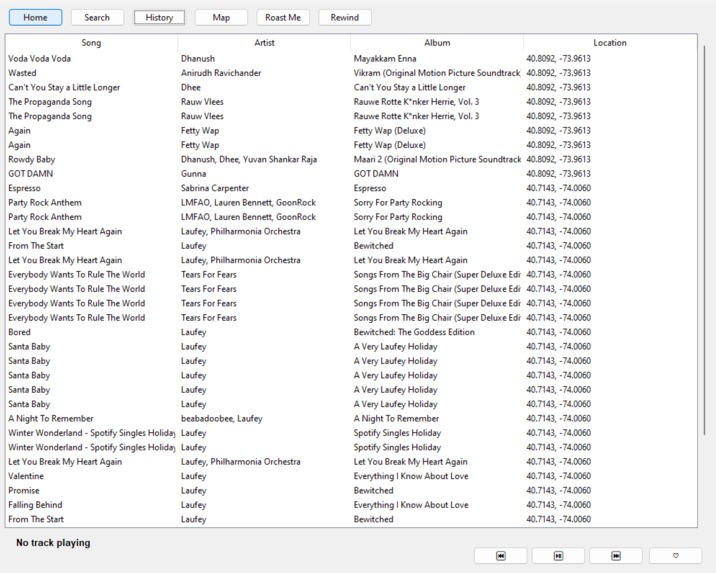
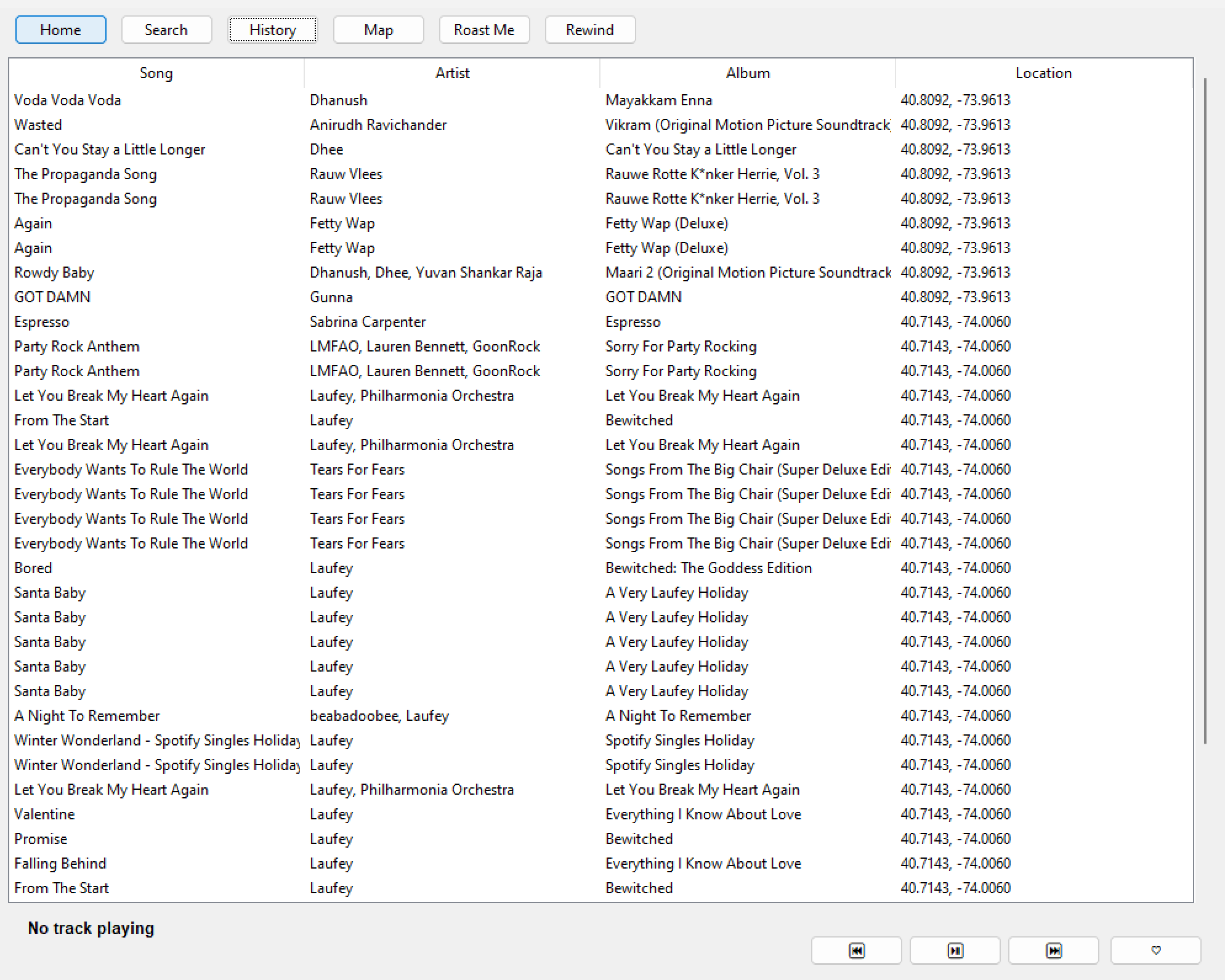
Sample of the history function (plus the current UI)
-
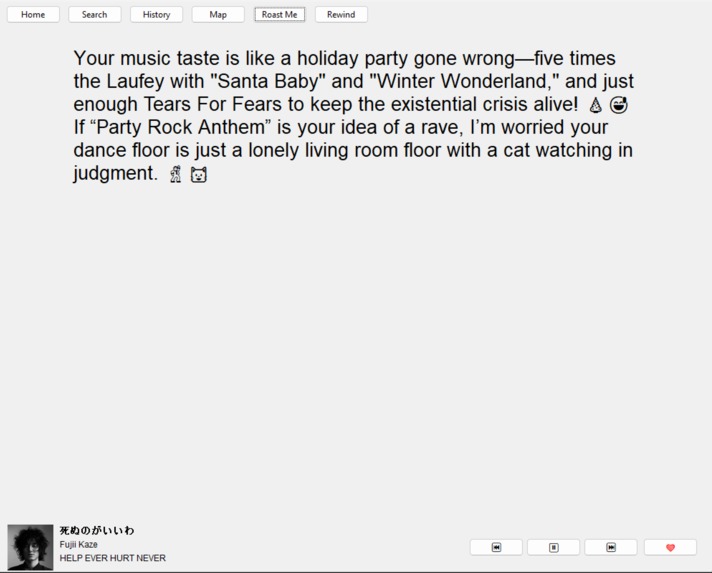
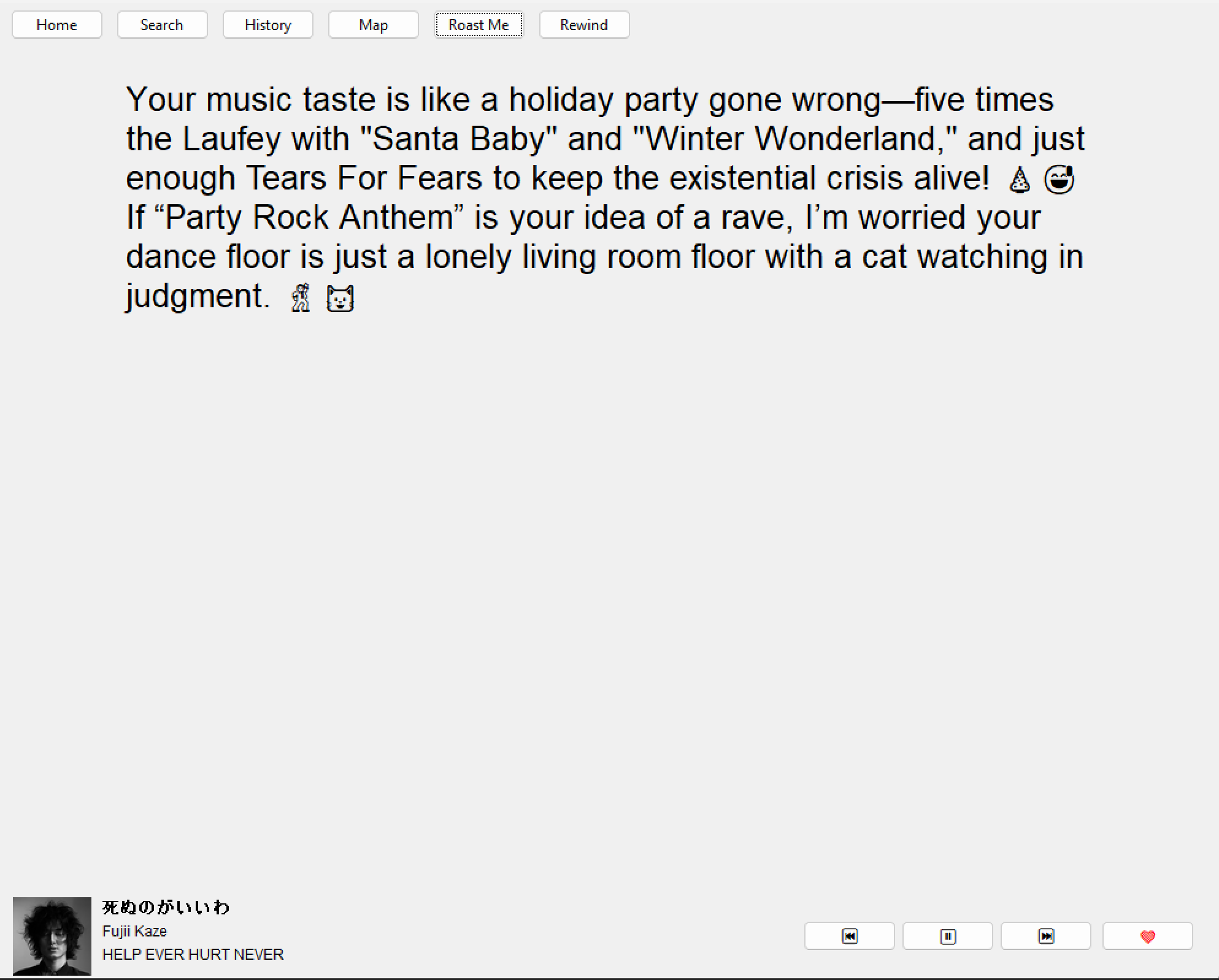
AI "feedback" based on music tastes
Inspiration
Have you ever gone shopping but had your hands full so you couldn't see what song you were listening to outside Starbucks? SoundTrack tries to address this problem with its basic Spotify functionality and then some.
What it does
Some of SoundTrack's features include the general Spotify dashboard that has your liked songs, saved albums, and personal playlists. There's the feature to search for new songs, and a history tab to see what you listened to. The map function is most important, as it shows when and where you listened to certain songs. Finally, for when you feel bored, there is an AI bot that checks your listening history and gives you some "feedback".
How we built it
Pretty much all of the program was made in Visual Studio Code using Python as the base. The map functionality was made through web development languages like html, css, and json.
Challenges we ran into
With great power comes great responsibility, similarly with a great spotify wrapper comes being shadowbanned from Spotify for 13 hours. Unfortunately, due to the size of our massive project and its requirements from the Spotipy API, we exceeded the request limit and were rate limitted from Spotify for a whopping 10 hours between 12AM and 10AM, the only thing we could do was wait and hope it fixed itself. We tried every possible solution, changing WIFI networks to get a different IP address, connecting to a mobile hotspot, changing the hardware address, obtaining a new API key and Secret Key, we even tried a VPN. Did we learn a lot from this process? Definitely, we learnt that a Penn State email ID lets you log onto any Columbia WiFi network, we learnt the various possible ways to get past a rate limit, most importantly we learnt to trust the process. We didn't let this stop us. We made sure that we have the best possible project despite the problems we faced.
Accomplishments that we're proud of
We finished the map based on the location and memory, with a roaster function embedded. Also, the search function allows the user to search the song they want, with liked song, albums, and playlists section. We successfully connect Spotify with our local programming. We are most proud of the extension for a better Spotify.
What we learned
As a group, we learned how taking breaks occasionally is not the worst idea given the duration we'd be working on this. We also learned how to use git since most of us hadn't used it much, if at all, since most of us were new to hackathons (first hackathon for everyone!). We learned how to connect APIs through python (definitely the most lengthy part of the process because of Spotify's shadowbanning) and apply html to show the marking location on the web page. We applied UI design for having the different section of panels as well as letting the user to roast they liked songs. Overall, the process was very rewarding, especially since we did end up with a good working final product.
What's next for SoundTrack
That's a great question. We feel that SoundTrack could be the next great thing. We had some limitations with the Spotify API not allowing us to stream music via the API and rather requiring us to play it through Spotify the app and control it via the interface we built. We plan on building our own Spotify player later on down the line and better optimise the app to take advantage of the Spotify API without being rate limited. Performance enhancements and integrating cover art into the app further is definitely on the table. The main feature we want to add however, is to make listening to music more of an experience itself, we want to dig into the nostalgia associated with music, custom album art that lets you upload your own media such as photos and videos to replace the artists' album art is the way to go for this. We want to make listening to music less of a distraction and more of an experience. Make Spotify Great Again.


Log in or sign up for Devpost to join the conversation.