-
-
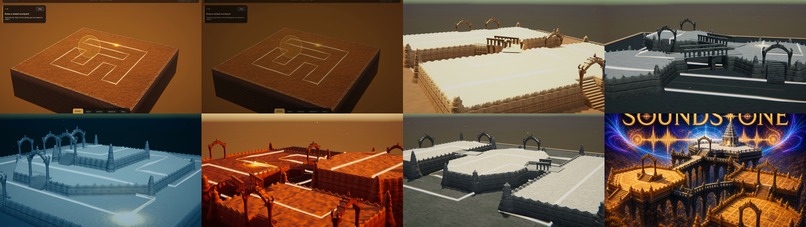
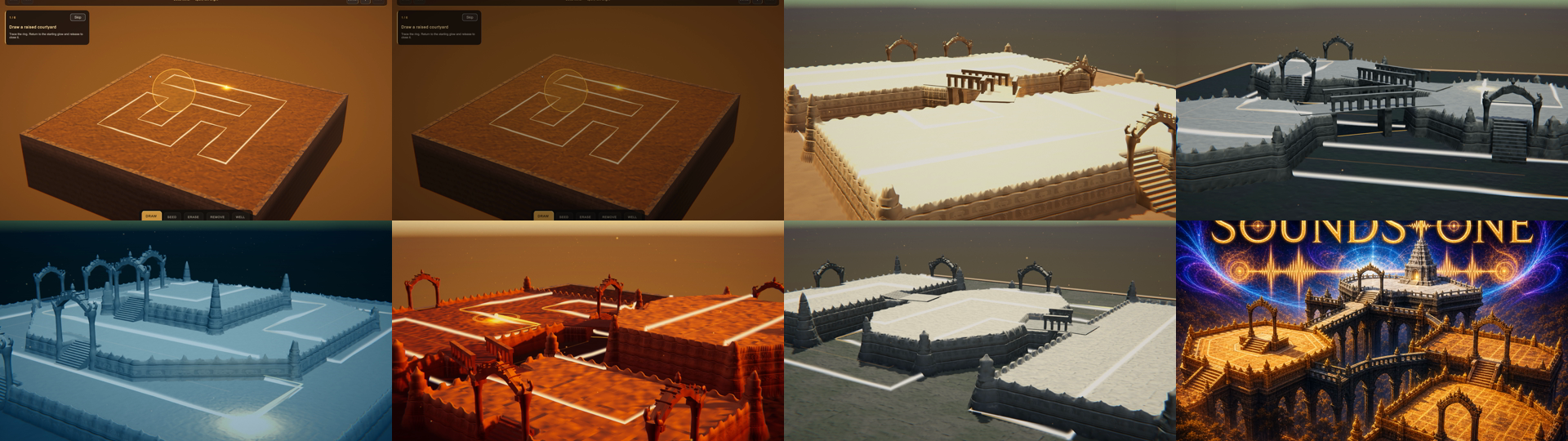
A traced plan on the sand, followed by views of the arched galleries and stairs it can become.
-
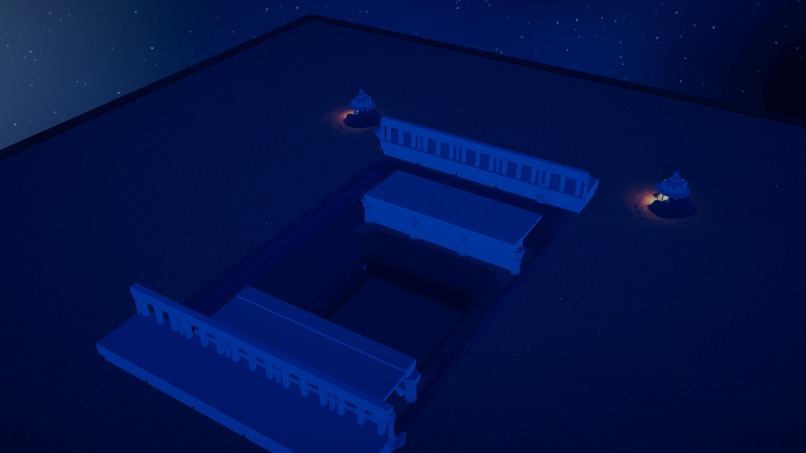
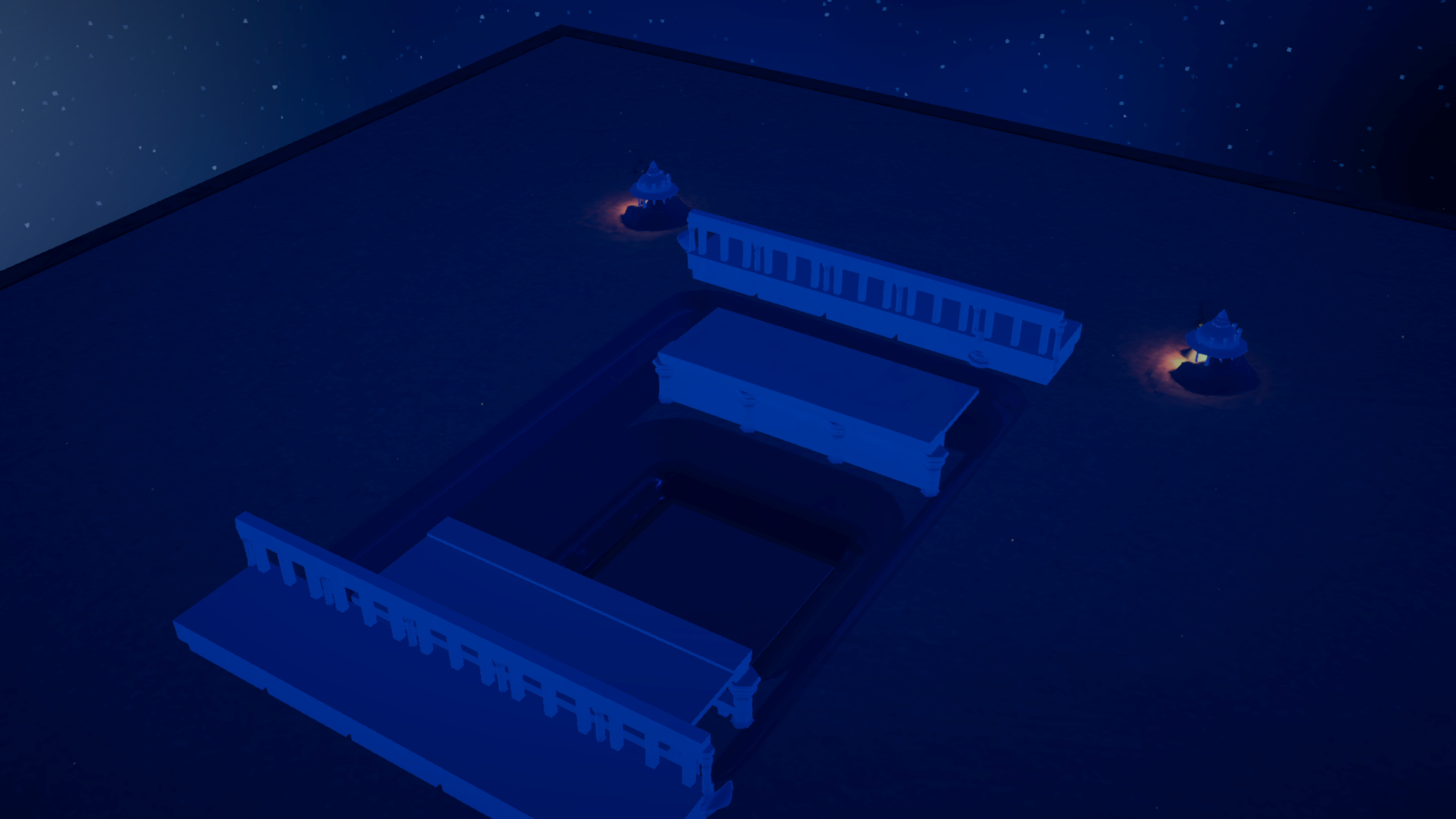
Two lit stupas flank a sunken well under a night sky.
-
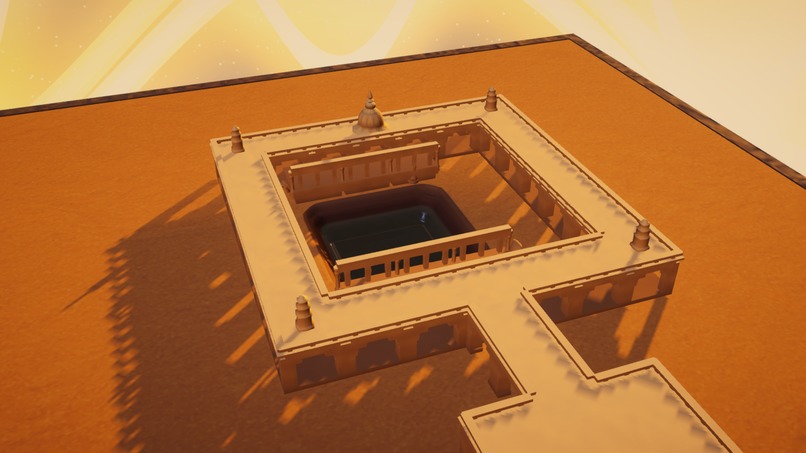
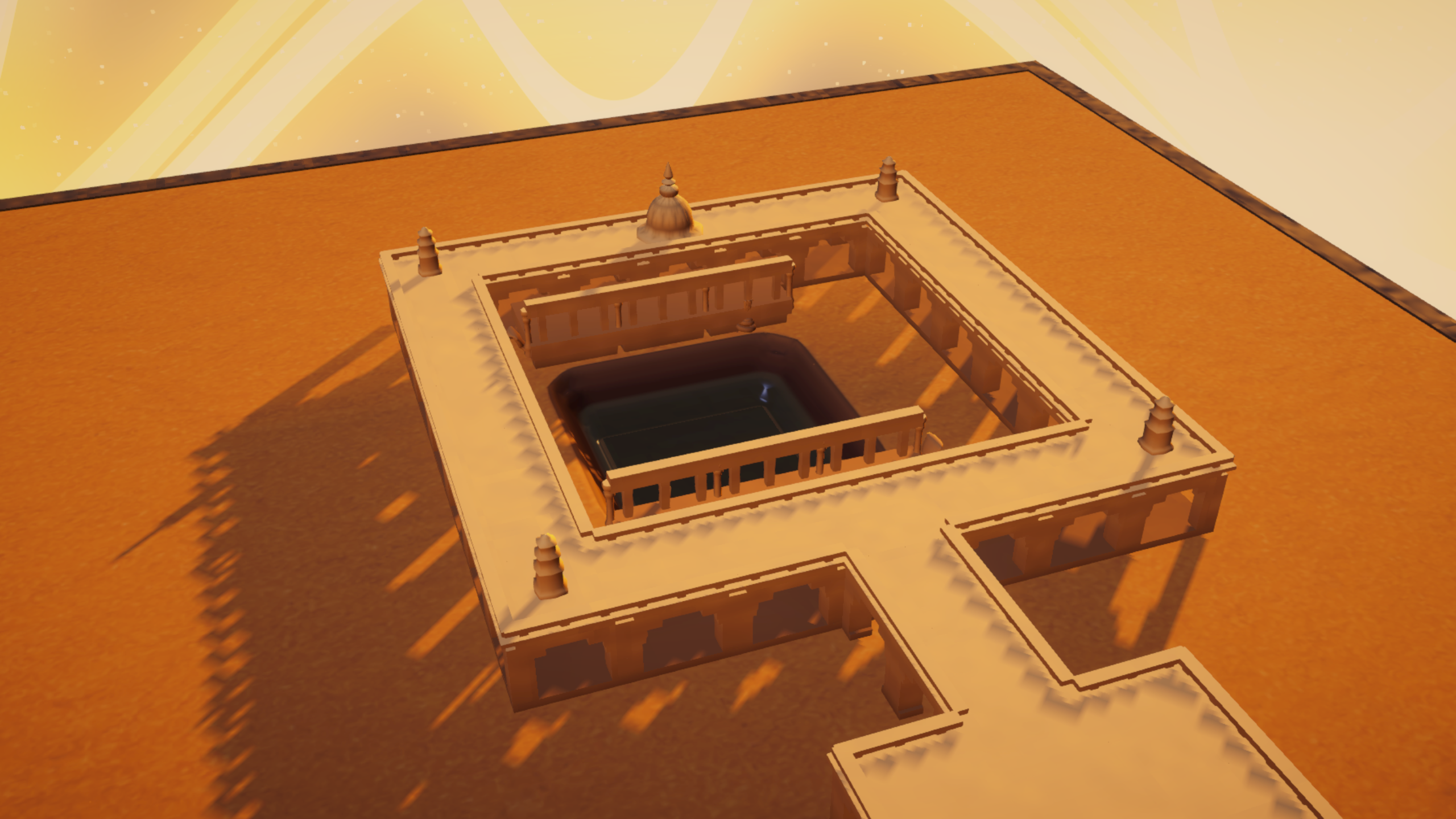
A raised gallery wraps around a pool, with a small stupa on the roof.
-
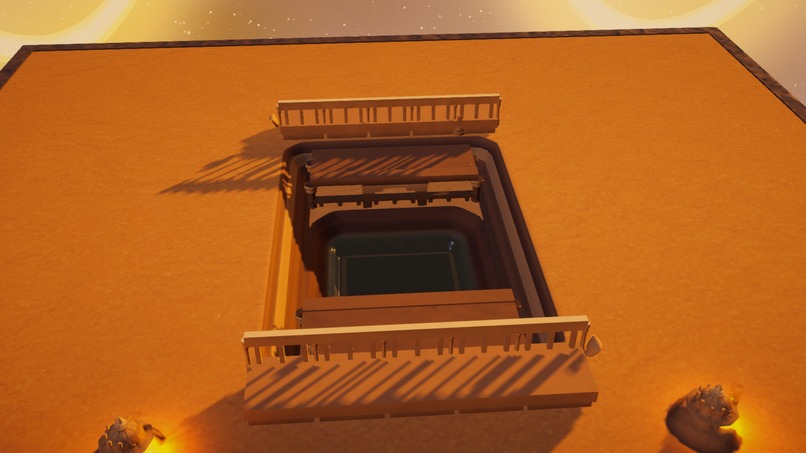
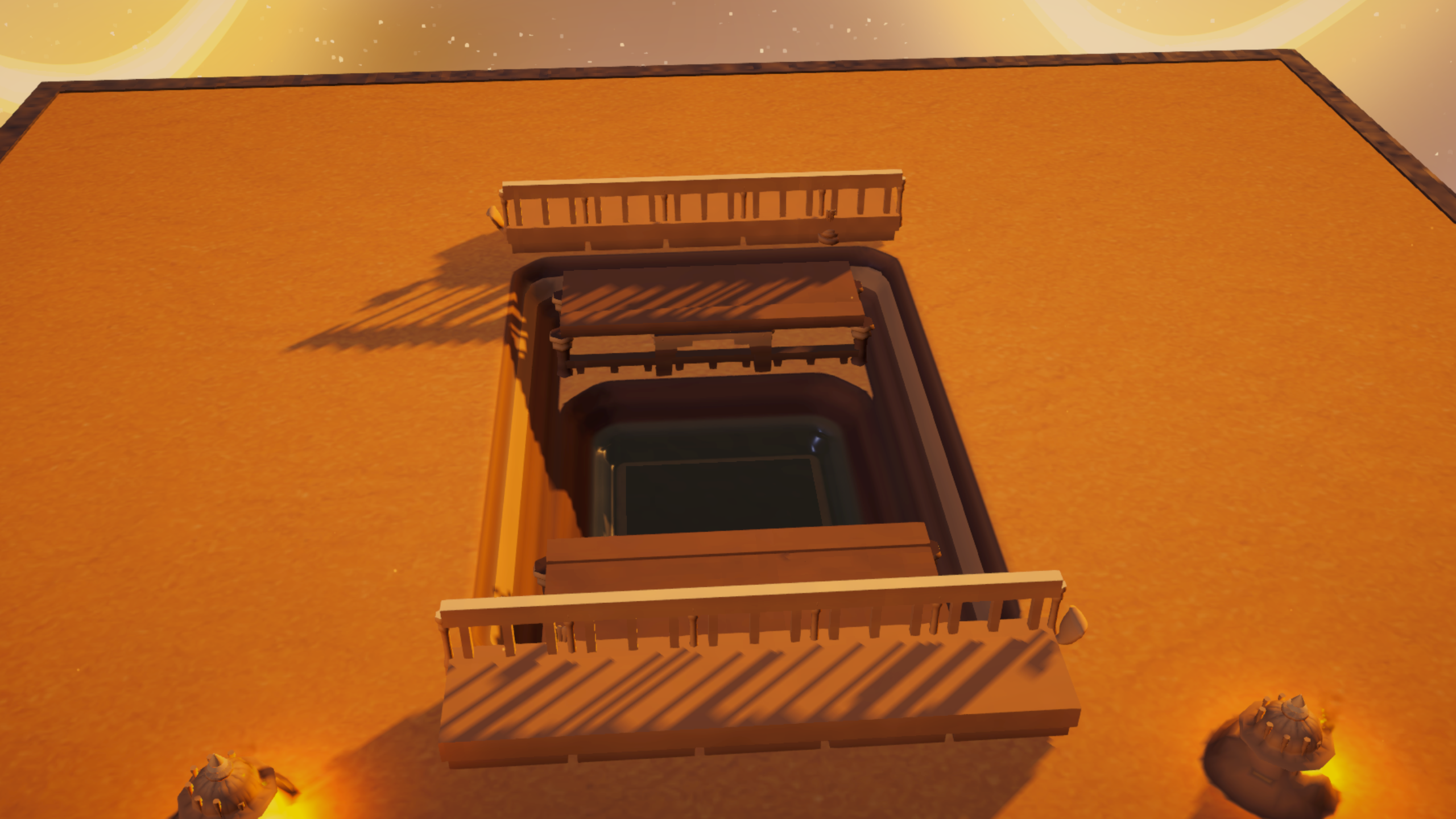
Looking down into the well between two rows of pillars.
-
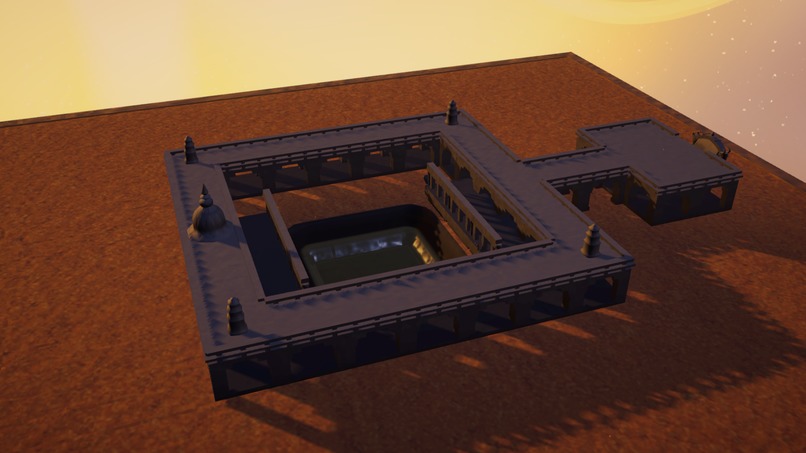
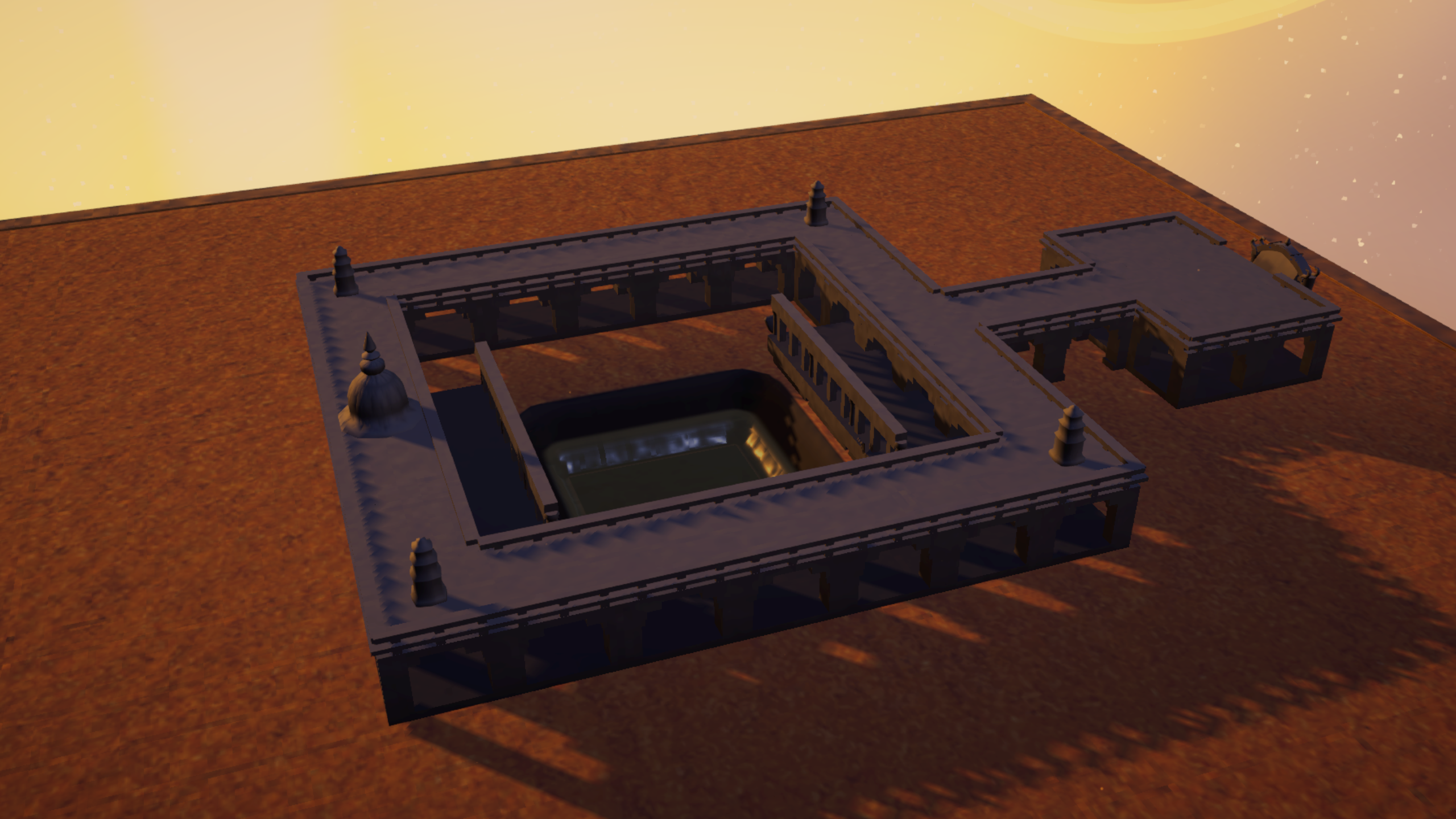
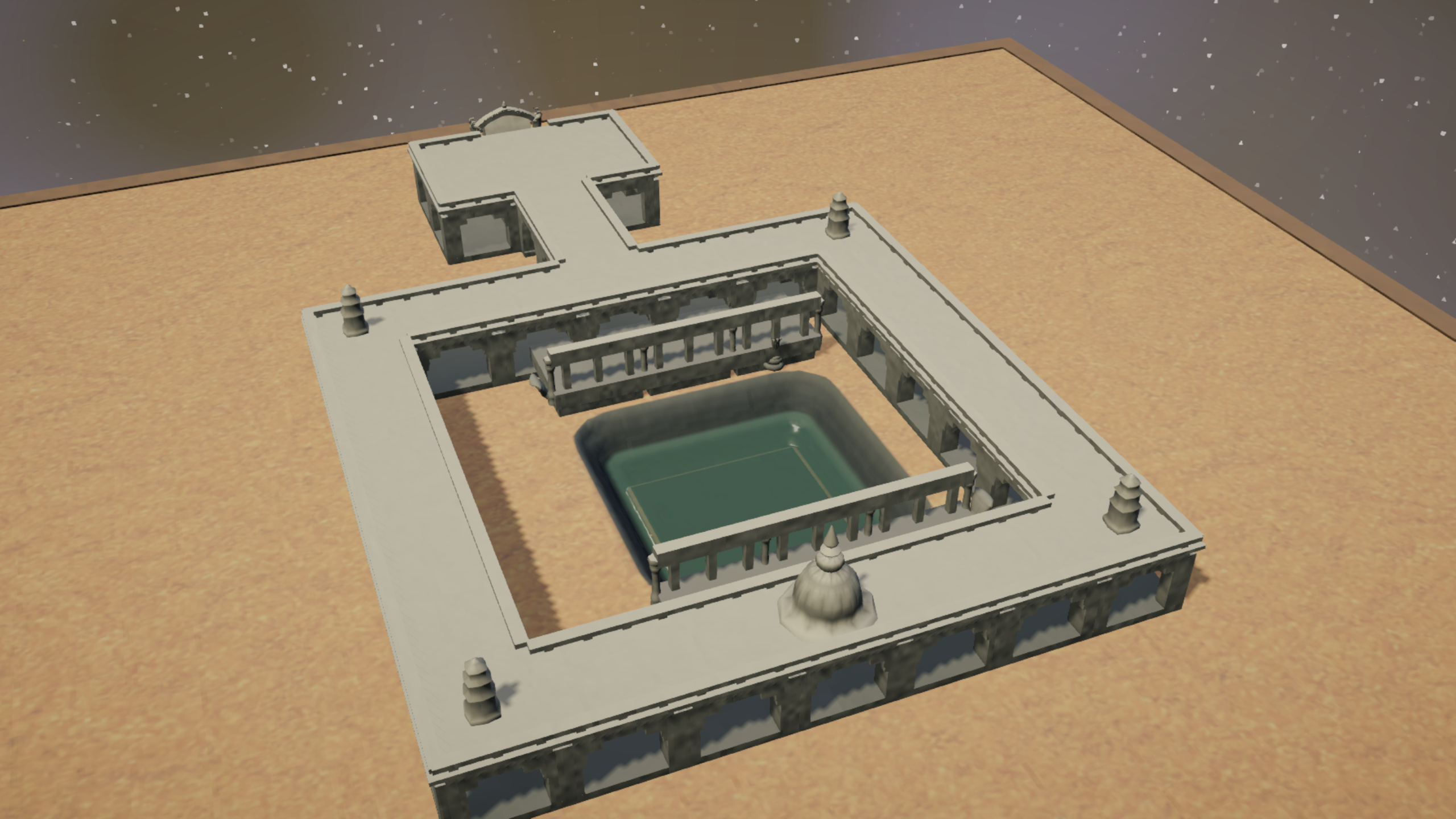
The raised path circles the well and branches toward an arched entrance.
-
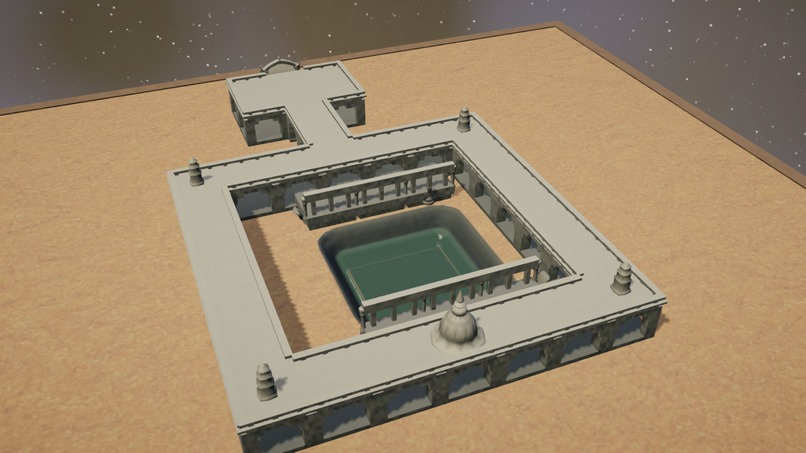
From above, the inner colonnades and the green pool are visible inside the outer court.
-
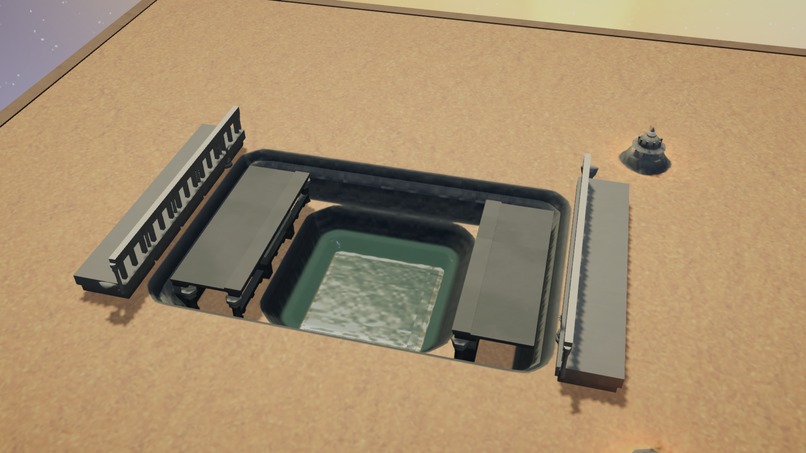
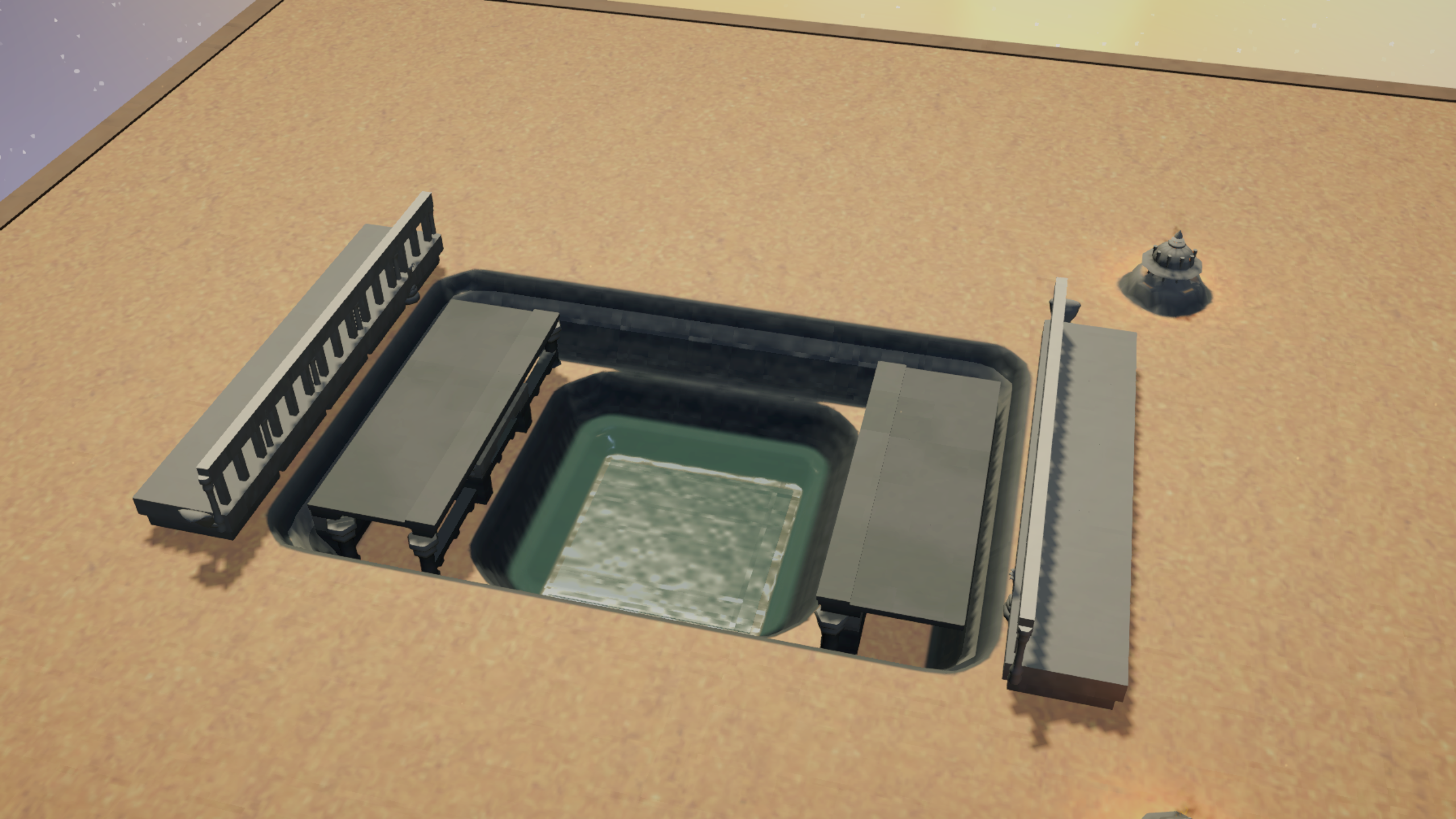
A close view of the water at the bottom of the well, with covered platforms along its sides.
Inspiration
What if building a temple could also mean composing music? SoundStone grew out of my fascination with Hindu and Buddhist temple architecture, the grid of the Vastu Purusha Mandala, and cymatics, the patterns that sound can make visible. A temple rises in tiers. A stepwell takes a similar shape down toward water. On Quest, I wanted both forms to grow out of what you do with your hands.
What it does
SoundStone is a musical diorama builder for Meta Quest, inspired by ancient Hindu and Buddhist temples. On a tabletop of sand, you raise towers by hand, carve stepped pools, and hear the world you’ve built ring as light travels through it. Tap to raise a stupa, hold to sink a stepwell, or trace a courtyard and lift it into storeys. Pinch the bead above a stupa to lift its summit, then pull the bead at its rim to shape the crown. Place two towers along the same ley line and you can watch and hear them play in turn.
A constellation gives you something to build toward. A gold pilgrim needs a continuous route between its stars. Press stairs into a floor or draw an elevated walkway across a gap, and the pilgrim can use the route you made. For a different way to compose, pinch the beads on a seed resonator and listen as its tuning changes. A mandala can open into a star-shaped pattern under your fingertips.
How I built it
I built SoundStone in Unity and C#. The procedural architecture and music sandbox existed before the competition. For Quest, I built a hands-first way to play it with OpenXR, Unity XR Hands, passthrough, and Meta XR Audio. Players can bring the plate to their lap or table and turn it to reach the far side.
Challenges I ran into
A pinch near a tower could mean grabbing a tuning bead, starting a walkway, or moving the whole plate. I gave each gesture a distinct starting contact. A highlighted fingertip shows when a line is being drawn, and moving the plate takes a deliberate two-hand hold. Keeping the architecture legible on standalone Quest hardware also took work on procedural geometry, shaders, and caching.
Accomplishments I'm proud of
I’m proud of the moment when two towers are ringing and there’s still a gap the pilgrim can’t cross. You can reach across that gap with one hand, watch the bridge supports rise, and give the little figure a way through.
What I learned
A gesture is easier to learn when its result explains it. Seeing a pilgrim take the stairs you just pressed into the stone tells you immediately what that gesture was for.
What's next for SoundStone
I want to watch new players try the seated tutorial and see which gestures need a clearer cue. I’m also tuning performance as glades grow more elaborate.


