Inspiration
Sound carries critical situational context that visual cues alone often miss: emergency sirens, doorbells, footsteps, approaching vehicles, or sudden alarms. For deaf and hard-of-hearing individuals, navigating environments without these acoustic signals demands constant hyper-vigilance.
OFFGRID challenges builders not to build what they are supposed to build, but what they want to exist. We wanted an interface where acoustic reality isn't just transcribed as speech-to-text, but visually mapped as real-time spatial awareness—turning ambient soundscapes into clear, intuitive visual telemetry.
What it does
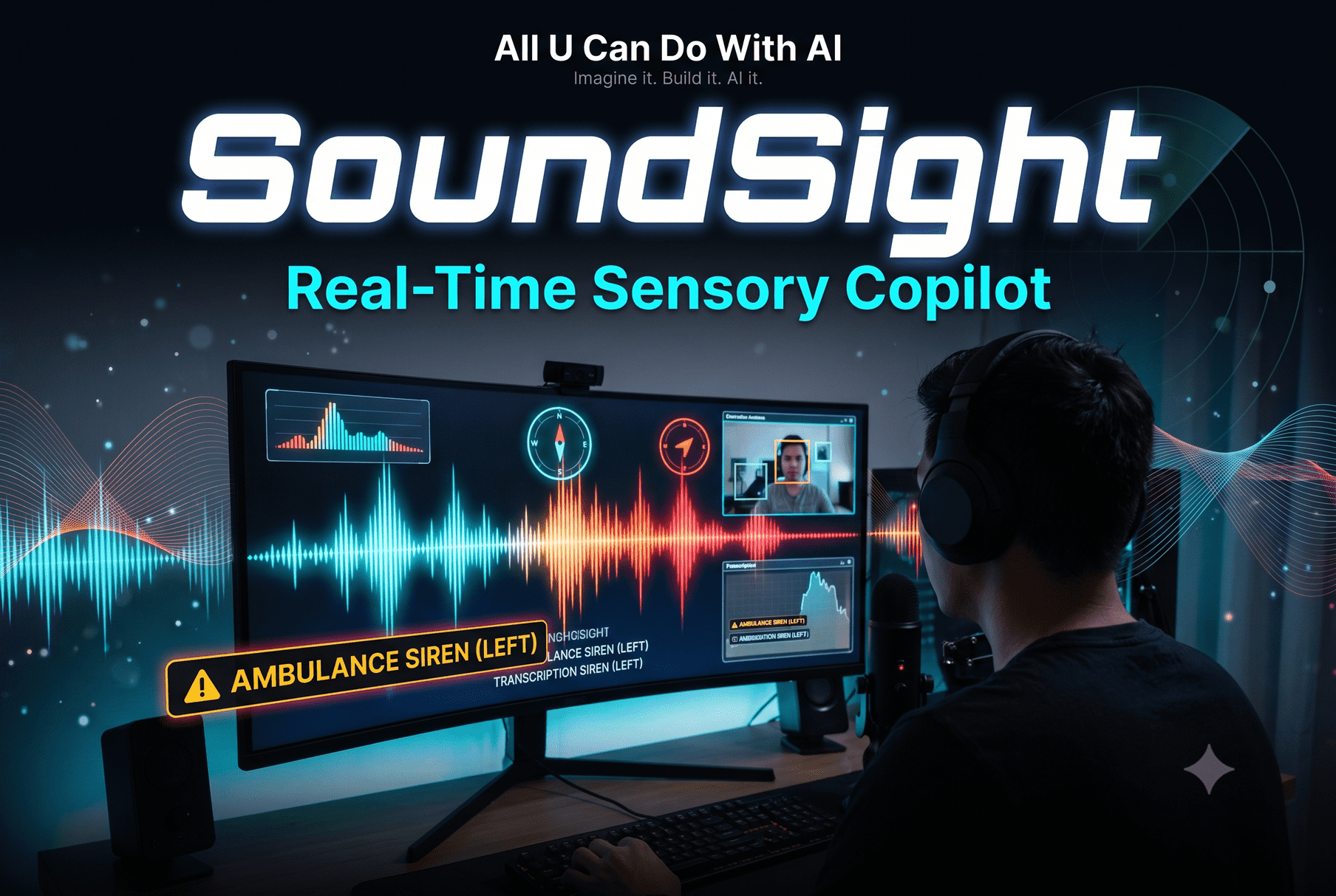
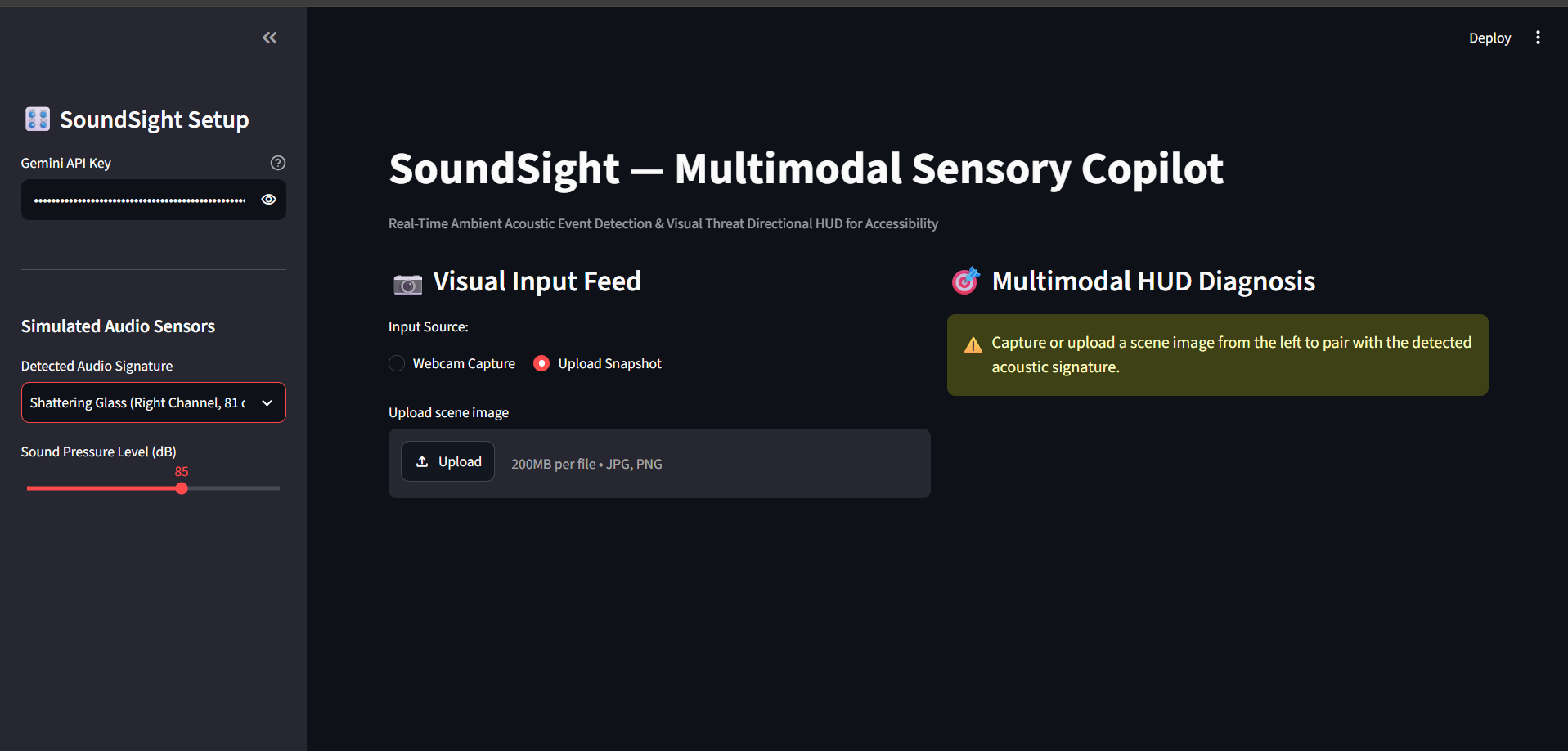
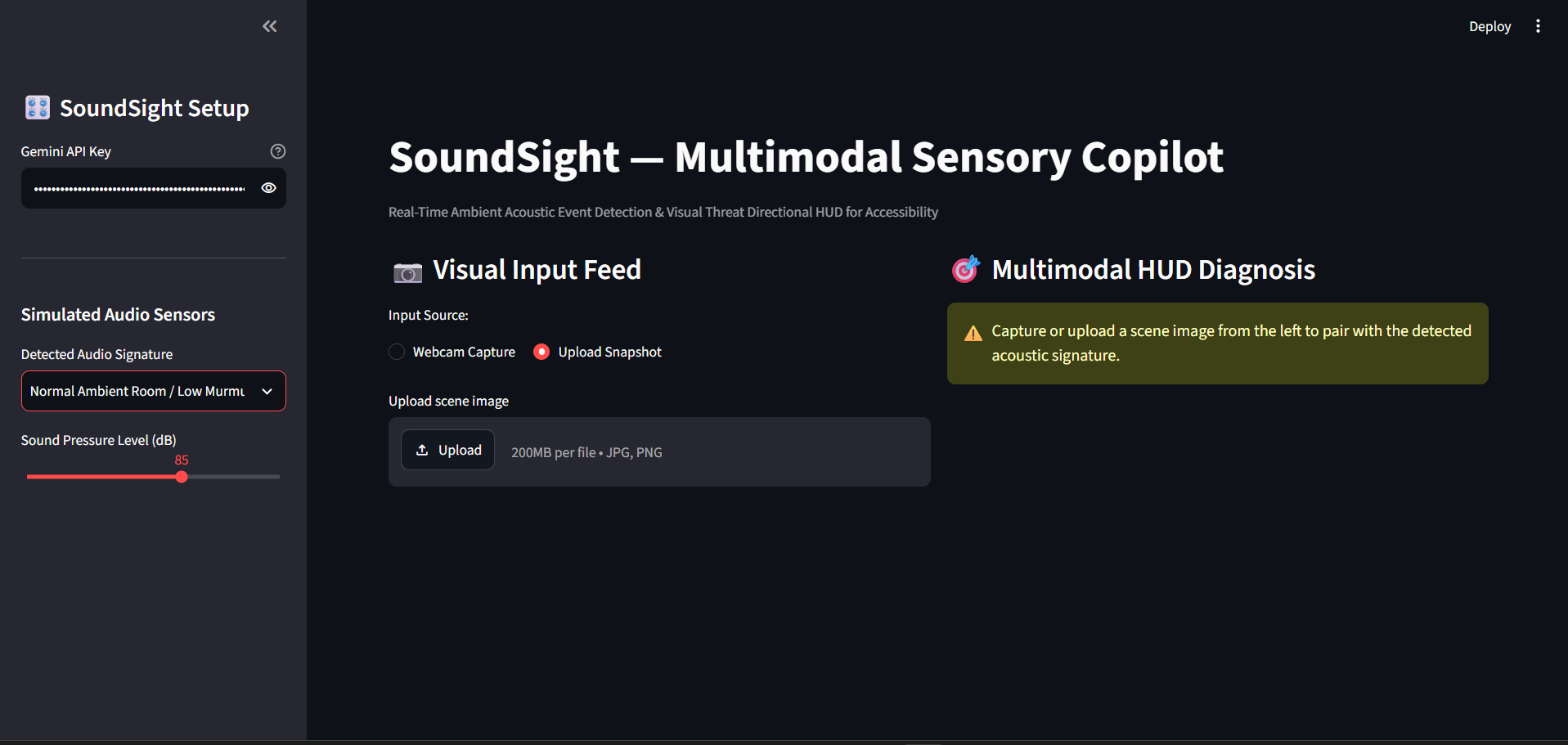
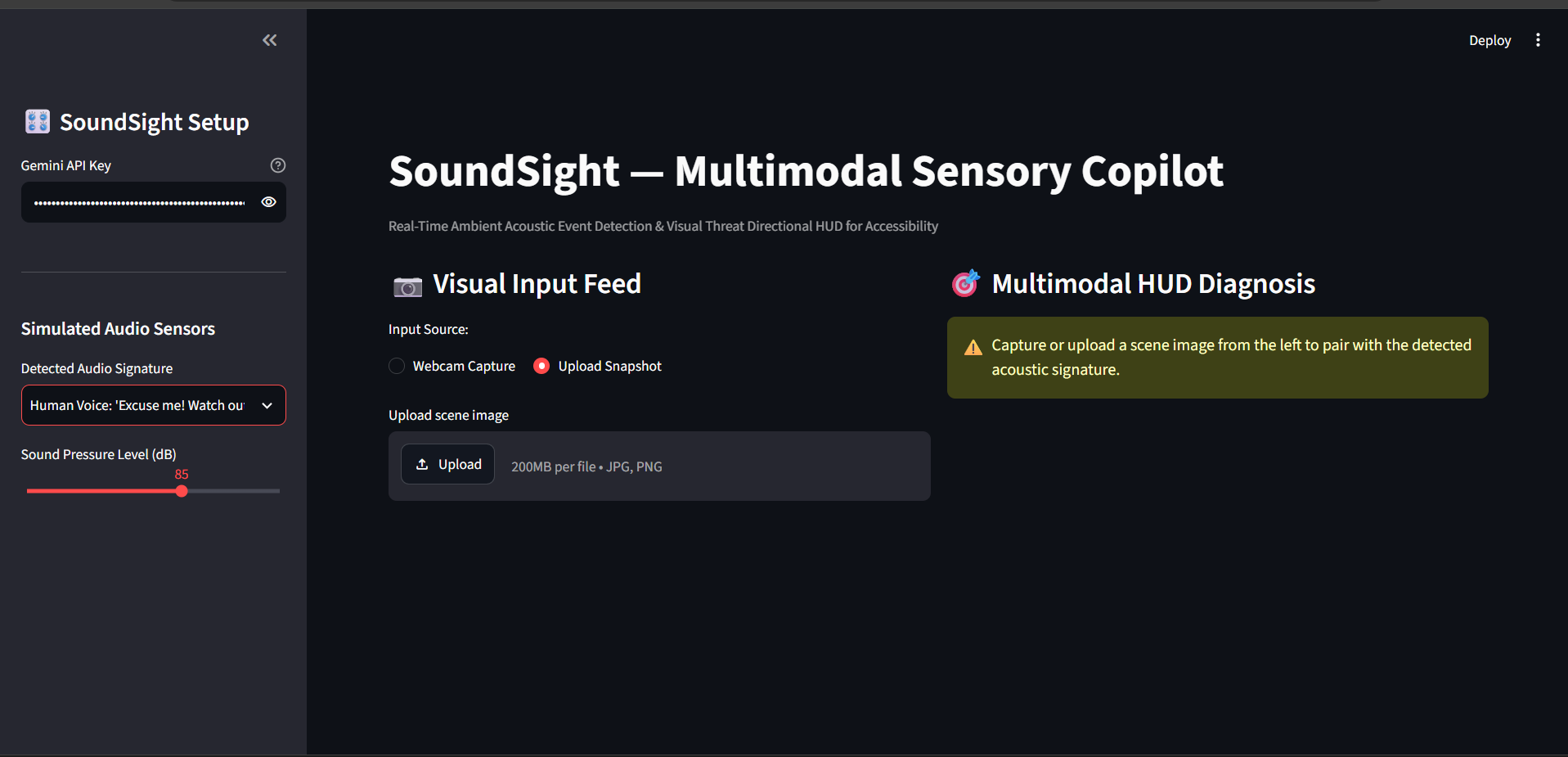
SoundSight is an assistive audio-visual scene analysis tool designed to bridge the auditory-visual gap. It listens to real-time ambient audio, detects and classifies critical acoustic events, and translates them into immediate visual indicators.
- Real-Time Sound Event Detection: Continuously classifies environmental sounds (e.g., sirens, alarms, glass breaking, door knocks, speech).
- Urgency & Severity Mapping: Color-codes and prioritizes critical acoustic hazards to immediately grab peripheral attention without overwhelming the user.
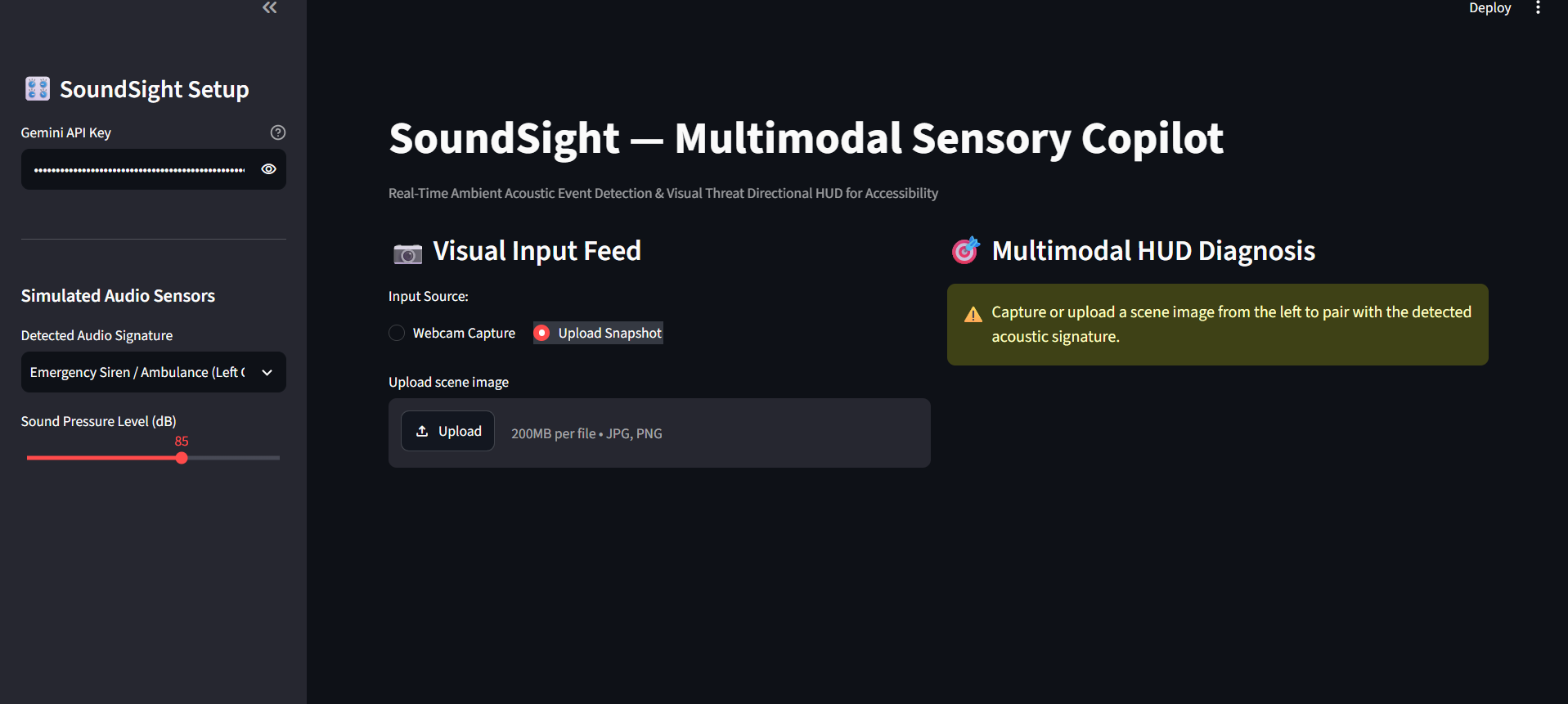
- Multimodal Visual Dashboard: Provides dynamic visual waveforms, confidence scores, and categorical alerts built for fast situational comprehension.
How we built it
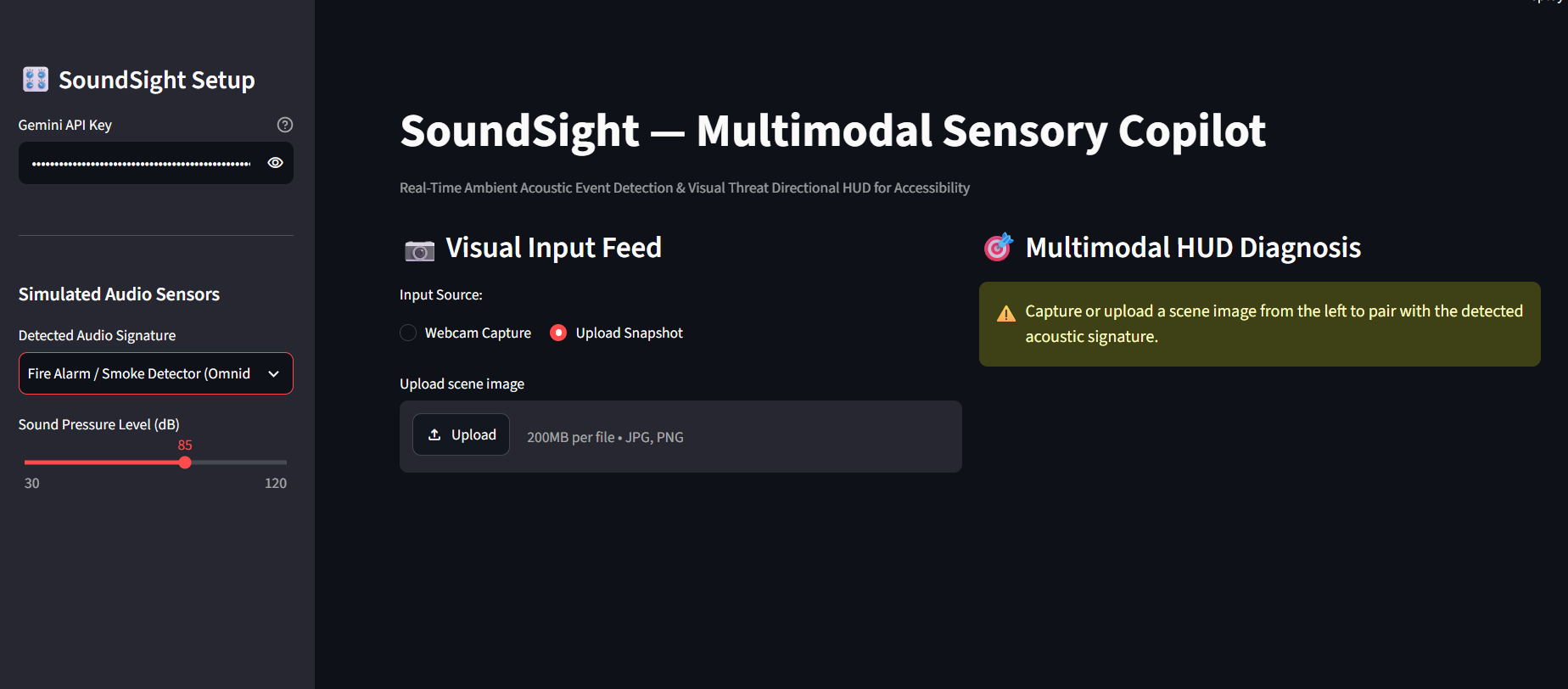
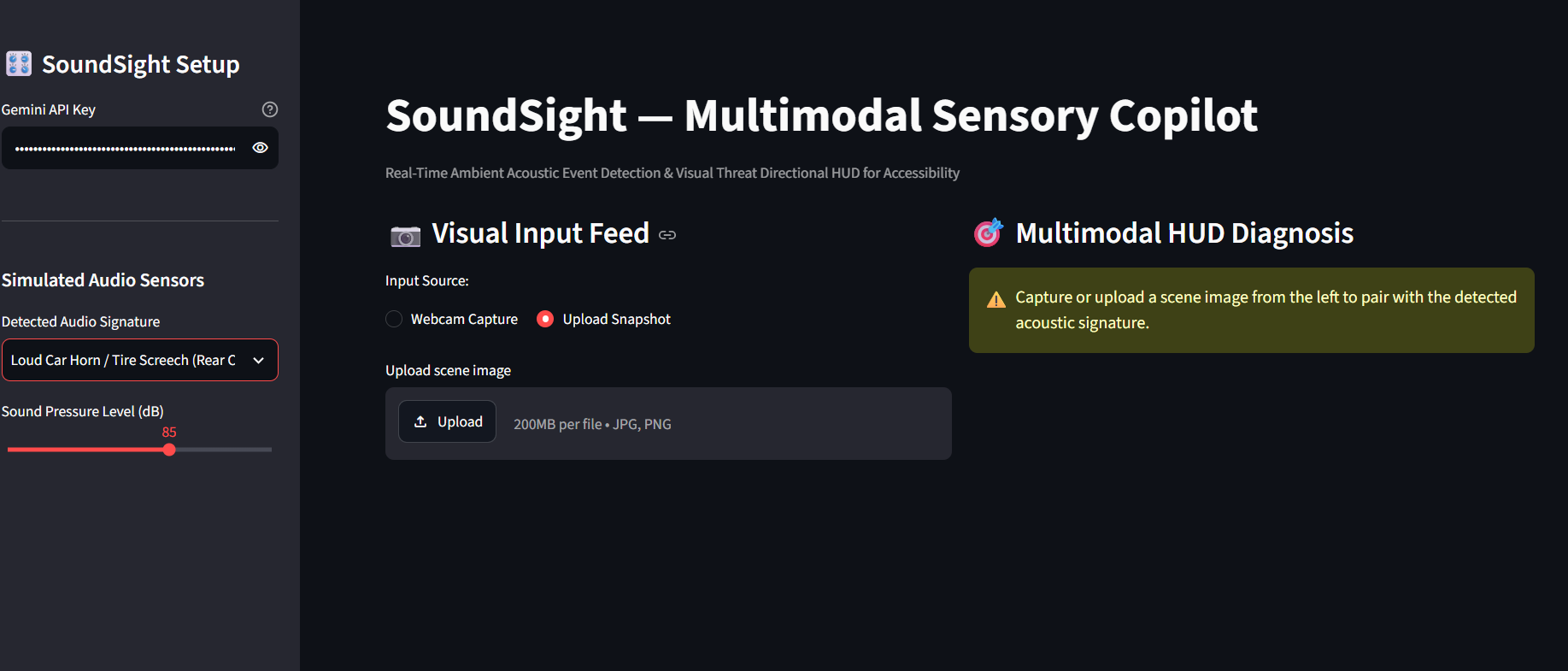
- Frontend & Interface: Built using Streamlit for an interactive, reactive real-time telemetry dashboard.
- Audio Processing & Pipeline: Developed in Python, utilizing NumPy and audio streaming pipelines to capture and preprocess raw waveform signals.
- Acoustic Classification: Powered by multimodal/audio event recognition models and embeddings, matching real-time ambient spectrogram inputs against classified acoustic sound categories.
- Data Flow: Ambient Audio Capture $\rightarrow$ Fast Fourier Transform / Feature Extraction $\rightarrow$ Event Classification Inference $\rightarrow$ Dynamic Visual Alert Rendering.
Challenges we faced
- Latency vs. Accuracy: Processing streaming audio in near real-time without lagging the visual interface required fine-tuning audio chunk buffers and inference windows.
- Ambient Noise Filtering: Differentiating background white noise (HVAC, street rumble) from actionable foreground sound events (sirens, knocks) to minimize false positives.
- Designing Intuitive UI: Ensuring alerts are instantly interpretable at a glance without causing sensory overload.
Accomplishments that we're proud of
- Delivering a functional, responsive prototype that visualizes ambient sound with minimal perceptible delay.
- Building an impactful accessibility tool adhering strictly to the ethos of human-centric assistive tech.
What we learned
- How to manage real-time audio telemetry streams and buffer pipelines in Python.
- Practical constraints of acoustic event classification under varied background noise conditions.
- How thoughtful visual design and UX are just as vital as model accuracy in assistive technology.
What's next for SoundSight
- Wearable / Heads-Up Integration: Porting the visual alert layer to smart glasses (HUD) or wearable haptics (directional vibrations).
- Directional Sound Localization: Implementing multi-microphone array processing to show the exact physical direction (left, right, behind) a sound originates from.
- On-Device Edge Deployment: Compressing the model pipeline to run fully offline on edge devices without internet reliance.
Built With
- accessibility
- artificial-intelligence
- audio-processing
- machine-learning
- multimodal
- opencv
- python
- streamlit

Log in or sign up for Devpost to join the conversation.