Inspiration
We were inspired by the growing sense of digital homogenity in navigation and discovery apps. Platforms like Google Maps reduce vibrant, storied cities to sterile grids of rating and photos - both stripping away local identity and turning exploration into a transactional experience. We wanted to reintroduce humanity, novelty, and discovery into how people explore places. Soundscape was born from the belief that every street has a story and technology should help us hear it, not hide it.
What it does
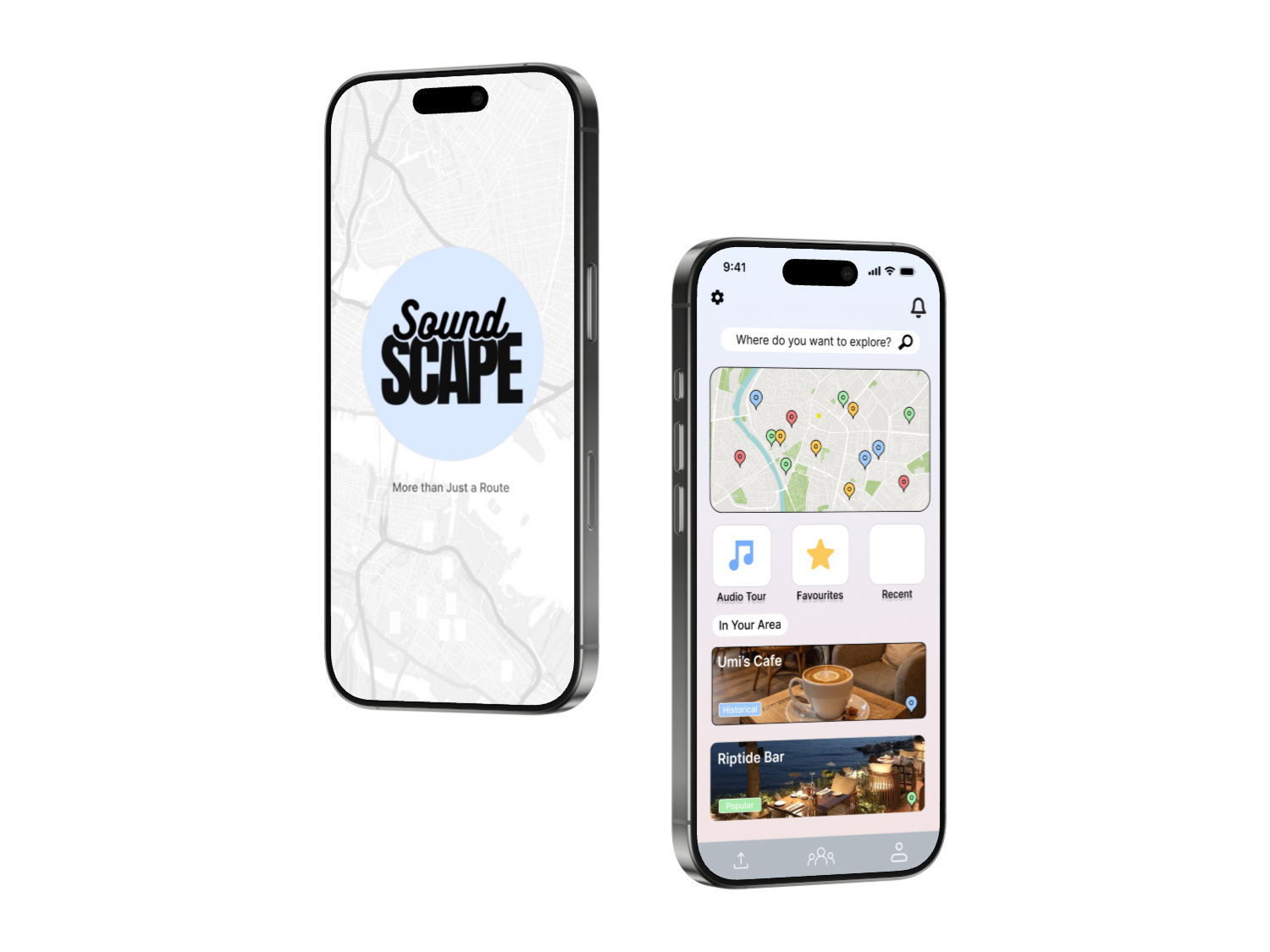
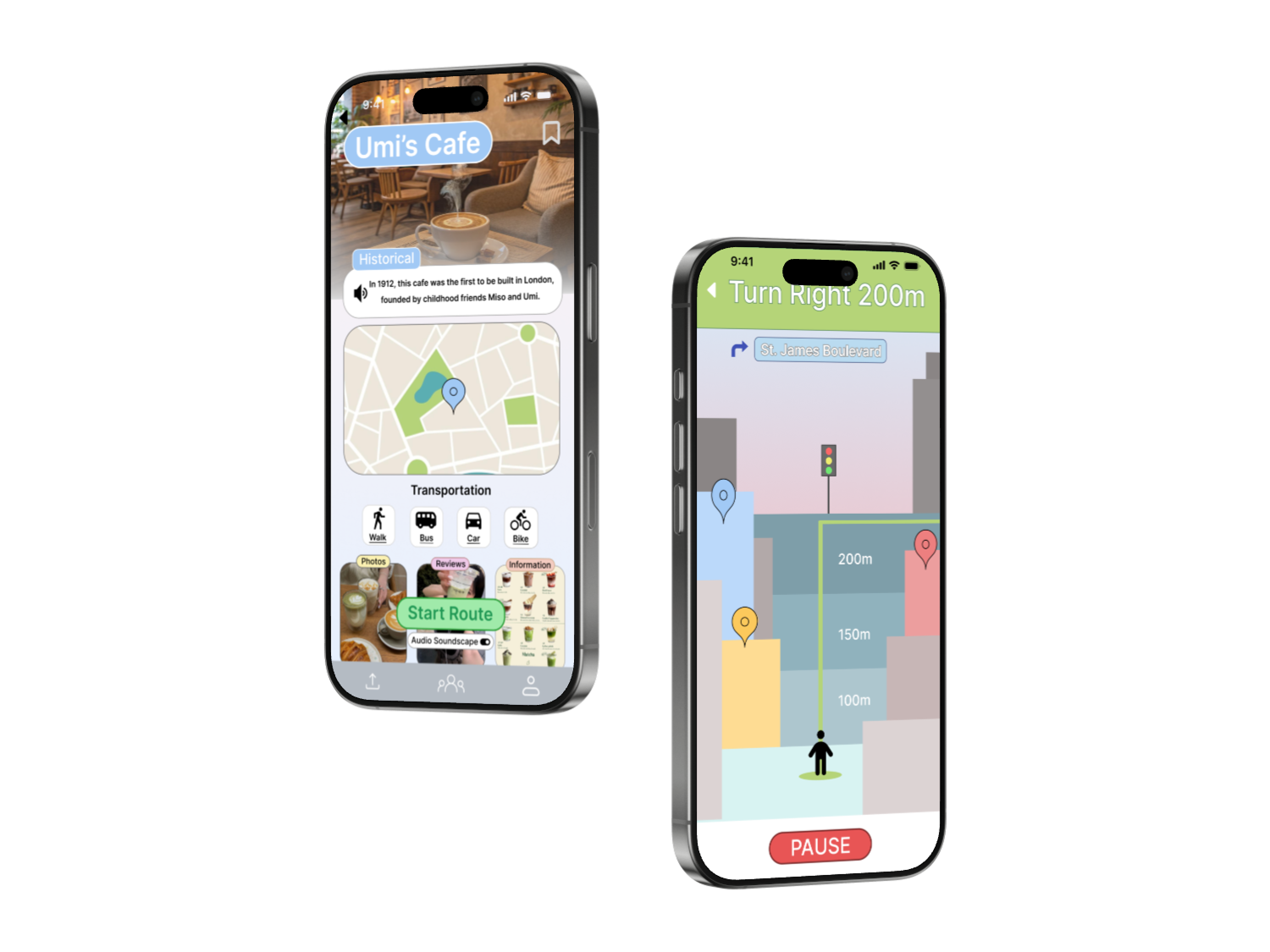
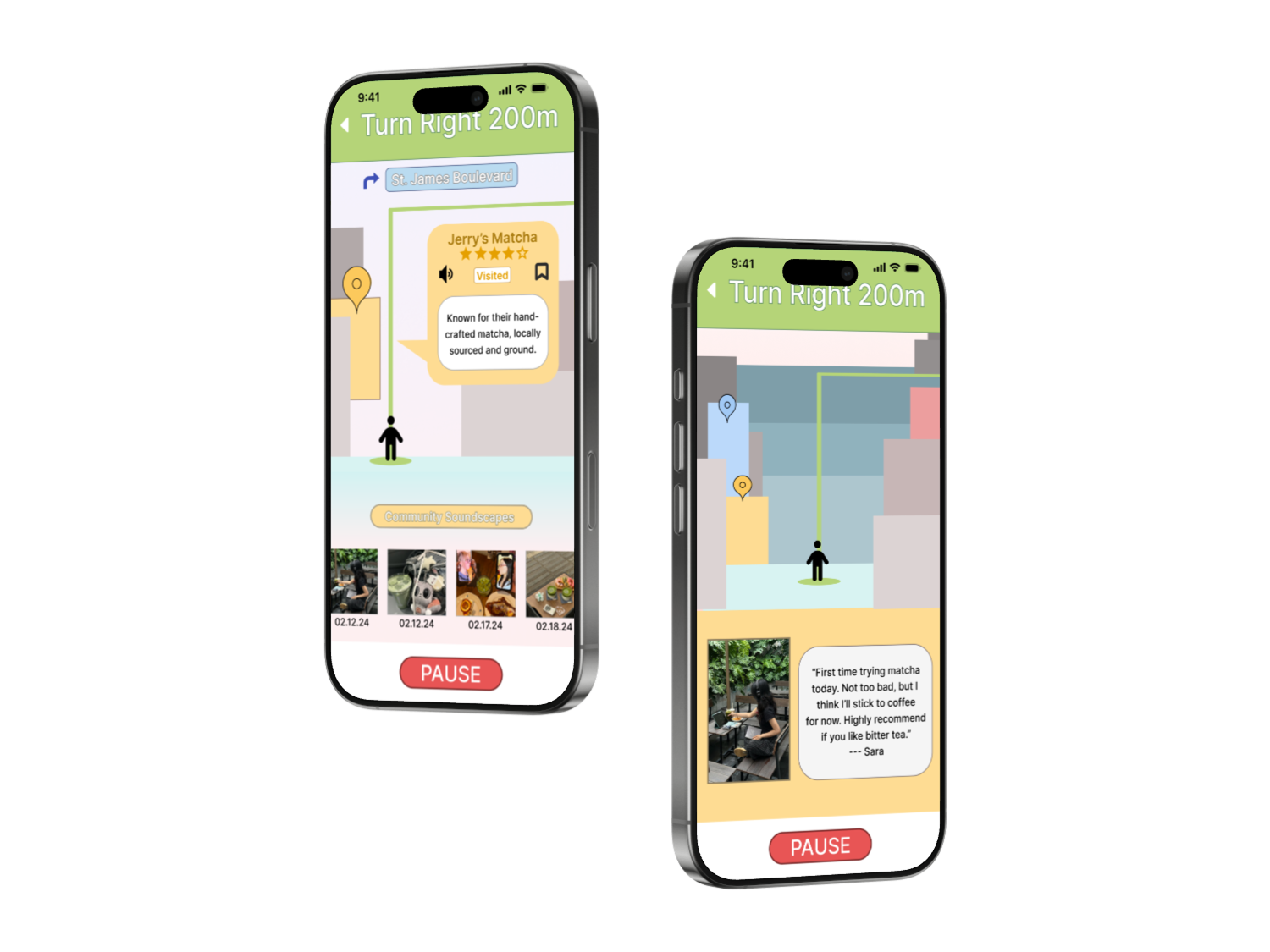
Soundscape adds a storytelling layer to digital maps by surfacing audio stories, sounds, community and facts tied to specific locations as users move through a city. Instead of relying on ratings and rankings, it highlights the cultural, historical, and emotional significance of places. This transforms everyday navigation into an exploratory experience that makes each location feel distinct and meaningful.
How we built it
We followed a user-centered design process to ensure our solution addresses real pain points while remaining feasible and impactful.
Phase 1: Research & Poblem Definition
- Brainstorming all possible problem phrases and sources, using the crazy 8 method.
- Dumping all ideas into a shared doc, then fleshing out what the core issue is.
- Research involved interviewing friends about their personal experiences using navigation apps like Google Maps, and whether they would be interested, or use a product such as our own.
Phase 2: Ideation & Strategy
- Brainstormed concepts using constraint based ideation and "Jobs to be Done" framework.
- Selected the Soundscape concept for its ability to blend digital and physical discovery through audio storytelling and passive discovery.
- Defined core features: Story pins, Audio Tour, Smart Notifications, and Local submissions
Phase 3: Design & Prototyping
- Using a low-fi, mid-fi and high-fi strategy
- Discussing with the team all the features we want our product to include
- Keeping in mind the user's experience and how they'd feel, navigating the product.
Phase 4: Refinement
- Speaking with our mentor about our ideation process and selection
- Narrowing down our problem and solution statements
- Polishing up the prototype
- Tested the prototype through quick feedback sessions to evaluate usability and perceived value. Based on insights, we refined interactions, reduced friction, and strengthened the storytelling focus
Challenges we ran into
Going into this project, I created a group of 3 people, however, we soon realized that nobody had knowledge of using Figma besides myself. So, while they helped with much of the research and brainstorming, it was difficult to split tasks evenly when it came to designing the low-fi, mid-fi, or high-fi designs for Soundscape's prototype. There was a large difference in experience, and so at some points I had to take on an instructor role, and show the other 2 the basics of using Figma. However, while they did try their best, it's nonetheless challenging to become an instant pro, and make beautiful designs just like that. Thus, I took on the heavy majority of the total design aspect, which proved to be a lot of work for one person, though it ultimately was a great learning experience.
Accomplishments that we're proud of
Our team is proud of our idea formation process, and our quick action, teamwork, and communication when it came to getting things done. One of our team members was a last minute addition, as we wanted to have more helping hands, and to our pleasant surprise, we were able to mesh extremely well, as all of us were hardworking, and driven to succeed. We worked extremely efficiently, cross-referencing frameworks when developing our problem and solution statements, researching effectively and each of us calling our friends to get their personal experience with navigation platforms, and working together to solve problems, and complete tasks.
What we learned
Through user interviews, we discovered people don't expect digital maps to be fun and that they've accepted monotony as the norm. This reveals something deeper: homogeneity isn't just a design problem, but also an emotional one. We learned that users crave:
Authentic local context over algorithmic popularity Curated discovery over endless scrolling Emotional connection over transactional efficiency
These learnings directly shaped our features: story pins, audio first designs, and community-driven content.
What's next for Soundscape
Next, Soundscape would launch small local pilots to test engagement and refine story quality with real users. We plan to improve tools for local contributors and moderation to keep content authentic and meaningful. In the future, Soundscape could introduce more advanced personalization while remaining focus on curiosity and exploration.
Built With
- figma

Log in or sign up for Devpost to join the conversation.