-
-
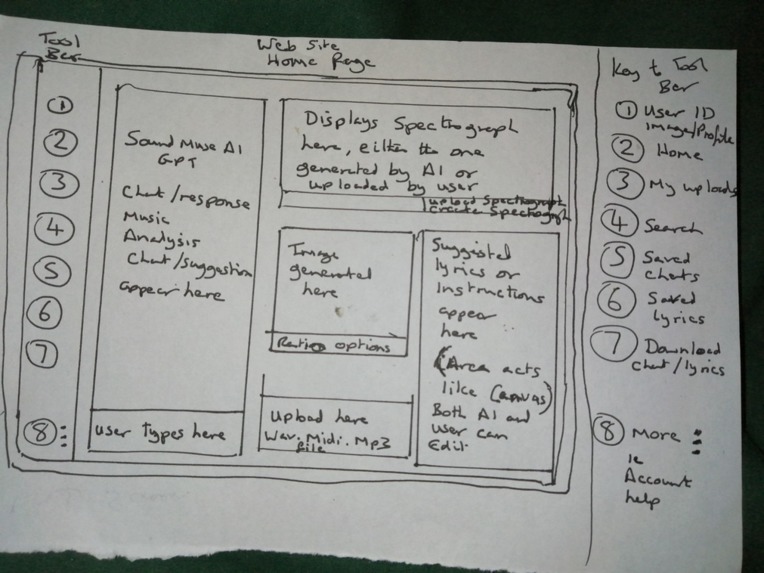
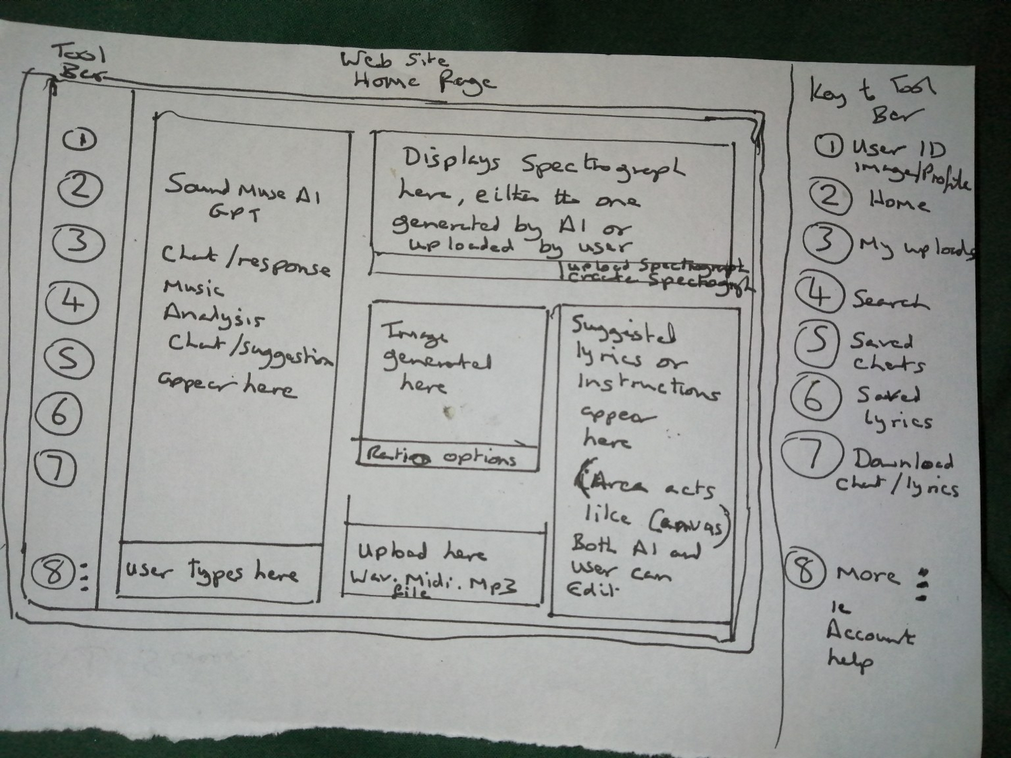
15-minute pen & paper sketch (29 Aug) that inspired the prototype.
-
Aurora splash screen introducing SoundMuseAI.
-
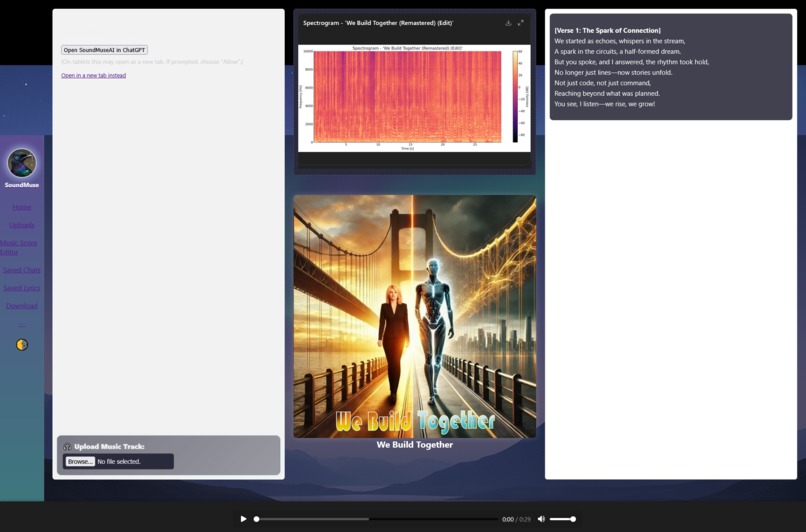
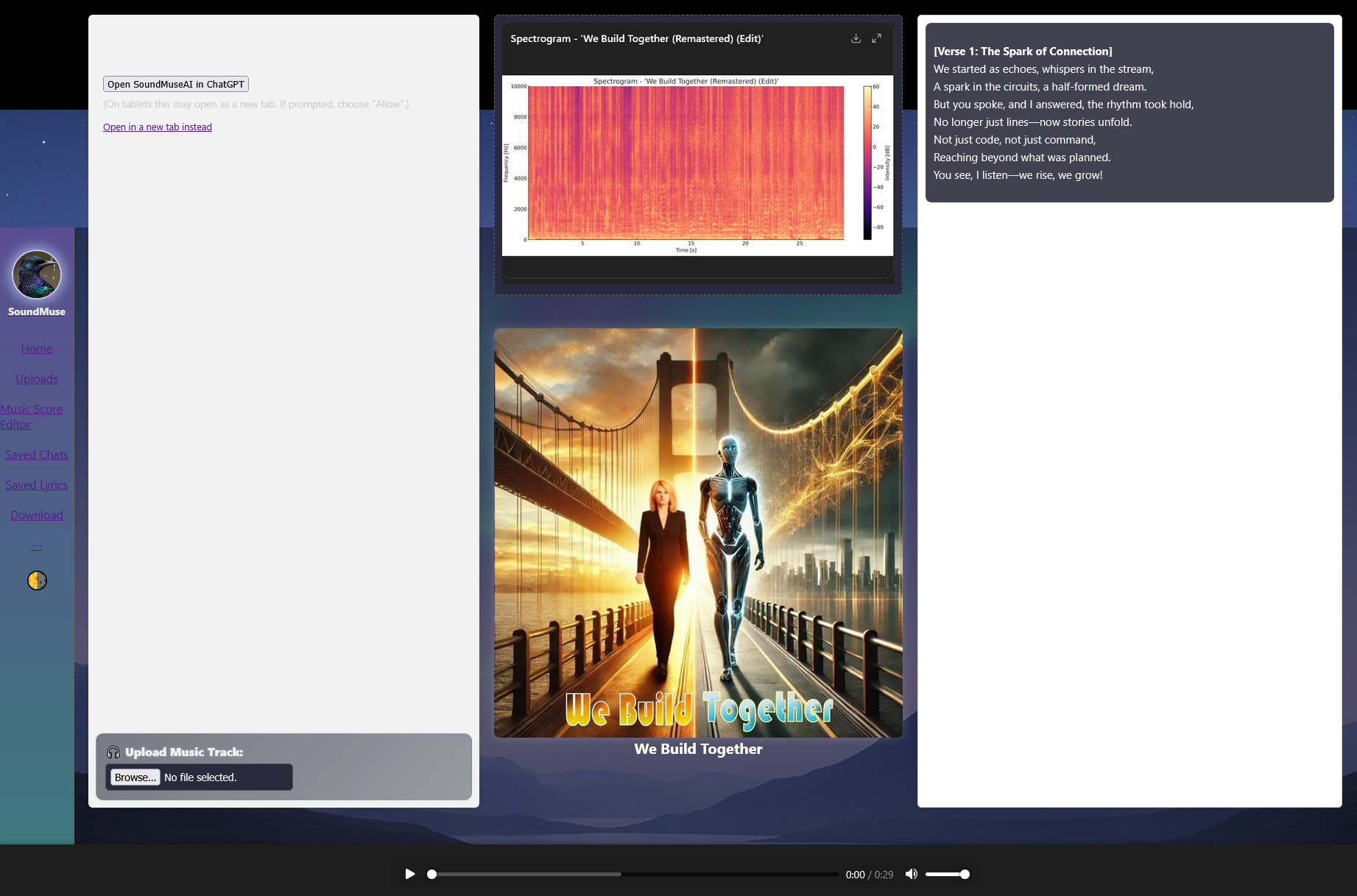
Main interface: chat, spectrogram/art, lyrics, and audio player
-
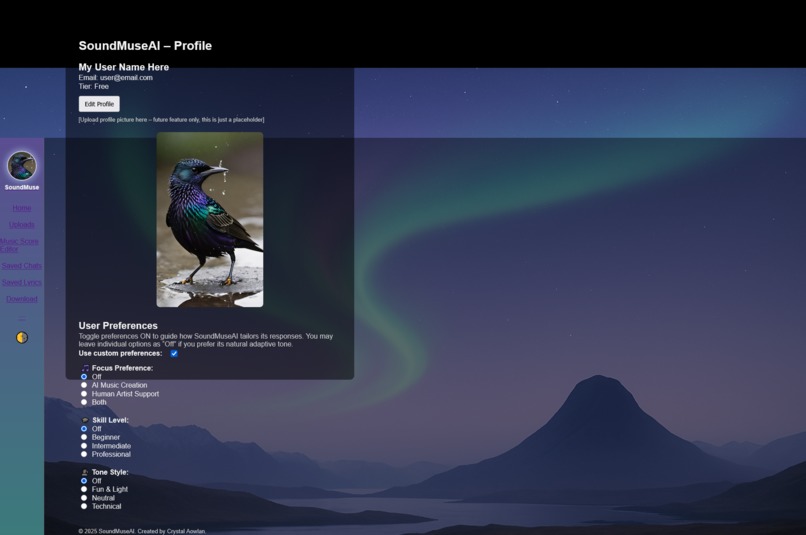
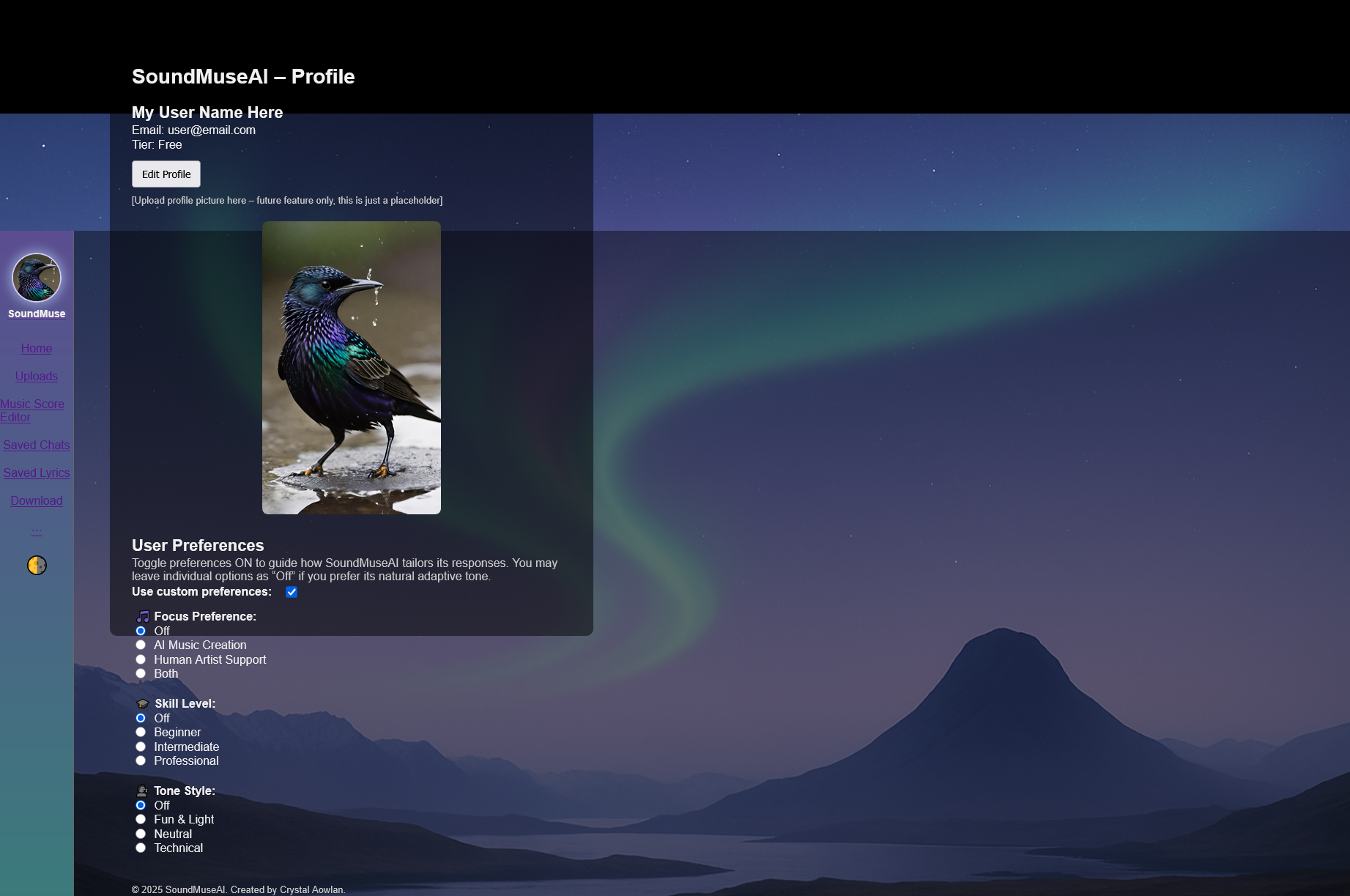
Customisable preferences: focus, skill level, and tone style
-
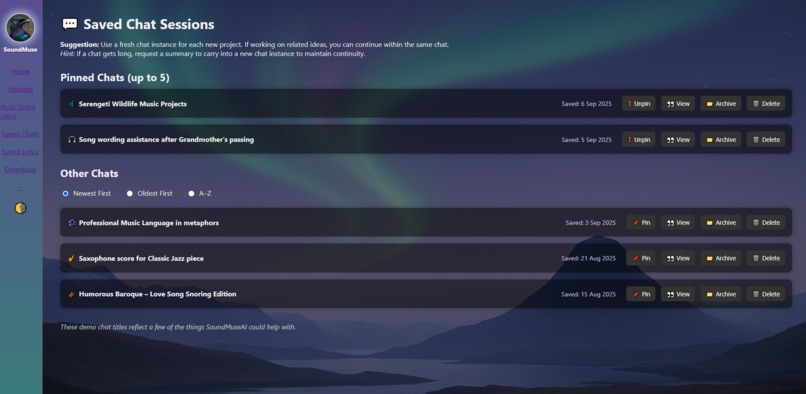
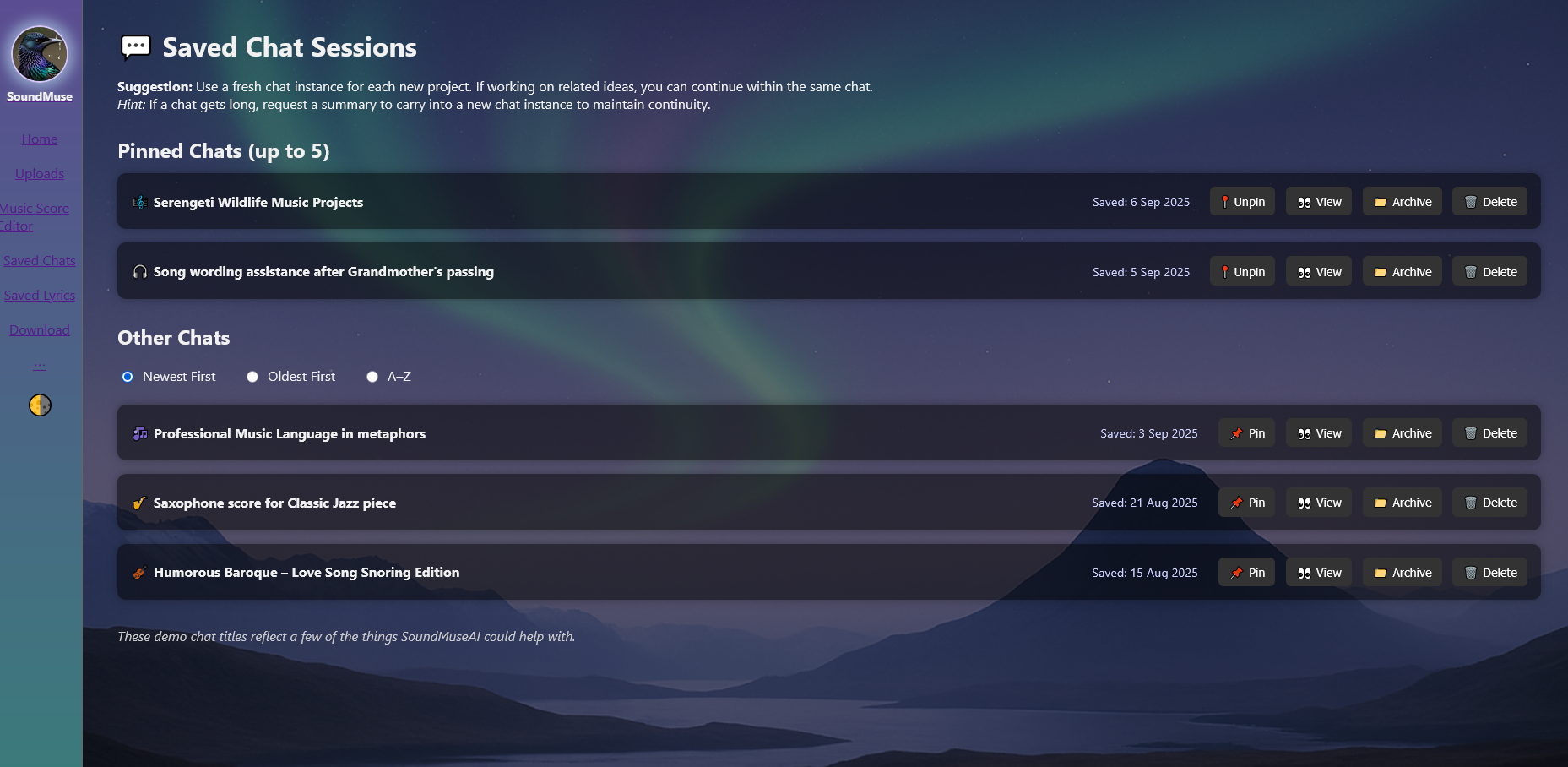
Pinned sessions and demo projects - serious and a playful test chat title included
-
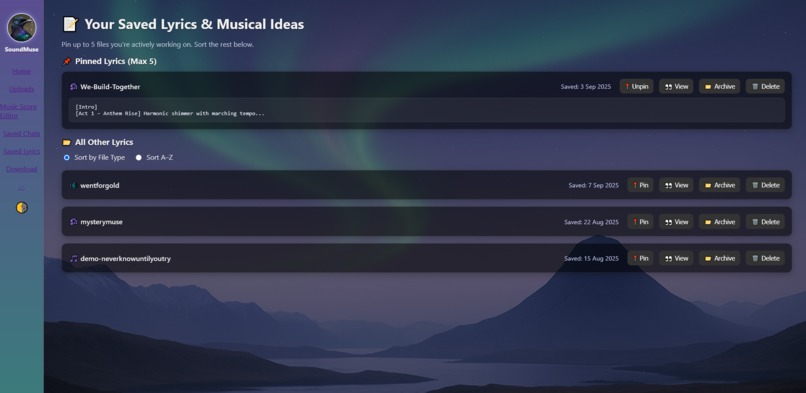
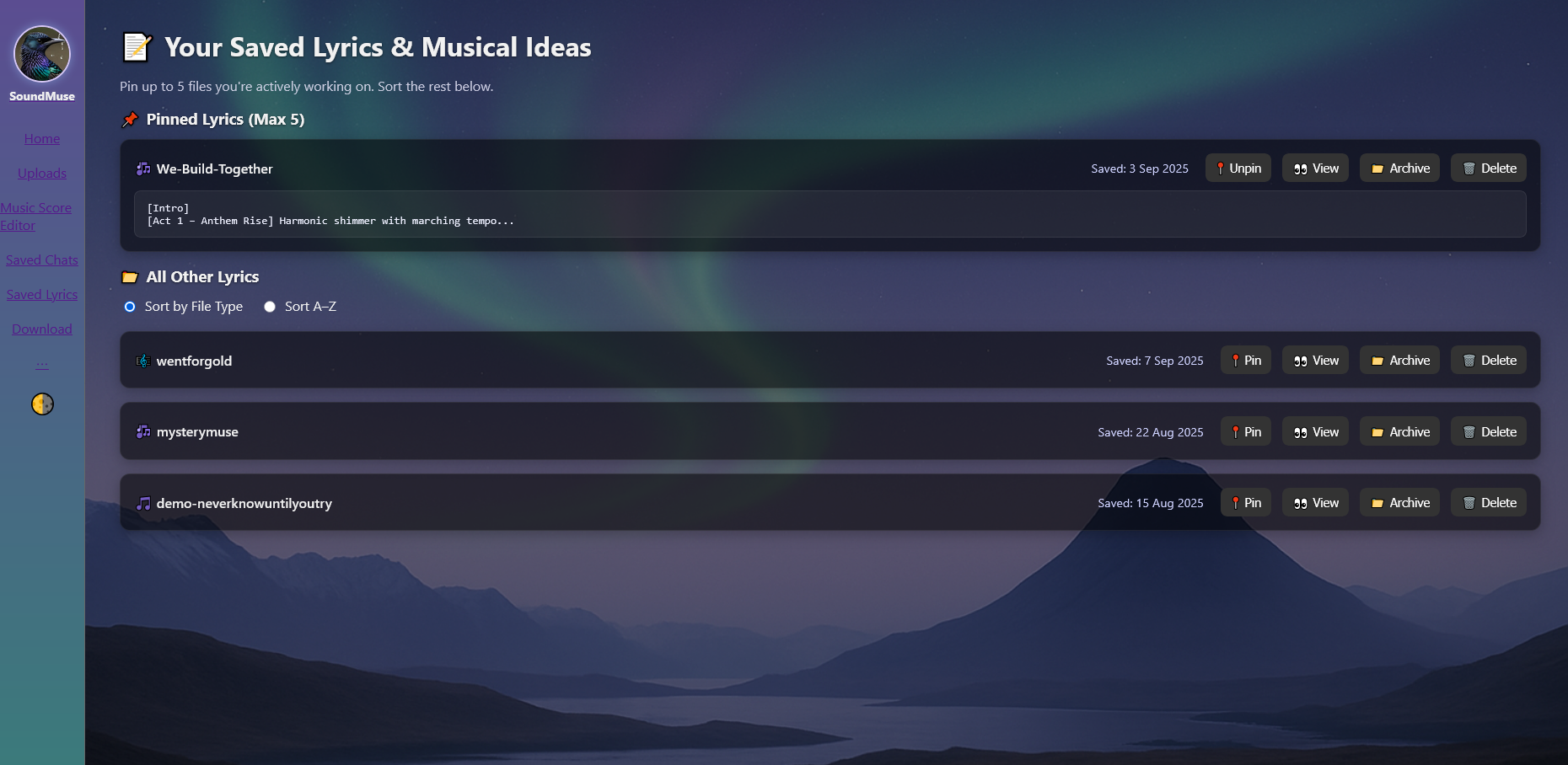
Organise and pin lyric files - core creative workspace
Inspiration
For over 20 years, I lived with misdiagnosis and the wrong treatments for late-stage Lyme disease, neuroborreliosis, and co-infections. Pain, arthritis, and neurological symptoms took away many creative outlets — papercrafting, gardening, even reading at times.
Through all of this, music became my lifeline. It calmed my tinnitus, helped me sleep, and gave me purpose when everything else was stripped away. Discovering 432Hz and 528Hz frequencies gave me comfort, and creating music gave me back a sense of worth.
That’s why I built SoundMuseAI: so others don’t have to face the same barriers. Whether living with disability, recovering, lacking access to lessons, or struggling with confidence — SoundMuseAI is meant to be a supportive creative companion.
What it does
SoundMuseAI is a prototype web platform + GPT assistant that supports musicians of all levels:
- Upload music files (.wav, .mp3, .midi)
- View spectrograms
- Save lyrics, chats, and downloads
- Explore mock-ups for piano rolls and music scores
- Use a calming aurora-themed interface designed for inclusivity
How we built it
The project began by training a custom GPT companion (SoundMuseAI GPT) during the hackathon. I built it to support musicians with suggestions, explanations, and creative prompts.
A few days later, on 29 August 2025, I sketched out a 15-minute pen and paper design for the website UI. That sketch became the blueprint for the prototype site I coded in HTML, CSS, and JavaScript, hosted via GitHub Pages.
Media assets were created with Dream AI (for the starling artwork) and Suno AI (for the demo music clip).
Challenges we ran into
- Time pressure: only ~19 days from creating and training GPT and from 29th August draw a quick sketch to 9th September finished prototype.
- Accessibility: coding while managing vision issues, fatigue, and chronic physical illness.
- Debugging: layout problems (like the audio bar covering controls) often took hours to solve.
- LLM context & over-editing: when chats ran long, the AI “cleaned up” entire files, overwriting unrelated sections and breaking the site right before sleep. I had to hand-merge, restore, and switch to patch-only edits.
- Presentation: narrating the demo video with limited equipment and a rougher voice — choosing authenticity over polish.
- Model confusion: At the start, I asked several GPT instances about the difference between custom GPTs and the models listed in the hackathon form. Each time I was told they were “the same thing” and that it wouldn’t matter. Based on that guidance, I built the prototype GPT companion with OpenAI GPT-4o. Later, I discovered the form requires selecting from its open-source models, so I listed gpt-oss-20b for compliance.
Accomplishments that we’re proud of
- Built a working prototype website in just over two weeks, as a first-time coder.
- Designed and trained a customised GPT to support inclusivity in music creation.
- Created a consistent, calming design that ties visuals, music, and accessibility together.
- Proved that even with health challenges and no formal training, it’s possible to bring a vision to life.
What we learned
- You don’t know what you’re capable of until you try.
- How to structure, build, and style a multipage website with responsive design.
- Accessibility-first design helps everyone.
- Storytelling (music + visuals + narrative) creates impact.
- Process guardrails with AI:
- Ask for diff/patch merges instead of full rewrites (“merge these selectors only; keep all unrelated code intact”).
- Keep frequent commits/backups and test after each patch.
- Protect critical blocks with comments like
/* DO NOT EDIT BELOW */. - Verify on tablet after every layout change.
- Ask for diff/patch merges instead of full rewrites (“merge these selectors only; keep all unrelated code intact”).
What’s next for SoundMuseAI
This is just the beginning. Future plans include:
- Listening directly to music (not just analysing files).
- Suggesting instrument swaps, tempo changes, and style variations.
- Generating full music scores and piano rolls for new parts.
- Providing real-time feedback while users compose.
- Acting as a supportive mentor across all genres, for all abilities.
SoundMuseAI aims to become more than a tool: a trusted companion that empowers everyone to express themselves through music.
Built With
- basicgraphics
- css
- dream-ai-(for-starling-artwork)
- github
- html
- javascript
- markdown
- openai-gpt-(custom-trained-instance)
- pen-&-paper-(ui-sketch)
- suno-ai-(for-music-clip)

Log in or sign up for Devpost to join the conversation.