-
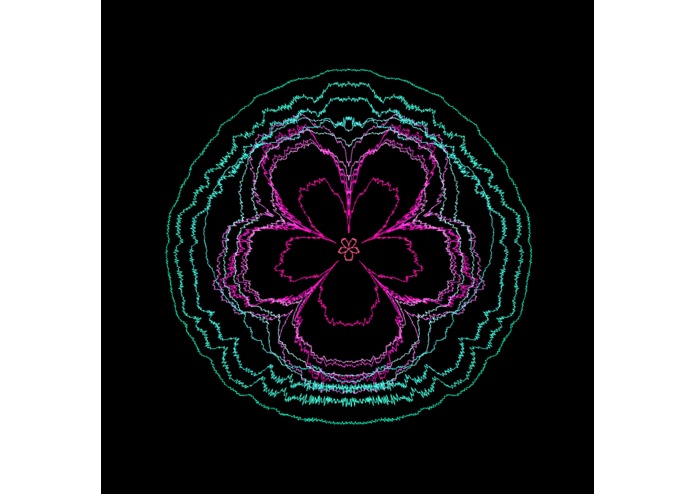
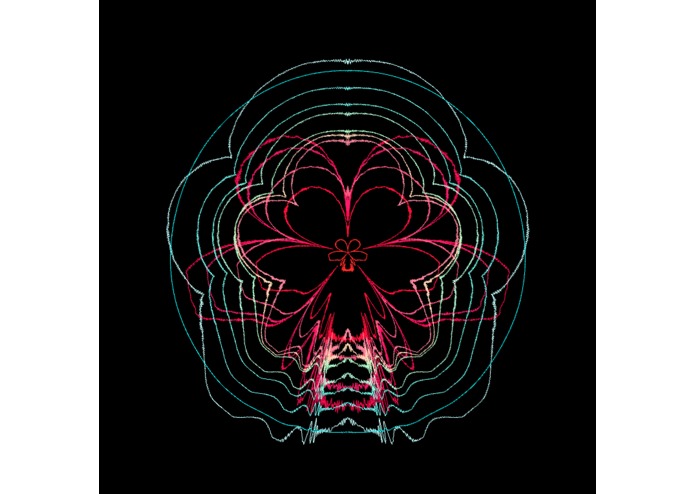
Looks like a flower.
-
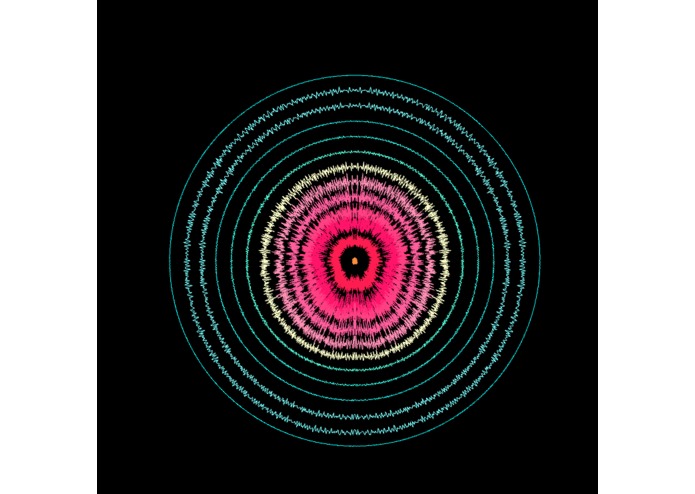
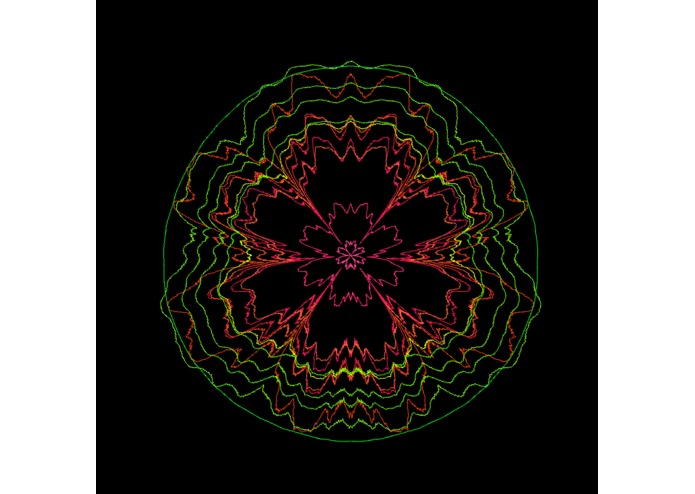
At this point in the song, a medium and high-pitched sound is being played.
-
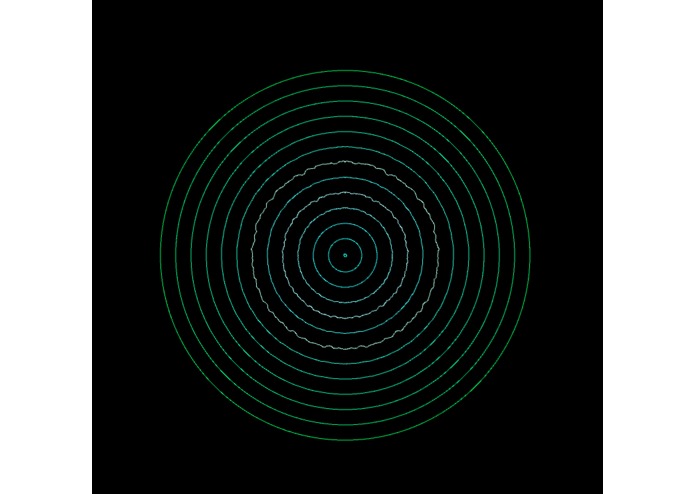
Relatively quiet, the lens is unexcited.
-
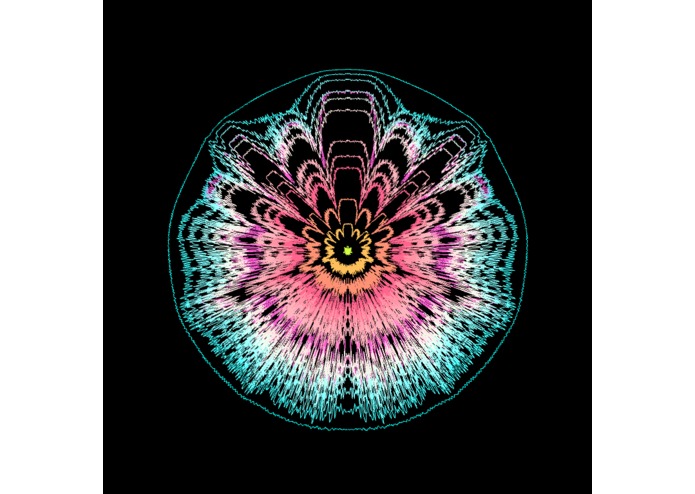
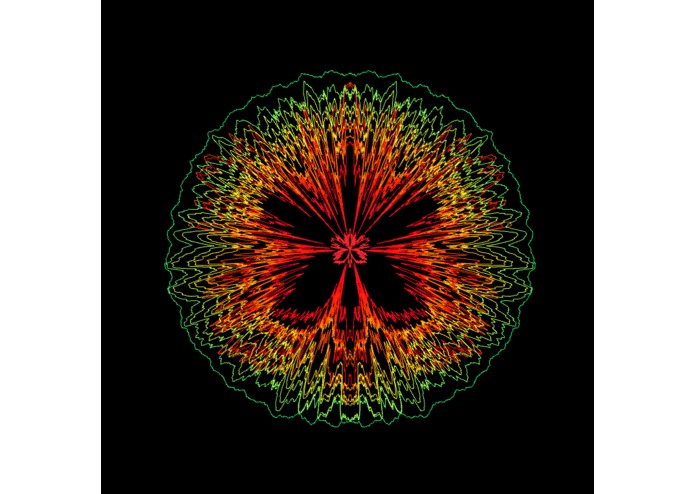
Here, the lens is very excited.
-
-
-


Inspiration
My friend studies Audio Engineering, and told me he made a music visualizer using Processing for one of his classes. I wasn't previously aware that Processing included helpful resources for working with audio, so I was interested to learn more about that. I love music, so I thought it would be fun to make my own music visualizer, and thus SoundLens was born.
What it does
SoundLens takes audio data and converts it into an appealing visual. The visual is built using several concentric rings, with the inner rings representing deeper-pitched sounds. As the rings move outwards, they vibrate along with higher-pitched sounds. The vibration pattern is based on the waveform of the sound at that current moment. As rings vibrate more intensely, they take on a more red hue. The rings also oscillate between displaying a green/red hue and a white/purple hue.
Accomplishments that I'm proud of
I'm proud of how visually appealing the SoundLens turned out. When I began coding my idea of the concentric vibrating rings, I didn't know if it would look attractive. After fine-tuning it over several hours, I finally settled on the design I liked most.
What I learned
I learned that there is a vast difference between having a rough, proof-of-concept idea, and making something that looks good. I designed a functional prototype after only 3-4 hours, but it took the next 7 hours to fine-tune that prototype, (getting all the rings spaced out, perfecting the color changes, etc.) before I ended up with the final project.
What's next for SoundLens
I'd like to export it into a more usable format, such as an application that simply needs to be double-clicked to run. I also would like to make it able to take in audio from any source, instead of having to drag a song to the "Data" folder to play it. If it could be run side-by-side with iTunes or another source playing audio, that would be ideal.
Built With
- java
- minim
- processing

Log in or sign up for Devpost to join the conversation.