-
-

App Icon
-
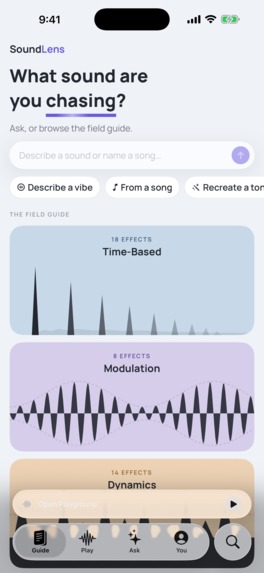
Home page
-
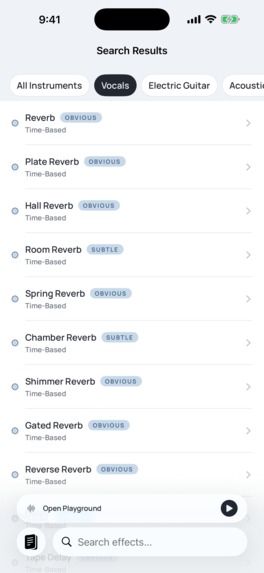
Search/Instruments Page
-
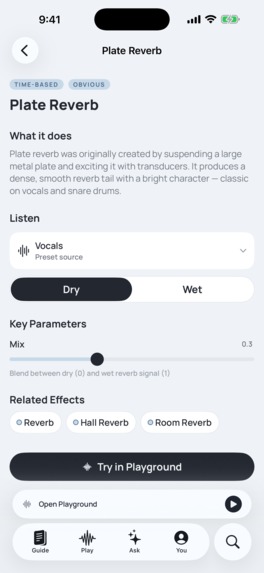
Effect Detail Page
-
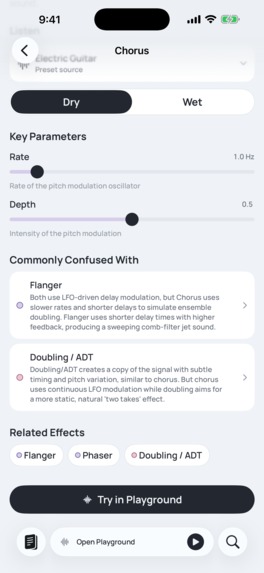
"Confused with" view
-
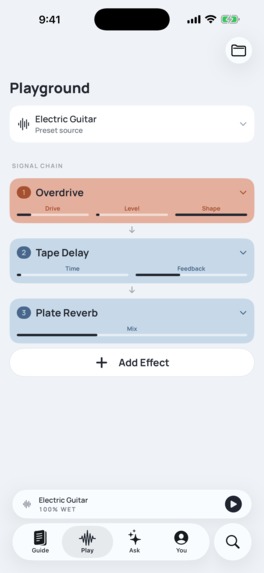
Playground view
-
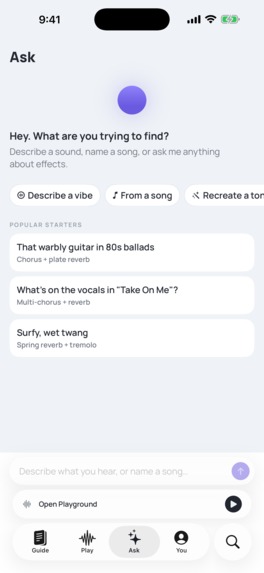
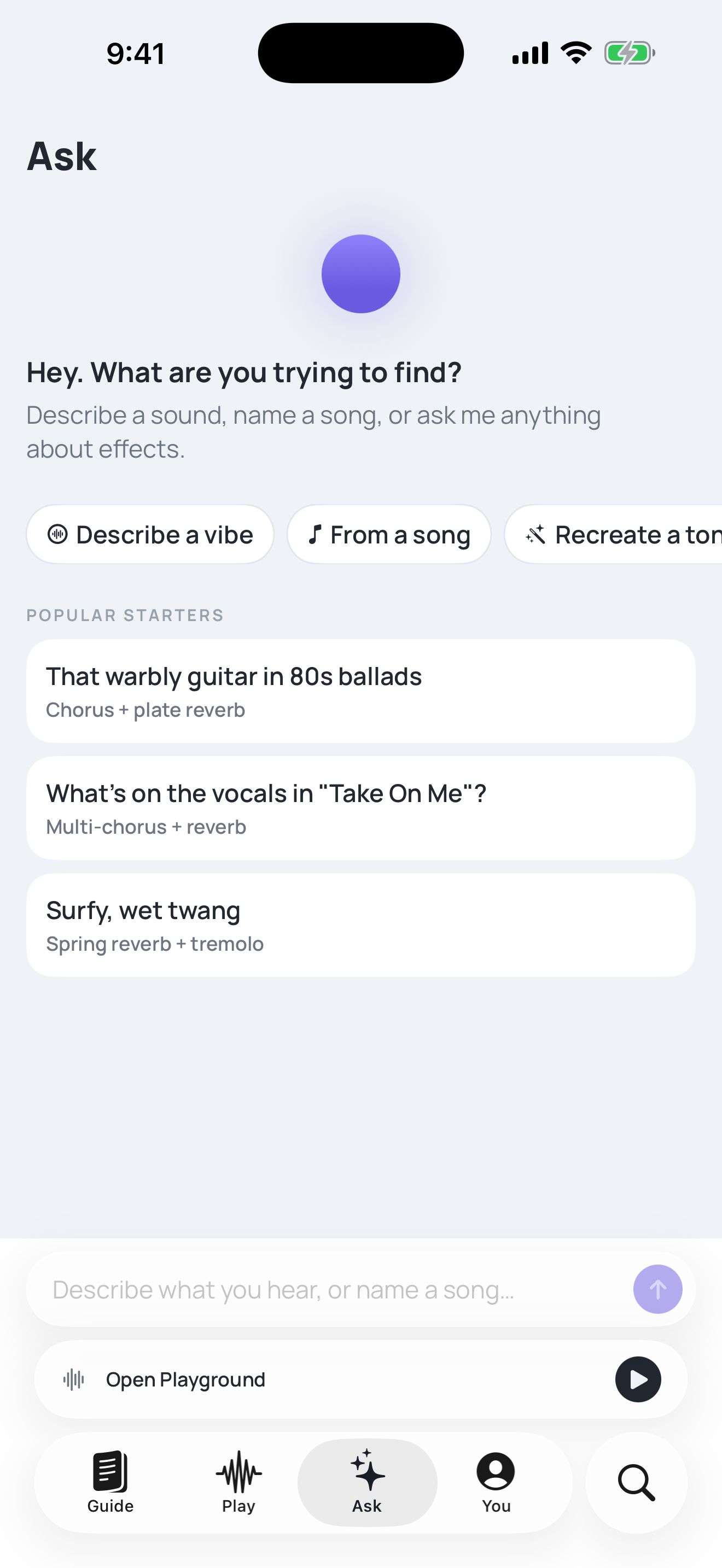
AI Ask View
-
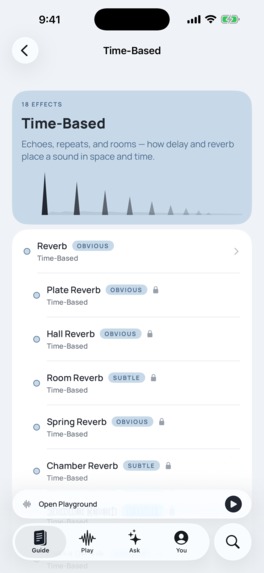
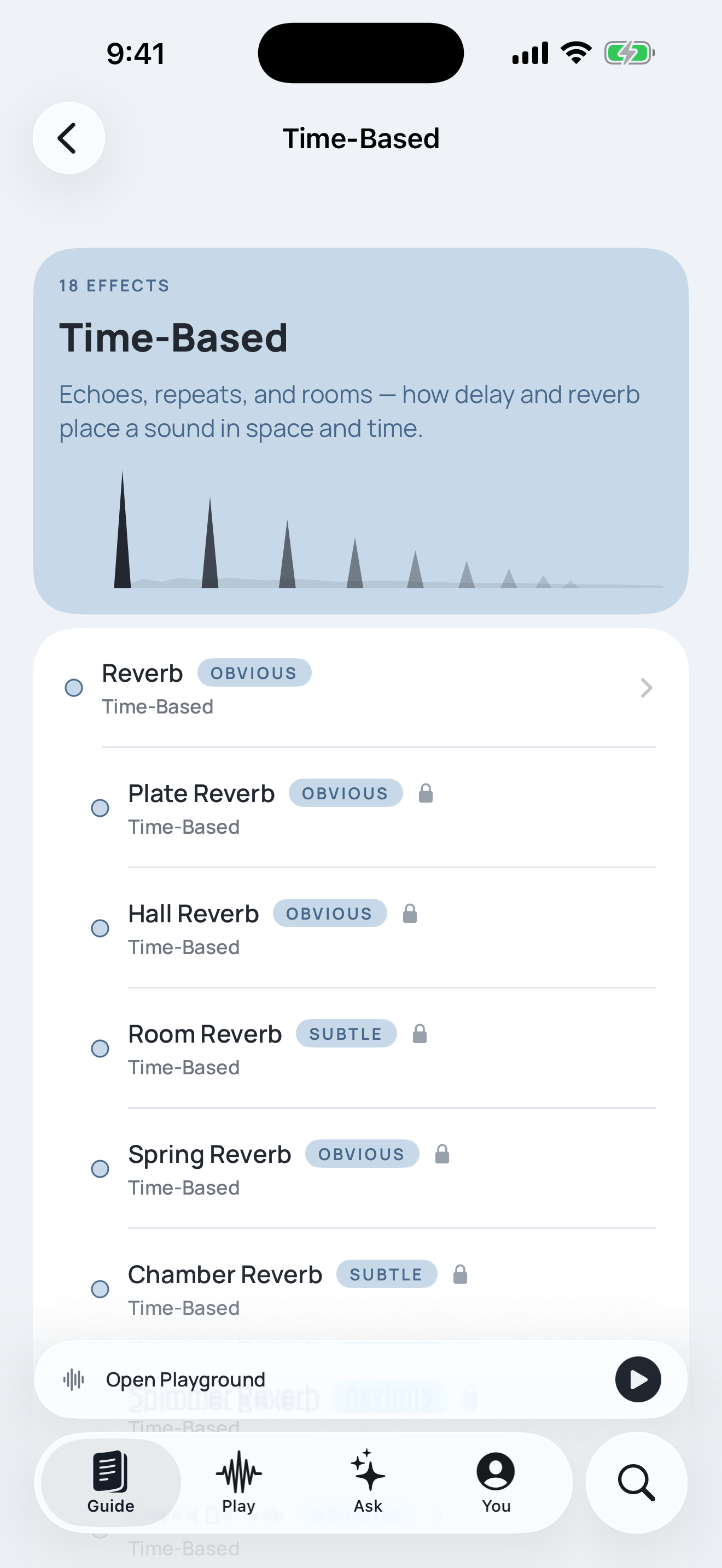
Category view

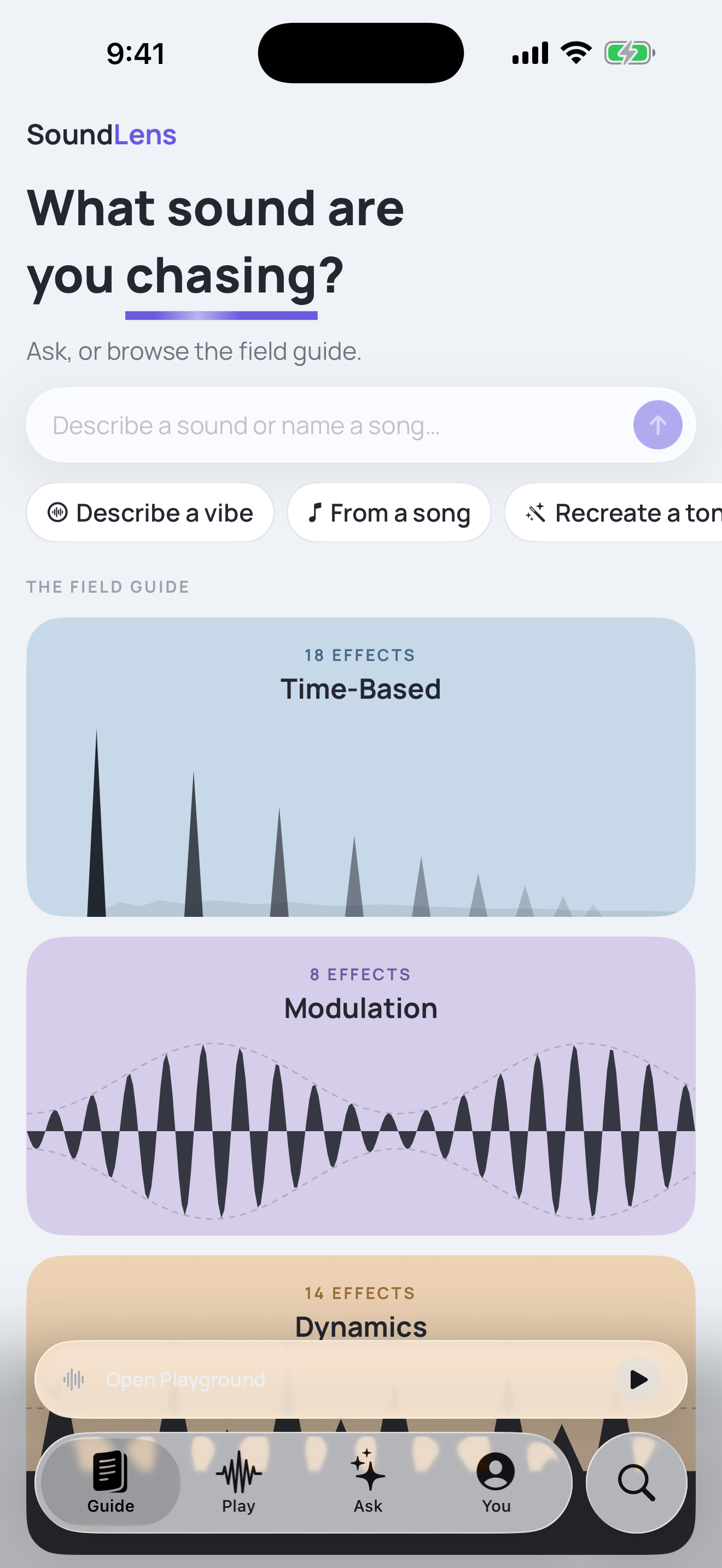
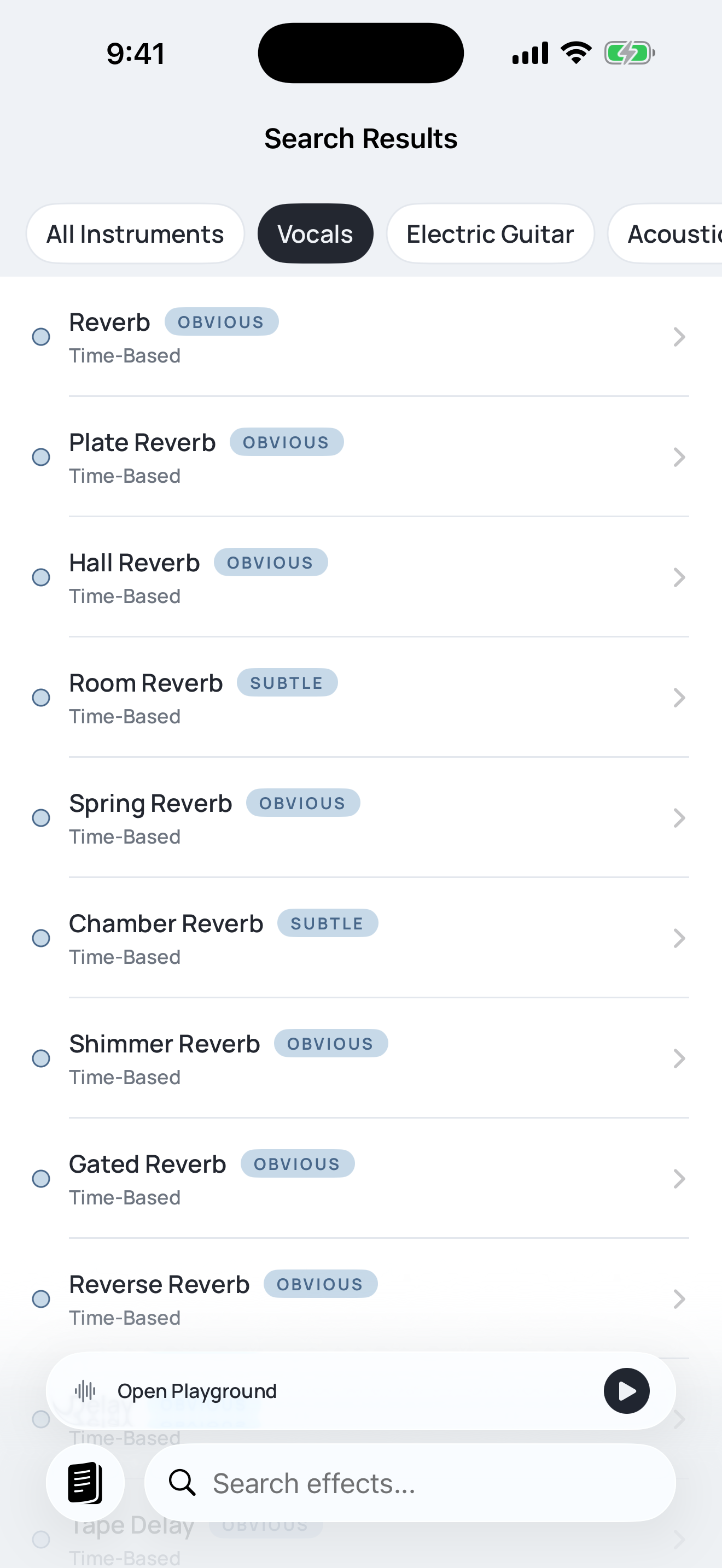
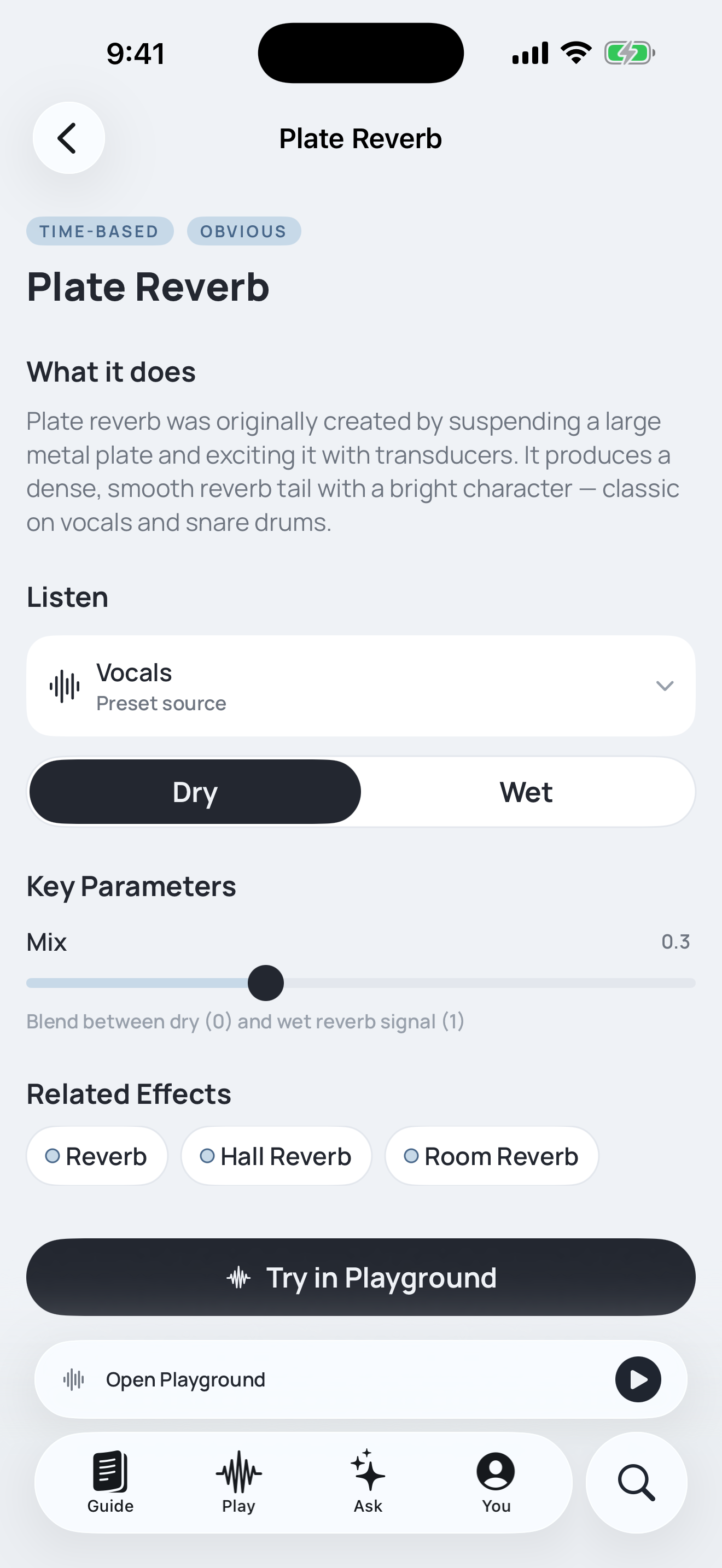
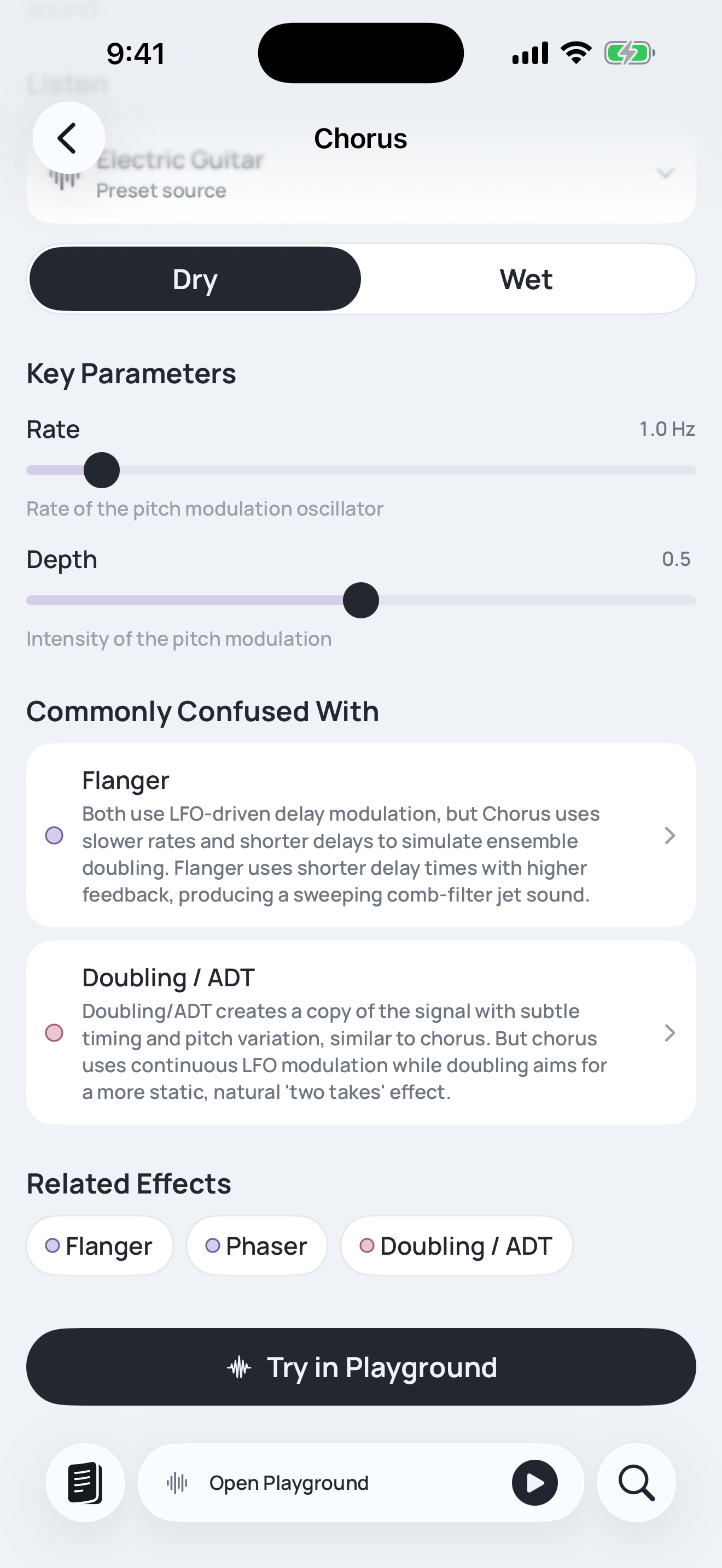
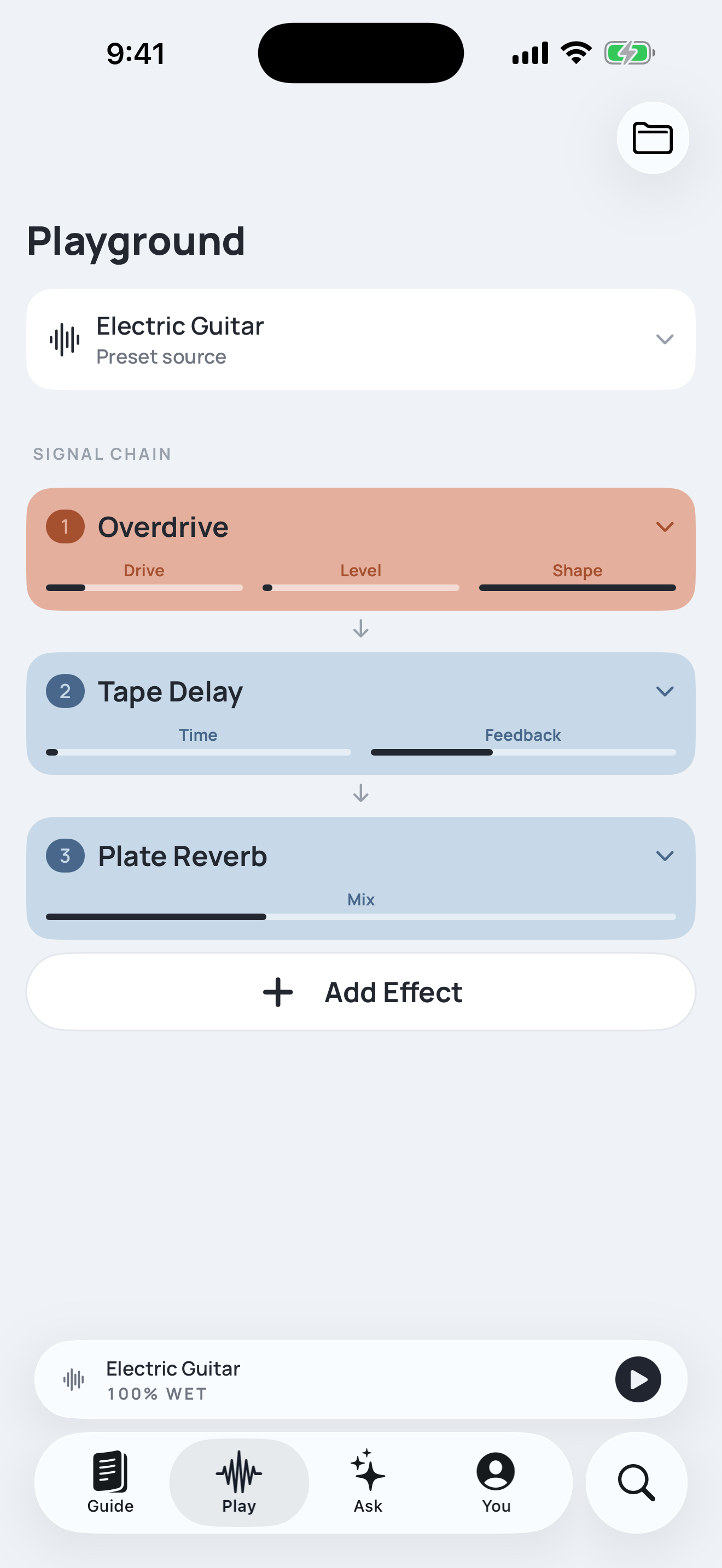
SoundLens is for musicians covering songs. You hear an effect on the record and can't name it, and even when a forum or an AI names it for you, you still can't hear what it's doing. SoundLens lets you hear 93 effects dry and wet on real instruments, tell the similar ones apart, and stack them into a chain.
Entering: RevenueCat Design Award, HAMM Award and Peace Prize Award.
Inspiration
When I learn a cover, I look for the sound on forums or ask an AI: what effect is on the guitar in Limp Bizkit's "Creamer"? I'd get an answer, but a name didn't help much. I still couldn't hear which part of the sound it was, or how to get it myself. I wanted one place where I could get the answer, hear the effect on a real instrument, try it, and see how it works.
What it does
- 93 effects in 11 categories, each playable on nine instrument recordings: electric and acoustic guitar, bass, drums, piano, organ, strings, synth pad and vocals. You switch between Dry and Wet while the loop keeps playing.
- The effects people confuse most, like chorus and flanger or compression and limiting, link to each other with a one-line way to hear the difference.
- The Playground stacks effects into a chain you can reorder and save, so you can hear why order matters.
- Ask takes a description in your own words, like "that warbly guitar in 80s ballads", and names the likely effects. It can only choose from SoundLens's own catalog, so every effect it names opens a page where you can hear it, and it sends the whole chain to the Playground.
- You can record or import up to 30 seconds of your own playing and try effects on it.
- Eleven effects can't be reproduced faithfully on a phone, and their pages say so.
No account. Everything except Ask works offline. The app's screens are in English, Kazakh and Russian; the effect catalog is English for now.
How it makes money
Ten effects are free for good. The other 83 are a one-time $19.99 purchase, because a reference is something you keep. Ask is $2.99 a month, because every answer is a model call I pay for. Both run on RevenueCat entitlements; the HAMM answer has the details.
How I built it
SwiftUI on iOS 26, AudioKit for the audio, SwiftData, RevenueCat, and a Cloudflare Worker between the app and Claude. The Worker holds the API key, the choice of model and Ask's instructions, so none of them ship in the app, and I can change any of them without an update. I set up and tested the RevenueCat side through RevenueCat's MCP server: the products, entitlements and offering, promotional access for test devices, and checks against the live App Store products. The interface uses iOS 26's native tab bar with Liquid Glass. The onboarding images were generated with Higgsfield. The catalog, all 93 effects with their descriptions, parameters and confusion notes, was written for SoundLens, not copied from another source, and it is data rather than code. For launch it ships inside the app, which keeps everything offline and let me ship on time. The app already loads the catalog from raw data, and the Worker already holds a copy for Ask. There are 174 app tests and 53 relay tests.
Challenges I ran into
I'm not a professional musician, so I was learning these effects while building the app, and the hardest part was checking that each one sounded right. I kept Logic Pro open alongside and tried the same effects there to compare. The first catalog ran 93 effects on only 21 DSP nodes, so many effects that were supposed to be different sounded the same. I gave the reverbs their own algorithms, moved five effects to dedicated nodes, re-tuned eight that made no audible difference, and labeled the eleven I couldn't make faithful.
The default guitar sample started with 3.83 seconds of silence, and every Dry/Wet tap restarted it, so the app seemed broken. I found it by measuring the audio, trimmed the samples, and changed the A/B to switch instantly instead of restarting.
Moving around the app was clumsy at first. The play controls lived inside each screen, so scrolling down a long effect page or switching tabs meant losing them. iOS 26's new tab bar accessory solved it: a small player now sits above the tab bar on every tab, with play and stop always in reach and one tap back to the Playground.
What I learned
Unit tests could confirm that an effect changed the audio, but not that it sounded right. For that I had to listen, and first learn what each one should sound like.
What's next
SoundLens has been live since August 27 and has been found by people in eight countries without any promotion. Version 1.1 is built: Logic Pro and GarageBand setup steps on 85 effect pages and inside Ask answers. Next, the catalog moves to the server, so fixes and new content reach everyone without waiting for an app release. I'm also adding privacy-friendly analytics, to see where people stop before paying, and a server-controlled banner for outages and update notices. After that, an ear-training quiz mode and the effect catalog in Kazakh and Russian.

Log in or sign up for Devpost to join the conversation.