-
-
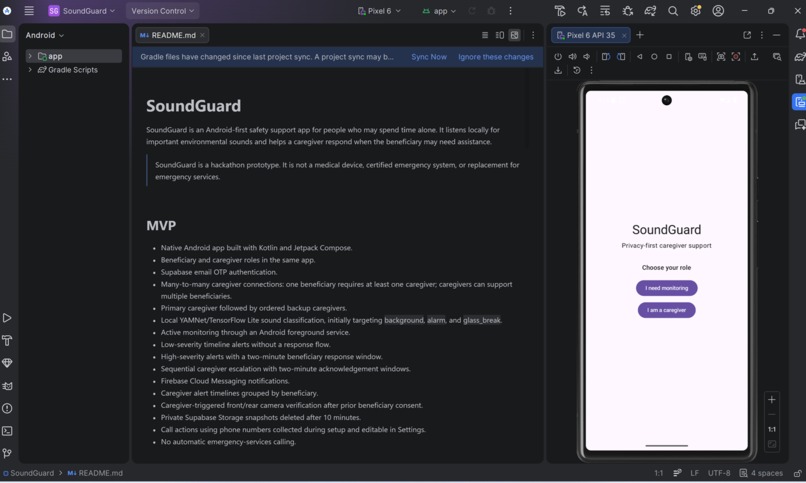
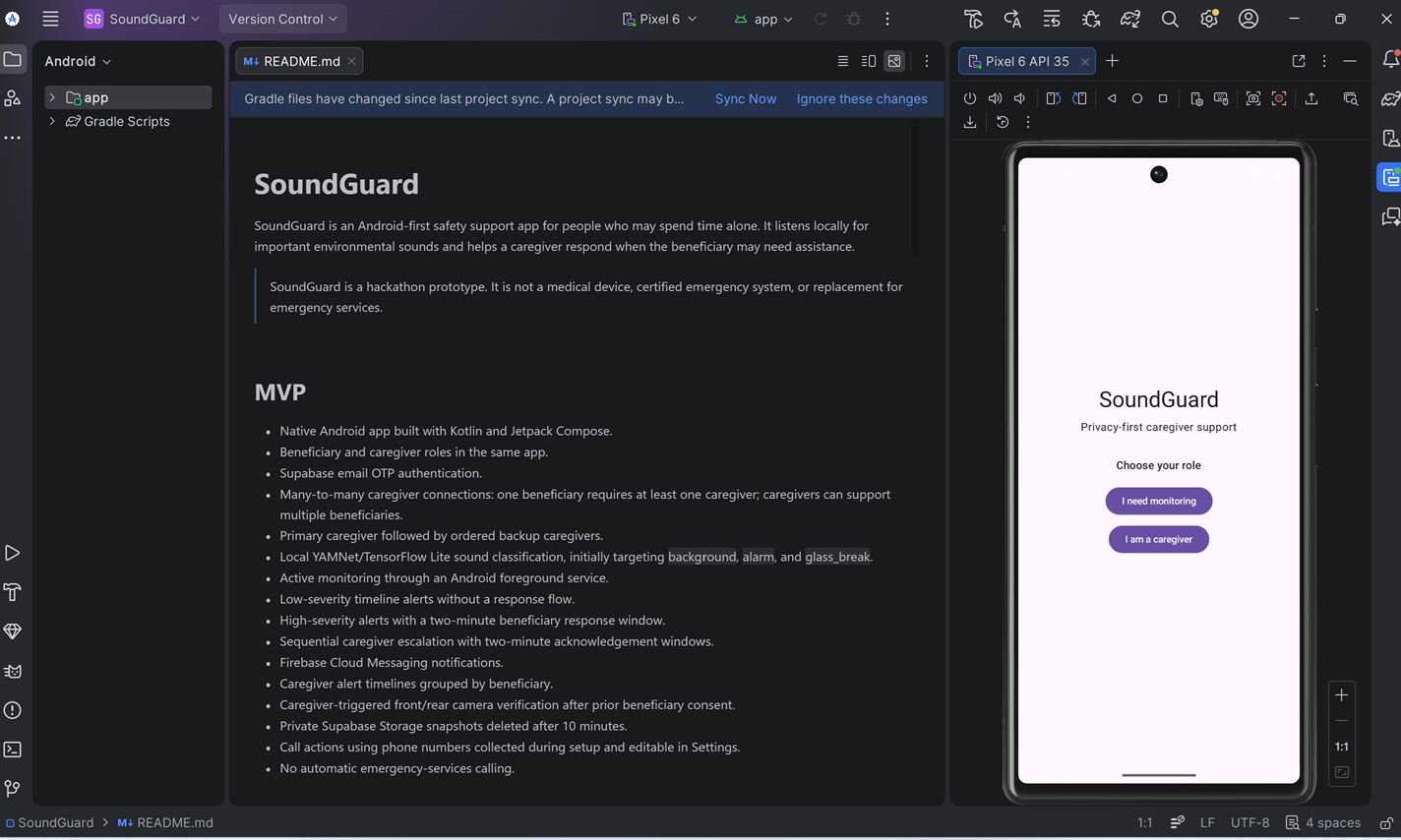
v0.1 first ever page which was the login page
-
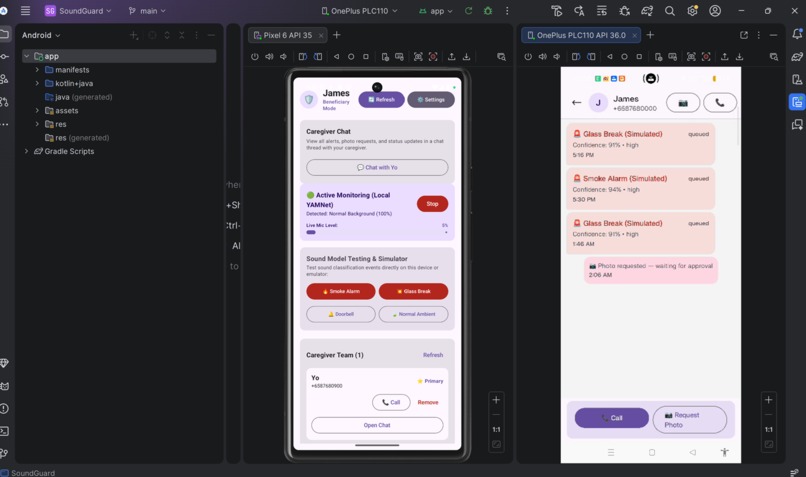
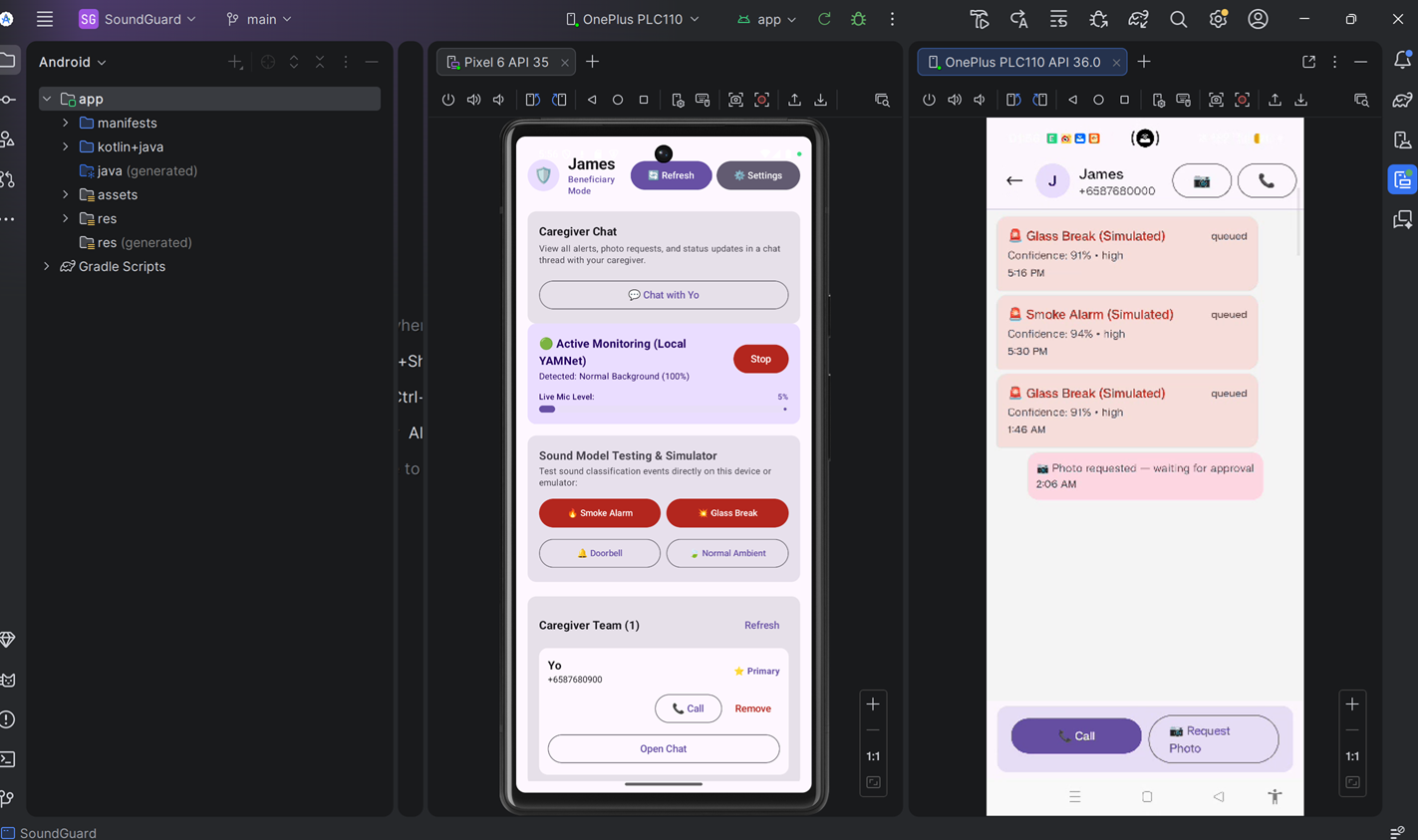
v0.8 working YAMnet Sound Classifier with barebones UI/UX
Inspiration
In the current society, many first world countries are ageing rapidly, many of the vulnerable such as the elderly or people with disabilities are not monitored or cared for by a caregiver physically all the time. This leaves them alone for long stretches, highly susceptible to accidents in their own homes. Tragically, many falls or accidents go undiscovered for hours, resulting in serious injury or death. Much of this could be prevented by urgently alerting someone close to them, letting that person decide whether to escalate to emergency services as soon as possible.
Therefore, this inspired me to create an AI tool that can act as a companion that is listening to whatever they do and inform a trusted adult when something goes wrong.
What it does
SoundGuard turns any Android phone into a silent guardian. A deep-learning audio model (Google's YAMNet, running as TensorFlow Lite) executes entirely on-device, classifying live microphone audio in real time across 521 sound types — raw audio never leaves the phone.
- Detects emergencies — smoke alarms, breaking glass, crying, fire, and sirens trigger a structured incident flow with a 2-minute window to respond ("I'm OK" / "Need Help").
- Escalates automatically — if the user can't respond, alerts go to the primary caregiver, then sequentially through backup caregivers, each with their own acknowledgement window.
- Keeps caregivers in the loop — a WhatsApp-style chat timeline shows incidents in real time, with push notifications delivered even when the app is closed.
- Verifies visually, with consent — during an incident, caregivers can request a verification photo; the beneficiary approves each request, photos stay in private storage, and auto-delete after 10 minutes.
- Pairs instantly — beneficiaries and caregivers connect
How we built it
AI tools and agents, more than 10 different AI models and >200M tokens used for coding to experiment which suits best (Gemini 3.7 Flash, GLM 5.2 & 5.3, Mimo V2.5, Deepseek V4 Flash, GPT 5.6 Luna etc)
Challenges we ran into
Countless RLS (Row Level Security Errors) on Supabase, False alerts and detections by YAMnet, Buttons not working, 400 and 404 errors.
Accomplishments that we're proud of
- Finishing the project in under 6 days
- A complete, working safety loop: sound detection → response window → automatic escalation → caregiver chat → consent-first photo verification, all functioning end-to-end on real hardware.
- A genuinely privacy-preserving architecture — no audio recording is ever created; classification happens entirely on-device.
- A self-healing backend that survives live-database drift through fallback paths and idempotent repairs.
What we learned
Building something simple and useful matters far more than being over-ambitious and missing expectations.
What's next for SoundGuard
IOS, making it to run on wearables.
Built With
- compose
- deno
- firebase
- gradle
- jetpack
- kotlin
- litert
- oauth
- pg-cron
- postgresql
- supabase
- yamnet


Log in or sign up for Devpost to join the conversation.