-
-
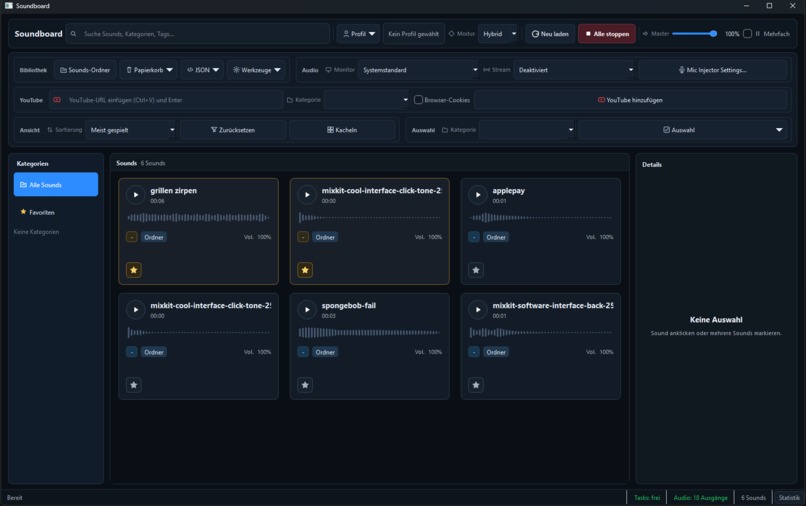
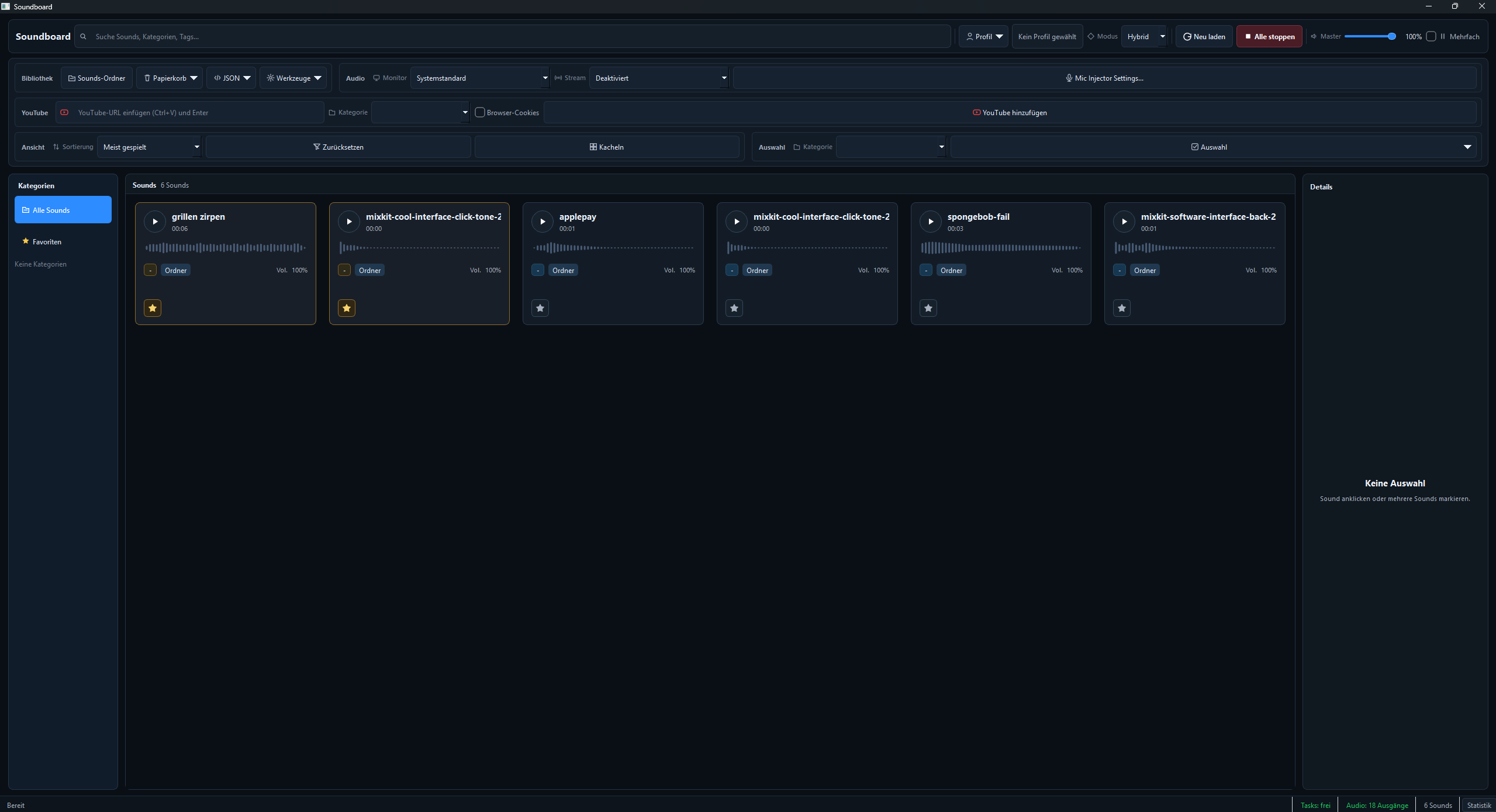
Cropped Home Screen
-
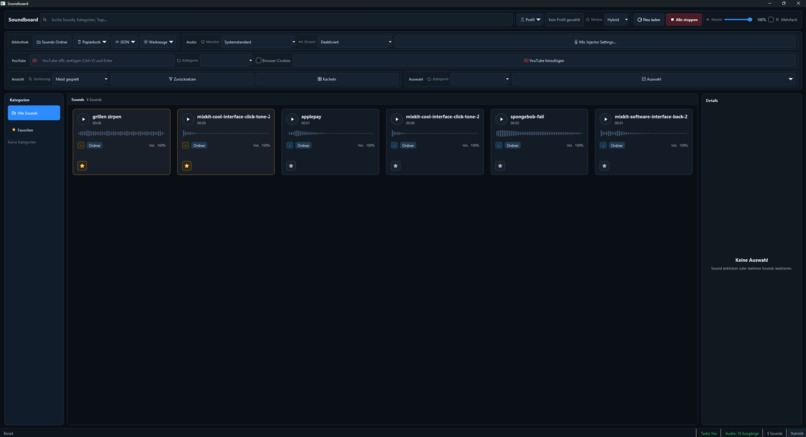
Full Size Home Screen
-
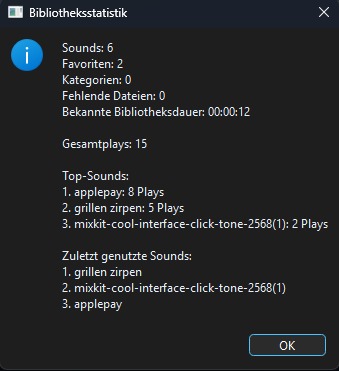
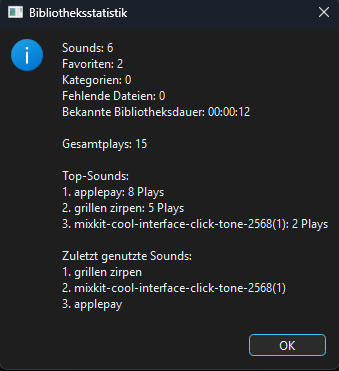
Statistics
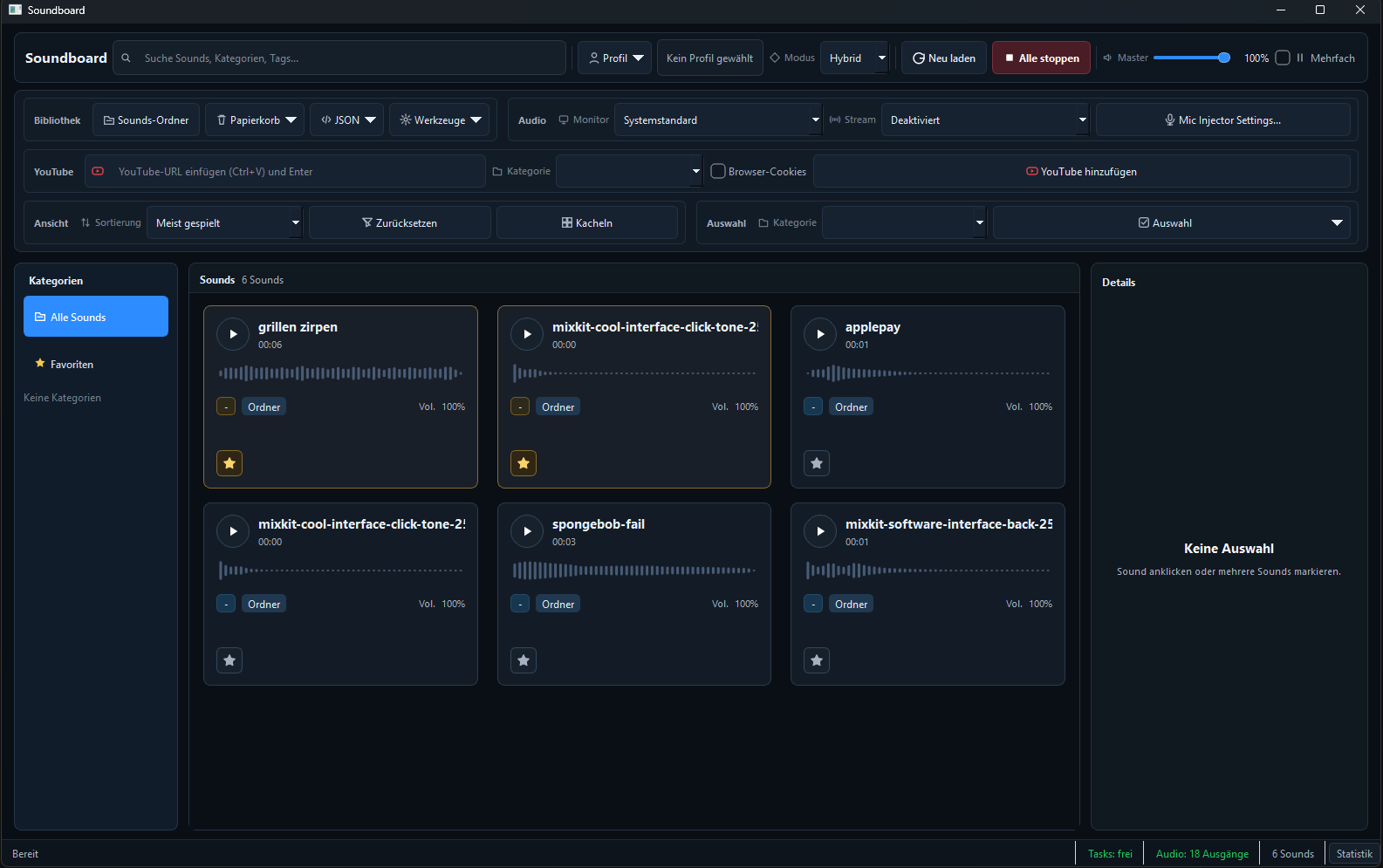
Inspiration
I built Modern Python Soundboard because I wanted a simple and reliable way to organize and play audio clips during gaming, streaming, and live sessions without depending on cloud services.
What it does
The app lets users import and organize sounds, search the library, create categories, mark favorites, adjust individual and master volume, and choose monitor or stream audio outputs.
Everything runs locally on Windows.
How I built it
Modern Python Soundboard is built with Python, PySide6, FFmpeg, PyInstaller, pytest, and Ruff.
The project already existed before OpenAI Build Week. During the event, I used Codex to implement focused improvements, add regression tests, investigate failures, and verify the repository.
I used GPT-5.6 for architecture review, debugging, test planning, and reviewing each change.
Challenges
The hardest parts were handling background workers safely, shutting down Qt threads correctly, separating user data from installation files, and keeping logs useful without exposing private paths, URLs, or tokens.
What I’m proud of
During Build Week, I improved the release process, crash diagnostics, worker lifecycle, privacy protections, runtime data handling, and automated test coverage.
The result is a more stable and release-ready Windows soundboard.
What’s next
Next steps include English localization, keyboard shortcuts, better onboarding, accessibility improvements, and more creator-focused integrations.

Log in or sign up for Devpost to join the conversation.