-

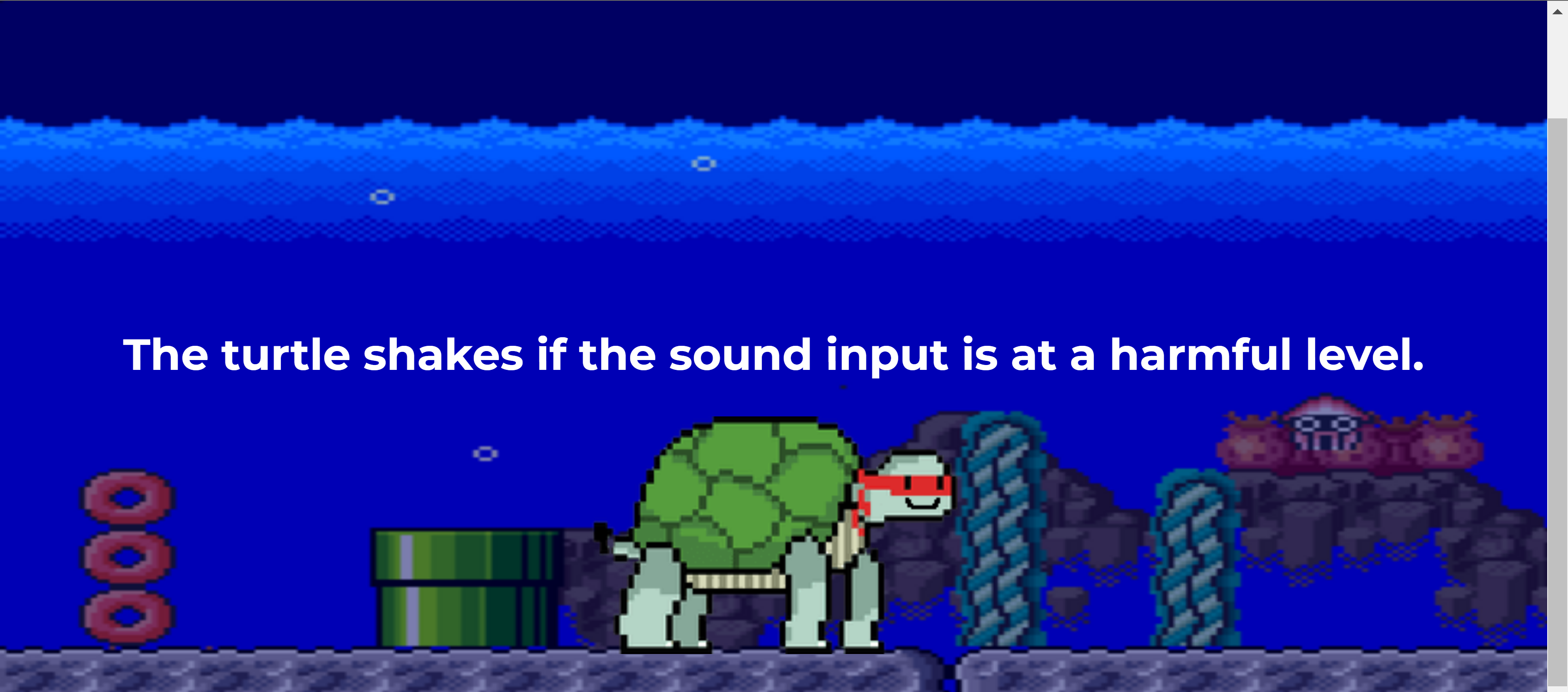
This is the turtle that we made that we implemented into our web app. This turtle will react to sound picked up from the Arduino.
-
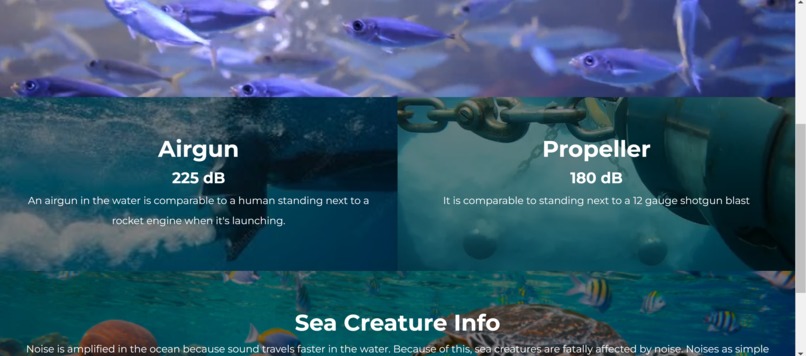
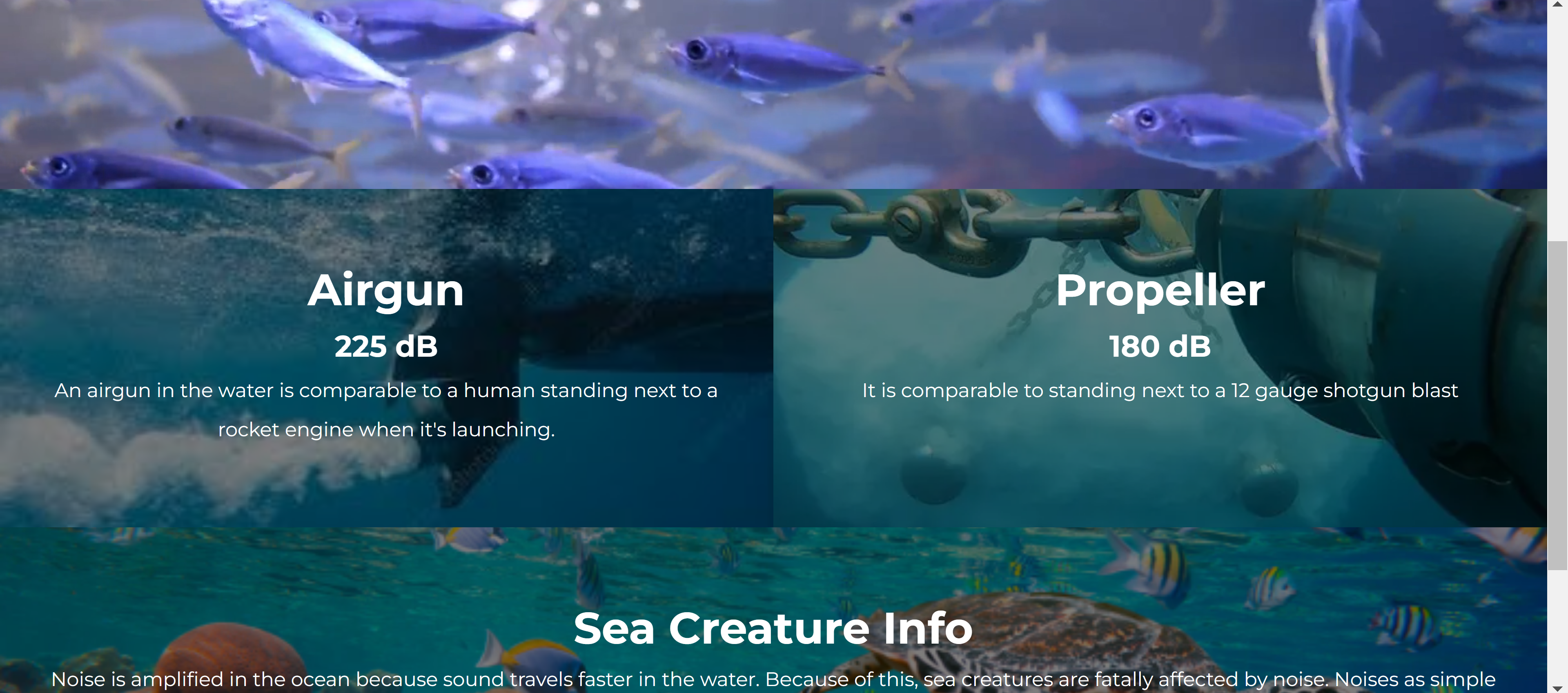
Our web app page includes information on noise pollution and harmful effects.
-
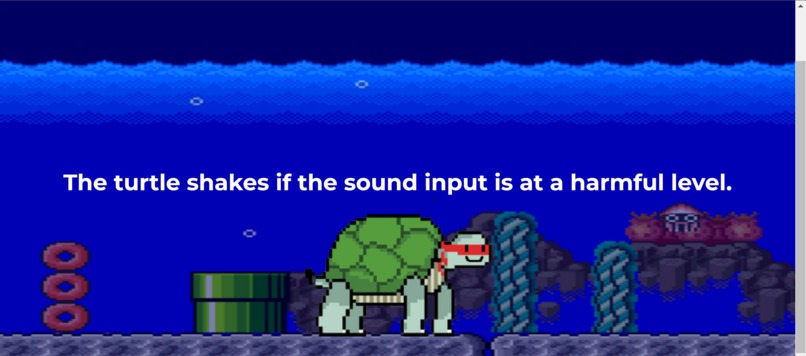
This is the turtle in our web app.

Inspiration
An emotional article about how harmful noise pollution affects ocean wildlife and marine activity inspired us to build our project.
What it does
Our Arduino takes input sound and outputs the data received from the Arduino into our web app that will demonstrate a turtle reacting to harmful sound.
Our Approach
We used C++ to code the Arduino. Arduino's data cannot be transferred to our web app, so we found an alternative solution. We converted the Arduino C++ code into Javascript and put it from the Arduino IDE to VScode. From VScode, we took the inputted sound data that the Arduino picked up and outputted it into our web app.
Challenges We Ran Into
We ran into not having the necessary hardware to make our project more accessible. For example, we needed an Arduino extension, the esp8266, to send data from the Arduino to the cloud and the cloud to the web app. However, we did not have this hardware extension and instead had our data be sent from the Arduino to node js to the computer.
Accomplishments that we're proud of
Programming an Arduino using C++ and then converting it into Javascript is something my team is proud of. Also, we are proud of using HTML, CSS, and Javascript to develop a web app.
What we learned
We learned how to use and program an Arduino to sense sound. In addition, we also learned how to light an LED on an Arduino. Using Javascript to interpret data was also another valuable skill we learned. We learned how to develop a web app and have it communicate with the Arduino sensors.
What's next for Sound Sensor Arduino with Web App
Since the Arduino kit provided during the hackathon did not include a wifi module, we were unable to use the Arduino's data unless it was connected by wire to the computer. With the use of a wifi module, in the future, this device could be used by scientists to receive sound data and to determine whether noise levels are potentially dangerous. A scientist could utilize this device by having a waterproof version for the ocean, which would then send data to the scientist's computer. For scientific purposes, more graphs and statistics would be added for more thorough research.
Our Website
https://oceanjuice-eight.vercel.app/ By connecting an Arduino with a microphone on the website, users can determine whether the sound levels are potentially dangerous.


Log in or sign up for Devpost to join the conversation.