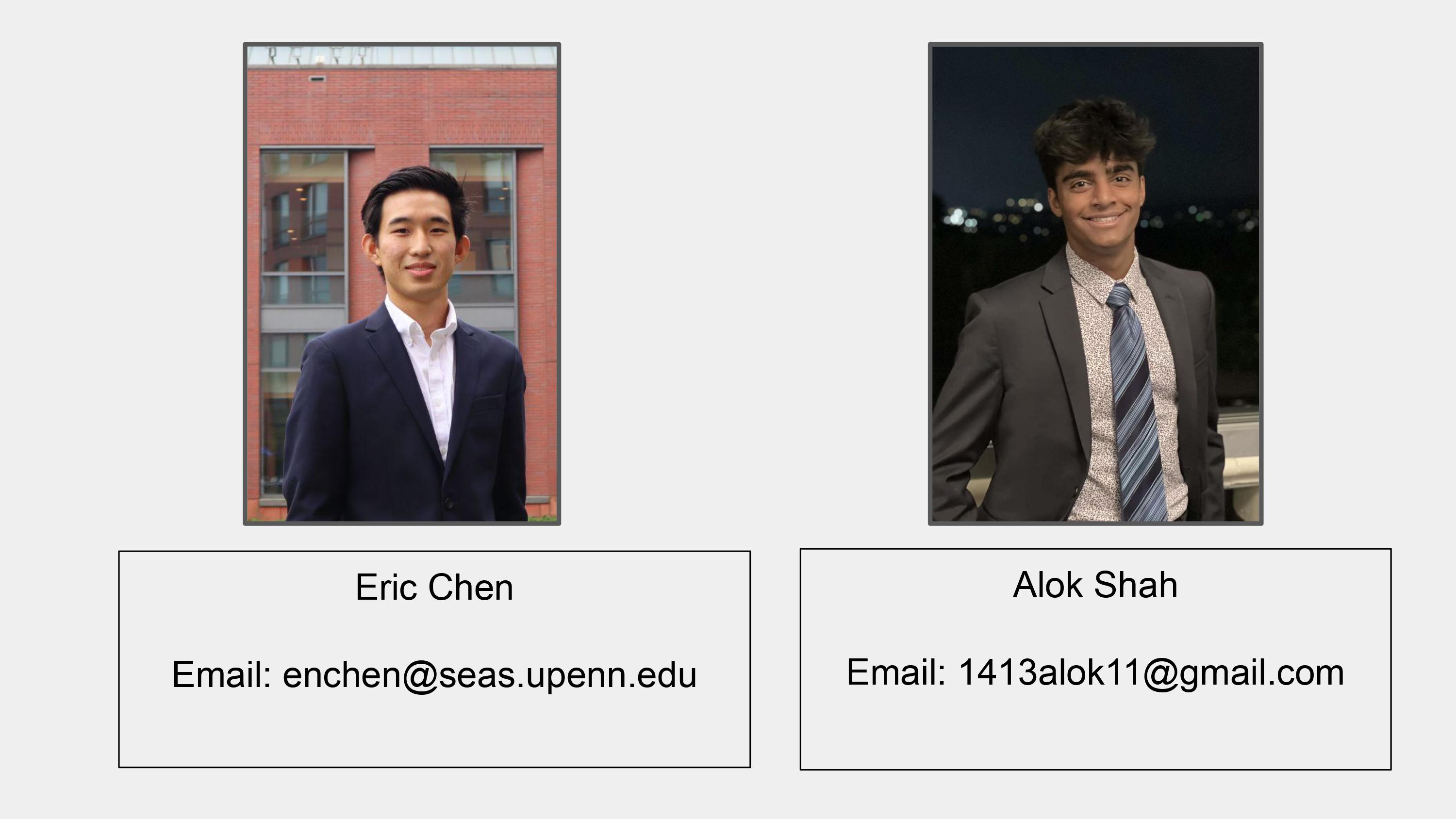
Team Members:
Alok Shah (email: [email protected])
Eric Chen (email: [email protected])
Project Description
Inspiration We wanted to create a product that would be fun and applicable for college students. At the University of Pennsylvania, we live by the phrase "work hard, play hard." When hanging out with friends or having people over, cool and unique lighting is the perfect way to set the vibes. That is why we created Sound Responsive Lighting aka "Disco Party." It's the perfect way to lighten the mood and help everyone have fun after a long day of classes.
Project Description We wanted to create a dynamic LED lighting system that was able to react and pulse different colors based upon live music in the environment. The lighting pattern would match the rhythm of the music.
Technology The parts utilized consisted of an Arduino Uno R3, Arduino MKR Wifi 1010, KY-038 Sound Sensor, breadboards, wires, and power supplies. Additionally, we used the Blynk app via wifi for our IoT component.
Design Process
First Iteration (MVP) Our first iteration consisted of an Arduino Uno connected to the KY-038 sensor. The LED reactive lights were very inconsistent as we struggled to get consistent reads from the audio signal. After some troubleshooting, we were able to establish consistent audio signals.
Second Iteration During this iteration, we utilized the ESP32 Feather with the Blynk app via wifi. We were able to develop the interface and get everything connected; however, we were having difficulties sending the digital signal from the ESP32 Feather to the Arduino Uno. Thus, we decided to finally switch to an Arduino MKR Wifi 1010 board instead, which the Detkin staff informed us was a more effective option.
Final Iteration In our final iteration, we were able to connect the dots between of our subsystems to create a cohesive product. Additionally, we coded in an auto-calibration feature where the sound system would take in the range of audio in the first 5 seconds and help improve the LED's live responsiveness.
Reflection
Challenges The biggest challenges we encountered were understanding how the sound sensor works from a fundamental level as we had some initial confusion between determining whether we needed to read/write analog or digital signals. The other challenge we faced was implementing the IoT component with the ESP32 Feather. We had some hardware issues which resulted in lots of time spent that led to minimal results. Eventually, we were able to overcome these challenges by transitioning to a different board: the Arduino MKR Wifi 1010.
Lessons Learned We learned the importance of interdisciplinary work. In order to create any real tangible projects, it is necessary to understand how both the hardware and software components work. Everything is interconnected, especially with the integration of IoT.
Looking Forward
If we were to move forward with this project, we would work to design a housing container for the electronic components using CAD and then 3D printing the housing. Additionally, we would increase the modes available and clean up the UI within the Blynk App.
Conclusion Overall, this was a really insightful project that we had a lot of fun completing. Thank you to all the TAs and Professor Deliwala.


Log in or sign up for Devpost to join the conversation.