What Inspired Us Our inspiration came directly from the hackathon's Problem Statement: "...many of these valuable perks go unused because people don't know they exist, can't keep track of them..."
We all felt this problem personally. But the real "Aha!" moment came during a mentor session, where a judge mentioned that the average consumer might have 10, 20, or even more accounts.
This crystallized the problem for us. The issue isn't just one card; it's systemic "Benefit Blindness." Users are drowning in perks they already pay for, like travel reimbursements, free hotel nights, and complex airline miles.
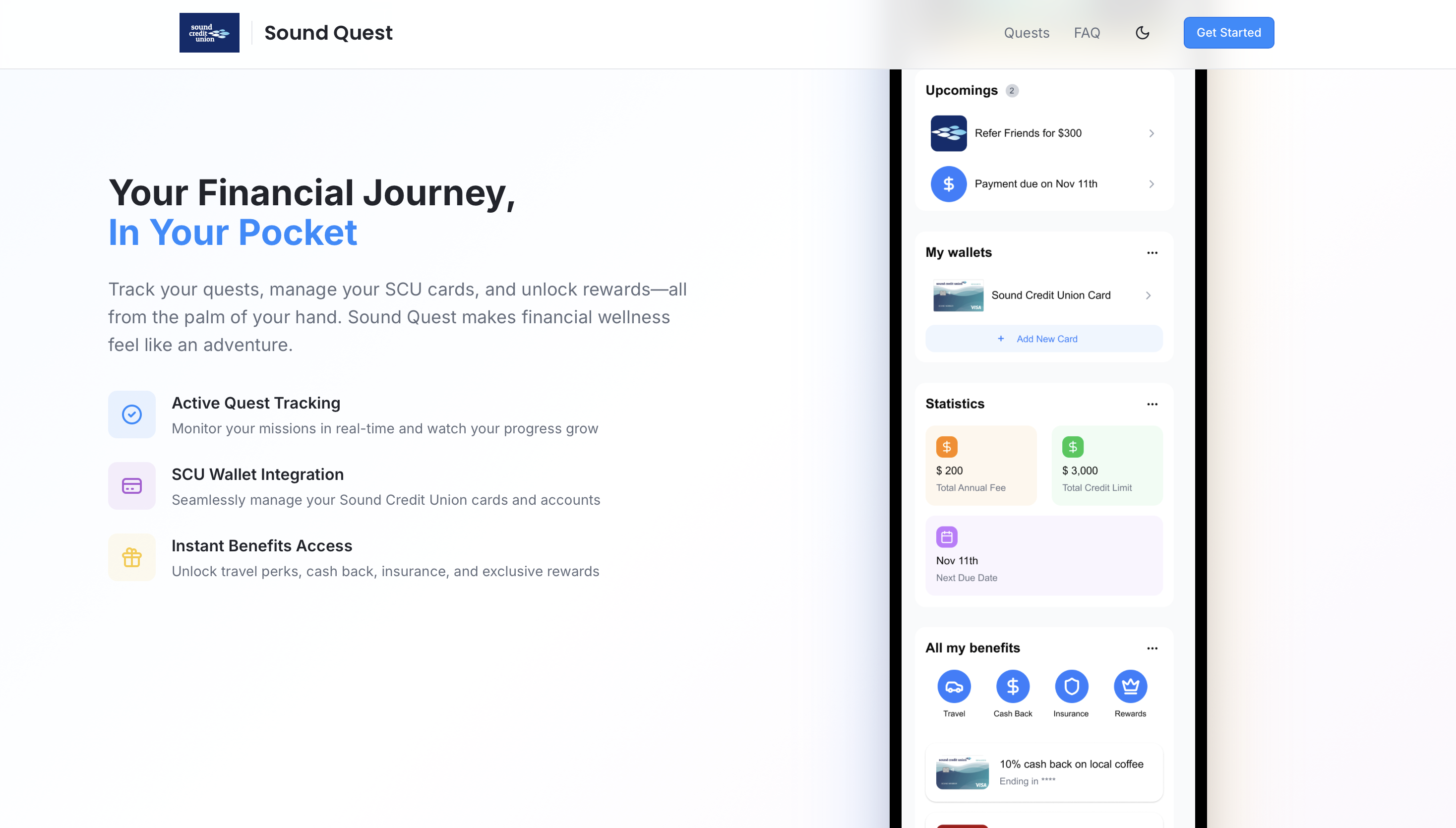
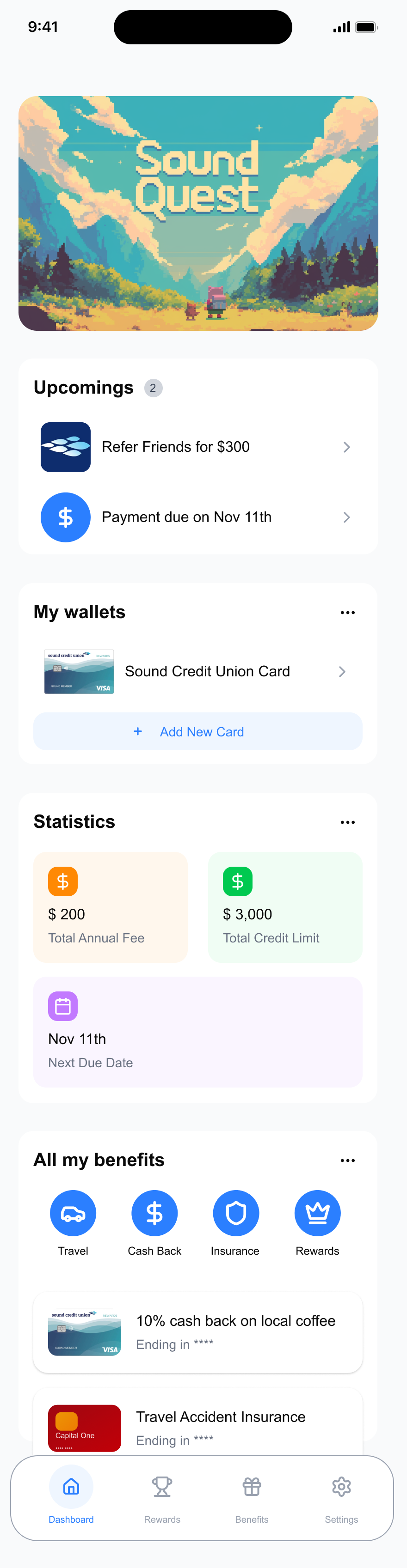
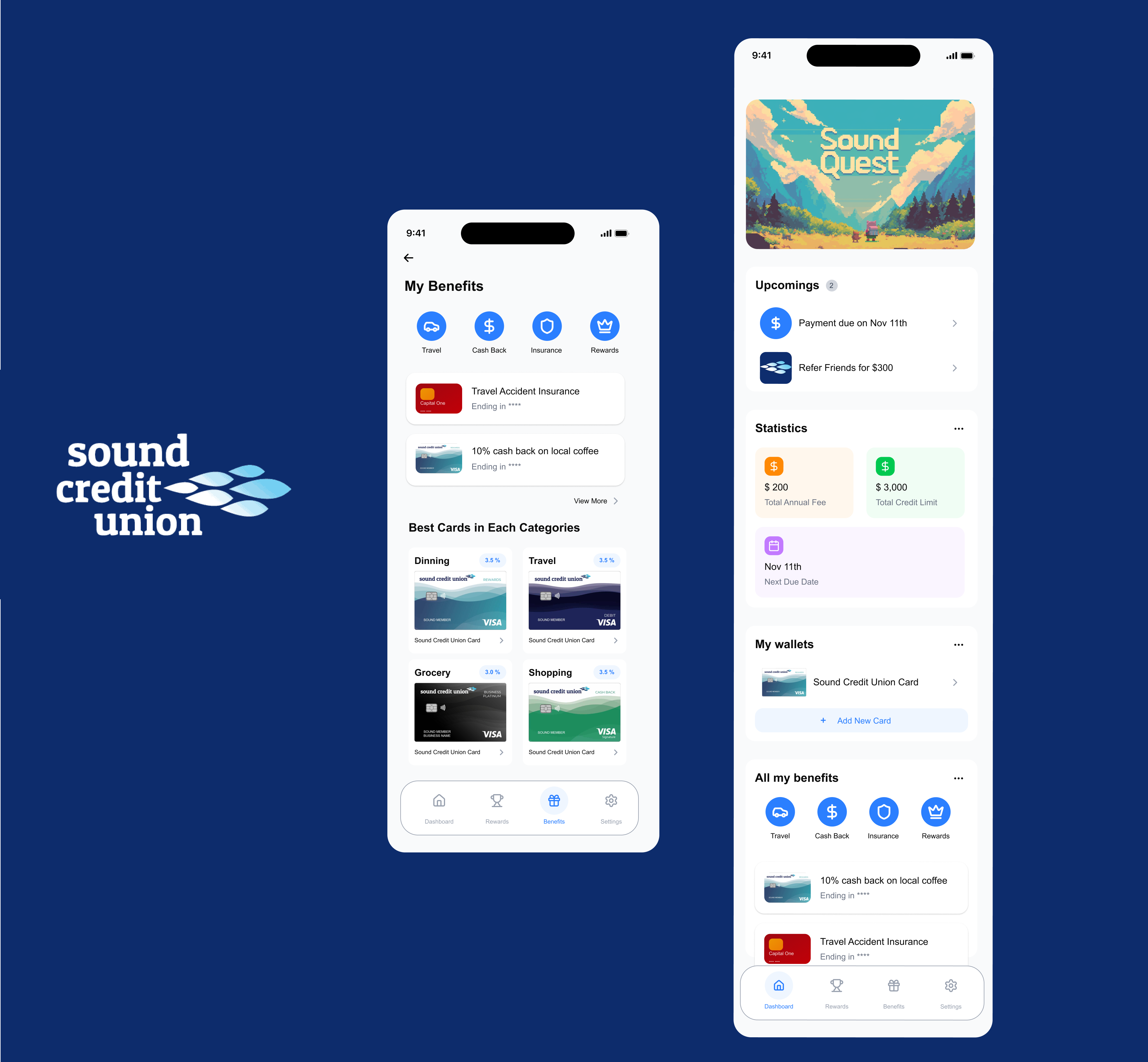
We were inspired to build the "All-in-One" dashboard that we wished we had. But we knew a simple dashboard wasn't enough. To truly succeed, it had to be engaging. This led us to our core game loop: "Repay-to-Win."
What We Learned This hackathon was a masterclass in separating "ideas" from "viable products." Our two biggest takeaways were not about code, but about strategy.
"Plaid is the Pipe, Not the Content": Our most critical technical lesson was understanding the data landscape. A naive approach assumes Plaid (or any aggregator) magically provides all benefit rules. We learned that Plaid is the Connectivity ("the pipes"), but it doesn't provide the Content (the benefit T&Cs, $ values, or expiration dates). We learned that a real, scalable solution must involve a professional, 3rd-party data partner.
"Turn a Cost into an Engine": Our biggest business lesson was solving the ROI puzzle. Why would SCU pay (for APIs and rewards) to help members use competitor cards? This seemed like a fatal flaw. We learned that this "cost" is actually an investment. The "Repay-to-Win" game is a Data Foundation. It collects priceless behavioral data (which rival cards are members paying for? What local rewards do they love?). This data fuels the Cross-Sell Engine, turning a cost center into a hyper-targeted marketing machine.
How We Built It Given the 48-hour limit, we focused on "Proving the Architecture," not just building a feature. We built our demo on a realistic, three-layer architecture.
Front-End: React
Back-End: Node.js / Express
Layer 1: Connectivity (The "Pipes") Our first priority was proving we could handle the core connection. We successfully integrated the Plaid Sandbox API. This isn't just a slide in our deck; it is a functional piece of our project that we can demo. This proves the "linking" part of our architecture is viable.
Layer 2: Content (The "Data") Based on what we learned (see above), we knew we couldn't actually call a multi-thousand-dollar enterprise Benefits API. So, we made an honest and strategic choice: we mocked the 3rd-party partner API. We created a benefits-data.json file that simulates the clean, professional data feed our "Valuation Engine" would consume. This allowed us to focus on the UI/UX.
Layer 3: Experience (The "IP") This is where we spent most of our time. We built the React front-end to:
Ingest our mocked data.
Run it through our "Valuation Engine" to translate complex perks (like "5x Miles" or "$120 Travel Credit") into simple, comparable dollar values.
Display it all on a clean, intuitive dashboard.
Prototype the "Repay-to-Win" game loop UI, showing how a user can pay a bill and get an instant reward.
Challenges We Faced The "Data Source" Problem: Our biggest technical challenge was the "chicken-and-egg" problem: we can't build a benefits tracker without a benefits API, and we can't get that API at a hackathon. We overcame this by embracing the problem. Our solution—the "Plaid + Mocked Partner API" architecture—was a strategic decision that showed we understood the business of FinTech, not just the code.
The "ROI Justification" Problem: Our biggest business challenge was the one we mentioned earlier: "Why would SCU pay for this?" This felt like a deal-breaker. Our solution was the Cross-Sell Engine. The realization that this "game" was actually a "data-gathering tool" for competitive intelligence and hyper-targeted marketing was the biggest breakthrough of the entire weekend.
The "Incentive" Problem: How do you make repaying a bill—a chore—feel fun? Our first ideas (points, badges) were weak. The breakthrough was linking the rewards to SCU's core identity: community. By making the prizes real, local, and exciting (like "Seahawks tickets" or "local coffee vouchers"), we created a powerful incentive that a national bank like Chase could never replicate.


Log in or sign up for Devpost to join the conversation.