-
-
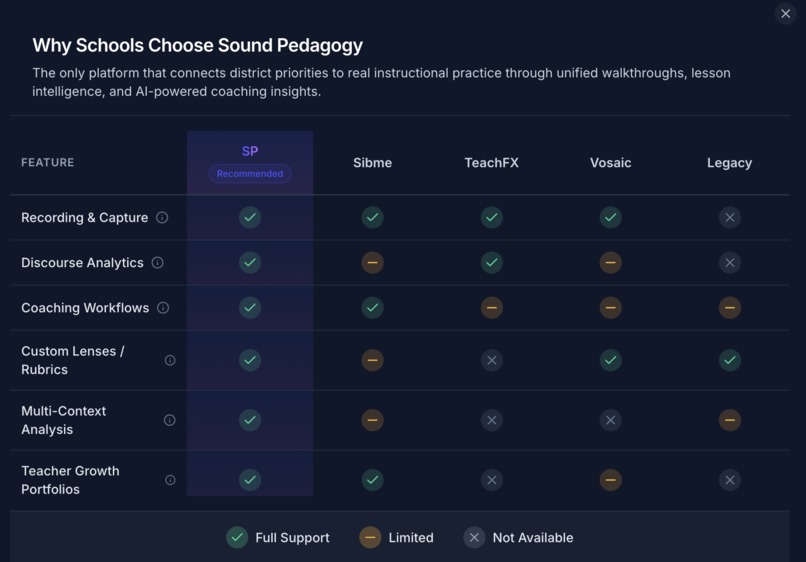
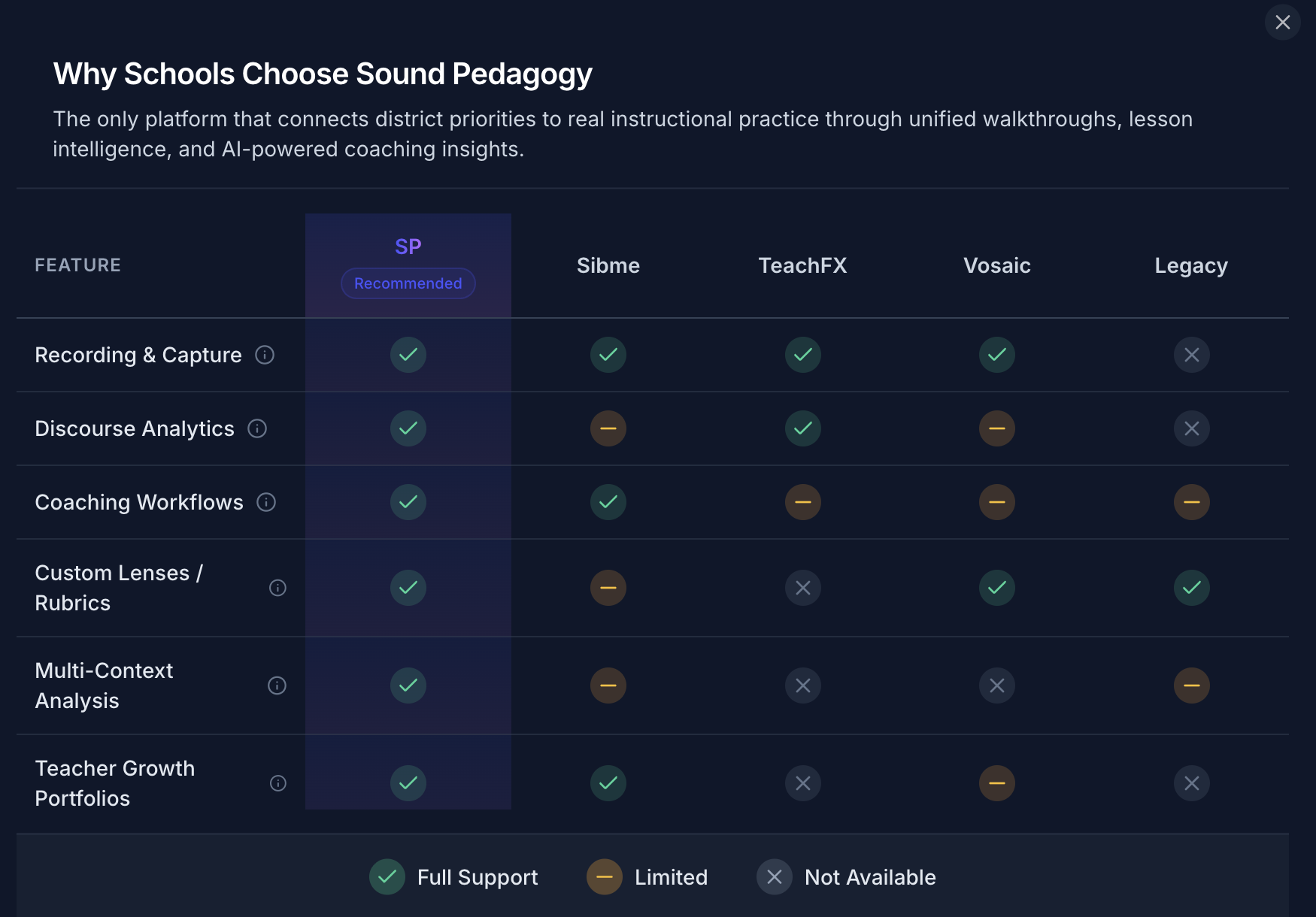
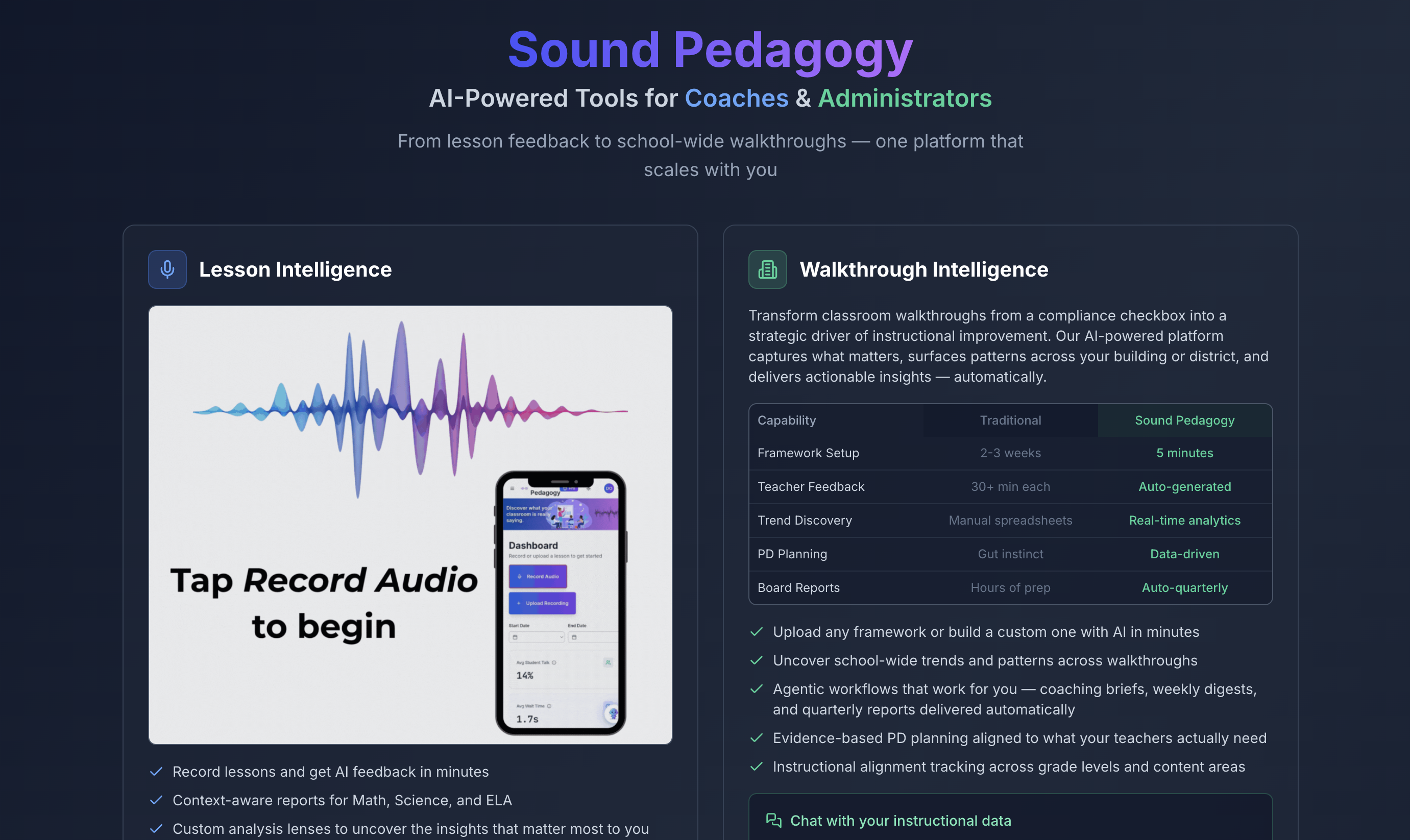
Why Sound Pedagogy
-
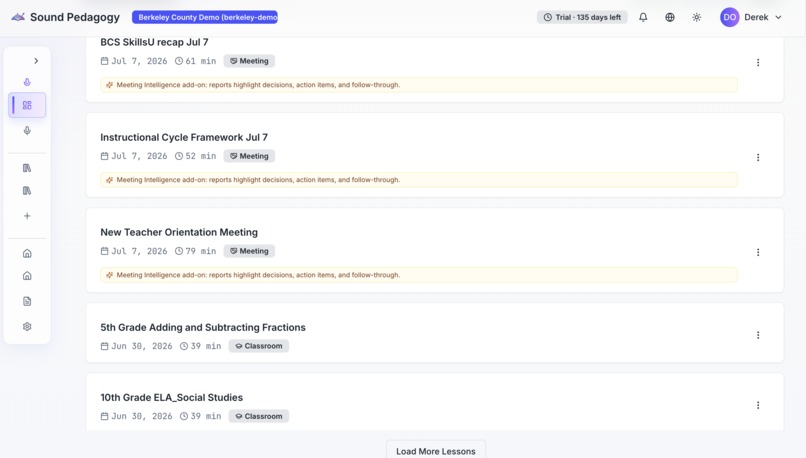
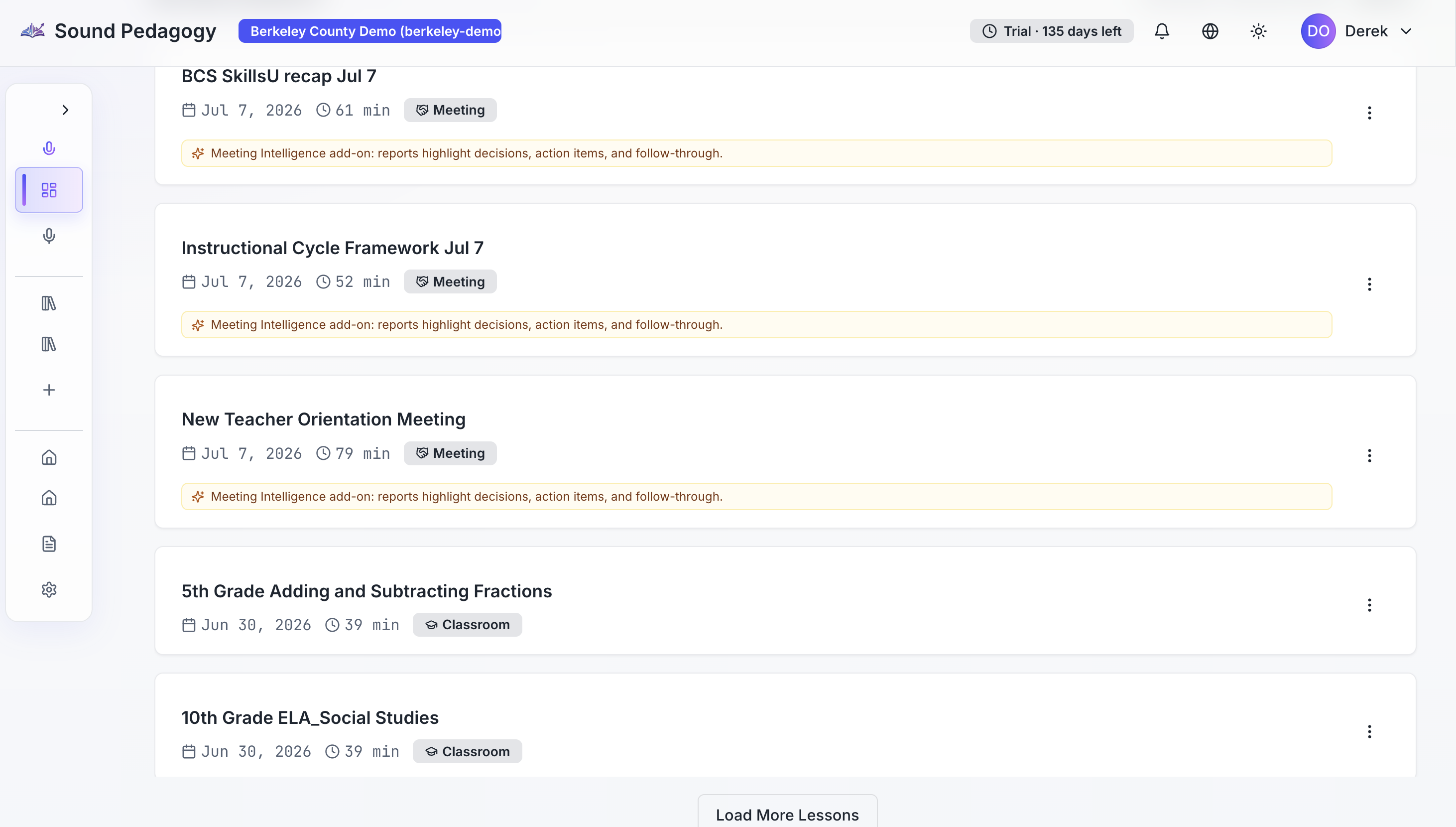
Sound Pedagogy not only records and analyzes lesson audio, but meetings also
-
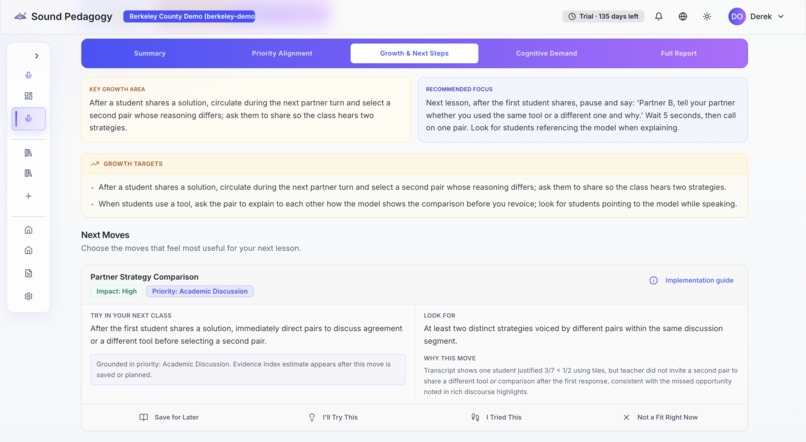
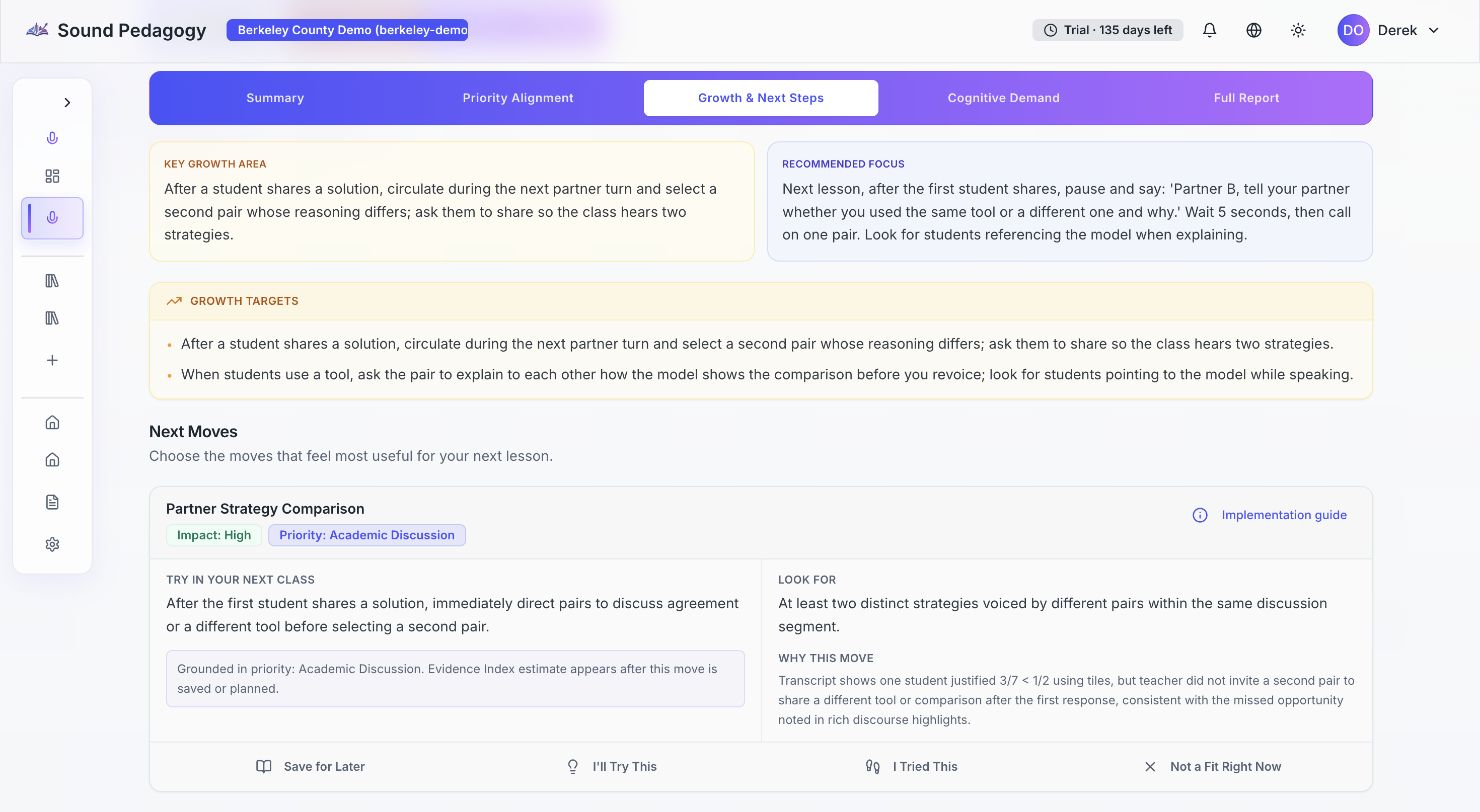
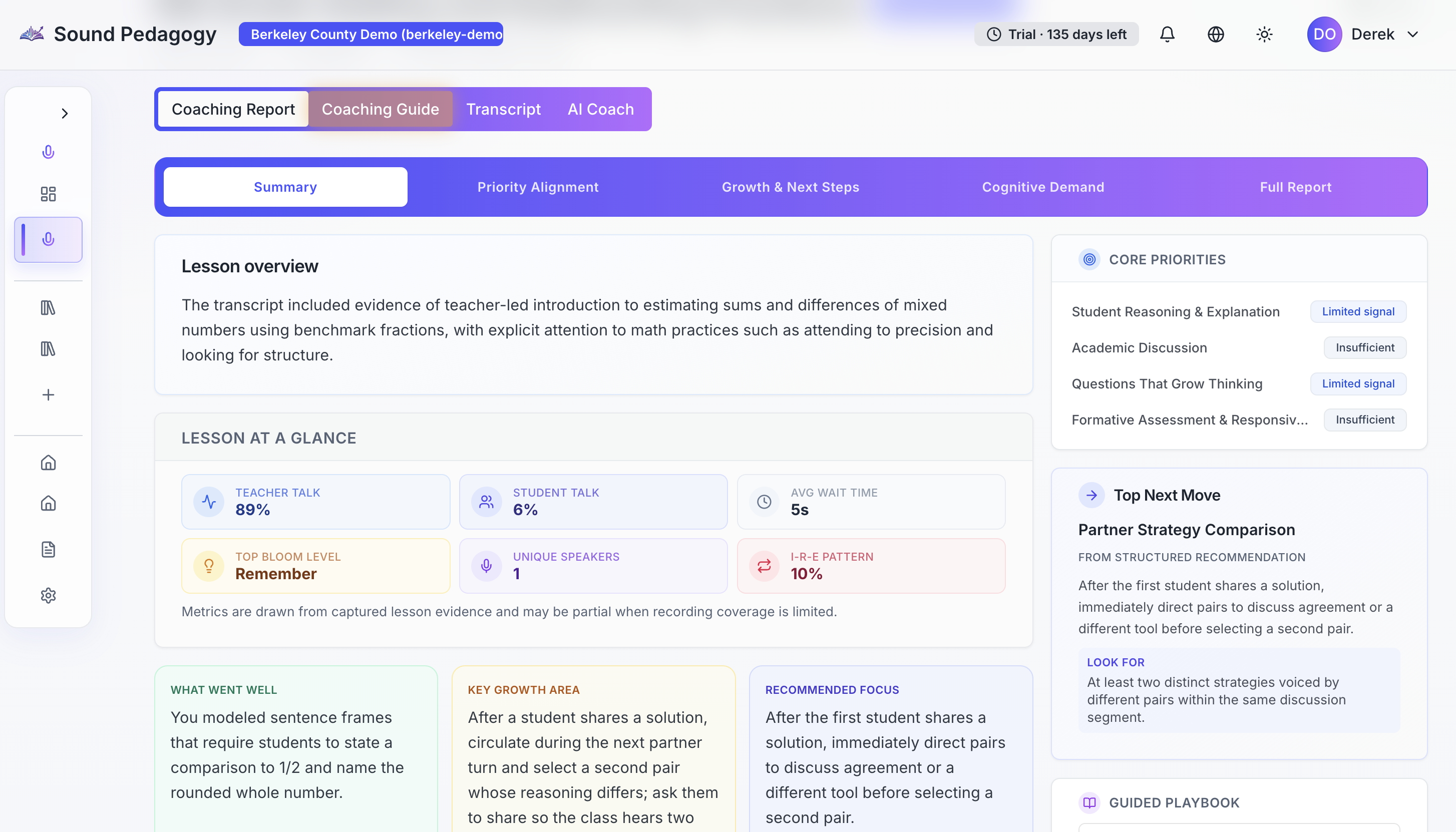
The "Next Moves" component - teacher can respond to next move, if selected, the move goes into queue & system begins listening for evidence
-
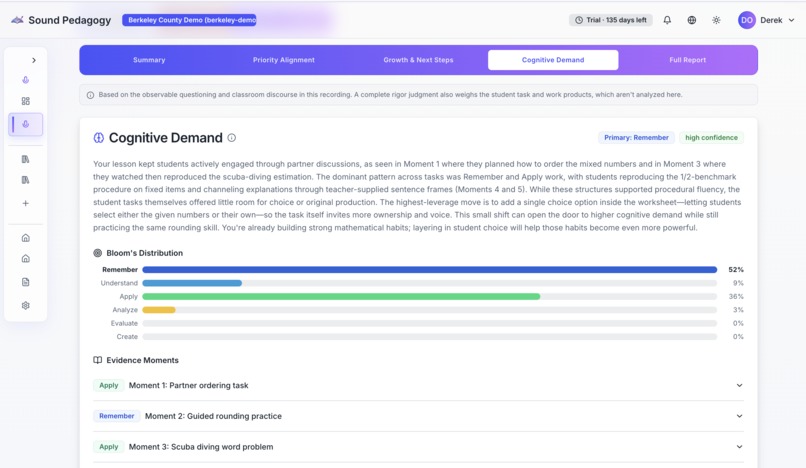
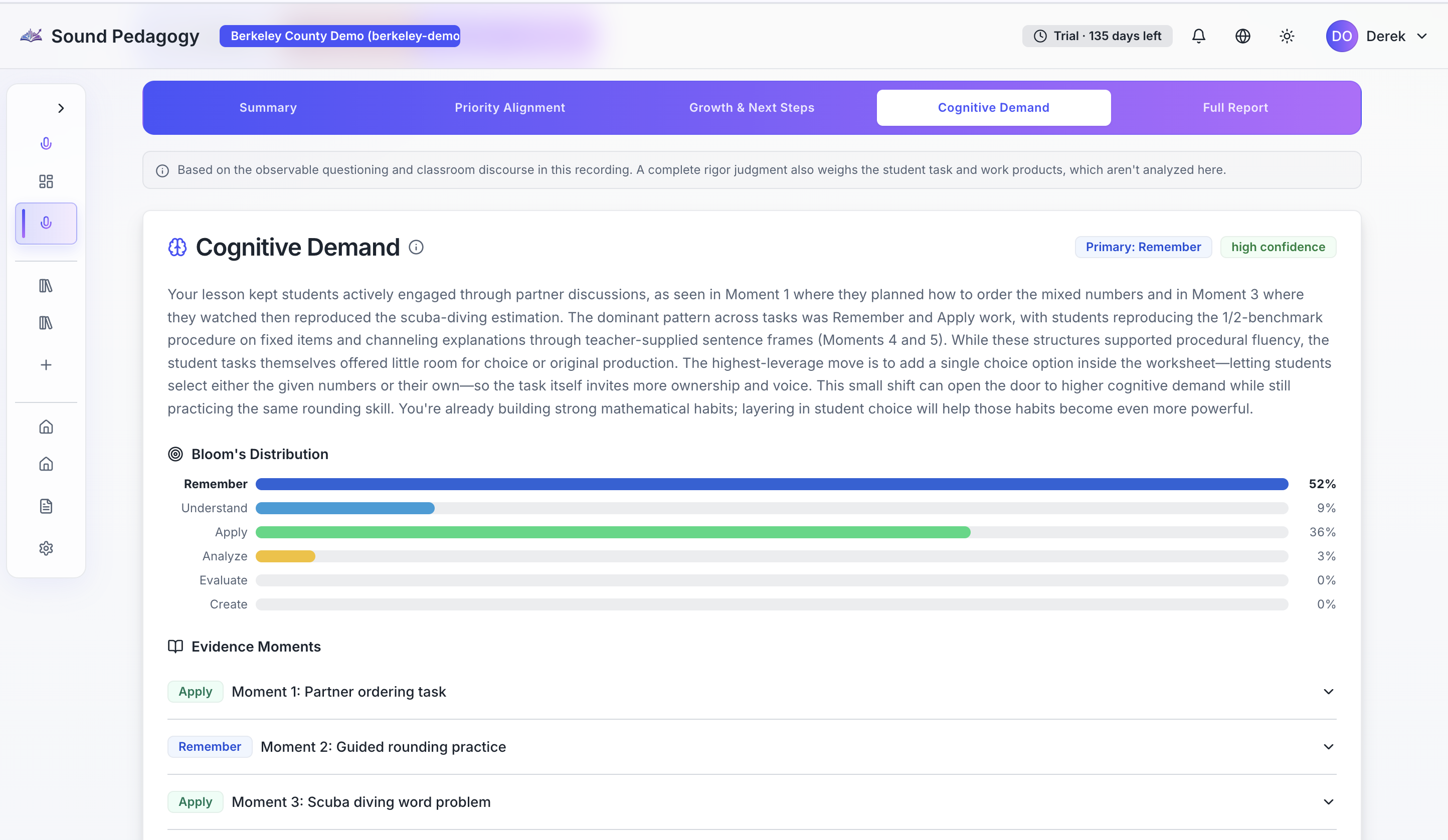
Each report comes with a Cognitive Demand report
-
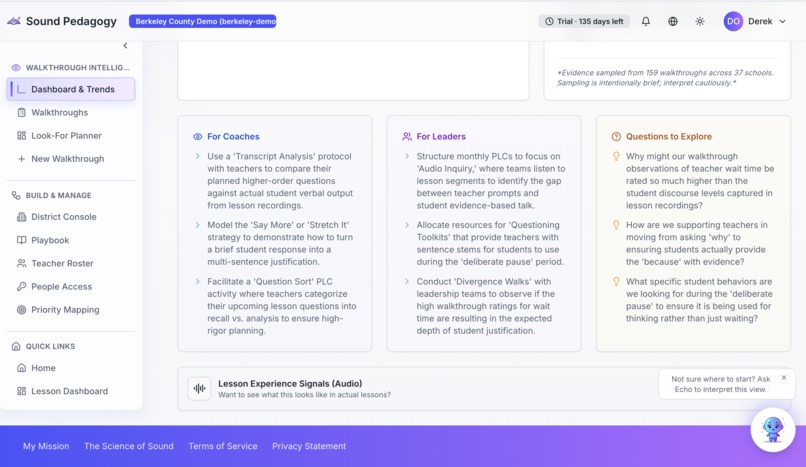
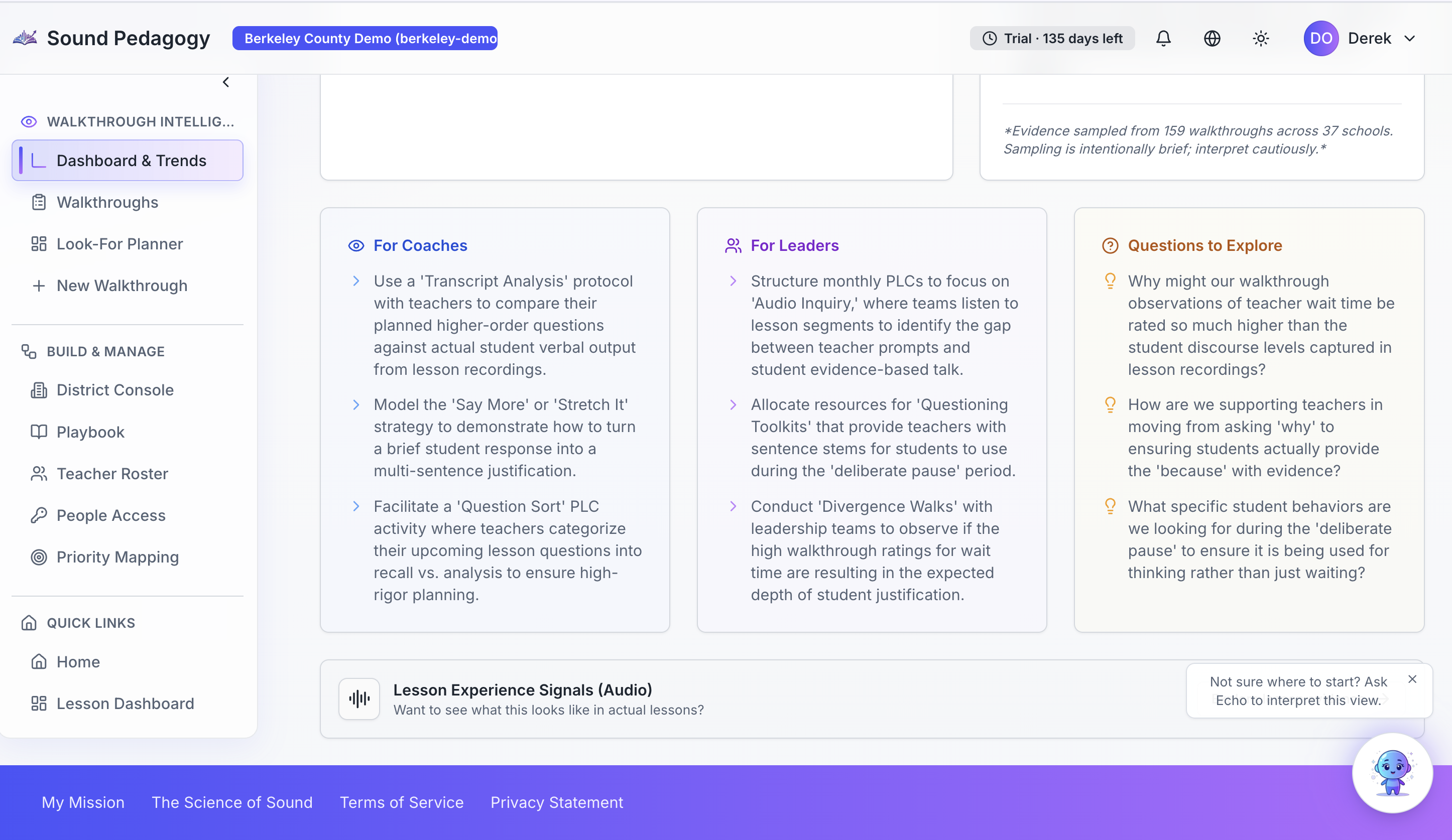
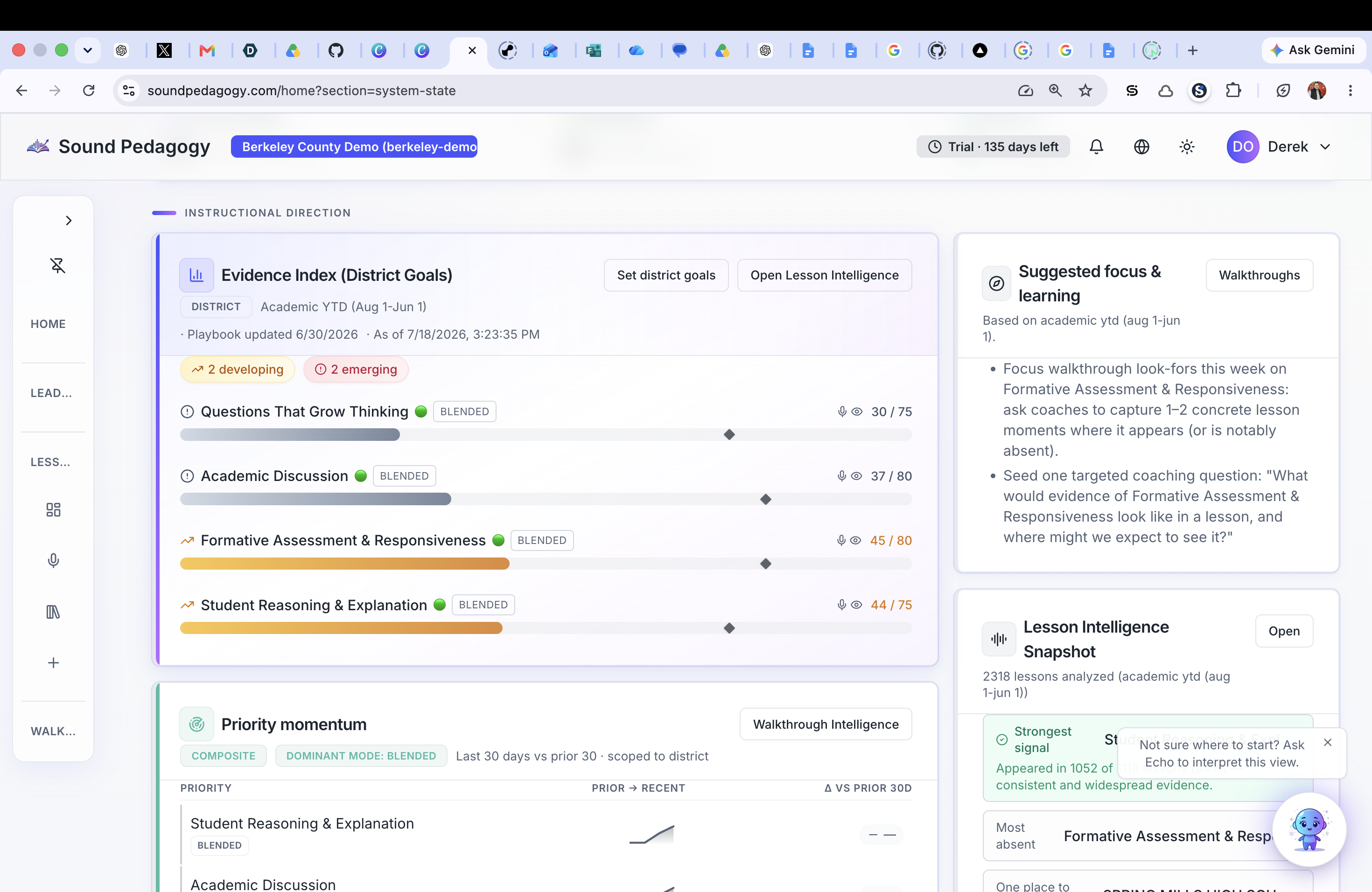
Generated insights for school and district leadership roles
-
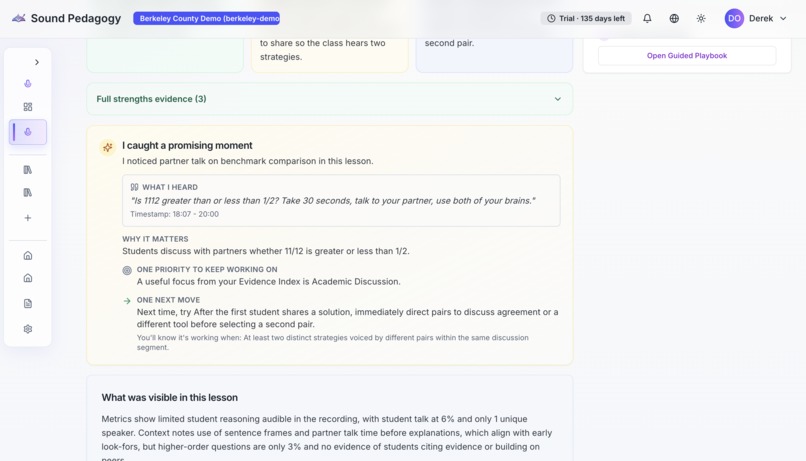
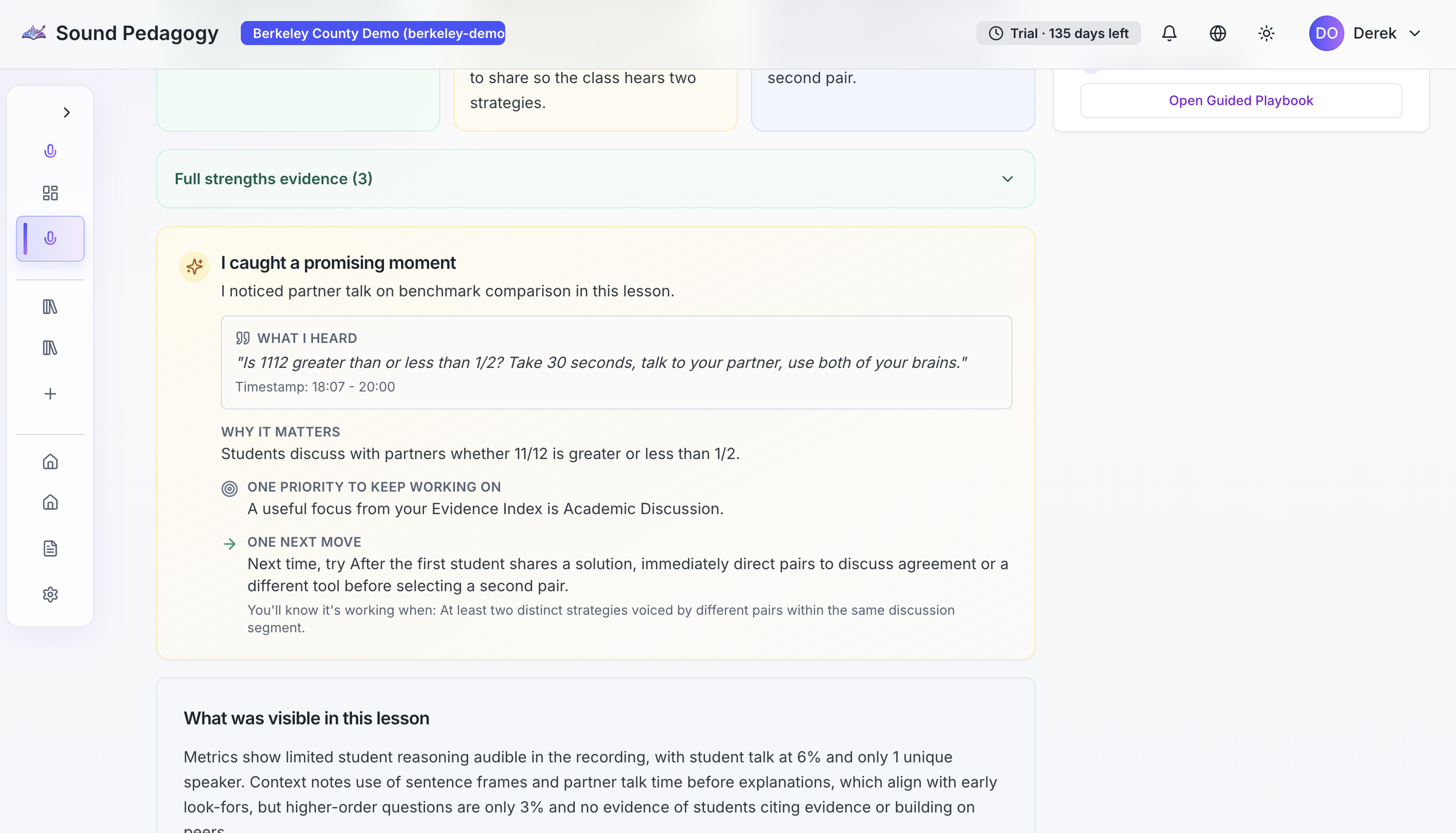
Insights are grounded in the lesson audio transcript
-
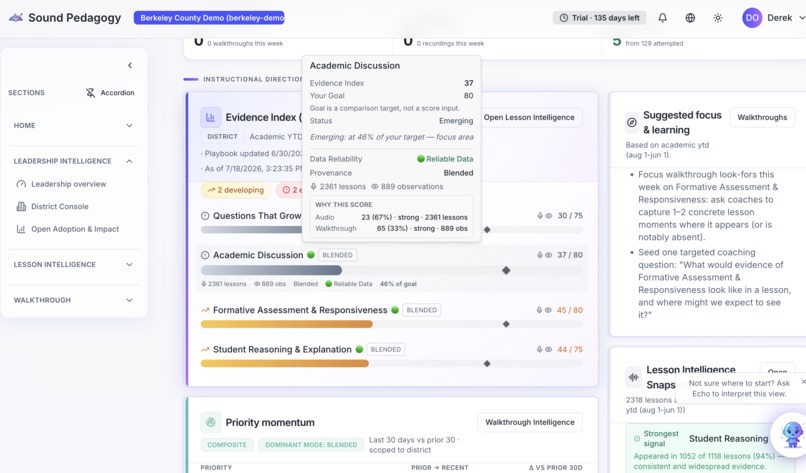
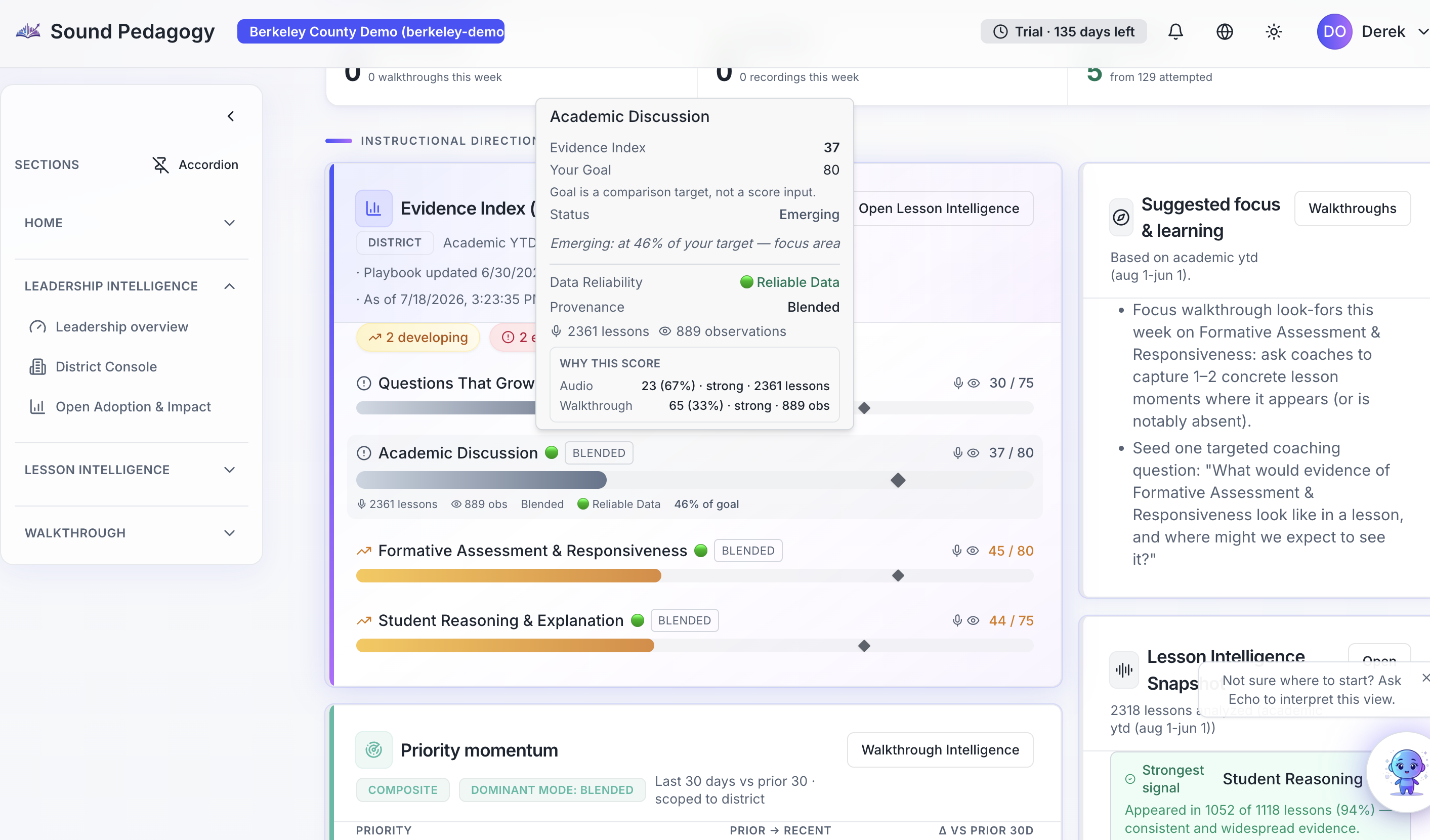
Breakdown of evidence data used to calculate the evidence index score
-
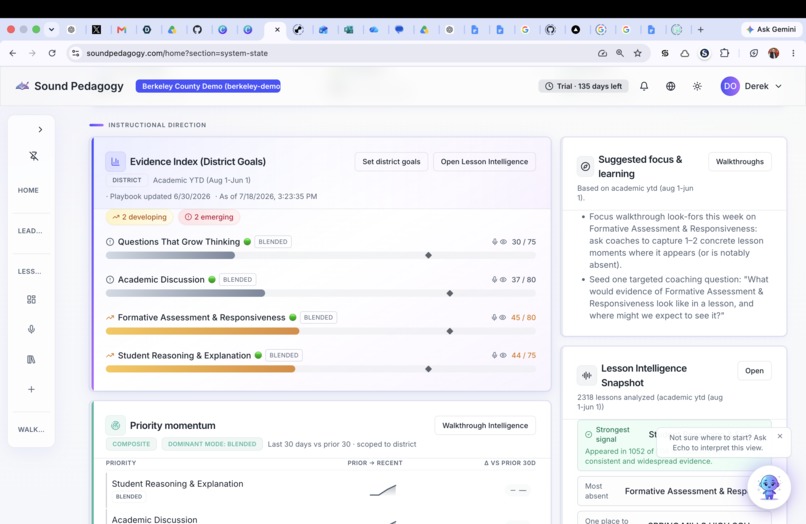
Principal or District Leadership /home page
-
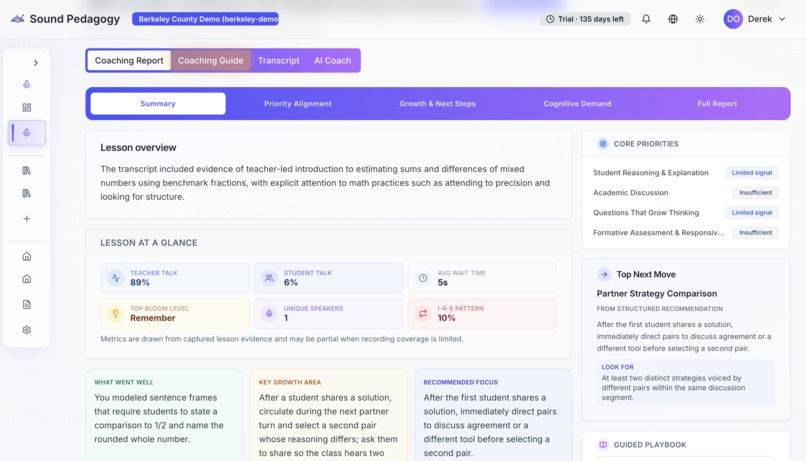
Lesson audio coaching report summary
-
Login page
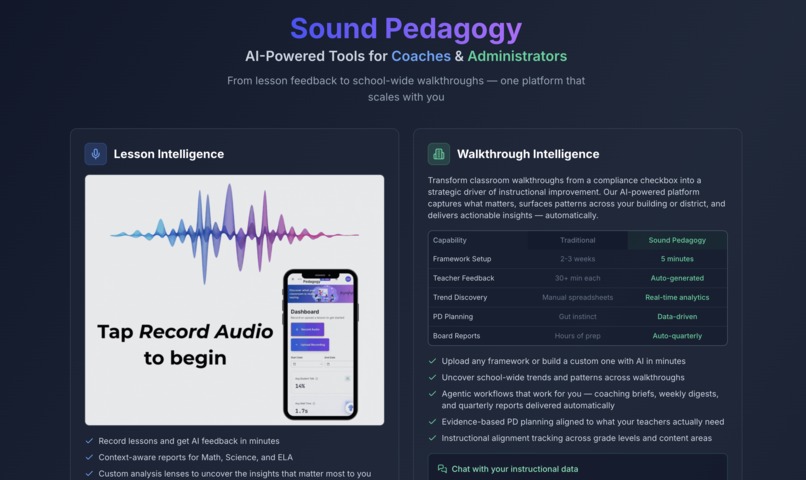
Sound Pedagogy
Inspiration
Large language models are remarkably good at understanding language, but classrooms are far more complex than text alone. Great teaching depends on questioning, discussion, pacing, evidence of student thinking, instructional strategies, and countless contextual decisions that unfold over an entire lesson.
As an educator and instructional technology leader, I wanted to explore a question:
Could an AI system move beyond summarizing a transcript and instead reason about teaching like an experienced human instructional coach?
Sound Pedagogy was built to answer that question by combining AI models with structured instructional evidence to generate coaching that is specific, transparent, and actionable.
What it does
Sound Pedagogy transforms a classroom lesson into a comprehensive coaching experience.
The platform:
- Transcribes and analyzes classroom audio
- Distinguishes teacher and student voices
- Identifies instructional patterns throughout the lesson
- Maps evidence against customizable instructional playbooks
- Generates evidence-grounded coaching reports
- Tracks instructional growth across multiple classroom observations
Rather than asking an LLM to "review a lesson," the platform builds structured evidence first, then uses AI models to synthesize meaningful instructional insights.
The result is coaching that teachers can immediately act on instead of generic AI feedback.
How we built it
Sound Pedagogy is designed to answer three instructional questions:
What are our instructional expectations? Where is this classroom in relation to those expectations? What should the teacher do next to close the gap?
To answer those questions, the platform combines multiple sources of instructional evidence through a structured AI pipeline:
Lesson audio is transcribed, diarized, and analyzed to identify instructional patterns, classroom discourse, questioning, engagement, and other evidence that cannot be captured through a traditional walkthrough. Administrative walkthrough observations are combined with lesson audio analysis to build a richer picture of classroom instruction than either source could provide independently. An Evidence Index is calculated for every instructional priority, measuring the strength, consistency, and confidence of the available evidence across multiple signals. Retrieval-Augmented Generation (RAG) grounds every coaching decision in district instructional priorities, instructional frameworks, previous coaching context, and the supporting classroom evidence. Longitudinal coaching builds on prior growth over time, allowing recommendations to advance as teachers demonstrate implementation instead of treating every lesson as an isolated event.
Every coaching recommendation is grounded in observable classroom evidence, instructional priorities, and accumulated implementation history before it reaches the teacher, reducing hallucinations and ensuring coaching remains transparent and defensible.
The project combines modern AI workflows including embeddings, vector search, structured outputs, prompt orchestration, and evidence-first reasoning.
Beyond powering portions of the application itself, ChatGPT became an indispensable development partner throughout the project. I used Codex, GPT-5.5, 5.6, and OpenAI models within GitHub Copilot to iterate on architecture, debug complex issues, refine prompts, design data models, and accelerate implementation. This gave me the ability to explore ideas and iterate at a pace that would have been impossible working alone.
Challenges we ran into
One of the biggest challenges was preventing the AI from producing believable but generic coaching.
Early versions sounded impressive but frequently lacked enough connection to what actually happened during the lesson. The same recommendations were surfacing over and over. I had to develop a strategy bank from reputable sources like Marzano, Danielson, and others. I also developed a core priority profile. Underneath selected core priorities are evidence indicators and core strategies that we know will strengthen each priority. This dramatically improved the coaching recommendations that AI would recommend.
Instead of relying entirely on prompting, I redesigned the architecture so the model reasons over structured instructional evidence before generating recommendations.
Another challenge was balancing flexibility with consistency. Schools use different instructional frameworks, so the platform needed to adapt to different "playbooks" while still producing reliable coaching.
Accomplishments that we're proud of
The accomplishment I'm most proud of is the next-move implementation. Schools and districts aren't interested in producing 1000 coaching reports throughout the year. They want to know how instructional practices improved as a result of using Sound Pedagogy. Next-moves exist in Sound Pedagogy as a way for the system to recommend instructional strategies and allow a teacher to respond to them. If a teacher selects to try one, the system begins listening for that strategy in future recordings. That plan also surfaces in the walkthrough administrators conduct. What this adds for school and district leadership is the ability to communicate changes in teacher practice and strategies that specifically led to increases in evidence index scores.
What we learned
This project reinforced that the most effective AI systems are not built by asking better questions.
They're built by giving models better evidence.
AI models become dramatically more powerful when paired with carefully designed retrieval systems, structured instructional data, and domain-specific reasoning pipelines.
Building trustworthy AI isn't just about choosing the best model. It's about designing the information architecture around the model.
I have also learned that lesson audio evidence is the missing data layer so many schools and districts are looking for when it comes to identifying what is really happening in their classrooms.
What's next for Sound Pedagogy
The next phase is expanding from lesson analysis into a true instructional intelligence platform.
Future work includes multimodal classroom understanding, richer longitudinal analytics, conversational coaching assistants, district-wide instructional trend analysis, and deeper integration with OpenAI's latest reasoning and agent capabilities.
The problem is clear: teachers receive very little feedback on the instruction that is happening in the classroom. Traditional methods of collecting instructional data often rely on infrequent and uncalibrated instruments that don't invoke trust with teachers. And with teacher shortages across the country, many districts can no longer afford to employ experienced instructional coaches. Our goal is simple: give every teacher access to the kind of thoughtful, evidence-based coaching that is normally available only through expert instructional mentors.
Built With
- 5.5
- assemblyai
- chatgpt
- cloudflare
- codex
- copilot
- embeddings
- firebase
- gemini
- github
- grok
- neon
- node.js
- postgresql
- rag
- react
- render
- typescript

Log in or sign up for Devpost to join the conversation.