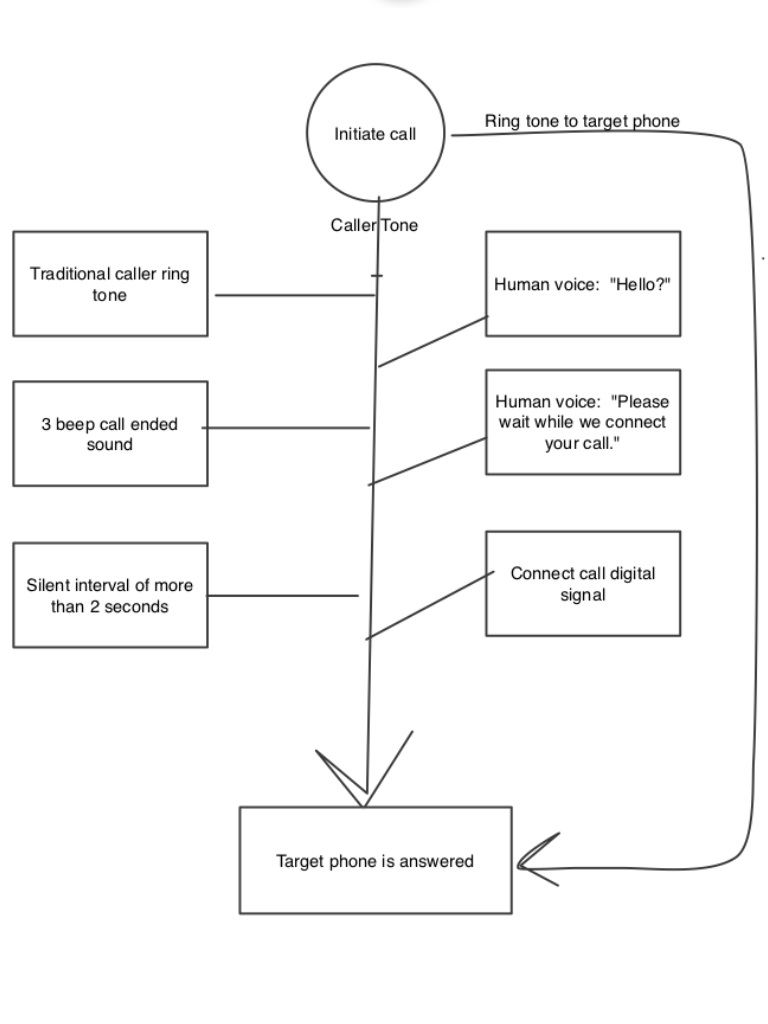

          Many proposed methods will not work.  Any method that requires adding new equipment or an interface to existing phones is too expensive and cumbersome. Identifying, capturing and reporting caller IDs will fail since the source numbers can be faked or spoofed and they can be changed faster than lists can be recorded.  Requiring every caller to answer questions, input a PIN or perform a function in order to be connected will defeat robocallers but will be wildly unpopular.  My patent pending solution is to have telephone carriers alter the normal caller tone heard by the caller to include audible elements that confuse a robotic caller, causing it to prematurely begin a recorded message or to disconnect the call before the callee answers the call.   The invention defeats robocallers by having telephone carriers alter all caller tones to simulate the way in which robocallers automatically sense that the phone being targeted has been answered or hung up. Robocallers usually begin their presentation a few seconds after the caller tone ceases, or after sensing the sound of a human voice answering the call followed by silence or by sensing a digital or radio signal to connect the call. The present invention includes one or more of these audible elements instead of the customary ringing caller tone heard by the caller. One embodiment of this invention embeds the customary digital or radio signal to connect a call in the caller tone prior to actually beginning a ring tone signal to the target phone.    In a preferred embodiment, the telecom provider alters the caller tone by substituting the normal ring sound with a human voice stating "Hello?" followed by an interval of silence lasting longer than the customary interval of silence between ring tones.  Then the announcement, "Please wait while we connect your call."  Then another interval of silence while the callee hears a ring tone. This unique caller tone will trigger premature start to a robocall recording, defeating its message. In another embodiment, the caller tone is altered to include the three beep sound or a solid tone that customarily signals a hang up and will cause the robocall to disconnect.
         The altered caller tone can be quickly produced and implemented by telecom providers. It will not confuse or dissuade a human caller, nor will it alter the current experience of the person being called. Furthermore, it is a robust and highly adaptable method.  As robocallers change the way in which they monitor and sense a call has been answered or hung up the caller tone can be changed to confuse them. A legitimate robocall such as a political recording can defeat this invention by having a human caller manually initiate the call and ask permission to play a recorded message.
Sound Idea Caller Tone
Updates

Leave feedback in the comments!
Log in or sign up for Devpost to join the conversation.