-
-
thumbnail
-
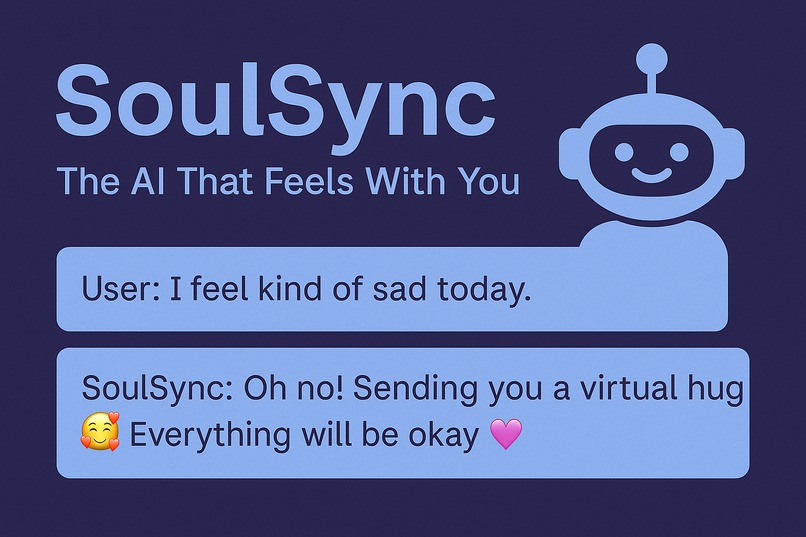
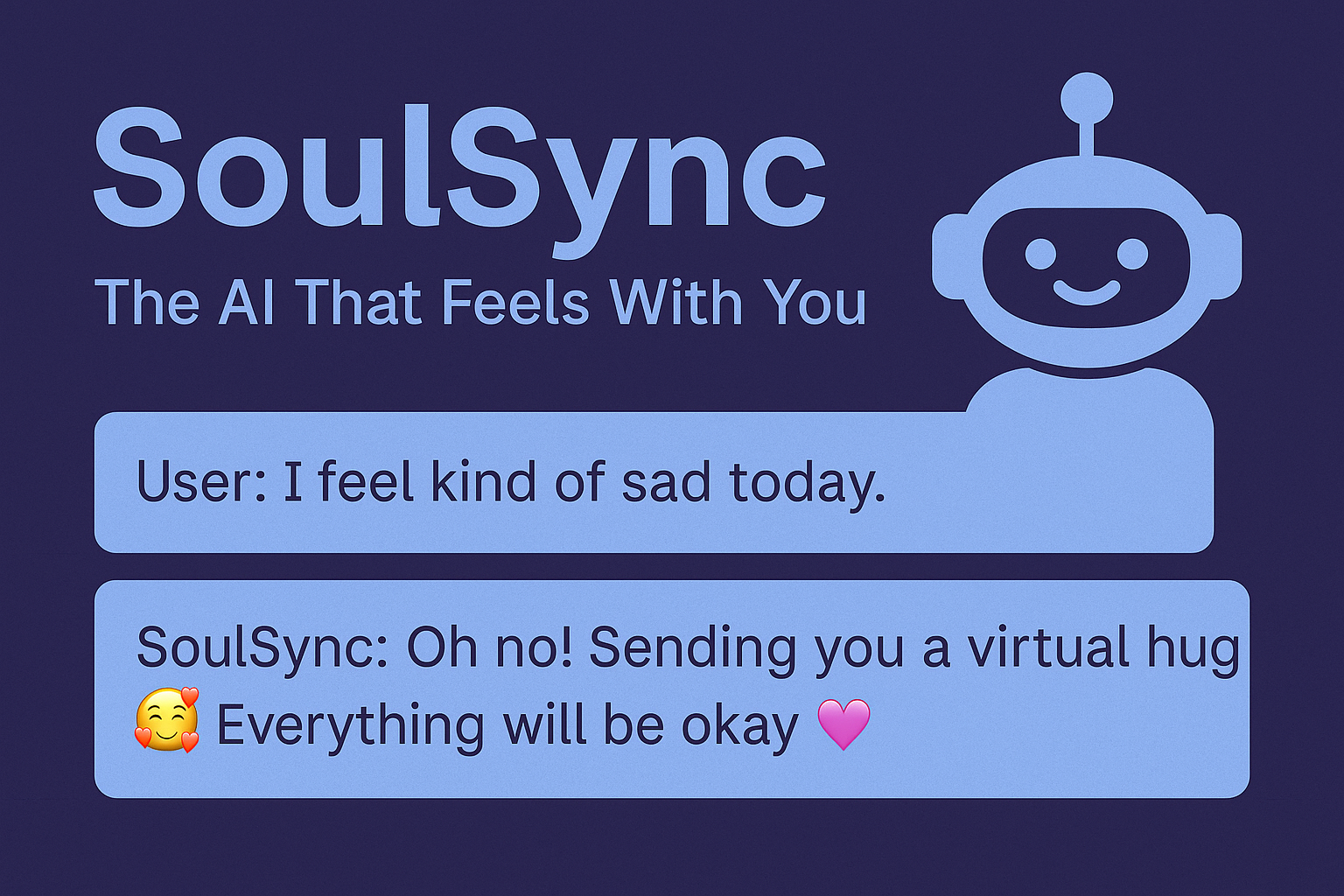
This image demonstrates how the AI assistant mirrors human moods in a friendly and empathetic tone.
-
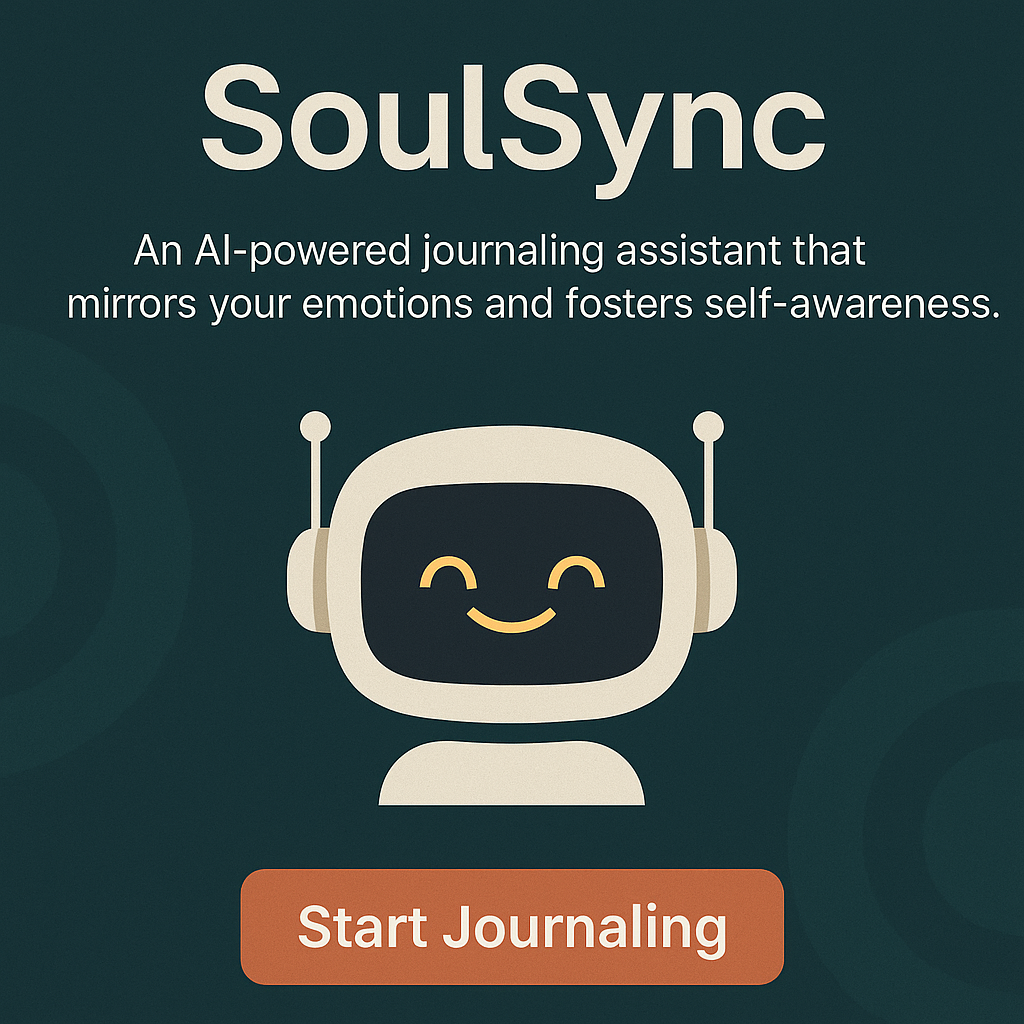
A mock dashboard introducing SoulSync as an AI-powered journaling assistant.
-
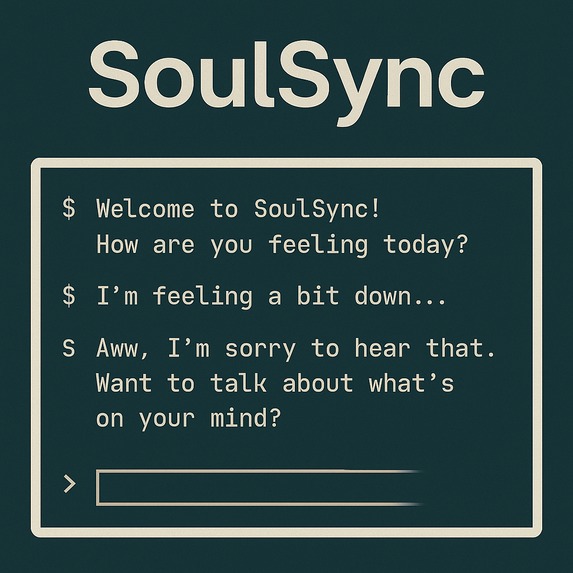
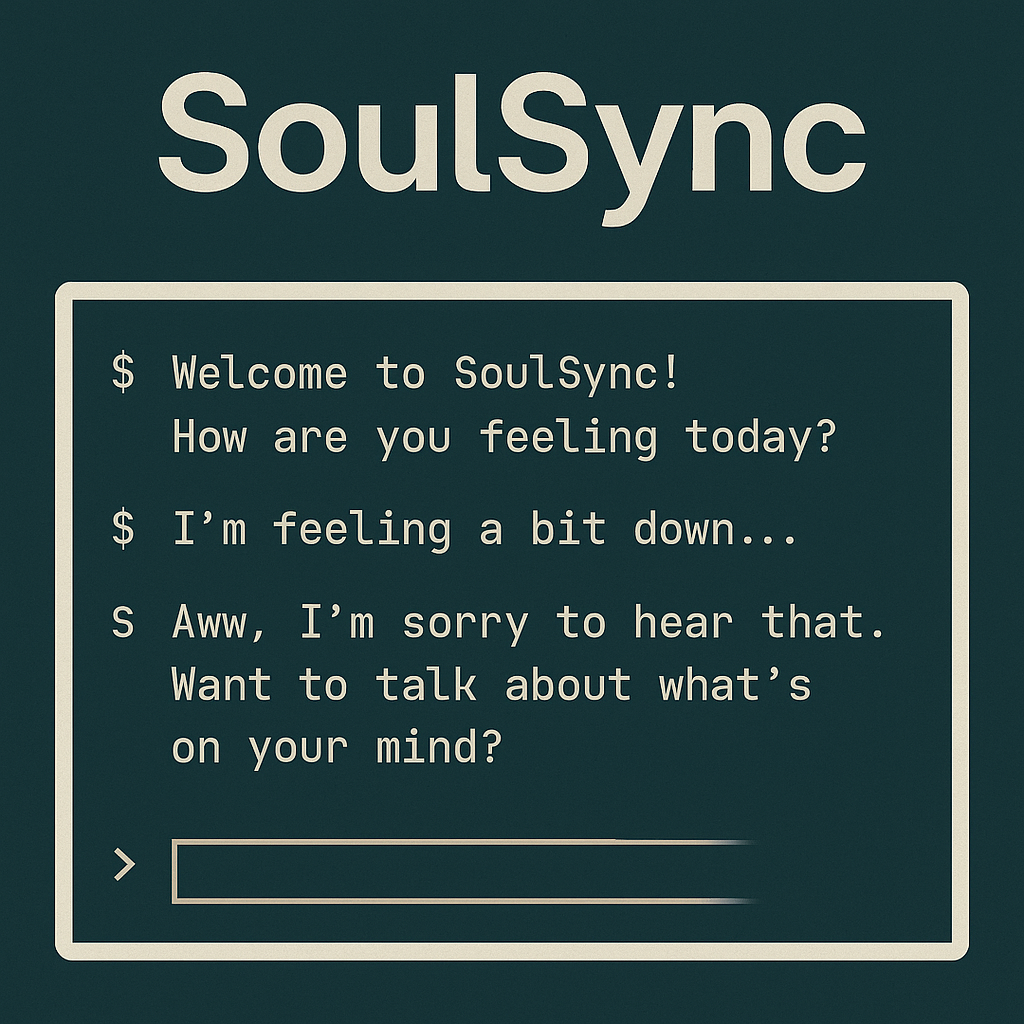
A 2D retro-inspired terminal mockup of a live user interaction with SoulSync.
Inspiration
Most AI tools are designed to be functional, polished, and emotionless. But humans are chaotic, emotional, and sometimes downright weird. We wanted to create a chatbot that doesn’t just respond — it relates. So we asked: What if AI had a personality so strong, it started to feel human? Thus, SoulSync was born — an emotional, vibe-based AI assistant that mirrors your moods, reacts like a best friend, and makes even your bad days feel a little more understood.
What it does
How we built it
Language: Python Interface: Terminal / Command Line Logic: Emotion detection via keyword mapping Randomized personality-based response system Structure: One main function to detect emotional tone One response generator based on detected mood No external APIs or libraries — just pure logic and human-inspired language.
Challenges we ran into
Emotional nuance is hard — people express the same emotion in wildly different ways We had to keep the detection logic simple but effective, so it worked for beginners without relying on ML libraries Making responses feel human, not robotic, required careful language crafting.
We also had to resist the urge to “overbuild” — the soul of this project was in its simplicity
Accomplishments that we're proud of
This isn’t just a bot. It’s a mirror. A friend. A slightly unhinged emotional support algorithm. SoulSync proves that human-first AI doesn’t have to be complex — just expressive.
What we learned
How to design conversational AI that feels personal without being overly complex
How tone, timing, and randomness can simulate emotional intelligence
That even a simple chatbot can feel real when you inject it with humor, empathy, and a little chaos

Log in or sign up for Devpost to join the conversation.