-
-
Problem Statement
-
A Statistic
-
Target Users
-
What is Soul?
-
-
-
-
Soul - Smart Insole for Diabetic Foot Ulcer Prevention
Inspiration
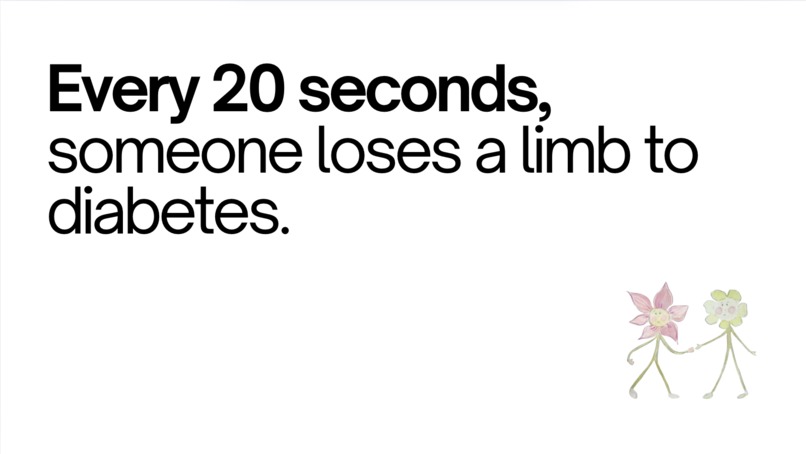
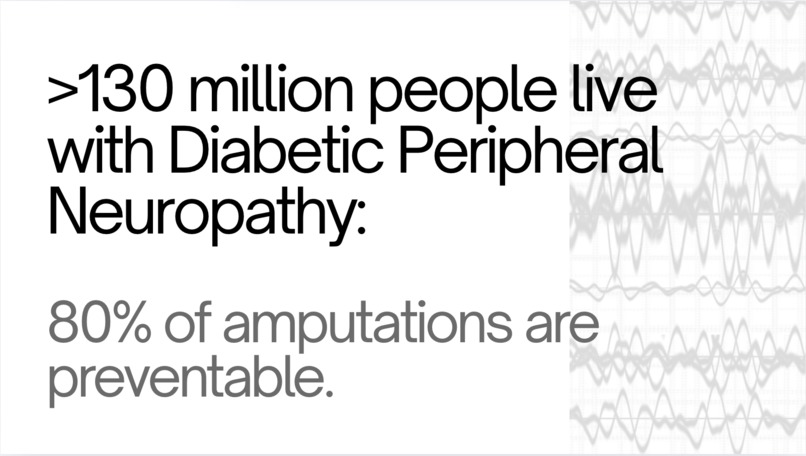
Every 20 seconds, someone loses a limb because of a diabetic foot ulcer—yet 85% of these amputations are preventable with early detection.
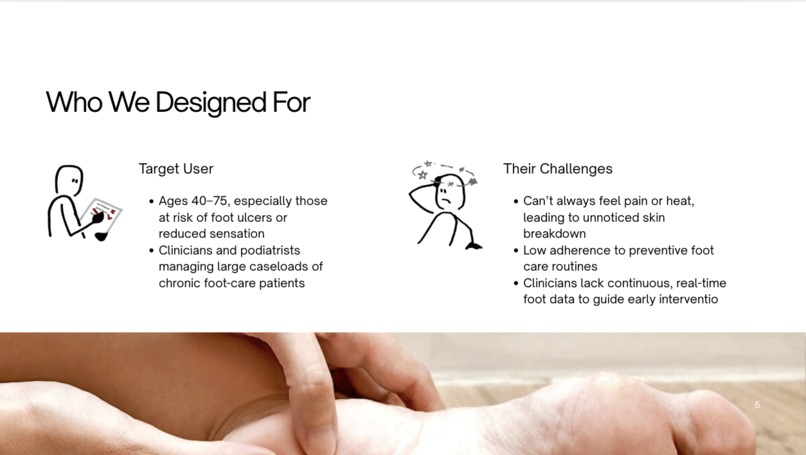
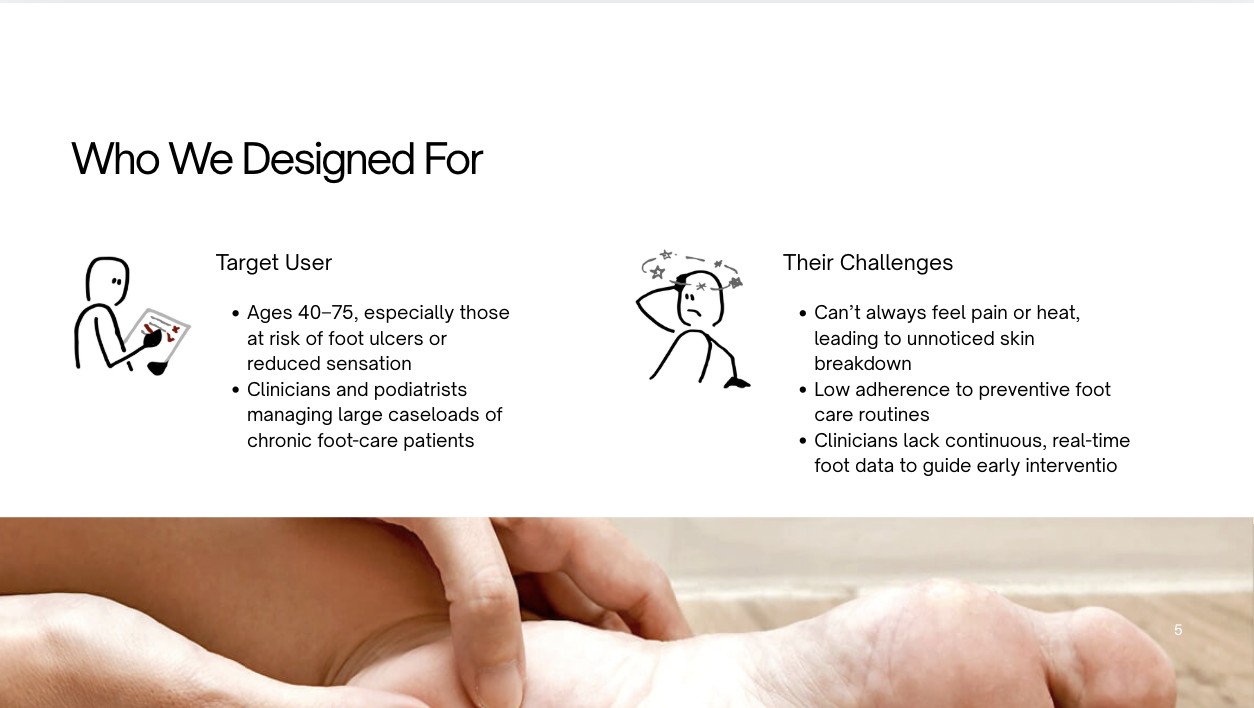
Diabetic patients with neuropathy can't feel wounds or pressure points developing on their feet. By the time symptoms appear, tissue damage is often irreversible. We wanted to build something that listens before pain speaks—an intelligent insole detecting the earliest warning signs through continuous monitoring.
Soul is prevention as effortless as stepping into your shoes each morning, giving people with diabetes back their independence, mobility, and confidence.
A soul for a diabetic's sole.
What it does
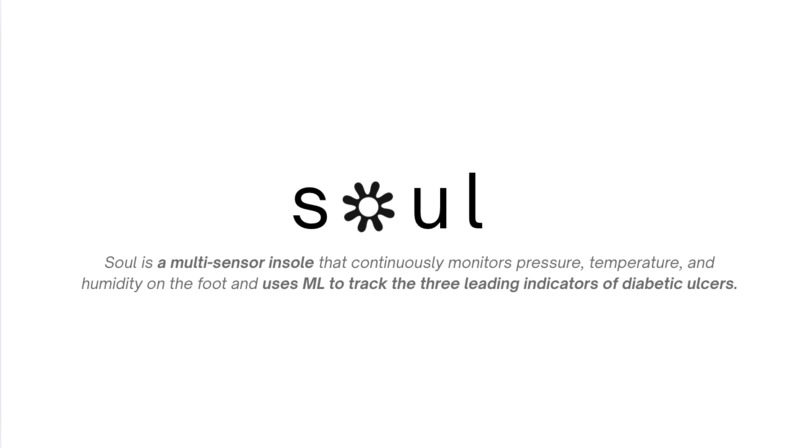
Soul monitors the three critical risk factors for diabetic foot ulcers: pressure, temperature, and humidity.
Clinical Foundation
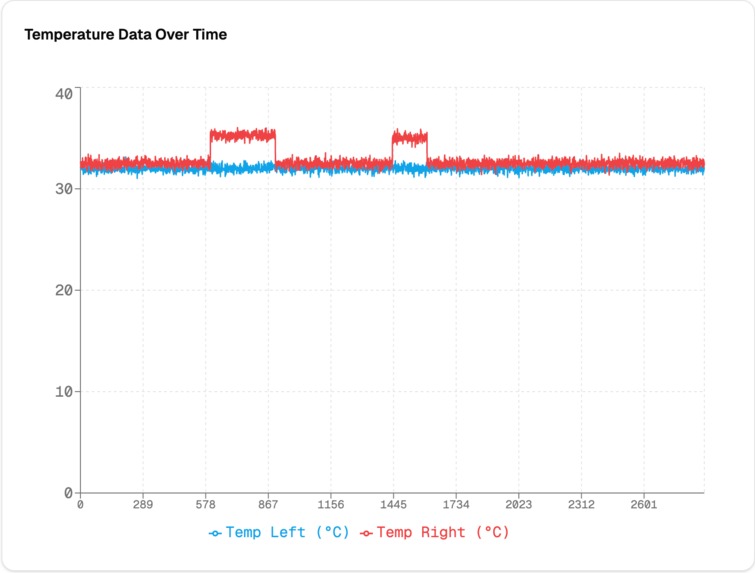
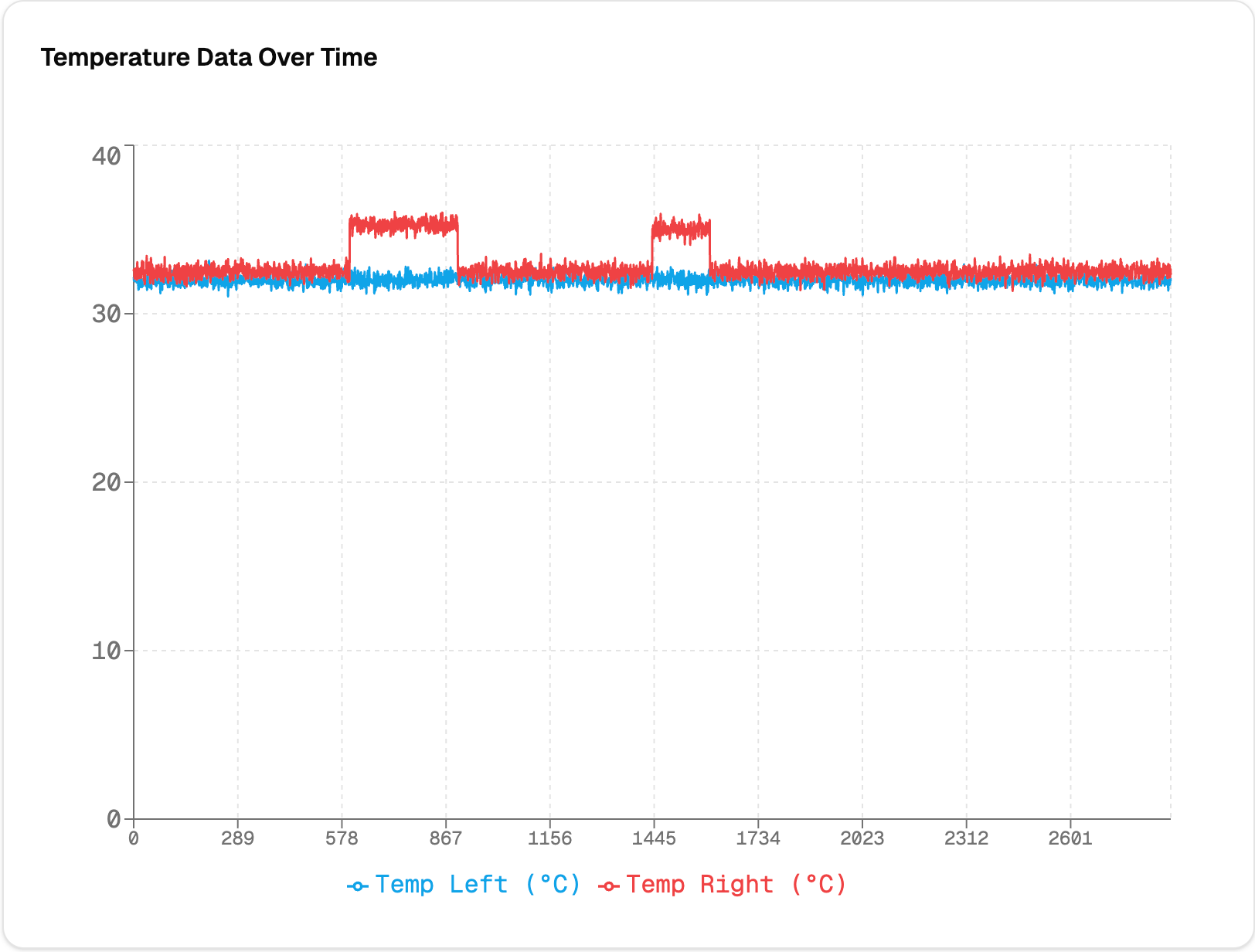
- Temperature asymmetry >2.2°C between feet predicts ulcers 33-42 days early (97% sensitivity)
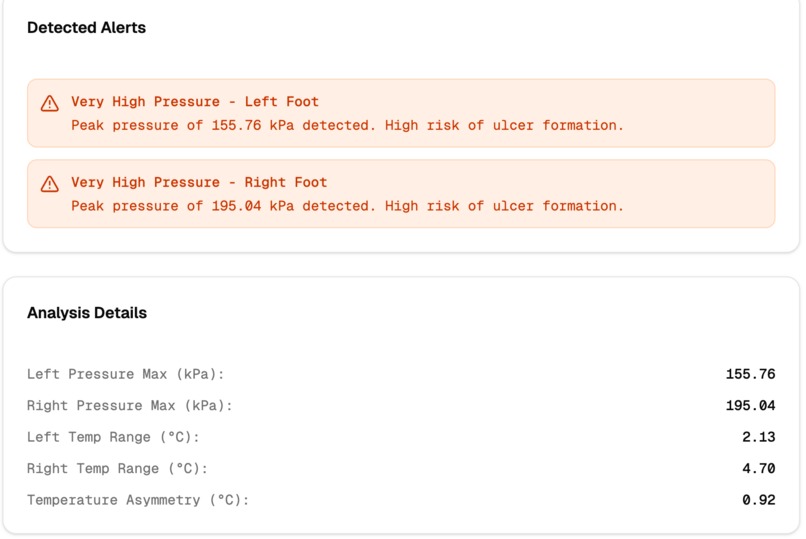
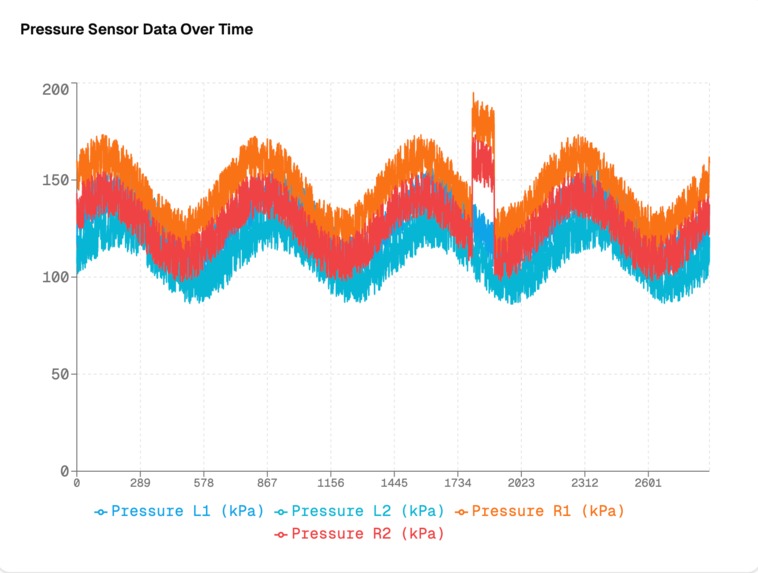
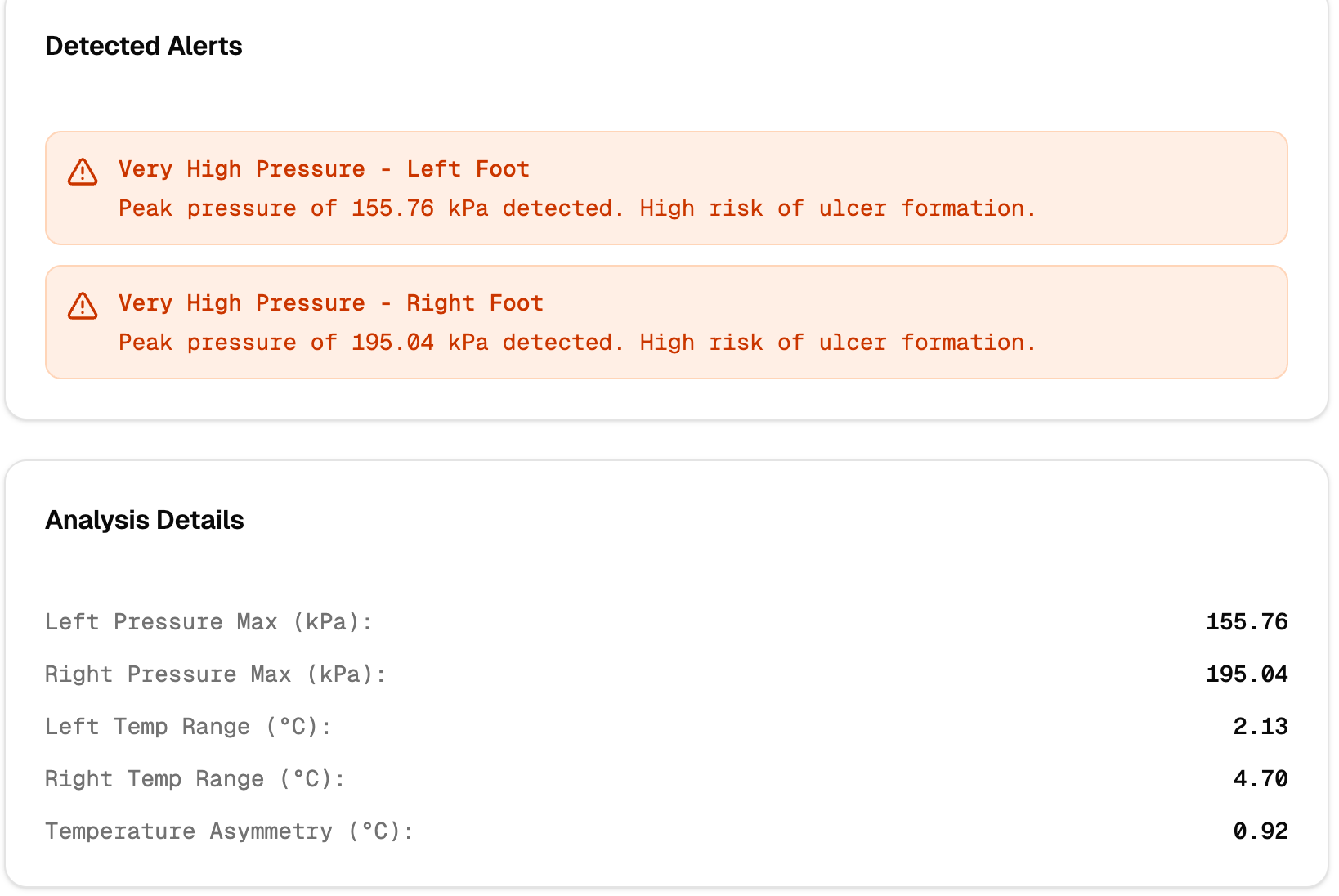
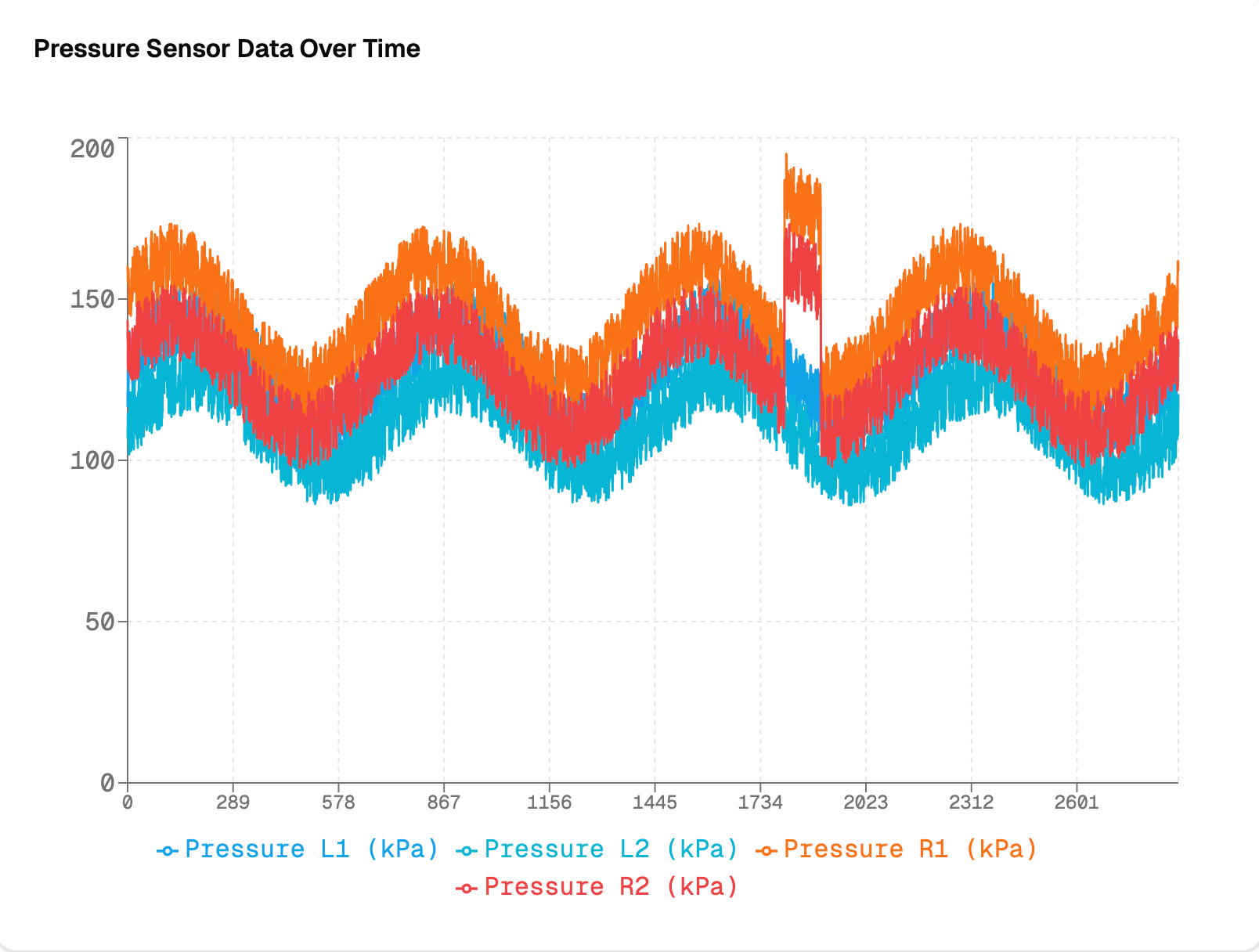
- Sustained pressure >200 kPa causes capillary occlusion and tissue ischemia
- Elevated humidity >80% indicates maceration risk
- Multimodal monitoring achieves F1 scores 0.983-0.997 in ulcer prediction
System Components
Hardware Monitoring:
- 2 pressure sensors/foot (0-999 range → 0-400 kPa) at metatarsal heads and heel
- 1 temperature sensor/foot (0-65°C) for bilateral asymmetry detection
- 1 humidity sensor/foot (0-100% RH) tracking moisture
- 1 sample/minute (validated by FDA-cleared Orpyx system)
- BLE transmission to mobile app
Dual Analysis System:
Rule-Based Algorithm (interpretable, clinically validated):
# 1. Calculate bilateral asymmetry
temp_asymmetry = abs(temp_left - temp_right)

# 2. Check consecutive-day confirmation (reduces false positives 96%)
if temp_asymmetry > 2.2 and occurred_yesterday:
    CRITICAL_ALERT  # 99.7% specificity

# 3. Multimodal risk score (0-7+ points)
risk_score = (
    2 if temp_asymmetry > 2.2 else 1 if temp_asymmetry > 1.5 else 0
) + (1 if pressure > 200 else 0) + (1 if PTI > 70 else 0) + ...

# 4. Generate actionable alerts
"High pressure (245 kPa) at LEFT metatarsal → Shift weight to heel"
XGBoost ML Model (pattern recognition):
- Input: 15+ engineered features (bilateral asymmetry, PTI, temporal trends)
- Output: 4-tier classification (Normal/Monitor/At-Risk/Critical)
- Performance: F1 0.96, trained on DFUC 2020 + clinical trial data
Mobile Dashboard:
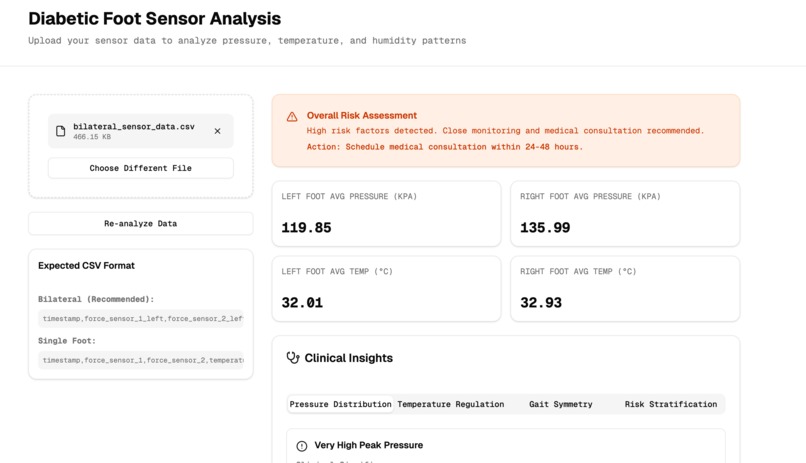
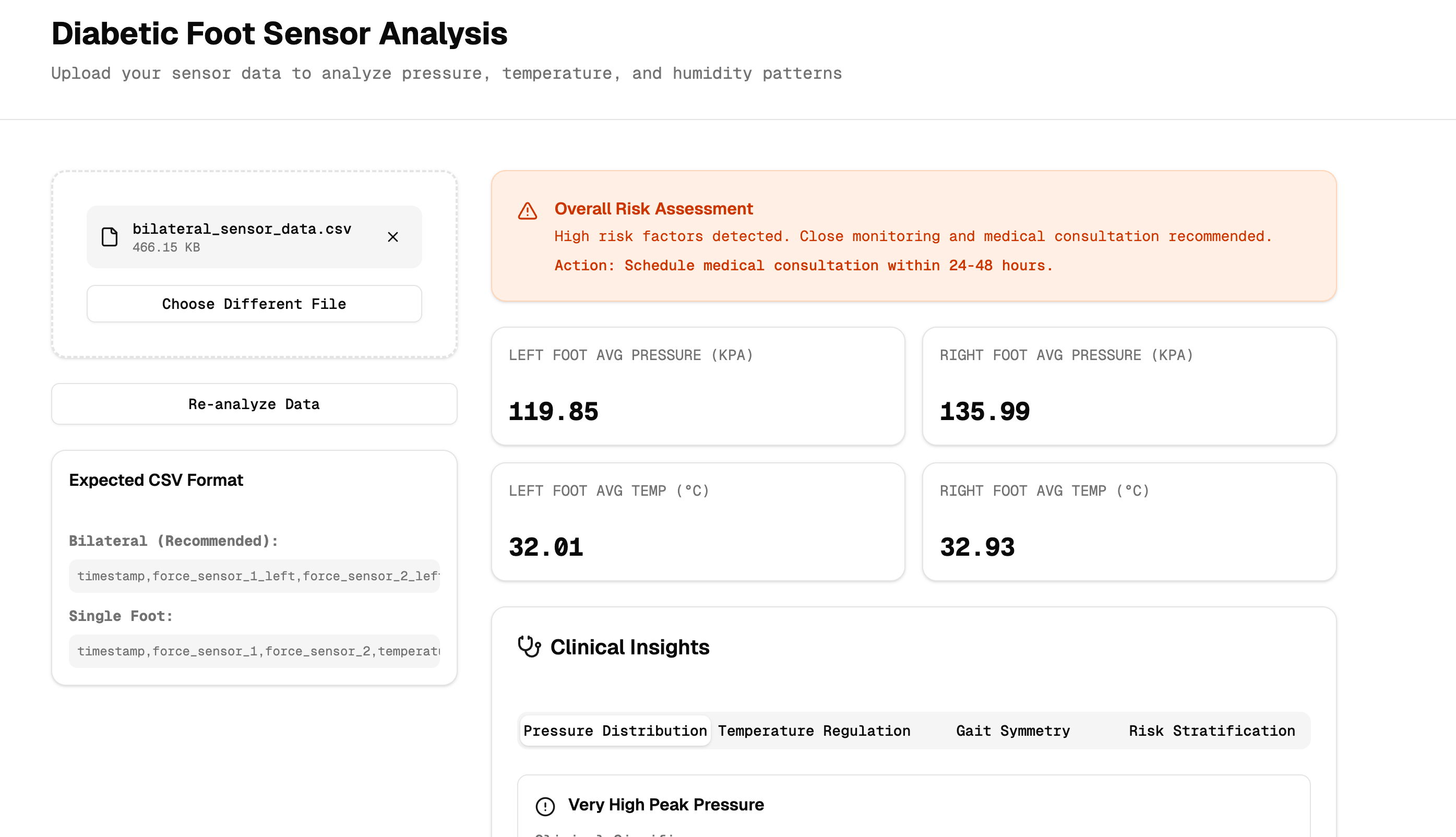
- Real-time bilateral heatmaps with asymmetry visualization
- Color-coded risk zones (Green → Yellow → Orange → Red)
- Actionable alerts: "shift weight to heel," "schedule clinical evaluation"
- Historical trends and consecutive-day confirmation tracking
Clinical Documentation:
- Timestamped data with consecutive-day confirmation
- Weekly/monthly reports for providers
- Foot-specific risk assessment
- Relief period tracking (alerts >90 min without offloading)
How we built it
Hardware
- FSRs at MTH 1/3 (highest ulcer risk zones) with voltage divider linearization
- Thin-film thermistors (±0.1°C precision)
- Capacitive humidity sensors at toe box/midfoot
- ESP32 for data acquisition and BLE transmission
- Li-Po battery (24+ hour operation)
Software Pipeline
ESP32 → BLE → React Native App → Flask API → Dual Analysis
                      ↓                ↓
              Live Dashboard    Rule Algorithm + XGBoost
                                        ↓
                                  Supabase (PostgreSQL)
Algorithm: Implements 7 steps—preprocessing, bilateral asymmetry, rolling window analysis (15-min PTI), consecutive-day confirmation, multimodal scoring, foot-specific assessment, alert generation
ML Training: DFUC 2020 dataset + synthetic gait pressure maps + clinical trial data (Lavery, Abbott, Ghulam & Abdullah)
Backend: Flask endpoints (/upload, /predict, /alerts) + Supabase (auth, real-time DB, row-level security)
Clinical Validation
Grounded in:
- 5 RCTs (772 participants) showing 71-90% ulcer reduction
- Systematic reviews (Castro-Martins 2024, 26 studies)
- Commercial validations (Orpyx, Podimetrics)
- 40+ papers synthesized into unified thresholds
Challenges we ran into
Sensor Calibration: FSRs showed non-linear response/hysteresis → Polynomial calibration curves + temperature compensation
False Positives: Initial temp alerts triggered on normal variation → 2-consecutive-day confirmation (Wijlens 2017): 96% false positive reduction, maintained 97% sensitivity
Data Sync: Time-aligning left/right readings for asymmetry → Timestamp protocol + interpolation for missing samples
Research Synthesis: Fragmented medical literature → Systematic review of 40+ papers into unified algorithm
Accomplishments that we're proud of
Evidence-Based System: Every threshold backed by peer-reviewed research—not just a sensor, but a clinically validated early warning system
Gold Standard Detection: Temperature asymmetry >2.2°C on consecutive days = most validated predictor (99.7% specificity beats commercial systems)
Dual Analysis Innovation: Rule-based (interpretable for clinicians) + XGBoost (subtle pattern recognition) = best of both worlds
End-to-End Integration: Hardware → firmware → ML → mobile app → clinical dashboard—complete pipeline with <2s latency
Actionable Intelligence: Not just data visualization—specific guidance ("shift weight to heel") and foot-specific assessments
What we learned
Technical:
- Biomechanical forces → reliable digital signals requires careful calibration
- ML needs temporal context; consecutive-day confirmation is algorithmic brilliance
- Dual approach (rules + ML) > either alone for medical devices
Clinical:
- Medical devices need precision (thresholds) + interpretation (context)
- Human story matters—prevention gives confidence and independence
- Temporal validation (2-day confirmation) dramatically improves specificity
Design:
- Good UX turns complex data into action
- Specific alerts ("left metatarsal") > generic warnings
- Color-coded asymmetry visualization is critical for intuitive understanding
Team:
- Hardware, AI, and medicine requires constant iteration and empathy
- Diverse skills (hardware, ML, clinical research, mobile dev) synergy was magical
What's next for Soul
Technical Enhancements:
- LSTM/transformer for temporal pattern recognition
- IMU for gait asymmetry + step counting
- 8-12 pressure sensors/foot for higher resolution
Clinical Deployment:
- Small pilot studies with endocrinology clinics
- FDA 510(k) clearance (predicate: Orpyx, Podimetrics)
- Real patient data for model refinement
Product Features:
- Clinician RPM dashboard with EHR integration (HL7 FHIR)
- Personalized activity recommendations based on daily risk
- Charcot neuroarthropathy detection (>3-4°C asymmetry)
- CGM integration for holistic diabetes management
Long-Term Vision: Make early ulcer detection as effortless as putting on shoes—prevent 100,000 amputations by 2030.
Clinical References
- Lavery et al. (2004, 2007): 90% complication reduction with temp monitoring
- Armstrong et al. (2007): 61% ulcer reduction (OR 3.0)
- Abbott et al. (2019): 71% reduction with intelligent insoles
- Golledge et al. (2022): Meta-analysis (RR 0.51, 5 RCTs)
- Castro-Martins et al. (2024): Systematic review (26 studies)
- Ghulam & Abdullah (2025): Multimodal F1 0.983-0.997
Soul isn't just hardware. It's a step toward giving people with diabetes back their independence, mobility, and confidence.
Built with 💙 at CalHacks 12.0
Built With
- autodesk-fusion-360
- c++
- chart.js
- claude
- claude-api
- d3.js
- esp32
- figma
- firebase
- flask
- groq
- groqapi
- kicad
- micropython
- next.js
- openai-api
- postgresql
- python
- react-native
- scikit-learn
- solidwork
- supabase
- tailwindcss
- typescript
- xgboost


Log in or sign up for Devpost to join the conversation.