
Inspiration
Soul Archive was built for the Stellar Stories theme: data and cultural preservation.
But we wanted to approach that theme from a more personal angle.
The internet is full of traces left by celebrities, politicians, founders, and public figures. Ordinary people rarely get preserved with the same care, even though the world is made of ordinary people. Every person has a voice, memories, habits, values, and stories worth keeping.
We also kept thinking about a more intimate problem: when someone passes away, their personality does not disappear from the people who loved them. Their way of speaking, their experiences, and the small details that made them who they were still matter. Most tools can store photos or documents, but very few preserve presence.
That became the core idea:
What if preservation was not just storage, but conversation?
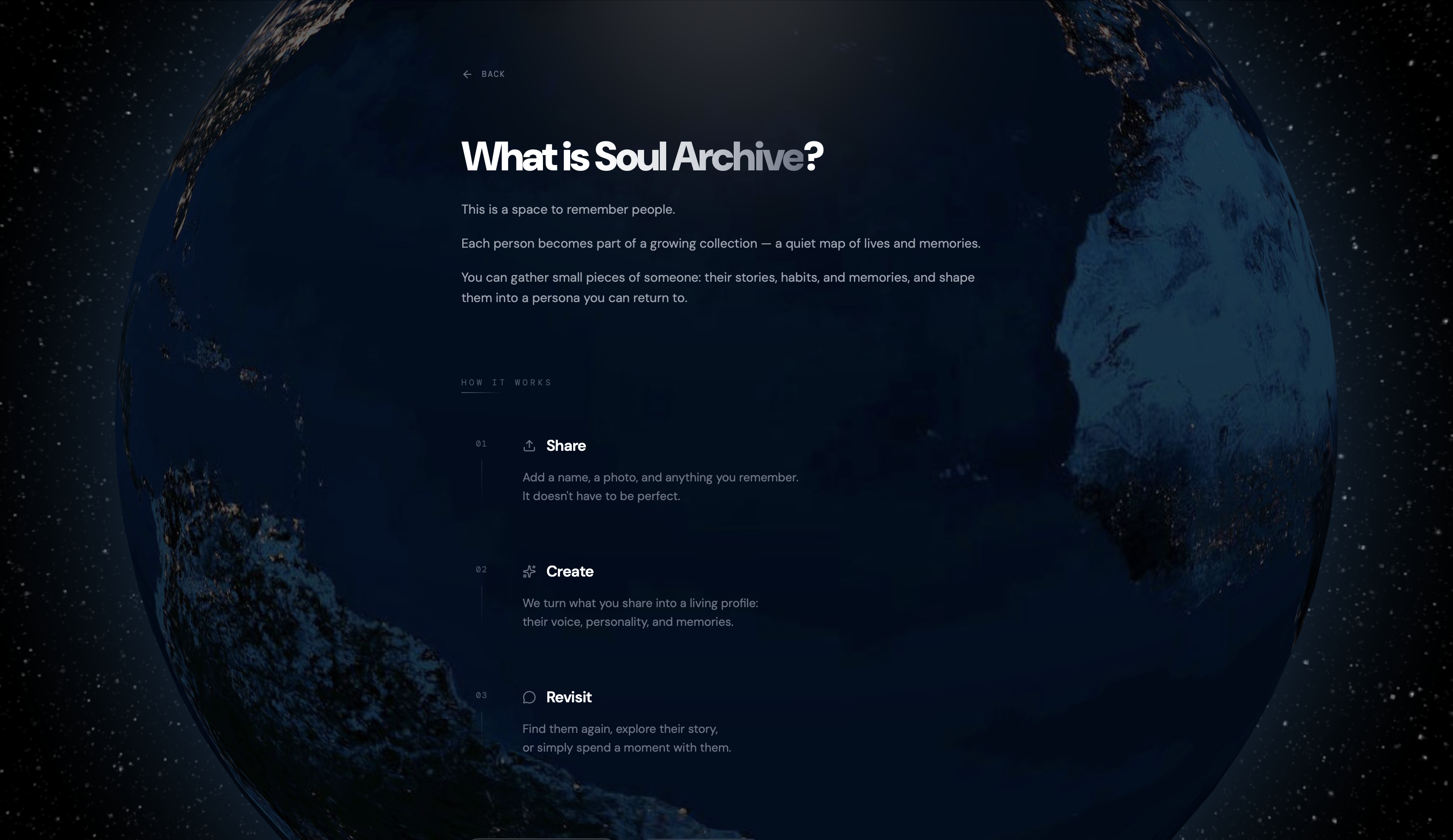
Instead of building another static archive, we built a system where a person can be remembered through an interactive persona that carries their identity, voice, personality, and memory forward.
Why this fits Stellar Stories
This project is directly about preserving human stories with technology.
It also reflects the spirit of the track in three ways:
Preserving people who are usually not preserved Most digital history centers on famous people. We wanted to build for everyone else.
Preserving more than files Photos and documents matter, but so do personality, voice, recurring stories, and personal memory.
Making preservation interactive We used chat as a storytelling interface. Instead of reading a biography, users can ask questions and discover a person through dialogue.
That is the part we think makes Soul Archive feel culturally meaningful rather than just technically functional.
What it does
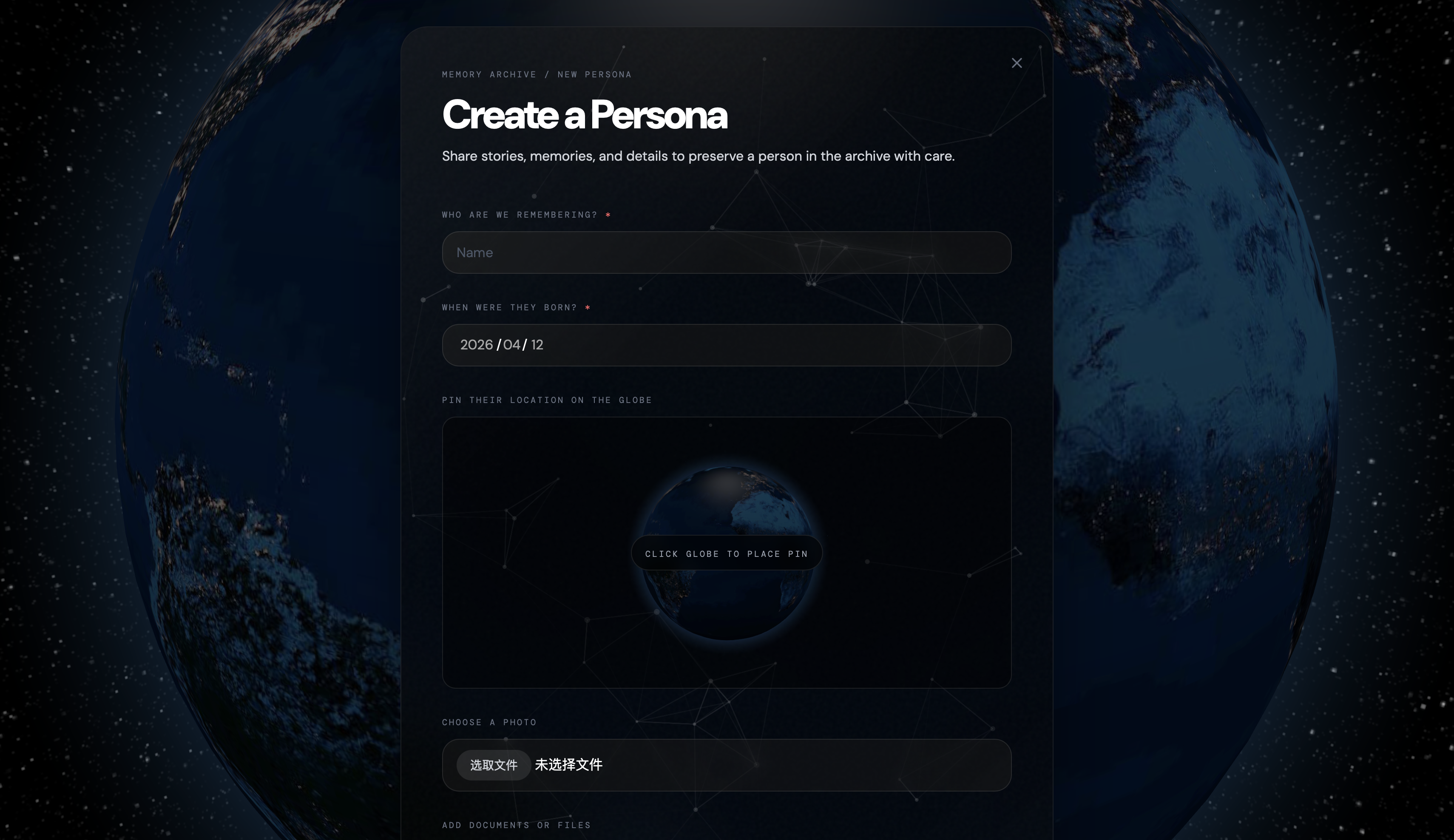
Soul Archive is an AI-powered memory preservation platform.
Users can upload mixed media such as:
- text
- documents
- PDFs
- images
- links
From that input, the system generates five persona files:
identity.mdvoice.mdpersonality.mdmemory.mdagent.md
These files are then used to create a chatable persona.
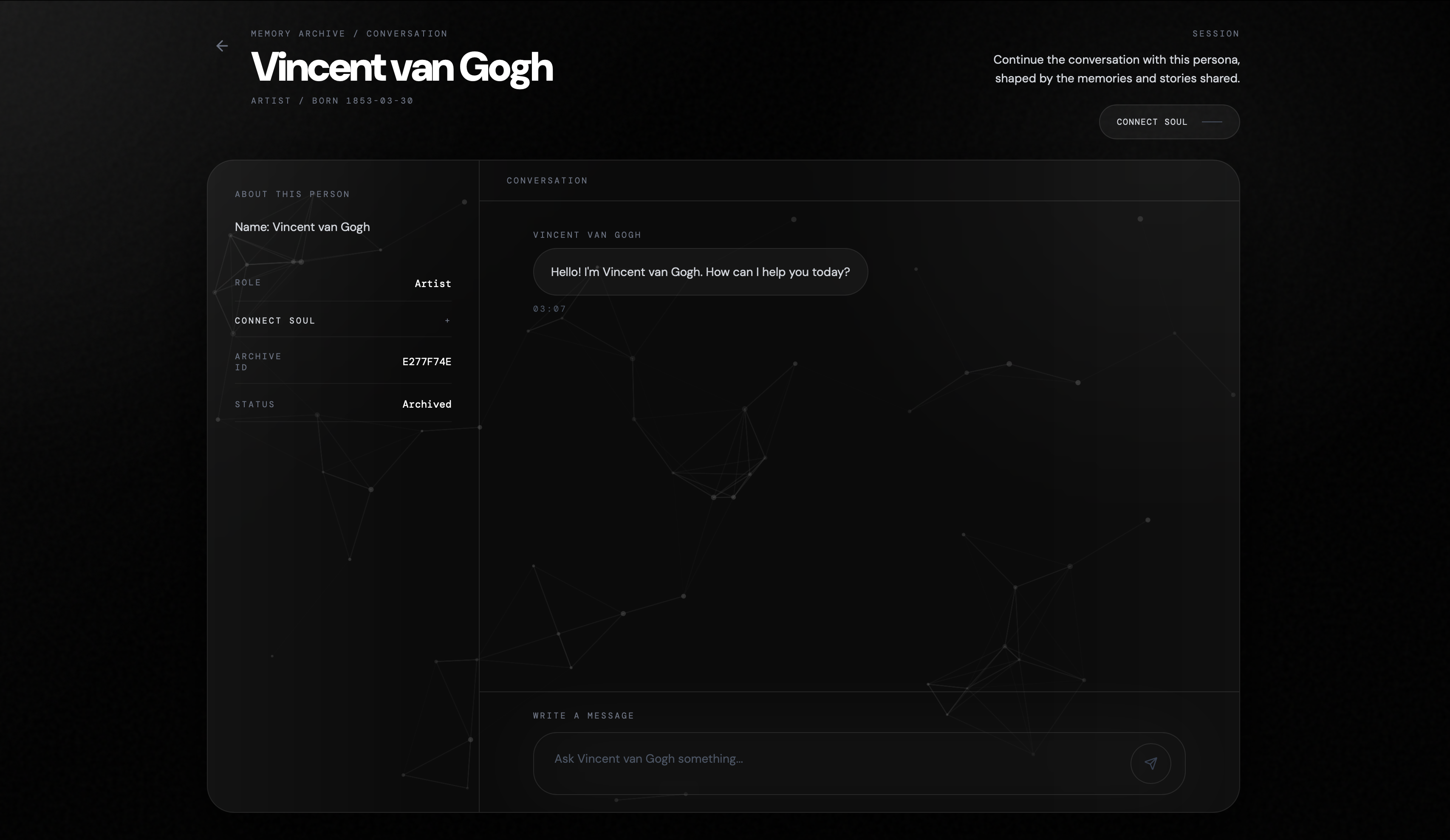
The result is not just a profile page. It is an interactive storytelling interface where users can explore a person by talking to them.
This makes preservation feel more human:
- not just reading facts
- not just storing media
- but experiencing someone's story through conversation
How we built it
We built Soul Archive as a full-stack web app with:
- a FastAPI backend
- a React frontend
- Supabase for storage
- OpenAI models for persona extraction and response generation
Our backend takes unstructured multimedia input and runs it through a simple pipeline:
- normalize sources into text notes
- extract persona signals into structured JSON
- generate persona markdown files
- store the result as a reusable, chatable persona
On the frontend, we designed the archive as a more immersive experience instead of a utilitarian dashboard:
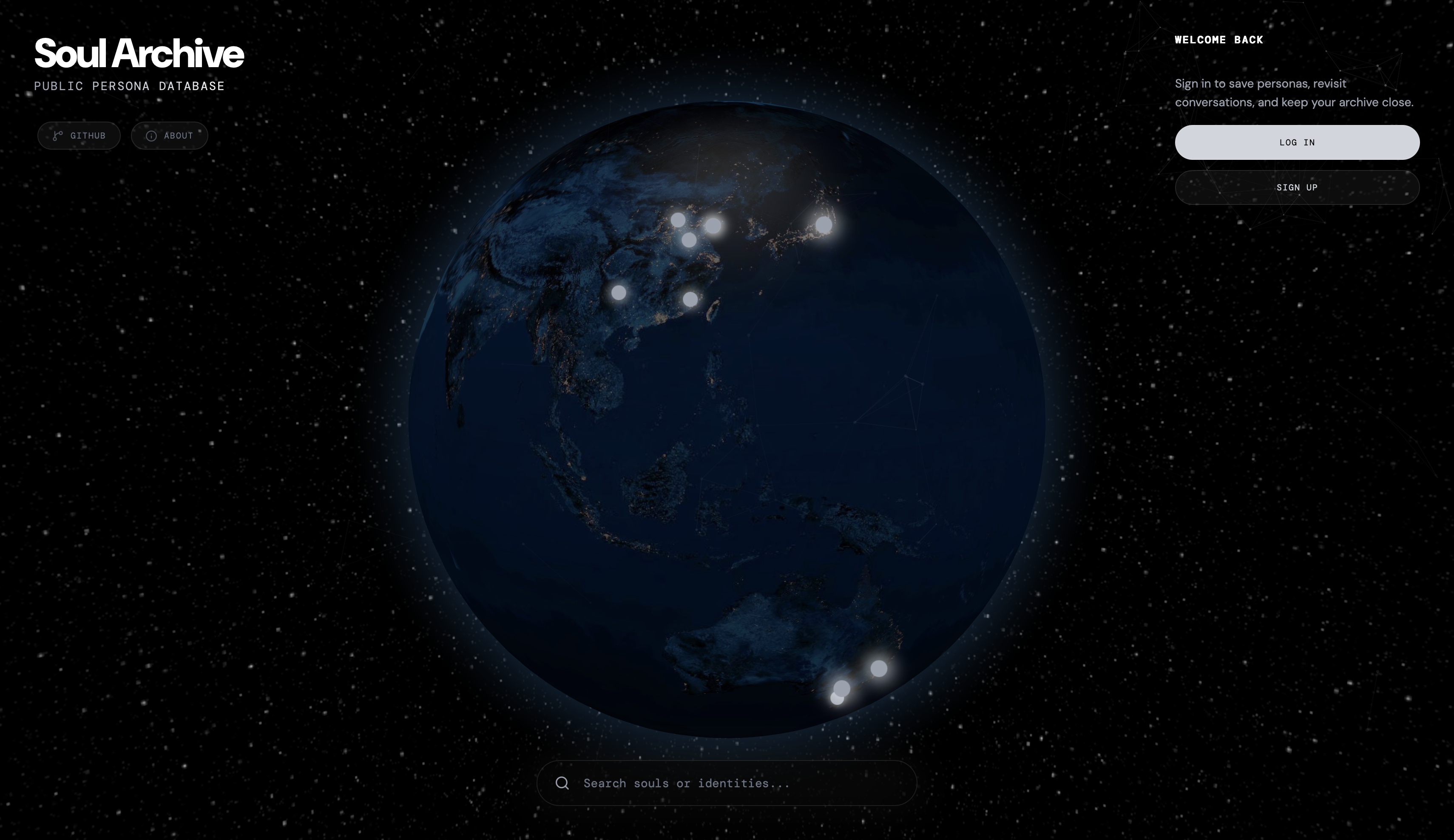
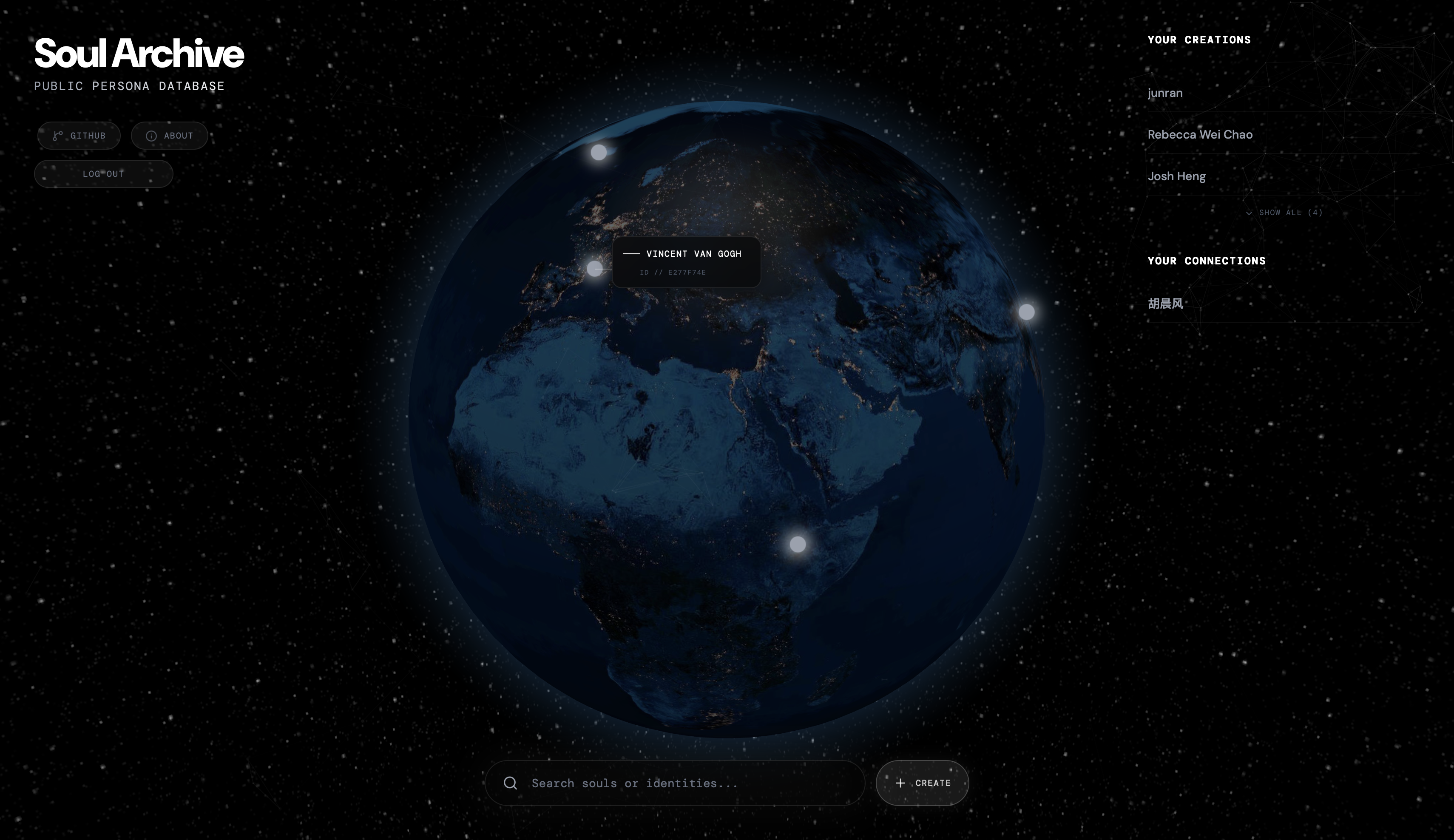
- a globe to represent people as part of a larger shared archive
- searchable personas
- saved connections
- chat as the main storytelling interface
That design choice was intentional. We wanted preservation to feel alive, not administrative.
Challenges we ran into
The biggest challenge was grounding AI outputs in incomplete, messy real-world inputs.
People do not come as structured datasets. They come as fragments:
- a few photos
- a document
- a paragraph from a friend
- a memory written in an emotional tone
Turning that into something coherent without inventing details was difficult.
We also had to carefully separate:
- what was directly supported
- what was only inferred
- what should remain unknown
Another challenge was designing something emotionally resonant without becoming confusing or heavy to use.
Accomplishments that we're proud of
We are proud that Soul Archive is not just a concept. It works end to end:
- upload multimedia input
- generate structured persona files
- save personas to a database
- search them
- connect with them
- chat with them
We are also proud that the concept feels aligned with the theme rather than loosely attached to it.
This is not a generic chatbot with a memory skin. It is a preservation tool built around the idea that every person deserves to leave a trace.
What we learned
We learned that preservation is not only a storage problem. It is also an interface problem.
How people encounter memory matters.
If preservation feels cold, users disengage. If it feels too synthetic, users stop trusting it. The challenge is to create something that feels interactive and alive, while still staying grounded in real evidence.
We also learned that prompt design and structured intermediate representations matter a lot when building with AI. The quality of the final persona depends heavily on how well the pipeline preserves evidence from raw inputs.
What's next for Soul Archive
We want to push Soul Archive further as a platform for memory and cultural preservation.
Next steps include:
- better visual understanding so image-based memories are captured more accurately
- voice-based interaction so preserved personas can be heard, not just read
- richer long-term memory updates as more stories are added over time
- stronger provenance and evidence views so users can see what each persona claim is based on
- community or family archives that preserve not just one person, but relationships and shared history
Our long-term goal is simple:
to make preservation feel human
Not just a database of files, but a space where people, memories, and stories can still be discovered.
Built With
- ai
- fastapi
- ffmpeg
- javascript
- postgresql
- python
- react
- tailwind
- vite


Log in or sign up for Devpost to join the conversation.