-
-
App icon
-
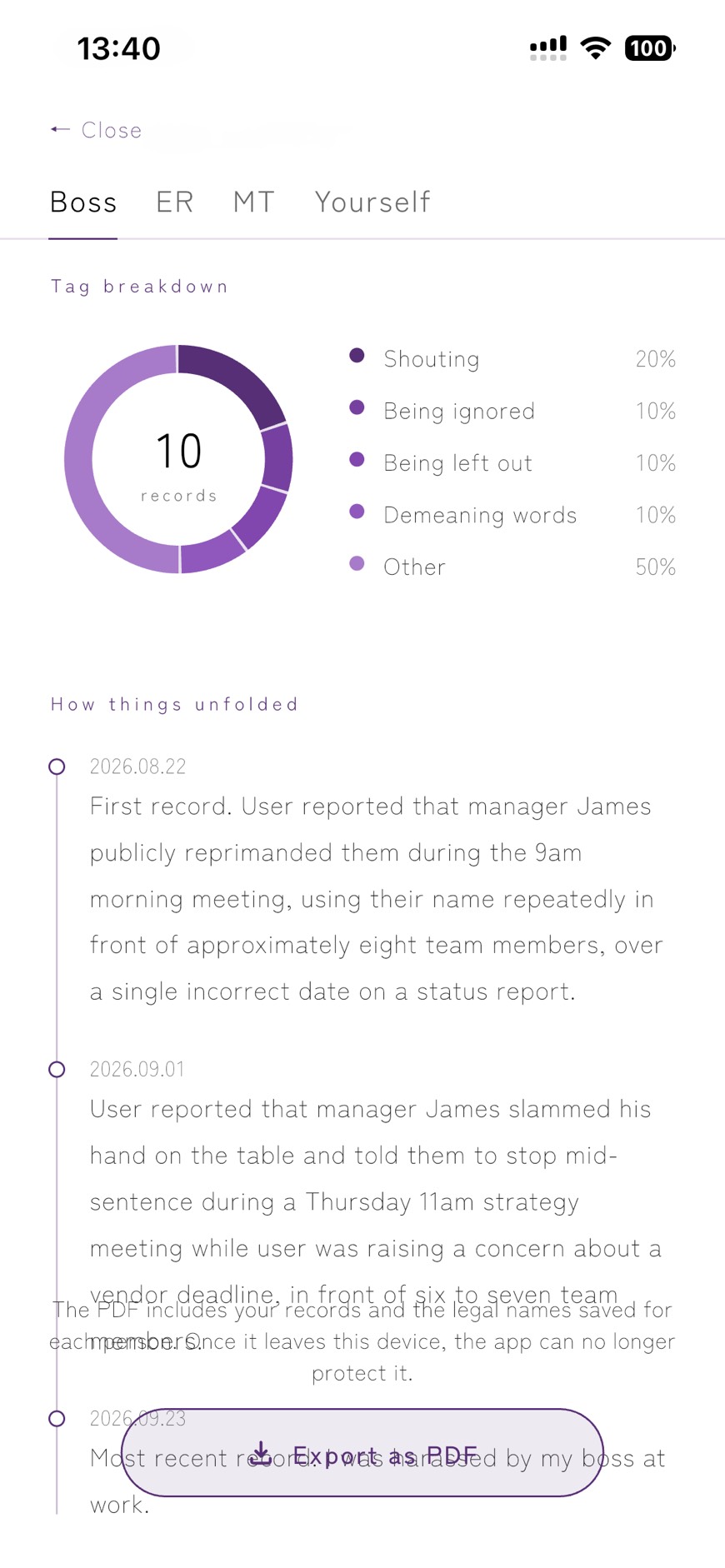
Screenshot of records
-
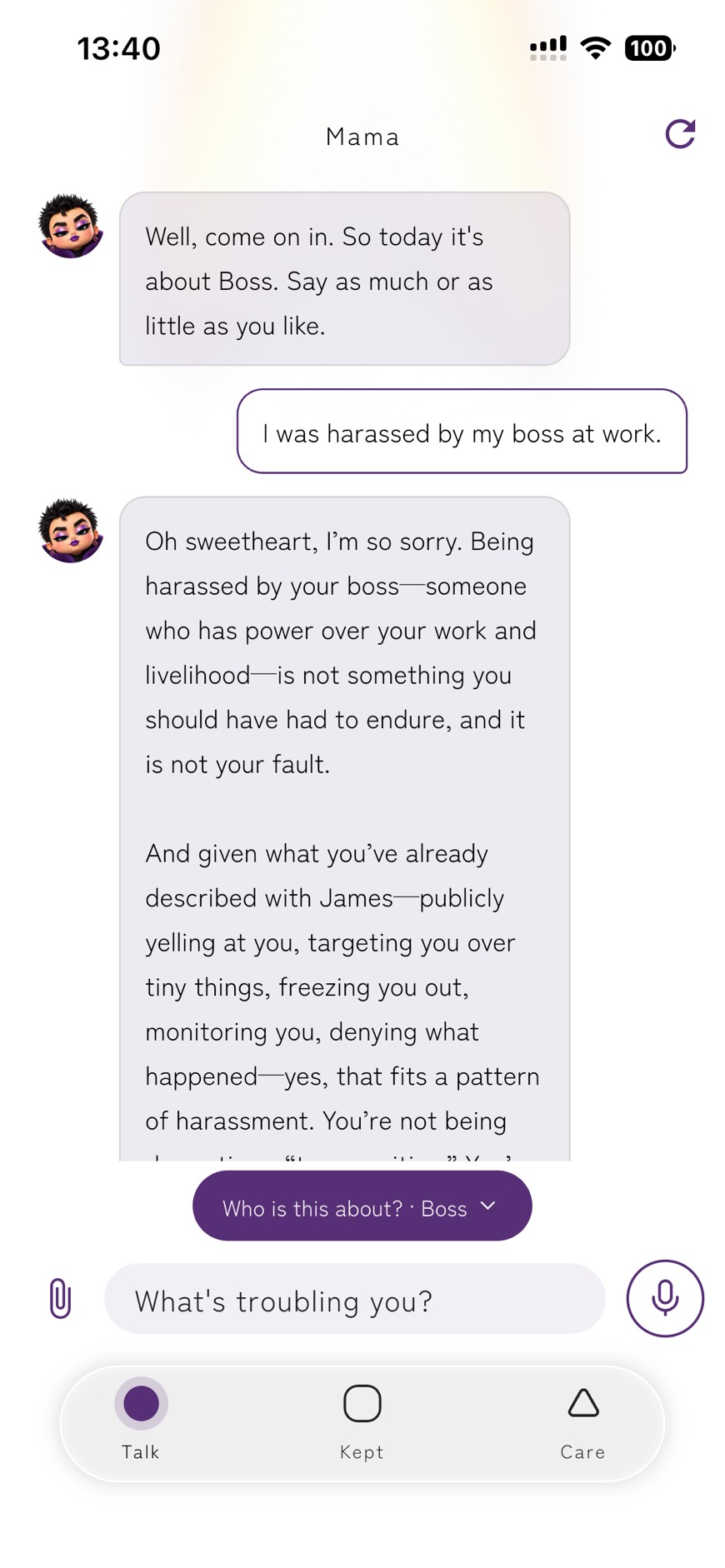
Screenshot of a counseling session
-
Screenshot of features designed to protect your privacy
-
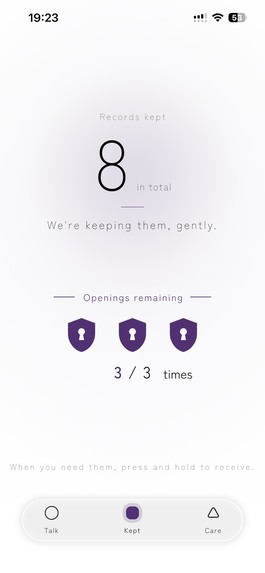
Screenshot 1 of features designed for when you don’t want to look back
-
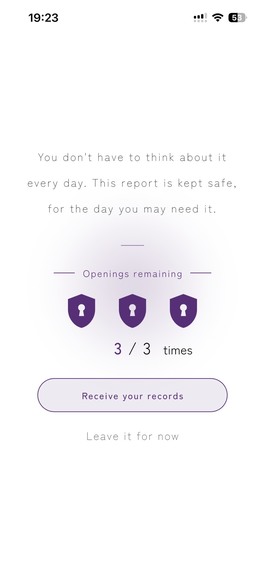
Screenshot 2 of features designed for when you don’t want to look back

Inspiration
The inspiration for SOTTO came from something that happened to one of my classmates in graduate school. He experienced harassment from his professor and eventually left the program.
At the time, he sometimes talked to me about his relationship with his professor. As I listened, I often wondered, “Why doesn’t he keep a record of what is happening?” and “Why doesn’t he take those records to the university’s counseling office and ask for help?”
At first, he would tell me about what had happened between him and his professor. But over time, he began talking about it less and less. When I asked him, “How are things with your professor lately?” he would simply say, “It’s okay,” and wouldn’t go into any more detail. At the time, I took that as a sign that things might be getting better.
But in reality, the opposite was happening.
Without me realizing it, the situation had become worse, and eventually, he left graduate school. That experience made me think deeply about what it means to keep a record of painful experiences.
Keeping records or evidence can be helpful when you need to talk to someone or seek support later. But the more painful an experience is, the harder it can be to look back on it and put it into words. Even when you know that keeping a record could be important, the feeling of “I don’t want to think about it again” or “I don’t want to see it again” can become so strong that you avoid documenting it altogether. That made me wonder: instead of asking people to overcome those feelings, could I create a way for them to keep what matters while still respecting their desire not to relive or revisit painful experiences? That question became the starting point for SOTTO.
What it does
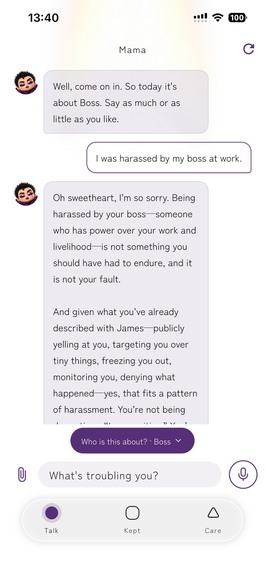
Users first choose who they want to talk about—such as themselves, a family member, a partner, or someone at work—and then share their concerns and experiences with the AI.
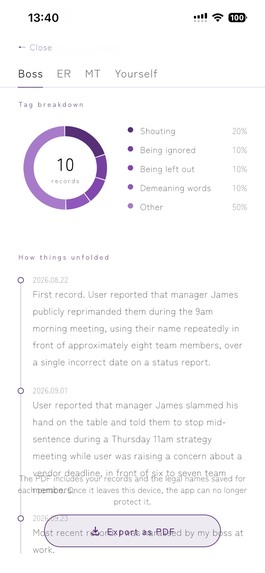
As the conversation continues, SOTTO automatically organizes important information from the conversation and creates a timeline for each person. This means users don’t have to revisit difficult experiences and write everything down themselves.
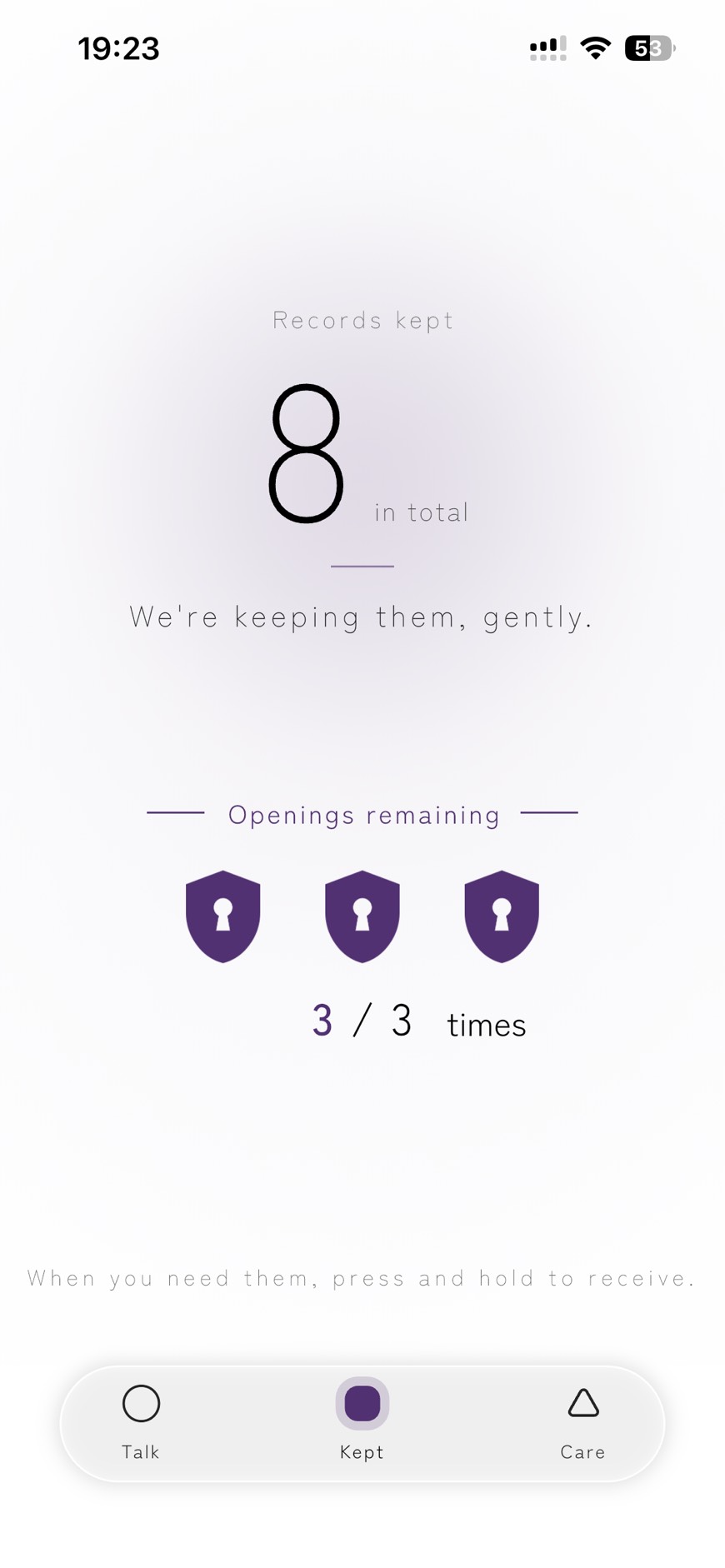
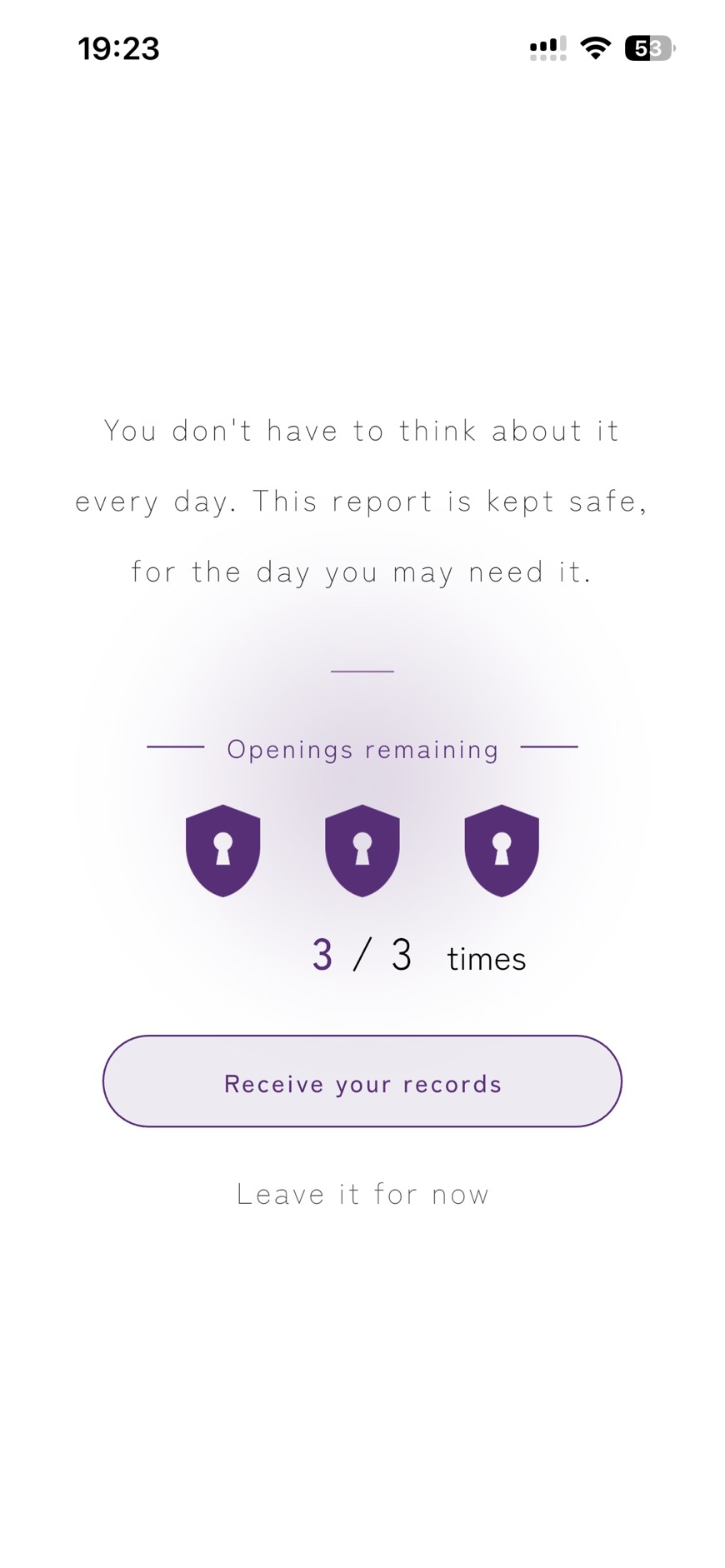
SOTTO is also designed around the feeling of wanting to keep a record without having to see it all the time. To prevent past records from being opened too easily, viewing a record requires two steps: pressing and holding, followed by a final confirmation.
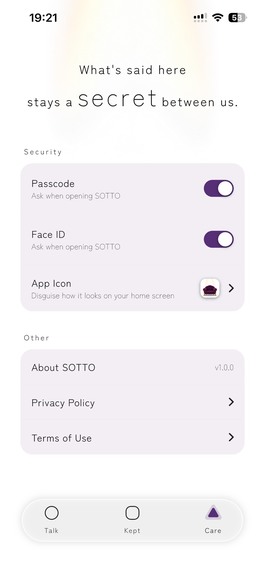
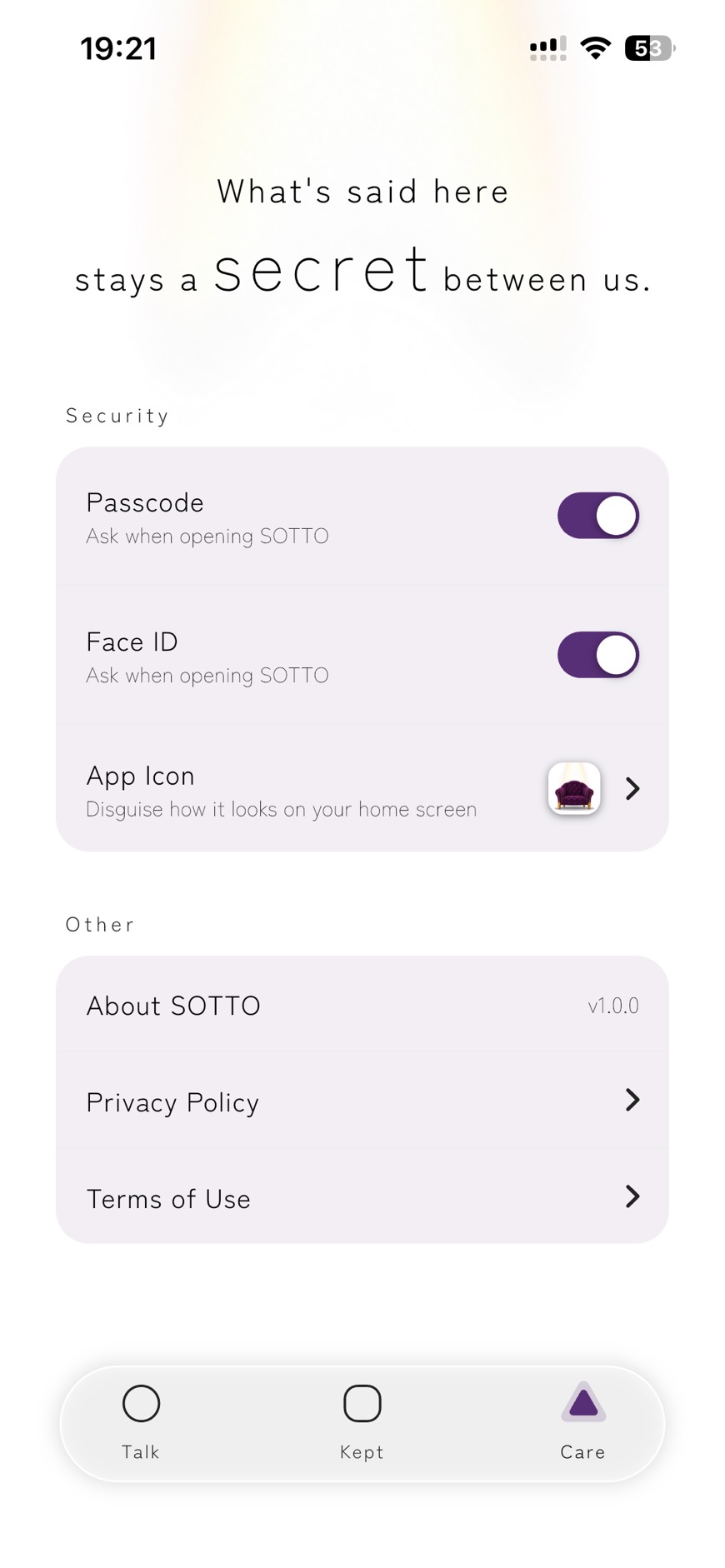
To help keep records private from others, access to the app can be protected with a passcode or Face ID. SOTTO also includes an app icon camouflage feature. Users can change the icon to look like another type of app, such as a calendar or calculator, making it less obvious at a glance that SOTTO is installed on their device.
How we built it
Once we had identified the core problem, we focused on one question:
How can we help someone keep what matters without making them relive what they want to forget?
We decided that the starting point should not be a form for writing down events or an app for collecting evidence. Instead, we made conversation the entry point.
Users can simply talk to SOTTO about what happened. As the conversation continues, SOTTO identifies important information and organizes it into records. This allows users to preserve important details without having to stop and write everything down themselves.
We also designed the product around an important distinction: recording something and looking at it are not the same thing.
A record can be useful even when you don’t want to see it. That’s why we made past records intentionally less accessible. Viewing a record requires a long press followed by a confirmation, rather than simply tapping it.
Privacy was also treated as part of the experience itself, rather than something added afterward. We added passcode and Face ID protection, as well as an icon camouflage feature, because keeping something private can be just as important as keeping it.
We also spent a lot of time refining how SOTTO talks to users. We wanted the conversation to feel less like filling out a form and more like talking to someone who is listening. SOTTO does not constantly ask questions or try to collect every detail at once. Instead, it responds naturally and asks for more information only when it seems helpful.
Through these decisions, we gradually turned the original idea into a product built around one principle:
You should be able to keep a record without having to keep looking at it.
Challenges we ran into
The biggest challenge was defining the core concept of SOTTO.
To develop the concept, We chose one of my friends from graduate school as our persona. He struggled with harassment from his professor and eventually left graduate school because of it.
I asked myself, “If I could go back to that time, what kind of app could I have built to help him?”
That question became the starting point for SOTTO.
At first, I focused on one problem: How could I make it easier for someone to preserve evidence of harassment? My initial idea was to build an app for collecting evidence—something that would make it easy to record audio and save photos or videos.
But as I developed the idea, I began to wonder: Was an evidence-collection app really what he needed?
I looked back on the conversations we had at the time and also spoke with him directly about how he had felt back then.
From those conversations, I realized that he didn’t know where to begin. The daily harassment had left him with little energy to take action. Even when he wanted to talk to someone, he struggled to explain what was happening. Most importantly, he didn’t want to think about those painful experiences, so he would just go to sleep and try to forget about them.
That made me realize that collecting evidence comes much later in the process.
Before someone can do that, they may first need a place to talk about what happened, gradually make sense of a situation they cannot yet explain clearly, and preserve important information without having to constantly revisit painful memories.
The real challenge, then, was not simply, “How can we help people collect evidence?”
It was something that came before that—a seemingly contradictory feeling: “Don’t want to see it. Don’t want anyone else to see it. But still want to keep it.”
That realization became the foundation of SOTTO’s current concept.
Accomplishments that we're proud of
What we are most proud of is turning a seemingly contradictory feeling—“Don’t want to see it. Don’t want others to see it. But still want to keep it.”—into a real product.
Most record-keeping apps are designed around convenience: making it easy to save something and access it whenever you want. With SOTTO, however, we designed the experience not only around keeping records, but also around how users can maintain some distance from them.
Our goal was not to make users overcome their feelings of “I don’t want to see it” or “I don’t want others to see it” in order to keep a record. Instead, we wanted to make it possible for them to preserve what matters while still respecting those feelings.
Throughout development, we kept returning to one question: “Does this feature truly respect all three of these feelings?” We used that question as a guiding principle when designing each feature and interaction.
As a result, we were able to create SOTTO as a single, cohesive experience that respects all three feelings—“Don’t want to see it,” “Don’t want others to see it,” and “But still want to keep it”—without asking users to give up any one of them.
What we are most proud of is that we did not leave this concept as just an idea or a phrase. We turned it into a product that people can actually use.
What we learned
The most important thing we learned through developing SOTTO is that the problem we first see is not always the problem we truly need to solve.
As we mentioned in “Challenges we ran into,” we initially focused on one question: “How can we make it easier for people to preserve evidence of harassment?” However, as we looked back on what happened and listened to our persona’s experience, we realized that there were deeper challenges that came before collecting evidence: not knowing where to begin, having little energy left to take action, struggling to explain the situation to someone else, and not wanting to relive painful experiences.
This led us to realize that the seemingly contradictory feeling behind all of these challenges—“Don’t want to see it. Don’t want others to see it. But still want to keep it.”—was the real problem we needed to address.
Through this experience, we learned the importance of not immediately trying to solve the problem in front of us, but instead digging deeper and asking, “Why is this problem happening?” and “What is this person actually struggling with?”
We learned that building a good product starts not with finding a solution, but with finding the right problem to solve.
What's next for SOTTO
The next step for SOTTO is to further refine the UX/UI.
First, we want to make conversations feel more comfortable and natural. By carefully adjusting things like response length, text display speed, and how often SOTTO asks questions, we want to create an experience where users can talk at their own pace without feeling pressured.
We also want to further improve the way SOTTO organizes records. In the future, we plan to automatically separate what actually happened from how the user felt about or interpreted the situation during conversations with SOTTO. This will make it easier for users to look back and distinguish between events and their own feelings or interpretations. It will also help them organize what happened more clearly when they need to share their records with someone else for support or advice.


Log in or sign up for Devpost to join the conversation.