-
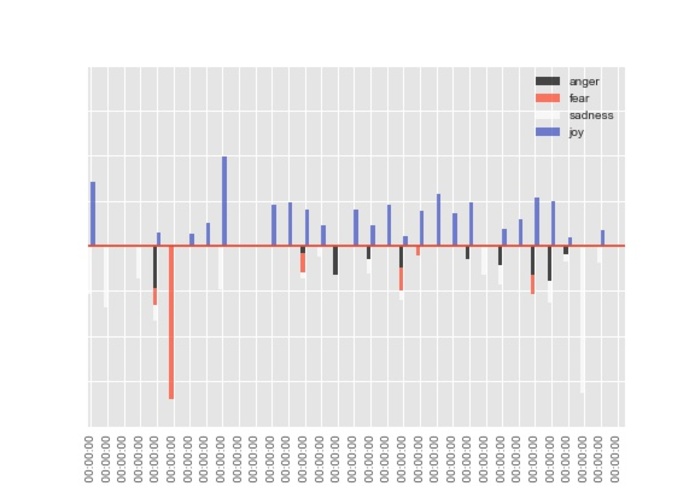
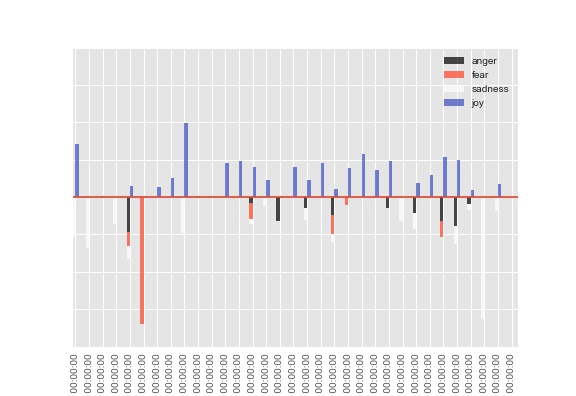
Sample Data Graph
-
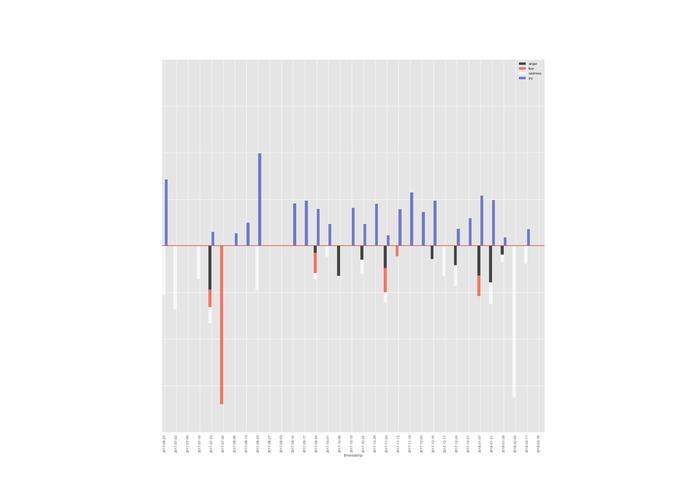
Sample Data Graph
-
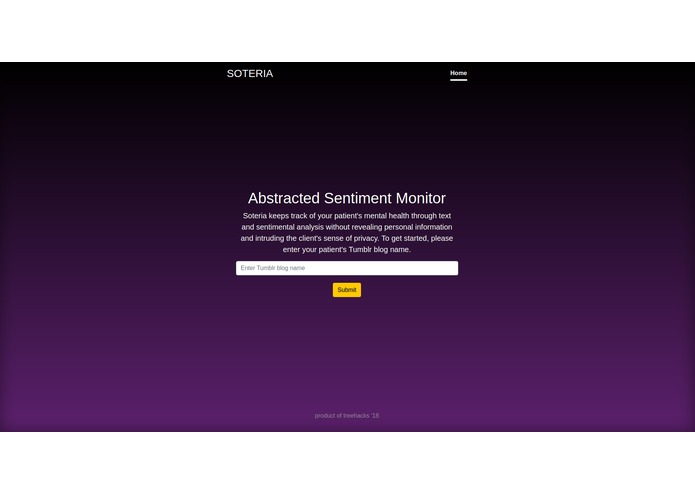
Front Page v1
-
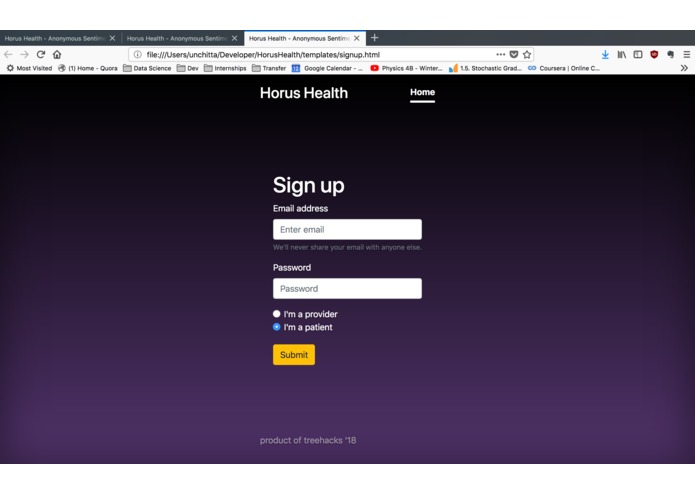
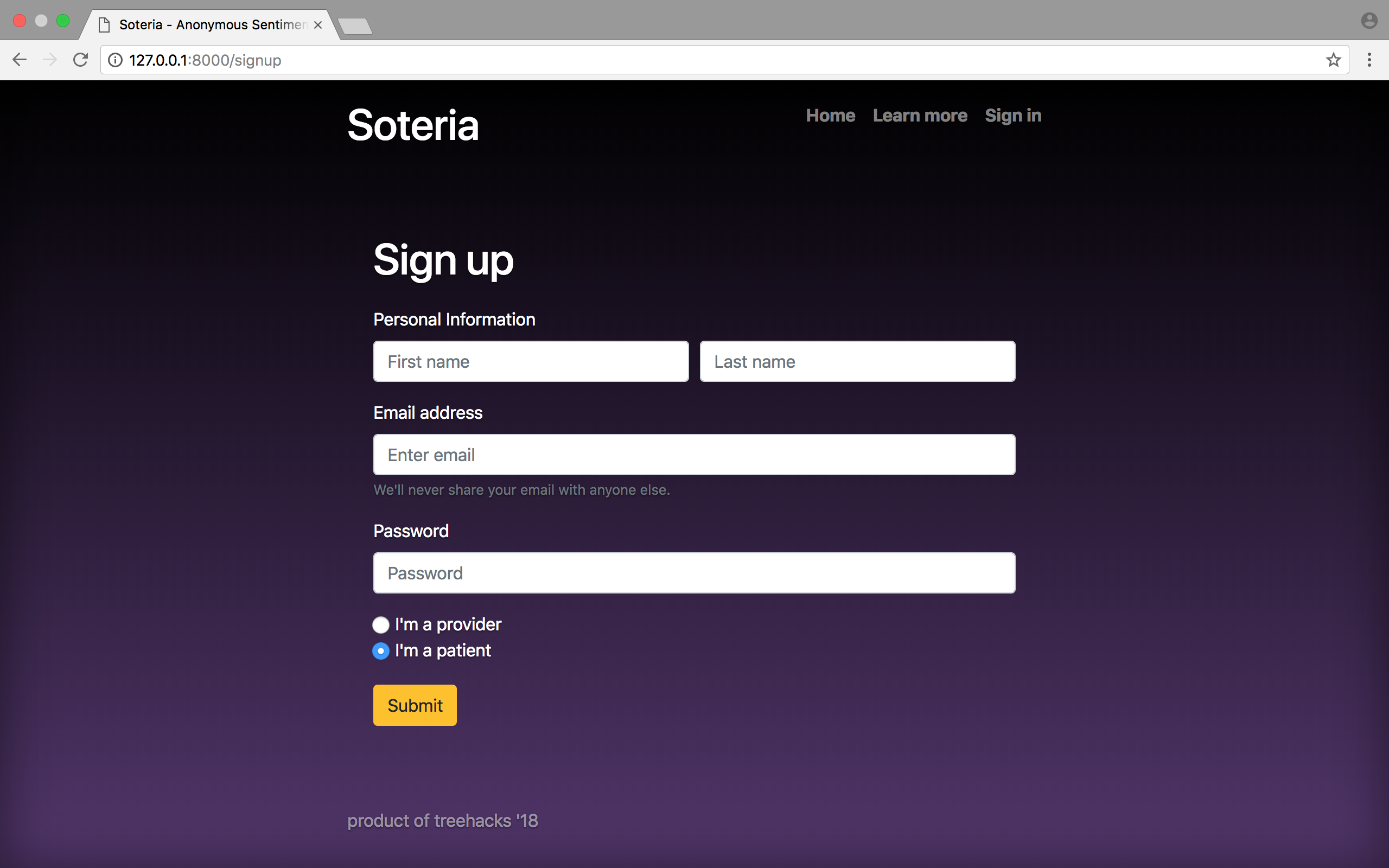
Sign Up
-
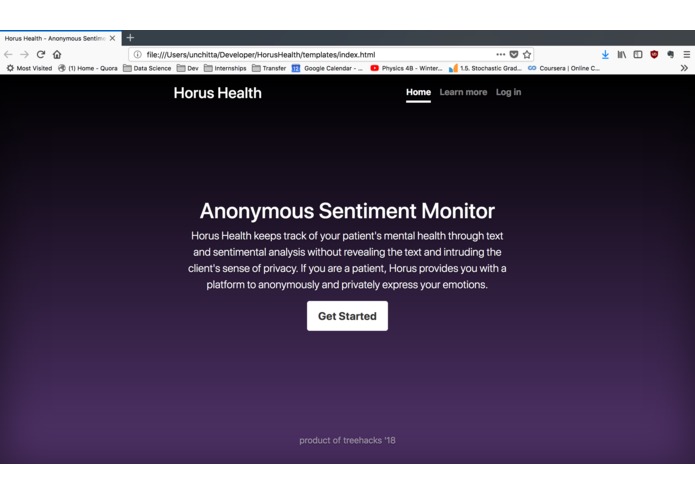
Front Page v2
-
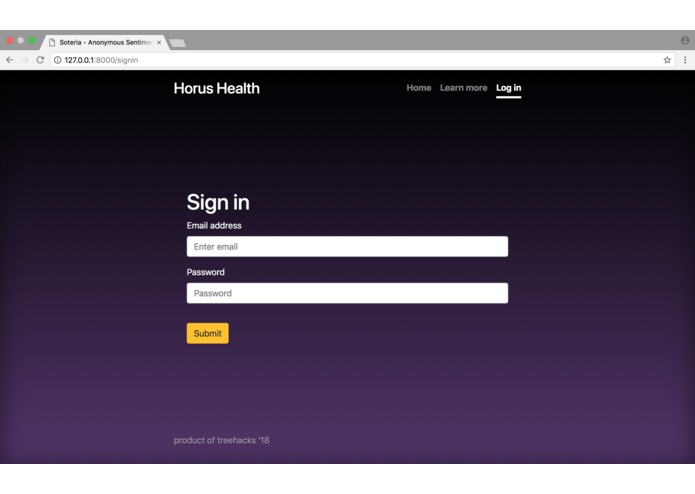
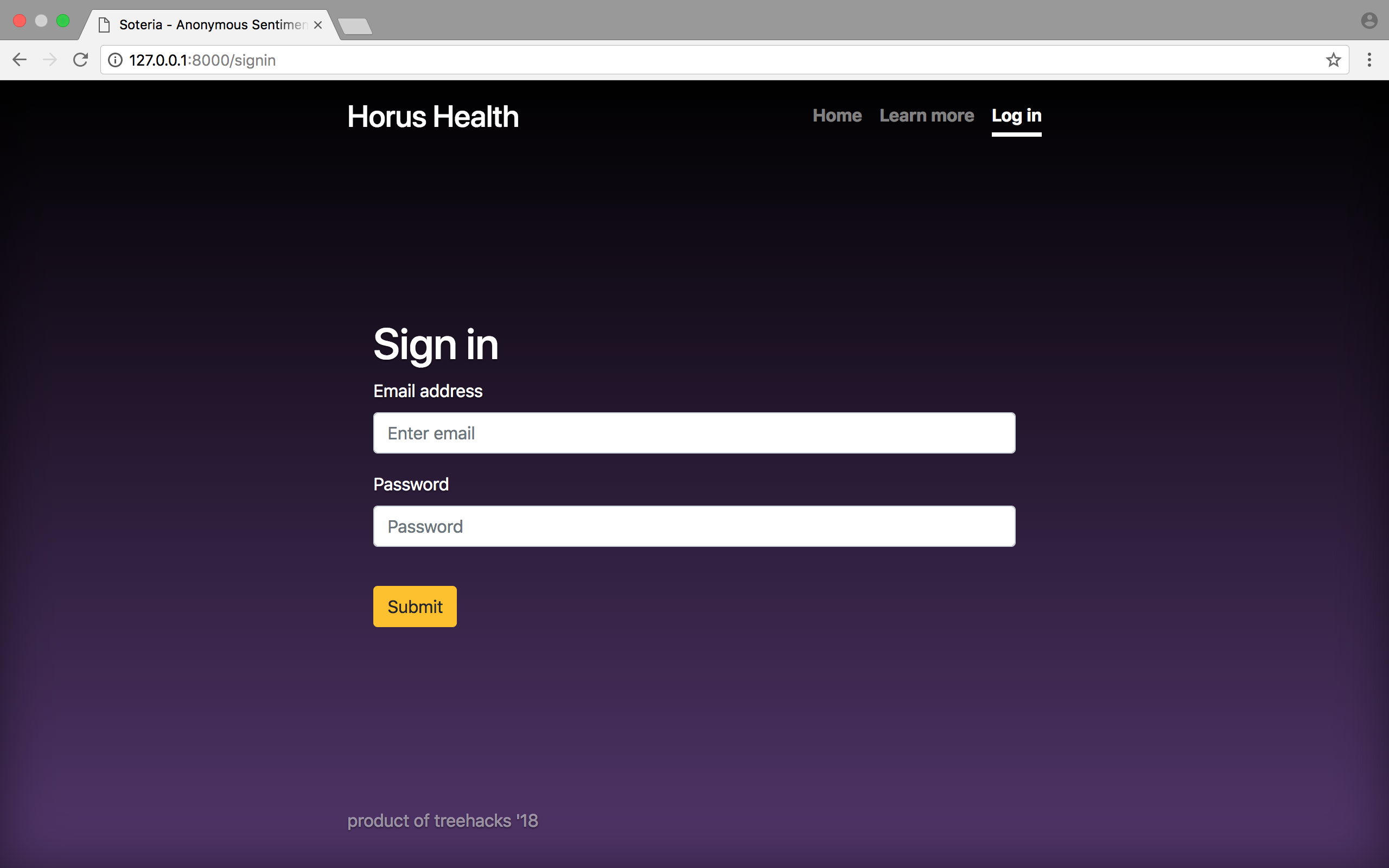
Sign In
-
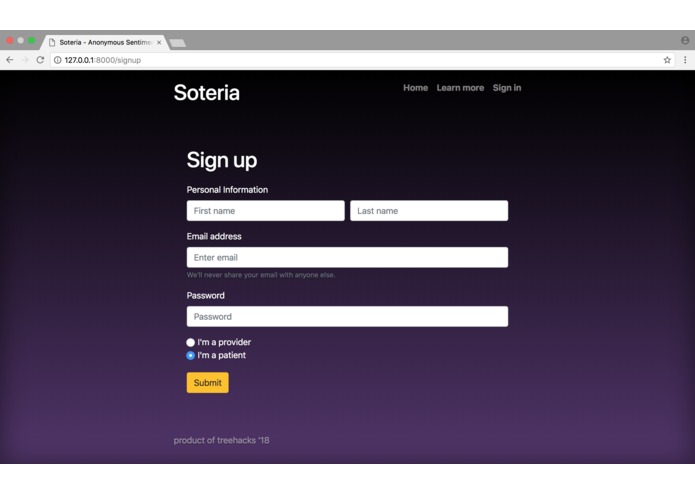
Sign Up (ext)
-
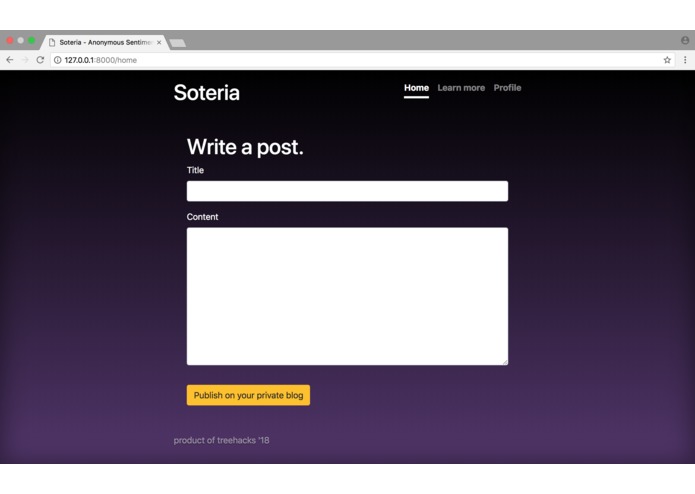
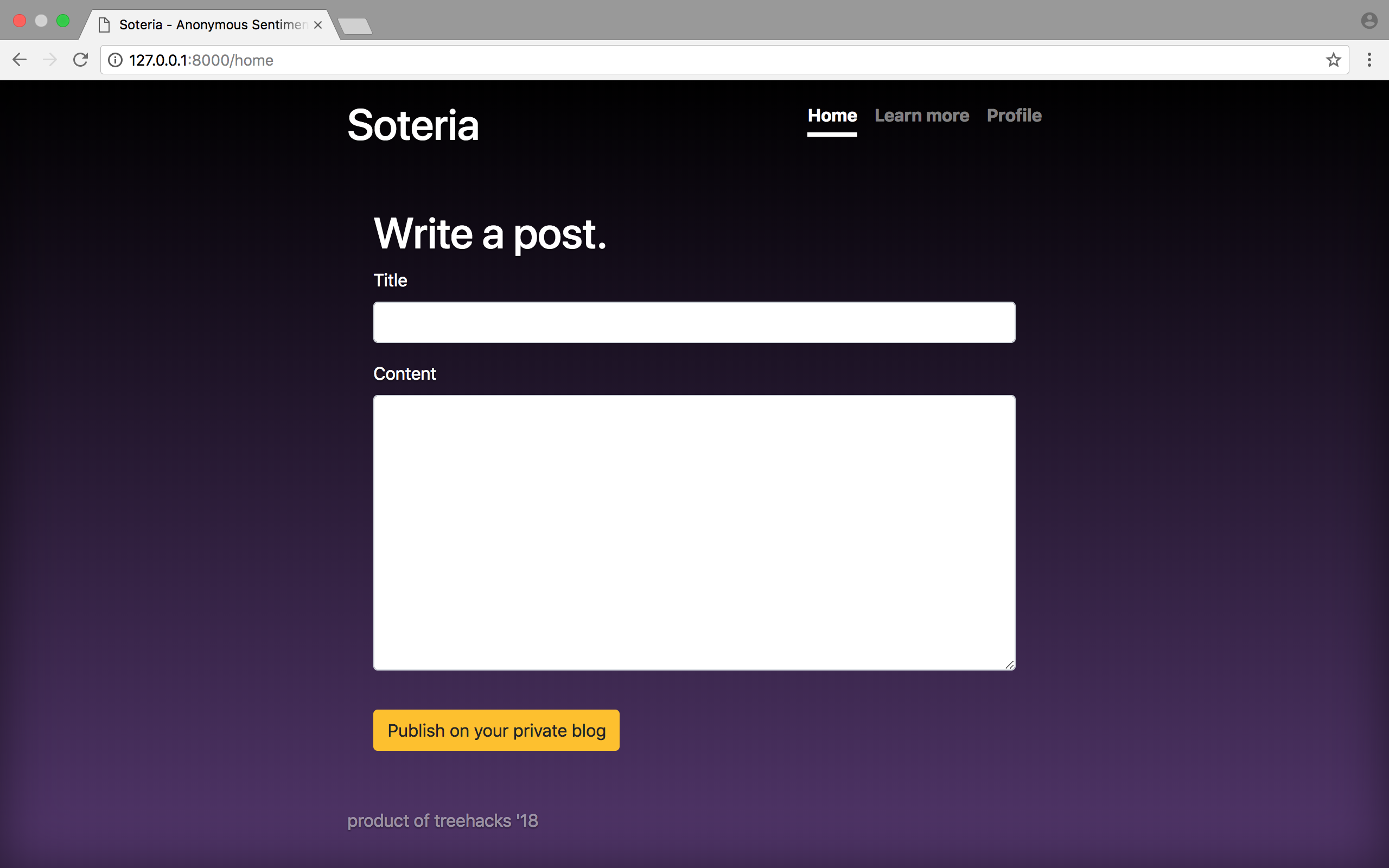
Blog Post View
-
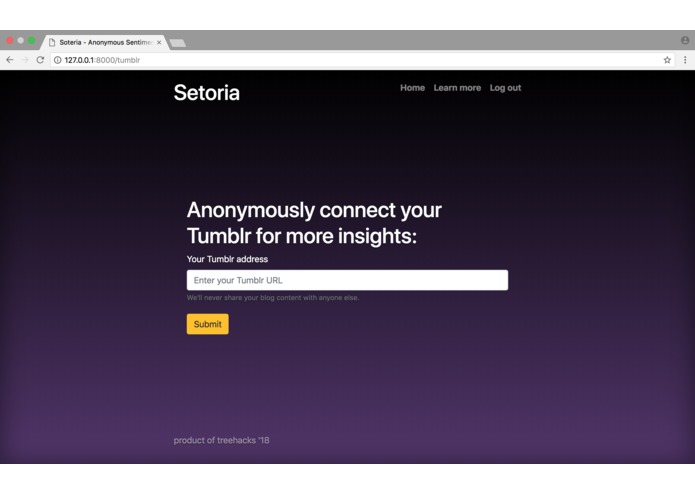
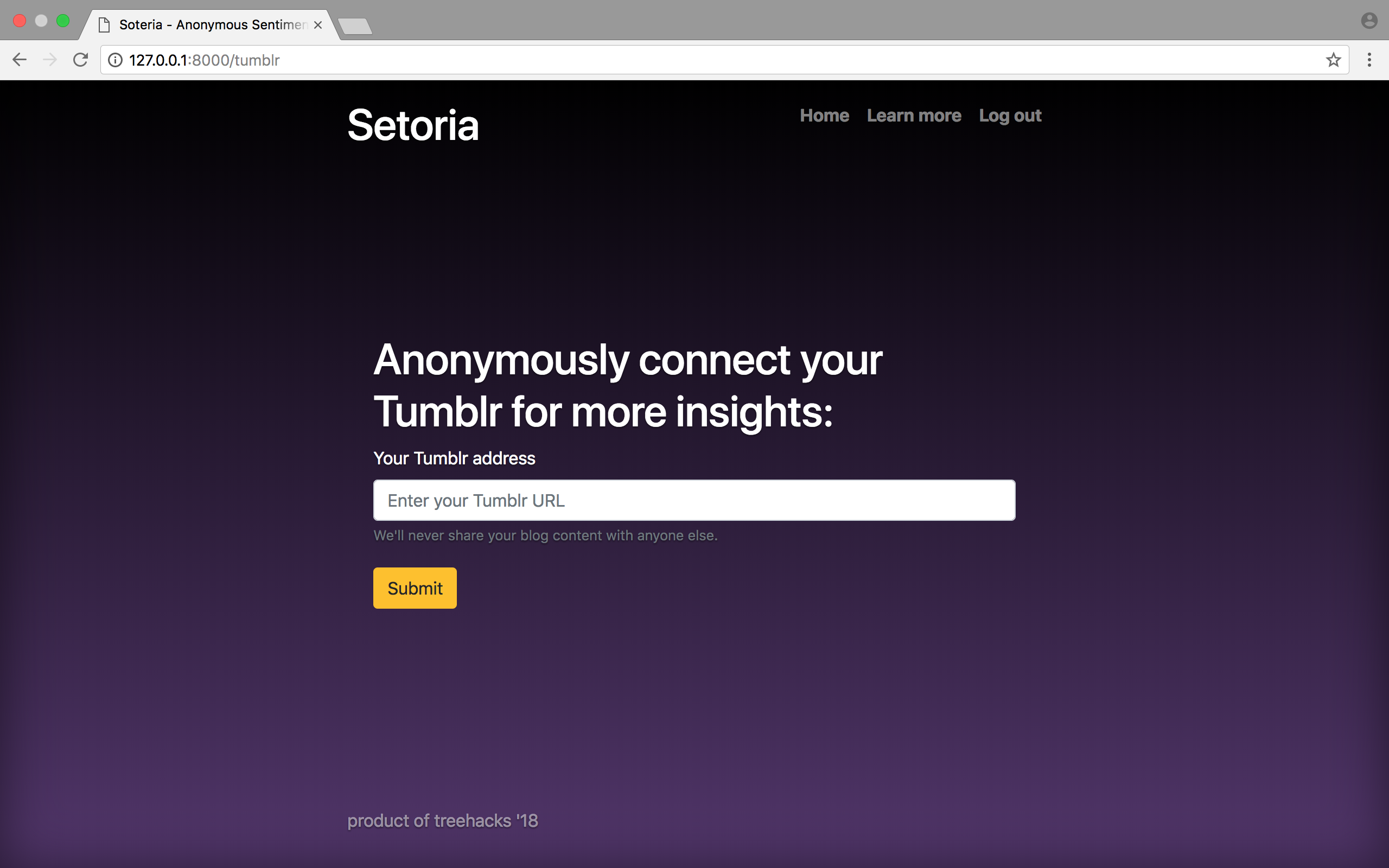
Interface with Program
-
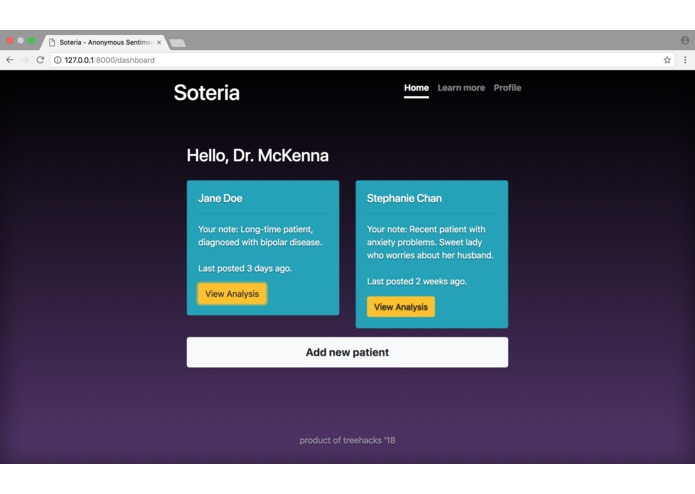
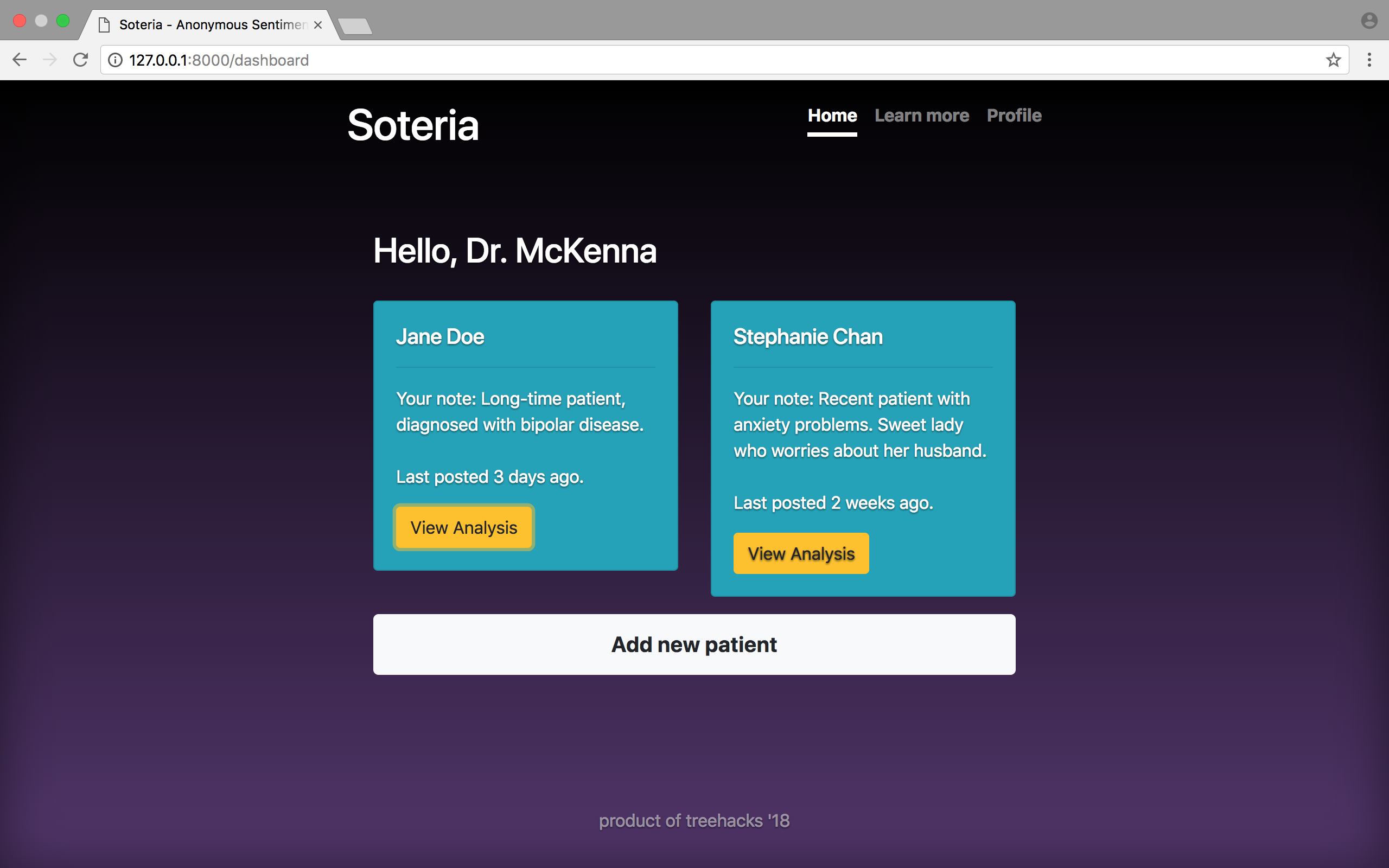
Physician Landing Page
-
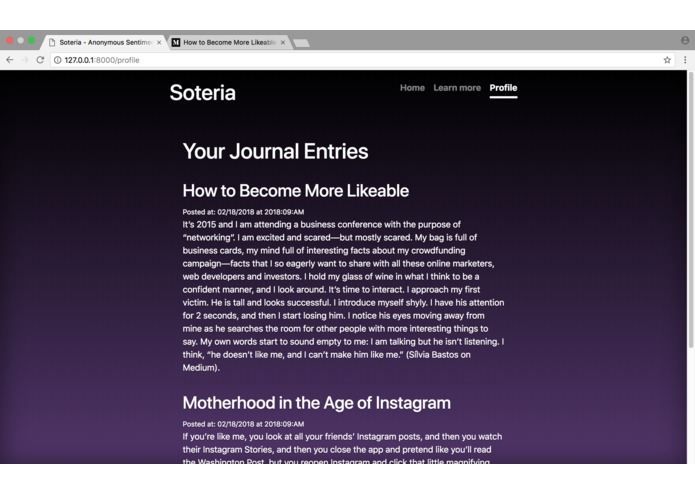
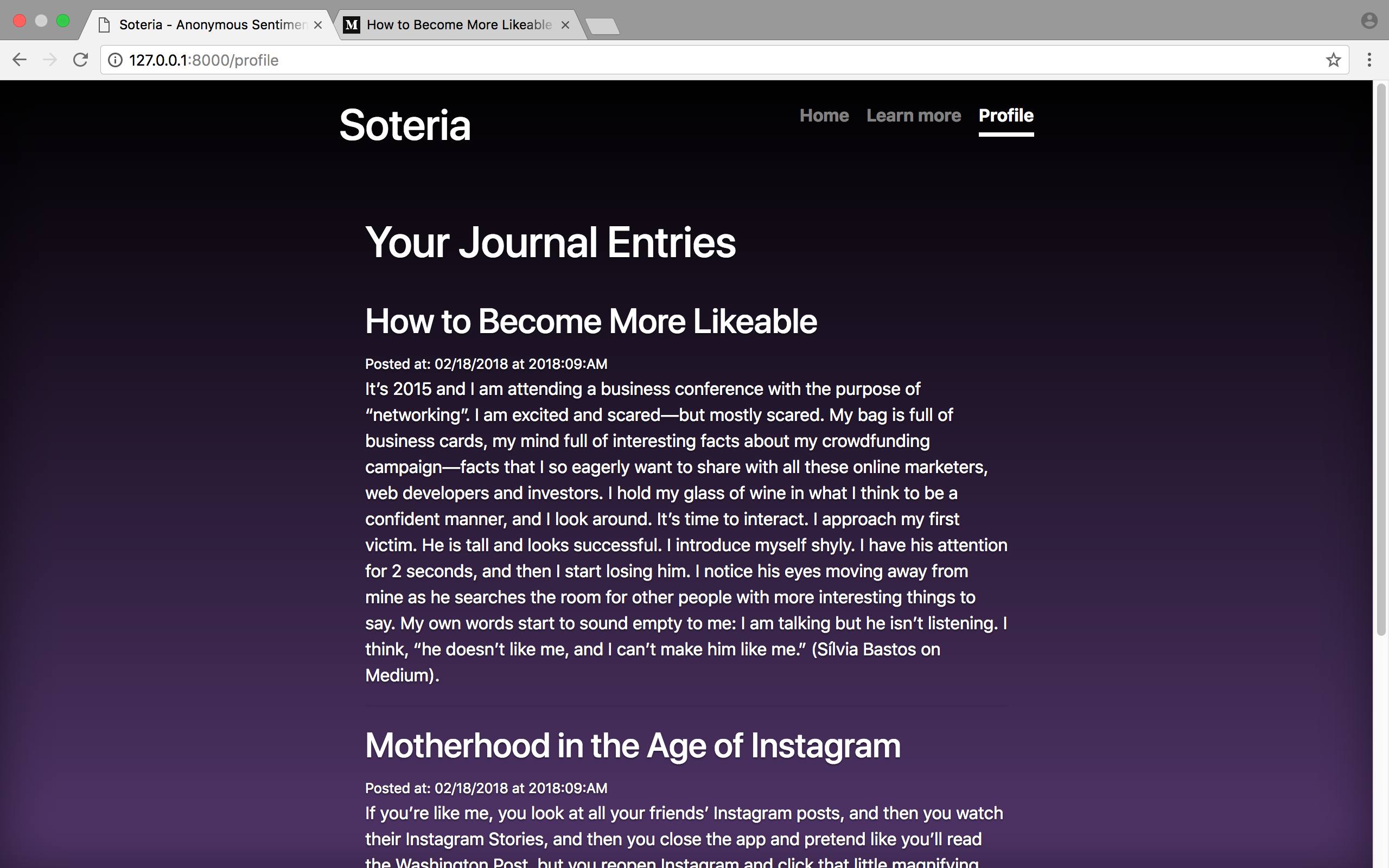
Journal Entries
Inspiration
Mental illness is a major issue that has been facing our society for millennia, yet only recently have we started taking it seriously. There needs to be more research in the subject to do better diagnosing and create better treatments - but unlike physical diseases, the surface area to probe for symptoms is mainly limited to people’s own thoughts, emotions, and interpretations. We can now add an extra layer of insight with Soteria. We were inspired by the idea of Soteria because we all are close with someone who is constantly dealing with mental illness but isn’t able to vocalize it.
What it does
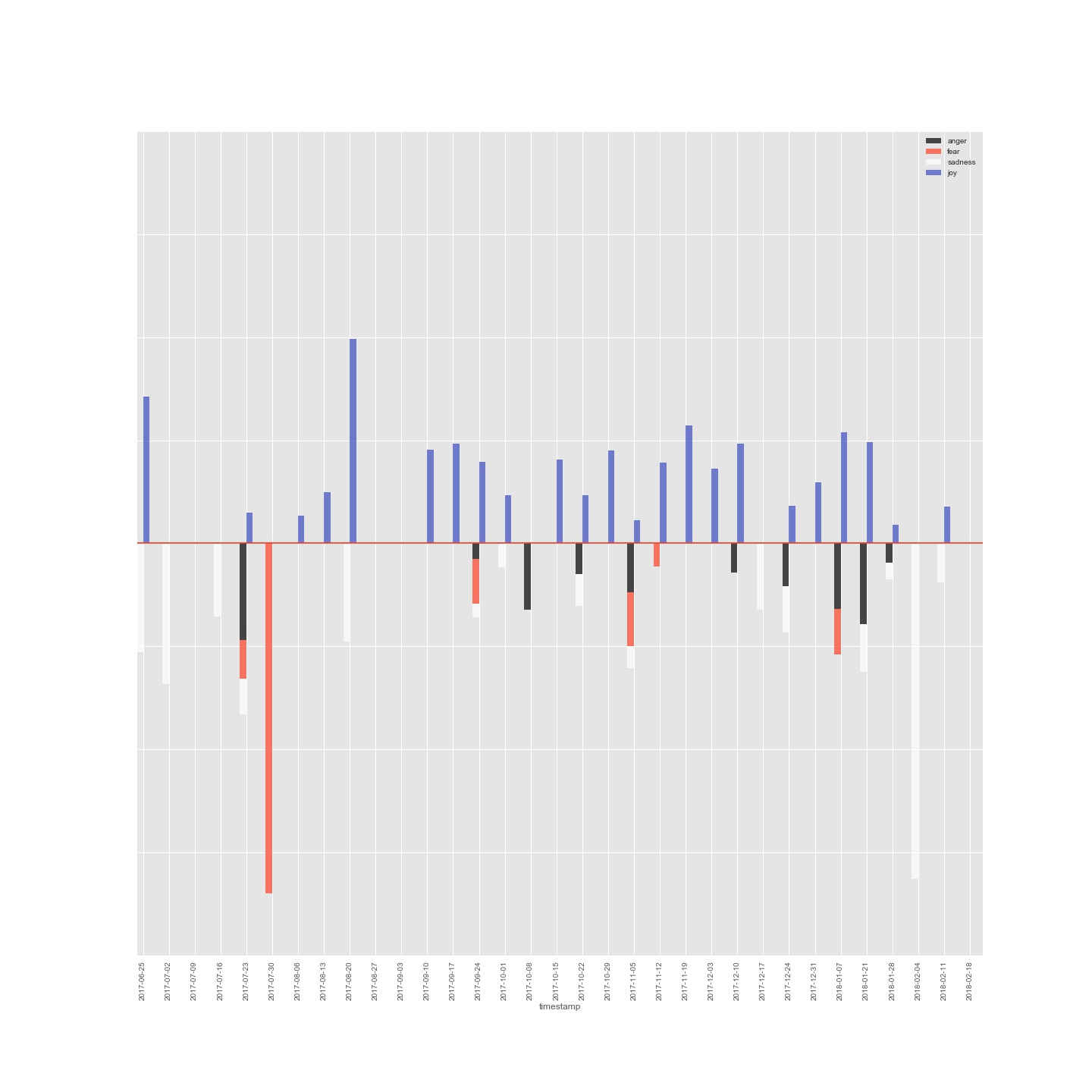
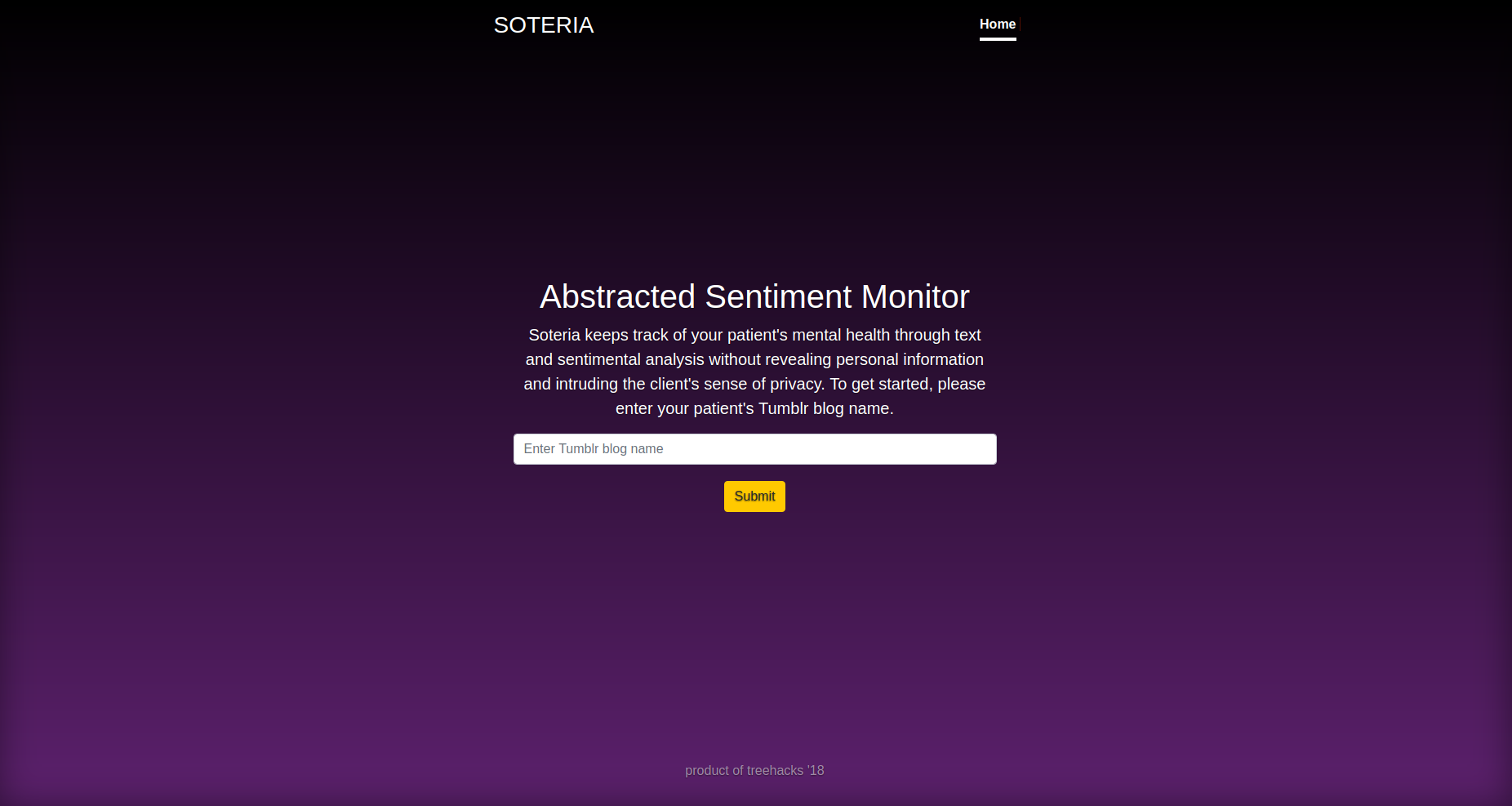
Soteria is a mental wellness tracker that allows a health professional to track their patient's emotional health over a period of time. The patient documents their thoughts and feelings in a personal Tumblr blog, which the program will parse through using a Tumblr API. Using sentiment analysis with the Watson Tone Analyzer and 2D plotting with Matplotlib, Soteria returns a graph of the patient's emotional status in a web app created in Flask using Python without needing the health professional to read through the blog, allowing the patient to feel more comfortable and be more honest about their personal journals.
How we built it
Soteria is built mainly in Python, using Flask as the server and a set of python scripts to process data; pytumblr was used to retrieve data-sets from a selected account. This data-set is then used in conjunction with IBM's Watson to perform a sentiment analysis, which is processed into a graph using the Matplotlib library for better comprehension.
Why Soteria?
As suicide rate is alarmingly high for teens between 15 to 24, we need an inexpensive, yet efficient way to keep track of at-risk youths. Soteria provides this by allowing the health professional to parse through any blog for an analysis of their emotional well-being over a period of time. Should there be a sign that the patient or client is experiencing more negative emotions over time, the health professional can check in and make sure that the person is alright without needing them to reach out first. This web app is useful for medical practices as well, as Pres Gainy, a nation leading provider of patient satisfaction, is very important and impactful in many hospitals and clinics.
Challenges we ran into
One of the challenges we ran into was the front end of html/css, as all of us were back-end developers. Namely, the css files were an issue, as we were unaware that Flask serves css as static files.
Accomplishments that we're proud of
We are proud of our achievement of our initial goal as well as the unity we showed as a team in seeking that end. We believe our teamwork was a great part of this and we look forward to continuing on this project with each other.
What we learned
We learned how to select the best methods for the visualization of data in an effective manner. We also learned to use a lot of unfamiliar technologies, such as Watson and Flask.
What's next for Soteria
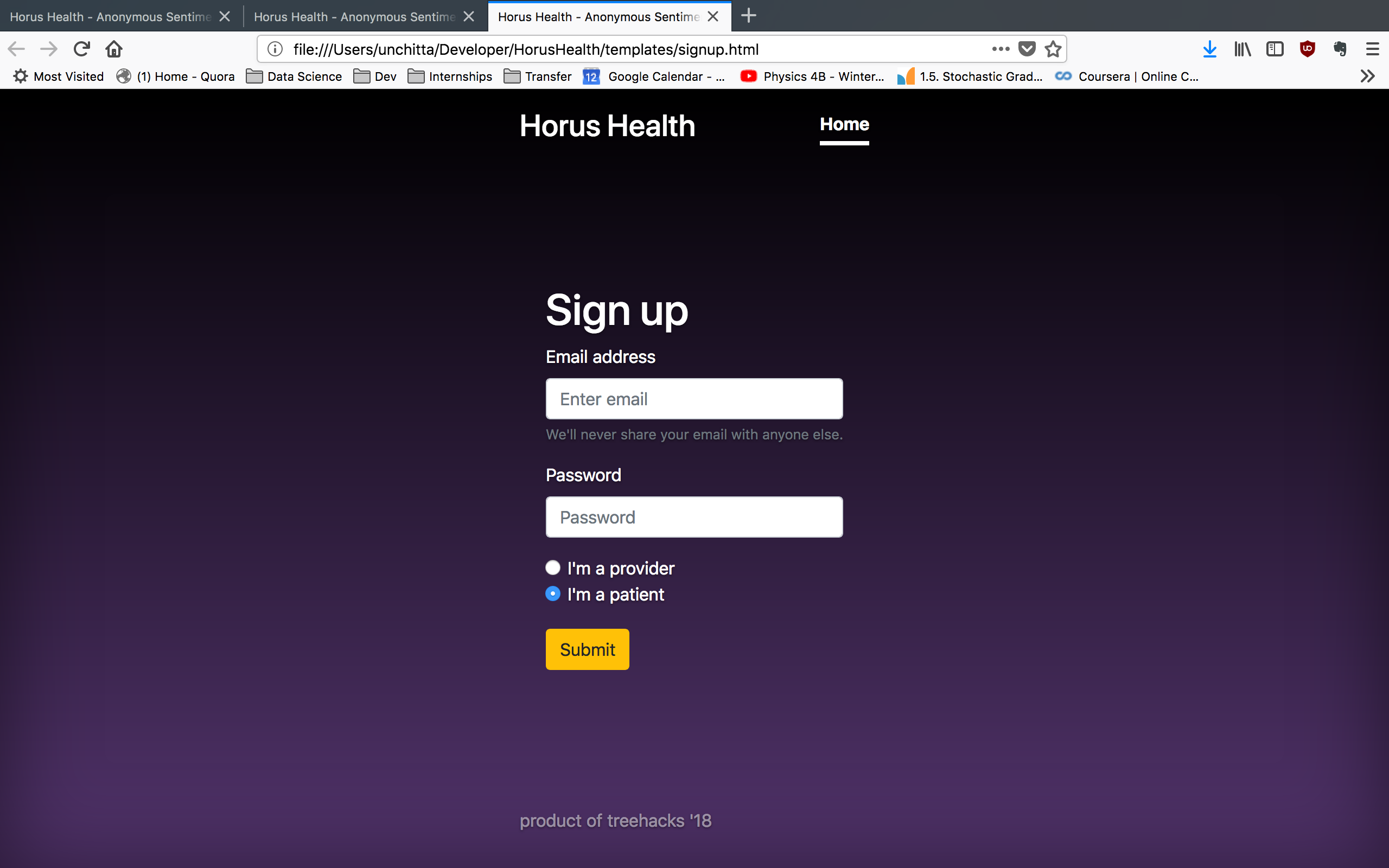
In the future, we will continue to expand the functionalities of Soteria, including adding personal journals for users and making user accounts, so that it may be used in practice as a platform to help not only health professional, but patients as well, or a randomly sampled study on introducing new therapeutic practices. In addition, we may move to Django/Postgres rather than Flask, and (tentatively) pewe, as a platform for our web app to increase its stability.
Built With
- flask
- google-app-engine
- ibm-watson
- matplotlib
- pandas
- pewe
- python
- pytumblr


Log in or sign up for Devpost to join the conversation.