-
-
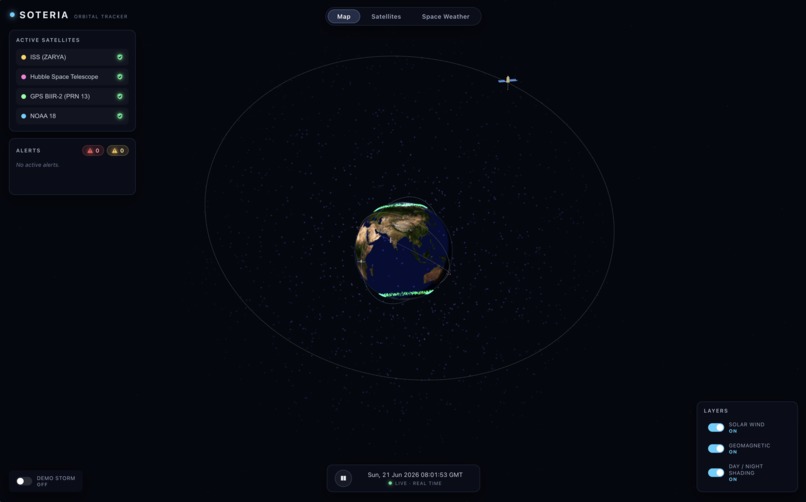
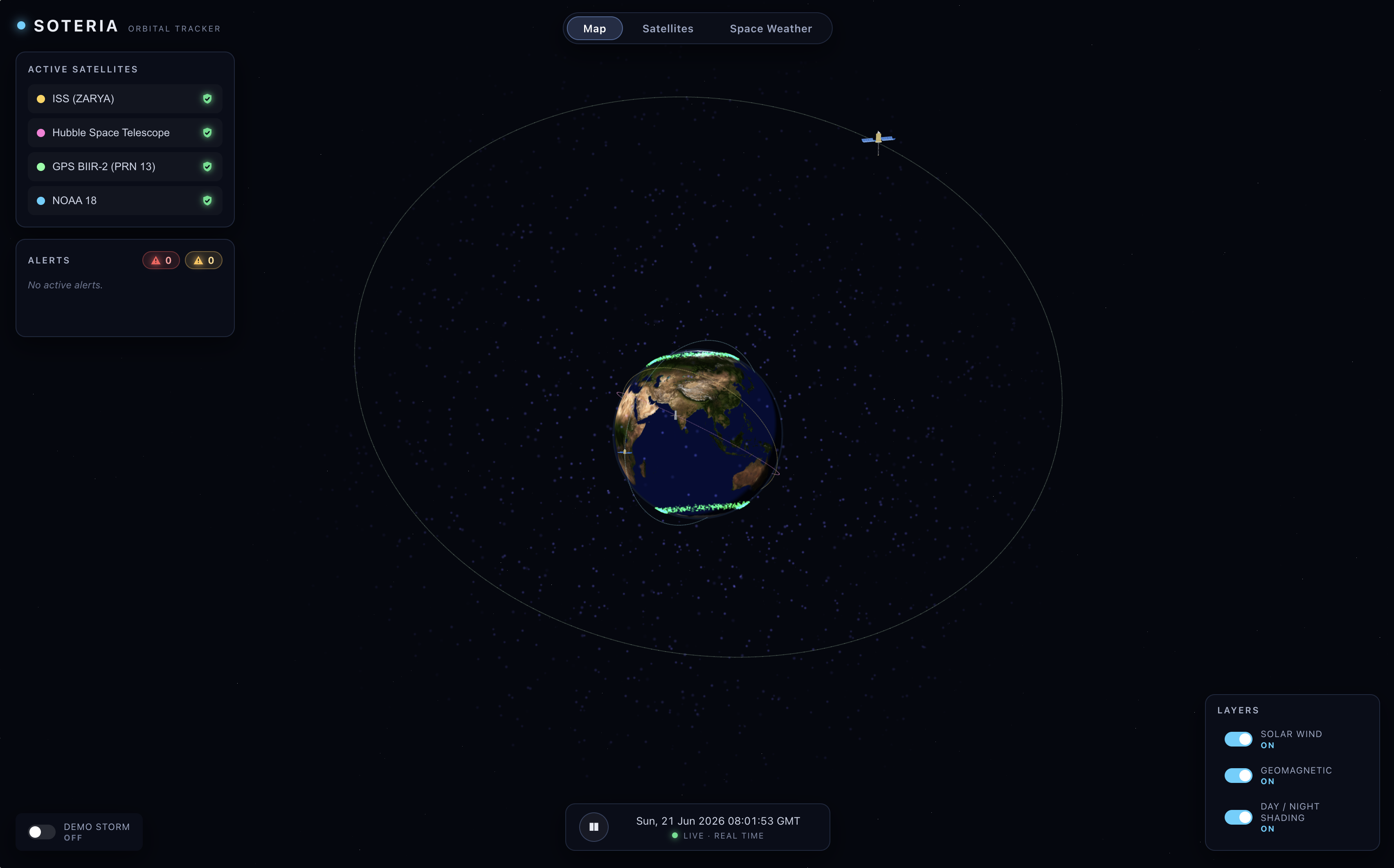
Main View
-
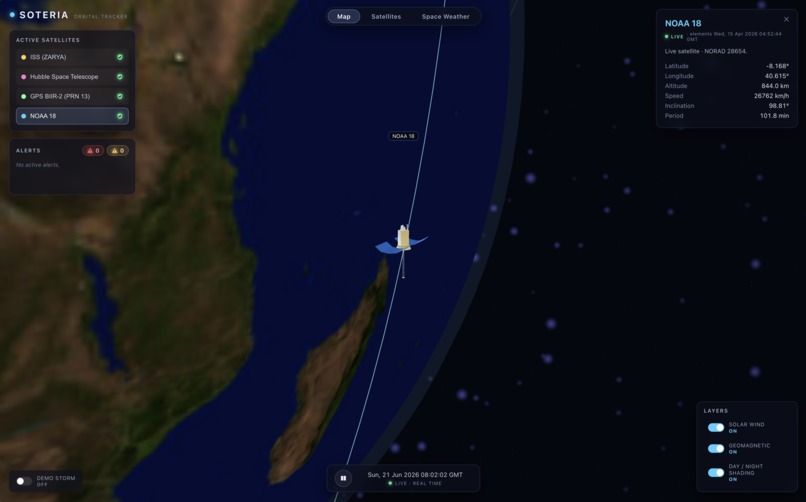
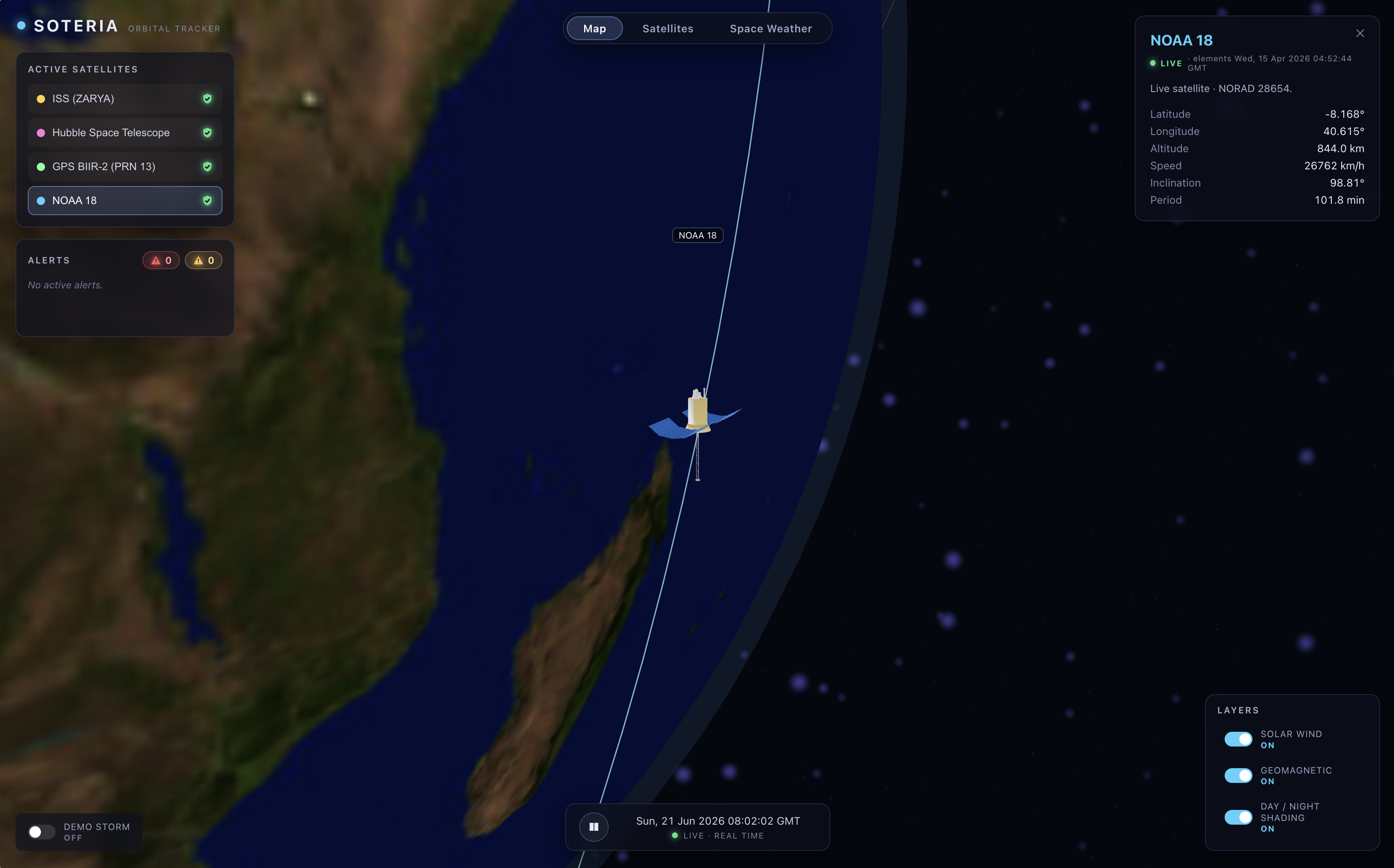
Satellite Zoomed In
Inspiration
Currently there are over 16,000 satellites in space. This is frankly an astonishing number and it grows every single day. One of my current positions is working at the National Oceanic & Atmospheric Administration (NOAA) and a little known fact about NOAA is that we are home to the main Space Weather Prediction Center where all space weather is forecasted. Another little known fact is that the center is located approx. 100 ft from my office so of course I have had numerous talks with the space weather team about what they do.
In that time I noticed a clear problem with satellite damage prevention. Satellites only have onboard AI that protect against immediate problems. They don't use forecasted data and the satellites operators who do have to use it spend hours generating and verifying reports and command runbooks. I realized that this was a clear problem and could be automated and made safer using deterministic ai agents.
Those 16k+ satellites drive internet, military communications, track wildfires, and more. So protecting them something that is vital.
What it does
Soteria uses AI agents and a deterministic engine to create detailed report summaries and real command runbooks based off of real NOAA SWPC data. Solteria allows you to easily use any preexisting satellite or use a new one and presents report, command runbooks, and info about the satellites in a clean and presentable form.
To get the vast swathes of data it leverages a complex data ingest pipeline using Apache Airflow for ETL orchestration. The most important part about Solteria is that all of the agents decisions are validated using real severity scales and satellite operational data.
How we built it
Frontend: web app using React, Three.js, TypeScript
Backend: FastAPI for the API endpoints and communication with the DB
Data Pipeline: Apache Airflow for task orchestration and Astronomer for deploying the workflows
Agent: Claude Agent SDK and Pydantic for model validation and the deterministic engine.
Deployment: Supabase and Render.
Credits: Space weather data utilized in this app is supplied by the NOAA/NWS Space Weather Prediction Center.
Challenges we ran into
The first main challenges was creating and deploying DAGs to orchestrate ETL workflows. This was my first time using Airflow and it definitely was a huge learning curve for me to figure out. The other main challenge was grounding the agent in reality. But we succeeded in this endeavor by using detailed Pydantic models to validate model outputs.
Accomplishments that we're proud of
Really proud of how to UI looks. We're especially proud of using AI to solve a unique real world problem that affects more things than you would think.
What we learned
Learned a lot about how to base ai agents in ground truth and validate the outputs. Also learned about data and agent orchestration. Finally learned about how to create real time listeners that invoke the agents automatically.
What's next for Soteria
We would love to develop this further. There are many things to consider. First and for most we would like to consult space weather and aerospace professionals to further ground the outputs in real systems. Secondly we would love to use CubeSat simulations to verify the command runbooks.
Finally this is truly a passion project of ours and we would love to work with real aerospace companies to further develop our solution


Log in or sign up for Devpost to join the conversation.