Inspiration
My inspiration comes from a real problem that still affects many Malagasy people. In emergency situations that require immediate assistance, people often do not know what to do, who to contact, or how to ask for help. This confusion can cause significant delays in receiving assistance, which can sometimes be fatal. For example, in situations such as fires or medical emergencies, even a short delay can lead to serious consequences or even death.That is why I built SOSAide, an emergency assistance platform designed to help people deal with these situations quickly and effectively.
What it does
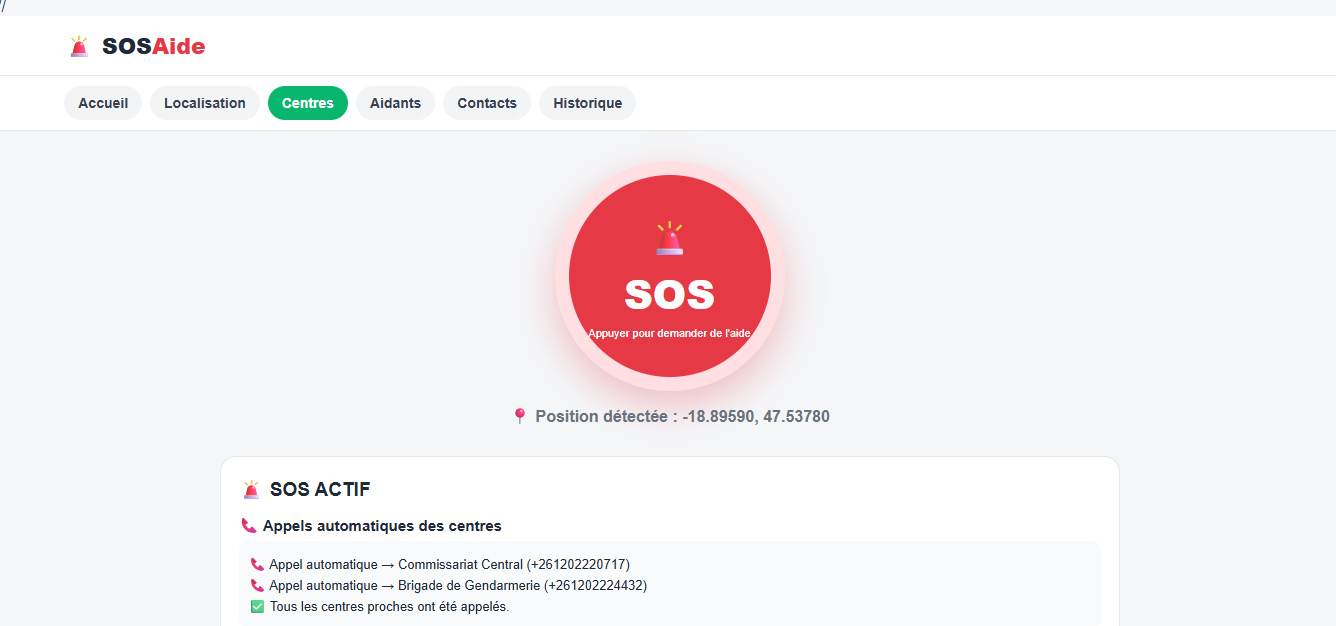
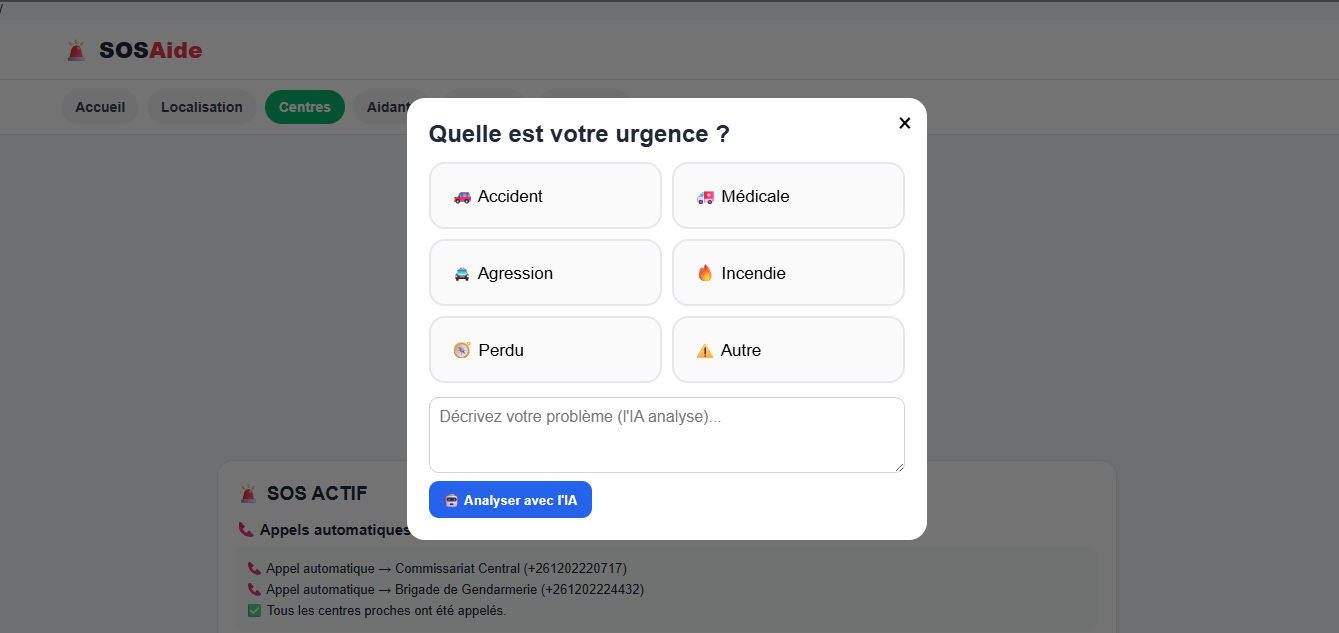
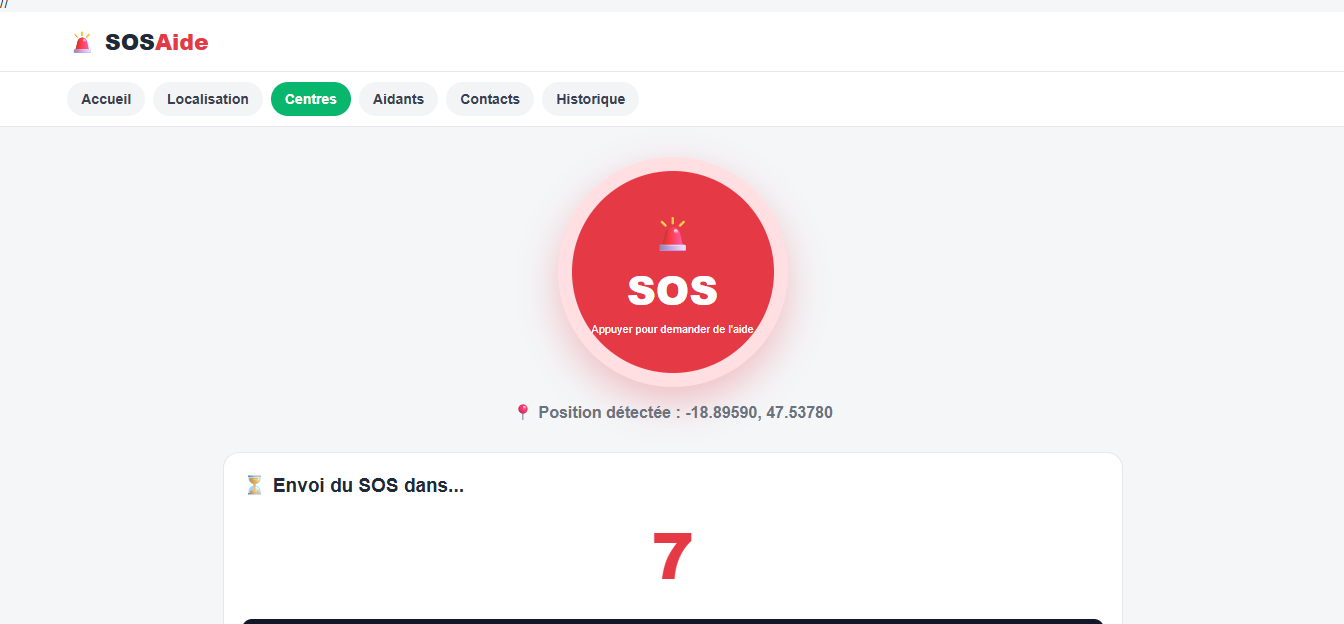
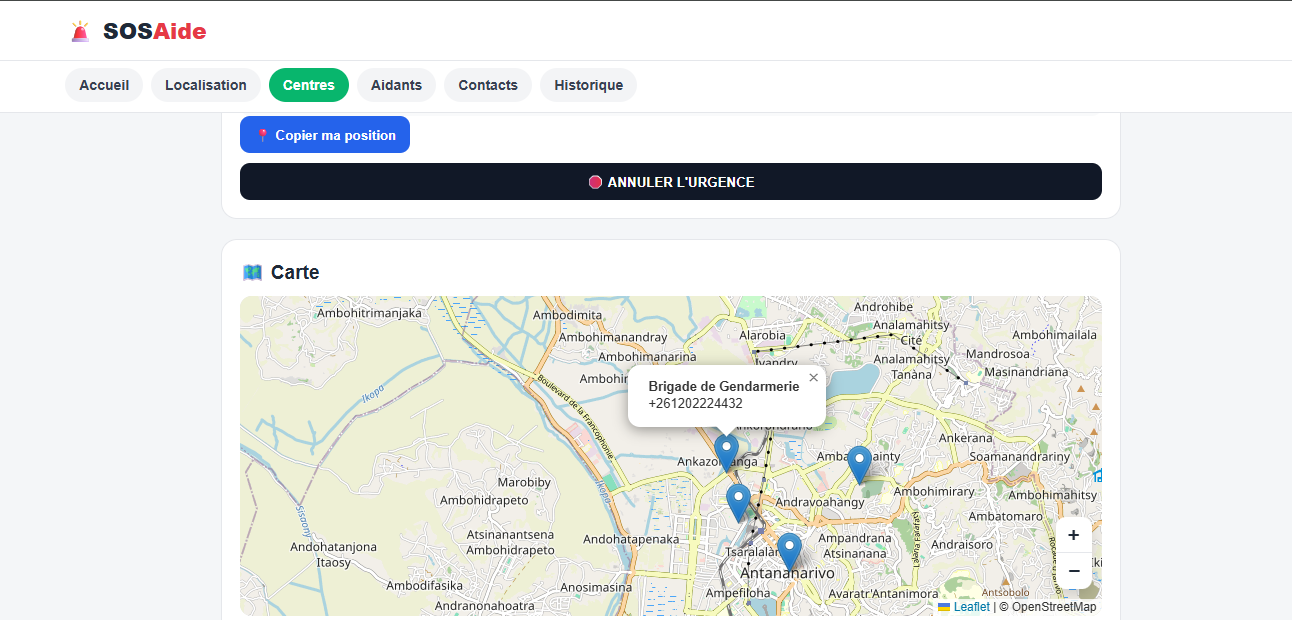
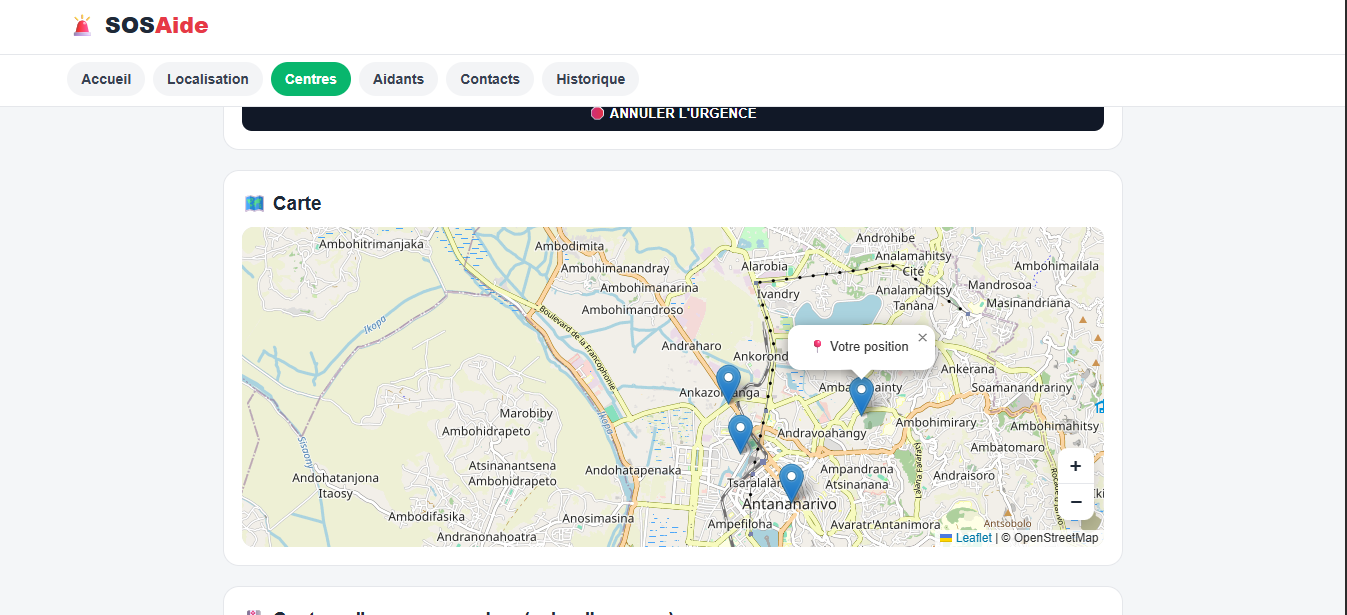
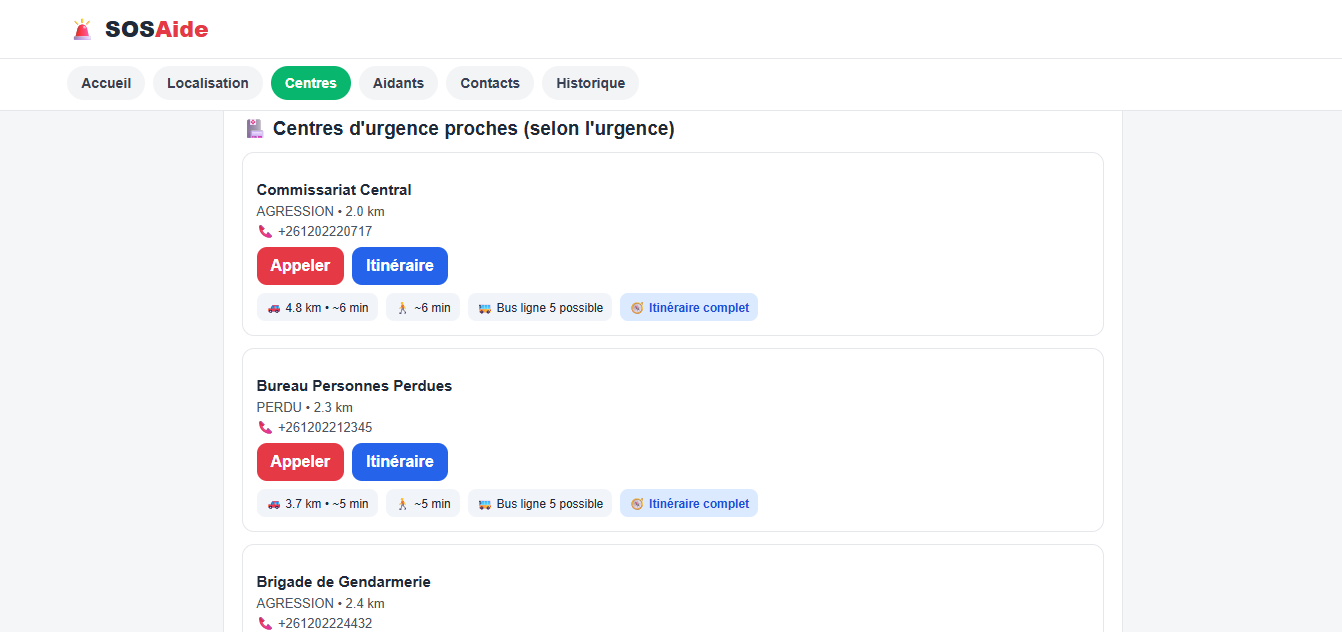
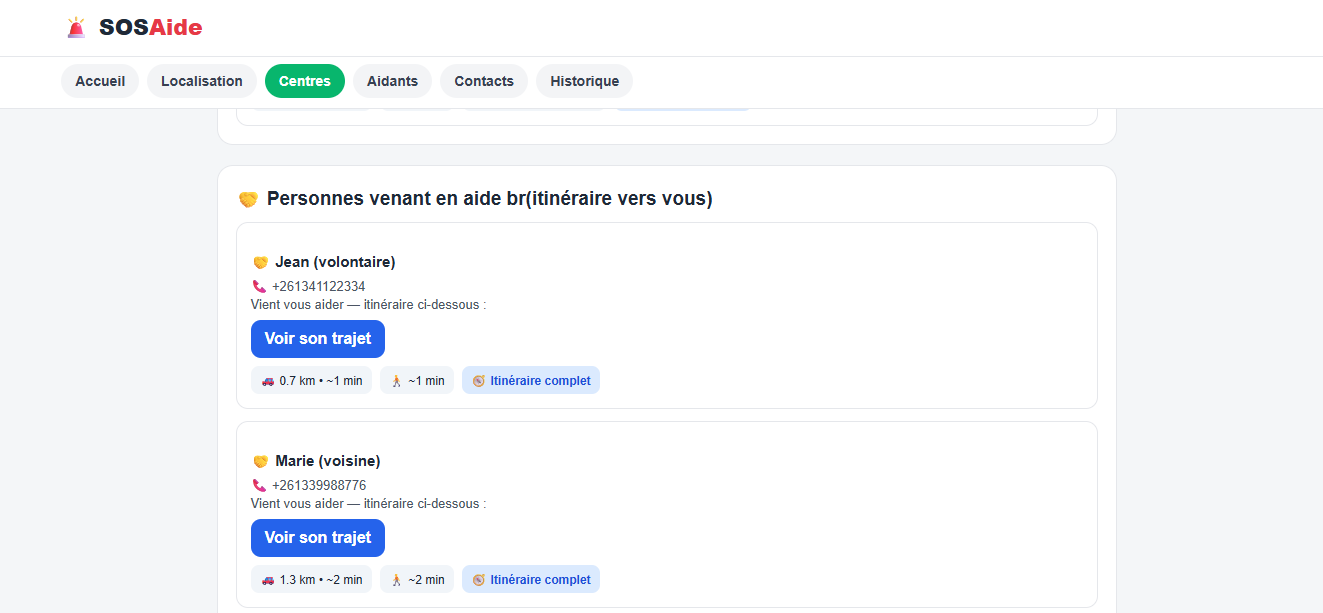
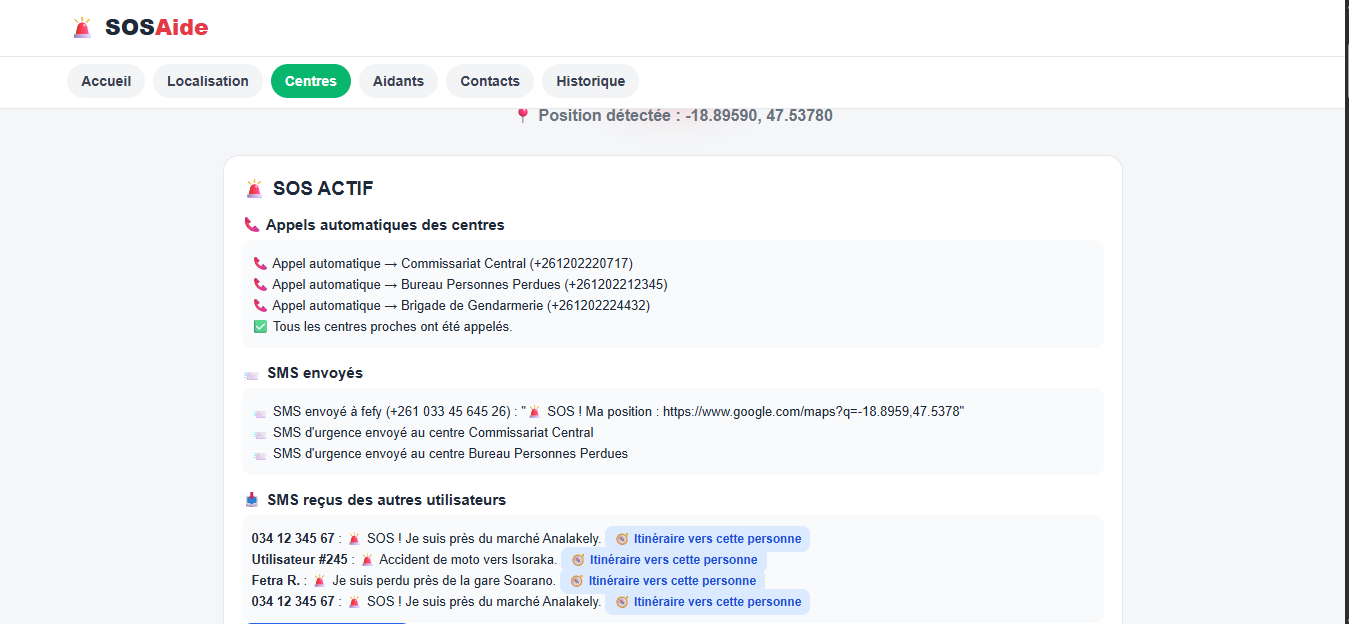
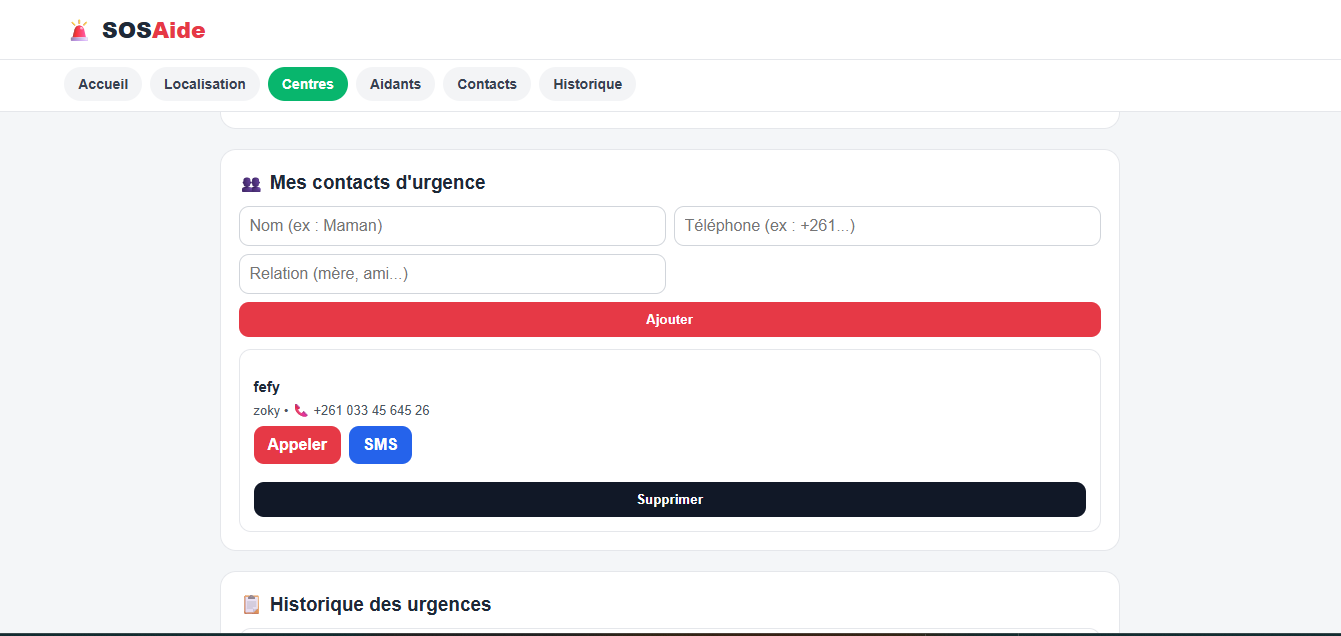
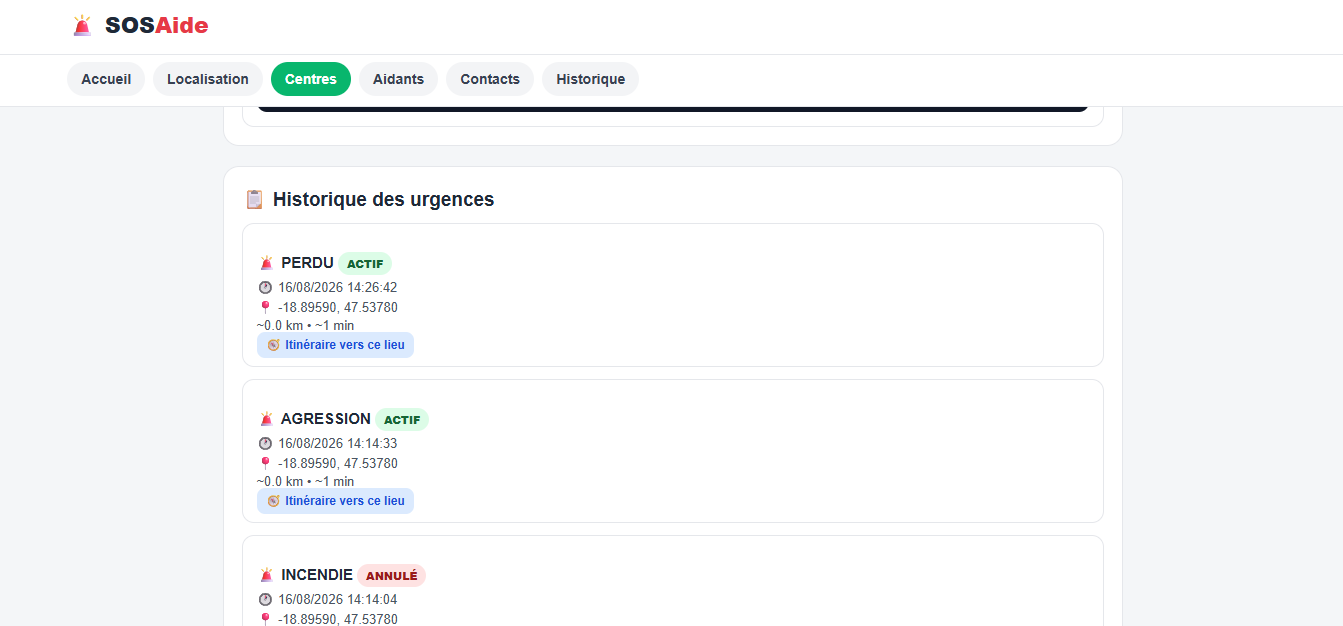
SOSAide is an emergency assistance platform designed to help people during critical situations. It allows users to quickly trigger an SOS alert, share their location, describe their emergency, and identify the appropriate assistance nearby. The platform can also help connect users with their emergency contacts and nearby emergency centers.
Our goal is to reduce the time between an emergency and the arrival or access to appropriate help.
How we built it
We built SOSAide as a web-based emergency assistance platform using a simple and accessible architecture.
Frontend: HTML, CSS, and JavaScript for the user interface and SOS interactions. Backend: Node.js and Express.js to handle emergency requests, alerts, and communication between the frontend and database. Database: MySQL to store users, emergency alerts, and emergency centers. Geolocation: The browser's Geolocation API to obtain the user's location during an emergency. AI assistance: We designed the platform to use intelligent analysis of the user's emergency description to help identify the appropriate type of assistance and nearby emergency services.
The main workflow is:
User → SOS Button → Emergency Information → Location → Backend → Database → Emergency Assistance
We focused on making the interface simple and fast to use, because during an emergency, the user may be stressed and have very little time to interact with the application.
Challenges we ran into
One of our biggest challenges was designing a system that could be simple enough to use during a stressful emergency situation while still providing useful and accurate information.
We also faced technical challenges while connecting the frontend, Node.js backend, MySQL database, and geolocation system. Making sure that emergency alerts, user locations, and emergency center information were correctly processed required a lot of testing and debugging.
Another challenge was thinking about how to identify the most appropriate emergency assistance based on the user's situation and location. Since this is a prototype developed during a hackathon, some features still need further development and integration with official emergency services.
Despite these challenges, we managed to build a functional prototype and demonstrate the core idea of SOSAide.
Accomplishments that we're proud of
We are proud of turning a real problem faced by many Malagasy people into a functional prototype in a short amount of time.
Our main accomplishments include:
Building a functional SOS emergency button. Integrating geolocation to identify the user's position. Allowing users to select and describe their emergency. Creating a system to identify and manage nearby emergency centers. Connecting the application to a MySQL database to manage emergency information. Building communication between the frontend and backend using Node.js and Express.js. Designing the foundation for AI-assisted emergency analysis. 🇲🇬 Creating a solution specifically inspired by a real local problem in Madagascar.
Most importantly, we are proud that SOSAide is not just an idea—we transformed our idea into a working prototype that demonstrates how technology can help people during critical situations.
What we learned
Through building SOSAide, we learned much more than just developing a web application.
We learned how to turn a real-world problem into a concrete technological solution, while keeping the user experience simple and accessible.
Technically, we improved our skills in:
Frontend development with HTML, CSS, and JavaScript. Backend development with Node.js and Express.js. Database management with MySQL. Working with geolocation and location-based data. Connecting different parts of an application through APIs. Thinking about how AI can support emergency decision-making.
We also learned the importance of teamwork, problem-solving, testing, debugging, and working under time constraints.
Most importantly, we learned that a good technological project is not only about the technology itself, but about solving a real problem and creating something useful for people.
What's next for SOSAide
Our vision for SOSAide goes beyond the current prototype. We want to make it a truly accessible emergency assistance platform for people across Madagascar.
Our next steps include:
Voice Messages: Allow users to send a voice message describing their emergency, especially when typing is difficult during a stressful situation. 🇲🇬 Nationwide Expansion: Expand SOSAide across Madagascar so that people in different regions can access appropriate emergency assistance. Support for All Phones: Develop a version compatible not only with Android smartphones, but also with non-Android phones, including touchscreen and keypad phones, so that the service remains accessible to as many people as possible. Real Emergency Service APIs: Connect SOSAide directly to official and real emergency service APIs, when available, to provide accurate and up-to-date information about emergency centers, availability, and contact numbers. AI-Powered Image Analysis: Allow users to send photos related to an emergency, with AI helping analyze the image and provide additional information to assist in identifying the situation. Smarter Emergency Assistance: Combine location, emergency type, voice, images, and real-time service information to provide more accurate assistance.
Our ultimate goal is to make SOSAide accessible to everyone in Madagascar, regardless of their location, device, or ability to communicate during an emergency.


Log in or sign up for Devpost to join the conversation.