-
SOS.sg
-
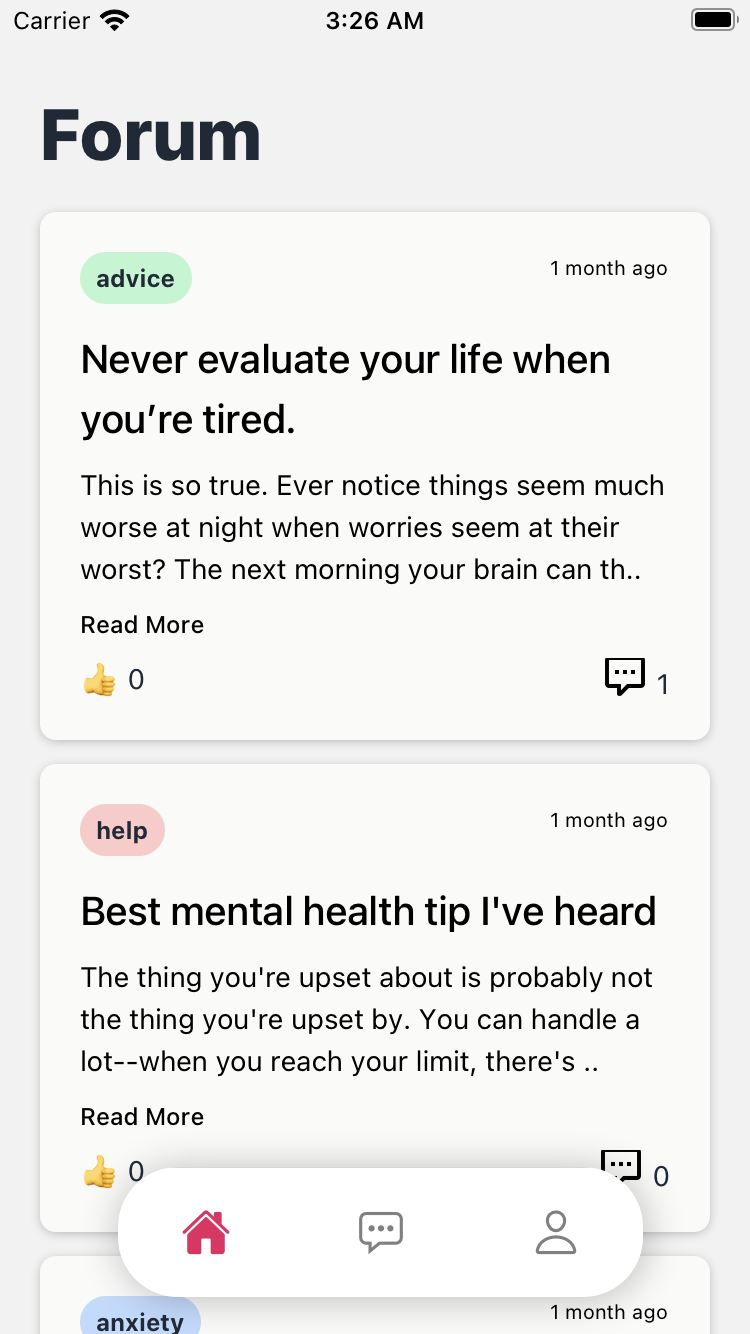
Forum
-
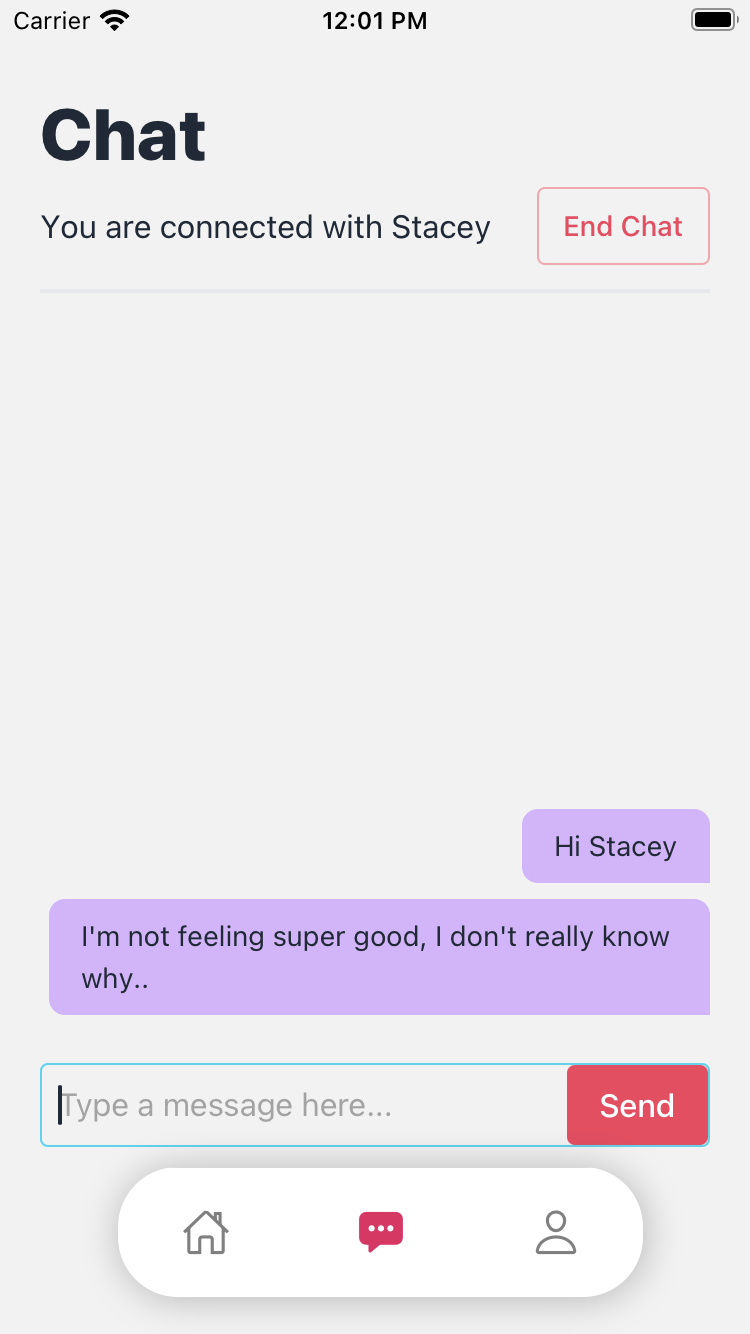
Chat Function
-
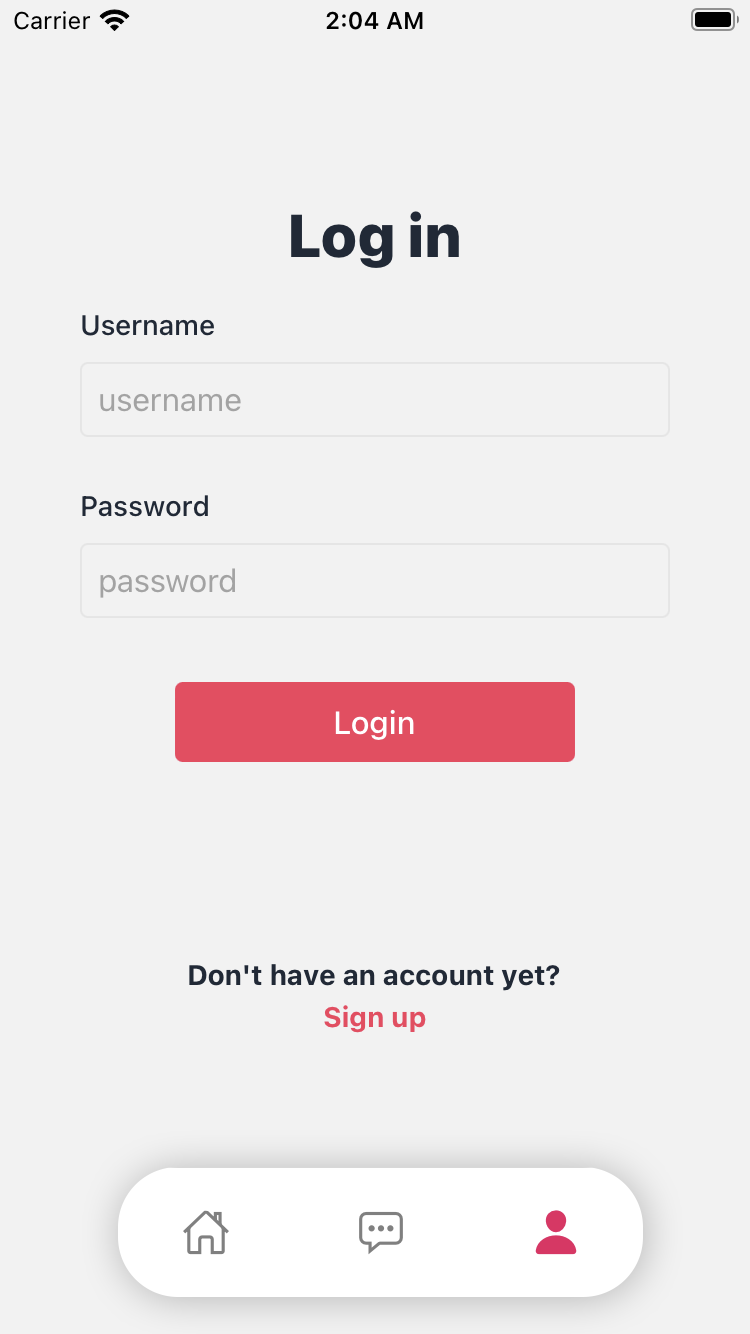
Login Screen
Mental health in Singapore
Pervasive unhealthy work culture “Second most overworked” and “most fatigued” nation in the world.
High prevalence of mental disorders 1/7 people in Singapore have experienced a mental disorder in their lifetime, an increase from the previous 2010 study (IMH, 2018).
Perceived societal stigma isolates people 65% of the respondents claimed that they would avoid the topic of mental illness with their families.
Inspiration
The overloaded and overworked healthcare infrastructure continues to plague the healthcare sector in Singapore. After reading up on studies, we believe that digitalizing healthcare and utilizing volunteers for administrative work are potential solutions in reducing medical overheads and the strain on the medical sector in Singapore.
In addition, digitalising healthcare may also potentially improve the standards of mental health literacy among younger target audiences by increasing its reach. Many of the younger audiences are both financially dependent on their parents and are living in a society where mental health stigma continues to pervade, both of which act as potential barriers in seeking early intervention.
Lastly, we also realised that while many mental health non-profit organizations have a website, they are often outdated or lack their mobile application counterpart. By creating a mobile application, we hope that this appeals to the younger audiences, who remain one of the most vulnerable socio-demographic to mental disorders.
What it does
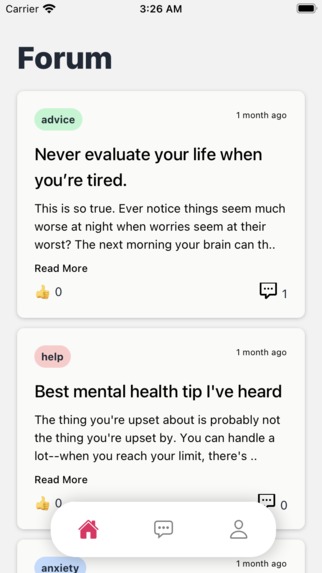
Our application has three key features. The first key feature that we built was the forum. The forum allows for tags and comments to encourage others to share about overcoming their own personal struggles. We believe in the importance of empowering communities and creating safe spaces. Through sharing of experiences, civil discourse, and actively listening in the forum, users may find solace hearing about how others have overcome their own obstacles, and potentially find solutions to their problems as well.
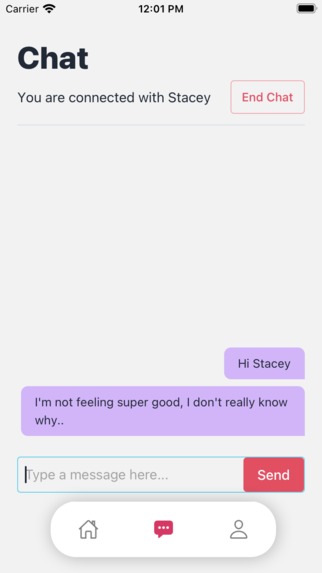
The second key feature we built was Text Therapy. During office hours, Text Therapy hooks the user to a volunteer and duty, in which both parties would then communicate using the chat room function. Youths are a vulnerable socio-demographic when it comes to attempting suicide. Their lack of financial independence and societal stigma can act as additional barriers to seeking professional help. Since 75% of youth prefer texting to calling (Upland Software), we seek to engage them by appealing to their preferred modality of communication. In doing so, we strive to increase their accessibility and exposure to facilities with early intervention measures.
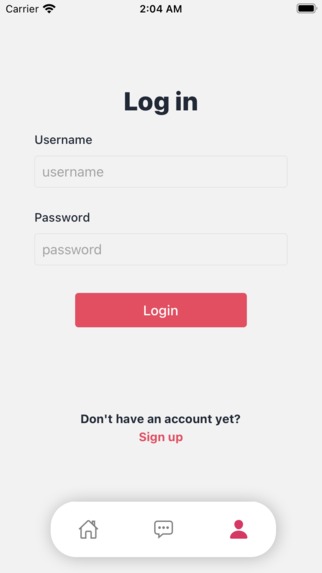
The last key feature we built was the Avatar. The avatar is the user profile. Having a profile (avatar) allows for a sense of (virtual) belonging, alleviating feelings of loneliness and isolation. Furthermore, the creation of a profile serves as a reminder of one's identity, allowing for ownership and civil discourse in a sensitive space.
How we built it
The front-end of the project was constructed with react native. The backend of the project was constructed with express and mongoose. The MERN stack is eventually deployed using Heroku. We communicated through discord and utilized Github to collaborate and merge codes.
Challenges we ran into
There was a lot to learn within 24 hours. Some of our group members tried out different roles in different languages, so there was a challenge in trying to not only pick up new skills, but also apply them throughout the project. Even group members who were more familiar with the tech stack also found new areas to pick up and learn, be it through the usage of the web socket or the nuances of mobile development
Accomplishments that we're proud of
The end product is definitely something that we are proud of. As we did not have any experience with building a forum or a chat feature, we started the project looking to complete just one out of the three features. However, we exceeded our own expectations and completed all the features that we envisioned building within a mere 24 hours. It was beyond satisfying watching as all our ideas bore fruition.
What we learned
This hackathon was an overall good experience for all of us. Some of us picked up a new language, and most of us tinkered with frameworks that we have not picked up prior. Having a common goal to work towards together definitely made it even more rewarding and fulfilling.
What's next for sos.sg companion app
We hope that in the future, we get to quicken the enforcement of forum regulations through formal recruitments of forum moderators. Improving UI flow is also a priority as we would like to provide useful links, advice, and information within the application to improve mental health literacy in Singapore. Most importantly, however, we are looking at a potential partnership with SoS and other beneficiaries in Singapore.
Self-reported quizzes and habit trackers are possible areas to venture into.

Log in or sign up for Devpost to join the conversation.