-
-
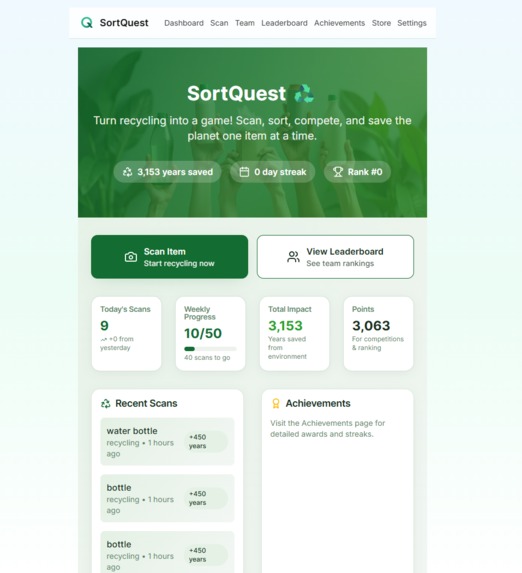
Dashboard
-
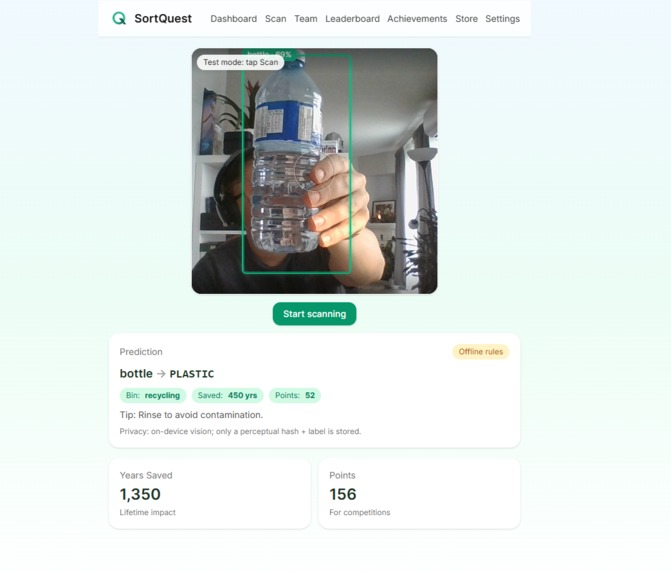
Scaning flow
-
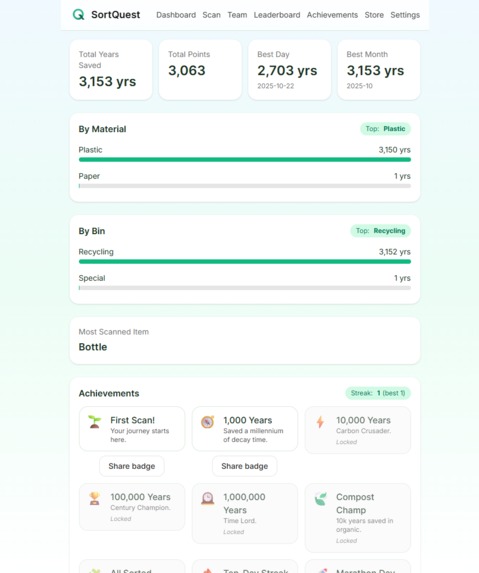
Achivements page
-
-
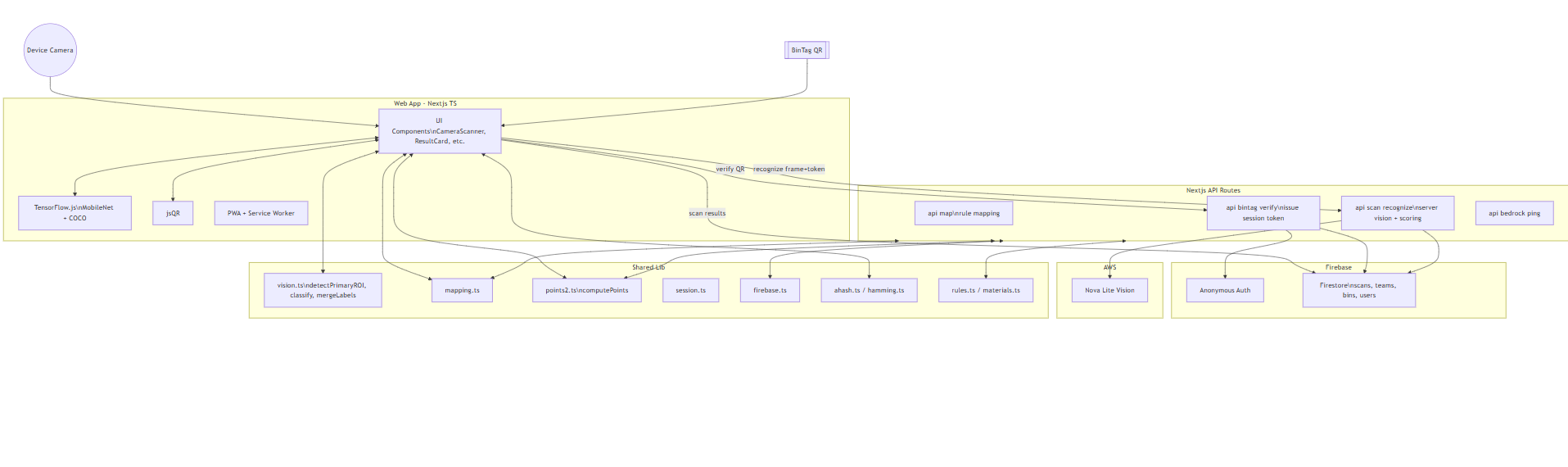
Architecture
Inspiration
Recycling is a motivation problem, not just an information problem. Fitness apps made daily movement sticky with points, streaks, and social proof. SortQuest applies the same game loops to waste sorting—turning “which bin?” into a quick win that compounds over time.
What it does
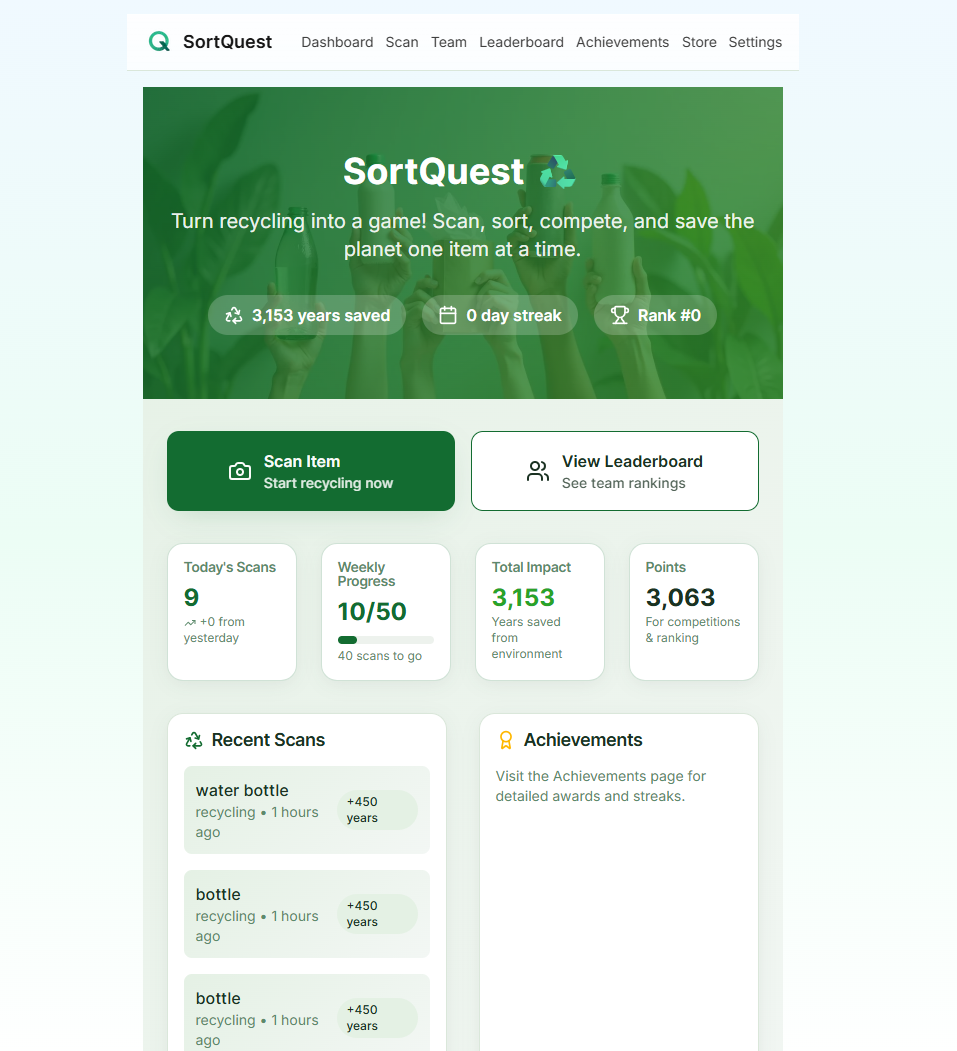
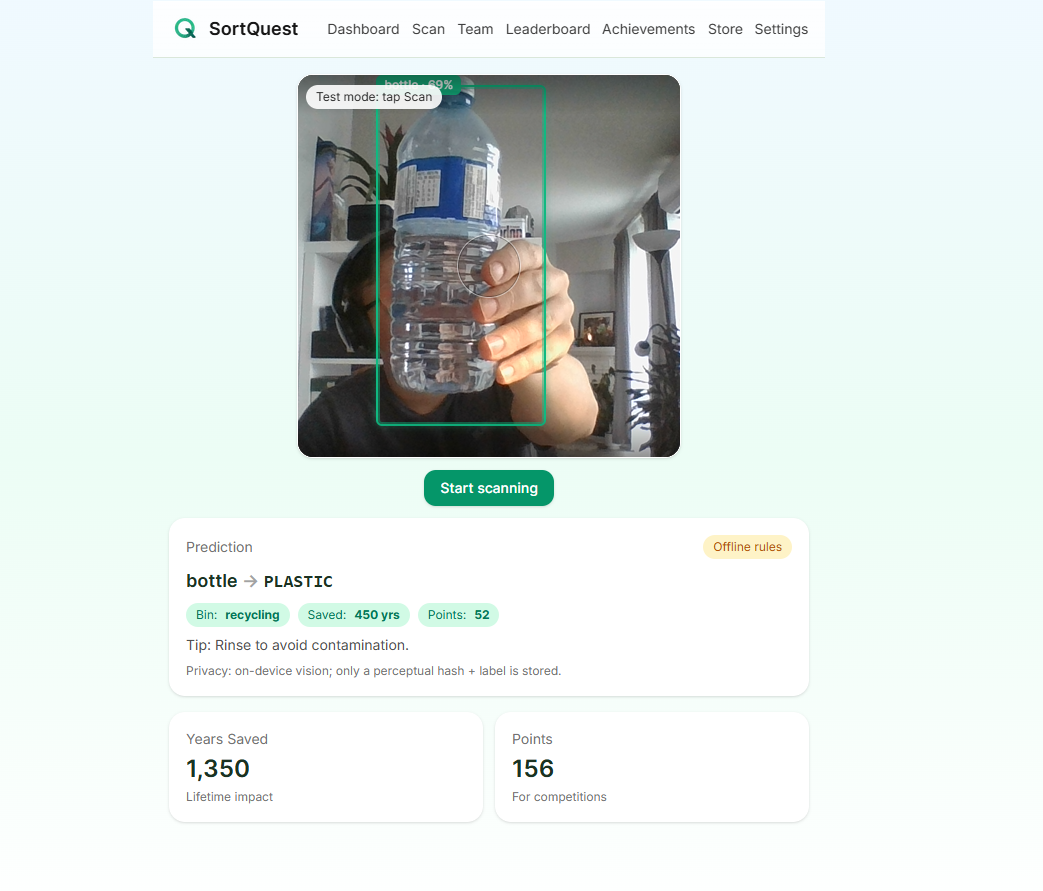
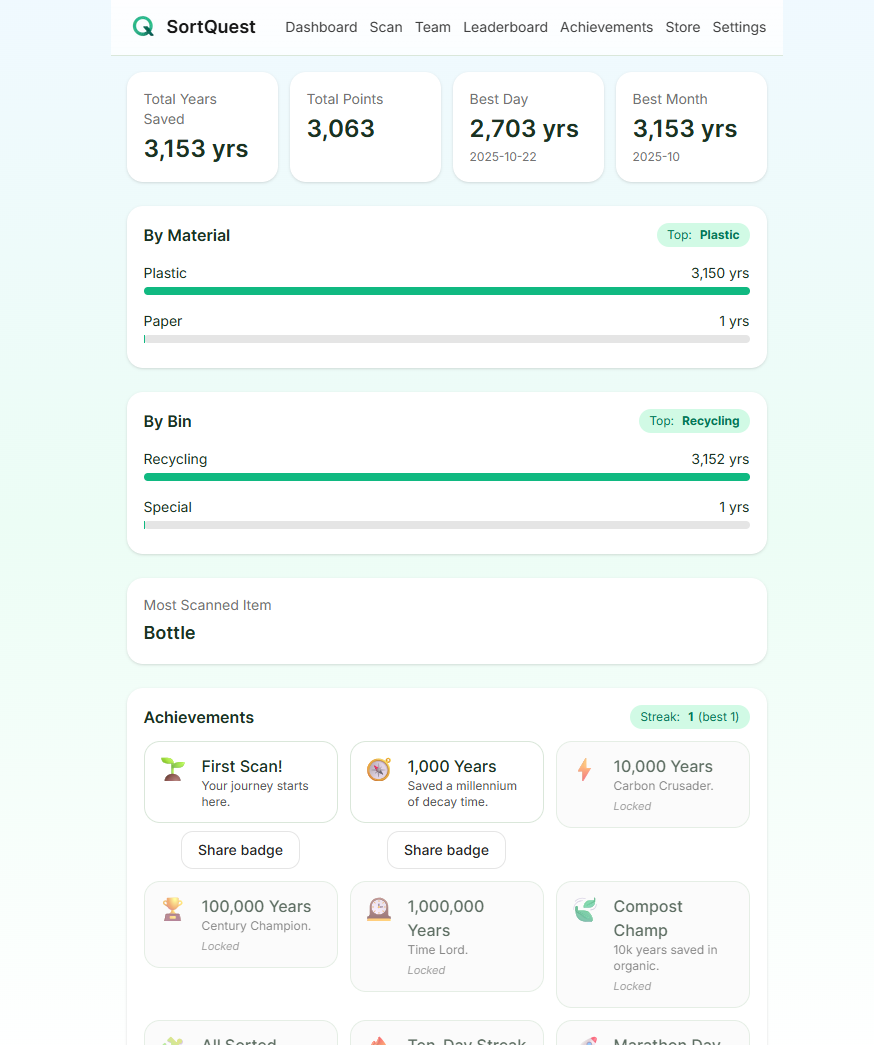
SortQuest lets you scan an item, get the right bin instantly, and earn points, streaks, badges, and “years saved”. Teams (schools, offices, neighborhoods) compete on leaderboards. It explains why a decision was made and cites the local rule, building trust and learning along the way.
How I built it
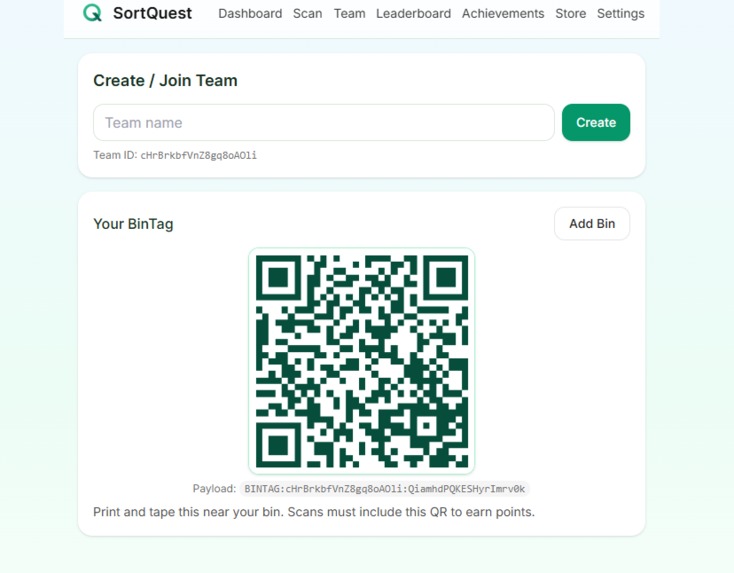
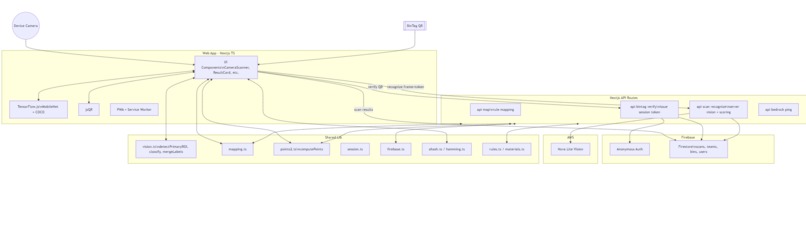
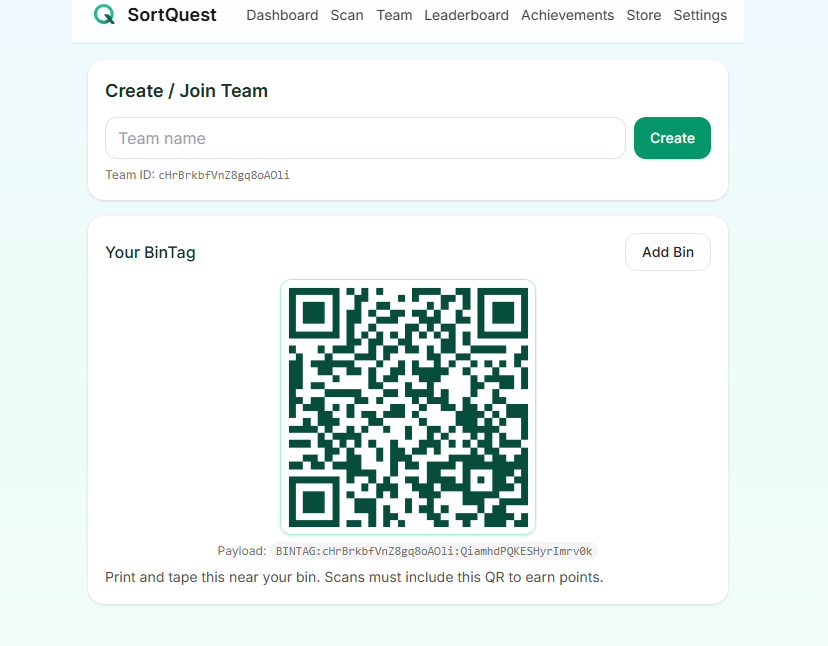
Perception: Client camera + lightweight TFJS (MobileNet) for on-device label hints. Reasoning & Rules: Amazon Bedrock Nova (reasoning) maps item → city-specific rules; returns {bin, tip, years_saved} with a short explanation. Retrieval (local rules): Chunked municipal guidelines stored in S3 + indexed (OpenSearch Serverless or DynamoDB + embeddings). API & Orchestration: API Gateway + Lambda; Nova prompts with a strict JSON schema; caching for low latency. Anti-cheat: QR BinTag in frame, motion threshold, perceptual hash dedupe, hourly caps, risk score. Privacy-first: We store labels + perceptual hashes—no photos. PWA front end for fast install + offline scoring.
Challenges I ran into
Rule fragmentation: Every city has different edge cases (e.g., greasy pizza boxes). Solved with RAG over city corpora + explicit conflict handling. Latency vs. cost: Prompt minimization, JSON schema, and result caching to keep Nova calls snappy and affordable. Mislabels from CV: Ensemble heuristics + user confirm on ambiguous items. Fair play: Designing anti-cheat that’s strict enough without blocking legitimate use. UX clarity: Explaining why a bin decision is correct in ≤2 sentences.
Accomplishments that we're proud of
Instant, trustworthy guidance with rule citations. Motivation loops that stick: streaks, badges, and team leaderboards that drive real behavior change. Privacy by design: zero photo retention; on-device hints + minimal telemetry. City-ready architecture: add a new city by dropping its PDF/HTML rules into the ingest pipeline.
What we learned
Gamification works when feedback is immediate, transparent, and social. Strict output schemas + short prompts make LLM reasoning reliable and cheap. RAG over municipal rules requires careful chunking, metadata, and fallback policies. Users love the “years saved” metric—it makes impact tangible.
What's next for SortQuest
More cities & languages (FR first), plus per-city “tricky items” playbooks. AR overlay (“point at item → see bin color”) and voice mode for accessibility. Classroom & office leagues with weekly challenges and prize hooks. ESG dashboards for organizations; anonymized impact exports. Open data partnerships with municipalities and MRFs to improve rules and contamination outcomes.

Log in or sign up for Devpost to join the conversation.