-
-
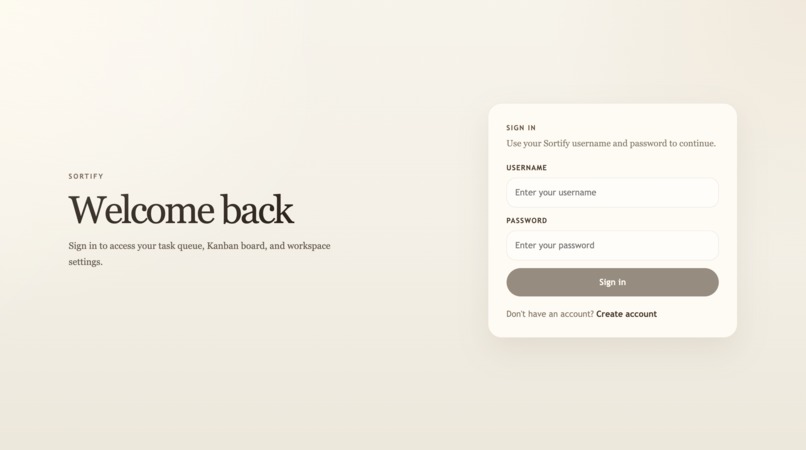
Login
-
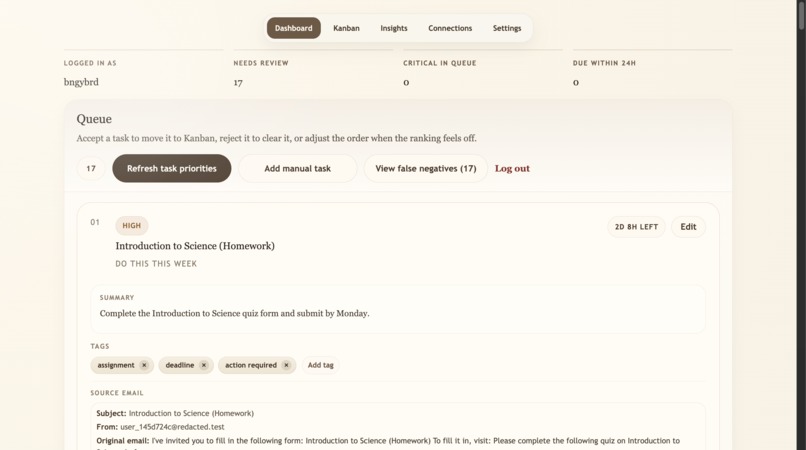
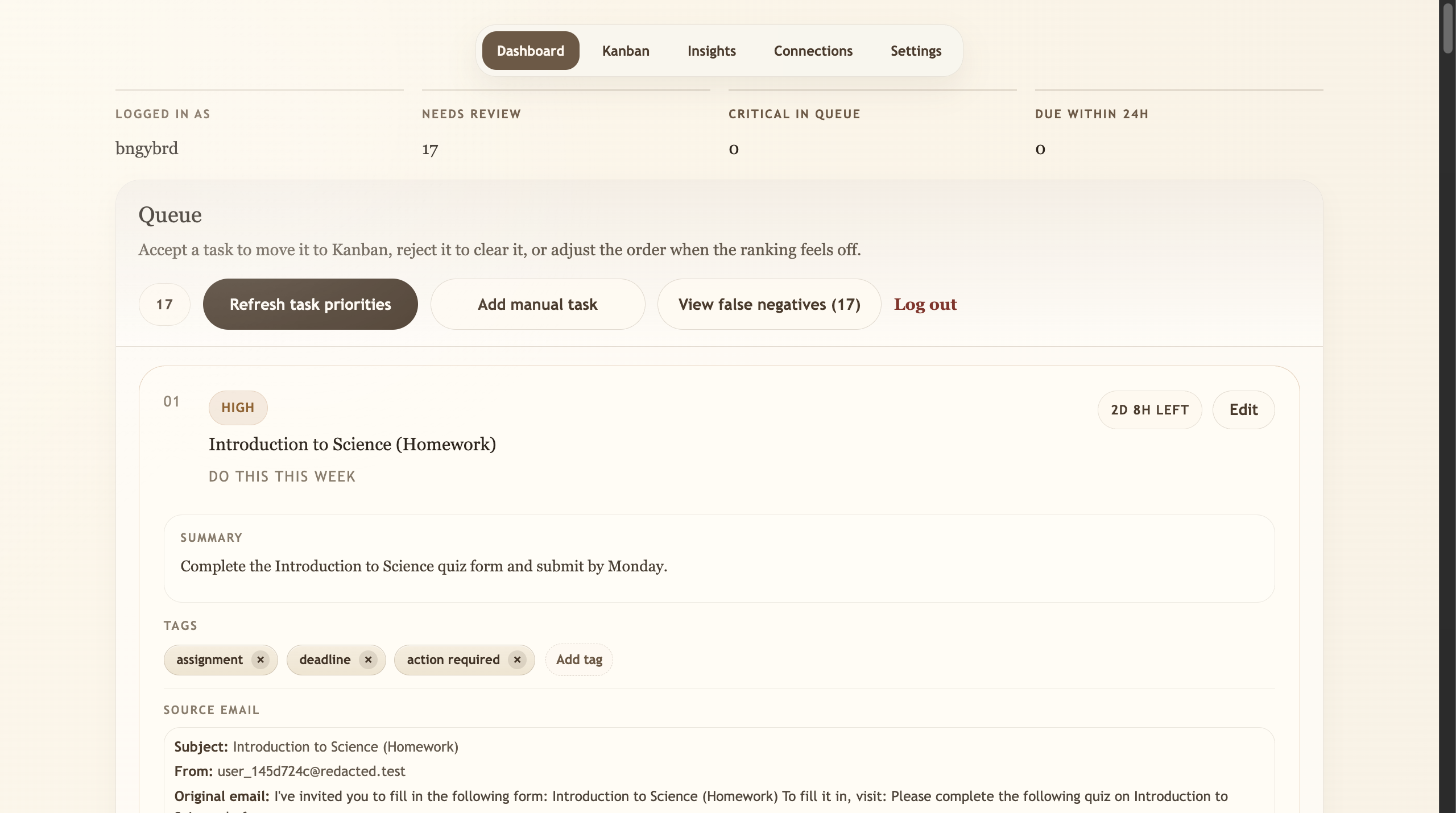
Dashboard
-
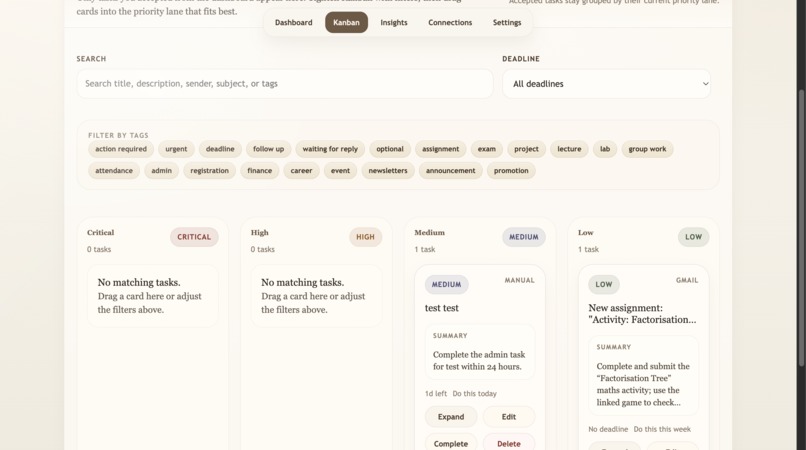
Kanban
-
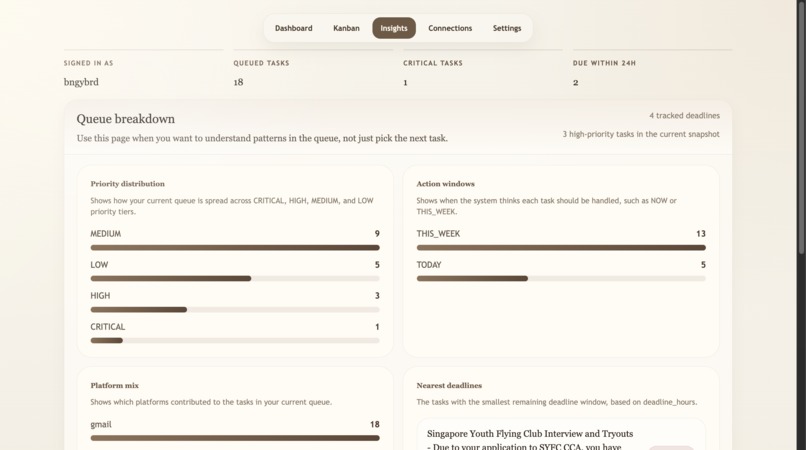
Insights
-
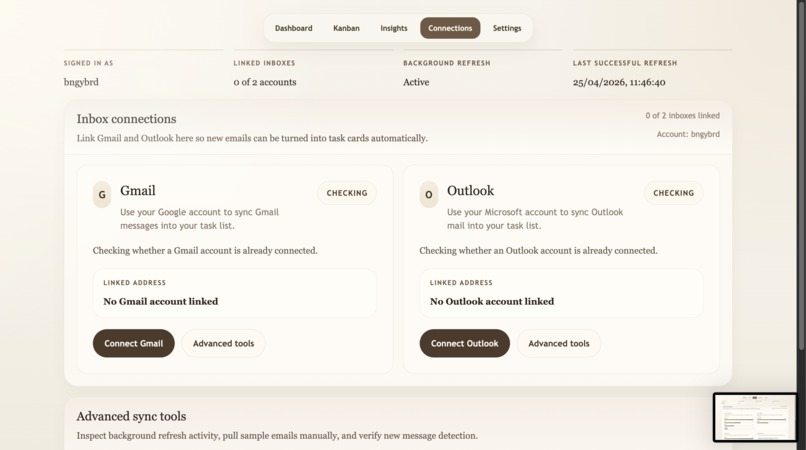
Connection
-
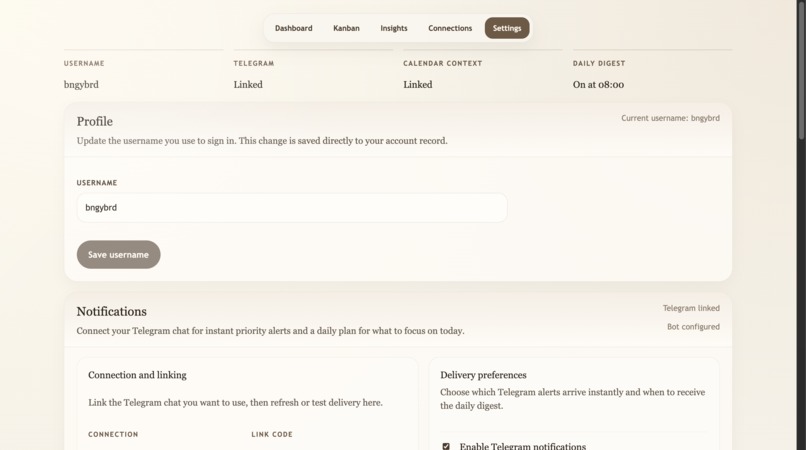
Settings
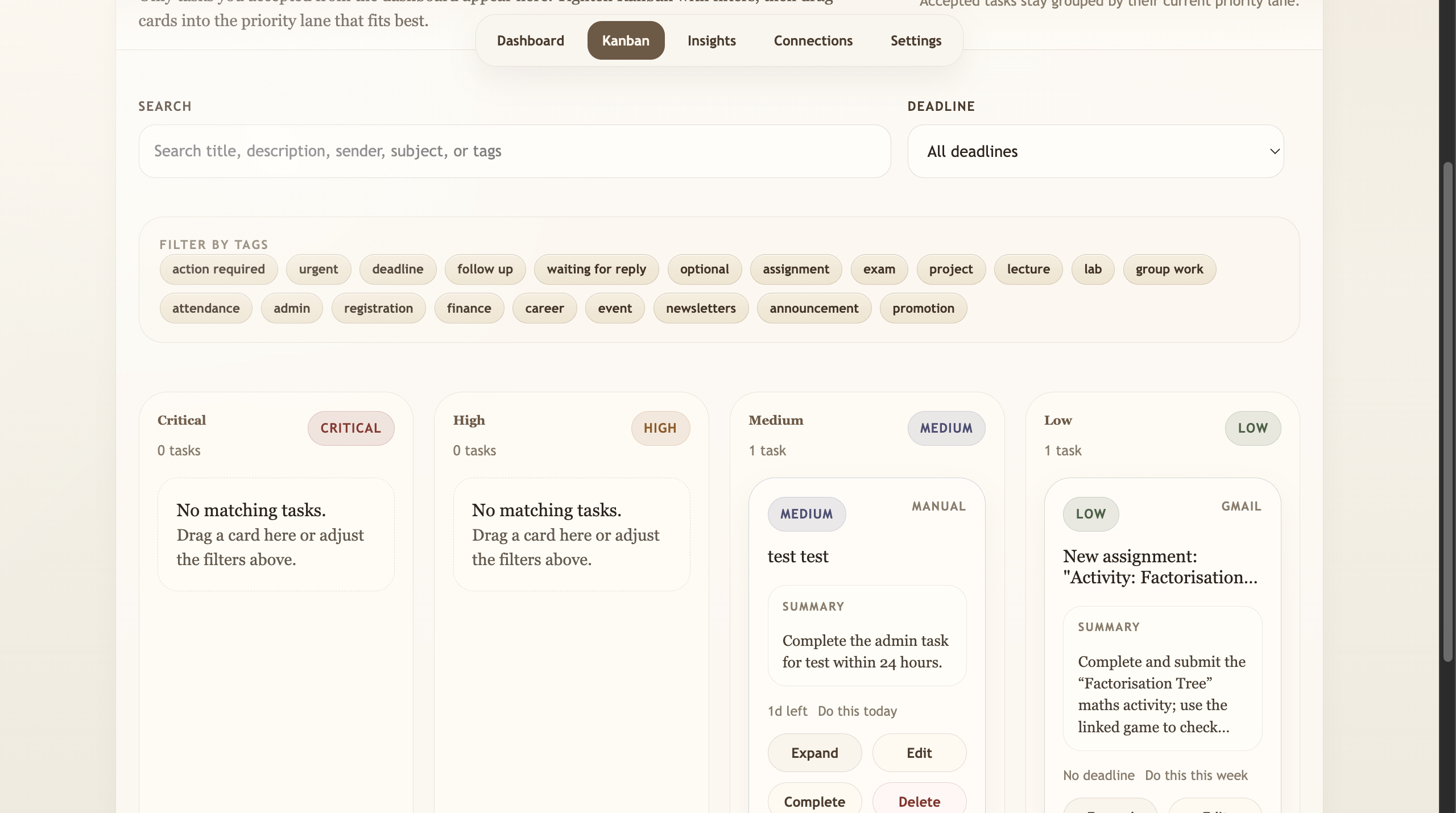
Inspiration Every student knows the feeling — 40 messages before lunch, a Canvas announcement buried under memes, a deadline hiding in a group chat from three days ago. We weren't overwhelmed by the volume. We were overwhelmed by the inability to tell what actually mattered. Existing tools ask you to organise your own work. We wanted something that did that thinking for you.
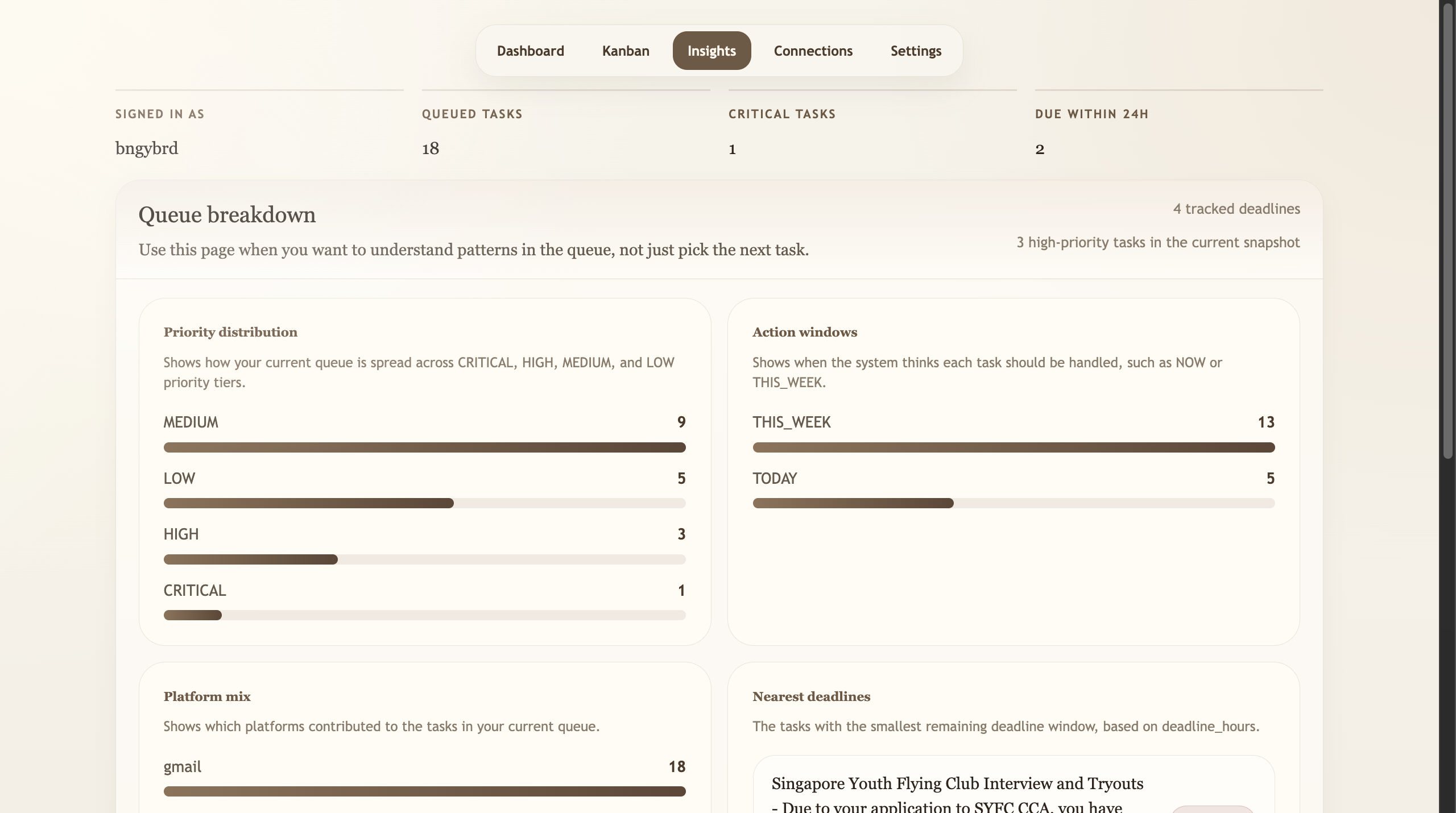
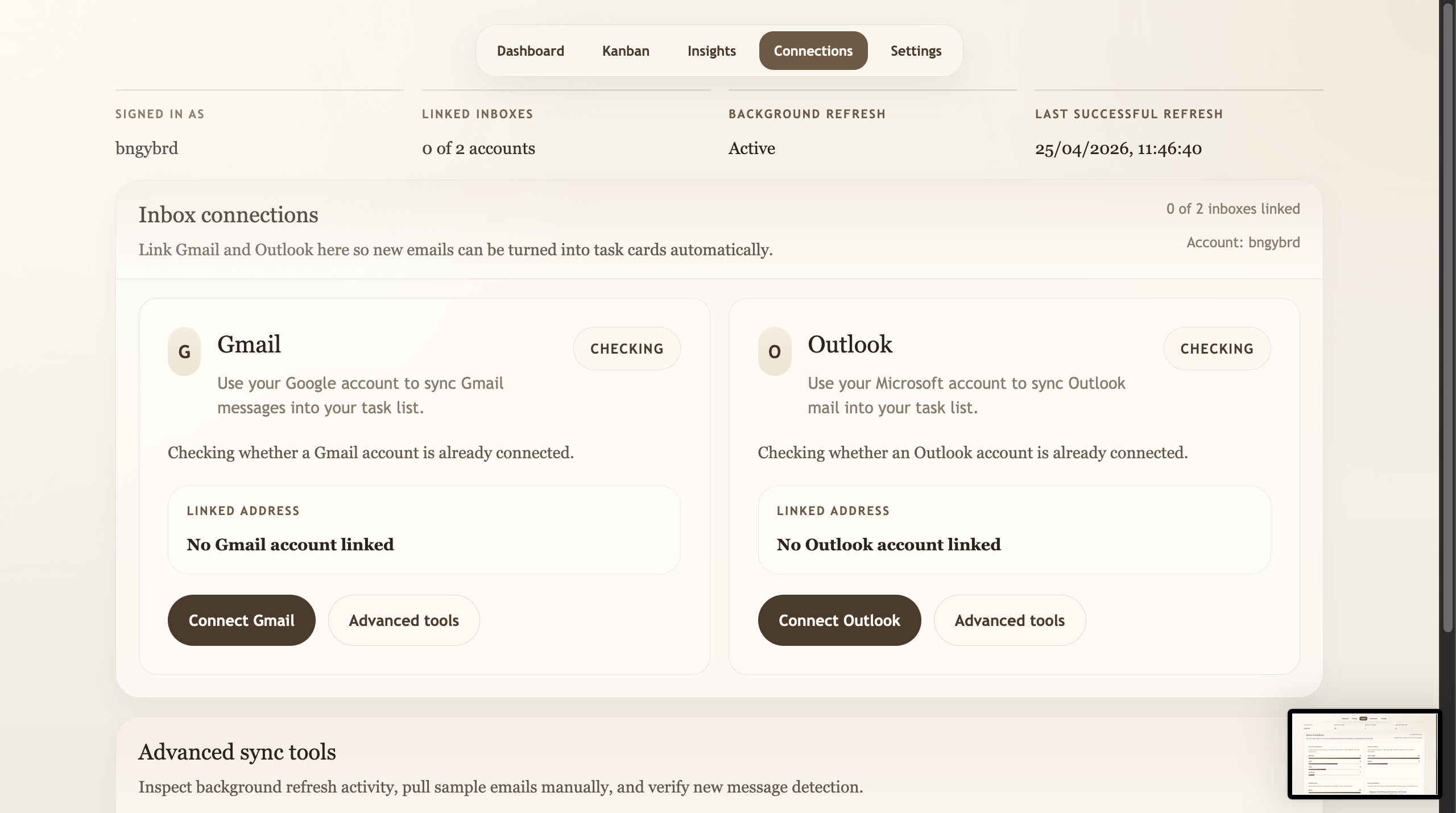
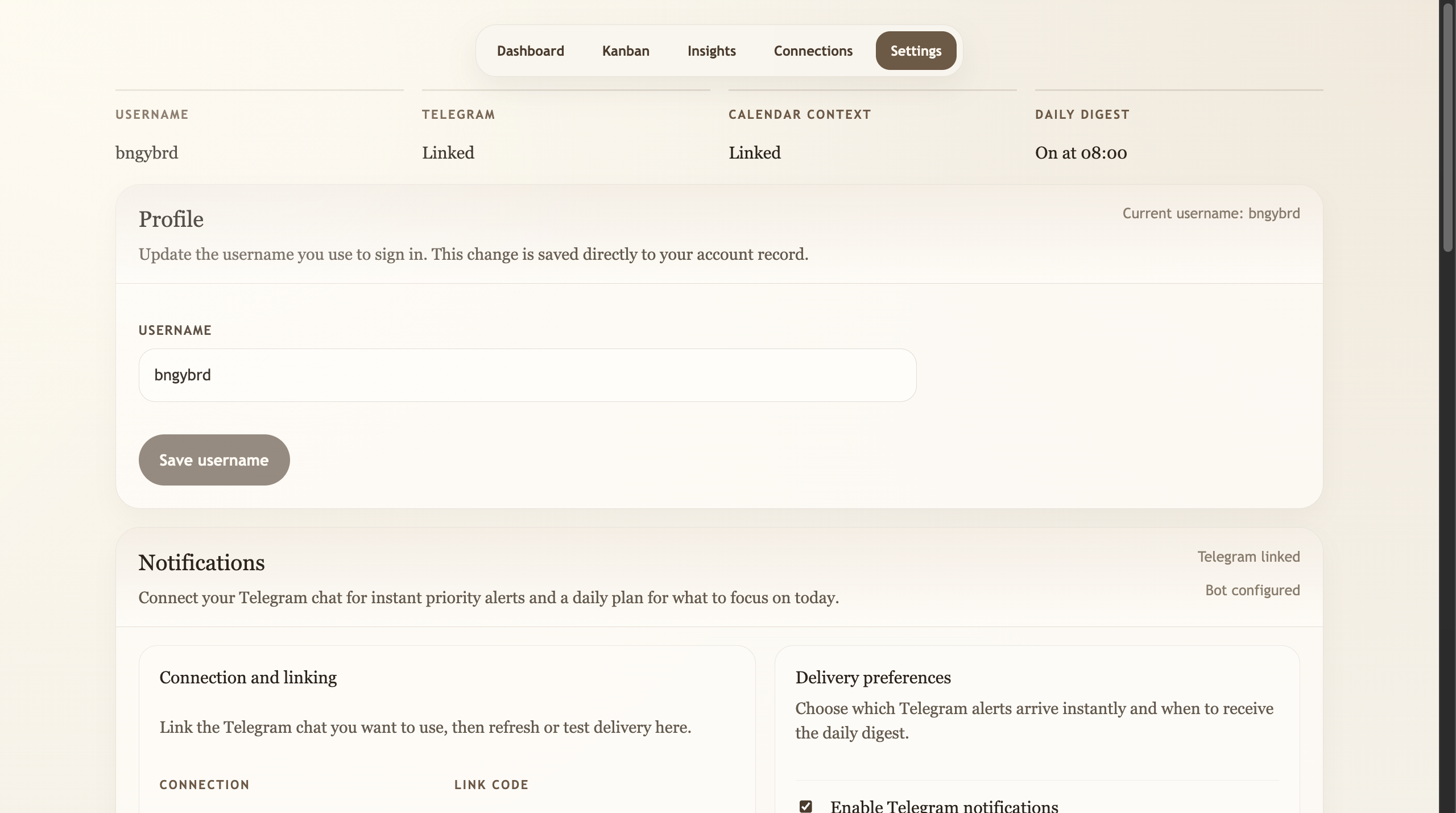
What it does Sortify connects to Gmail, Canvas, and Telegram, then automatically filters, ranks, and explains every incoming signal — so students see a prioritised queue of task cards instead of a wall of noise. Each card carries a plain-English rationale: why it was flagged, when it needs attention, and how that recommendation was shaped by the student's own behaviour over time. The longer you use it, the more accurately it reflects your actual priorities.
How we built it The pipeline runs in three stages. First, a hard filter discards promotions, social notifications, and spam using Gmail's native category labels — before any NLP runs. What remains passes through a local extraction layer (spaCy + sentence-transformers) that pulls structured signals — deadlines, sender roles, topic entities — without sending raw message content to any external API. Deduplicated signal objects then hit a Claude-powered reasoning layer that assigns priority tiers with explicit rationale and structured JSON output. A user profile stored in PostgreSQL JSONB accumulates feedback from every accept, reschedule, and correction — updating entity weights and sender weights via exponential moving averages so recommendations drift toward each student's real behaviour, not population averages.
Challenges we ran into The hardest problem was the cold start. A profile with no history produces generic output indistinguishable from a simple rule engine. We resolved this with a short onboarding capture that seeds the profile before the first email is processed. We also had to be precise about what the LLM's job actually is. Early versions sent raw email text to the model — expensive, slow, and privacy-compromising. Redesigning the pipeline so the LLM reasons over structured metadata objects (never raw content) was the architectural decision that unlocked everything else: lower cost, faster inference, and a credible privacy story.
Built With
- jsx
- postgresql
- python
- sentence-transformers
- spacy


Log in or sign up for Devpost to join the conversation.