
Inspiration
Batteries are found in a growing range of everyday items, including vapes, wireless earbuds, singing greeting cards, and light-up toys. When these items are discarded in regular recycling or garbage, the batteries can be crushed or punctured during collection and processing. Lithium-ion batteries in particular can ignite, causing fires in garbage trucks and recycling facilities. Incidents like these are reported thousands of times a year, and improperly discarded batteries of all types also leak hazardous materials and waste recoverable resources.
Existing sorting technology mostly works downstream, after everything has been mixed together and the damage is already in motion. We wanted to fix the problem at the source: the moment someone decides which bin an item belongs in. That goal became SortiFy.
What it does
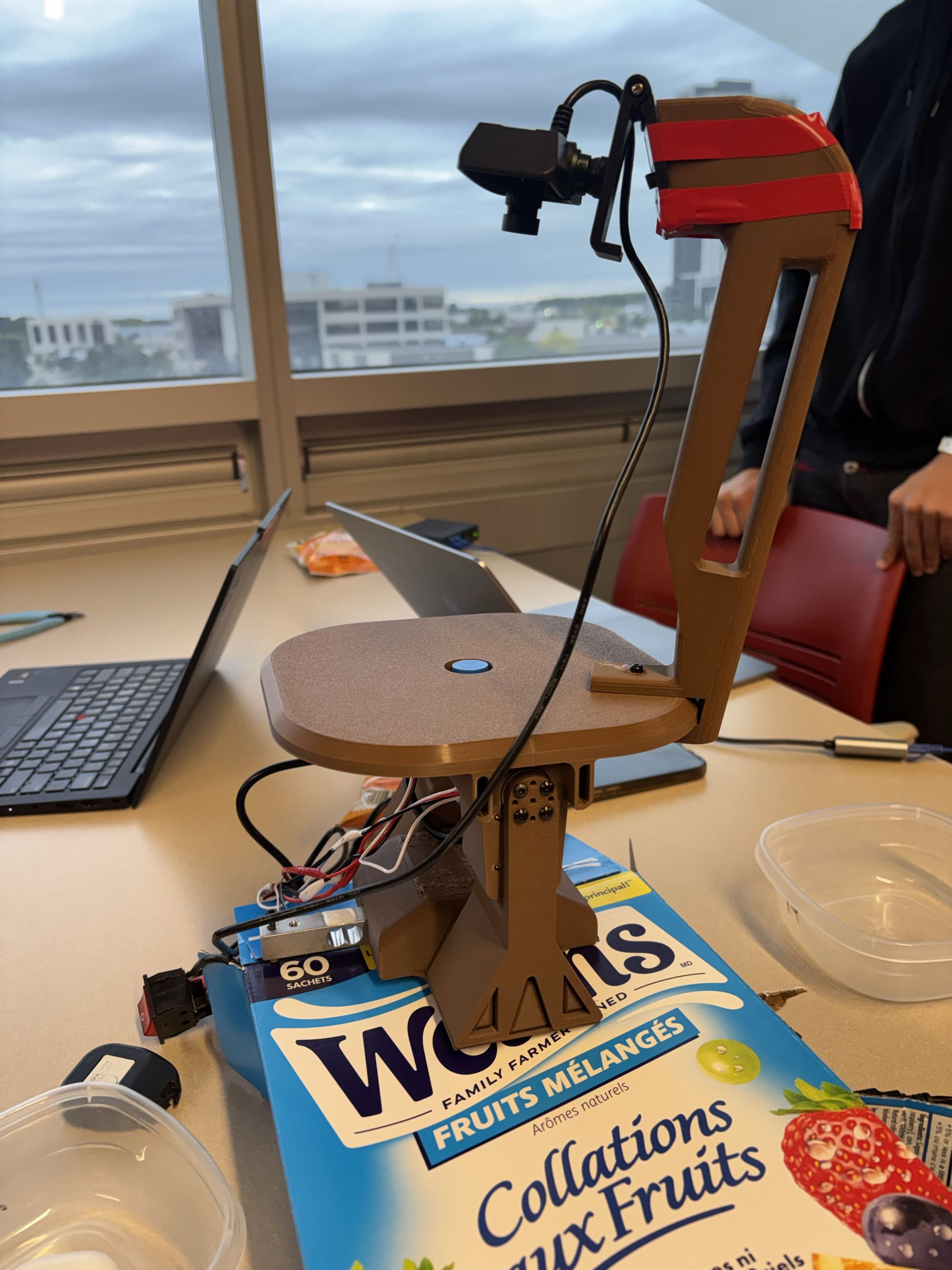
SortiFy is an automated sorting station for the point of disposal. Place an item on the platform and SortiFy identifies what it's made of and whether it may contain a battery. Then the platform rotates: one direction for recyclable items, the other for anything that contains a battery or needs special handling, sending it to the e-waste stream instead of the recycling bin.
One device keeps hazardous items out of the wrong stream, protects downstream facilities, and takes the guesswork out of recycling.
How we built it
- Control: A Raspberry Pi 5 acts as the central controller, running our sensing pipeline and driving the sorting mechanism.
- Material identification: A camera captures each item, and the image is analyzed through the Gemini API to determine what it's made of.
- Battery detection: An inductive sensor detects metal content, a strong indicator of an internal battery, while a load cell measures the item's weight. Together they catch batteries that the camera alone can't see.
- Decision logic: Custom scripts combine the camera, metal, and weight readings into a single recyclable vs. battery-containing decision, tuned against a range of real test items.
- Sorting mechanism: Servo motors rotate the platform left or right depending on the decision.
- Mechanical design: The platform and housing were designed in CAD and 3D printed, and every part fit correctly on the first print.
Challenges we ran into
- Sensors: Getting clean, consistent readings was harder than expected. Output varied with item placement, surface, and material, so we spent a lot of time calibrating.
- Debugging: With hardware, sensors, and software all interacting, a wrong result could originate in any layer, and isolating the cause took patience.
- Hardware issues: Physical faults don't show up in error logs, so they took longer to diagnose than software bugs.
Accomplishments that we're proud of
- Our 3D printed CAD models fit and functioned correctly on the first try.
- We achieved accurate, reliable sensor data.
- SortiFy made consistently correct sorting decisions across the wide range of test items we tried.
- We built a working end-to-end system, from sensing to decision to physical sorting, within the hackathon.
What we learned
- Details matter. One small thing, like a loose connection or a slightly misaligned sensor, can break the whole system.
- Test early and often. Testing each component on its own before integrating saved us hours.
- Hardware and software fail differently. Physical systems have noise and tolerances that code alone doesn't.
- Real data beats assumptions. Sensors behaved differently on real items than we expected, so we calibrated against actual objects.
What's next for SortiFy
- More categories: Expanding beyond recyclable vs. battery-containing to sort by specific materials such as plastics, metals, glass, and paper, using a multi-bin design.
- Even sharper sensing: Adding sensors and refining our models so identification stays accurate across an even wider variety of items.
- Scaling up: Bringing SortiFy to high-traffic spaces like campuses, airports, and offices, with larger-capacity versions for facilities that handle more waste.
- Insights for facilities: Turning every scanned item into data on what people throw away and where contamination happens, so waste teams can act on it.


Log in or sign up for Devpost to join the conversation.