-
Logo
-
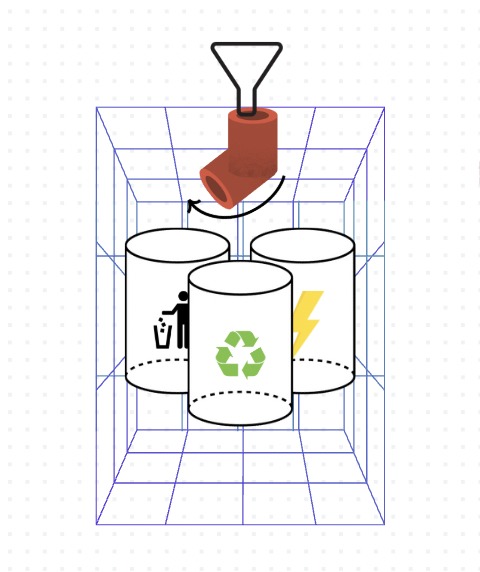
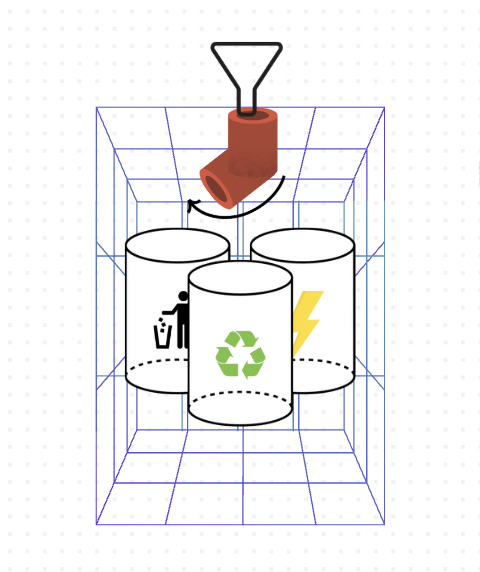
How the machine inner look like
Inspiration
The growing waste crisis inspired us to create an AI-powered automated waste sorting system. With over 2 billion tons of waste generated annually, improper disposal remains a major issue. While education helps, human error is inevitable. We wanted to build a solution that makes waste sorting accurate, efficient, and effortless.
What It Does
SORT DESU NE uses AI image recognition to classify waste in real time and directs it into the correct bin using automated mechanical sorting. This reduces human error and ensures proper waste disposal in homes, public spaces, and institutions.
How We Built It
- AI Model: Trained on a dataset of various waste categories for accurate classification.
- Hardware: Stepper motors (NEMA 17) controlled via TB6600 drivers to automate sorting.
- Software: AI inference integrated with real-time mechanical control for seamless operation.
- Frameworks & Tools: Python, OpenCV for image recognition, and microcontroller-based motor control.
Challenges We Ran Into
- Dataset Limitations: Finding a diverse dataset for AI training.
- Hardware Integration: Synchronizing AI outputs with motor movements.
- Sorting Speed: Optimizing response time for real-world usability.
Accomplishments That We're Proud Of
- Successfully trained an AI model to distinguish waste types.
- Developed a functional prototype with real-time automated sorting.
- Built an end-to-end system integrating AI, hardware, and software.
What We Learned
- The importance of dataset diversity in AI model accuracy.
- Overcoming hardware-software integration challenges.
- The potential of AI-driven automation in sustainability.
What's Next for SORT DESU NE
- Expanding AI accuracy with more training data.
- Enhancing mechanical design for faster, more efficient sorting.
- Exploring real-world deployment in homes and public spaces.


Log in or sign up for Devpost to join the conversation.