-
-
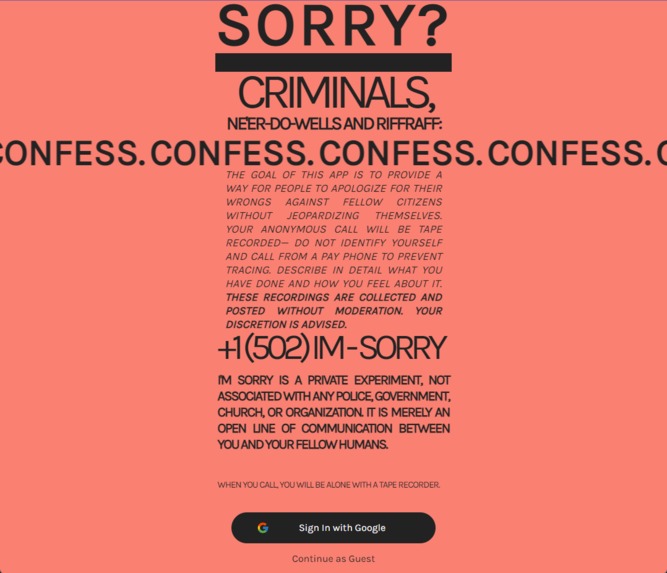
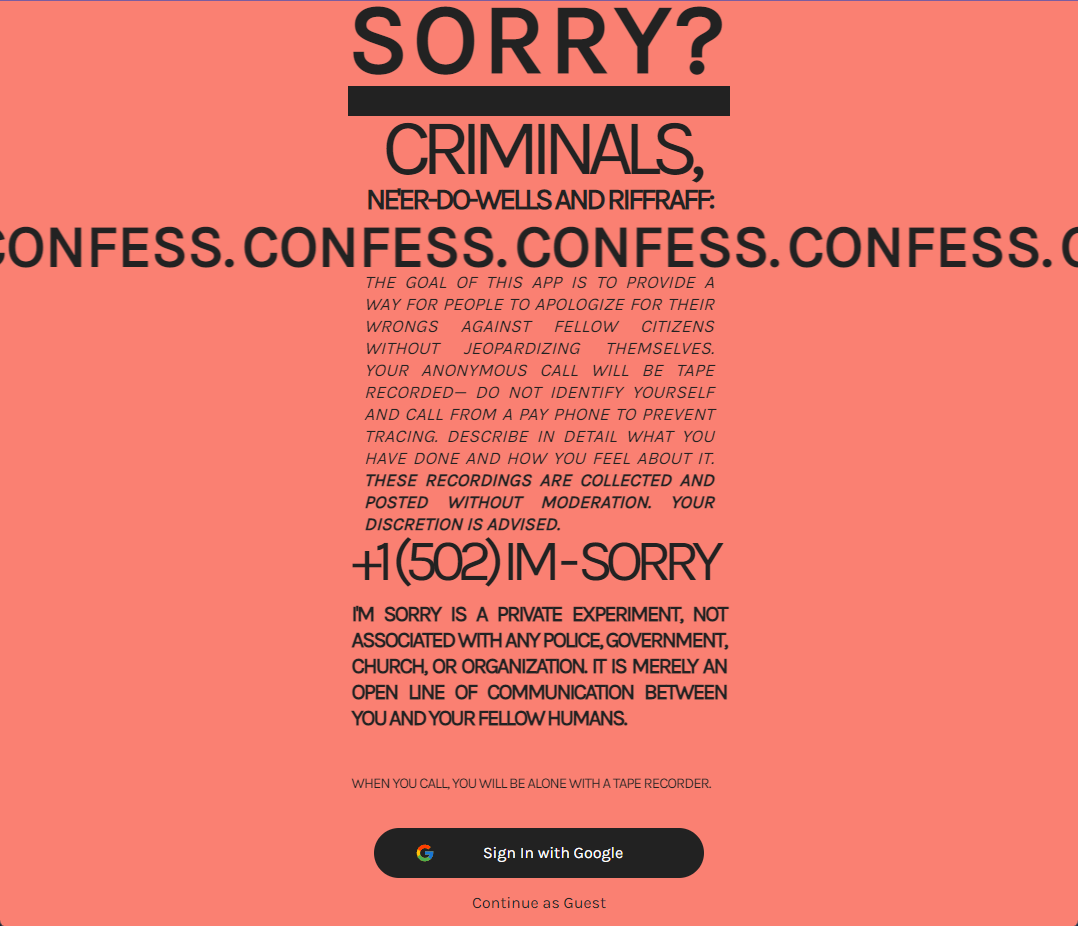
Login screen
-


📻 Inspiration
Our application was inspired by “The Apology Line”, a real phone line and answering machine used to receive apologies & display them for the public to listen to during the early 1980s. The concept behind it is to give people an outlet to voice their apologies anonymously.
☎️ What it does
"Sorry" utilizes Twilio API to receive and record voice messages. The messages are later served on our site. The app is fully functioning and includes authorization.
🔨 How we built it
In addition to Twilio's API, we also used Node.js, Express, and React. We utilized Firebase Authorization for our login functionality.
🚧 Challenges we ran into
We have never used Twilio's API before, so figuring out how to set up voice calls and recording in node.js was a challenge. We initially created our front end with vite, but later we ran into some irreconcilable issues and had to switch to create react app.
🎉 Accomplishments that we're proud of
Initially our team was intimidated by the idea of even getting our Twilio API to function as needed. But we were able to complete this by the first night and take our application beyond what we initially imagined. We all adapted to using new types of technologies.
💪 What we learned
Our team gained invaluable experience with node.js, which was quite new to most of us, project management, GIT, Twilio API use, servers, and node packages.
🌠 What's next for Sorry
We plan to add several features to Sorry to increase user interactivity, such as upvoting and comments. We plan to do this by creating our own API that includes data from our Twilio API in addition to user-input data.

Log in or sign up for Devpost to join the conversation.