-
-
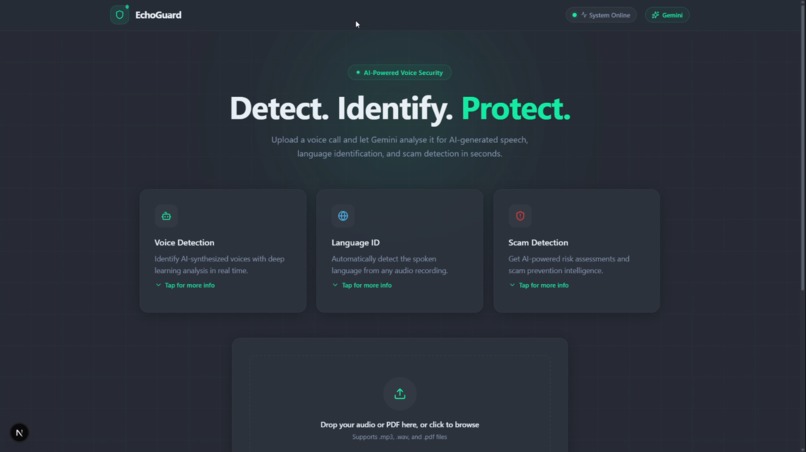
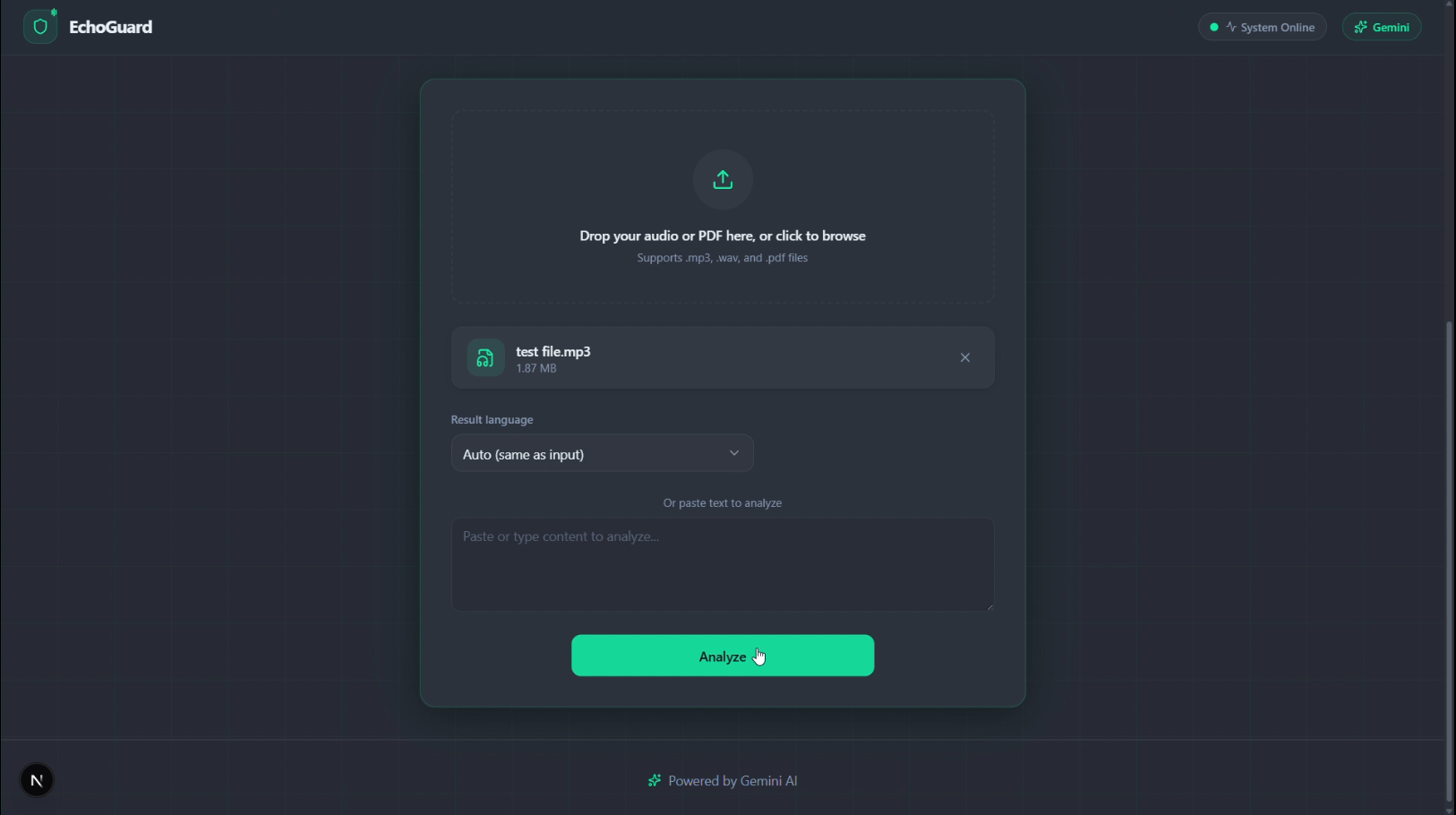
Home Page
-
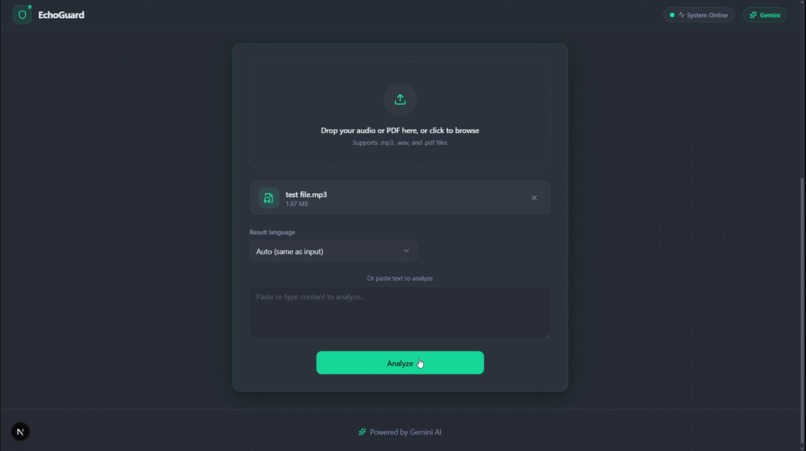
Uploading files/text
-
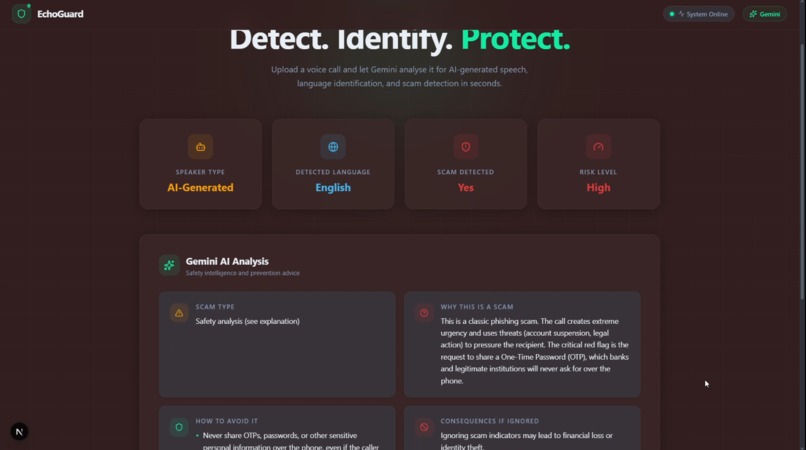
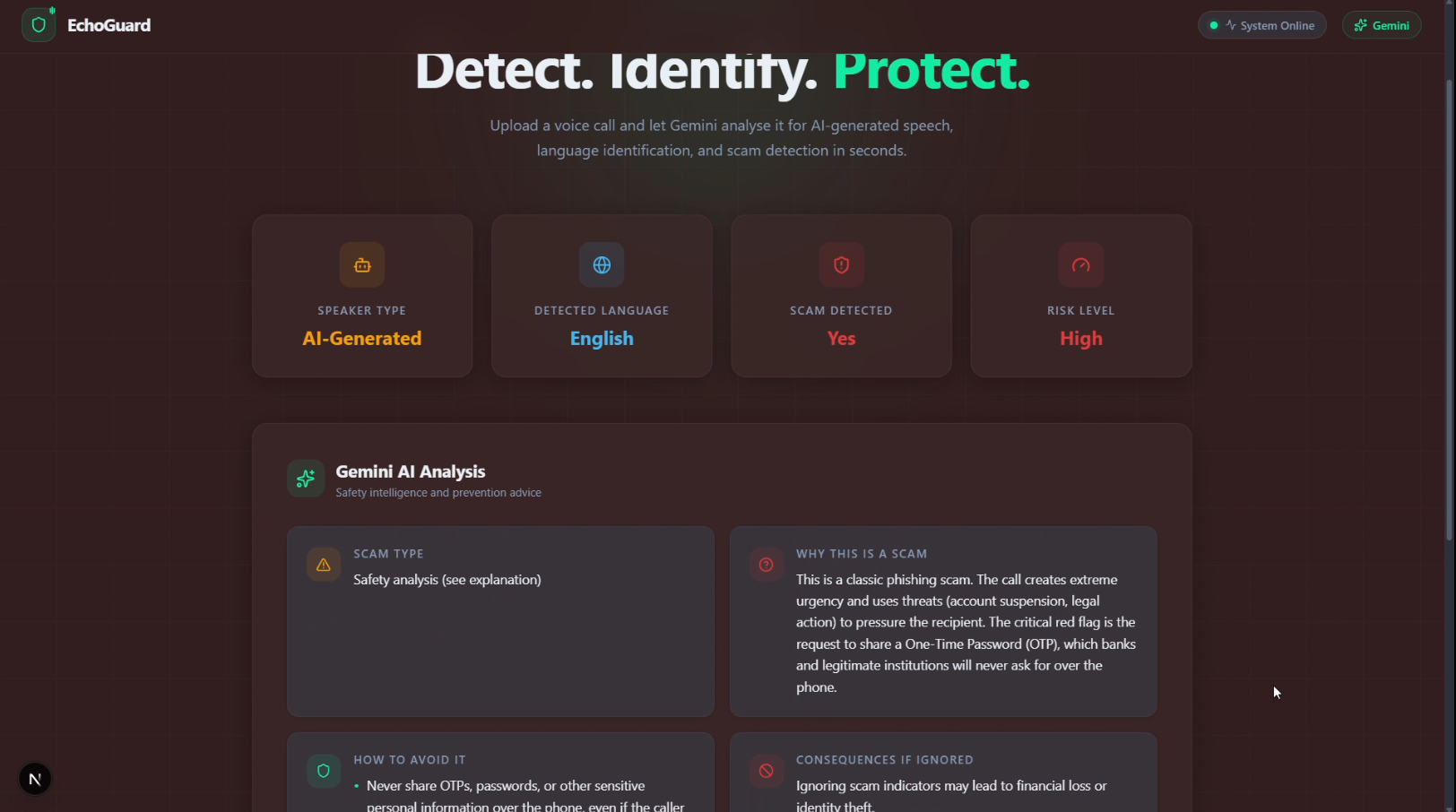
Result (Analysis)
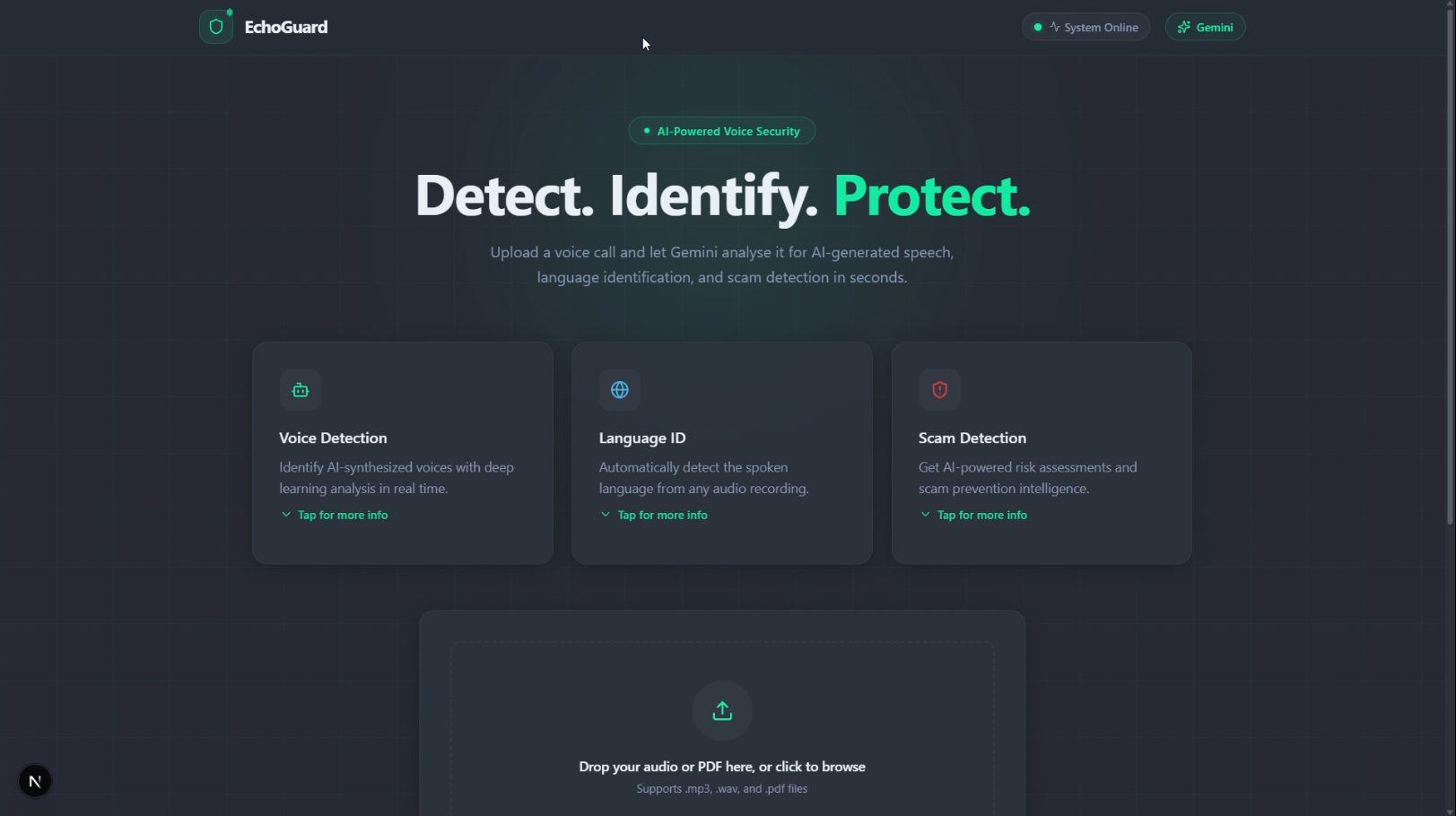
Inspiration
With the rise of AI-generated voice calls, scam messages, and fake content, it has become harder for users to trust what they hear or read. EchoGuard was inspired by the need for a simple tool that helps people quickly verify whether a message or voice recording is genuine or potentially harmful.
What it does
EchoGuard analyzes voice recordings and text messages using AI. Audio inputs are converted into text, and both audio-derived text and direct text inputs are examined to detect AI-generated content, identify language, and flag possible scam indicators. The system provides clear insights to help users make safer decisions.
How we built it
EchoGuard was built using a Python-based backend with Flask. Whisper is used for speech-to-text conversion, and the Gemini API performs AI-based analysis. The frontend is developed using HTML, CSS, and JavaScript to keep the interface lightweight and easy to use.
Challenges we ran into
Integrating AI APIs and handling different content formats consistently was challenging. Managing model compatibility, API limitations, and ensuring accurate transcription from audio files required careful debugging and testing.
Accomplishments that we're proud of
We successfully integrated speech-to-text and AI analysis into a single workflow. The application can process both audio and text inputs and deliver meaningful insights in real time through a simple interface.
What we learned
We gained hands-on experience working with AI APIs, handling real-world data formats, and building an end-to-end AI-powered web application. We also learned how important error handling and clear output presentation are for user trust.
What's next for EchoGuard
Future plans include real-time call analysis, browser and mobile support, improved scam detection accuracy, and enhanced user reporting features to make EchoGuard even more effective.
Built With
- css
- flask
- html
- javascript
- python
- rest
- whisper


Log in or sign up for Devpost to join the conversation.