-
-
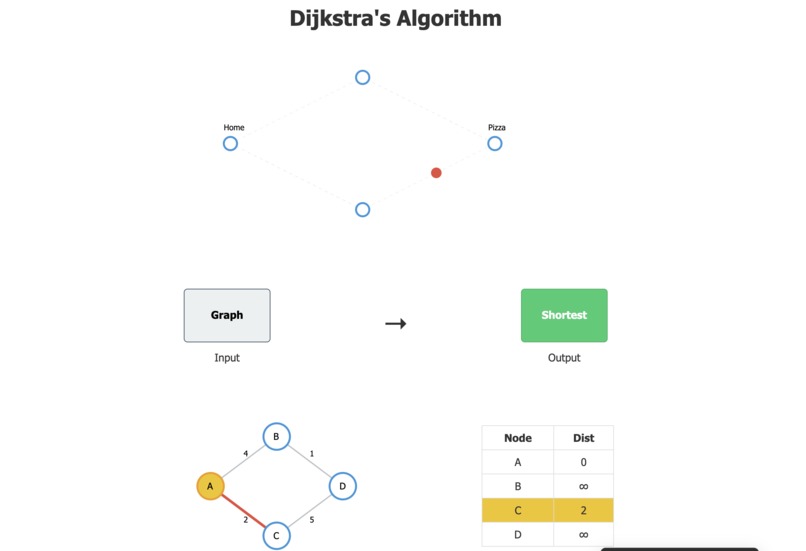
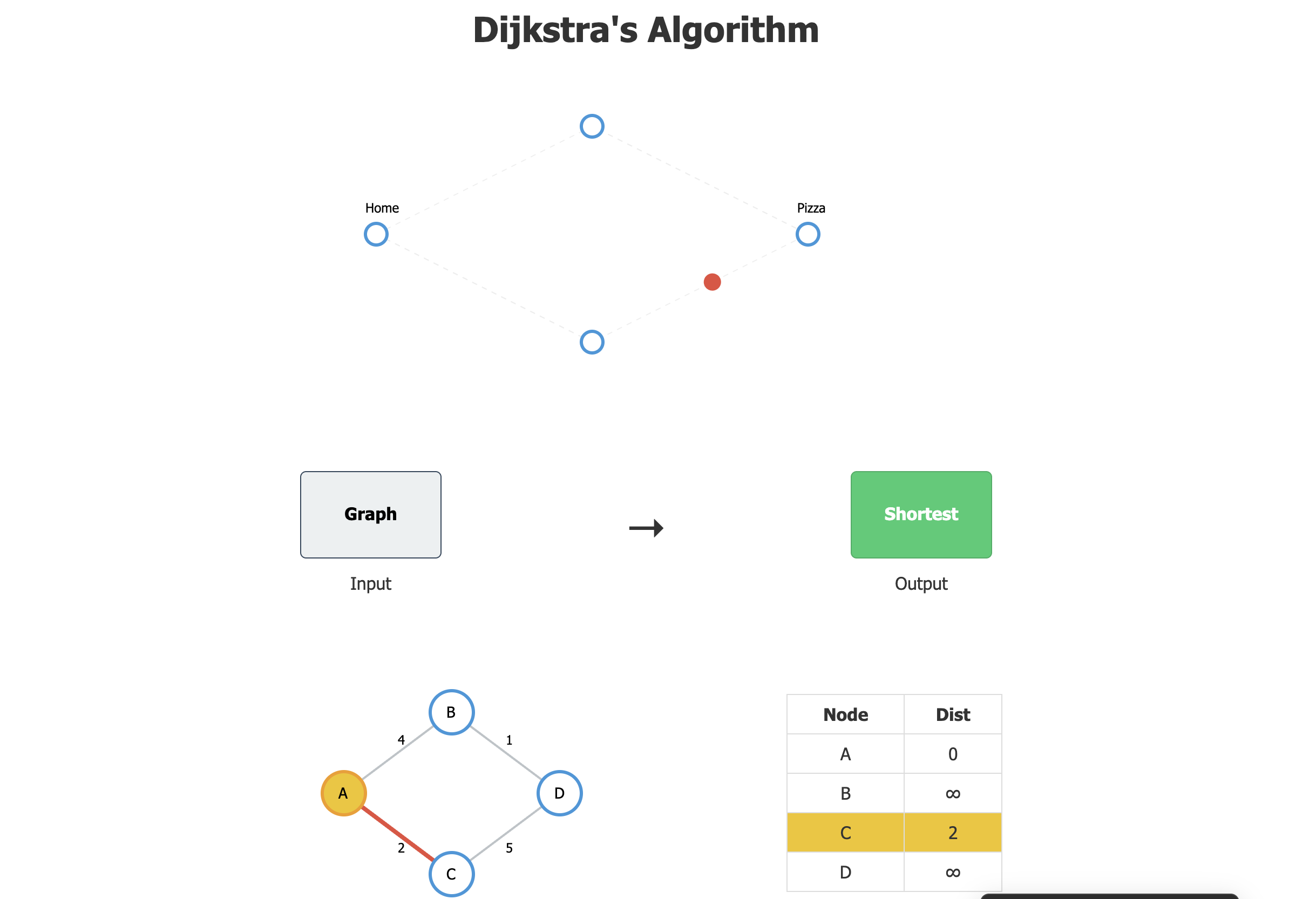
Sophia visually explains Dijkstra’s Algorithm step by step, highlighting the current node, chosen path, and updated distances in real time.
-
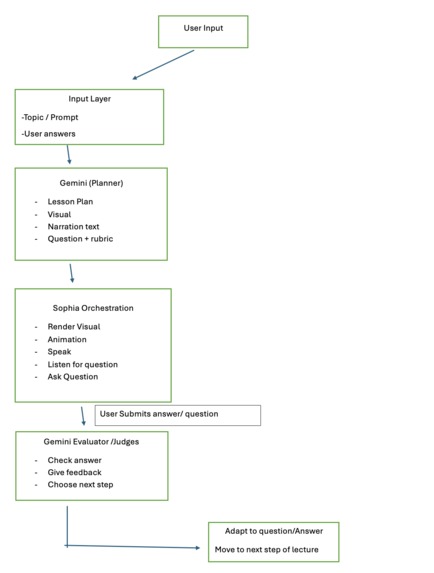
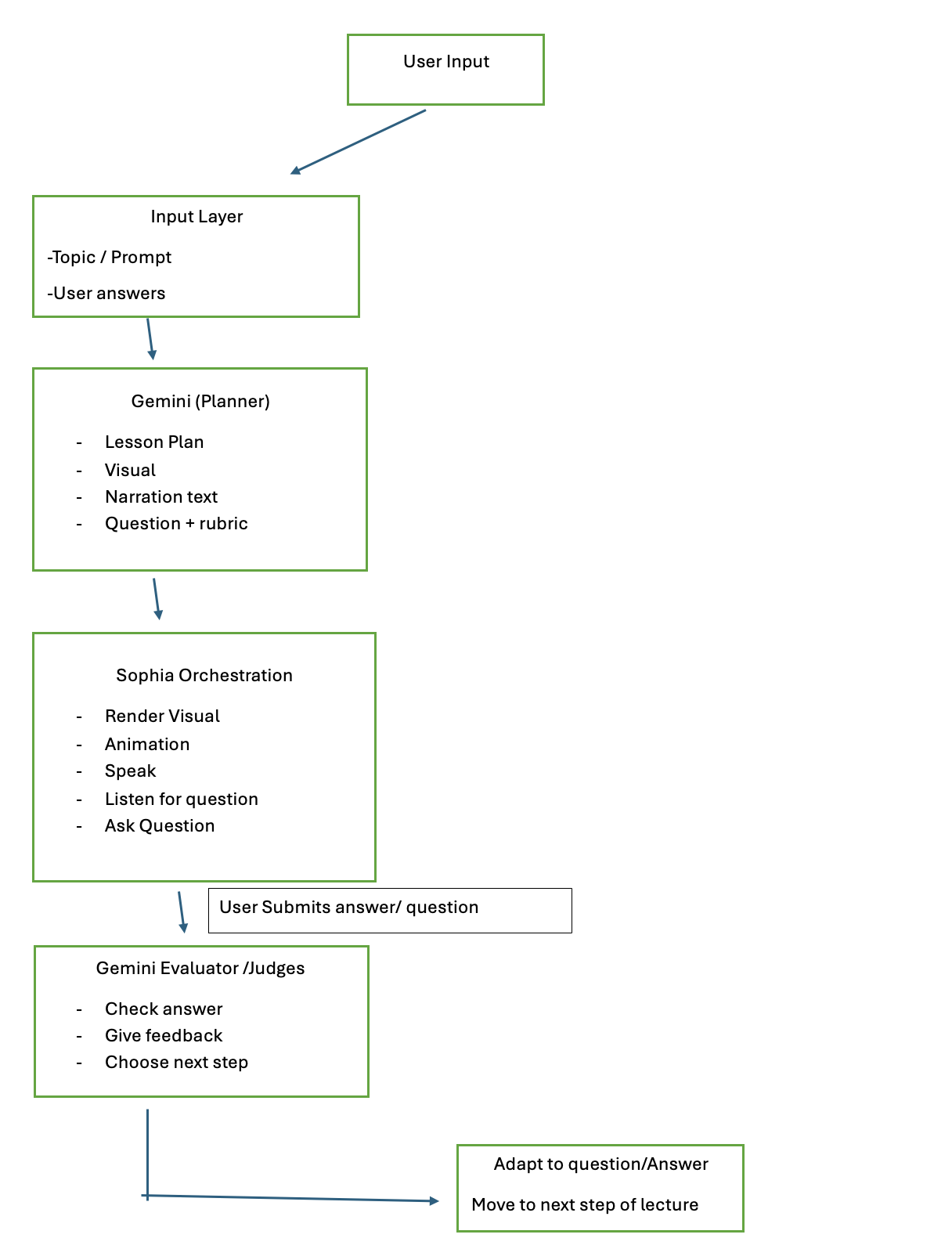
Architecture
Inspiration
Sophia was inspired by my own experience learning computer science, especially algorithms, but that frustration extends beyond computer science alone. In math and physics, I often noticed the same problem: concepts were presented as abstract rules or formulas without showing how they actually behave in the real world. In math, it was not always clear why a calculation mattered beyond getting the right answer. In physics, however, the moment you see motion, how an object moves, accelerates, or changes over time, the theory suddenly becomes intuitive rather than memorized.
Many times, when I searched for help online, I either found long videos that didn’t answer my specific question or AI-generated responses that jumped straight to the solution. While those tools were useful, they often skipped the reasoning process, which is the most important part of learning. I wanted a tool that explains how a concept works step by step while showing why each decision or change happens in real time, whether that concept comes from an algorithm, a mathematical relationship, or a physical system.
That frustration led me to ask a simple question: what if AI could guide learning without replacing thinking?
What it does
Sophia is an interactive AI tutor that teaches algorithms using visuals and step-by-step explanations. Instead of producing a final answer immediately, Sophia walks through the algorithm’s logic, highlights key elements on the screen, and explains each transition as it happens. For example, in pathfinding algorithms, Sophia visually shows which node is being explored and explains why it was chosen based on cost or heuristics, such as
[
f(n) = g(n) + h(n)
]
This approach helps learners connect mathematical concepts with visual intuition.
How we built it
When building Sophia, I didn’t want another chatbot that just gives answers. I wanted something that teaches the way a real person would, slowly, visually, and with intention.
That’s where Gemini 3 became central to the project.
Instead of asking Gemini to simply “explain an algorithm,” we guide it to create a full learning experience. When someone types a topic into Sophia, Gemini doesn’t just return text. It builds an entire lesson — with visuals, movement, and step-by-step explanations that feel like someone is writing on a board in front of you.
Gemini helps generate:
A visual board that shows how the idea behaves
Clear, friendly explanations that match what you’re seeing
Small questions that make you pause and think
A logical flow so nothing feels rushed
The key idea was separation. The board shows what is happening. The narration explains why it’s happening. This makes learning feel natural instead of overwhelming.
Gemini 3 allows us to do this because it can understand detailed instructions and turn them into structured, interactive lessons, not just paragraphs of information. It helps Sophia think like a tutor instead of a search engine.
Challenges we ran into
One of the biggest challenges was controlling the flow of information. Early versions of Sophia explained too much at once, which made the experience overwhelming. Another challenge was making sure the AI supported learning without doing the thinking for the student. Balancing clarity, depth, and restraint required multiple iterations and careful design decisions.
Accomplishments that we're proud of
I’m proud that Sophia successfully turns complex algorithms into interactive learning experiences. Seeing explanations and visuals stay in sync makes the system feel more like a real tutor than a static tool. I’m also proud of creating a project that prioritizes understanding over speed, which is often overlooked in AI-powered learning tools.
What we learned
This project taught me that good educational tools are as much about design as they are about technology. I learned how pacing, visual cues, and explanation structure can deeply affect understanding. I also gained hands-on experience integrating advanced AI reasoning into an interactive system while keeping the learner at the center.
What's next for Sophia
In the next stage, Sophia will expand beyond algorithms into broader areas of computer science, including data structures, systems concepts, and problem-solving strategies. Beyond that, the long-term vision is to bring visual-first explanations to all STEM subjects, where diagrams, motion, and interaction play a critical role in understanding.
Another key goal is adaptability. Sophia is designed to grow into a tutor that can adjust explanations based on a learner’s questions, pace, and points of confusion.
Ultimately, the goal is to make Sophia a personal, thoughtful, and effective learning companion that helps students build intuition, not just arrive at answers.


Log in or sign up for Devpost to join the conversation.