Inspiration
Have you ever thought about your need for touch? There is a term called “touch starvation,” describing the lack of physical connection many people experience today. In the modern world, this need often goes unnoticed or unmet. Some people may feel it strongly, while others may ignore it, but that doesn’t mean our bodies aren’t signaling for it.
We track our steps, sleep, and calories, yet often overlook our largest sensory organ: the skin. Research by Tiffany Field shows that touch is essential for wellbeing, helping reduce stress hormones and regulate emotions. Today we face a paradox: we are digitally connected but physically disconnected.
Since the COVID-19 pandemic, affection deprivation has become a widespread but often invisible stressor. Research from 2024 shows that 30% of adults experience loneliness at least once a week, and 10% feel lonely every day.
Soothe was created to bridge this tactile gap by turning everyday touch interactions into meaningful insights. By making the invisible visible, Soothe helps users understand their tactile balance and transform physical disconnection into emotional grounding and wellbeing.
⸻
What It Does
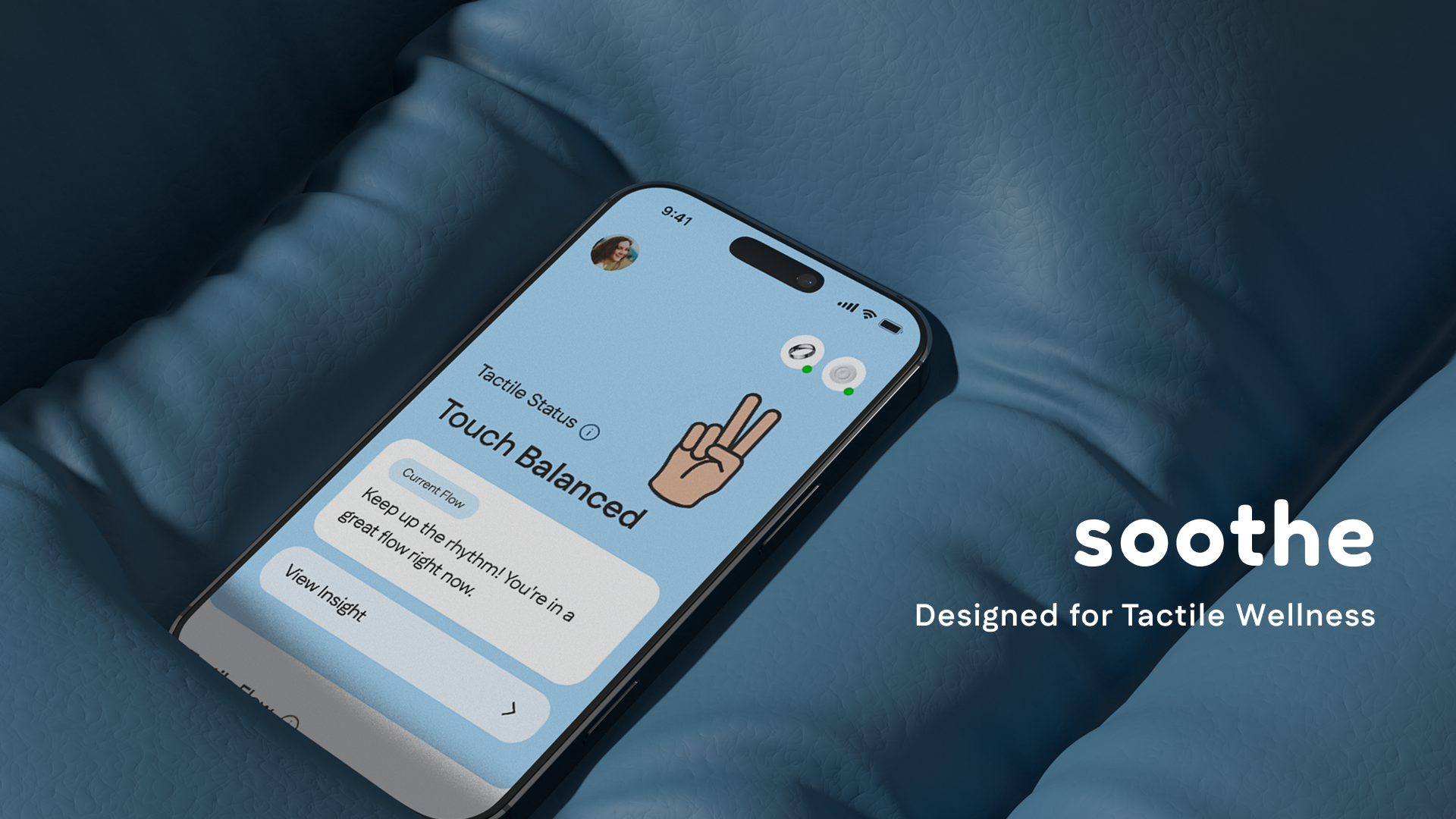
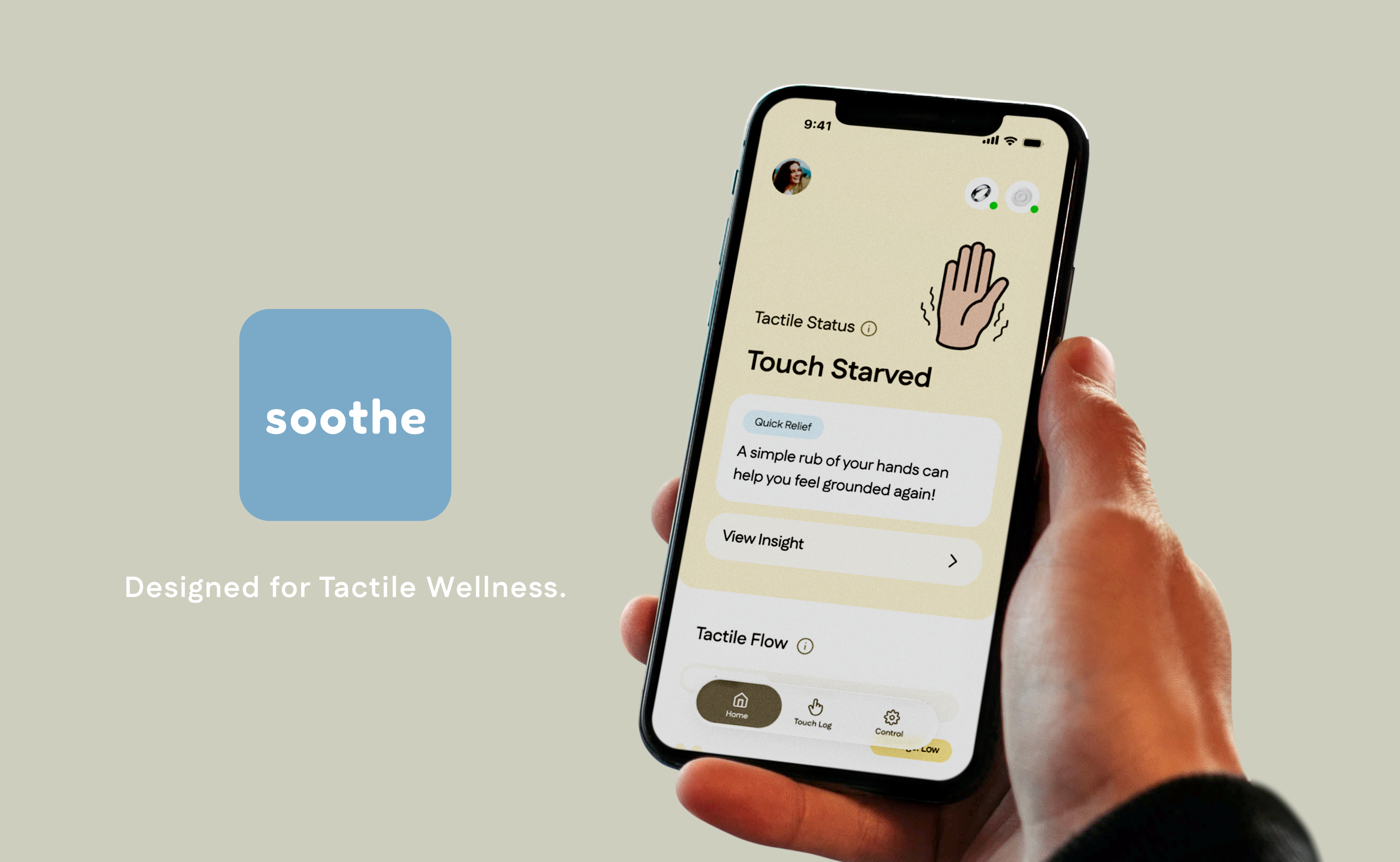
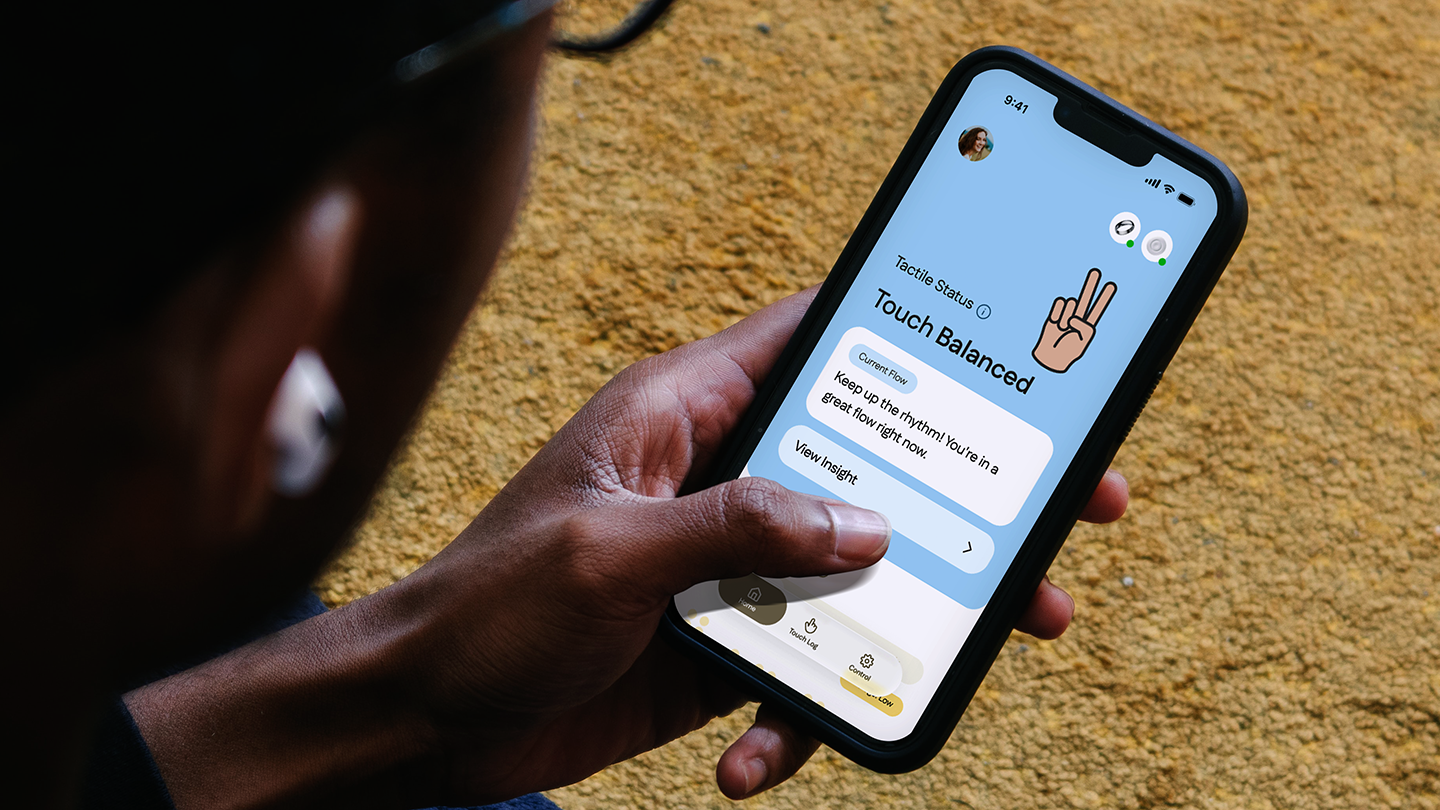
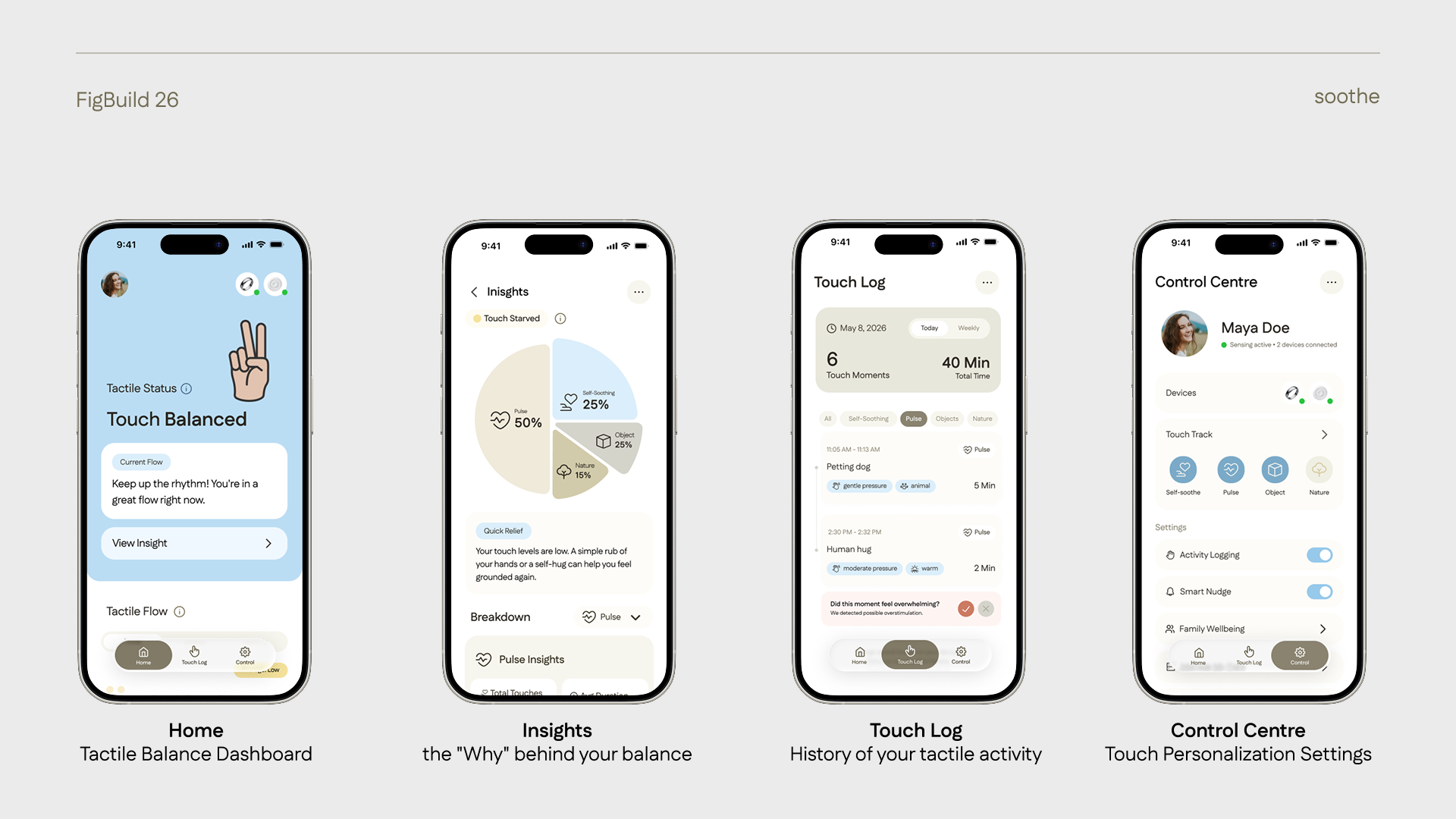
Tactile Status Index: Our core metric that measures sensory input in real time, categorizing your state as “Touch Hungry,” “Balanced,” or “Overstimulated.”
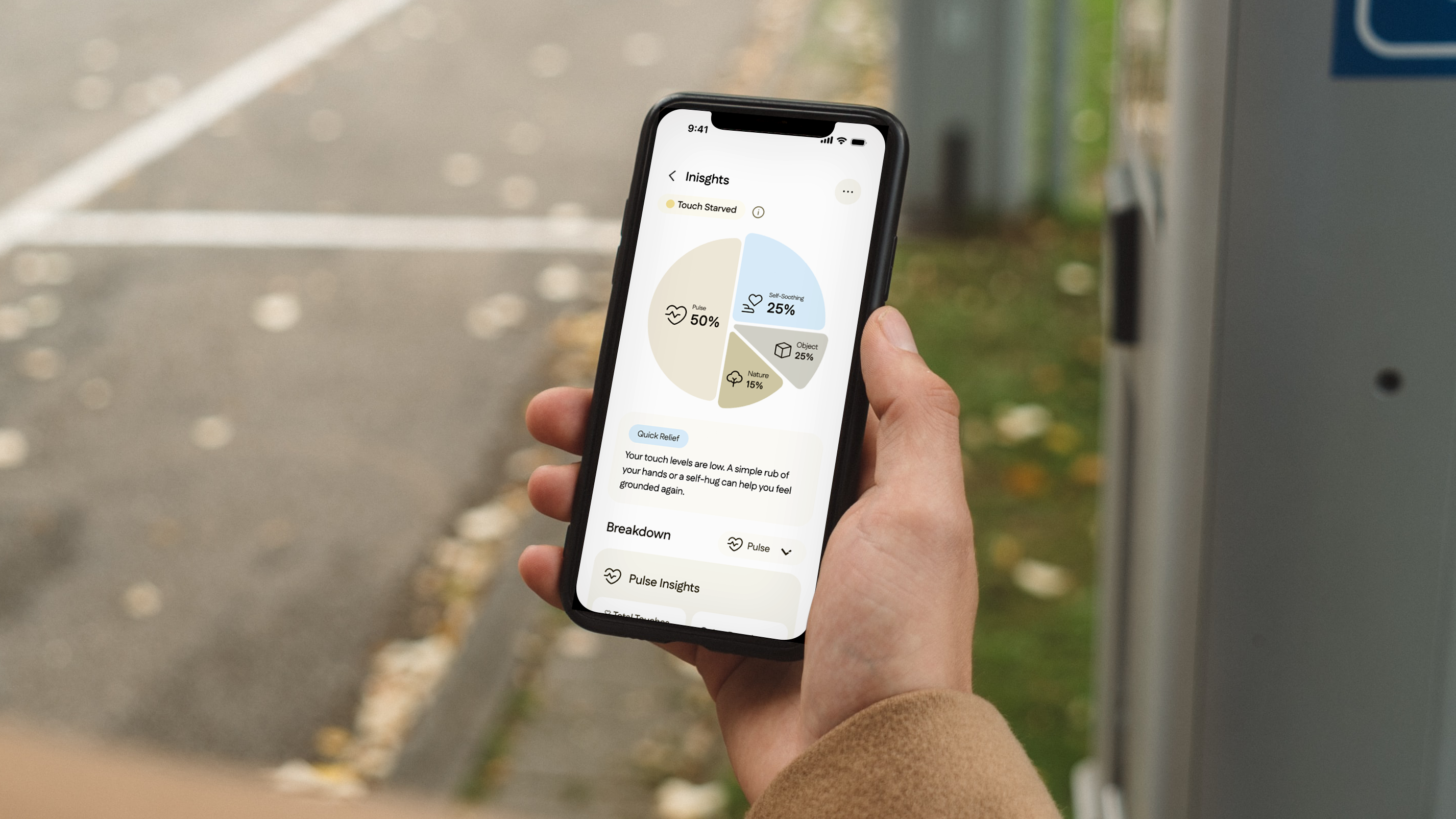
Sensory Habit Tracking:Identifies daily tactile patterns and physical behaviors to reveal connections between environment, touch, and stress levels.
Contextual Grounding Nudges:Provides personalized suggestions based on your Index level (e.g., “You’re Touch Hungry—try a warm drink or a weighted blanket.”).
Active Validation Loop The app asks users to confirm sensory insights (e.g., “Did this feel overwhelming?”), turning the system into a collaborative partner that learns from user feedback while keeping them in control of their data.
Trust-Centered UX:Translates complex sensor data into clear, empathetic insights using human-centered language, ensuring users feel supported, not monitored.
⸻
How We Built It
User Research & Journey Definition After brainstorming and narrowing down our concept, we identified key user pain points and drafted 5–6 user stories, refining them into three core scenarios. From these, we selected one primary user journey to guide our main user flow and product direction.
Visual Exploration & Design System We explored visual directions through mood boards, refined them into a design system, and developed low-fidelity wireframes to establish the product structure.
Wireframes & User testing After creating mid-fidelity screens, we used Figma Make to generate an early prototype and shared it with six users to gather quick feedback and validate the concept.
Iteration & Design Refinement Based on user feedback, we revised the layout, sections, and data presentation. Through two to three design iterations, we refined the interface and finalized the product. We also treated copywriting as a design element, shifting from clinical language toward a tone focused on grounding and wellbeing.
⸻
Challenges We Ran Into
1. Privacy & Ethical Data Use One major challenge was balancing surveillance vs. support. We wanted Soothe to feel like a nurturing wellness companion, not a data-tracking tool. We carefully considered how the device and data should be used responsibly to prevent misuse. As a safeguard, the device only functions when the paired phone is nearby, preventing someone from giving the device to another person and secretly tracking their data without consent.
2. Making Tactile Data Understandable We also faced a design challenge in presenting a new tactile measurement scale without overwhelming users. Communicating complex sensory data in a simple, intuitive way required multiple design explorations and iterations. Instead of displaying raw statistics, we focused on translating sensor data into clear user insights, while still providing enough transparency to help users understand how their personal balance score is generated.
3. Designing Family Wellbeing Mode Another challenge was designing the Family Wellbeing Mode. Research by Tiffany Field highlights that touch plays a crucial role in child development and emotional wellbeing, making tactile awareness especially valuable for families. However, we needed to ensure caregivers could receive meaningful insights while maintaining strict privacy boundaries. We addressed this by sharing only high-level summaries rather than detailed personal data.
⸻
Accomplishments We’re Proud Of
We successfully designed a Trust Interface where data processing happens locally on the device, ensuring users retain full ownership of their tactile history. We also created a UI that presents complex sensor data, such as HRV and skin response—in a way that is clear, scannable, and non-judgmental. The Family Wellbeing Mode stands out for balancing utility with strong privacy protection.
⸻
What We Learned
We learned that trust is a critical design feature in health technology. Making privacy transparent and using supportive language helped users feel comfortable engaging with the app. Even small UX choices, like button labels or notification tone—can influence whether users feel supported or monitored.
We also explored the concept of touch starvation, researching how tactile interactions can be tracked and how the app and wearable should work together. This helped us better understand the science of touch and how to translate it into meaningful wellness insights.
⸻
What’s Next for Soothe
1. Improve Hardware & Smart Nudges Integrate hardware to improve sensor accuracy and deliver smarter, context-aware recommendations. 2. Enhance Family Wellbeing Mode Add customizable caregiving routines and shared grounding rituals while keeping strong privacy protection. 3. From Tracker to Companion Evolve Soothe from a passive tracker into a supportive tool that helps people stay grounded and connected.
Built With
- figma
- figmamake


Log in or sign up for Devpost to join the conversation.