-
-
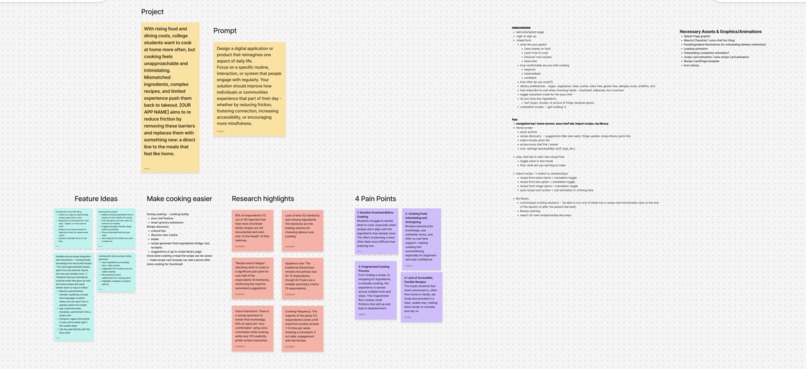
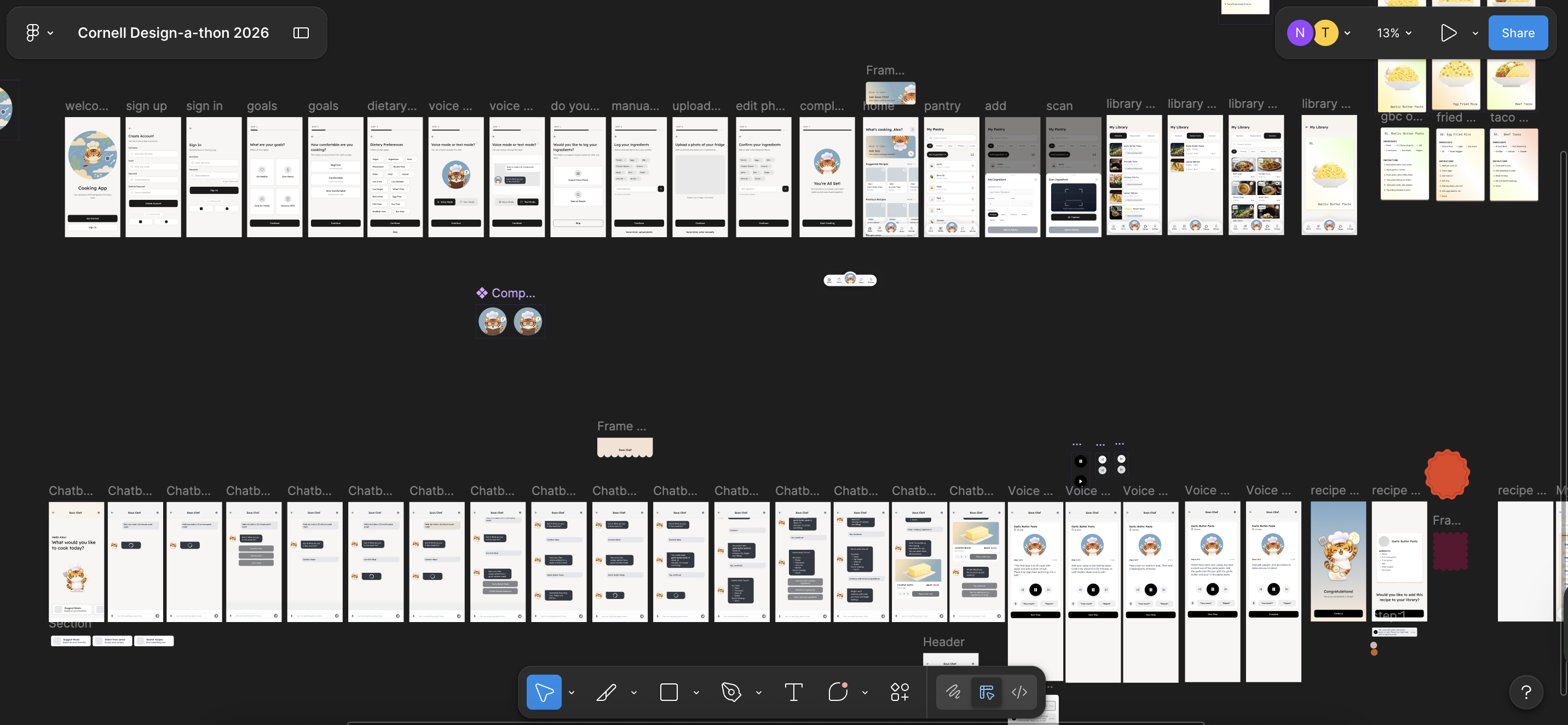
Brainstorm
-
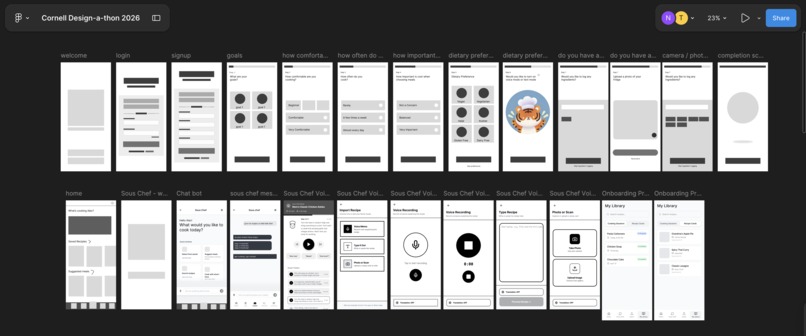
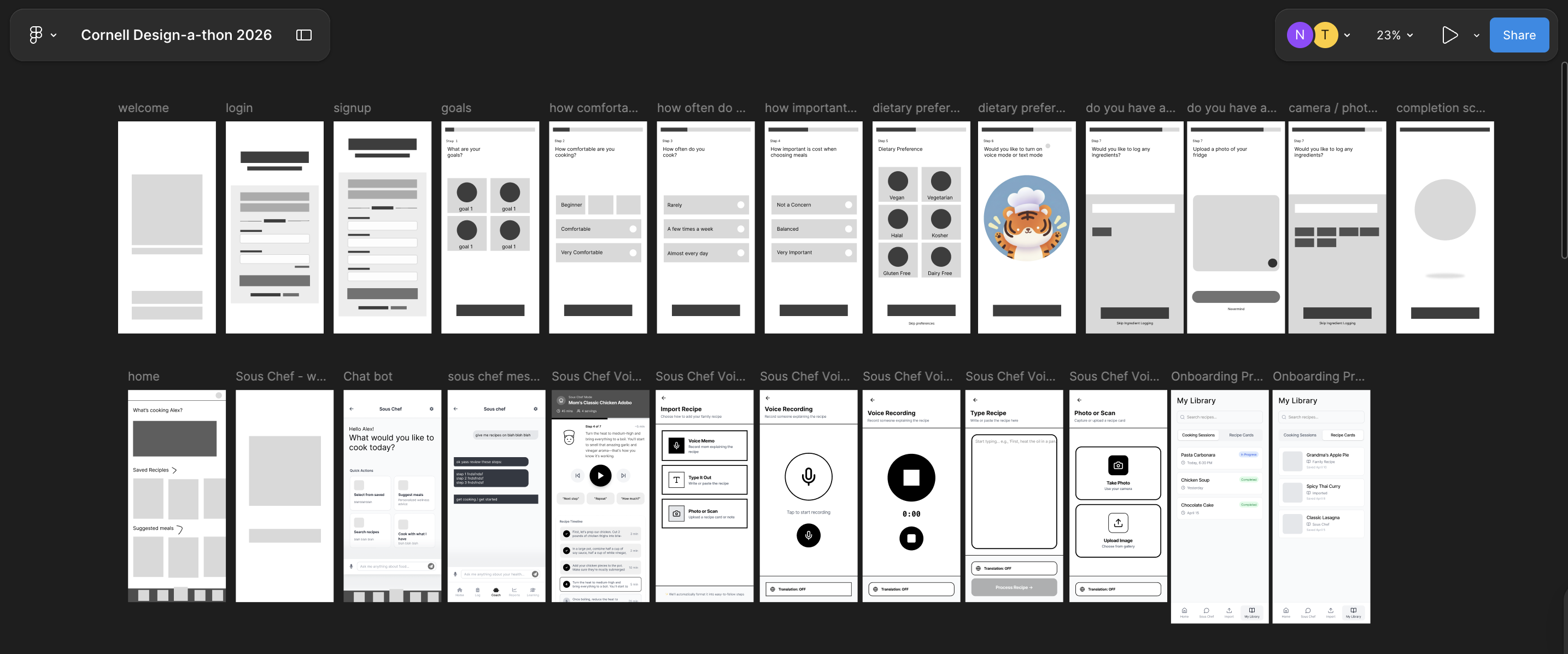
Low-Fidelity
-
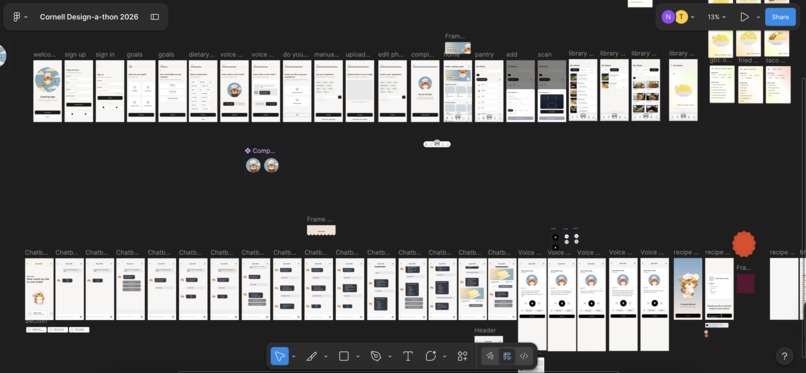
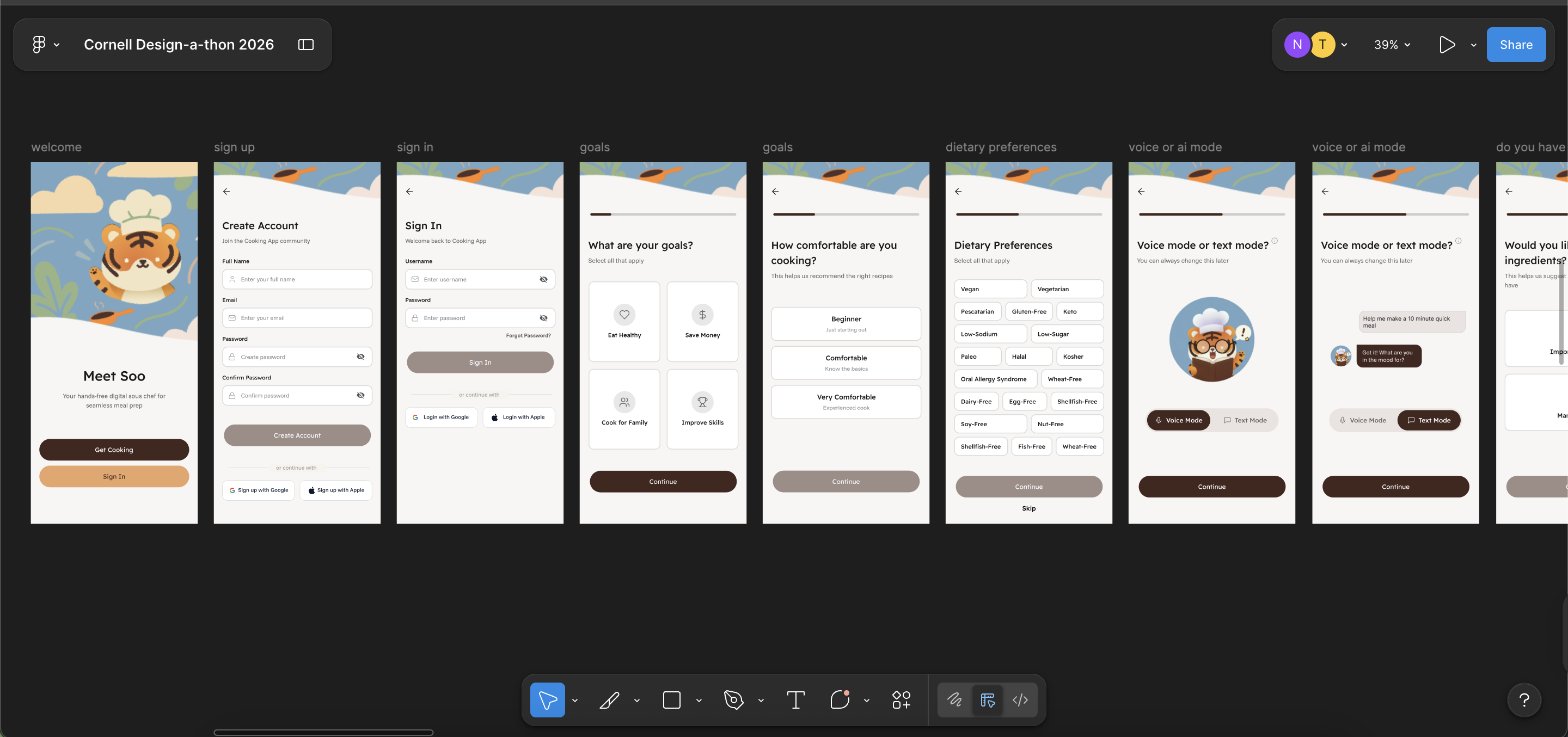
Mid-Fidelity
-
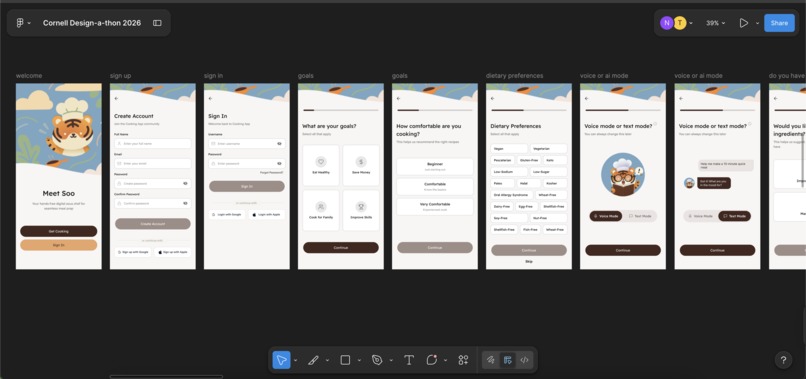
High-Fidelity
-
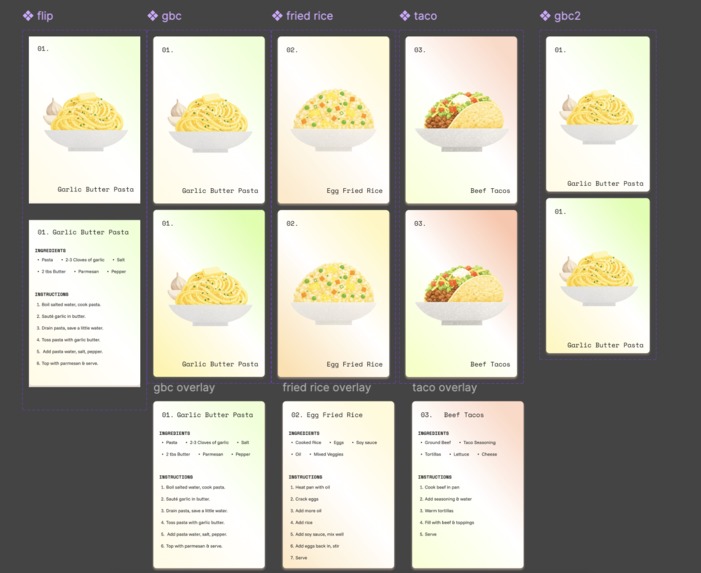
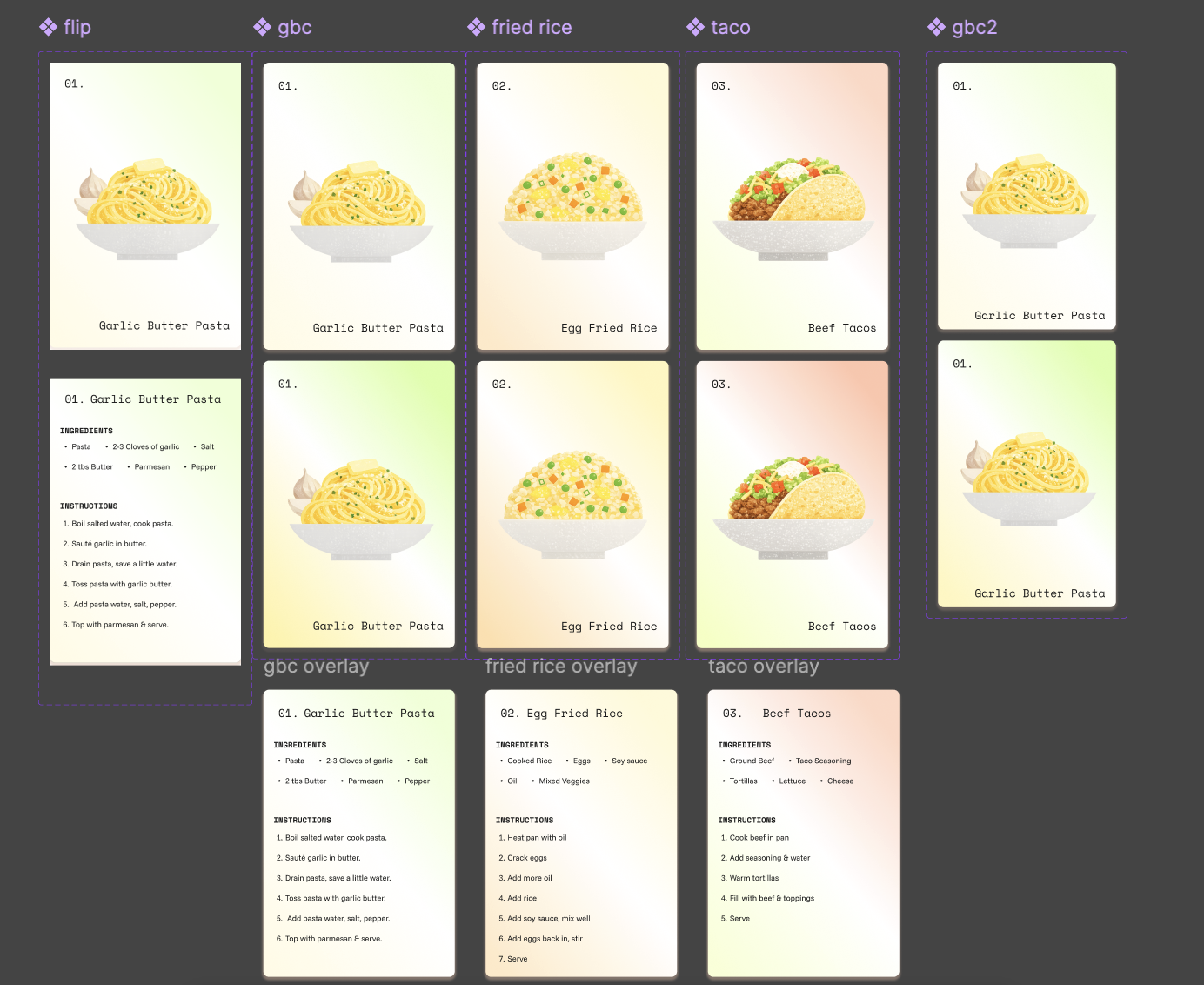
Recipe Cards
-
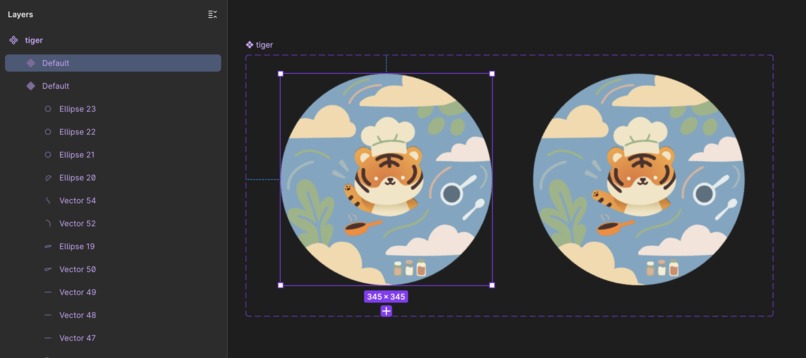
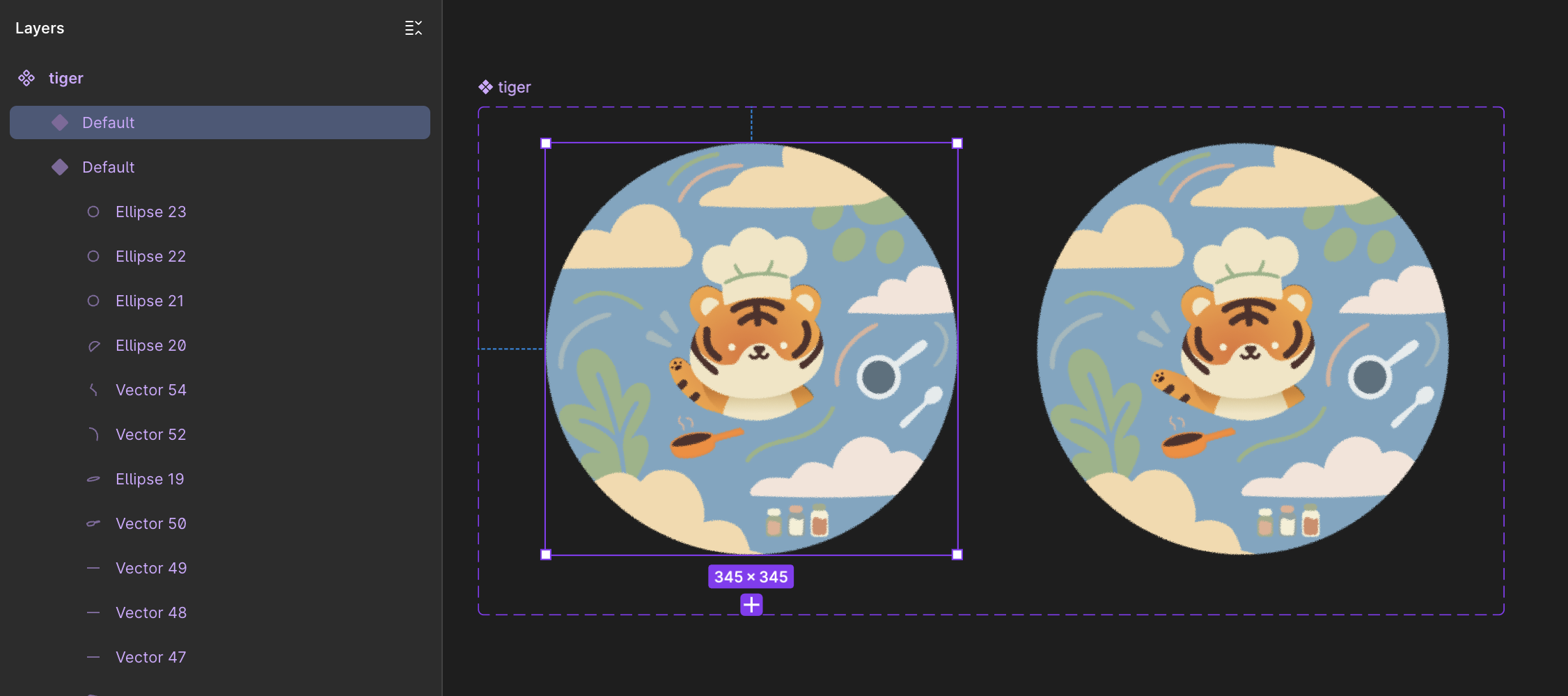
All Illustrated in Figma
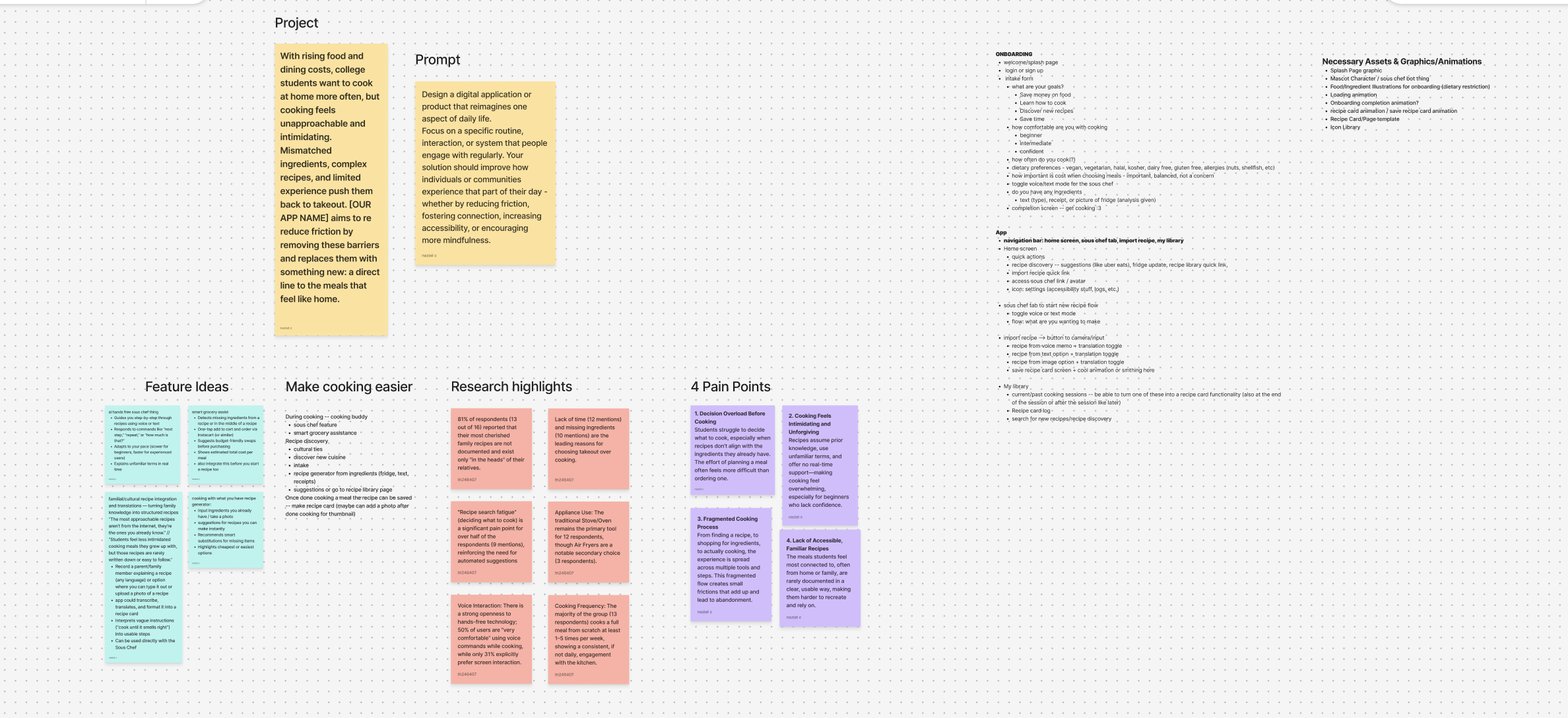
Project Overview
Consuming food is one of the most constant rituals of daily life, an everyday practice shared by everyone. But with dining costs rising sharply, eating out is becoming less and less sustainable for college students. More are turning toward home-cooked meals, not just to save money, but to reconnect with something grounding. The problem is that the kitchen, for many, feels anything but welcoming. Recipes written for experienced cooks assume knowledge beginners don't have: unfamiliar terms buried mid-step, judgment calls with no guidance, instructions that leave no room for questions. What should feel like a refuge ends up feeling like a test.
Soo is built to change that. By eliminating the four core friction points standing between a student and a home-cooked meal: decision overload, intimidating recipes, fragmented tools, and inaccessible dishes, we replace the barriers with something new. A direct line to meals that feel like home.
What it Does
Soo-Chef is an AI-powered assistant that removes every barrier between a student and a home-cooked meal.
Hands-Free Voice Assistant: No more getting flour on your iPhone screen. Soo-Chef guides you step-by-step via voice. You can ask, "What's next?" or "How much salt was that?" and it even explains technical terms like "sauté" or "fold" in real-time if you’re a beginner.
The "Pantry Pivot" Generator: Don't know what to make? Input what you have in your fridge (or scan a receipt), and Soo-Chef generates recipes you can make right now.
Hardware-Aware Cooking: Most recipes assume you have a 5-burner stove and a professional oven. Soo-Chef lets you toggle your equipment (Air Fryer, Microwave, Hot Plate) and automatically recalibrates the instructions and timing to fit your setup.
Smart Grocery Assist: If you’re missing a key ingredient, Soo-Chef offers budget-friendly swaps or lets you add it to an Instacart cart with one tap. It even shows you the estimated "Cost Per Meal" so you can stay on budget.
Research Process & Findings
We grounded our design thinking by first identifying our target user: college students who wanted to cook more at home but are unfamiliar consistently chose takeout instead. To validate our assumptions and uncover real pain points, we designed and distributed a survey to students.
Survey methodology: We collected 32 responses from college students, focusing on cooking frequency, barriers to cooking, familiarity with kitchen techniques, and emotional relationship to food from home. Questions probed both behavioral patterns ("How often do you order takeout per week?") and attitudinal factors ("What stops you from cooking more often?").
Key findings:
The majority of respondents cited not knowing what to make with available ingredients as a frction point Over 50% reported feeling intimidated by recipes that used unfamiliar terminology or assumed baseline cooking knowledge. Nearly 60% said they had abandoned a cooking attempt mid-process because they were missing one or two ingredients and didn't know what to substitute. Most respondents used 3+ separate tools to complete a single meal (recipe site, grocery app, YouTube for technique) — reinforcing our fragmented-experience hypothesis.
Key Design Decisions
Hands-Free AI Sous Chef Over Static Recipe Cards Respondents consistently reported confusion mid-cook: unfamiliar terms, unclear quantities, no one to ask. Rather than present a traditional recipe view, we designed a conversational, voice-activated sous chef that guides users step-by-step and responds to natural language. The adaptive pacing feature (slower for beginners, faster for experienced users) emerged directly from our finding that intimidation drives abandonment.
Fridge Analyzer as the Entry Point Survey data made it clear: the biggest blocker wasn't cooking itself, it was deciding what to cook. We made the fridge analyzer as a part of the onboarding experience of the app. Users photograph their fridge and pantry; the app generates meal options from what they already have. This directly eliminates decision overload and reduces the mental cost of starting. The design decision was driven by the insight that students don't need more recipes, they need fewer decisions.
Integrated Grocery Assist with Budget Swap Suggestions Nearly 60% of survey respondents said a missing ingredient caused them to abandon cooking entirely. Rather than letting users hit that wall, we integrated one-tap Instacart ordering with proactive budget-friendly swap suggestions surfaced before purchase. This decision collapsed three separate user behaviors (realize what's missing, research alternatives, order groceries) into a single in-app flow.
What we learned
We learned that Accessibility in the kitchen isn't just a "nice-to-have", it's the key to building a routine. By focusing on voice-first interactions and equipment limitations, we realized we were solving a problem for everyone, not just students. We also learned that small UX touches, like showing the "Cost Per Meal" upfront, significantly reduces the stress of decision-making.
Built With
- figma


Log in or sign up for Devpost to join the conversation.