-
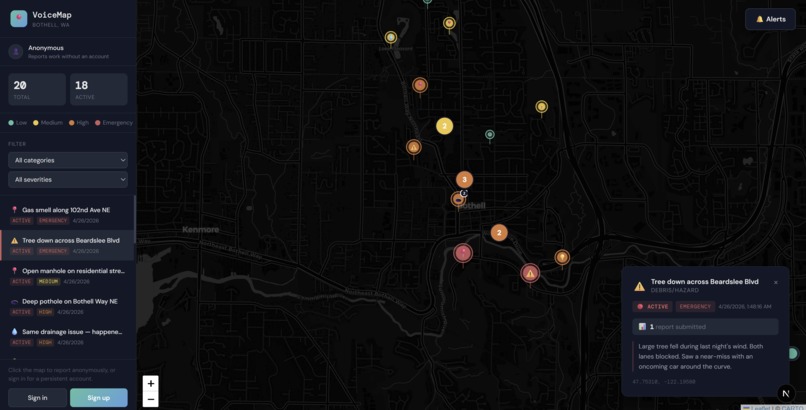
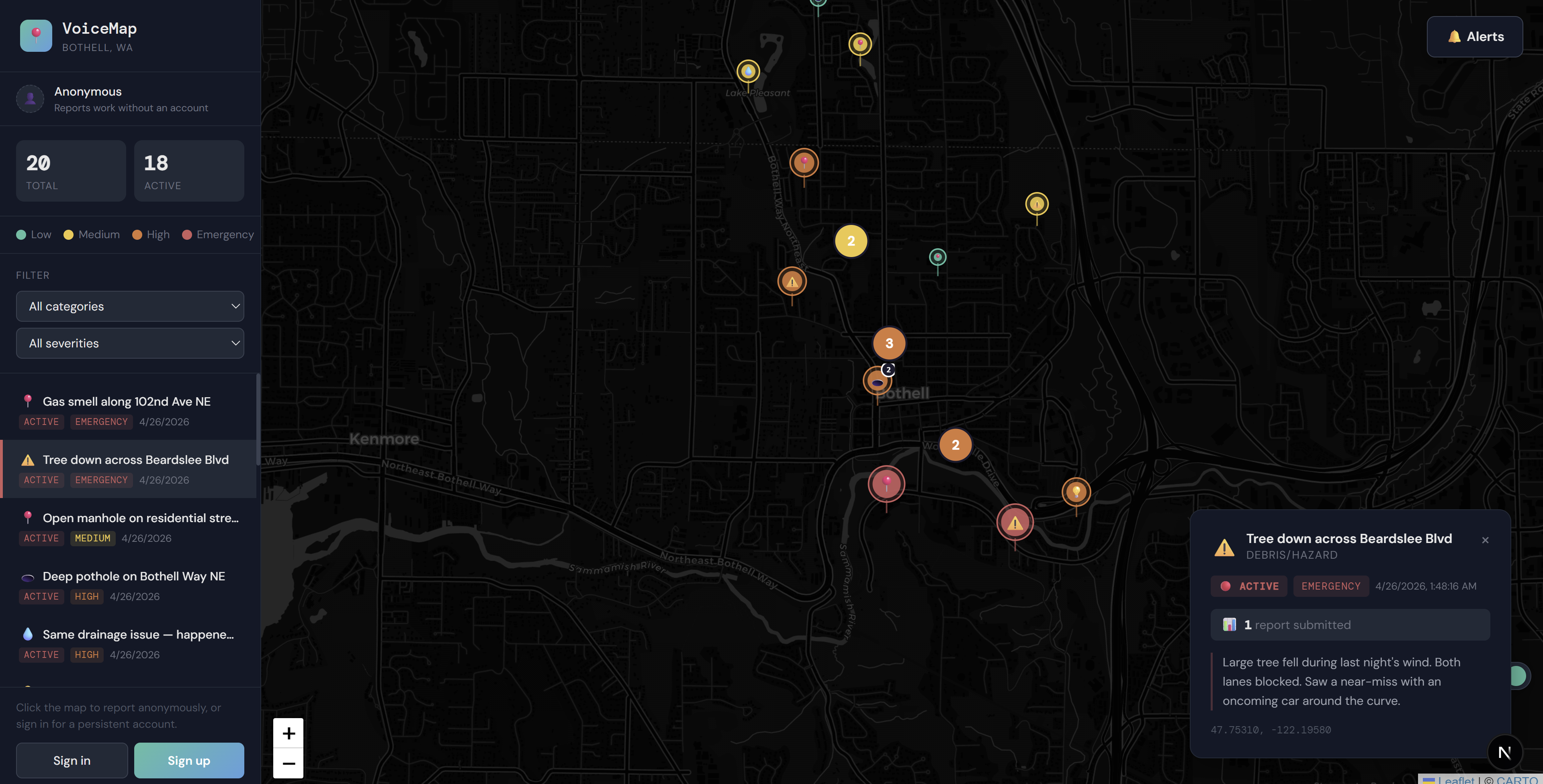
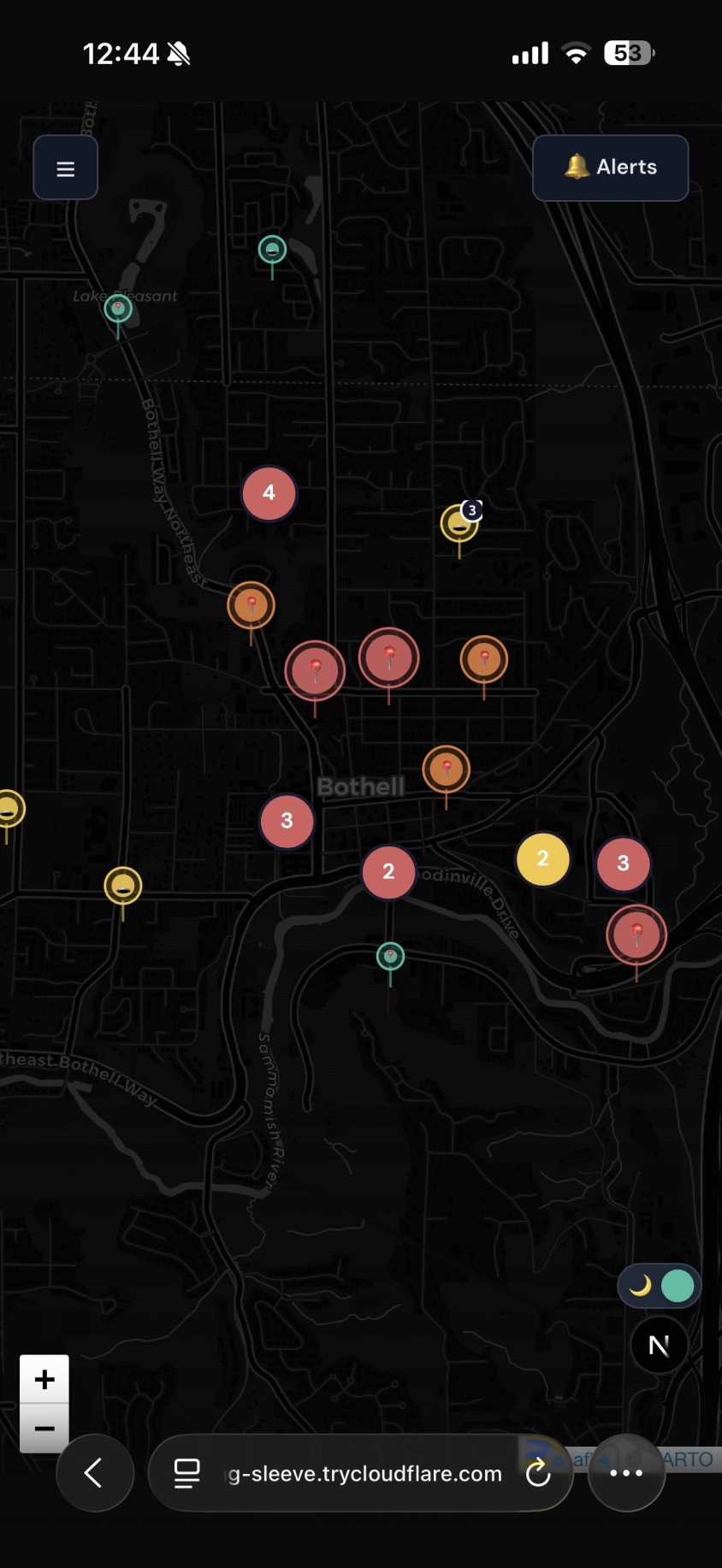
VoiceMap PC UI
-
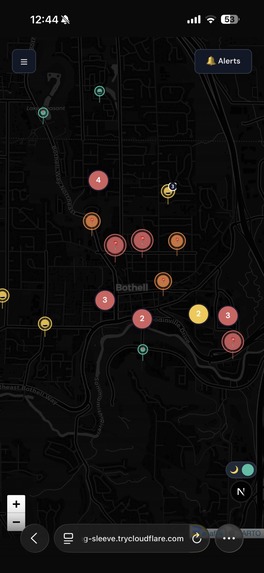
VoiceMap Mobile UI
-
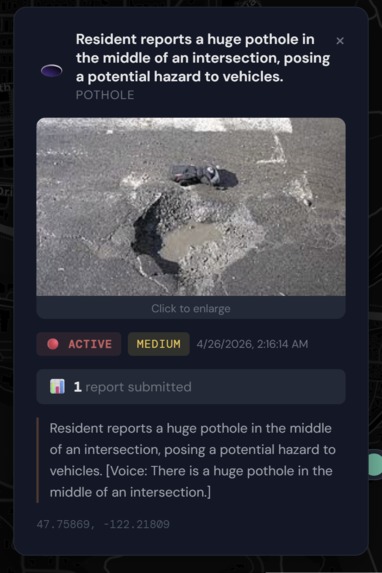
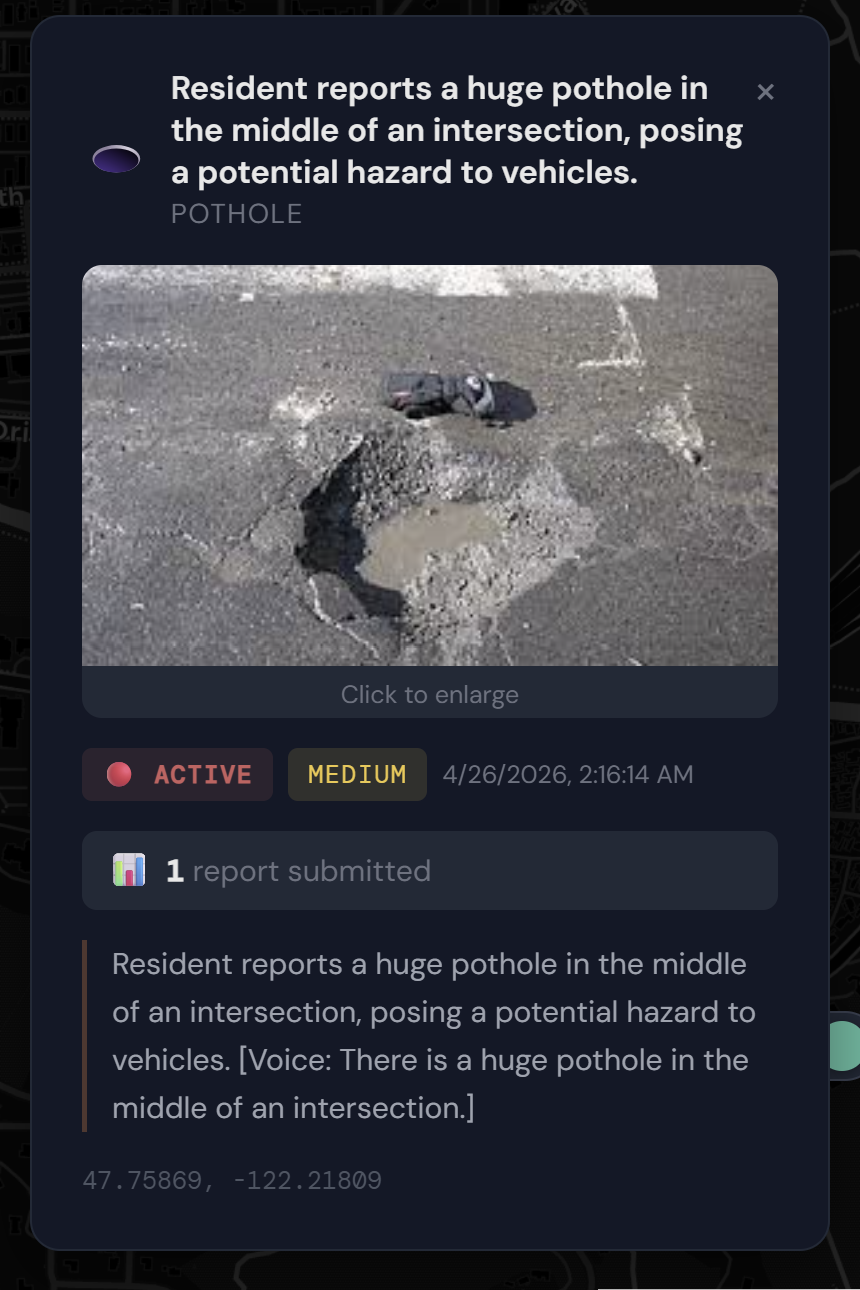
Issue Ticket Format
-
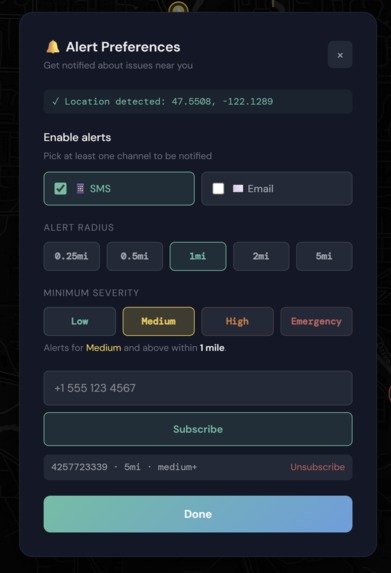
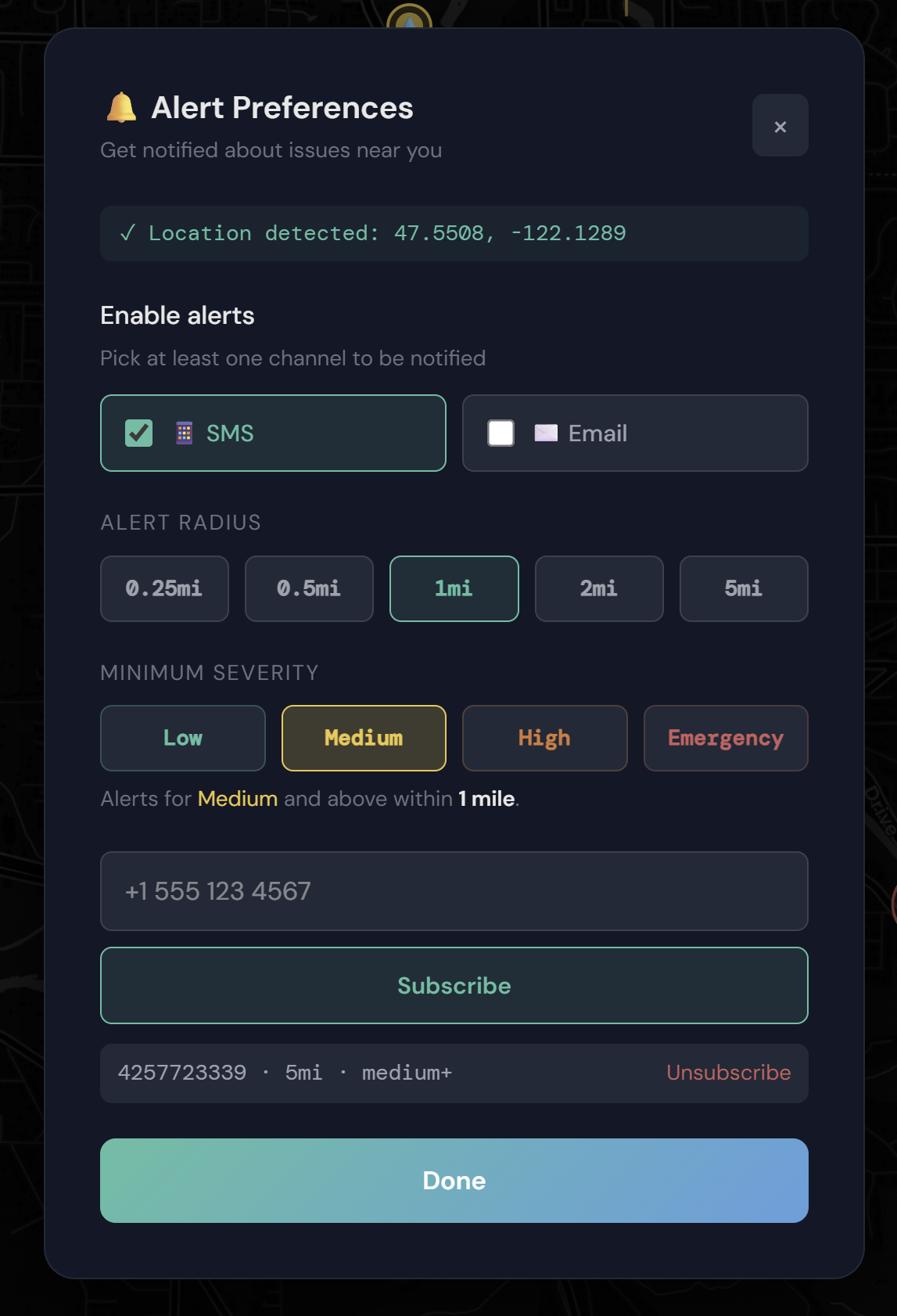
Alert Signup UI
-
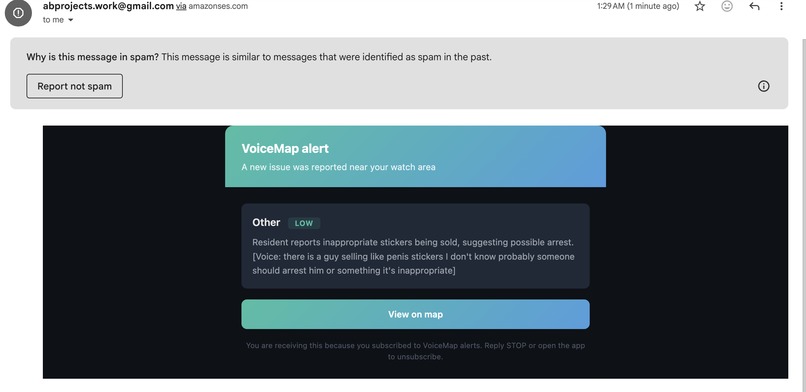
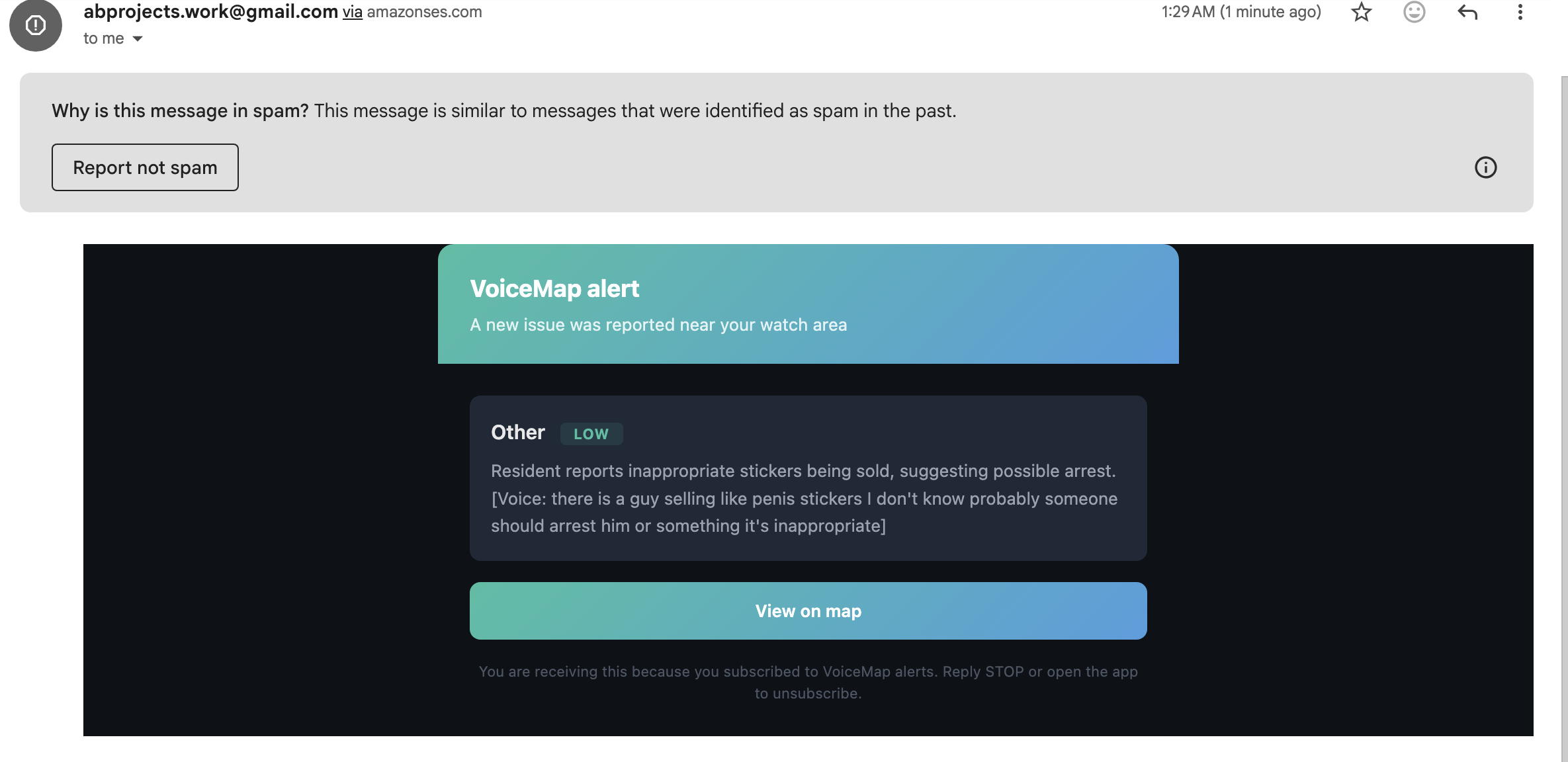
Email Citizen Issue Alert
-
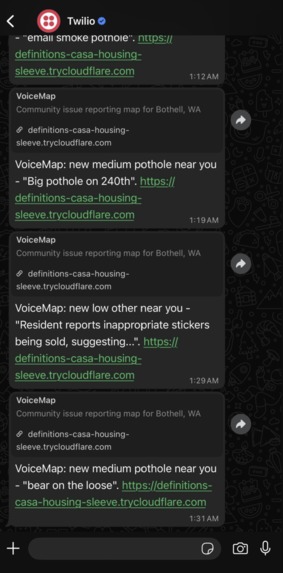
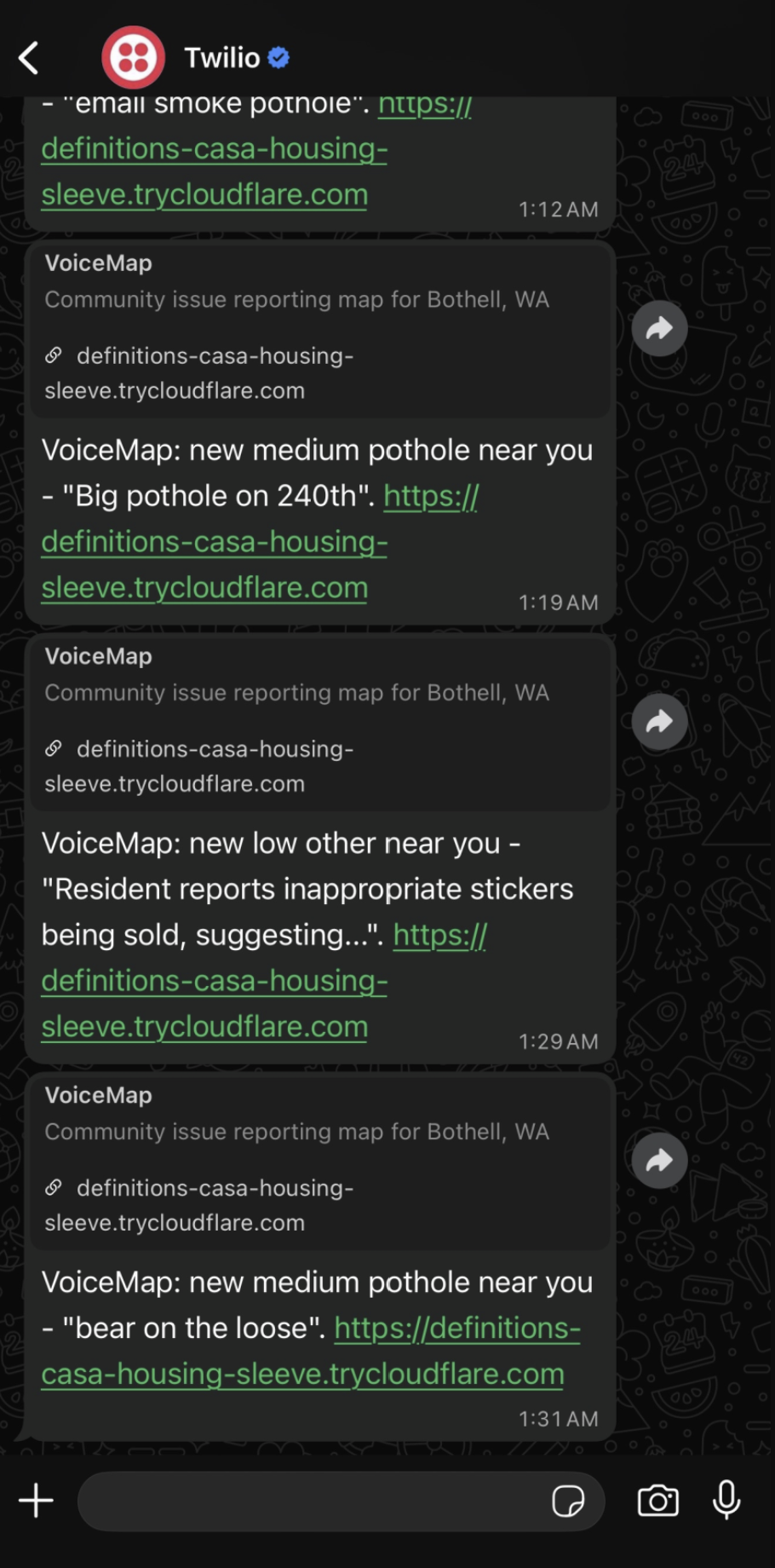
Mobile Citizen Issue Alert
-
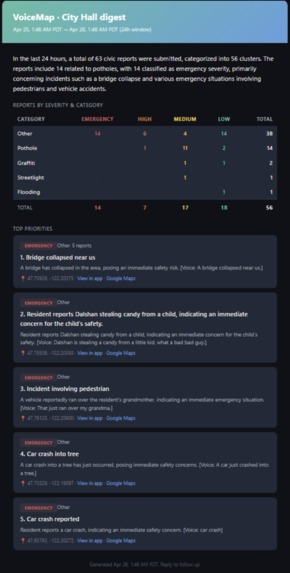
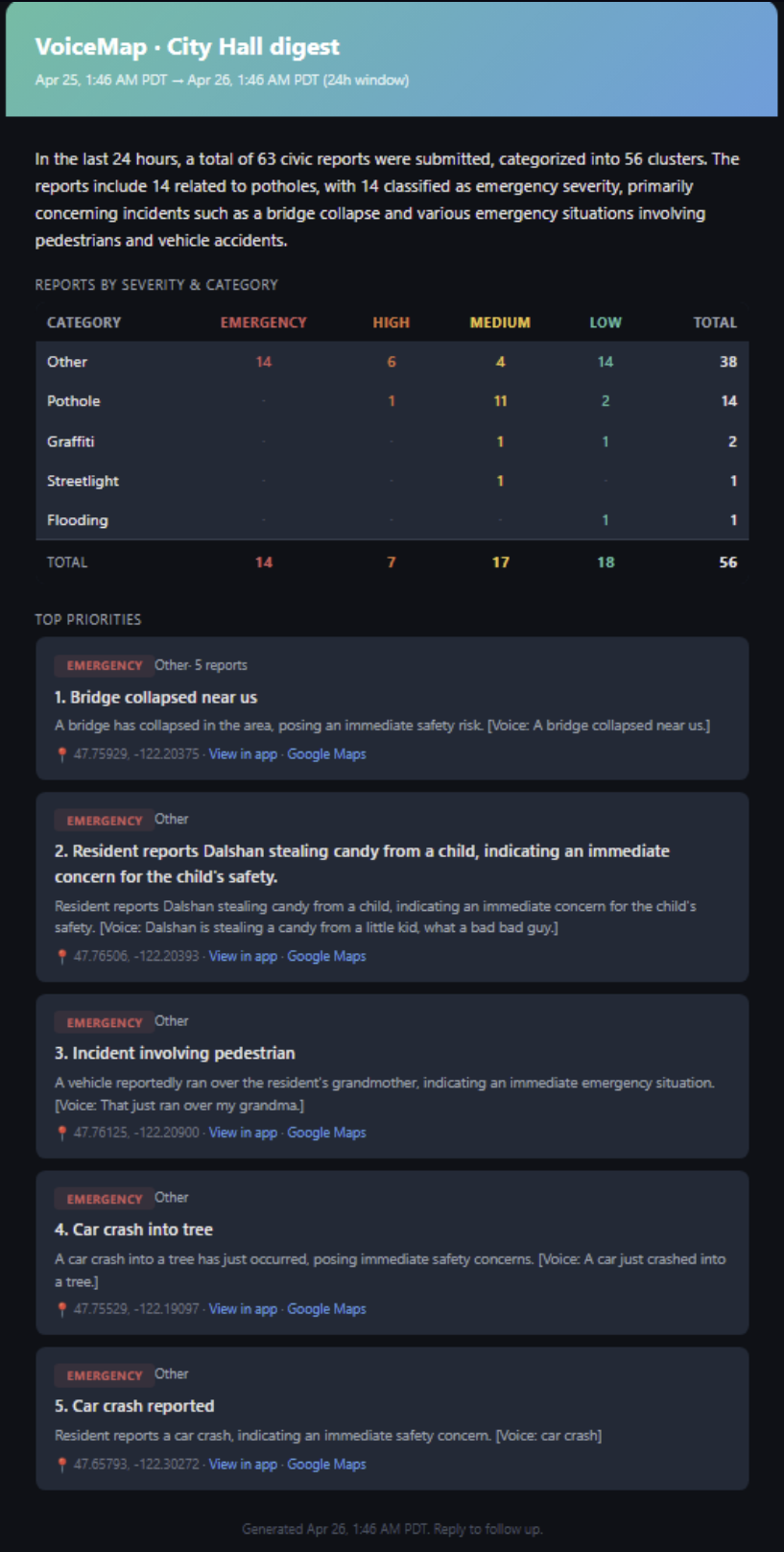
Issue Report For City Staff
Our Inspiration
The team wanted to work on a project that could have a great community impact, while being interesting and challenging to create. We are all intimately familiar with the experience of expecting city infrastructure to work when it doesn't (road work, flooding problems, etc.), and we are also familiar with issues going unfixed for years on end, while seemingly completely slipping the city leadership's attention. The vision of VoiceMap is to utilize crowdsourcing and data aggregation to simultaneously inform the community about issues in real time, while also giving the people a direct voice to the government.
What It Does
Imagine reporting a pothole just by speaking into your phone — VoiceMap makes that possible. It functions as a worldwide, map-based issue reporting application, where users can click on the specific locations of issues, filing a report to inform their peers and the government of the problem. Users have the option either to create these reports manually, or to simply vocally explain the issue to our AI agent, who will automatically generate an issue report. Users also have the option to submit pictures along with their reports. After reports are submitted, our AI-powered data aggregation program combines reports into issues, then places these issues on the map for all users to see, along with a summary of the problem and the number of reports submitted.
VoiceMap also boasts an issue alert feature, where users can sign up to be emailed or texted when issues of certain severity levels are reported near them. Through this same system, VoiceMap also collects a list of all open issues and arranges them based on user reports and urgency, sending these as emails to government infrastructure services which can benefit from the data.
How We Built It
The website interface primarily relies on LeafletJS for the map implementation. Reports and user accounts are stored in a Neon database, which GPT-4o is able to pull from in order to create issue reports, which it sends back to the database. Sign-ins and account creation are processed through Auth0, which is synced with our database. Images are saved and accessed through Cloudinary. Emails and text messages are sent out through AWS SES and Twilio respectively.
Challenges We Overcame
Creating all of the Auth0 applications and actions that we needed, and programming them to work with our Neon database, ended up being far more complicated than we first expected. Eventually it took the whole group working through multiple rounds of troubleshooting steps together to finally get everything synced and working properly.
Additionally, learning the AWS system for the first time also proved to be tough, which we were eventually able to resolve by asking an experienced guest professional on day 2 of the hackathon.
Accomplishments We're Proud Of
From AI-powered report generation, to image embed implementation, to automatic notification and mailing systems, our group ended up creating so many useful and interesting features for this project that we've found it's hard to choose what to be happy about. If we had to pick one highlight, it would be the voice-to-report pipeline — taking a raw audio recording, transcribing it, extracting structured data with GPT-4o, and pinning it to the map in seconds is something none of us were sure we could pull off in 48 hours. We are genuinely surprised by how much we managed to accomplish over the past two days, and so, we're proud of everything.
What We Learned
We can confidently say that every member of our group gained a lot of experience and technical knowledge when it comes to every aspect of full stack development. None of us had touched Auth0 or AWS SES before this hackathon, and by the end we had both fully integrated and working. Through this event we've taken another step from classroom coders to software professionals. We also gained valuable experience utilizing different AI models to increase our efficiency and maximize the output of each person working on the project.
What's Next for VoiceMap
Features we hope to add to VoiceMap in the future include:
Real-Time Data Integration — Synthesizing live API feeds from municipal utilities (e.g., Puget Sound Energy) and federal disaster agencies to provide critical situational awareness.
Enhanced Integrity & Governance — Implementing stronger automated and peer-moderation frameworks to mitigate spam.
Automated Fact-Checking — Integrating AI-driven validation against official datasets for reliability.
Expanded SMS Reach — Moving to a high-reliability SMS infrastructure to ensure alerts reach every user, regardless of smartphone or data access.
Built With
- amazon-web-services
- auth0
- cloudinary
- css
- gpt-4o
- javascript
- leafletjs
- neon
- openai-whisper
- plpgsql
- python
- ses
- twilio


Log in or sign up for Devpost to join the conversation.