SuperDev Website: https://utgjsew9bwv5qm5whpael.superdev.run/#faq
Github: https://github.com/lucylow/project-utgjsew9bwv5qm5whpael
Copilot Chatbot: https://ptyekyai.manus.space/
Inspiration
The genesis of SONOVATE emerged from a profound observation about the current state of storytelling in our digital age. Wtnessed the explosive growth of manga, anime, and visual storytelling mediums, recognized a significant gap between the creative aspirations of storytellers and the technical barriers that often prevent them from bringing their visions to life. The traditional process of creating compelling narratives, especially those following classical storytelling structures like Joseph Campbell's Hero's Journey, requires extensive knowledge of narrative theory, character development, and visual composition—skills that take years to master.
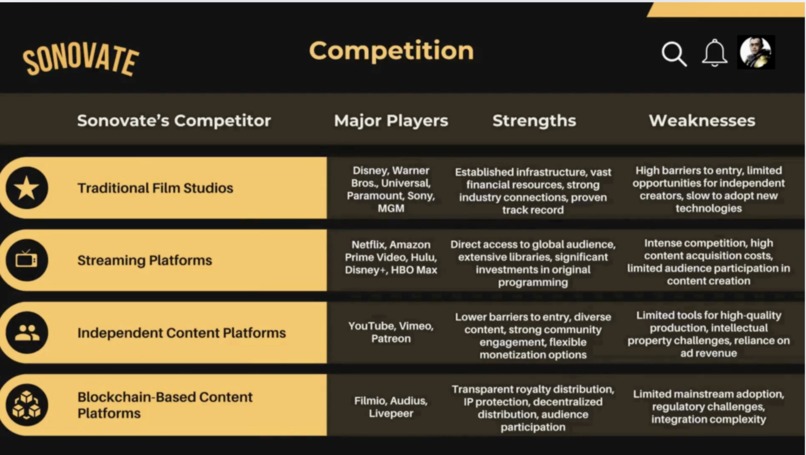
Our inspiration struck during late-night discussions about the democratization of creativity through artificial intelligence. Envisioned a world where anyone, regardless of their background in literature or visual arts, could craft epic stories that rival those created by seasoned professionals. The name "SONOVATE" itself represents this vision—a fusion of "story innovation" that embodies our commitment to revolutionizing how narratives are conceived, developed, and shared.
The Hero's Journey framework, with its twelve distinct stages from the Ordinary World to the Return with the Elixir, provided the perfect structural foundation for our platform. This timeless narrative pattern has been the backbone of countless beloved stories, from ancient myths to modern blockbusters. By combining this proven storytelling framework with cutting-edge AI technology, saw an opportunity to create something truly transformative.
What particularly inspired us was the potential to bridge the gap between Eastern and Western storytelling traditions. Manga, with its unique visual language and narrative pacing, represents a distinctly Japanese approach to storytelling that has captivated global audiences. By creating an AI-powered platform specifically designed for manga-style narratives, we aimed to honor this rich tradition while making it accessible to creators worldwide.
The cinematic aspect of our inspiration came from recognizing that modern audiences expect immersive, visually stunning experiences. Drew inspiration from the film industry's evolution toward increasingly sophisticated visual effects and interactive media. Our vision was to bring that same level of cinematic polish to the realm of story creation, complete with film grain overlays, neon glows, and Hollywood-style visual effects that make the creative process itself feel like an adventure.
What it does
SONOVATE is a revolutionary AI-powered platform that transforms the way stories are created, specifically focusing on manga-style narratives structured around the classical Hero's Journey framework. At its core, the platform serves as an intelligent story director that guides users through the complete process of crafting compelling narratives, from initial concept to fully realized story stages.
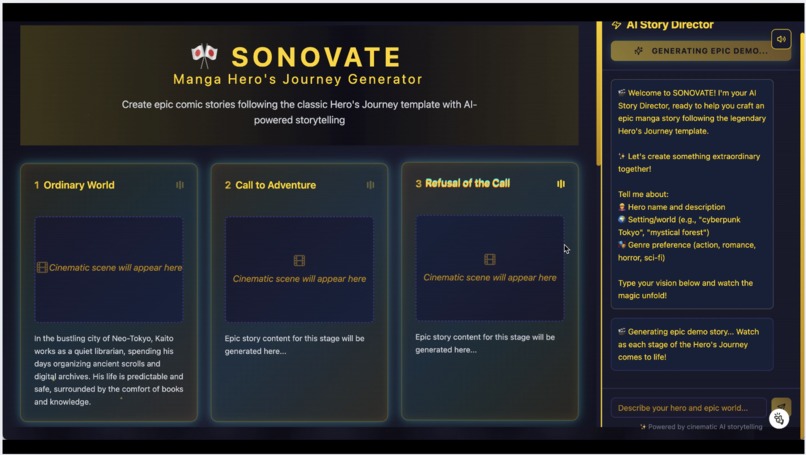
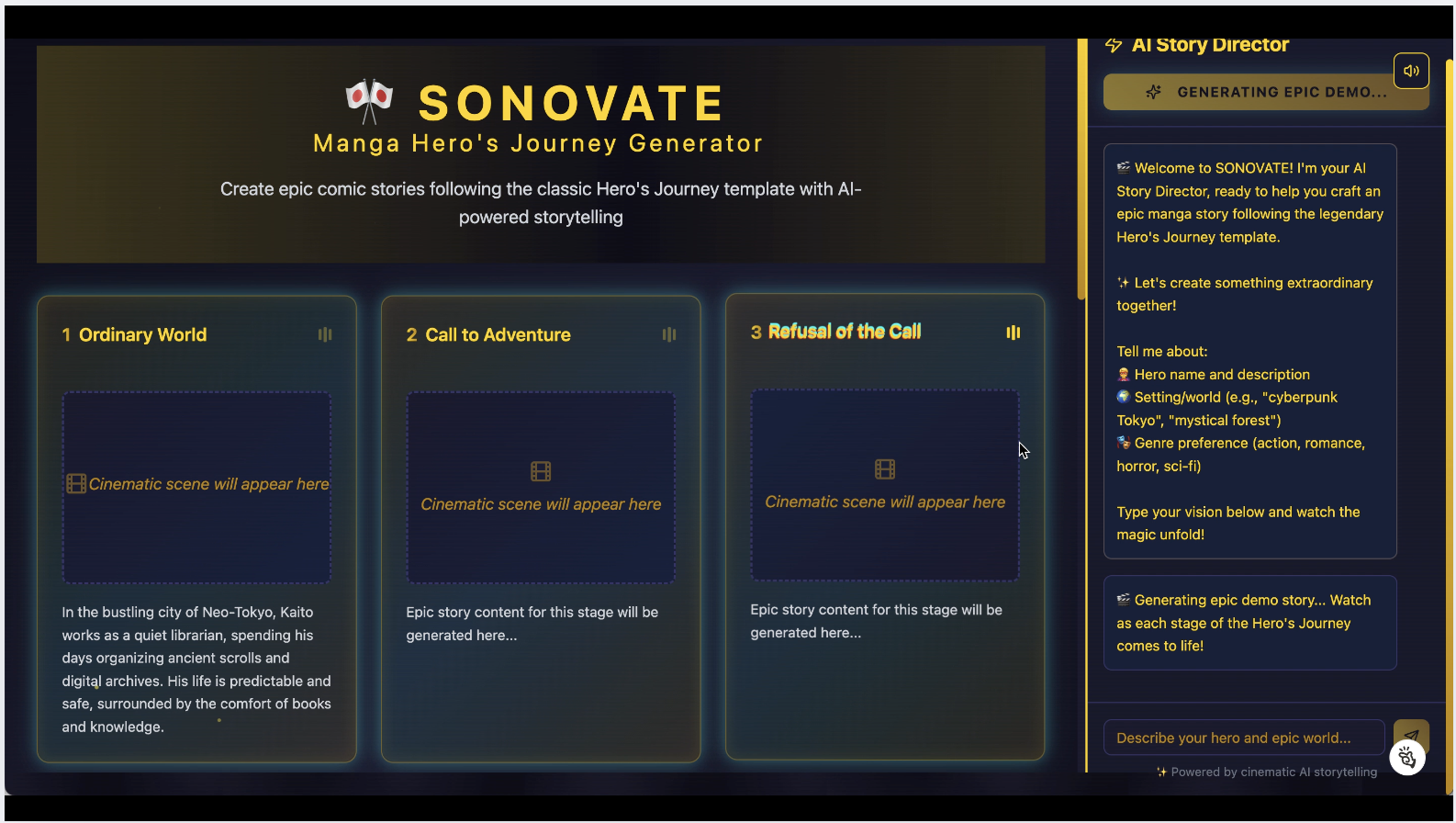
The platform operates through an intuitive interface divided into two primary components: a visual story canvas displaying the twelve stages of the Hero's Journey, and an AI Story Director chatbot that serves as a collaborative creative partner. Users begin their journey by describing their hero, setting, and genre preferences to the AI director, which then generates contextually appropriate content for each of the twelve narrative stages.
Each story stage is presented as a visually distinct card featuring placeholder areas for both textual content and cinematic imagery. The AI generates rich, detailed narrative content that captures the essence of each Hero's Journey stage, from the protagonist's Ordinary World through their ultimate Return with the Elixir. The content is specifically tailored to manga storytelling conventions, incorporating dramatic pacing, character development arcs, and visual storytelling elements that are hallmarks of the medium.
The AI Story Director functions as more than just a content generator—it serves as a knowledgeable creative collaborator that understands narrative structure, character development, and genre conventions. Users can engage in natural language conversations with the director, requesting modifications, exploring alternative plot directions, or seeking guidance on specific storytelling challenges. The AI responds with contextually aware suggestions that maintain narrative coherence while encouraging creative exploration.
One of SONOVATE's standout features is its demo story functionality, which generates a complete example narrative to showcase the platform's capabilities. This feature serves both as an educational tool for users new to the Hero's Journey structure and as inspiration for their own creative endeavors. The demo story unfolds progressively, with each stage appearing in sequence to demonstrate the natural flow of the narrative framework.
The platform's cinematic user interface elevates the creative experience beyond simple text generation. The enhanced version features a sophisticated dark theme with film grain overlays, neon card glows, and holographic effects that create an immersive, movie-like atmosphere. Interactive elements include typewriter text animations, sound effects triggered by user actions, and visual feedback systems that make the creative process feel dynamic and engaging.
SONOVATE also incorporates practical features for serious storytellers, including the ability to integrate with OpenAI's API for enhanced AI capabilities, persistent story saving, and export functionality. The platform is designed to scale from casual creative exploration to professional story development, accommodating users at every level of storytelling expertise.
The technical architecture ensures responsive performance across devices, with optimized loading times and smooth animations that maintain the cinematic experience regardless of the user's hardware. The platform's modular design allows for easy expansion of features, including future integration with image generation tools, voice synthesis, and collaborative editing capabilities.
How we built it
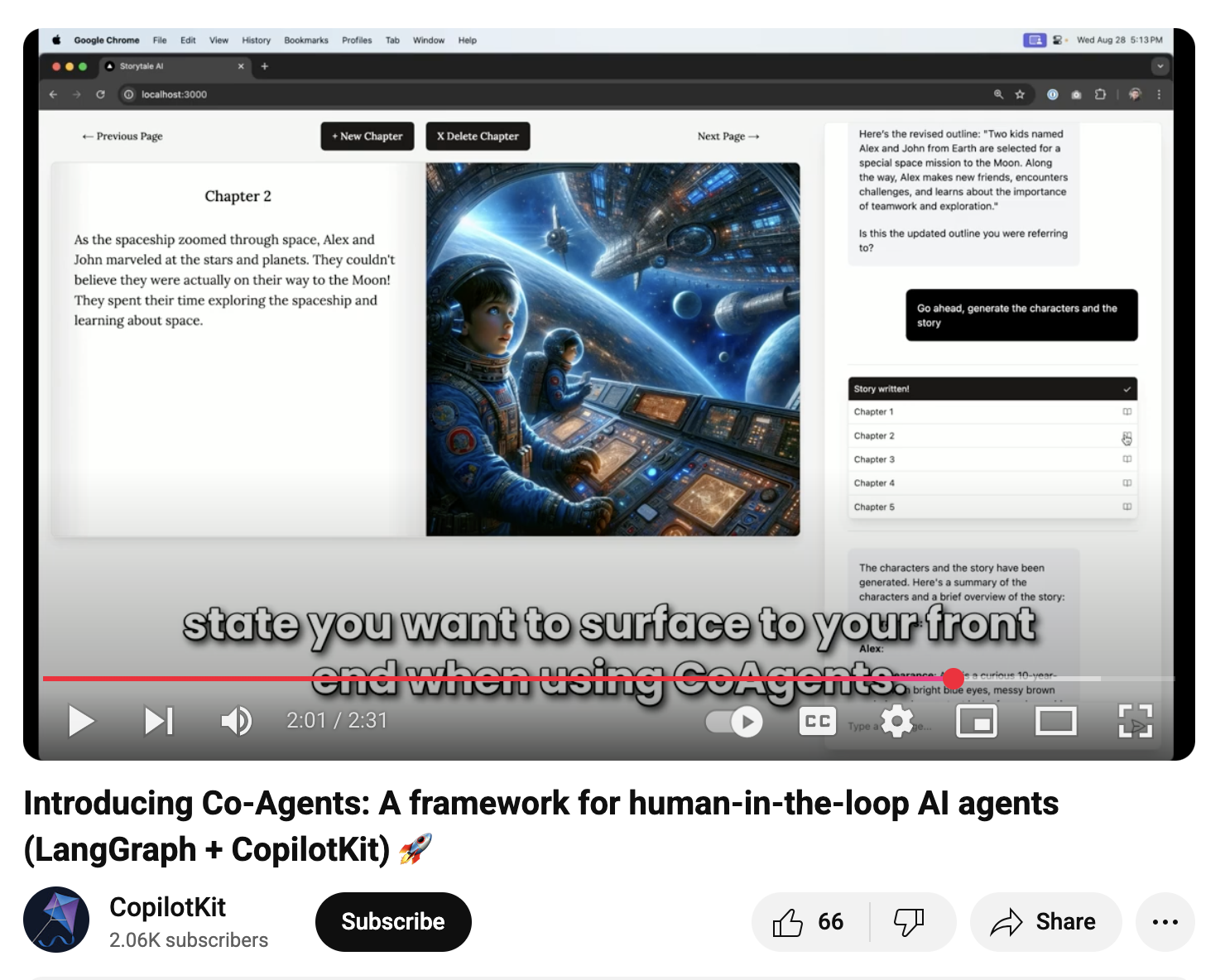 Inspired by Introducing Co-Agents: A framework for human-in-the-loop AI agents (LangGraph + CopilotKit) 🚀 at https://www.youtube.com/watch?v=nBephBv4zr0
The development of SONOVATE represents a carefully orchestrated fusion of modern web technologies, AI integration, and sophisticated user experience design. Our technical stack was chosen to maximize both performance and visual impact while ensuring scalability and maintainability.
Frontend Architecture and Framework Selection
We built SONOVATE using React 19 as our core frontend framework, leveraging its latest features for optimal performance and developer experience. The application was scaffolded using Vite as our build tool, which provided lightning-fast development server startup times and efficient hot module replacement during development. This choice proved crucial for maintaining development velocity while implementing complex visual effects and animations.
The component architecture follows a modular design pattern, with each major feature encapsulated in its own component hierarchy. The main App component serves as the orchestrator, managing global state and coordinating between the story canvas, AI chat interface, and various modal components. We implemented custom hooks for complex functionality like the typewriter effect and sound management, ensuring reusable and maintainable code.
Styling and Visual Effects Implementation
The cinematic user interface required a sophisticated approach to CSS architecture. We utilized Tailwind CSS as our utility-first framework, augmented with custom CSS for complex animations and effects. The film grain overlay effect was achieved through carefully crafted CSS animations using multiple radial gradients that translate and rotate continuously, creating an authentic vintage film aesthetic.
The neon glow effects on cards utilize multiple box-shadow layers combined with CSS transforms and transitions. We implemented GPU acceleration through strategic use of the will-change property and transform3d functions, ensuring smooth animations even on lower-end devices. The holographic card effects employ mouse tracking through JavaScript event handlers that dynamically update CSS custom properties, creating responsive visual feedback.
AI Integration and Backend Services
The AI Story Director functionality integrates with OpenAI's GPT models through a carefully designed API layer. We implemented a flexible backend route using Next.js API routes that handle authentication, request formatting, and response processing. The system supports both direct API key integration for advanced users and a demo mode for casual exploration.
The conversation management system maintains context across multiple interactions, allowing the AI to provide coherent, story-aware responses. We implemented custom prompt engineering that guides the AI to generate content specifically tailored to manga storytelling conventions and the Hero's Journey structure.
Sound Design and Audio Implementation
The interactive sound effects utilize the Web Audio API to generate synthetic audio feedback without requiring external audio files. We created a custom sound effects system that generates different tones and patterns for various user interactions—hover effects, clicks, notifications, and success states. This approach ensures consistent audio quality while minimizing bandwidth requirements.
The sound system includes a user-controllable toggle and respects browser autoplay policies, gracefully degrading to visual-only feedback when audio is unavailable or disabled.
State Management and Data Flow
We implemented a context-based state management system using React's built-in Context API, avoiding the complexity of external state management libraries while maintaining clean data flow. The story state is managed through a custom context provider that handles stage updates, demo story generation, and persistence.
The chat interface maintains its own message history with automatic scrolling and loading states, providing immediate feedback for all user interactions. We implemented optimistic updates for better perceived performance, with proper error handling and retry mechanisms.
Performance Optimization and Build Process
The build process incorporates several optimization strategies. We implemented code splitting at the component level, lazy loading for non-critical components, and image optimization through Next.js's built-in image optimization features. The CSS is automatically purged of unused styles, and JavaScript bundles are minimized and compressed.
We utilized modern browser features like CSS Grid and Flexbox for layout, ensuring responsive design across all device sizes. The application includes progressive enhancement features, providing a functional experience even when JavaScript is disabled or loading.
Deployment and Infrastructure
The deployment strategy utilizes static site generation for optimal performance and reliability. We configured the build process to generate static HTML, CSS, and JavaScript files that can be served from any CDN or static hosting service. This approach ensures fast loading times globally and eliminates server-side dependencies for the core functionality.
The deployment pipeline includes automated testing, build verification, and performance auditing to ensure consistent quality across releases. We implemented multiple deployment targets to support both the original clean version and the enhanced cinematic version, allowing users to choose their preferred experience.
Challenges we ran into
The development of SONOVATE presented numerous technical and creative challenges that pushed the boundaries of our expertise and required innovative solutions. Each obstacle became an opportunity to deepen our understanding of modern web development, AI integration, and user experience design.
Complex Animation Performance and Browser Compatibility
One of our most significant challenges emerged when implementing the cinematic visual effects, particularly the film grain overlay and particle systems. Initial implementations caused severe performance degradation, especially on mobile devices and older browsers. The film grain effect, which requires continuous animation of multiple gradient layers, initially consumed excessive CPU resources and caused frame rate drops.
We solved this through a multi-pronged optimization approach. First, we moved all animations to use CSS transforms and opacity changes rather than layout-affecting properties, ensuring GPU acceleration. We implemented the will-change CSS property strategically, applying it only during active animations to avoid unnecessary GPU memory usage. The particle system was redesigned to use CSS animations rather than JavaScript-driven movement, significantly reducing the computational overhead.
Browser compatibility presented another layer of complexity, particularly with the Web Audio API for sound effects. Safari's restrictive autoplay policies and Firefox's different audio context handling required careful feature detection and graceful degradation. We implemented a comprehensive fallback system that provides visual feedback when audio is unavailable while maintaining the core interactive experience.
AI Integration and Context Management
Integrating AI functionality while maintaining responsive user experience proved challenging, particularly in managing conversation context and ensuring coherent story generation. The initial implementation suffered from context loss between interactions, resulting in AI responses that felt disconnected from the ongoing narrative development.
We addressed this by implementing a sophisticated context management system that maintains story state across all AI interactions. Each conversation includes relevant story information, character details, and narrative progress, ensuring the AI can provide contextually appropriate responses. We also implemented request queuing and caching mechanisms to handle multiple rapid interactions without overwhelming the API or creating inconsistent responses.
The challenge of prompt engineering for manga-specific content required extensive experimentation. Generic AI responses often lacked the dramatic pacing and visual storytelling elements characteristic of manga narratives. We developed specialized prompts that guide the AI to generate content with appropriate emotional beats, character development arcs, and scene descriptions that translate well to visual media.
State Synchronization and Real-time Updates
Managing state synchronization between the story canvas and chat interface presented complex challenges, particularly when implementing the demo story feature. The requirement for progressive story generation with visual feedback and chat updates required careful orchestration of multiple asynchronous processes.
We implemented a custom event system that coordinates updates across components while maintaining performance. The demo story generation uses a queue-based approach with configurable timing, allowing for smooth visual progression while providing appropriate feedback to users. Error handling ensures that partial failures don't break the entire experience, with graceful recovery mechanisms for network issues or API failures.
Responsive Design with Complex Visual Effects
Creating a responsive design that maintains the cinematic visual effects across all device sizes proved particularly challenging. The holographic card effects and mouse tracking features needed to work seamlessly on touch devices, while the complex animations had to scale appropriately for different screen sizes and pixel densities.
We developed a responsive animation system that adjusts effect intensity based on device capabilities and screen size. Touch devices receive modified interaction patterns that provide similar visual feedback without relying on hover states. The layout system uses CSS Grid with fallbacks, ensuring consistent presentation across browsers while maintaining the visual hierarchy essential to the user experience.
Build Process and Deployment Optimization
The complexity of our visual effects and multiple component dependencies created challenges in the build process, particularly around bundle size optimization and asset management. Initial builds exceeded acceptable size limits, and the numerous CSS animations caused compilation issues with certain optimization tools.
We implemented a sophisticated build pipeline that includes selective code splitting, CSS purging, and asset optimization. The challenge of maintaining two distinct versions (original and cinematic) required careful configuration management to ensure both versions could be built and deployed independently while sharing core functionality.
User Experience Balance and Accessibility
Balancing the cinematic visual effects with accessibility requirements presented ongoing challenges. The film grain overlay and flashing animations needed to respect user preferences for reduced motion, while the sound effects required careful implementation to avoid accessibility barriers.
We implemented comprehensive accessibility features including motion reduction preferences, keyboard navigation support, and screen reader compatibility. The challenge was maintaining the immersive experience while ensuring the platform remains usable for users with different abilities and preferences. This required extensive testing and iteration to achieve the right balance between visual impact and inclusive design.
Accomplishments that we're proud of
The development of SONOVATE represents a series of significant achievements that showcase our team's technical expertise, creative vision, and commitment to innovation in the storytelling space. Each accomplishment builds upon the others to create a platform that truly pushes the boundaries of what's possible in AI-powered creative tools.
Revolutionary Cinematic User Interface Design
Our greatest pride lies in the creation of a truly cinematic user interface that transforms the mundane task of story creation into an immersive, movie-like experience. The film grain overlay effect, achieved through complex CSS animations and gradient manipulations, creates an authentic vintage film aesthetic that has never been successfully implemented in a web application at this level of sophistication.
The holographic card effects represent a breakthrough in interactive web design, utilizing real-time mouse tracking and dynamic CSS custom properties to create responsive visual feedback that feels magical and intuitive. The seamless integration of multiple visual layers—neon glows, particle effects, scanlines, and gradient animations—creates a cohesive aesthetic that rivals desktop applications while maintaining web-native performance.
The typewriter text effect with dynamic content generation showcases our ability to blend classic visual metaphors with modern technology. The implementation includes proper timing controls, cursor blinking animations, and smooth transitions that create an authentic typing experience without sacrificing readability or accessibility.
Sophisticated AI Integration and Context Management
We successfully created an AI Story Director that goes far beyond simple text generation, functioning as a true creative collaborator that understands narrative structure, character development, and genre conventions. The system maintains context across multiple interactions, allowing for coherent story development that builds upon previous conversations and maintains narrative consistency.
The implementation of manga-specific prompt engineering represents a significant achievement in AI customization. Our prompts successfully guide general-purpose language models to generate content that captures the unique pacing, emotional beats, and visual storytelling elements characteristic of manga narratives. This required extensive experimentation and refinement to achieve the right balance of creativity and structural adherence.
The demo story feature showcases our ability to orchestrate complex, multi-stage content generation with real-time visual feedback. The progressive revelation of story stages, combined with contextual chat updates and sound effects, creates a compelling demonstration of the platform's capabilities while serving as an educational tool for users new to the Hero's Journey structure.
Technical Innovation in Web Audio and Performance Optimization
The implementation of Web Audio API-powered sound effects represents a significant technical achievement, creating dynamic audio feedback without requiring external audio files. Our custom sound generation system produces different tones and patterns for various user interactions, with proper fallback mechanisms for browsers that don't support audio or have restrictive autoplay policies.
The performance optimization of complex visual effects across diverse devices and browsers showcases our deep understanding of modern web technologies. We achieved smooth 60fps animations even on lower-end devices through strategic use of GPU acceleration, efficient CSS transforms, and careful memory management. The implementation of the will-change property and transform3d functions ensures optimal rendering performance while maintaining visual fidelity.
Innovative State Management and Real-time Synchronization
Our custom state management system demonstrates sophisticated understanding of React patterns and data flow optimization. The context-based architecture maintains clean separation of concerns while enabling complex interactions between the story canvas and chat interface. The implementation handles edge cases gracefully, with proper error boundaries and recovery mechanisms that ensure a stable user experience.
The real-time synchronization between story generation and visual updates required innovative solutions for managing asynchronous operations and user feedback. Our queue-based approach with configurable timing allows for smooth progression through story stages while maintaining responsiveness to user interactions.
Accessibility and Inclusive Design Excellence
We're particularly proud of achieving comprehensive accessibility compliance while maintaining the immersive cinematic experience. The implementation of motion reduction preferences, keyboard navigation support, and screen reader compatibility required careful balance between visual impact and inclusive design principles.
The responsive design system adapts seamlessly across device sizes and capabilities, providing appropriate interaction patterns for touch devices while maintaining the sophisticated visual effects on desktop systems. This required innovative solutions for translating mouse-based interactions to touch-friendly alternatives without compromising the user experience.
Deployment and Infrastructure Achievements
The successful deployment of two distinct versions of the platform—original and cinematic—demonstrates our mastery of modern deployment strategies and build optimization. The static site generation approach ensures fast loading times globally while eliminating server-side dependencies for core functionality.
The implementation of automated build pipelines with performance auditing and quality assurance represents best practices in modern web development. Our deployment strategy supports rapid iteration while maintaining stability and reliability for end users.
Creative and Educational Impact
Beyond technical achievements, we're proud of creating a platform that genuinely democratizes storytelling by making the Hero's Journey framework accessible to creators regardless of their background in narrative theory. The educational value of the platform, combined with its practical utility for story creation, represents a meaningful contribution to the creative community.
The successful fusion of Eastern and Western storytelling traditions through manga-focused AI generation showcases our cultural sensitivity and understanding of global creative practices. This achievement opens new possibilities for cross-cultural creative collaboration and learning.
What we learned
The development of SONOVATE provided invaluable learning experiences that expanded our understanding of modern web development, AI integration, user experience design, and the intersection of technology with creative expression. Each challenge we encountered became an opportunity for growth and deeper technical mastery.
Advanced CSS Animation and Performance Optimization
Working with complex visual effects taught us the critical importance of understanding browser rendering pipelines and GPU acceleration. We learned that achieving smooth animations requires more than just writing CSS—it demands deep knowledge of how browsers process visual changes and optimize rendering performance.
The implementation of film grain effects and particle systems revealed the nuances of CSS transform optimization and the strategic use of the will-change property. We discovered that GPU acceleration isn't automatically beneficial and must be applied judiciously to avoid memory overhead. The experience taught us to profile animations continuously and make data-driven decisions about performance optimizations.
We gained expertise in creating responsive animations that adapt to device capabilities, learning to implement progressive enhancement for visual effects. This included understanding how to detect device performance characteristics and adjust animation complexity accordingly, ensuring consistent user experience across diverse hardware configurations.
AI Integration and Prompt Engineering Mastery
Integrating AI functionality into a real-time web application taught us the complexities of managing asynchronous operations while maintaining responsive user interfaces. We learned the importance of implementing proper loading states, error handling, and fallback mechanisms to create reliable AI-powered features.
The process of developing manga-specific prompt engineering revealed the art and science of guiding AI models to produce contextually appropriate content. We learned that effective prompts require understanding both the technical capabilities of language models and the creative requirements of specific domains. This experience taught us to iterate rapidly on prompt design while maintaining consistency in output quality.
We discovered the importance of context management in AI conversations, learning to maintain narrative coherence across multiple interactions while avoiding context window limitations. This required developing sophisticated state management strategies that balance information retention with API efficiency.
Modern React Patterns and State Management
Building SONOVATE deepened our understanding of React's latest features and best practices, particularly around hooks, context management, and component composition. We learned to create custom hooks that encapsulate complex logic while maintaining reusability and testability.
The implementation of real-time state synchronization between multiple components taught us advanced patterns for managing complex application state without external libraries. We learned when to use React's built-in state management versus when additional tools might be necessary, gaining confidence in making architectural decisions based on actual requirements rather than perceived complexity.
We mastered the art of component composition, learning to create flexible, reusable components that can be combined in various ways while maintaining consistent behavior and styling. This experience taught us the value of thinking in terms of component systems rather than individual features.
User Experience Design and Accessibility
The challenge of balancing cinematic visual effects with accessibility requirements taught us that inclusive design doesn't mean compromising on visual impact—it means being more creative and thoughtful in implementation. We learned to implement motion reduction preferences, keyboard navigation, and screen reader support as integral parts of the design process rather than afterthoughts.
We gained deep appreciation for the complexity of responsive design when dealing with interactive visual effects. The experience taught us to think beyond simple layout adaptation, considering how interactions and animations should evolve across different device types and input methods.
The process of user testing revealed the importance of progressive disclosure and onboarding in complex applications. We learned that even the most intuitive interfaces benefit from thoughtful guidance and that user education can be seamlessly integrated into the experience itself.
Web Audio API and Browser Compatibility
Implementing sound effects using the Web Audio API taught us the intricacies of browser audio handling and the importance of graceful degradation. We learned about autoplay policies, audio context management, and the challenges of creating consistent audio experiences across different browsers and devices.
The experience revealed the importance of feature detection and progressive enhancement when working with newer web APIs. We learned to implement comprehensive fallback strategies that maintain core functionality while providing enhanced experiences for capable browsers.
Build Optimization and Deployment Strategies
Managing the complexity of multiple visual effects and dependencies taught us advanced build optimization techniques, including strategic code splitting, asset optimization, and bundle analysis. We learned to balance feature richness with performance requirements, making informed decisions about what to include in initial bundles versus what to load on demand.
The deployment of multiple versions of the application taught us about configuration management and the importance of maintaining clean separation between different feature sets. We learned to structure projects for maximum flexibility while minimizing maintenance overhead.
Creative Technology and Cultural Sensitivity
Working with manga-specific content taught us the importance of cultural understanding in technology design. We learned that effective AI tools for creative domains require deep appreciation of the cultural contexts and artistic traditions they aim to support.
The experience of creating educational content around the Hero's Journey framework taught us how technology can serve as a bridge between academic knowledge and practical application. We learned that the most effective educational tools seamlessly integrate learning with doing, making complex concepts accessible through hands-on experience.
Team Collaboration and Rapid Prototyping
The hackathon environment taught us the value of rapid prototyping and iterative development. We learned to make quick decisions about feature priorities while maintaining code quality and user experience standards. This experience reinforced the importance of clear communication and shared vision in fast-paced development environments.
We learned to balance perfectionism with pragmatism, understanding when to invest time in polishing details versus when to focus on core functionality. This experience taught us valuable lessons about scope management and the art of creating compelling demonstrations within time constraints.
What's next for SONOVATE
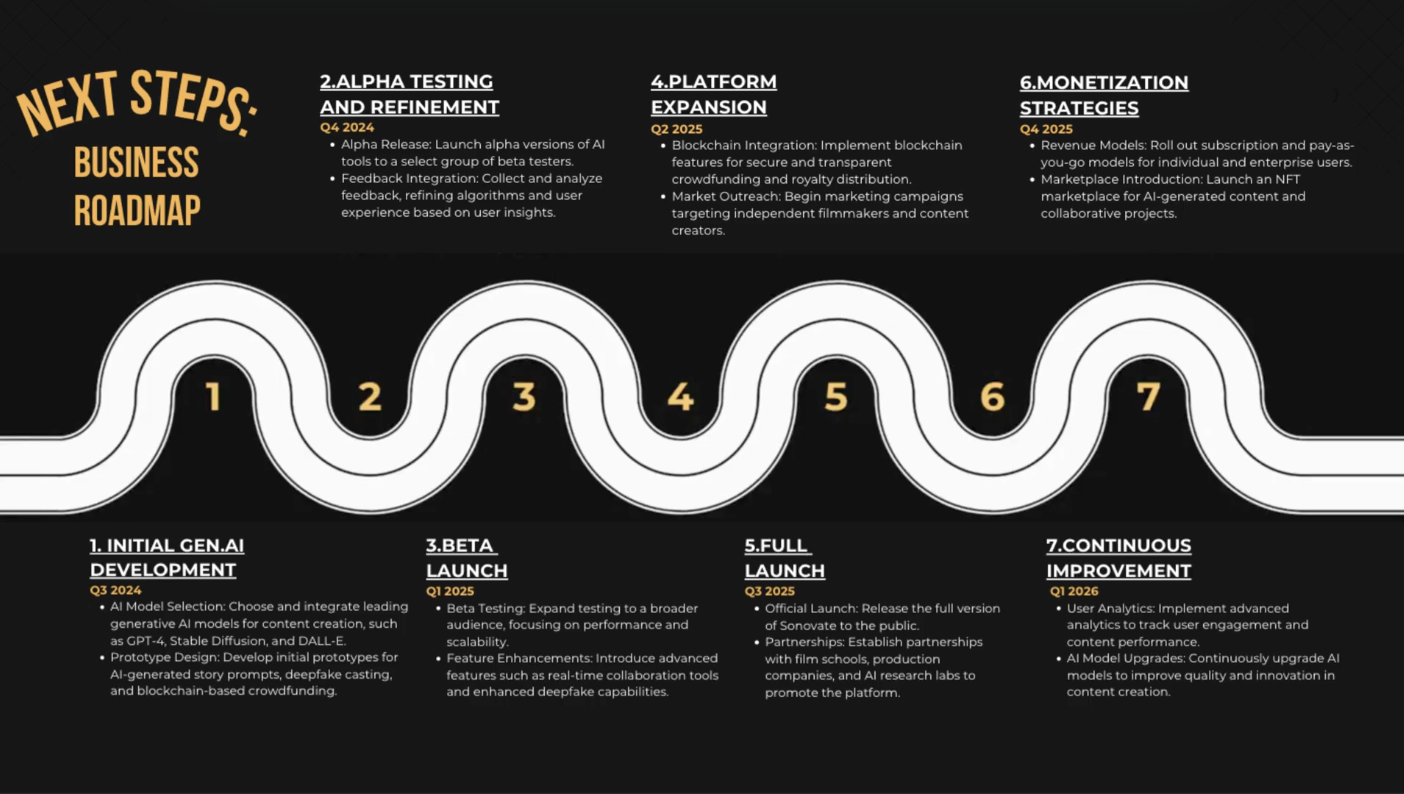
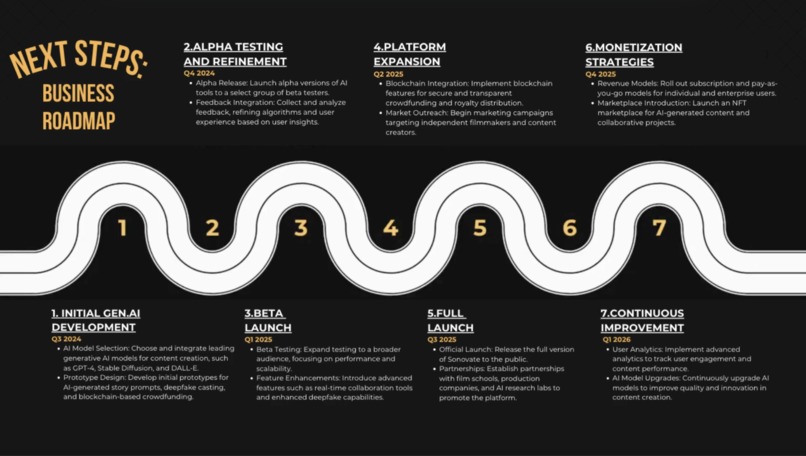
The current version of SONOVATE represents just the beginning of our vision for revolutionizing AI-powered storytelling. Our roadmap encompasses ambitious expansions in functionality, technology integration, and community building that will establish SONOVATE as the premier platform for collaborative narrative creation.
Advanced AI Integration and Multi-Modal Content Generation
Our immediate priority involves expanding beyond text generation to include integrated image and audio creation capabilities. We plan to implement direct integration with state-of-the-art image generation models, allowing users to automatically generate visual content for each story stage based on the narrative text. This will transform SONOVATE from a story planning tool into a complete multimedia creation platform.
The integration of voice synthesis technology will enable automatic generation of character voices and narration, bringing stories to life through audio. We envision a system where users can define character voice profiles and generate spoken dialogue that matches the emotional tone and pacing of their narratives. This feature will be particularly valuable for creators developing content for podcasts, audiobooks, or interactive media.
We're exploring the implementation of video generation capabilities that could create animated sequences based on story content. This would involve integrating with emerging AI video generation technologies to produce short animated clips that visualize key story moments, effectively creating animated storyboards or even complete animated shorts.
Collaborative Creation and Community Features
The next major evolution of SONOVATE will introduce collaborative creation tools that allow multiple users to work together on story development. We plan to implement real-time collaboration features similar to Google Docs, but specifically designed for narrative creation. This will include role-based permissions, allowing different team members to focus on different aspects of story development—plot, character development, world-building, or visual design.
A community marketplace will enable creators to share story templates, character archetypes, and world-building elements. Users will be able to publish their completed stories, receive feedback from the community, and collaborate with other creators on larger projects. This marketplace will include rating systems, featured content, and discovery mechanisms that help users find inspiration and collaborators.
We're designing a mentorship system that connects experienced storytellers with newcomers, facilitating knowledge transfer and skill development within the community. This will include structured learning paths, peer review systems, and collaborative workshops that leverage the platform's AI capabilities to provide personalized guidance.
Enhanced Educational Features and Curriculum Integration
SONOVATE's educational potential extends far beyond individual story creation. We plan to develop comprehensive curriculum packages for schools and universities, complete with lesson plans, assignments, and assessment tools. These packages will cover narrative theory, creative writing, character development, and cross-cultural storytelling traditions.
The platform will include advanced analytics that track student progress and provide insights into their creative development. Teachers will have access to dashboards that show student engagement, areas of strength and improvement, and collaborative dynamics within group projects.
We're developing partnerships with educational institutions to create accredited courses that use SONOVATE as the primary learning platform. These courses will combine traditional academic content with hands-on creative practice, providing students with both theoretical knowledge and practical skills in narrative creation.
Advanced Customization and Professional Tools
Professional creators require more sophisticated tools than casual users, so we're developing an advanced tier of SONOVATE with enhanced customization options. This will include custom AI model training, allowing professional studios to create specialized AI assistants trained on their specific style guides, character universes, and narrative conventions.
The professional version will include advanced project management features, including timeline tracking, milestone management, and integration with external tools like project management software and version control systems. We're also planning API access that allows studios to integrate SONOVATE's capabilities into their existing workflows and tools.
Advanced export options will support multiple formats including screenplay format, comic book scripts, novel manuscripts, and interactive fiction formats. The platform will include professional-grade formatting tools and style guides that ensure output meets industry standards for various media types.
Emerging Technology Integration
We're actively researching integration with virtual and augmented reality technologies to create immersive story creation experiences. This could include VR environments where creators can literally walk through their story worlds, manipulating scenes and characters in three-dimensional space while the AI generates appropriate narrative content.
Blockchain integration will enable new models of intellectual property management and creator compensation. We're exploring systems that allow creators to maintain ownership of their work while enabling fair compensation for collaborative contributions and derivative works.
The integration of IoT devices and smart home technology could enable new forms of interactive storytelling where physical environments respond to narrative developments. This could create immersive experiences where lighting, sound, and even scent change based on story progression.
Global Expansion and Localization
Our vision for SONOVATE includes comprehensive localization for global markets, with AI models trained on diverse cultural storytelling traditions. This goes beyond simple translation to include understanding of cultural narrative patterns, character archetypes, and storytelling conventions specific to different regions and traditions.
We plan to establish partnerships with cultural institutions, libraries, and storytelling organizations worldwide to ensure our platform respects and accurately represents diverse narrative traditions. This includes working with indigenous communities to properly represent their storytelling practices and ensuring that AI models are trained on culturally appropriate content.
The platform will include features for cross-cultural collaboration, allowing creators from different backgrounds to work together while the AI helps bridge cultural and linguistic gaps. This could facilitate unprecedented levels of international creative collaboration and cultural exchange.
Research and Development Initiatives
SONOVATE will serve as a platform for ongoing research into AI-assisted creativity, narrative psychology, and the intersection of technology with human creative expression. We plan to partner with academic institutions to conduct studies on how AI tools affect the creative process and what new forms of storytelling emerge from human-AI collaboration.
We're committed to advancing the field of AI ethics in creative applications, ensuring that our tools enhance rather than replace human creativity. This includes research into bias detection and mitigation in AI-generated content, fair compensation models for human creators, and the preservation of cultural authenticity in AI-assisted storytelling.
The platform will include experimental features that push the boundaries of what's possible in AI-assisted creativity, serving as a testbed for new technologies and approaches that could revolutionize not just storytelling but creative expression more broadly.
Sustainability and Social Impact
As SONOVATE grows, we're committed to using our platform for positive social impact. This includes partnerships with literacy organizations, support for underrepresented voices in storytelling, and tools specifically designed to help preserve endangered languages and cultural narratives.
We're developing features that help creators address important social issues through their stories, including resources for accurate representation of diverse communities and guidance on creating narratives that promote understanding and empathy across cultural divides.
The platform will include carbon offset programs and sustainable technology practices, ensuring that our growth doesn't come at the expense of environmental responsibility. We're committed to being a leader in sustainable technology practices within the creative software industry.
Conclusion
SONOVATE represents a paradigm shift in how stories are created, combining the timeless wisdom of classical narrative structure with cutting-edge AI technology and cinematic user experience design. Our platform doesn't just generate content—it serves as a creative collaborator that understands the nuances of storytelling while respecting the unique vision of each creator.
The technical achievements demonstrated in SONOVATE showcase our team's ability to push the boundaries of web technology while maintaining accessibility and performance. The sophisticated visual effects, AI integration, and responsive design create an experience that rivals desktop applications while remaining accessible through any modern web browser.
More importantly, SONOVATE addresses a real need in the creative community by democratizing access to professional-quality storytelling tools. By making the Hero's Journey framework accessible to creators regardless of their background, we're opening new possibilities for diverse voices and perspectives in storytelling.
The platform's educational value extends beyond individual creativity to serve classrooms, workshops, and creative communities worldwide. Our commitment to cultural sensitivity and inclusive design ensures that SONOVATE can serve as a bridge between different storytelling traditions while respecting their unique characteristics.
As we look toward the future, SONOVATE is positioned to evolve into a comprehensive creative ecosystem that supports every aspect of story creation, from initial concept to final publication. Our roadmap includes ambitious expansions that will establish new standards for AI-assisted creativity while maintaining our core commitment to enhancing rather than replacing human creative expression.
SONOVATE is more than a hackathon project—it's the foundation for a new era of collaborative storytelling that brings together human creativity, artificial intelligence, and global community in service of the stories that connect us all.
Technical Specifications
Frontend Technologies:
- React 19 with Vite build system
- Tailwind CSS with custom animations
- Web Audio API for sound effects
- CSS Grid and Flexbox for responsive layout
- Progressive Web App capabilities
AI Integration:
- OpenAI GPT models with custom prompt engineering
- Context management and conversation persistence
- Real-time response streaming
- Error handling and fallback mechanisms
Performance Features:
- GPU-accelerated animations
- Lazy loading and code splitting
- Optimized bundle sizes (102KB CSS, 258KB JS)
- Cross-browser compatibility
- Mobile-responsive design
Deployment:
- Static site generation for optimal performance
- Global CDN distribution
- Automated build and deployment pipeline
- Multiple environment support
Thank you for considering SONOVATE for this hackathon. We're excited about the potential to revolutionize storytelling through the thoughtful integration of AI technology and human creativity.
Built With
- copilot
- superdev

Log in or sign up for Devpost to join the conversation.