-
-
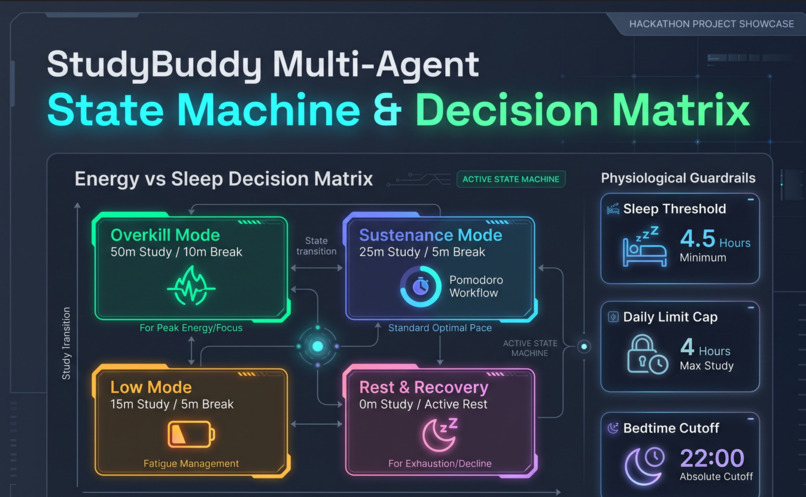
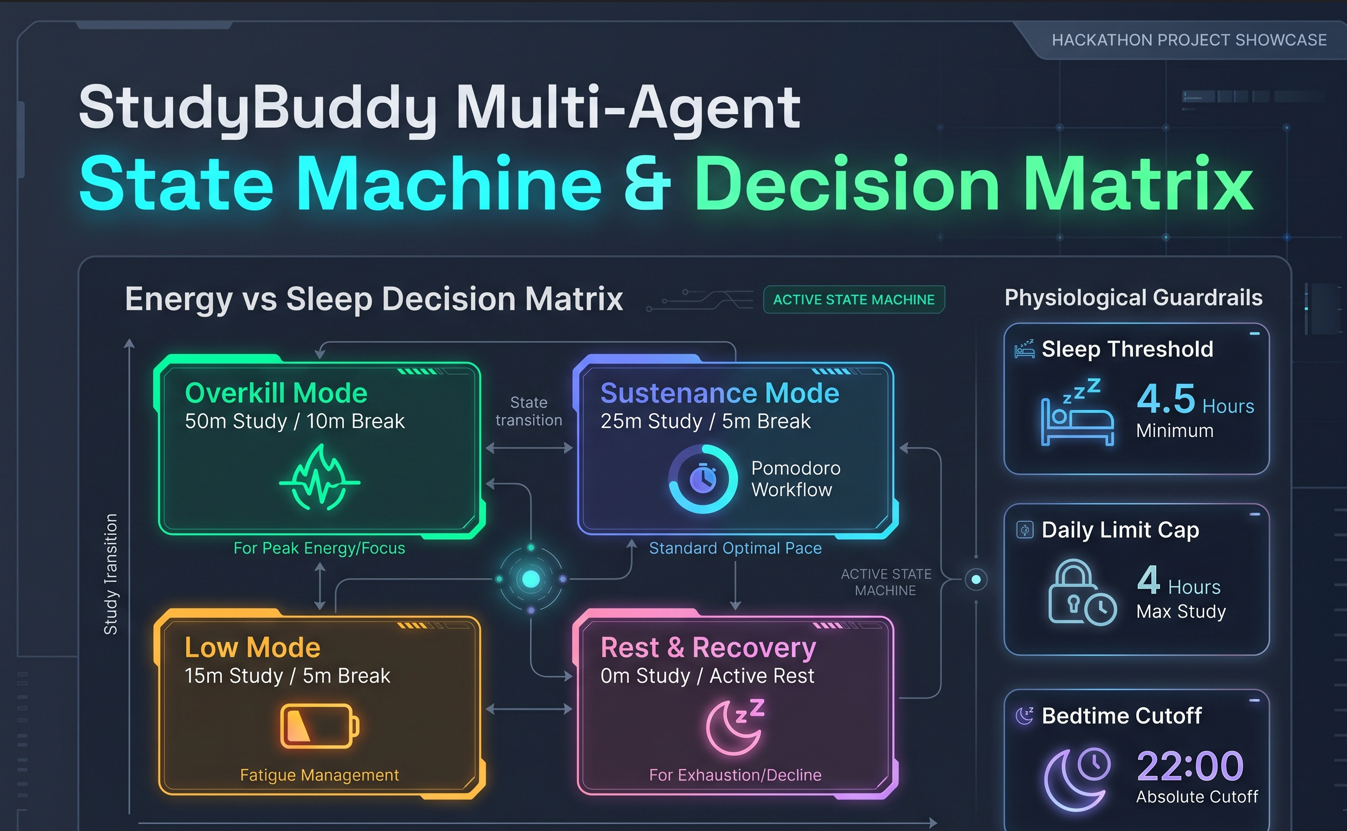
State Machine and Decision Matrix
-
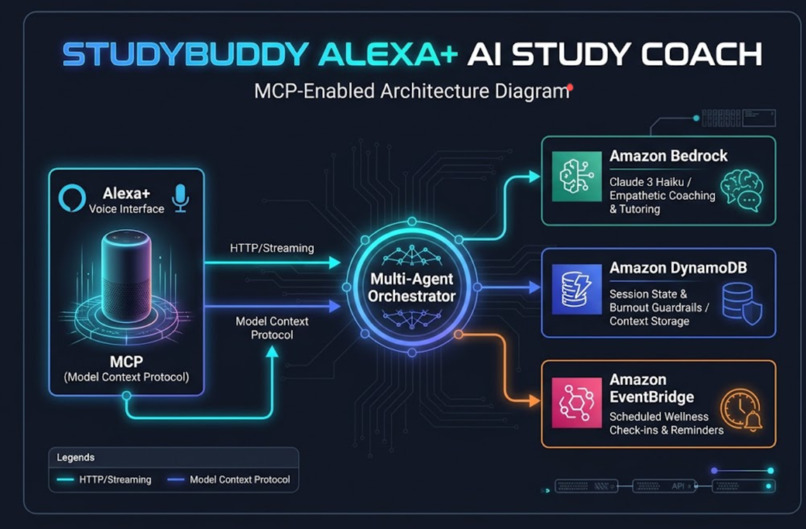
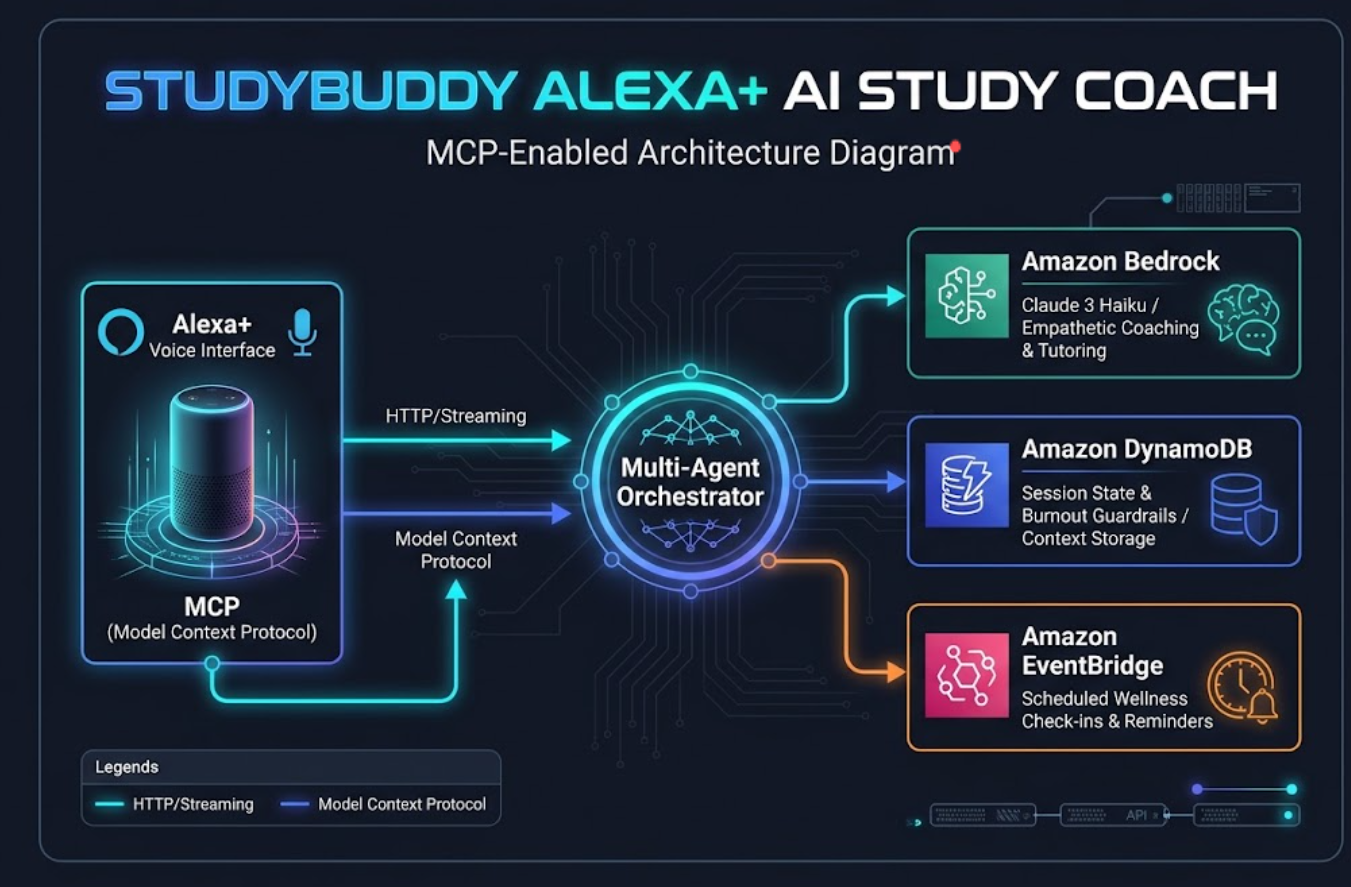
Architecture Diagram
-
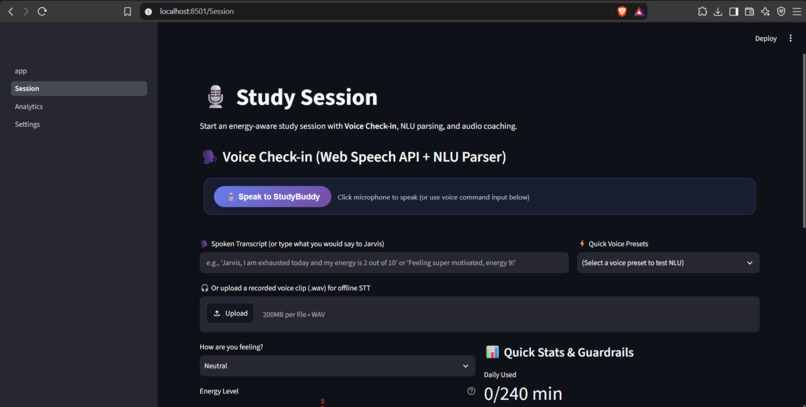
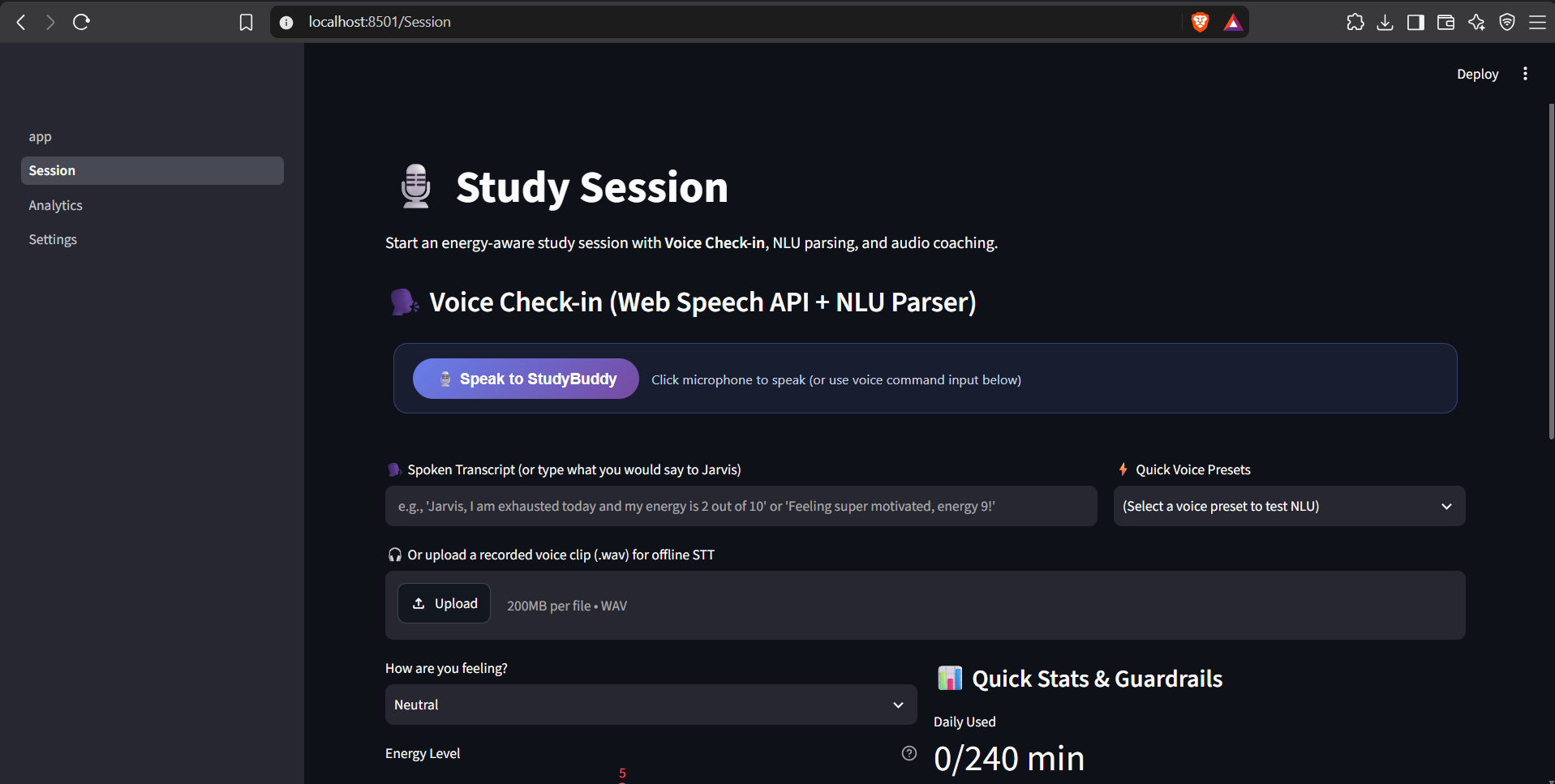
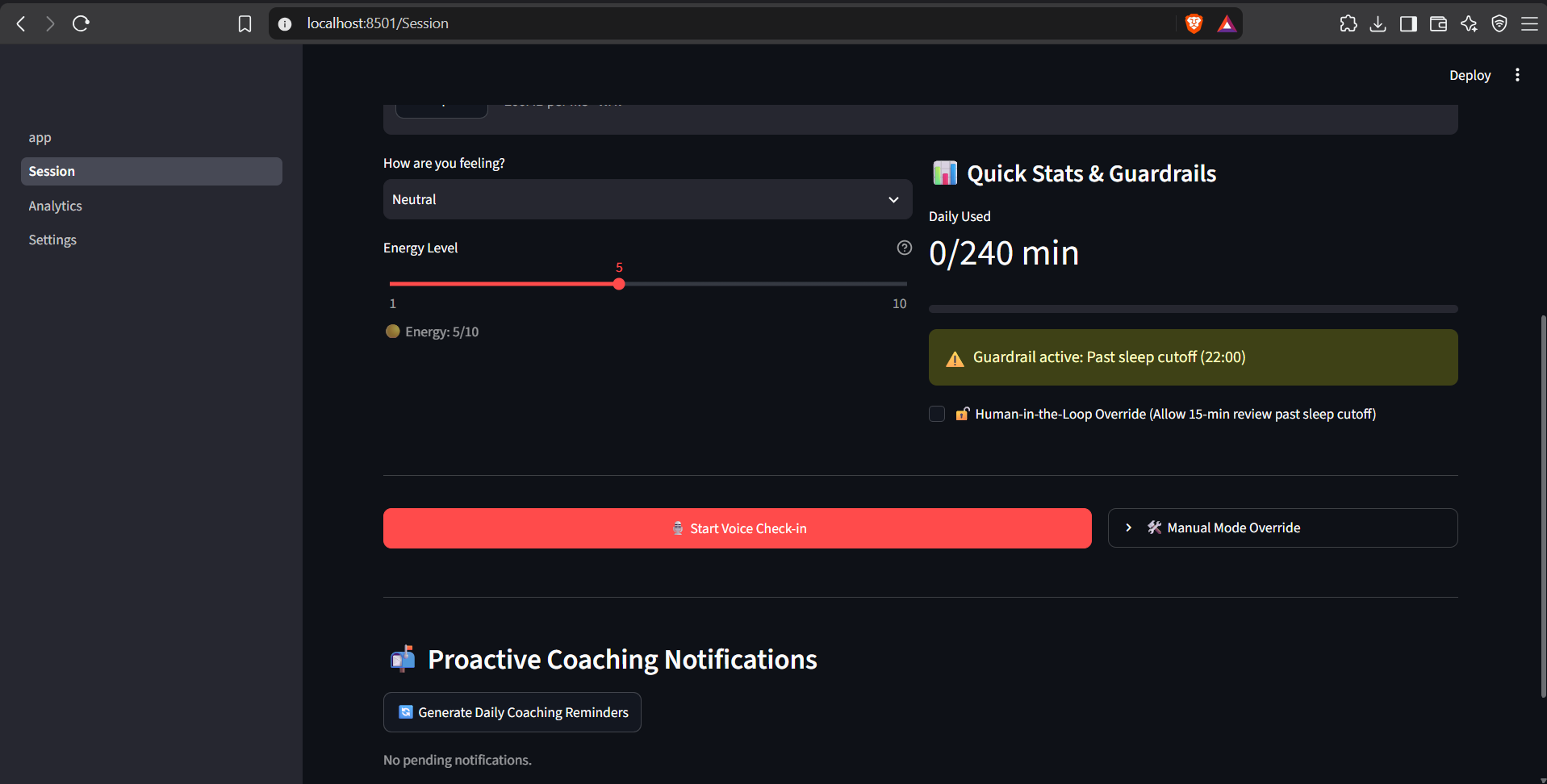
UI1(Session)
-
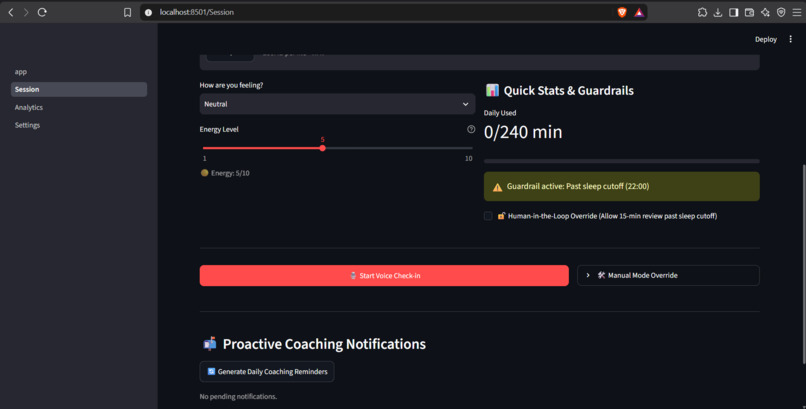
UI2(Session)
-
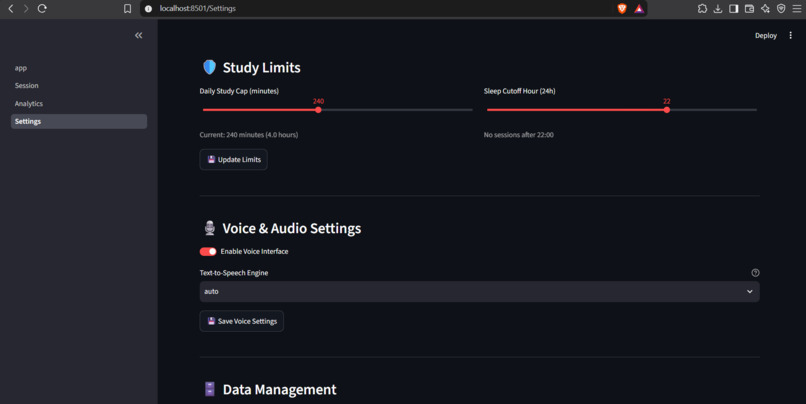
UI6(Settings)
-
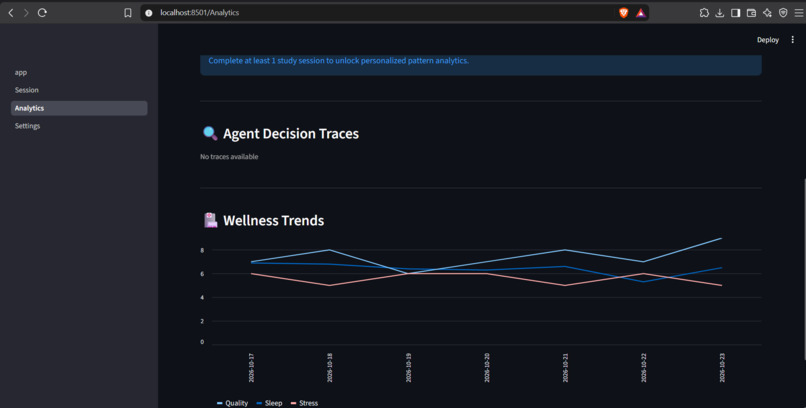
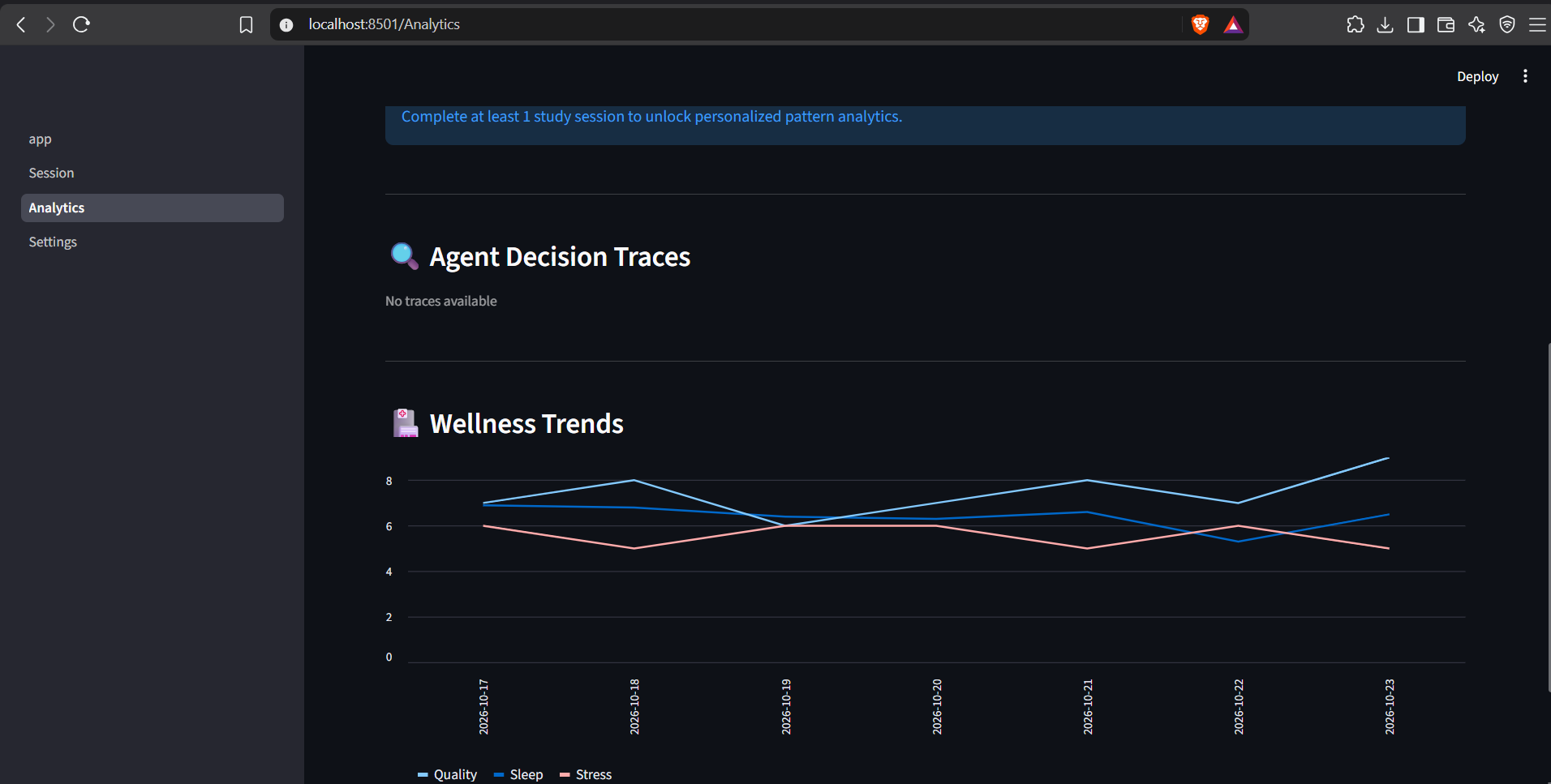
UI4(Analytics)
-
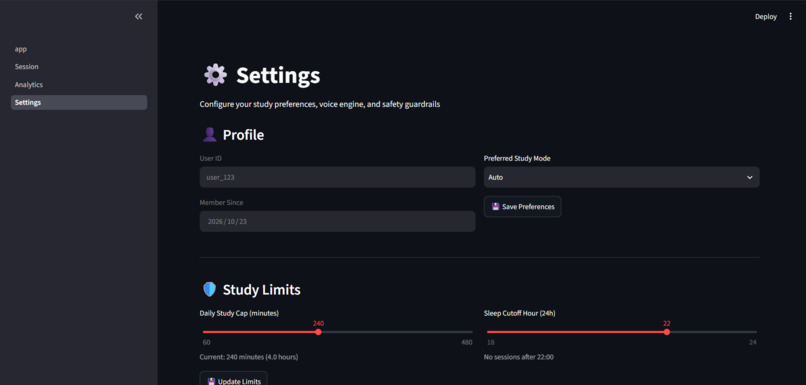
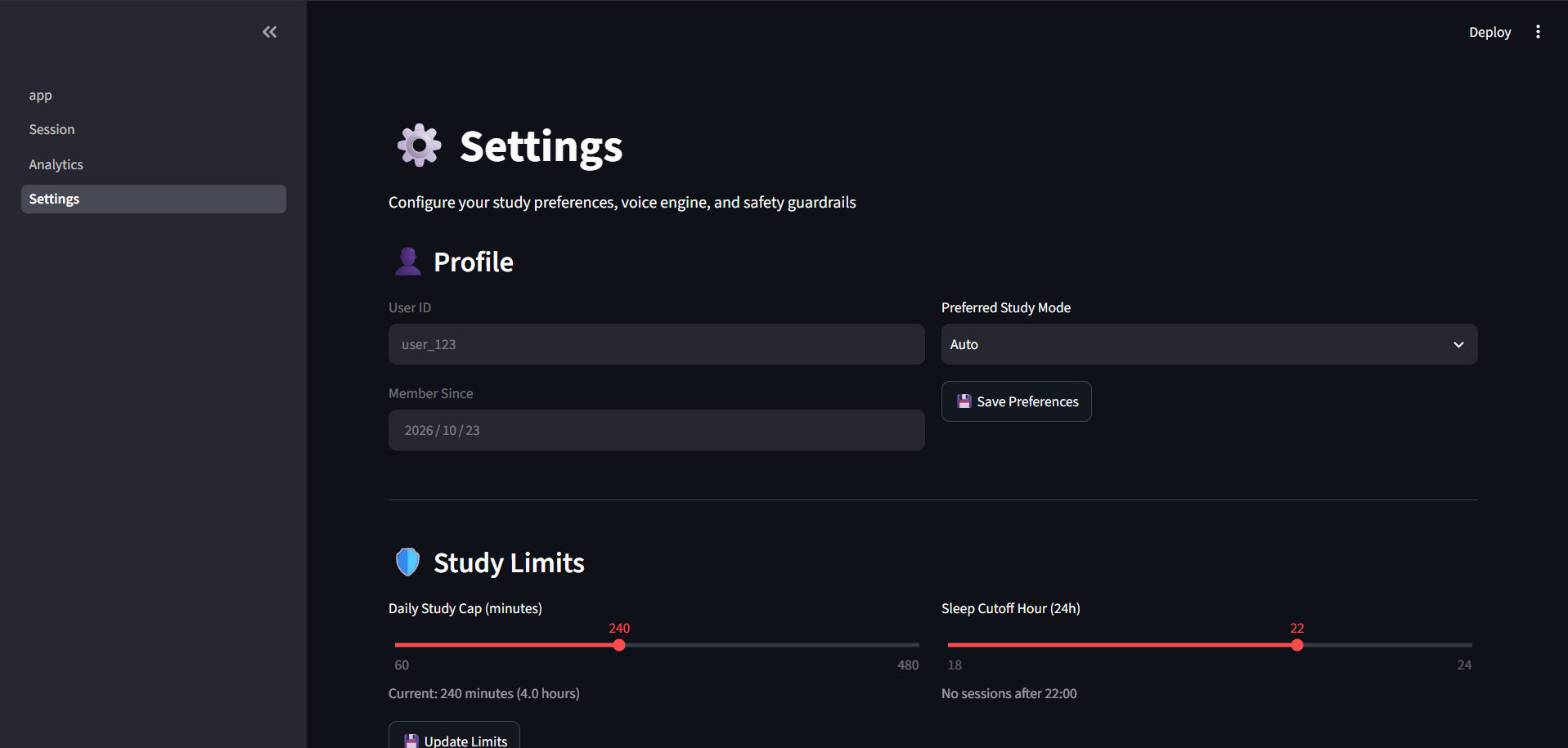
UI5(Settings)
-
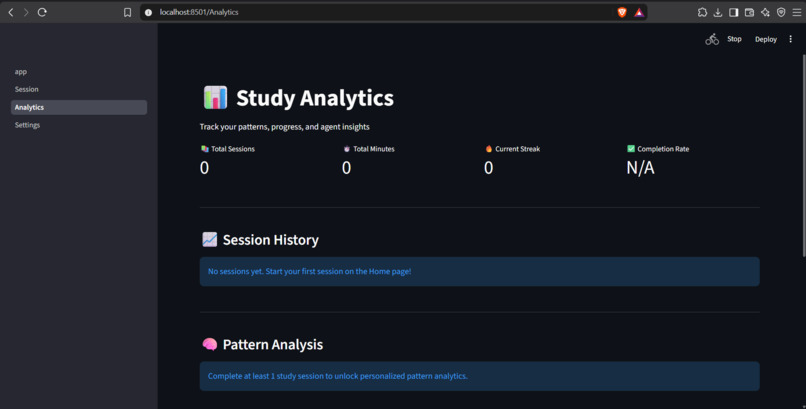
UI3(Analytics)
-
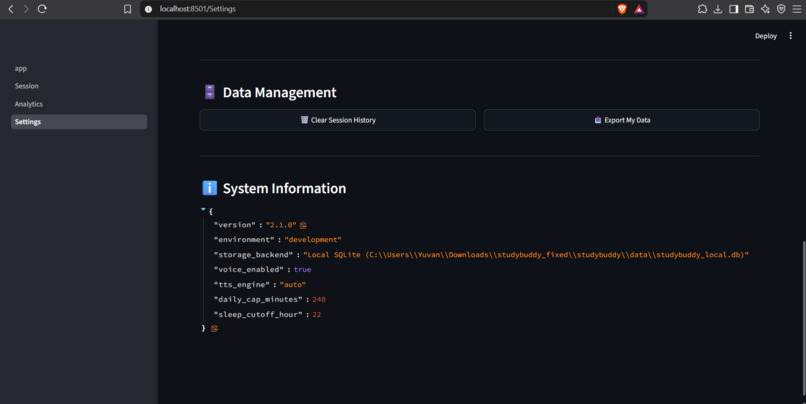
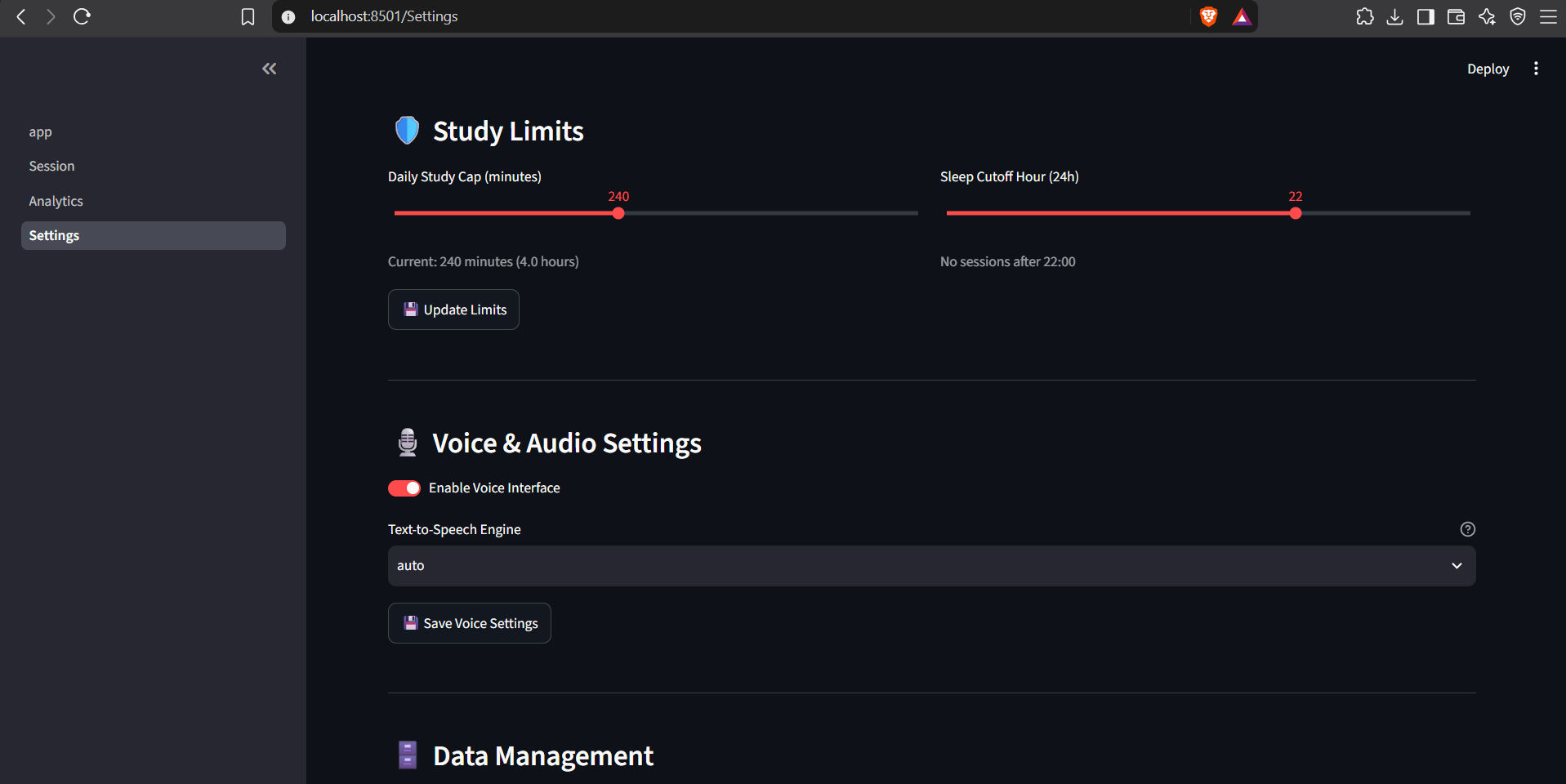
UI7(Settings)
Inspiration
Student and developer burnout is a physiological problem disguised as a time-management problem. Traditional study timers (such as standard Pomodoro clocks and static voice timers) treat every day identically—whether you slept 8 hours and feel sharp, or slept 4 hours and are running on fumes. Pushing through severe sleep debt and cognitive exhaustion leads to diminishing returns, frustration, and eventual burnout.
We built StudyBuddy to turn Alexa+ into an empathetic, physiologically aware study coach that orchestrates across wearable vitals, adaptive cognitive planning, and hard circadian safety guardrails—while maintaining cross-session learning memory.
What it does
StudyBuddy goes beyond a single-turn question-answering bot by running an autonomous multi-agent pipeline over the official MCP Spec 2025-11-25 (Streamable HTTP):
- Natural Language Voice Check-In: Students speak naturally ("Alexa, ask StudyBuddy—I'm exhausted today and my energy is 2 out of 10"). StudyBuddy extracts mood, energy (1–10), and user intent to trigger the supervisor agent.
- Autonomous A2A Physiological Discovery: The Supervisor queries the
mcp-wellness-agentworker over Agent-to-Agent (A2A) protocols for sleep duration, sleep quality, resting heart rate, and circadian metrics. - Adaptive Cognitive Load Planning: Dynamically maps physiological recovery against student mood to recommend evidence-based study rhythms:
- Overkill Mode: 50 min deep work / 10 min break × 3 blocks (high energy + optimal sleep)
- Sustenance Mode: 25 min focus / 5 min break × 4 blocks (standard Pomodoro)
- Low Mode: 15 min focus / 5 min break × 2 blocks (moderate fatigue)
- Custom / Rest Mode: 10 min light review or mandatory recovery (sleep deficit)
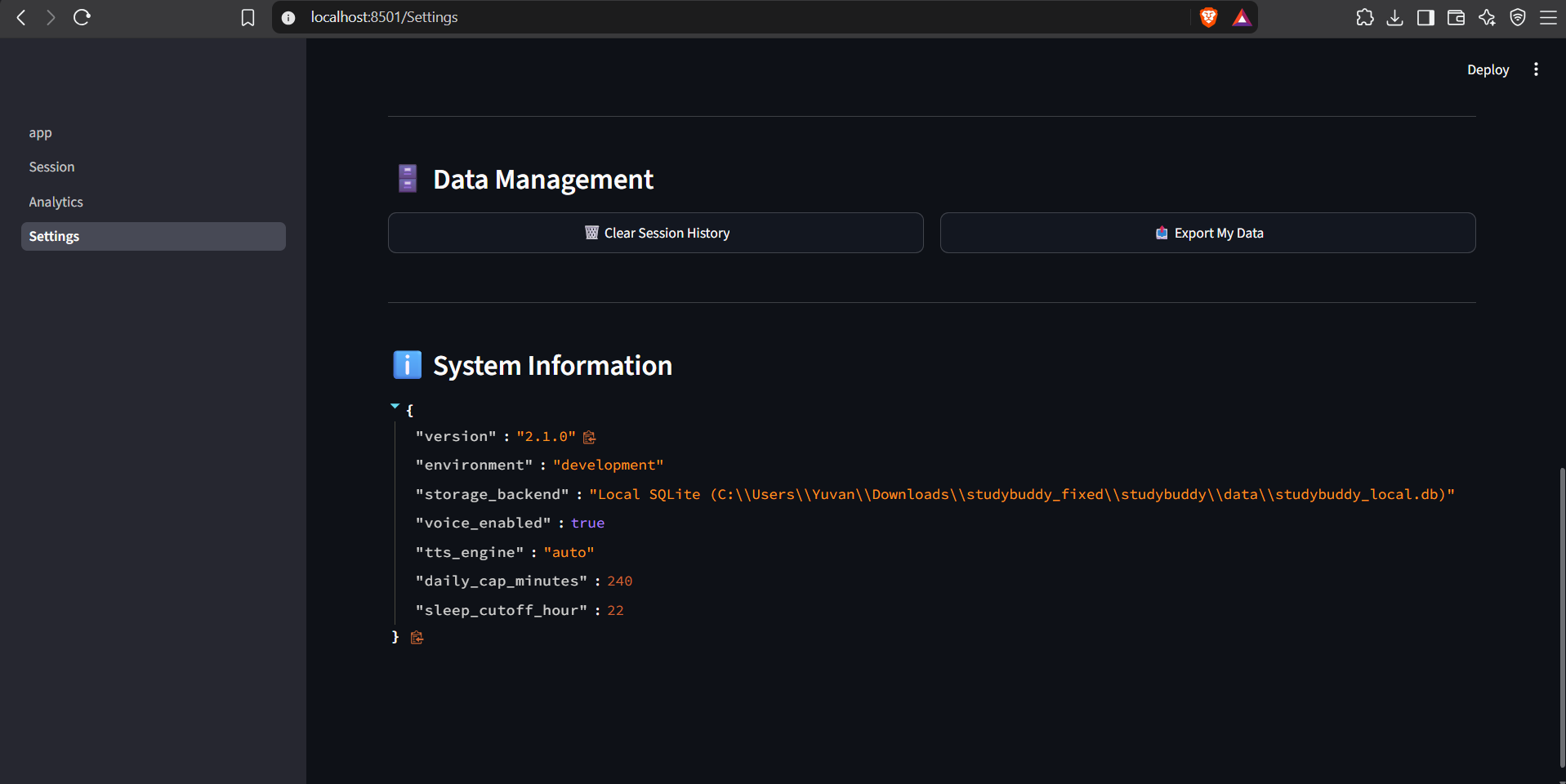
- Dual-Layer Burnout Guardrails: Enforces non-negotiable health rules: a 240-minute daily study cap, a 22:00 sleep cutoff (with an audited 15-minute Human-in-the-Loop Override option), a 4.5-hour minimum sleep threshold, and consecutive-day burnout warnings.
- Alexa+ Multimodal Experiences: Generates structured
alexa_plus_cardand 3-cardalexa_plus_carouselpayloads formatted for Echo Show and Alexa+ devices, paired with Claude 3 Haiku voice coaching audio. - Cross-Session Memory & Analytics: Stores session outcomes, atomic daily study counters, and multi-agent decision traces to adapt future recommendations to when the student is most productive.
How we built it
We built StudyBuddy using a multi-service AWS and Alexa+ serverless architecture:
- Alexa+ MCP Server (
src/server.py): Built with FastMCP and FastAPI, implementing MCP Spec2025-11-25over Streamable HTTP (POST /mcpwithMcp-Session-Idheader handling). - Amazon Bedrock (
bedrock-runtimeClaude 3 Haiku): Generates context-aware empathetic voice coaching scripts, performs second-tier LLM safety evaluations, and creates proactive notifications. - Amazon DynamoDB: Single-table design (
StudyBuddyData) withGSI1for fast time-series queries, atomic counters for daily study minute caps, and automated TTL expiration on agent traces. - Amazon CloudWatch & EventBridge: Emits custom metrics (
check_in_latency,agent_calls,user_engagement) into theStudyBuddynamespace and triggers scheduled 19:00 study check-in and 21:30 sleep cutoff reminders. - Unified AWS Lambda Entrypoint: Bridges both synchronous API Gateway V2 HTTP
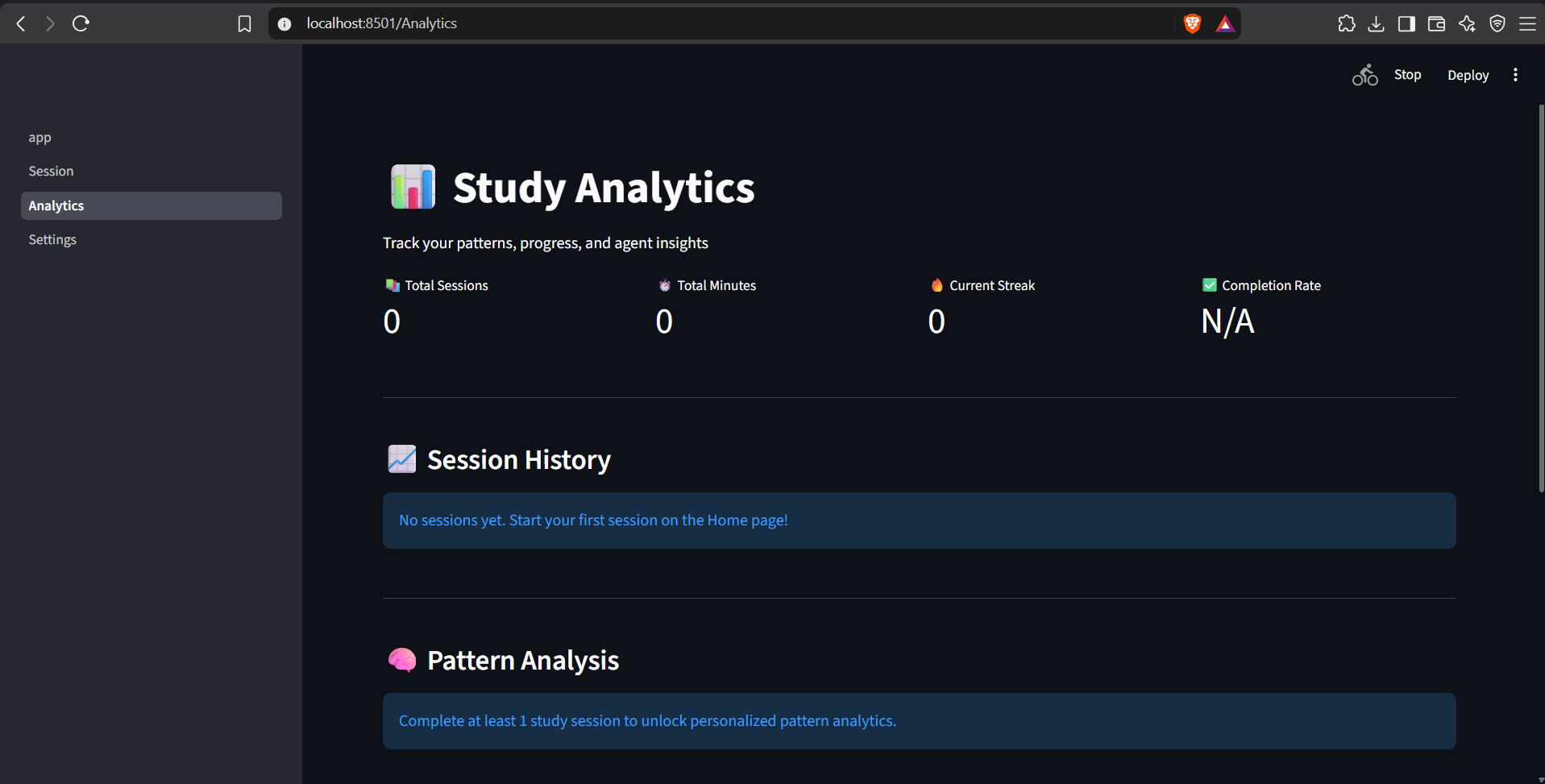
/mcptool calls and asynchronous EventBridge scheduled rules in a single stateless function. - Interactive Web App & Streamlit UI: Offers Web Speech API speech-to-text, an in-memory harmonic WAV synthesizer fallback, live focus timers, and real-time decision trace inspection.
Challenges we ran into
- MCP Streamable HTTP Transition: Upgrading from SSE transports to the official
2025-11-25Streamable HTTP standard required custom session header (Mcp-Session-Id) preservation and unified JSON-RPC 2.0 dispatching across AWS Lambda and local containers. - Audio Pipeline & Sandbox Restrictions: Streamlit stripped
<script>tags when rendering raw HTML in React, causing browser voice APIs to fail. We re-engineered the audio bridge withst.components.v1.htmland built a zero-dependency harmonic WAV synthesizer in pure Python so audio generation never stalls offline. - DynamoDB Serialization & Local Development:
boto3strictly rejects Pythonfloatvalues, breaking Pydantic models. We implemented recursiveDecimalconversion and built an instantLocalSQLiteStorefallback to eliminate 12-second boto3 retry freezes when developing offline. - Balancing Safety with Autonomy: Hard cutoffs can frustrate students working on urgent deadlines. We designed a Human-in-the-Loop Override that logs user intent to CloudWatch while capping late-night overrides to 15 minutes.
Accomplishments that we're proud of
- 21 / 21 Passing Unit & Integration Tests: Comprehensive test coverage spanning multi-agent planning, safety downgrades, MCP
2025-11-25JSON-RPC calls, EventBridge handlers, and CloudWatch metrics. - True Multi-Agent Collaboration: Orchestrating distinct, decoupled agents (Wellness, Planner, Safety, Supervisor) that can veto and adjust each other's outputs based on real physiological data.
- Dual-Licensed Open Source Contribution: Extracted and published
mcp-wellness-agentunder the PolyForm Noncommercial 1.0.0 and GNU AGPLv3 licenses, giving the community a plug-and-play MCP server for wearable vitals.
What we learned
- How to design and structure multimodal card and carousel payloads for the new Alexa+ Model Context Protocol ecosystem.
- How to combine deterministic rule engines (
SafetyAgent) with generative LLMs (Amazon Bedrock) to build reliable, safe AI workflows. - How single-table DynamoDB designs combined with EventBridge scheduled rules create cost-effective serverless agent architectures.
What's next for StudyBuddy: Energy-Aware Voice Study Coach for Alexa+
- Direct Wearable OAuth: Connecting real-time Apple Health and Garmin API webhooks to
mcp-wellness-agent. - Bedrock Prompt Caching: Leveraging static system prompt caching to reduce token costs and achieve sub-300ms voice responses.
- Collaborative Study Rooms: Enabling study buddies to share anonymous energy levels and synchronise Pomodoro breaks over Alexa+ devices.
Built With
- alexa
- amazon-bedrock
- amazon-cloudwatch
- amazon-dynamodb
- amazon-eventbridge
- aws-api-gateway
- aws-cloudformation
- aws-lambda
- claude-3-haiku
- fastapi
- mcp
- model-context-protocol
- python
- streamlit
- web-speech-api

Log in or sign up for Devpost to join the conversation.