-
-
Icon image
-
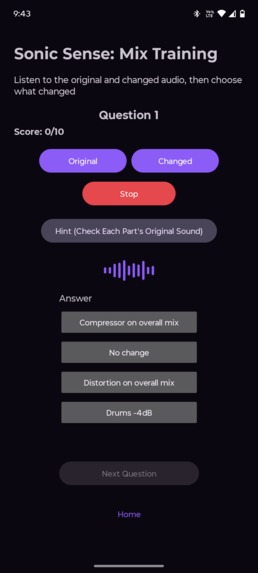
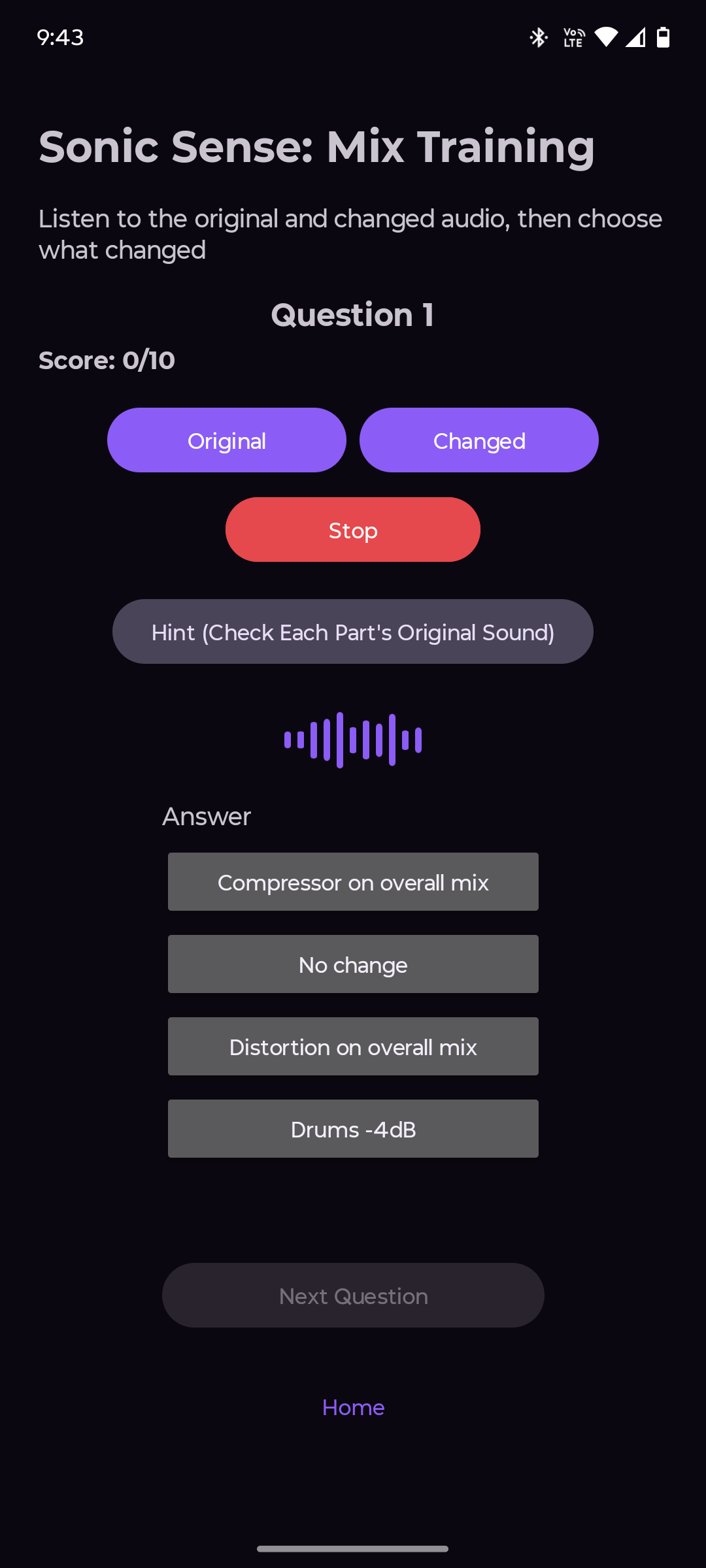
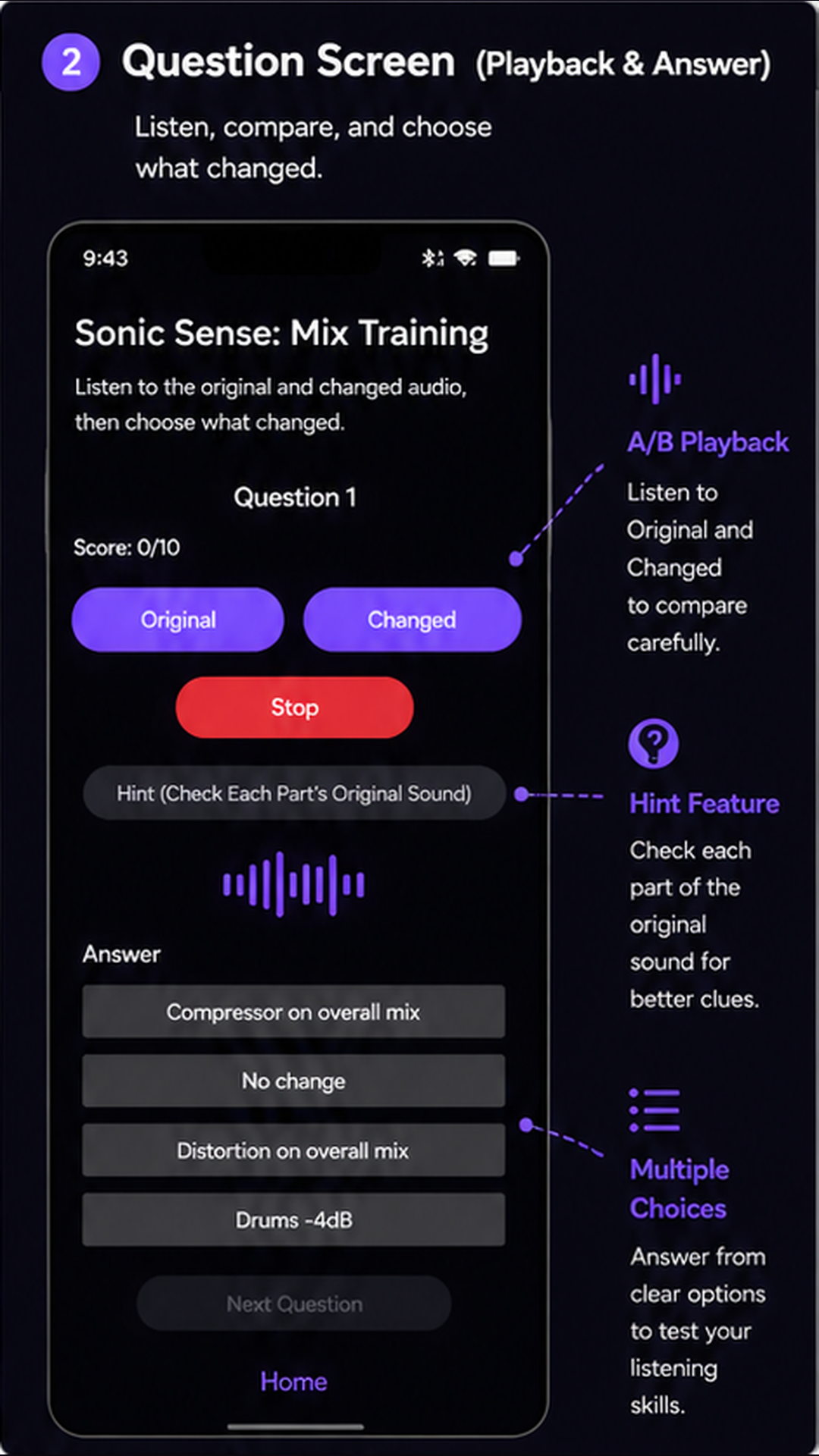
Full screen shot of question answer page
-
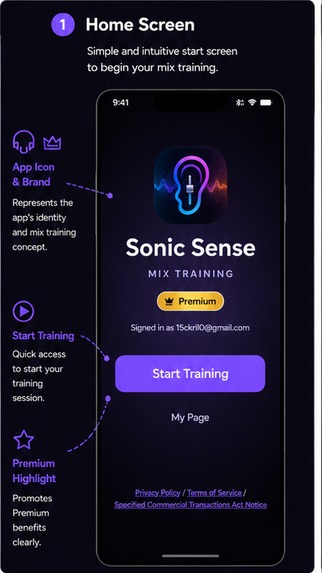
Home page
-
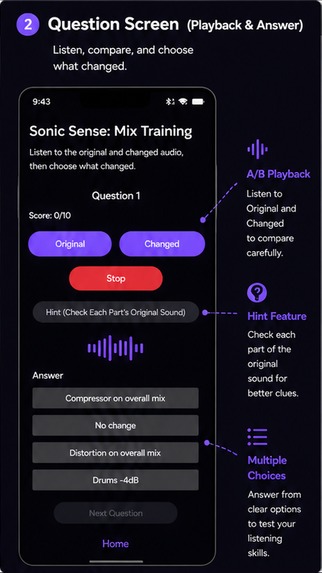
Question answer page
-
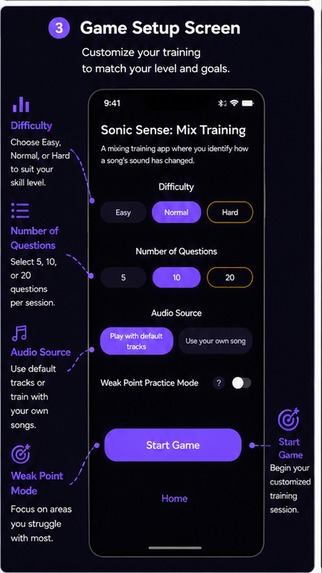
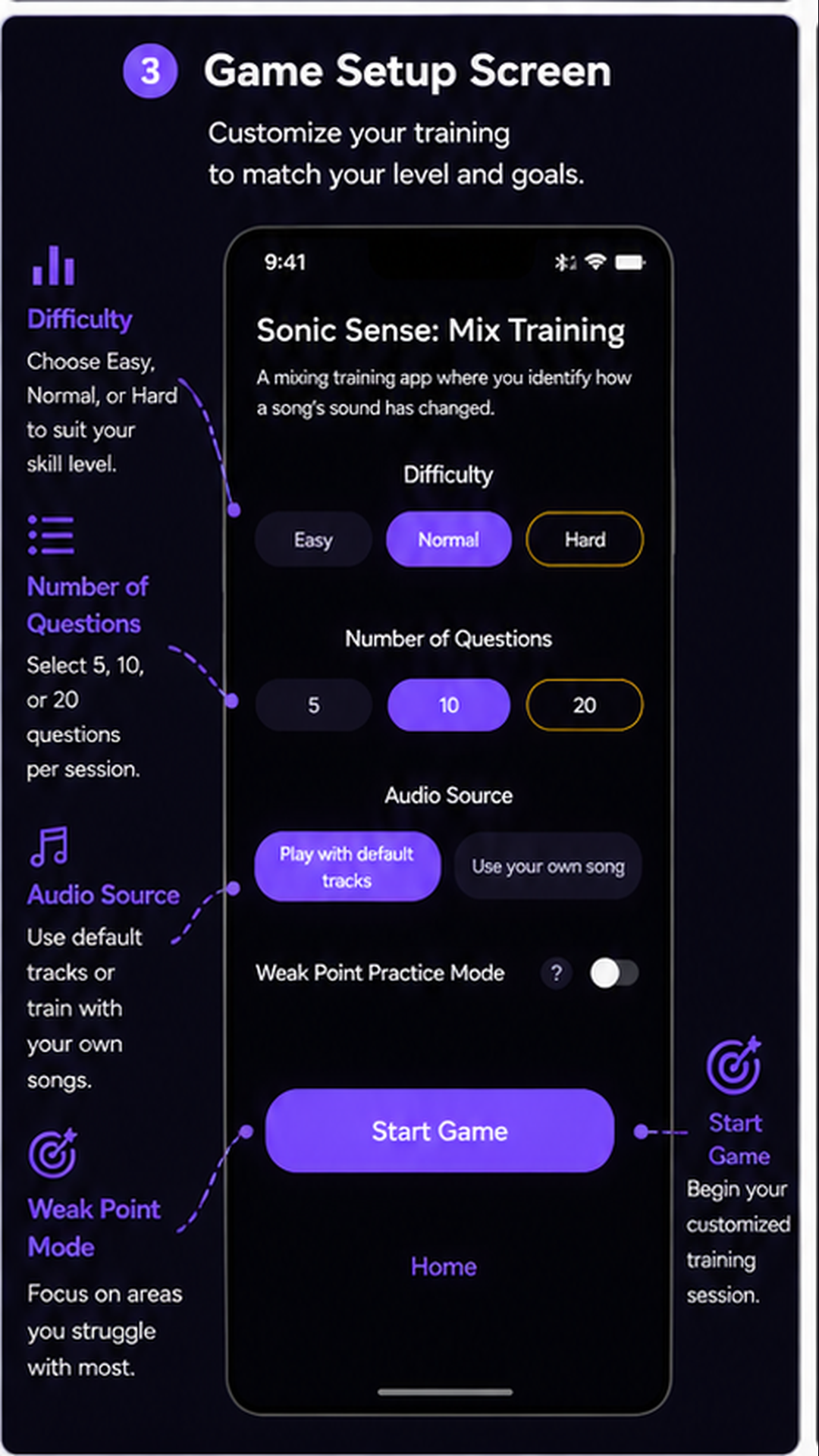
Question setting page
-
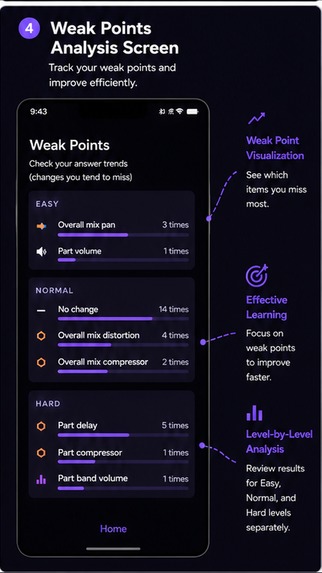
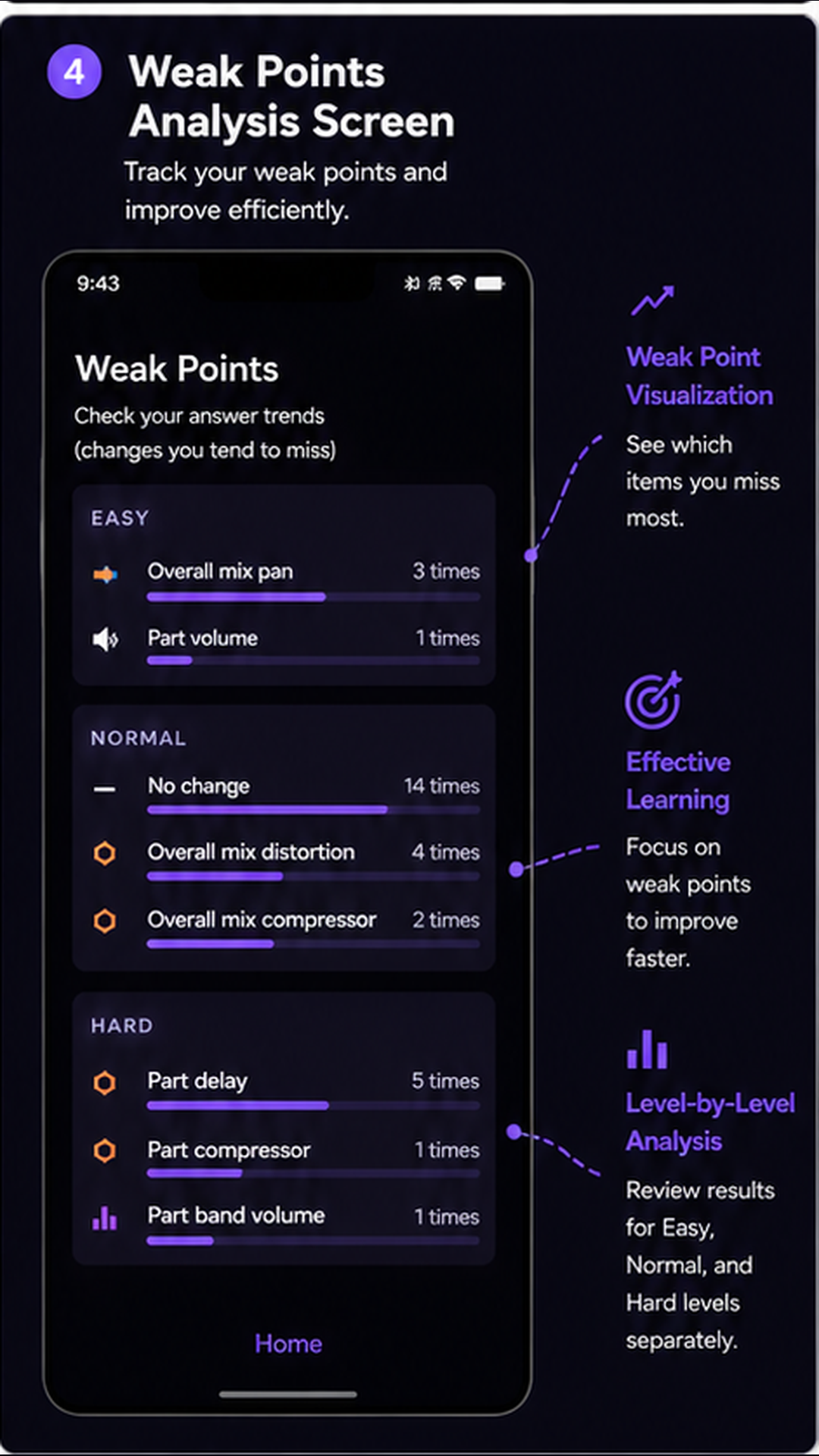
Weakness Analysis page
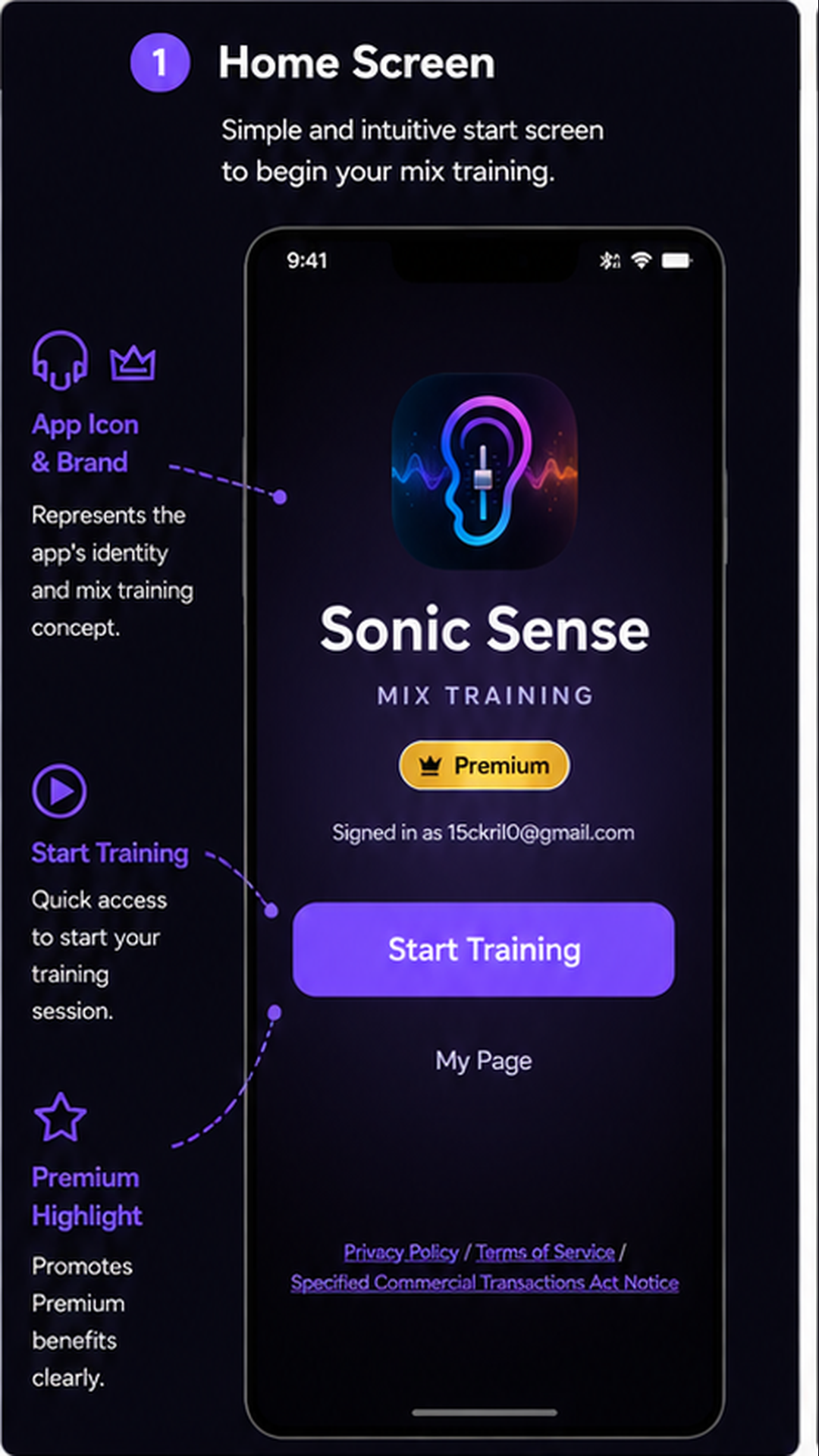
Inspiration
I enjoy mixing music as a hobby, and in recent years, with the spread of AI-powered automation plugins and other technologies, I have felt that it has become increasingly important for producers themselves to develop the ability to recognize subtle changes in sound, or "critical listening" skills.
I developed Sonic Sense with the aim of creating a game that allows engineers, music producers, and even music listeners to train the "ears" needed for mixing in a fun and efficient way.
Features
Basic Features (Free Version)
- Listening Quiz: Compare the original song with a mixed version and identify changes in sound, such as EQ, compression, and panning.
- Flexible Mode Settings: Customize the difficulty level and number of questions.
- Basic Weakness Overcoming Mode: Prioritize questions from categories in which the user has a higher error rate.
Premium Features (Paid Version)
- Unlimited Play: Remove the daily play limit.
- High Difficulty Mode: Challenge yourself with the "Hard" difficulty and 20-question sessions.
- Upload Original Songs: Use your own music as quiz material for personalized training.
- Advanced Weakness Overcoming Algorithm: Analyze the user's answer patterns in greater detail and present questions optimized for their individual weaknesses.
- Incorrect Answer Review: Review incorrect answers and visualize areas where the user needs further practice.
Development Process
I developed the Android app using Kotlin and the backend API using Python in parallel, allowing me to rapidly refine the entire product.
I fully adopted the latest AI development tools, including Claude Code, VSCode with GitHub Copilot, and Android Studio with Gemini Agent. I implemented an AI-driven development workflow in which I used an Android emulator to test the app and Swagger UI to verify the API, repeatedly testing and correcting each feature as it was implemented.
Challenges Faced
Building the Authentication and Billing Infrastructure
One of the major challenges was integrating Firebase for account management and RevenueCat for subscription billing, both of which I had no prior experience with.
Rather than simply implementing the code, I repeatedly verified and adjusted the configuration across the Firebase Console, Google Play Console, and RevenueCat dashboard. This required coordinating multiple external services and ensuring that authentication and subscription states were correctly synchronized.
Stem Separation and Music Rights Management
For stem separation of user-uploaded music, I initially considered using the Moises API. However, because it was not available to individual developers, I adopted the open-source Demucs model as an alternative.
To improve processing performance, I locally cached the model during the build process. To avoid potential music rights issues with quiz content, I also used a paid Suno AI plan to generate original music specifically for the app.
Overcoming the Android Closed Test Requirement
The biggest hurdle was Google's requirement for a closed test with 20 testers over 14 days before production release.
Because the hackathon period was limited to two months, I quickly utilized the Testers Community to meet the requirement without delaying the release. I then rapidly incorporated tester feedback into UI/UX improvements and successfully released the app on schedule.
Proud Achievement
I am particularly proud that I was able to complete an app of a quality that I personally "would want to use immediately" within a short and intensive development period.
In particular, I carefully tuned the quiz parameters, including the amount of dB change and frequency-band adjustments, to create an engaging level of difficulty that simulates the subtle changes produced by actual mixing plugins.
I also focused on making Sonic Sense feel like a professional training tool rather than simply a casual game. Features such as the ability to upload original music for personalized training, sophisticated UI design, and difficulty-based training modes were designed to support serious listening practice while maintaining the accessibility and enjoyment of a game.
Lessons Learned
Through this project, I found that fully utilizing AI-driven development can significantly accelerate complex implementation tasks, including audio processing, stem separation, and UI development, far beyond what I could achieve through manual implementation alone.
I also found AI-assisted quantitative verification particularly useful for evaluating the validity of quiz parameters. This allowed me to iterate quickly and fine-tune the difficulty based on measurable differences in audio.
Furthermore, by delegating peripheral functions such as authentication and subscription billing to specialized services such as Firebase and RevenueCat, I was able to focus my development resources on Sonic Sense's core value: the "listening and distinguishing experience."
Future Outlook for Sonic Sense
Based on tester reports, user feedback, and usage data, I plan to continue developing Sonic Sense in the following areas:
- Community Building: Create a platform where users can share mixing tips and custom questions they have created.
- Continued Content Expansion: Add new mixing effects and parameters, as well as AI-powered mixing advice.
- Accessibility Support: Further improve navigation and interaction for visually impaired creators, including enhanced accessibility support for TalkBack.

Log in or sign up for Devpost to join the conversation.