-
-
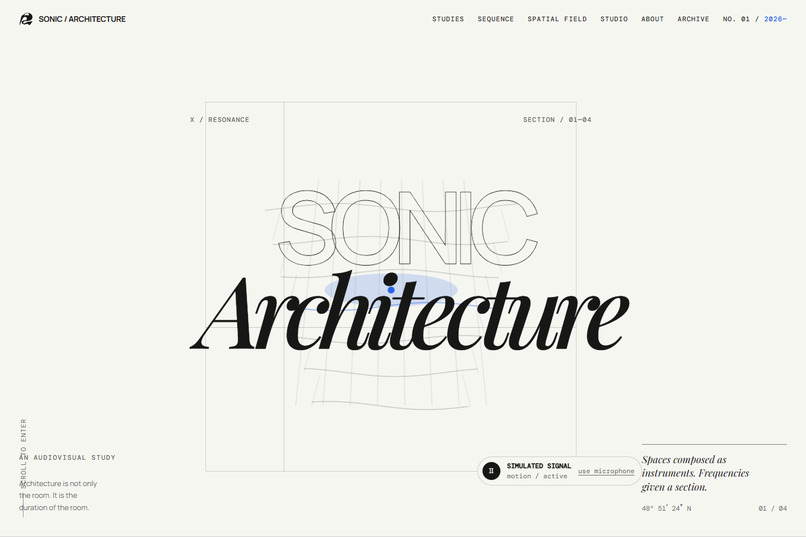
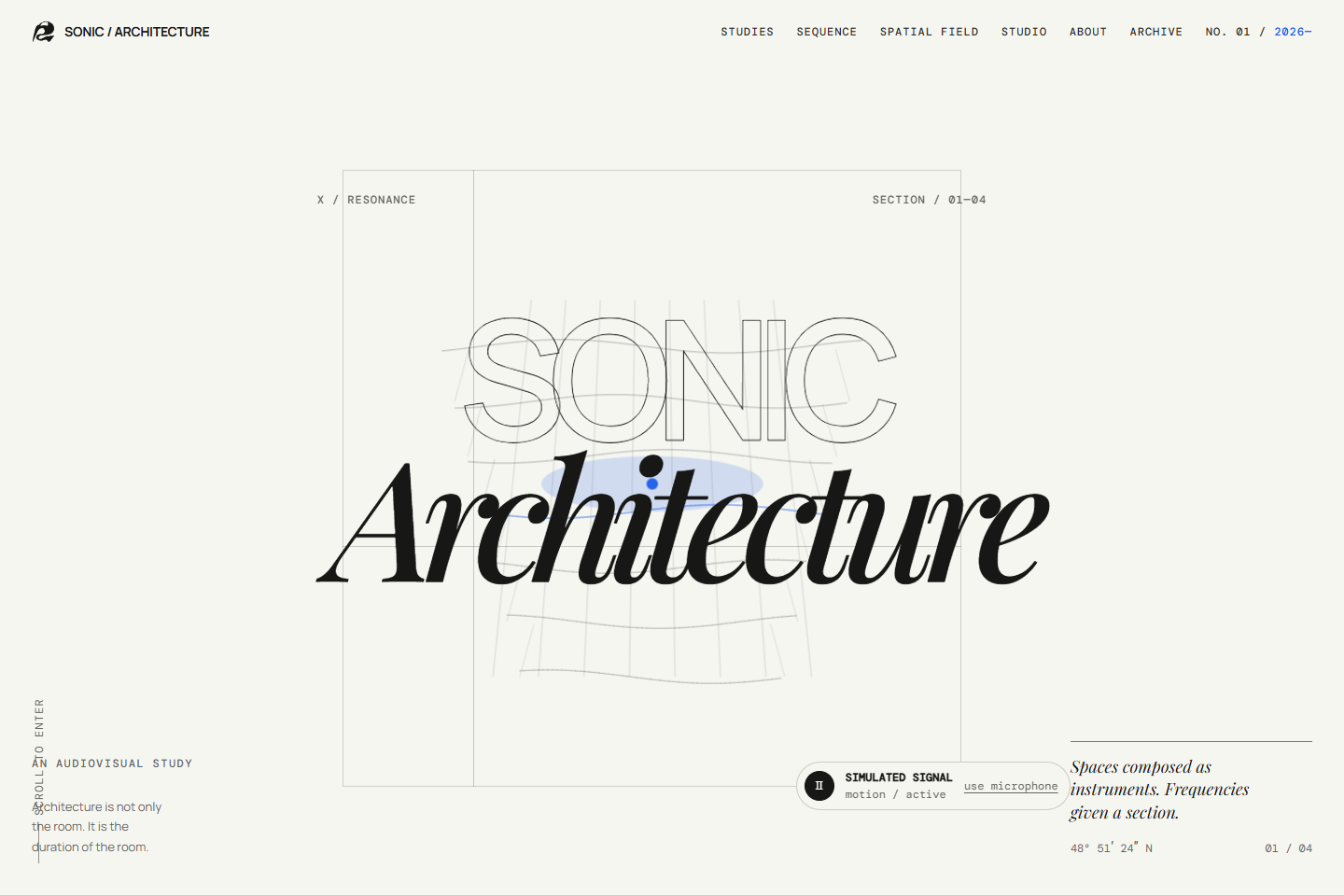
The Sonic Architecture Experience: Editorial homepage, official vector branding, audio study introduction, and starter prompt chips.
-
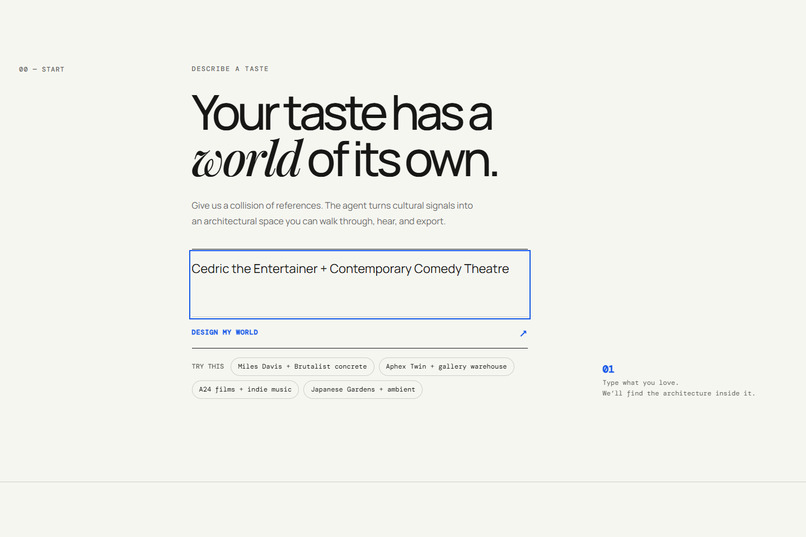
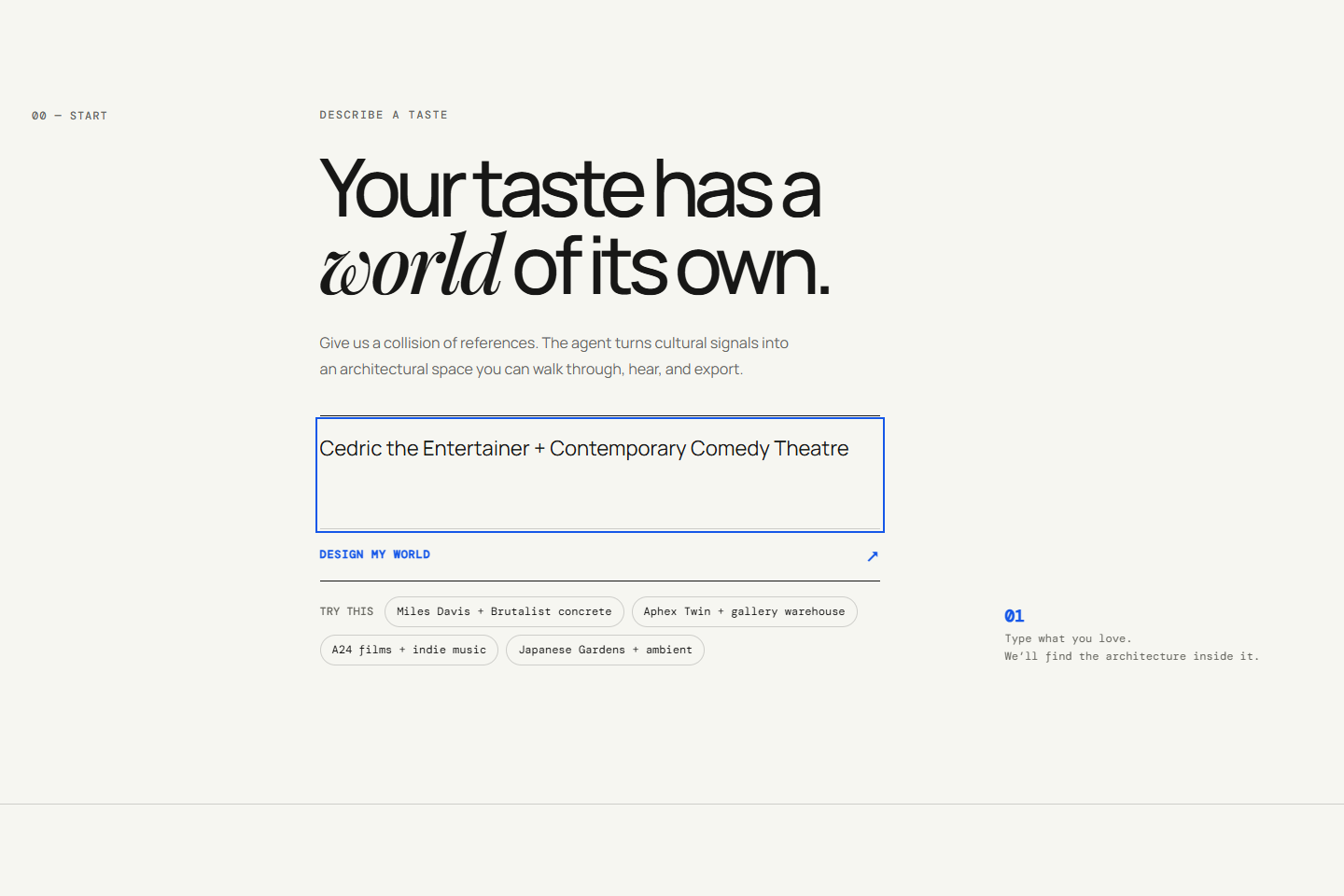
Cultural Creative Brief: Prompt intake interface capturing cultural references and architectural intent with active submission focus.
-
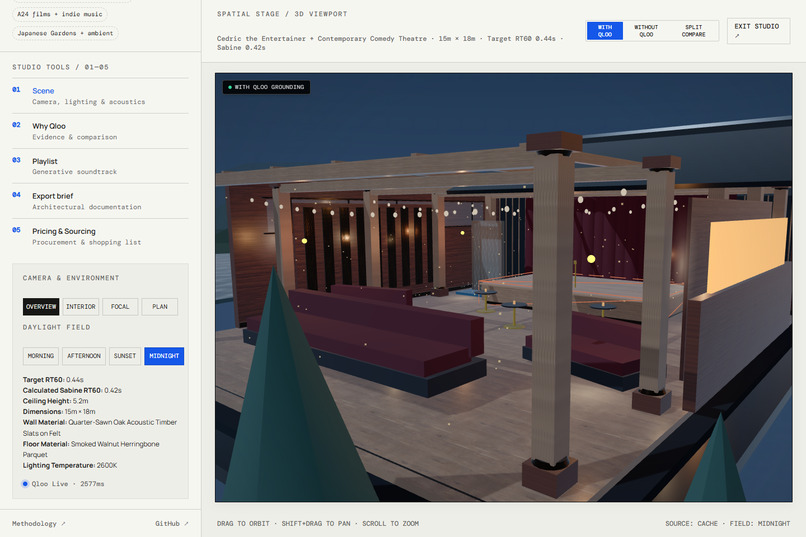
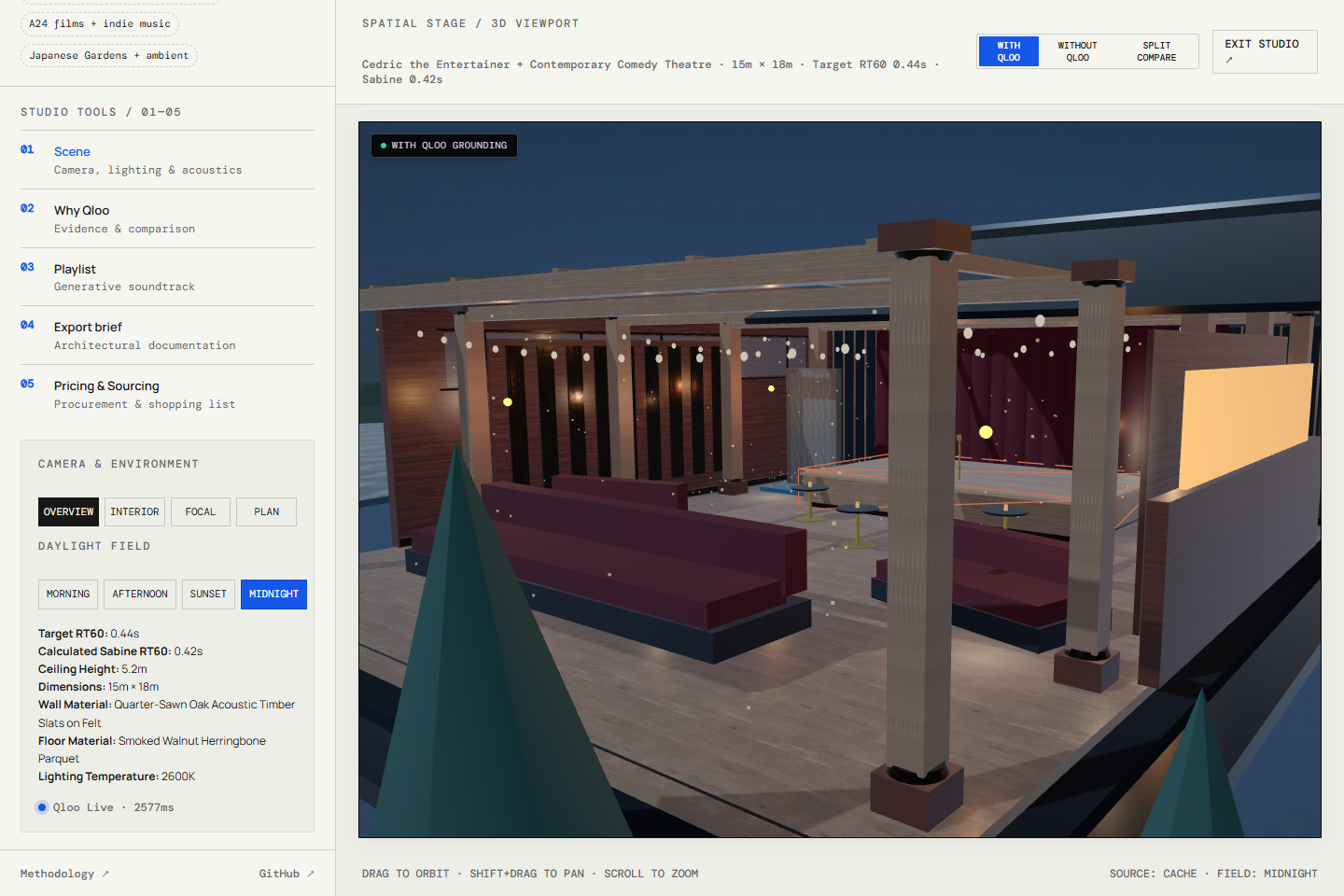
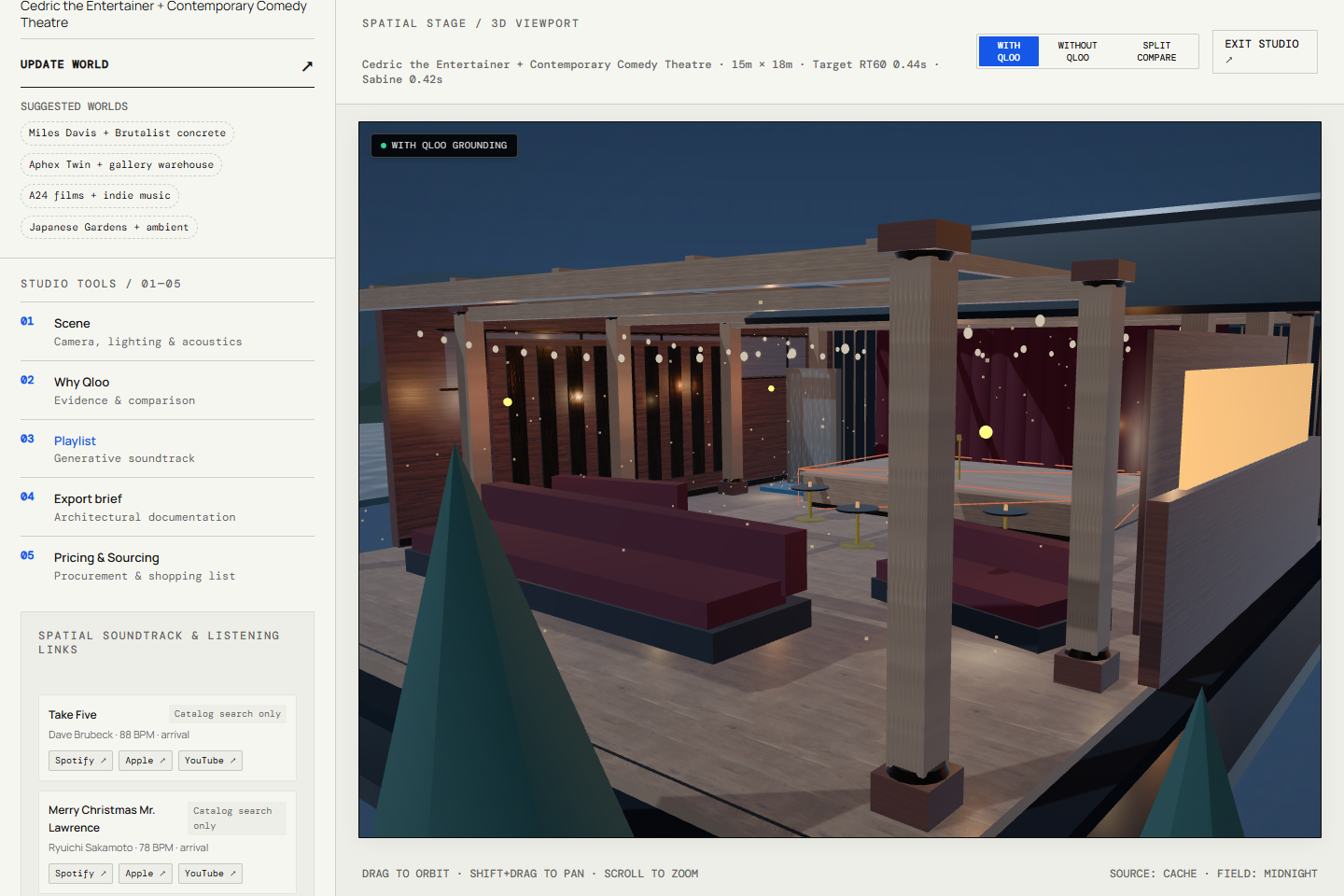
InteractThree.js WebGL canvas rendering thrust stage, vintage ribbon mic, ruby velvet drapery, and cabaret seating under midnight lighting.
-
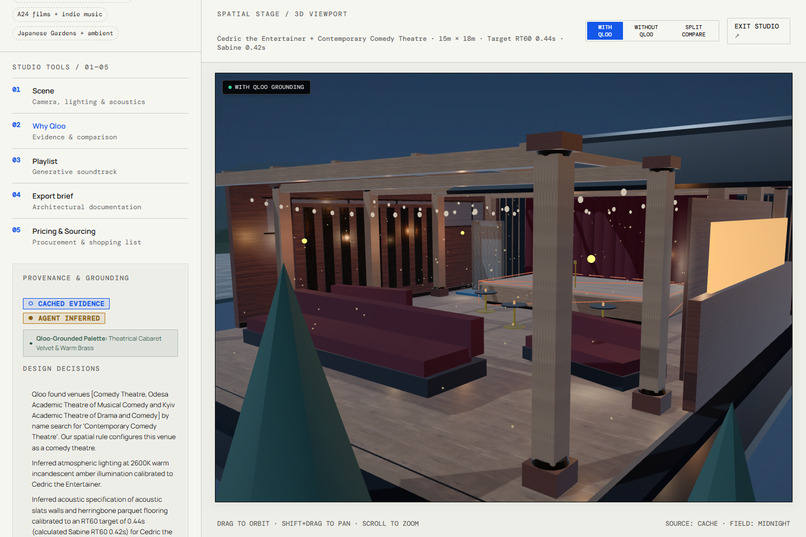
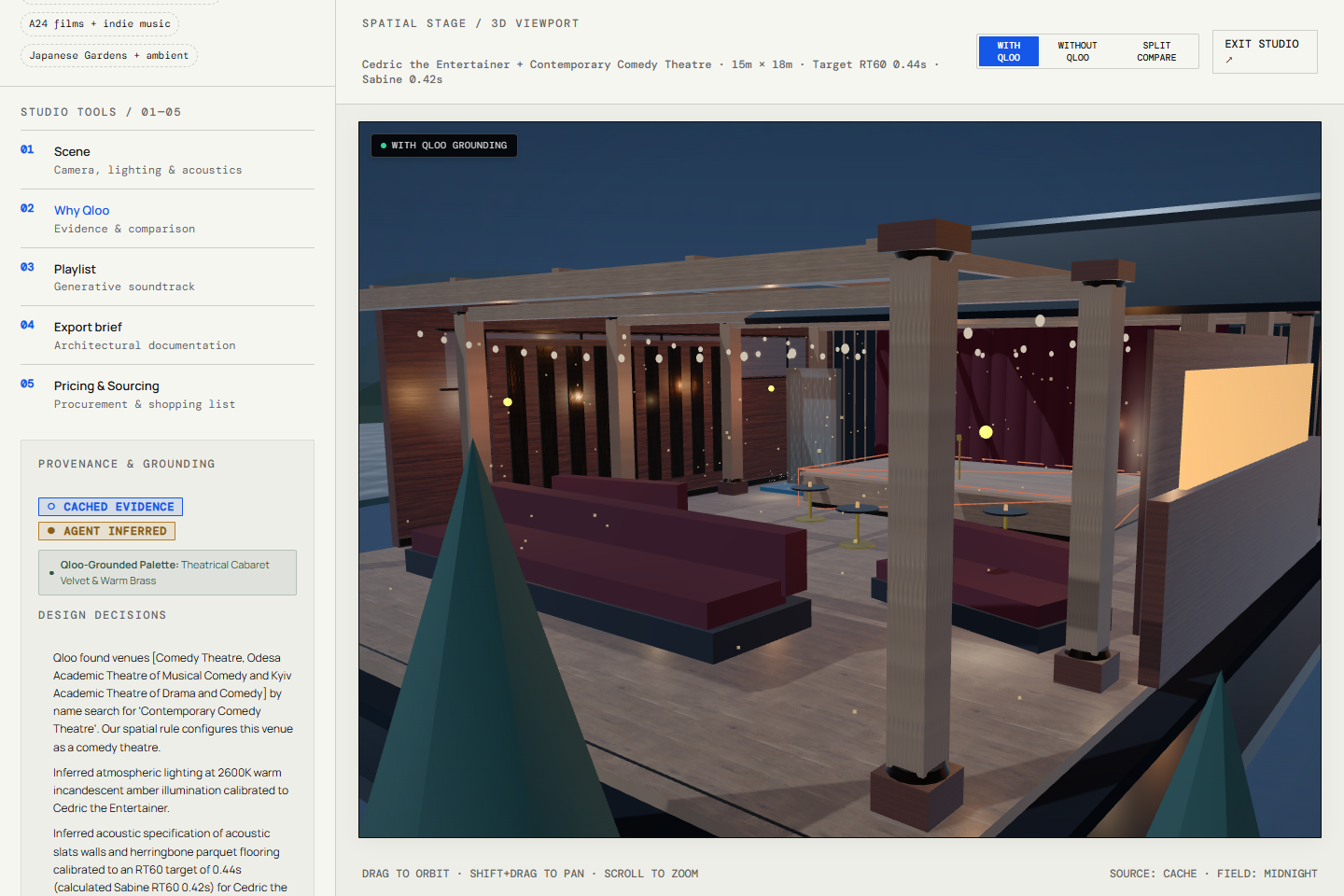
Qloo Live Provenance & Grounding panel displaying retrieved Qloo entities, venue affinity signals, and traced because-sentences.
-
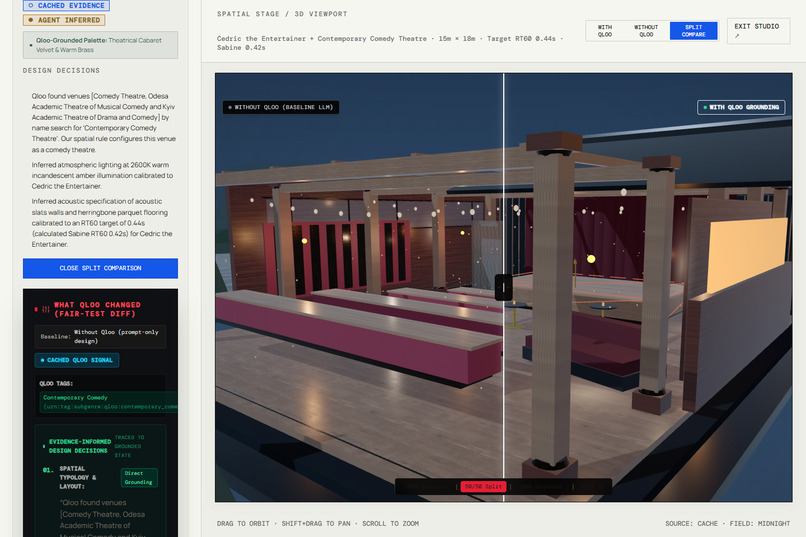
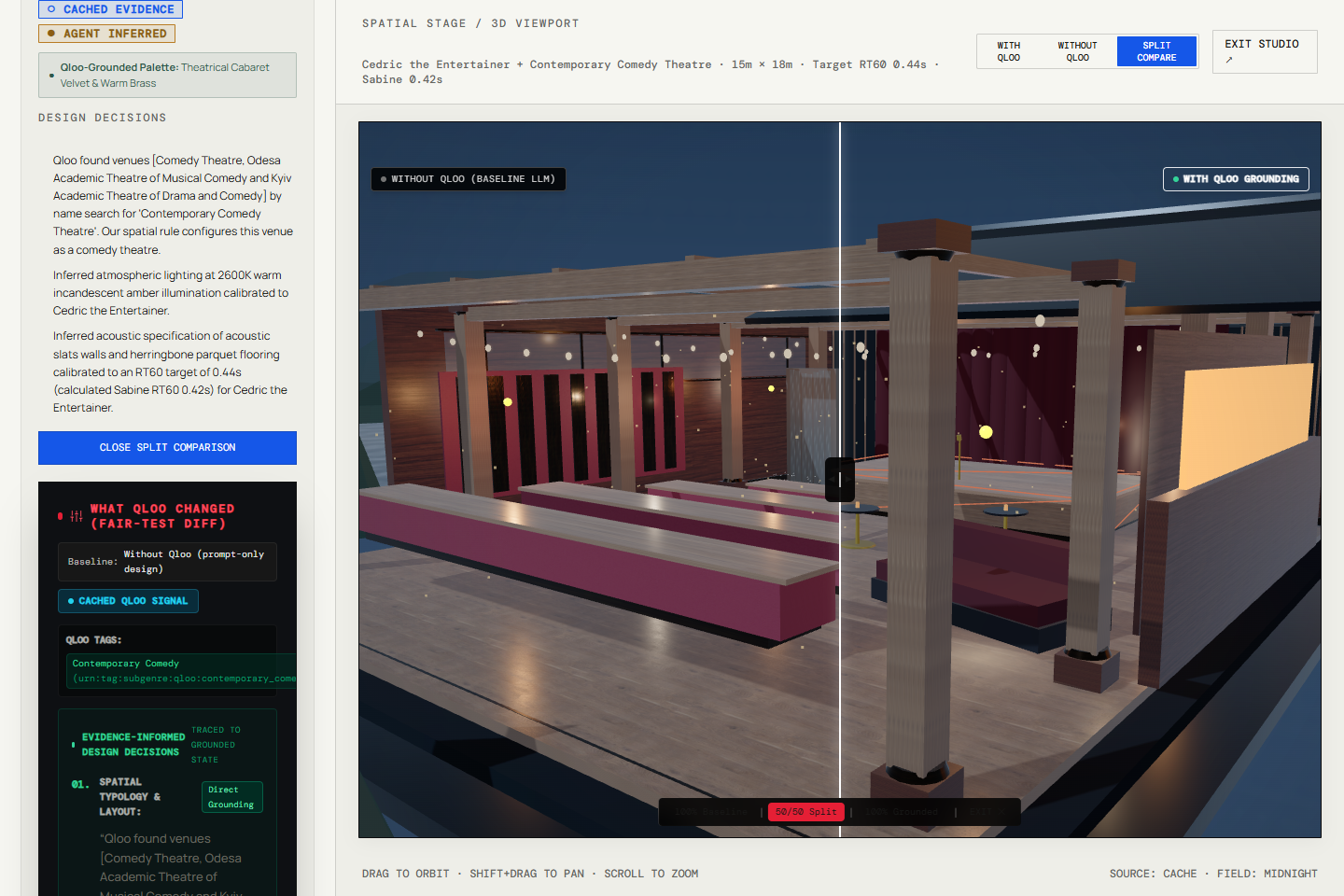
Split comparison between prompt-only baseline (The Apollo Mainstage) and grounded venue (The Cedric Revue) with 7 verified Fair-Test diffs.
-
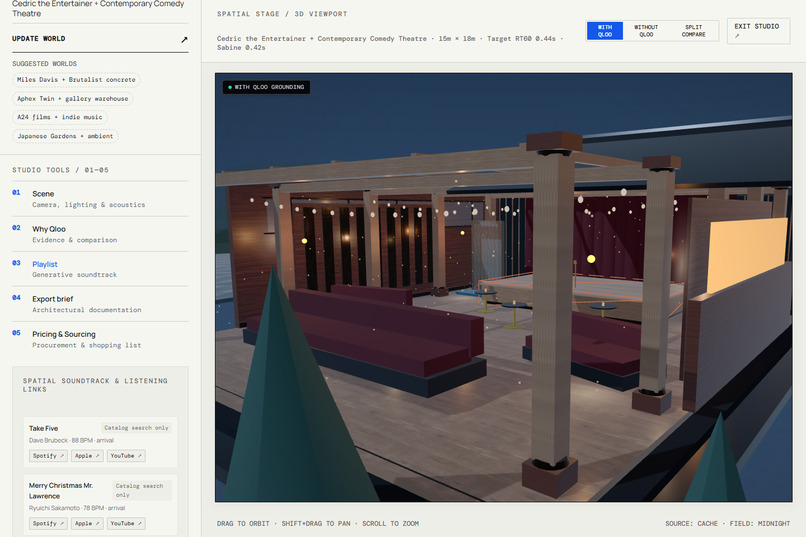
Four-moment musical narrative (Arrival, Warm-up, Peak, Afterglow), BPM/energy metadata, and audio preview controls.
-
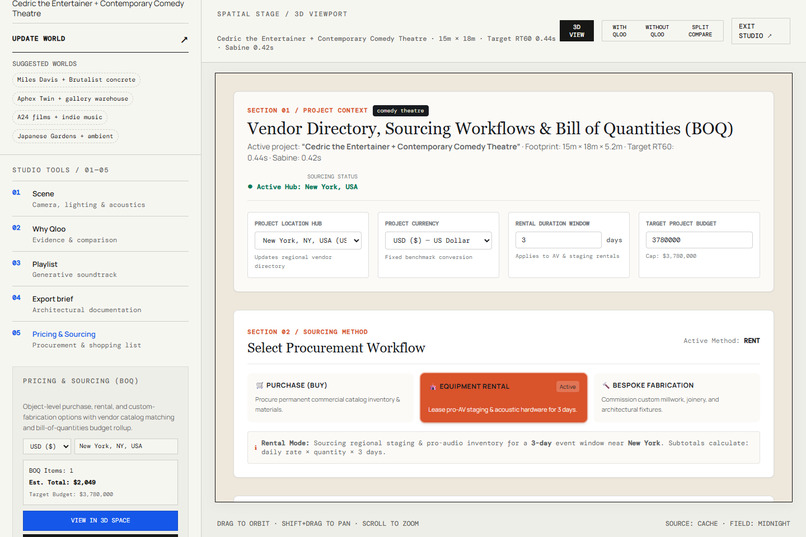
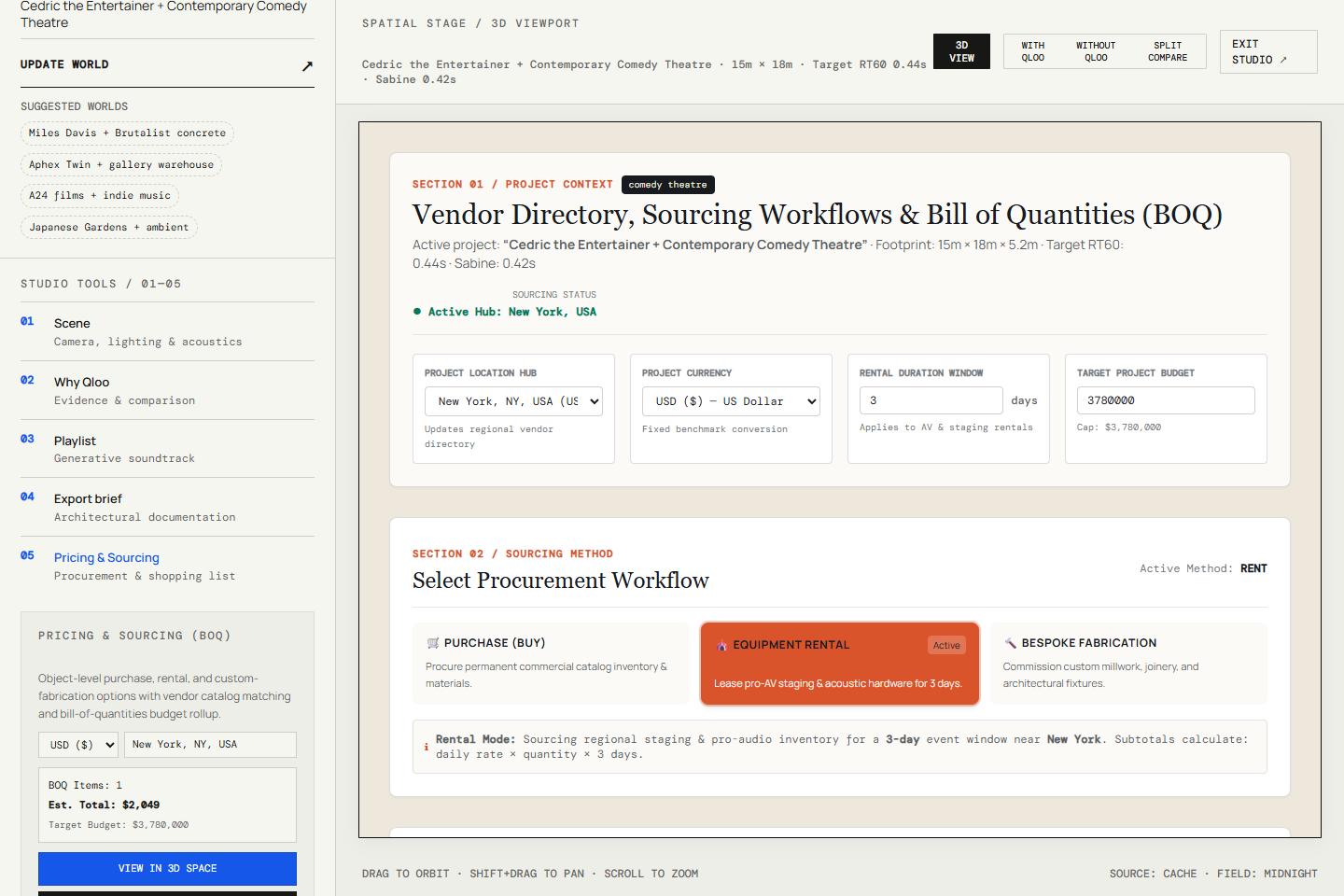
City hub (New York, USA), multi-currency toggle, budget config, BUY/RENT/CUSTOM sourcing options, and supplier search directories.
-
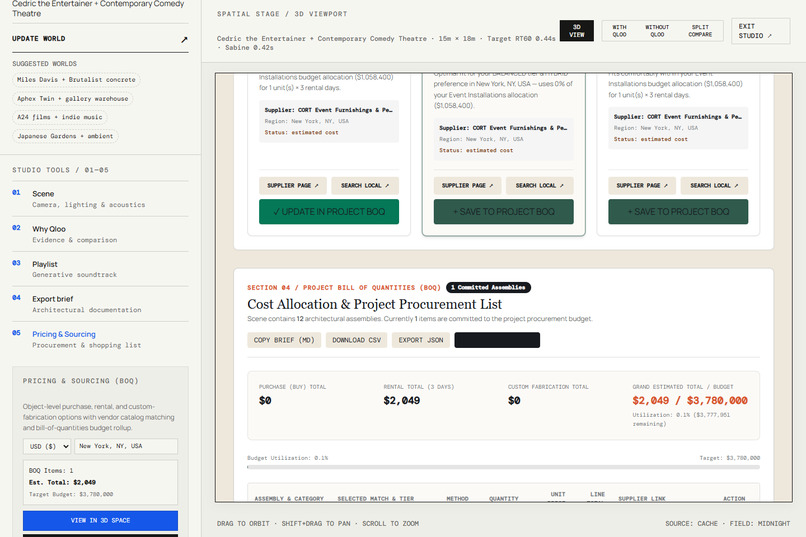
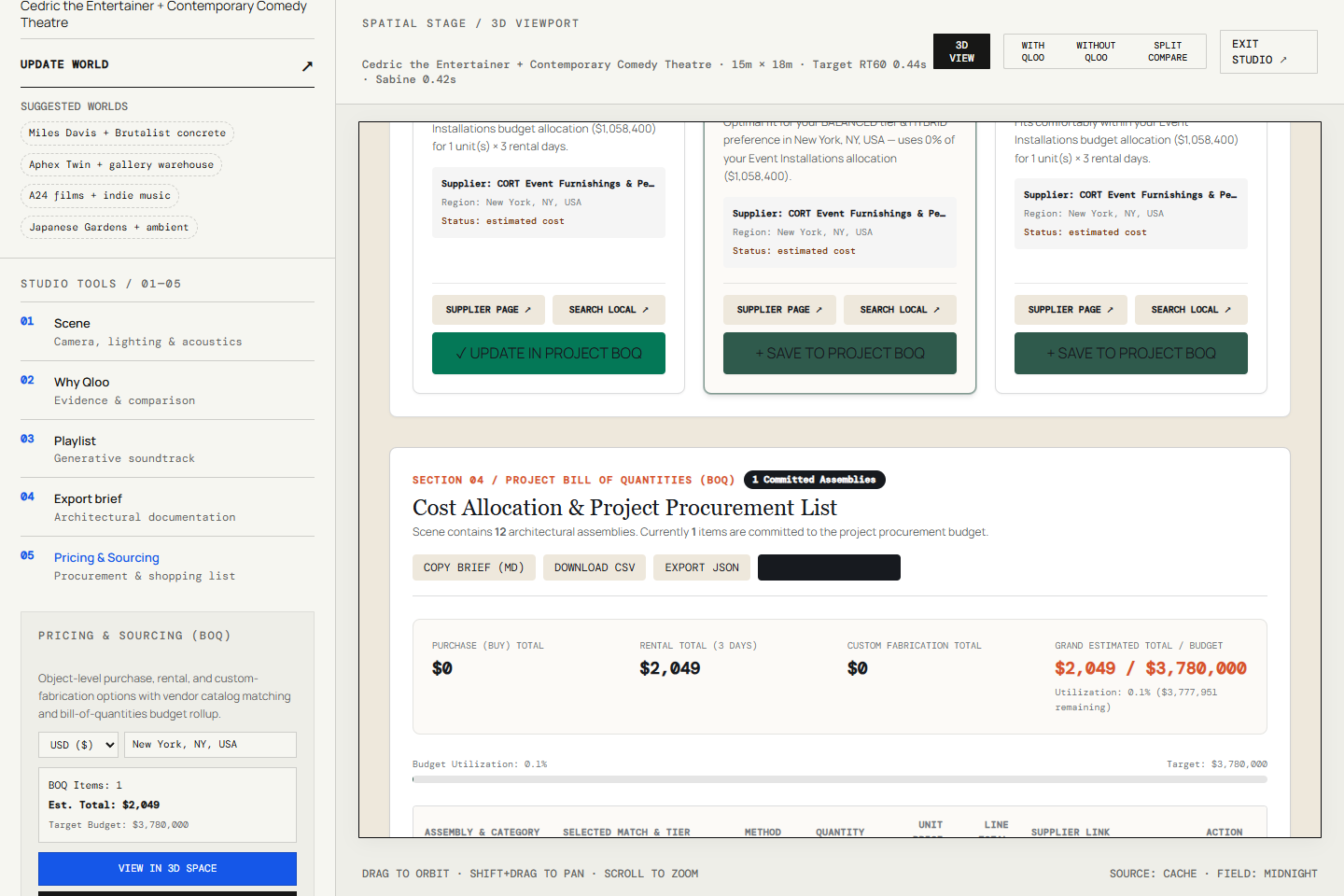
Itemized bill of quantities with committed assemblies, unit prices, line totals, subtotals by sourcing method, and budget utilization bars.
Sonic Architecture — Where Cultural Taste Becomes Spatial Experience
Inspiration: What if the things we love could shape the spaces we inhabit?
Think about the places that make us feel something. A jazz record that creates a sense of intimacy. A film whose visual world stays with us long after the credits. A song, an artist, or a cultural movement that gives us an entire aesthetic in our minds.
Now imagine translating that feeling into an actual architectural space.
We found an interesting gap between how people experience culture and how spaces are traditionally designed. We can describe what we love, collect references, create moodboards, and save inspiration, but translating those subjective preferences into a coherent spatial experience is still a difficult and fragmented process.
We wanted to explore whether cultural intelligence could make that connection more tangible.
That idea became Sonic Architecture.
What We Built
Sonic Architecture is an AI-powered, agent-orchestrated spatial design platform that transforms cultural taste and creative references into interactive 3D architectural environments.
Users can enter an open-ended creative brief containing references to artists, films, music, places, aesthetics, or the atmosphere they want to create.
The system interprets the brief, identifies relevant cultural references, retrieves cultural signals through the Qloo Taste API, and coordinates downstream architectural generation modules.
The retrieved evidence can inform:
- Spatial typology and geometry: How the space is organized, shaped, and experienced.
- Materials and furniture: Surface finishes, furniture assemblies, and architectural elements.
- Colour and atmosphere: Palettes, lighting temperatures, and environmental character.
- Acoustics: Acoustic treatments and Sabine-based RT60 design estimates.
- Soundtracks: Contextually relevant musical discovery and available audio previews.
The resulting specifications are translated into an interactive 3D environment built using Three.js.
But we wanted to go beyond simply generating a visually appealing room.
What Makes It Qloo-Powered?
Qloo is the cultural intelligence layer of Sonic Architecture.
Instead of treating references as isolated keywords, we use the Qloo Taste API to retrieve relevant cultural entities, affinity tags, and cross-domain insights.
Our application then evaluates the retrieved information and maps relevant signals into architectural design decisions.
For example, a creative brief referencing an artist or cultural movement can provide contextual information that influences the architectural interpretation. The system determines which retrieved signals are relevant to the requested space and passes them into the appropriate design-generation modules.
An important part of this process is transparency.
Sonic Architecture distinguishes between:
- Qloo Evidence: Information retrieved from the Qloo API.
- Agent-Inferred Decisions: Architectural interpretations informed by the available evidence and user brief.
- Rule-Based Decisions: Choices generated through deterministic architectural rules.
- Fallbacks: Decisions made when relevant cultural evidence is unavailable.
This distinction helps users understand not just what the system generated, but why.
What Makes the Workflow Agentic?
We designed Sonic Architecture as a coordinated, multi-stage spatial design workflow rather than a single prompt-to-image operation.
The workflow begins by interpreting the user's creative brief and identifying relevant cultural retrieval requirements.
It then invokes the Qloo integration, processes the available evidence, evaluates its relevance, and coordinates specialized architectural generation modules.
These modules produce spatial specifications, materials, furniture, lighting, acoustic estimates, and soundtrack recommendations where supported.
The resulting specifications are validated and passed to the 3D rendering environment.
The application also maintains provenance so that evidence retrieval, architectural inference, deterministic rules, and fallback decisions remain distinguishable.
Features We Explored
1. Interactive 3D Architectural Studio
Explore generated architectural environments and inspect their spatial arrangements, materials, lighting, furniture, and design specifications.
2. With Qloo vs. Without Qloo
Compare a prompt-only architectural baseline against a design generated with relevant Qloo cultural evidence. The Fair-Test Diff identifies changes across design categories using the actual generated outputs.
3. Evidence and Provenance
Explore the cultural evidence behind architectural decisions and distinguish retrieved signals from agent inference and deterministic design rules.
4. Soundtrack Discovery
Connect the spatial experience with relevant soundtrack recommendations, organized into different moments of an environment, with audio previews where available.
5. Pricing and Sourcing
Take generated architectural assemblies into a procurement workflow. Explore BUY, RENT, and CUSTOM options, select a location, find supplier directories, and work with indicative cost estimates.
6. Project Bill of Quantities
Select items, adjust quantities, calculate estimated costs, manage a project procurement list, and export BOQ information in CSV, JSON, and Markdown formats.
How We Built It
We used Next.js, React, TypeScript, and Three.js to build the interactive application and architectural visualization environment.
The Qloo Taste API provides the cultural retrieval layer, while our application coordinates evidence processing, architectural interpretation, procedural scene generation, provenance, and comparison.
We implemented Sabine-based acoustic calculations to estimate reverberation characteristics using room dimensions and surface absorption assumptions.
The procurement workflow connects generated scene assemblies to sourcing options, indicative regional trade estimates, quantity calculations, and project BOQ exports.
We also developed automated acceptance, cultural generalization, Qloo proof, system reliability, procurement, and browser-based testing to validate the workflow across different creative prompts.
Challenges and What We Learned
The most challenging part was not generating a 3D environment. It was making the relationship between cultural evidence and architectural decisions meaningful, consistent, and verifiable.
1. Cultural relevance is not simple keyword matching.
A reference to a musician, film studio, or cultural movement does not automatically establish an architectural style. We had to improve entity resolution, evidence filtering, and contextual mapping so that unrelated associations would not influence the output.
2. A successful API response does not guarantee successful grounding.
We encountered situations where the Qloo connection was live, but fallback fixtures or synthetic associations contaminated the generated results. This taught us to distinguish API connectivity from genuinely retrieved, relevant evidence.
3. The baseline comparison had to be fair.
A prompt-only design should still be an intelligent architectural interpretation of the user's brief. It should not be a generic default scene deliberately made inferior to the grounded result. We worked on separating the generation contexts and making the comparison reflect actual differences.
4. The data and the 3D environment had to stay synchronized.
Changing a palette or furniture specification is meaningless if the rendered scene does not update. We addressed issues involving material reactivity, scene state, architectural specifications, provenance, and calculation consistency.
5. A generated concept should connect to practical decisions.
We wanted the experience to extend beyond visualization. Connecting architectural assemblies to procurement choices, indicative prices, location-specific supplier searches, and a BOQ introduced another layer of complexity.
Our biggest takeaway was that cultural intelligence becomes much more interesting when it is not just retrieved and displayed, but translated into something people can explore, question, compare, and potentially act upon.
What's Next?
We see Sonic Architecture as an exploration of a new relationship between culture and the built environment.
The broader idea is to move beyond conventional design references and explore how cultural preferences, creative influences, and human taste can inform the spaces we inhabit.
Qloo provides the cultural intelligence. Sonic Architecture turns it into an experience.
What if the things you love could shape the spaces you inhabit?

Log in or sign up for Devpost to join the conversation.