-
-
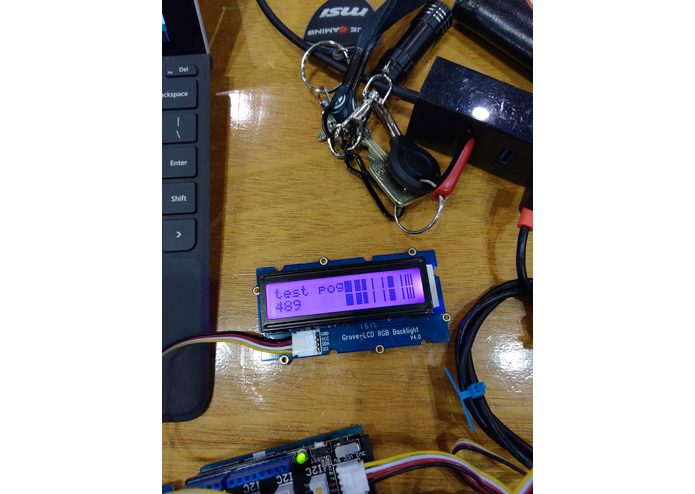
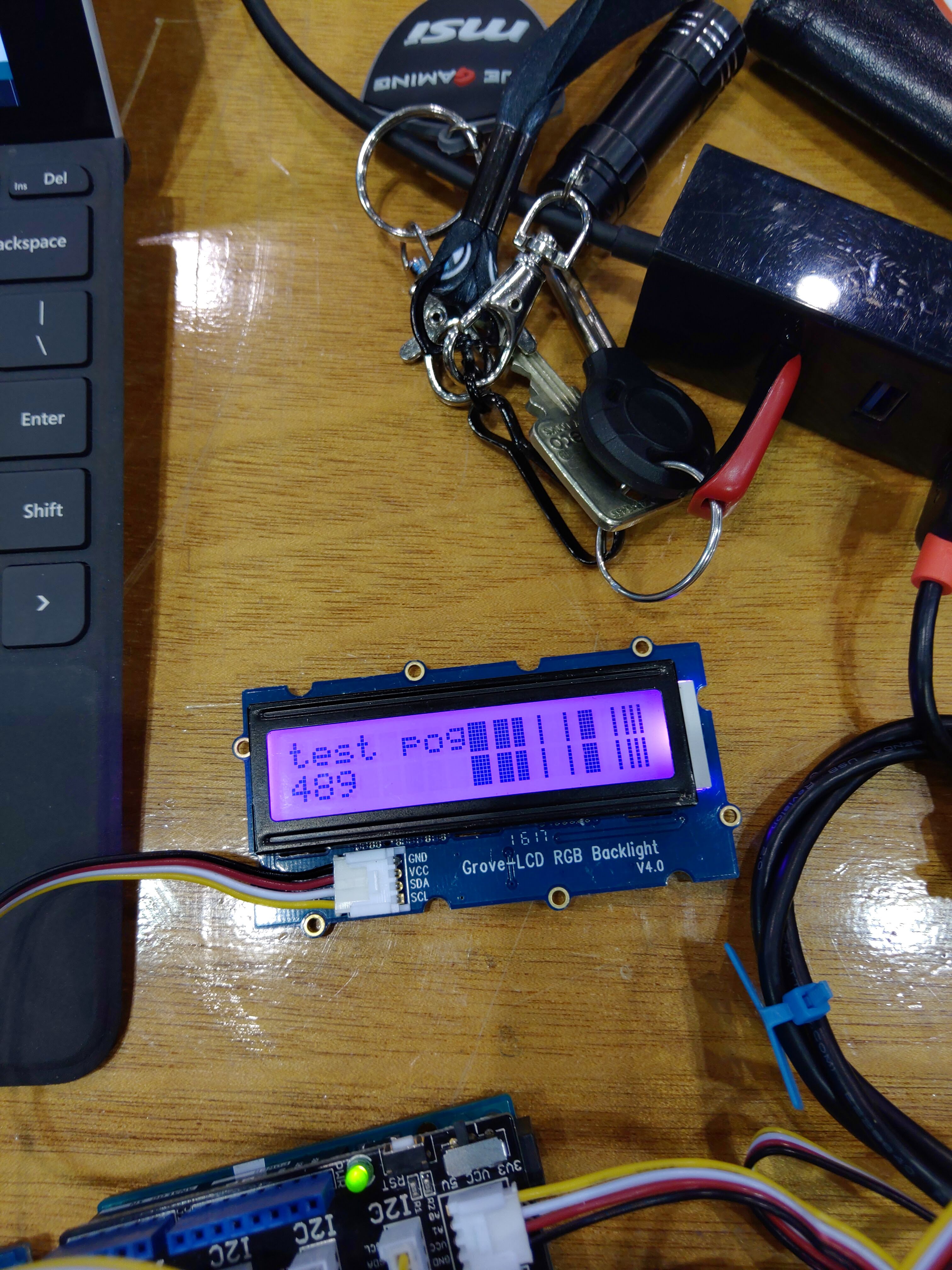
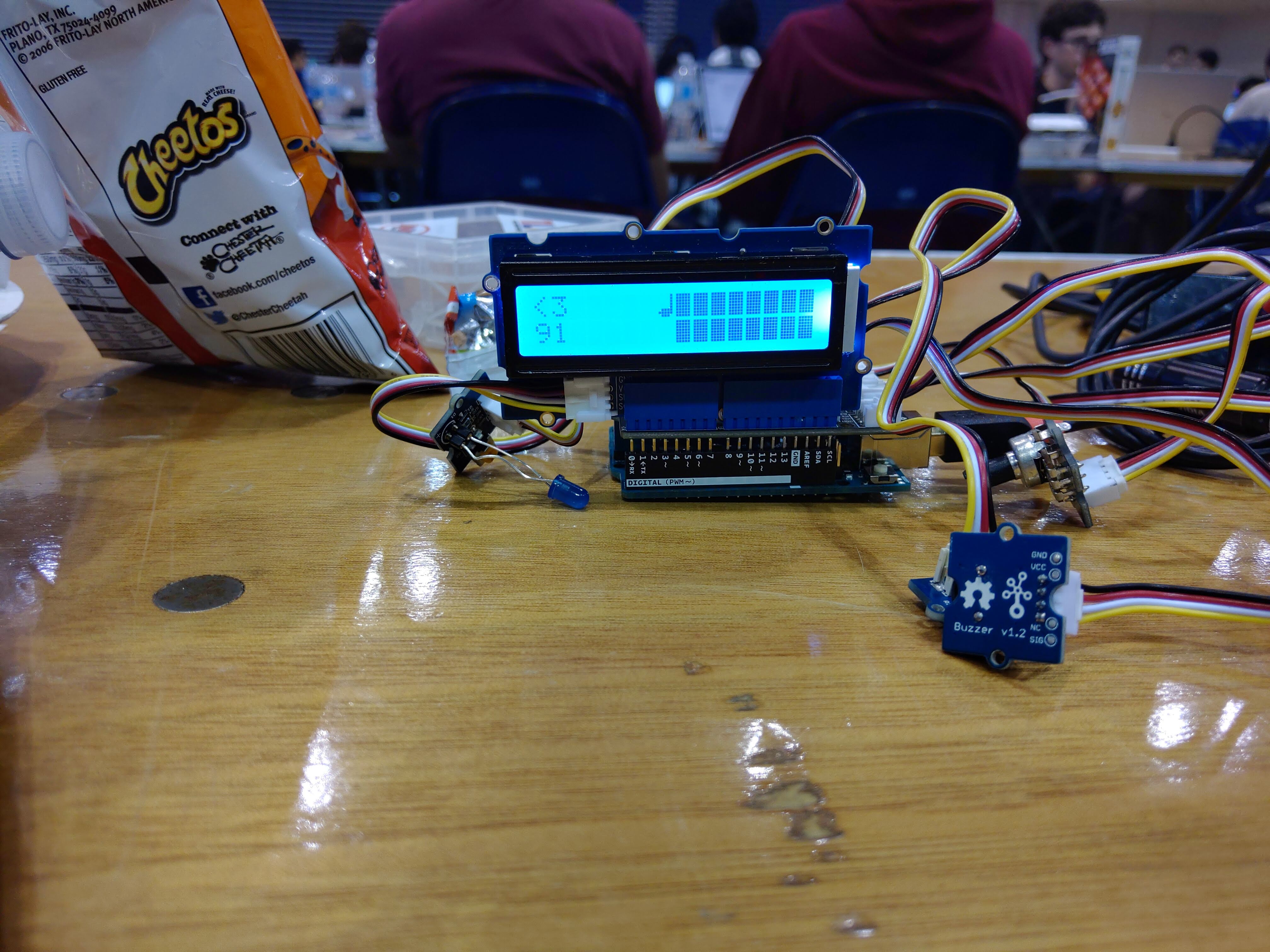
Initial stage, testing LCD
-
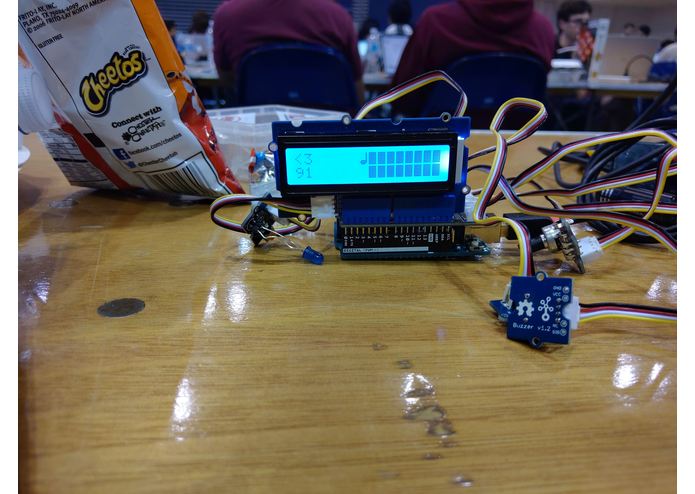
First design/look
-
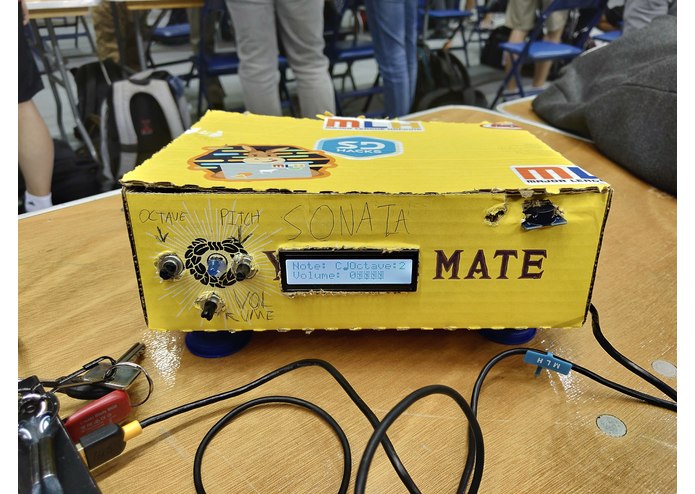
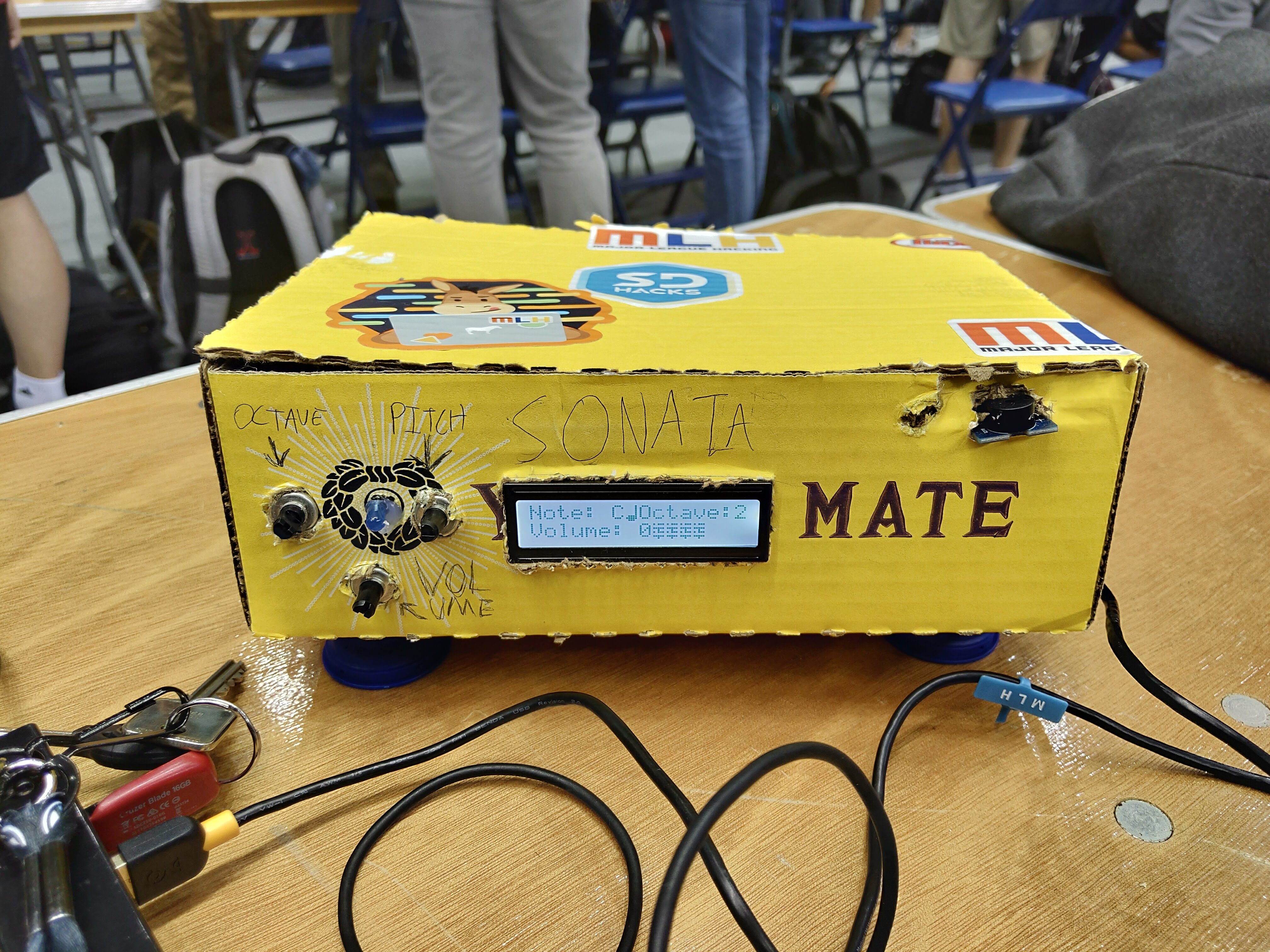
Final Product
Inspiration
Coding isn't one of my strong suits, however, I love hardware. After finding out about Major League Hacking and renting their electronics, I decided to do a hardware/software hack hybrid.
What it does
It's supposed to play an entire set of full-step notes starting from middle C from a piezo buzzer. It has features such as mute/volume control, a dial to shift one octave above or under middle C, and a dial to switch notes, from C to B, and left to right respectively. It is also environment-friendly, as the case is simply just a cardboard box!
How I built it
I grabbed electronic components one piece at a time and pieced it together over time. Every time I plugged in a component, I had another idea for a function that my project could have and went back and forth between the booth to grab more and more electronics. For the casing, I grabbed leftover Yerba Mate boxes to encase my project and give it a _ better _ look, rather than a skeleton of electronics. It also allowed me to place my knobs and buttons where I liked them so that it was easy to keep track of what each component does. For the coding section of this project, it was a matter of looking at libraries for the code and troubleshooting errors online and in the debug console.
Challenges I ran into
One line of code that I needed to delete hindered me and wasted ~2 hours. It is also incomplete. A really big challenge was doing this all by myself. Whenever I code, I always look for help because I'm not one of the best people when it comes to coding. After all my teammates decided to not come whether it was personal reasons, unavoidable problems, or just because they didn't "feel" like it, I was left alone with no clue on what to do.
Accomplishments that I'm proud of
I did this alone. Just me. To make an instrument from scratch and components in less than 48 hours is remarkable in my opinion.
What I learned
I learned how fun it is to learn code without being graded and pressured.
What's next for Sonata Mate
Growing up in a lower-middle-class family, affording anything was near impossible and only on rare occasions. This project is a decently cheap product, with the only expensive things being the screen and Arduino. Although not as easy to use as a piano, this product can enable anyone to learn to play music. It will also have a MIDI feature coded in so that not only can you play music, you can also record it.

Log in or sign up for Devpost to join the conversation.