Inspiration
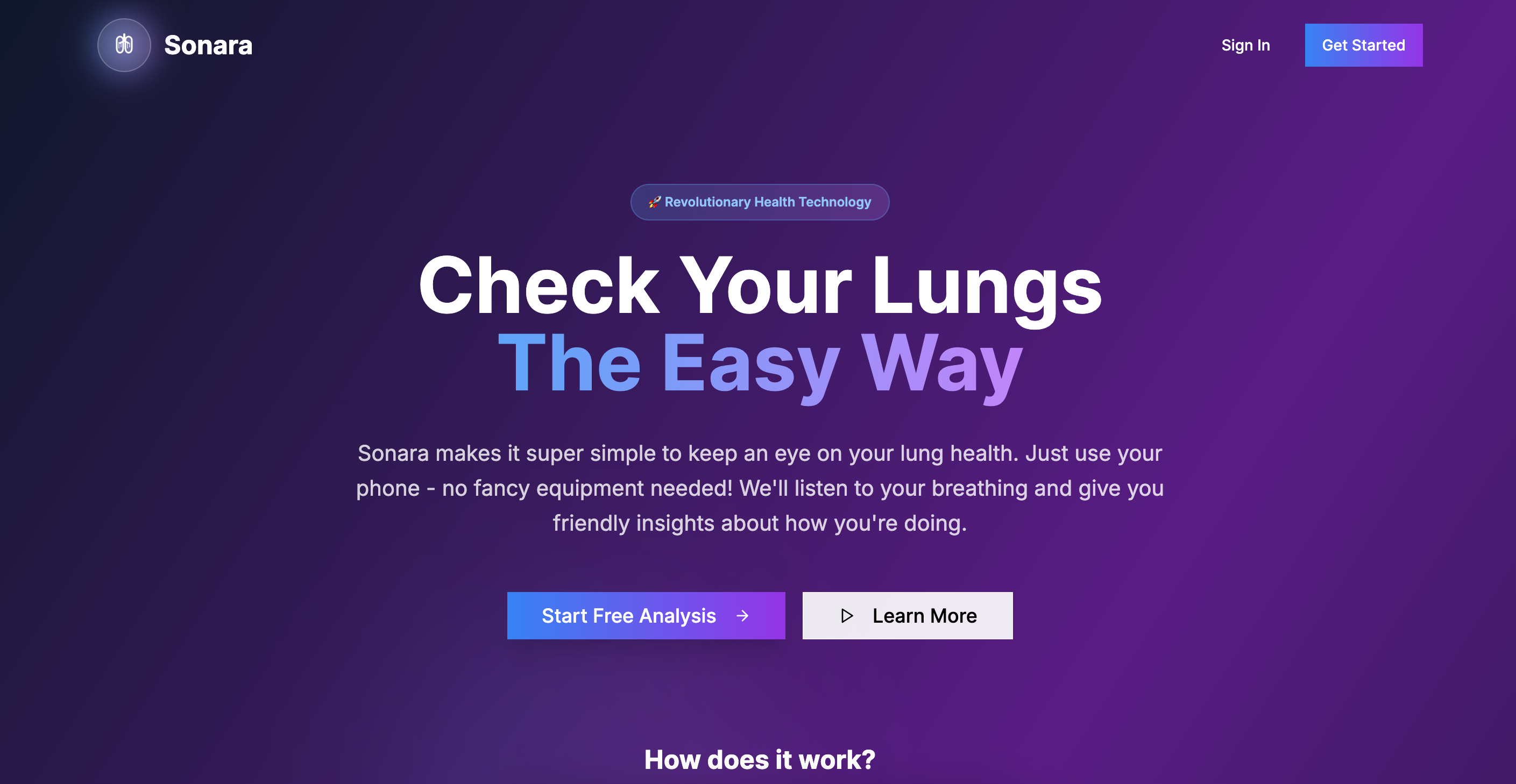
With respiratory illnesses on the rise and diagnostics often limited to clinical settings, we wondered, what if your phone could function like a stethoscope or even an ultrasound? Millions of people globally don’t have access to early detection tools like X-rays or CT scans, especially in rural or underserved areas. We were inspired by the idea that smartphones already contain the necessary hardware to capture and analyze sound. This sparked Sonara: a wellness-focused lung screening app that turns everyday devices into powerful diagnostic companions.
What it does
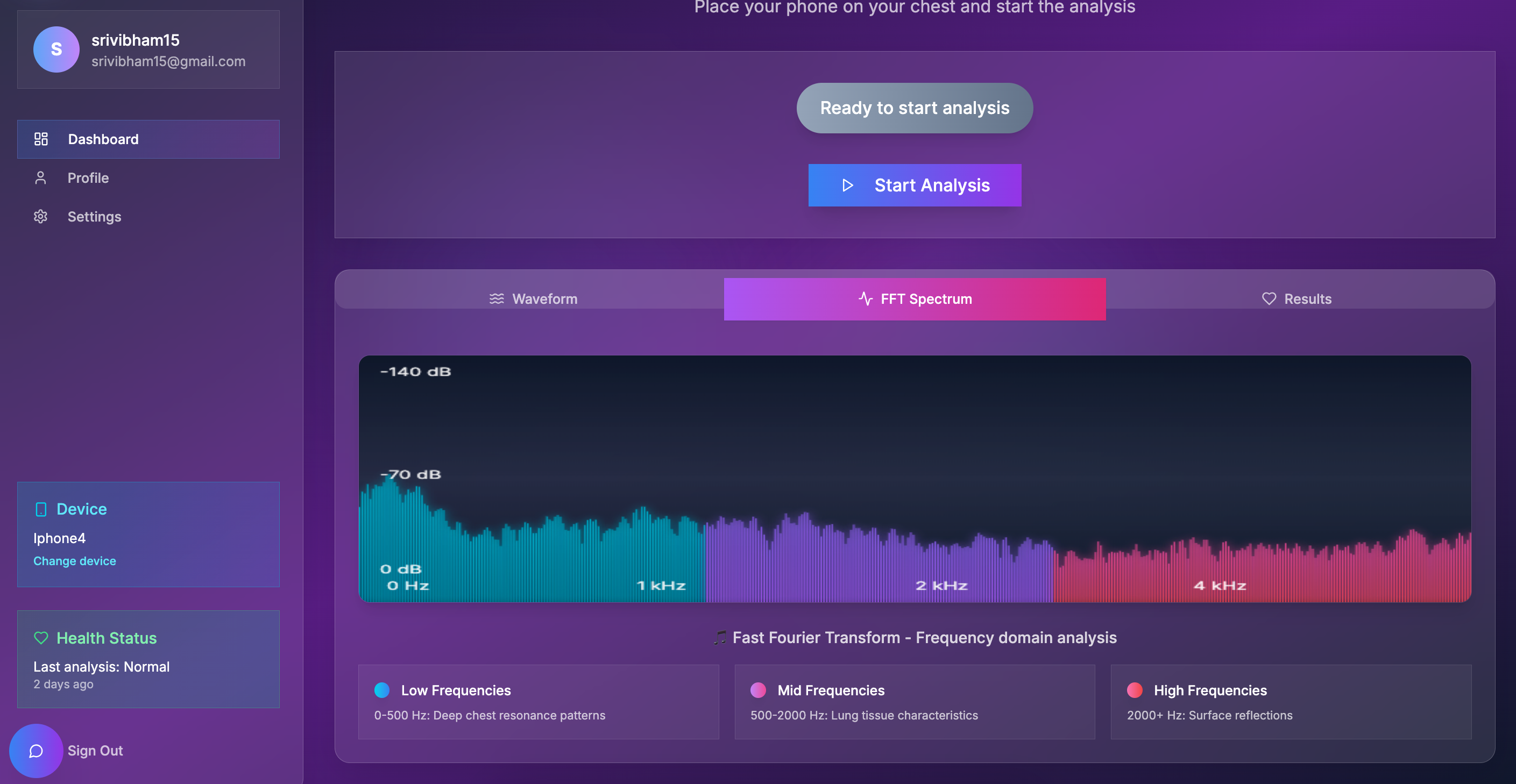
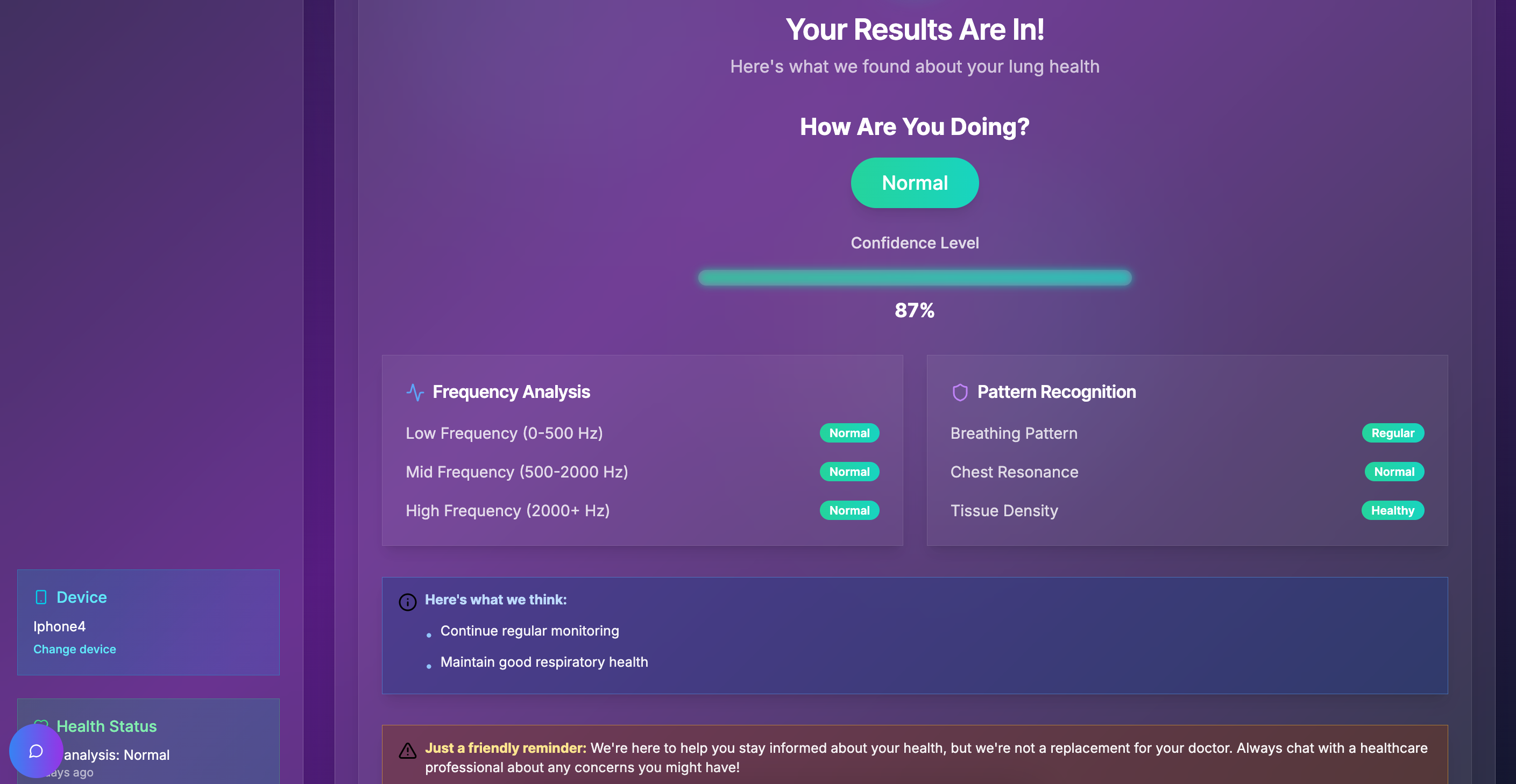
Sonara uses the phone’s built-in microphone and speaker to emit and record low-frequency sound waves from the user’s chest. It applies Fast Fourier Transform (FFT) to analyze reverberations and detect subtle anomalies in lung acoustics. These findings are compared to healthy baseline data to flag any irregularities that may warrant further medical attention. All of this happens within seconds, no wires, no appointments, just intelligent early insight.
How we built it
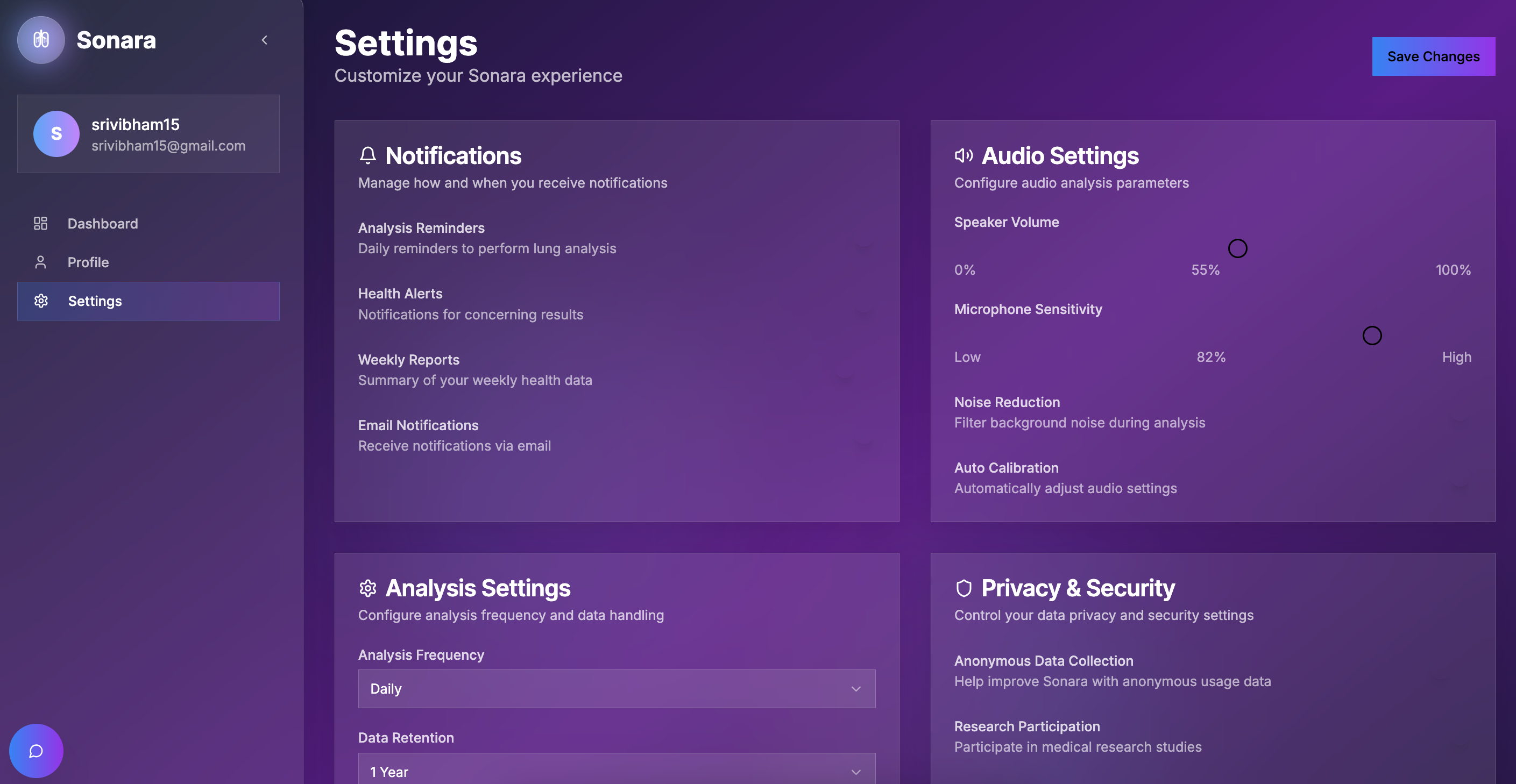
We designed the user interface in Vercel, with a focus on simplicity. The core concept is powered by audio signal processing using Python and FFT, which transforms time-domain signals into frequency graphs for analysis. Our goal was to build a realistic prototype that demonstrates technical feasibility without needing external hardware or sensors.
Challenges we ran into
One of the key challenges was simulating real-time acoustic behavior without physical lung data or lab equipment. Ensuring the user interface remained approachable while conveying complex processing under the hood also required careful thought. We also needed to find a balance between medical responsibility and innovation, emphasizing early awareness without overstating diagnostic power. Lastly, building a meaningful user journey in 72 hours meant iterating quickly while maintaining a grounded and trustworthy experience.
Accomplishments that we're proud of
We're proud to have built a complete, thoughtful MVP that bridges audio science with real-world wellness. Sonara simulates an end-to-end user experience, from sound emission to post-scan AI support. Our team worked harmoniously across research, design, and technical planning despite not having prior experience with medical signal processing. The final prototype represents not just a product, but a promising step toward accessible, preventive healthcare.
What we learned
We gained a deeper understanding of how audio signal processing can be applied to real-time health analysis. We learned to translate complex engineering concepts like FFT into simple, usable features for everyday people. We also explored the importance of ethical design when building something with health implications clarity, disclaimers, and user trust all matter. Most importantly, we learned how much impact a small, well-thought-out app can have when it’s grounded in empathy and science.
What's next for Sonara
Our next step is to collect real lung sound data to train and validate the app’s detection accuracy. We plan to develop a lightweight machine learning model that can recognize key anomalies in real-time. In addition, we want to partner with healthcare professionals to refine clinical relevance and expand to other use cases like cough or heart sound analysis. Ultimately, we envision Sonara as a global tool for preventive respiratory care, starting with a simple scan.
Built With
- fft
- figma
- python

Log in or sign up for Devpost to join the conversation.