-
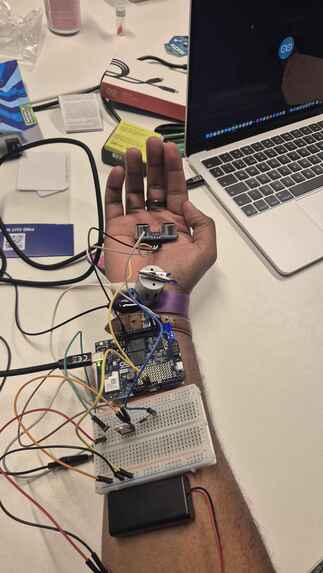
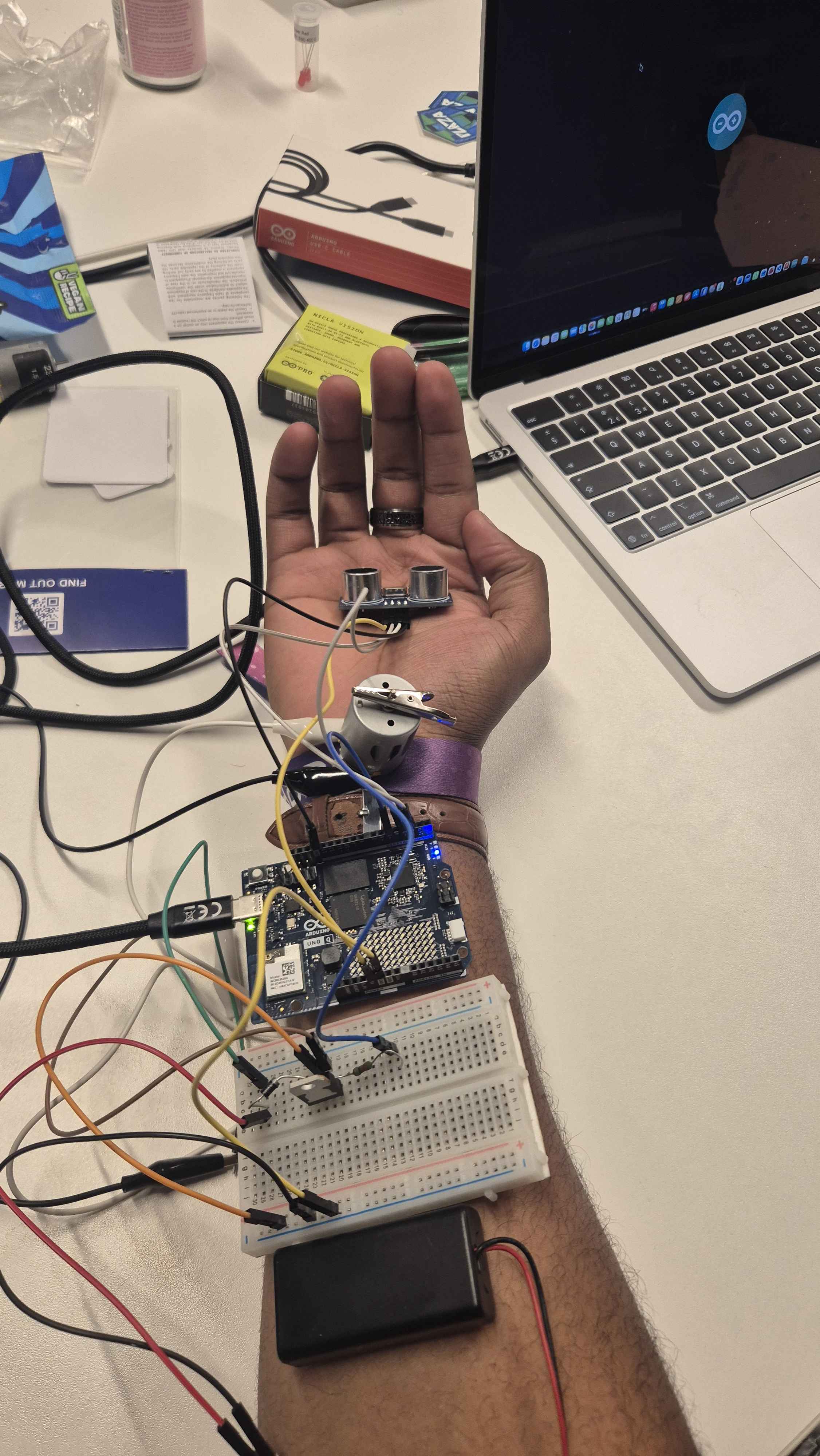
Arm fitting
-
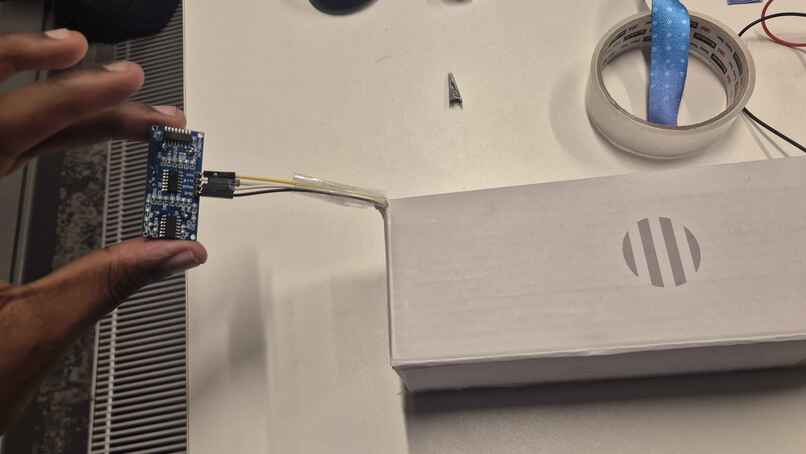
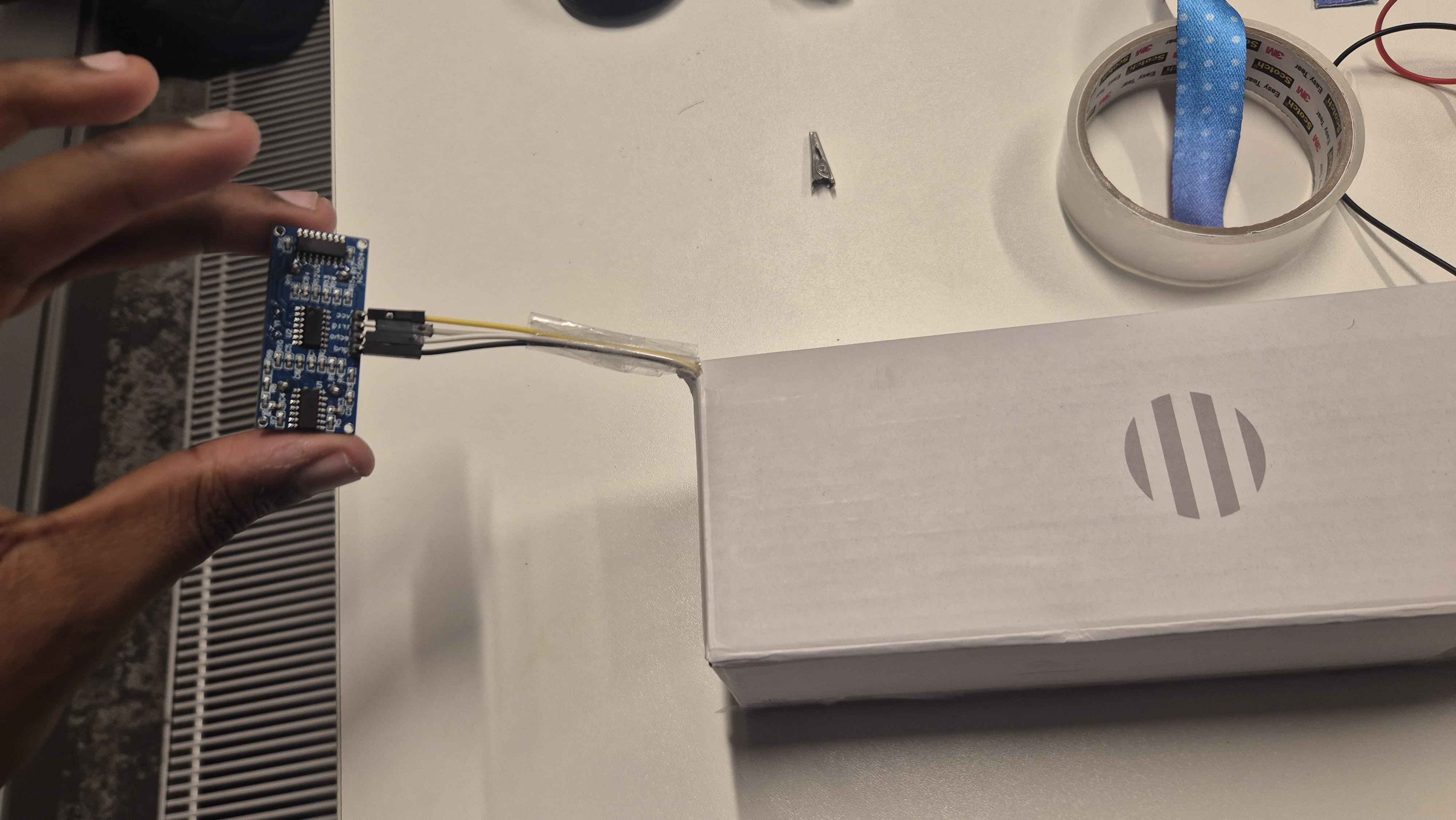
Fully boxed version
-
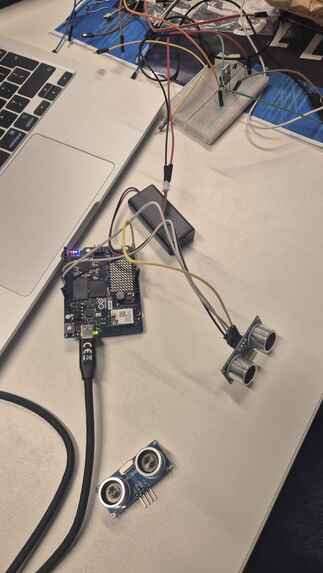
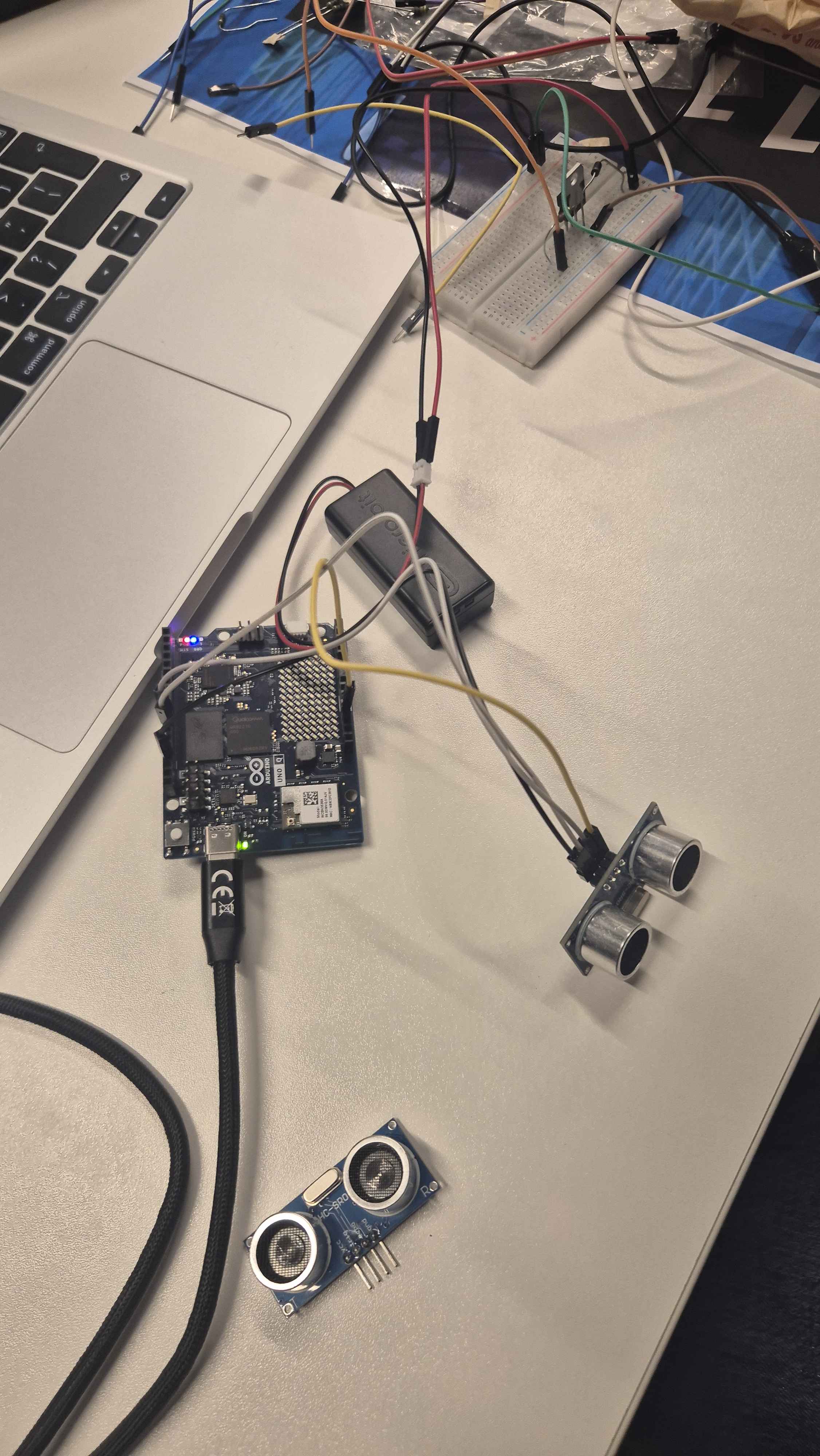
Naked skeleton
-
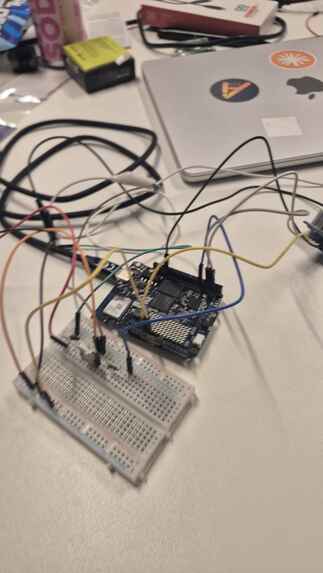
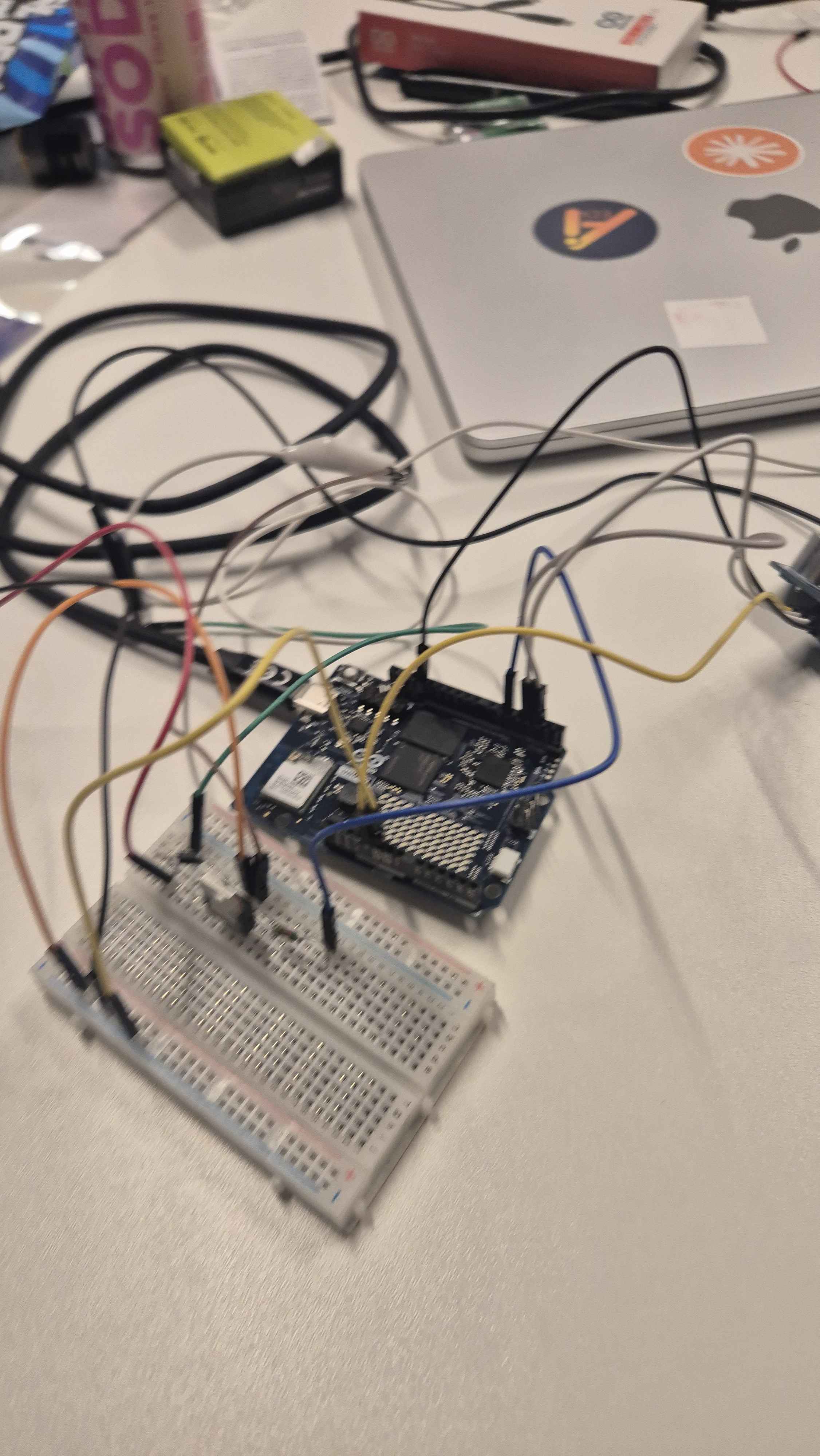
Early Stages
-
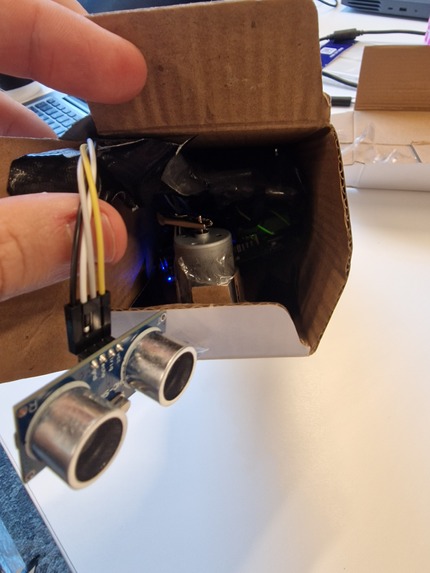
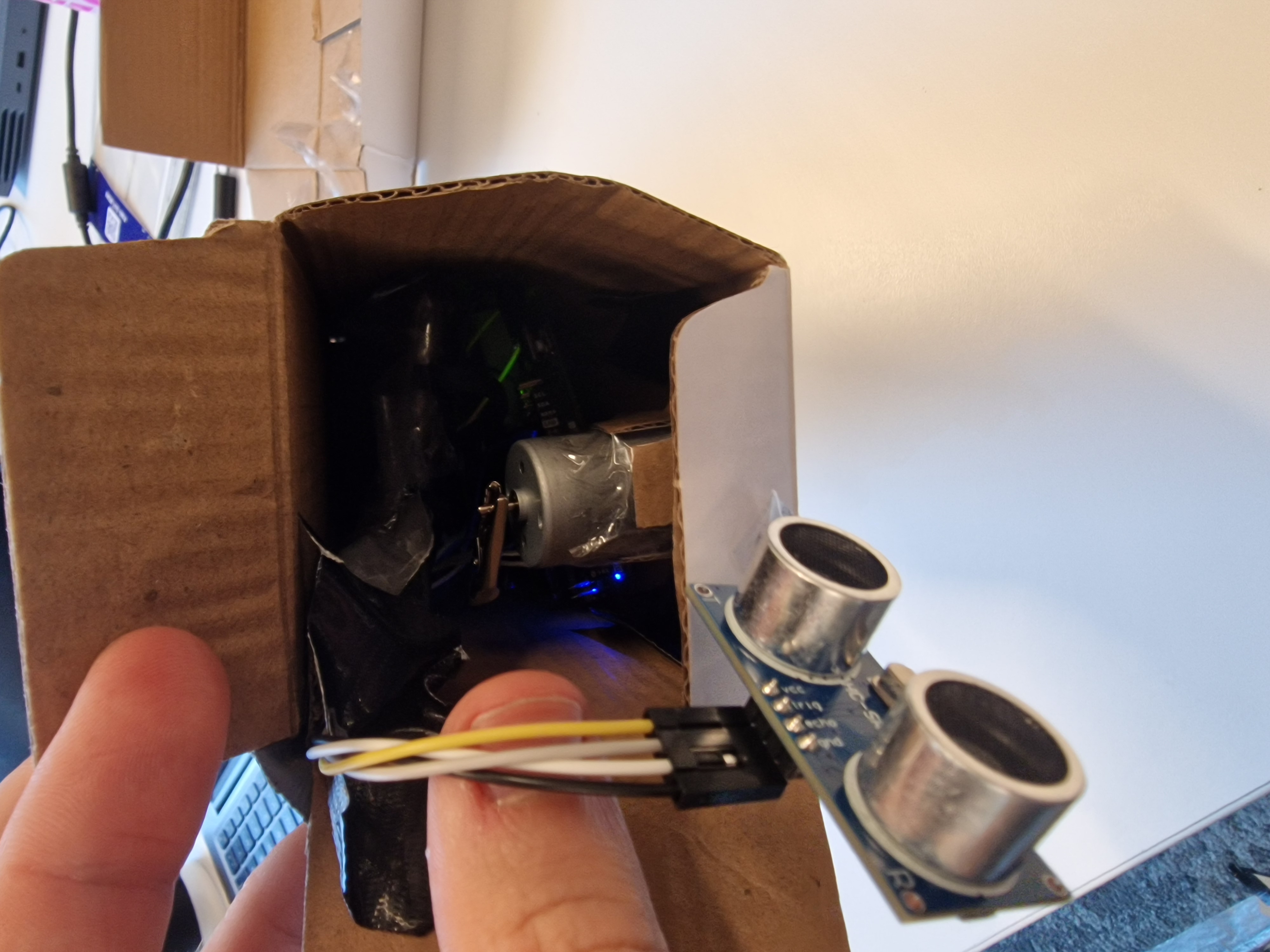
Project Interior
-
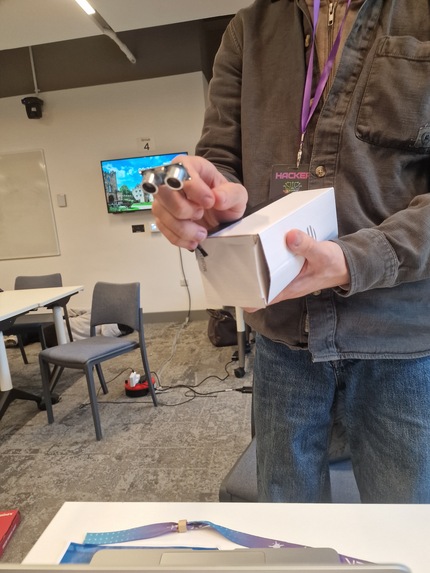
Project Exterior
-
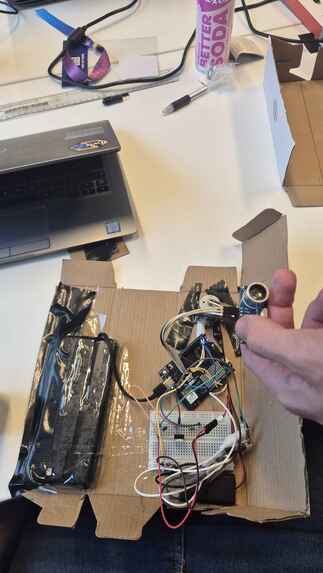
Project Skeleton
Inspiration
We were exploring the theme of composition and explored how music and sounds can be used improve the daily lives of people outside moods. We narrowed it to helping people with sensory deprivation, sight and looked into how we can use sound to help people sense the spaces around them.
What it does
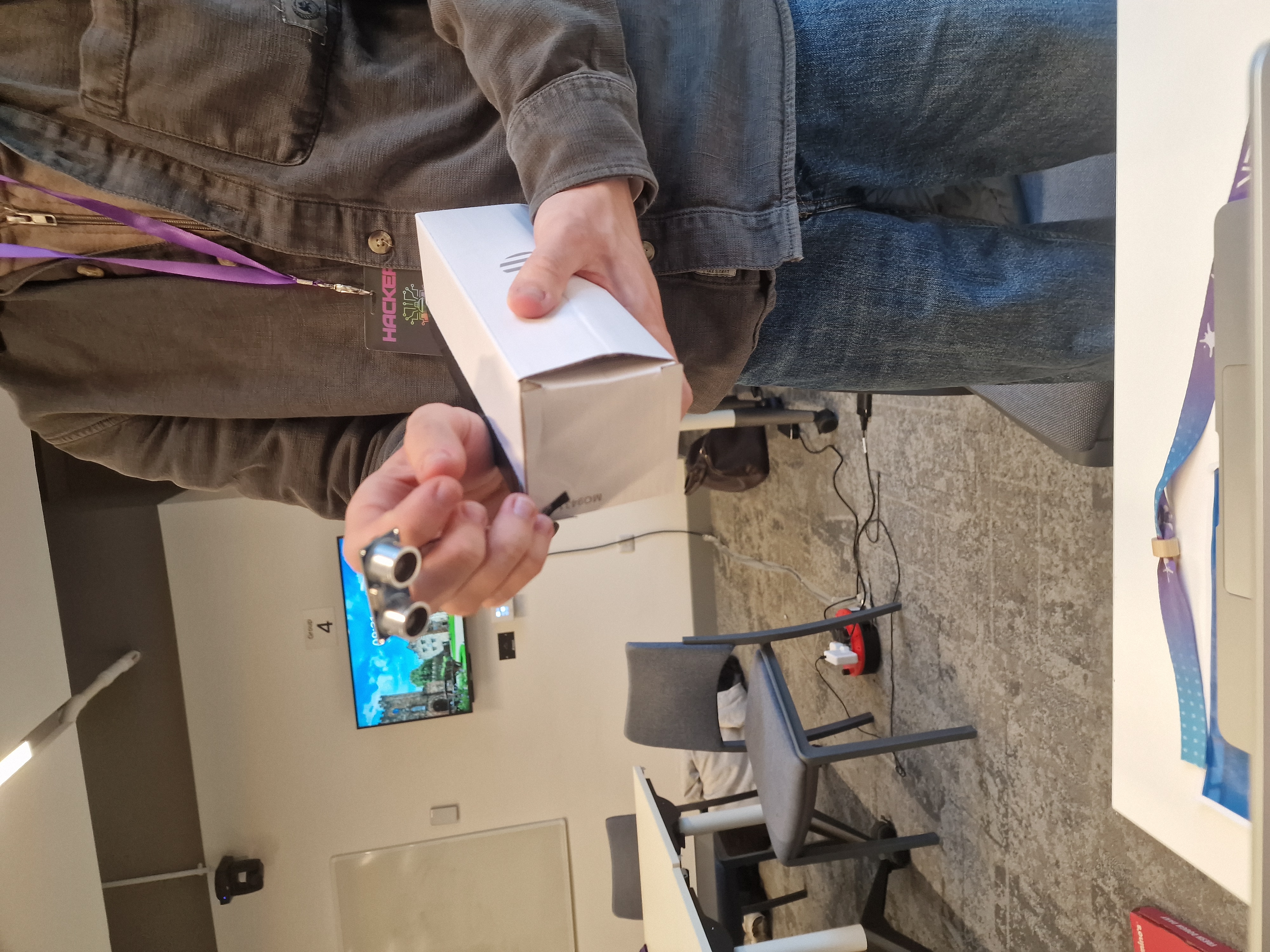
The device uses an ultrasonic distance sensor to measure the presence of close objects and how close it is, and relays this through haptic feedback.
How we built it
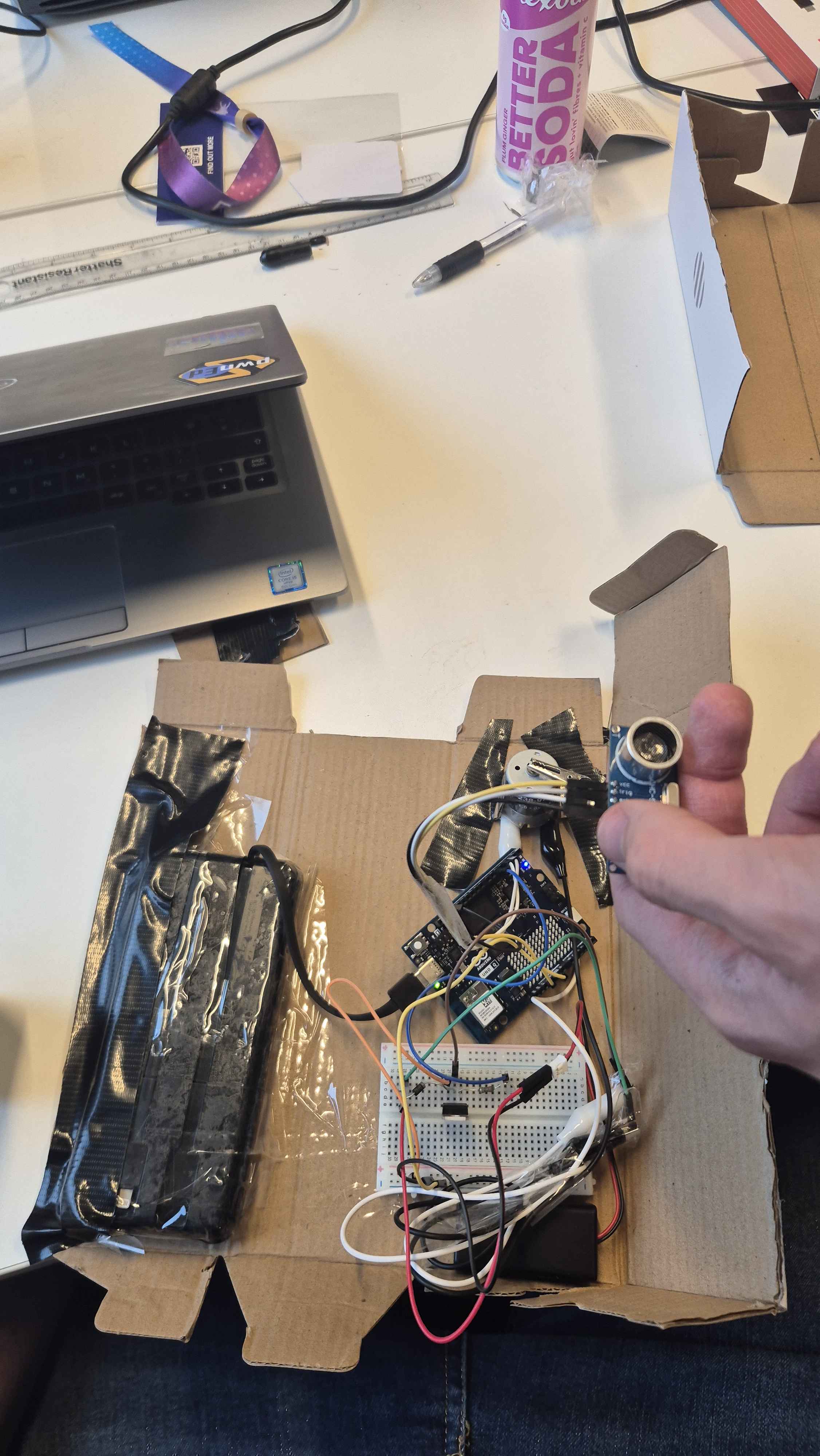
We connected an ultrasonic distance sensor to an Arduino UNO Q and connected it to a DC motor, using a switchboard. we used an obliquely centred object to simulate vibration using the motor. We then programmed the Arduino to receive input from the ultrasonic sensor, used that to calculate the distance of the object and then relayed the info to the motor so it responds accordingly.
Challenges we ran into
- Issues with the Arduino code
- Arduino code not synced with motor or distance sensor
- The distance sensor was not working
- Lack of Arduinos to make a full network and capture more surrounding objects
- 3D Print part taking > 2 hours and queue being longer than hackathon deadline
- A million mini bugs
Accomplishments that we're proud of
The project becoming a reality as it was initially unfeasable and we almost gave up and used an oculus approach or change idea completely. Also being able to pick up really new skills and be able to work with and debug it within a short time span
What we learned
A lot, from how to design and build an Arduino micro-controller and then how to programme it to receive input, process the input and relay it to another component. We also learnt how to use MCP with claude APIs for rapid 3D prototyping.
What's next for our sensory locator
We plan to use APIs and speakers to give more intelligent feedback to the user aswell as creating a network of devices that provide full body coverage which each node independent in the case of failure. we also plan to provide miniaturise the device
Additionally, we plan to use cameras and incorporate computer vision along with ultrasound to improve accuracy of distant objects.
