-
-
Title
-
Somus Design System
-
User Pain Points
-
Book Biometric Reading
-
Inspiration
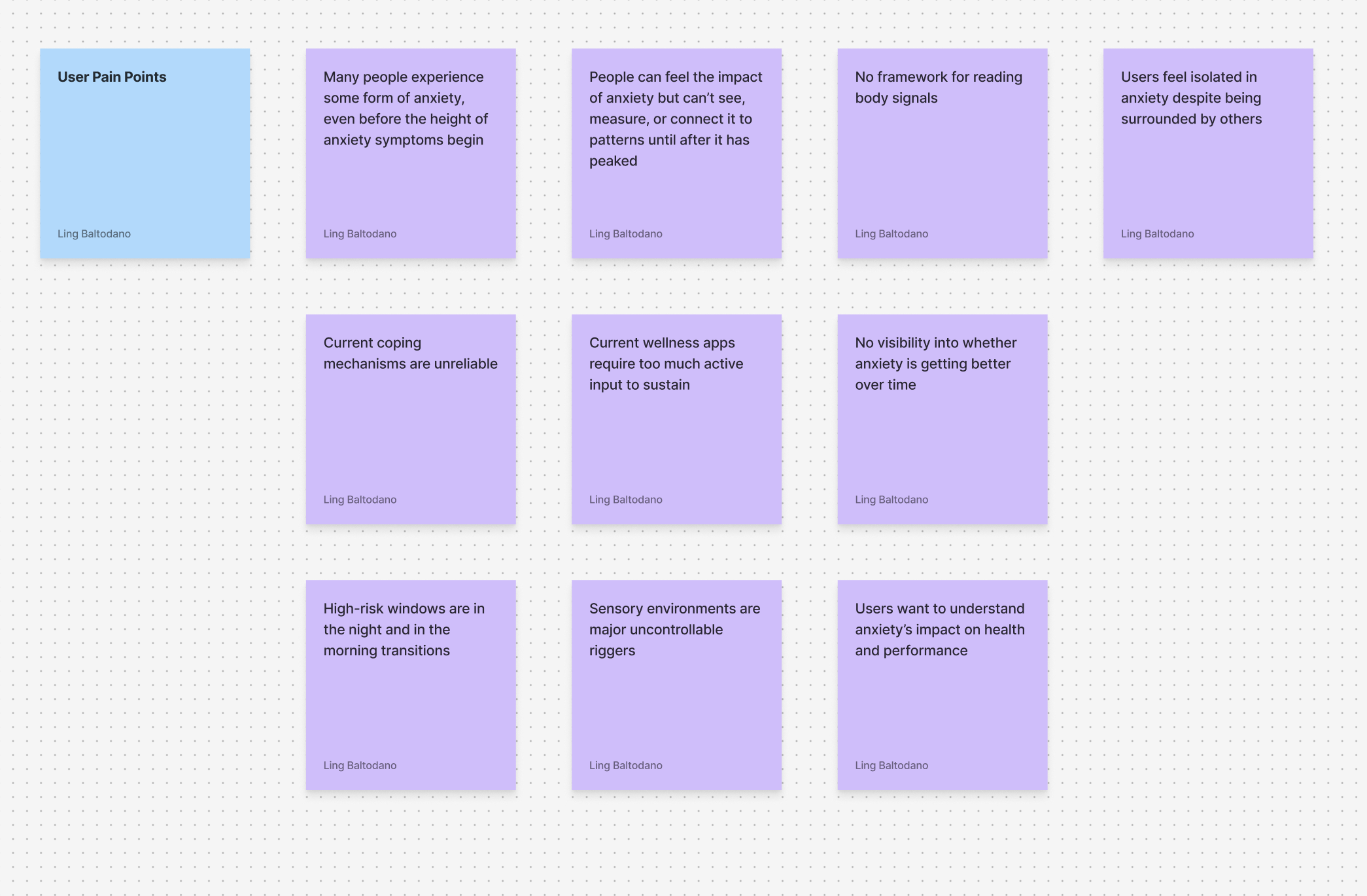
Somus was inspired by the word "soma," meaning the living, feeling self of our bodies that communicates amongst one another. The body almost always knows it's anxious before we can fully process it. A gap we identified was that current tools typically wait for users to report how they feel, long after the window for early intervention has closed, which is why we explored the role of interoception in anxiety management. We surveyed 16 college students and found that 13 of them described anxiety as appearing completely out of nowhere, with an average interoceptive self-accuracy score of just 3.1 out of 5. So, what if we could make the body's earliest signals detectable and visible?
What it does
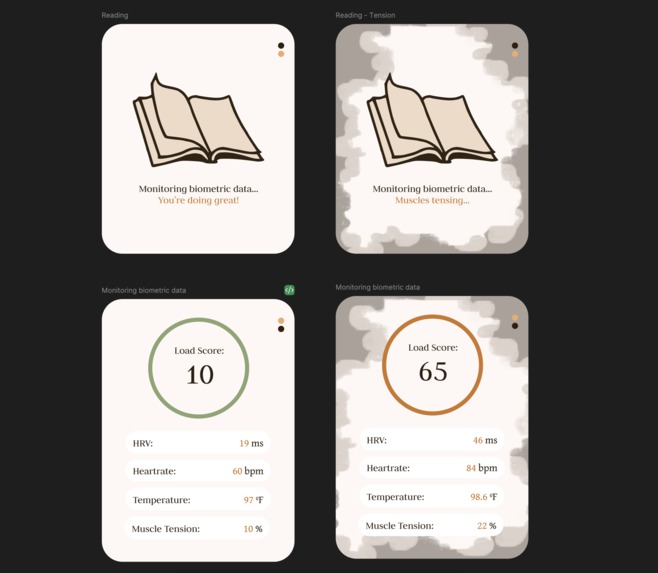
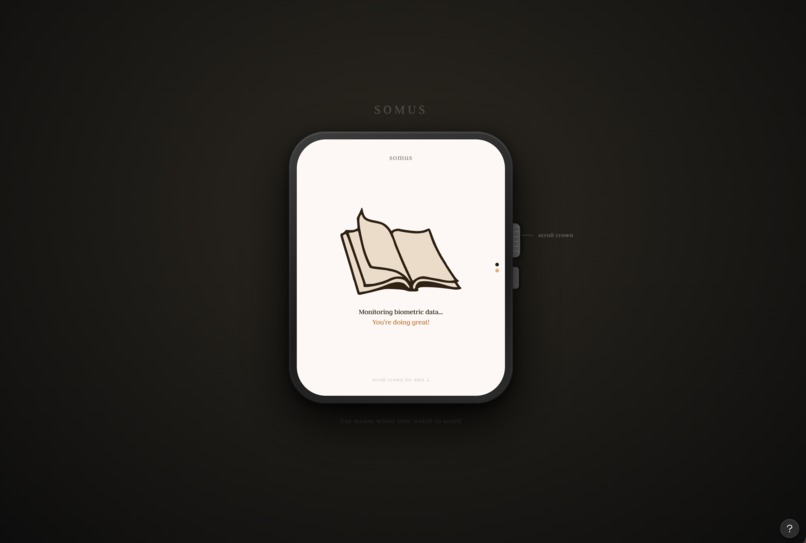
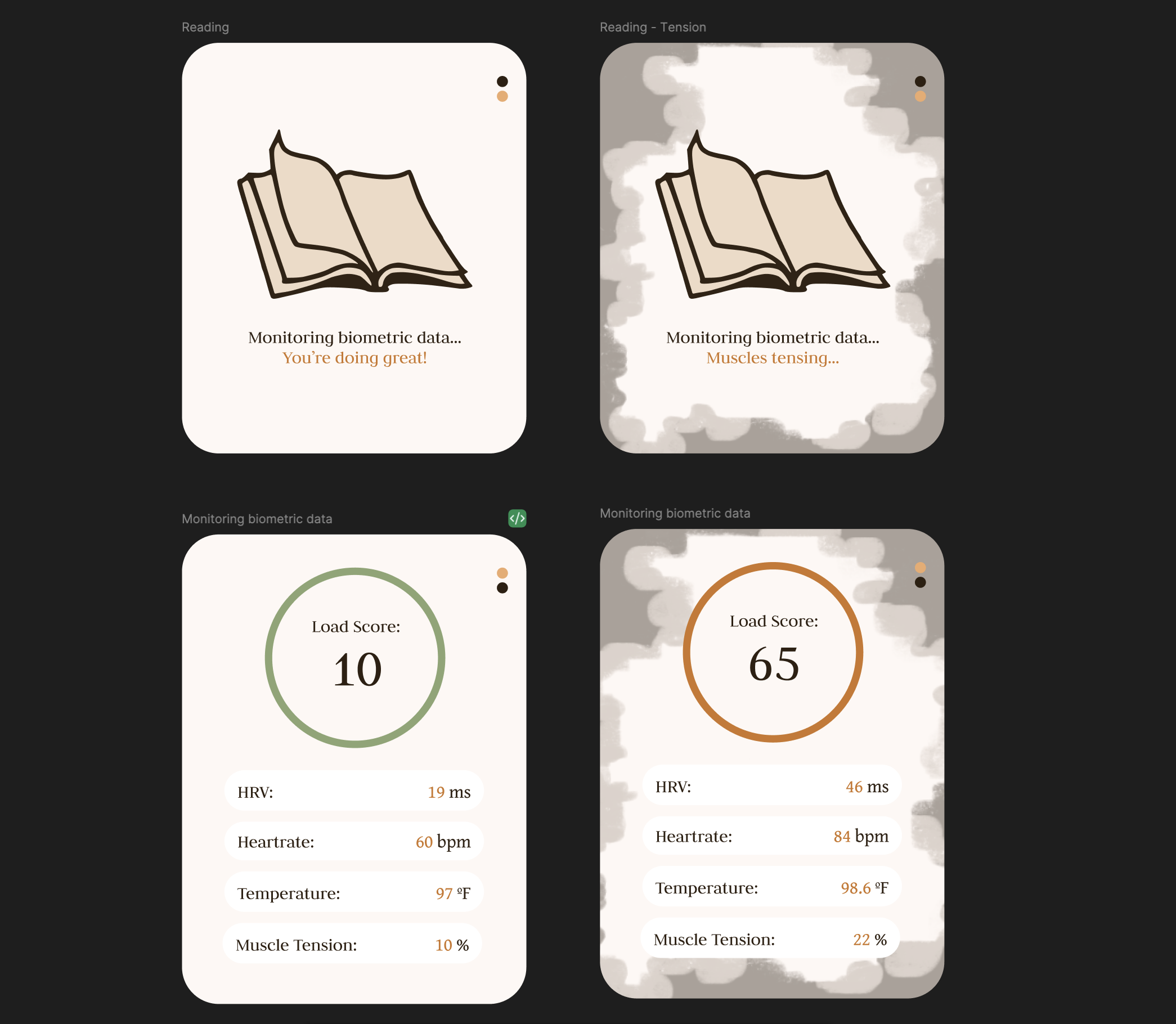
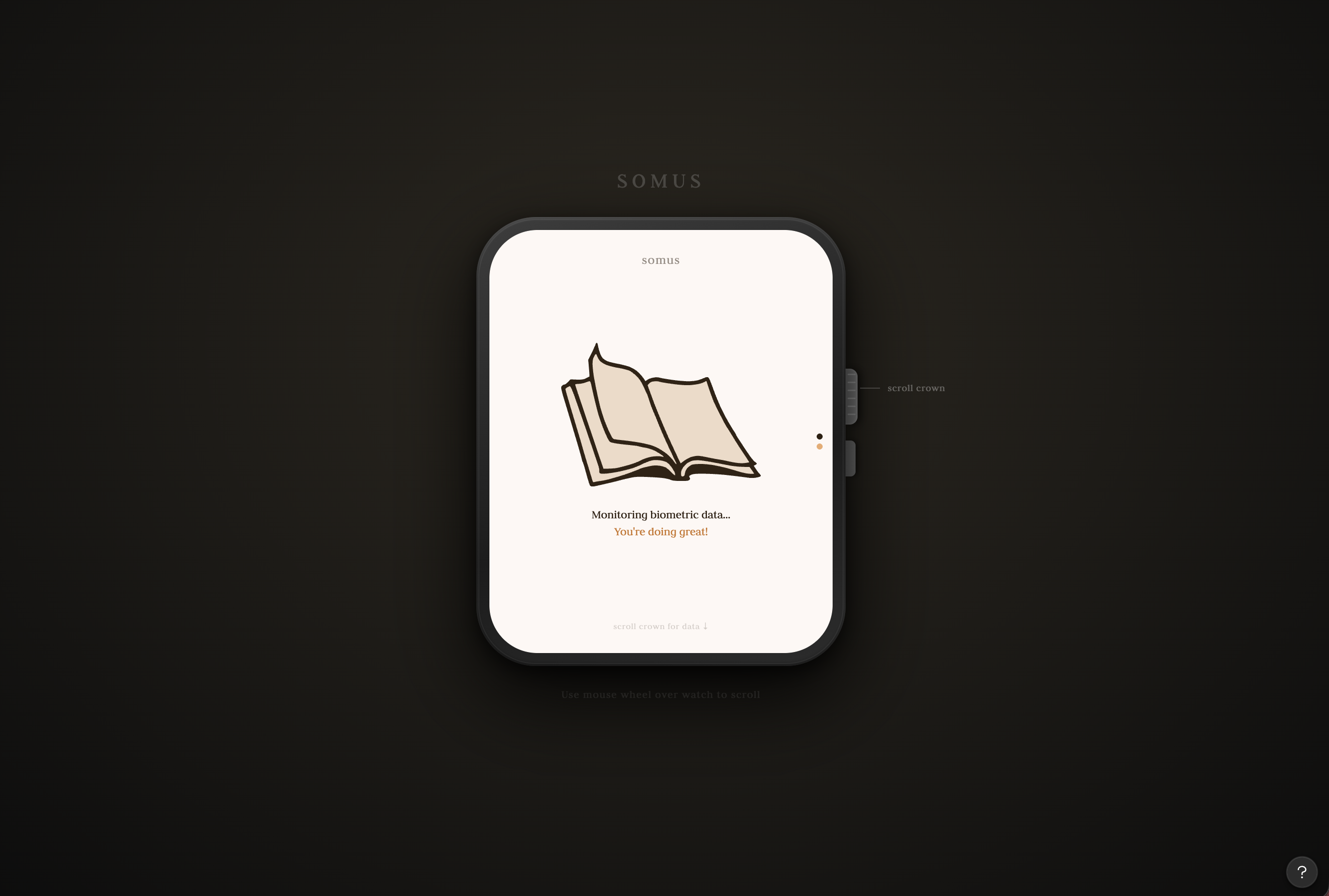
Somus passively reads your body's interoceptive signals throughout the day through a wearable, like an Apple Watch, without ever asking how you feel. As stress accumulates throughout the day, those signals are translated into a living book that fills itself with ink, char, and ashes, reflecting the weight your nervous system has been carrying in real time. When you approach your personal anxiety threshold, your watch delivers a slow haptic pulse, inviting you to a "burn ritual," a breathing exercise visualized in the form of a flame that consumes the book at the pace of your own exhale, functioning as a release for everything that your body has been holding in. After the burn, you can view a before-and-after biometric snapshot and a progress view showing how you are growing to understand your body.
How we built it
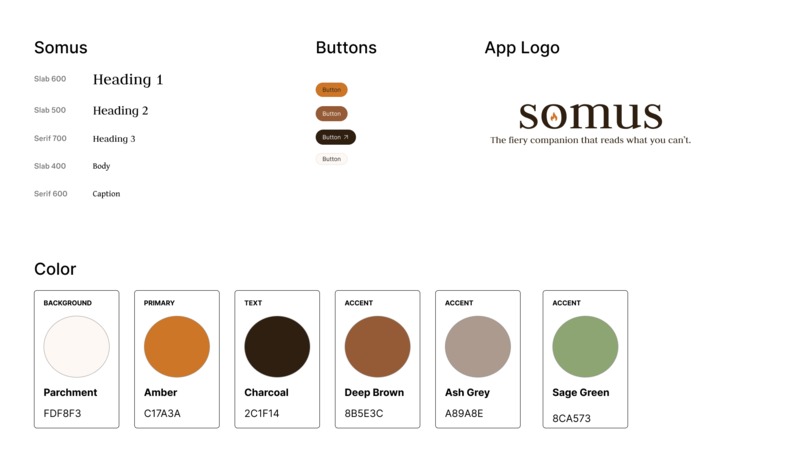
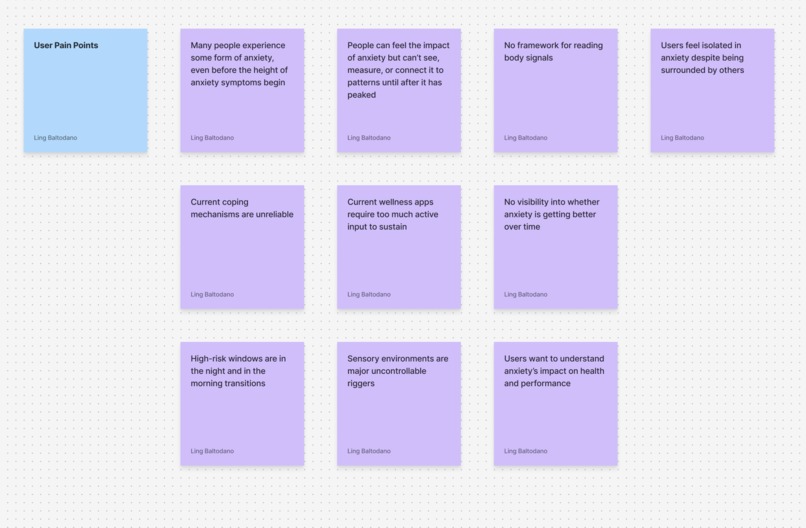
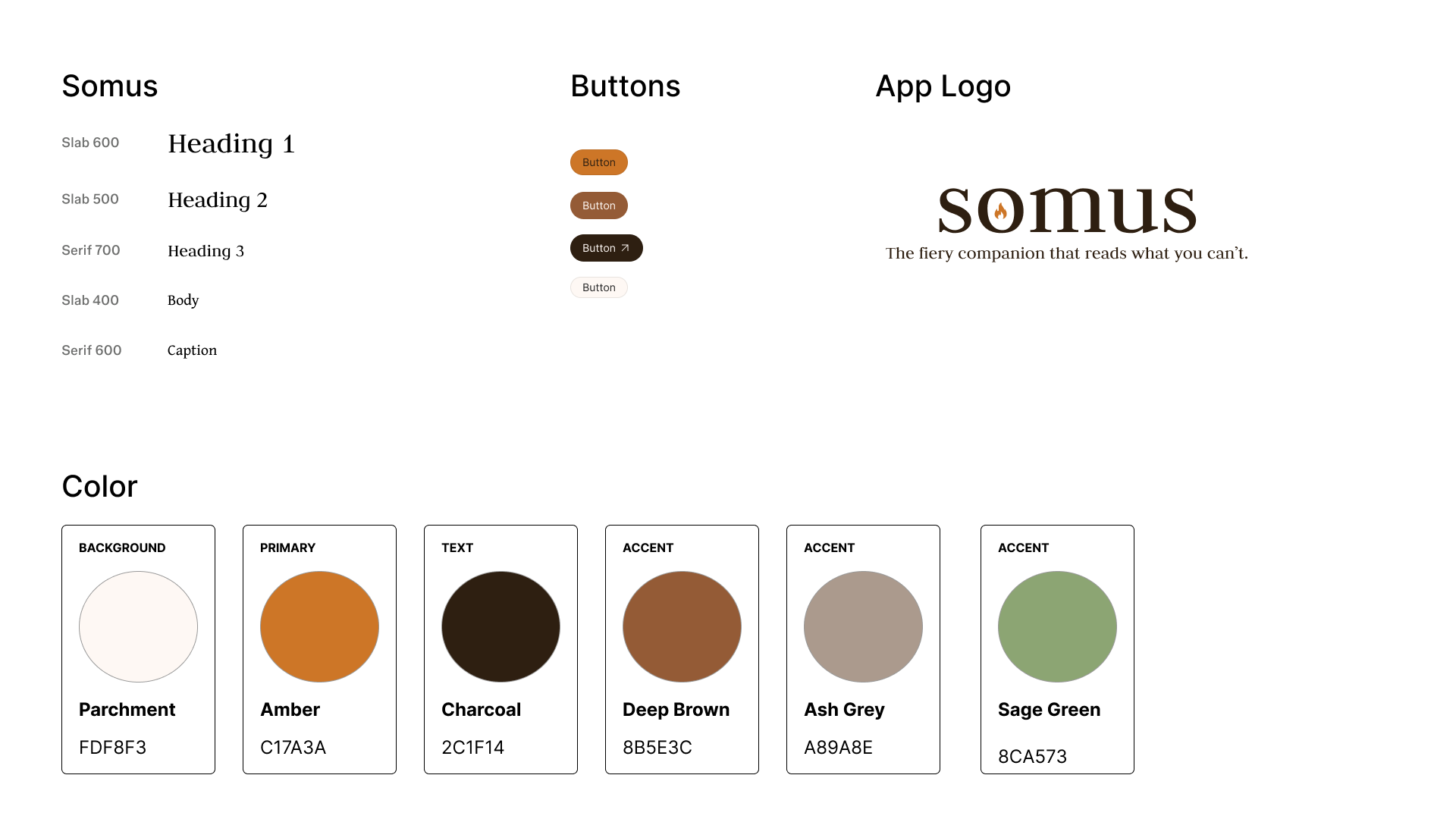
We began with a survey of 16 college students and identified 10 core pain points, mapping each to a feature in Somus, ensuring the product could be built on human-centered experiences. We developed a brand identity that was rooted in earthy, fiery tones and moved into Figma to prototype screens that covered the user flow. The sensing layer was designed around the capabilities of the Apple Watch biometric data, such as HRV, heart rate, skin conductance, wrist temperature, respiratory rate, and micro-muscle tension (something that we are unsure of that exists at this current time), all processed into an "Interoceptive Load Score" tailored to the user.
Challenges we ran into
One of the biggest challenges we ran into was time constraints, as we made a decision to scope out the campus community map, a feature that addresses user isolation, but could not be prototyped within our time window. In addition to that, as college students with a packed weekend, we were also coming in with varying skill sets which also meant that beyond ideating, we were also learning Figma's features together. Beyond time, another challenge we faced was making sure Somus was different from a mood-tracking app and unique. We pressure-tested and discussed whether the user would ever have to tell the app how they feel.
Accomplishments that we're proud of
One of our team members was new to design-a-thons, and being able to collaborate, distribute the work meaningfully, and have every member contribute was one of the most important outcomes of the experience. We were also proud that some of the assets were hand-drawn and later turned into vectors. Building a brand identity that feels emotionally honest and warm was meaningful, and we were also proud of designing a tool thats long-term goal is to make itself less necessary by "burning" less.
What we learned
Designing for an Apple Watch pushed every member of our team outside their comfort zone, allowing us to think in haptic language and wrist-based sensing as a primary interface layer, rather than a typical iPhone app.
What's next for Somus
The next step for Somus would be a trigger map, one of our high-priority longitudinal features, where users can better understand their personal anxiety patterns correlated with place and activity. We are also exploring the potential for an iPhone companion app that integrates features such as sharing data with a therapist or psychiatrist to provide better resources for users.
Built With
- figma

Log in or sign up for Devpost to join the conversation.