-
-
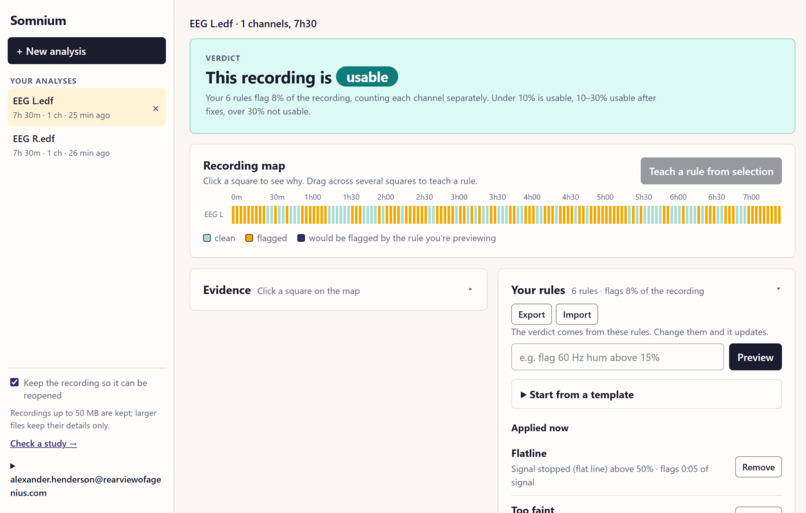
A saved research
-
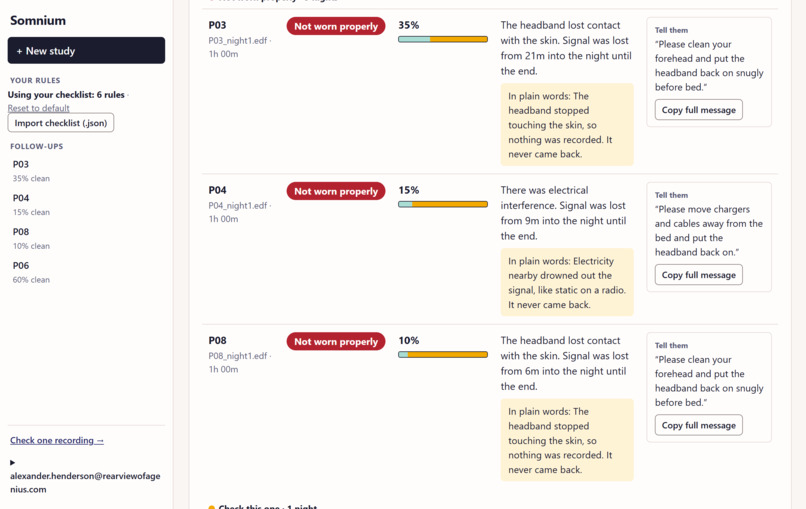
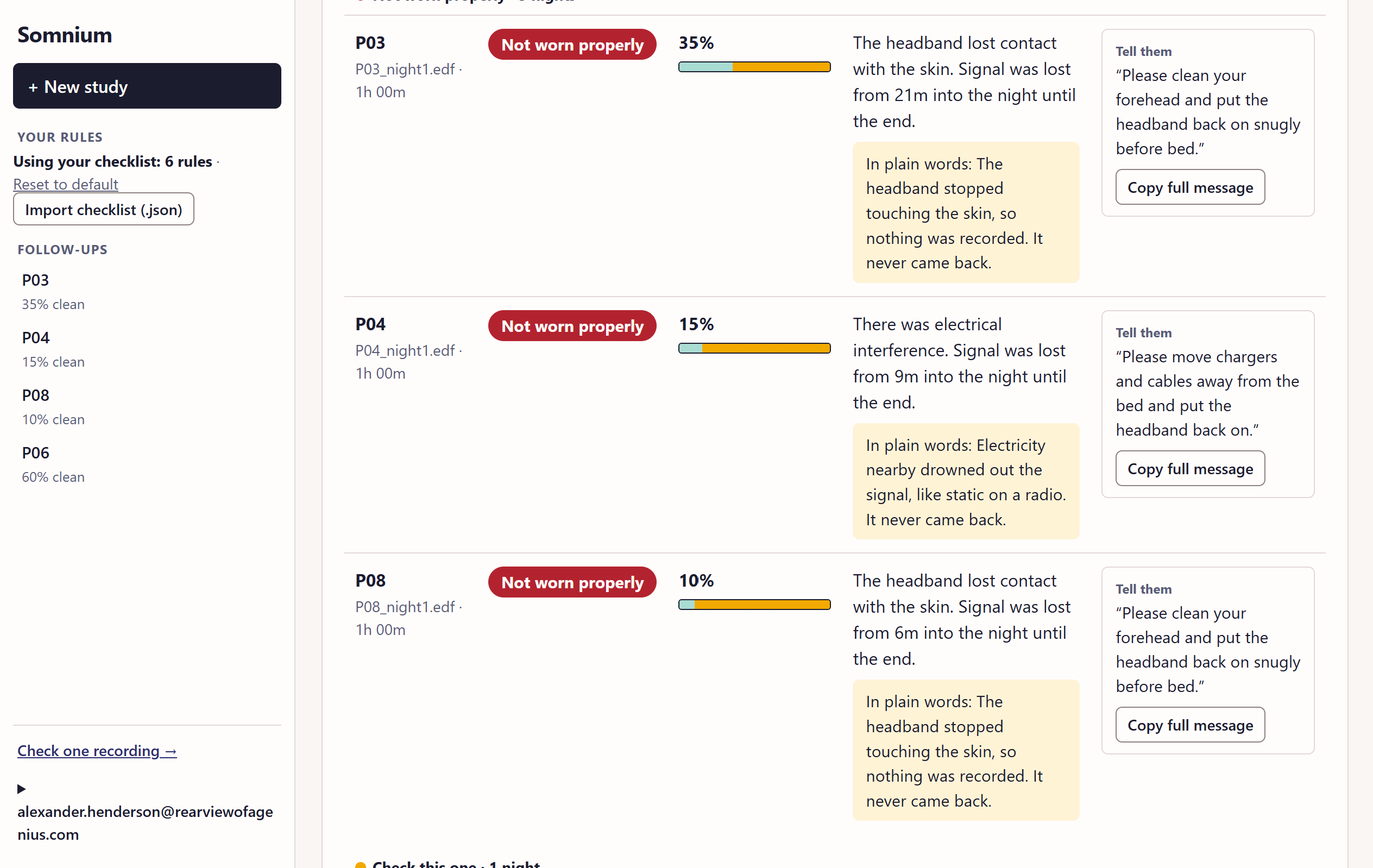
Study Comparison
-
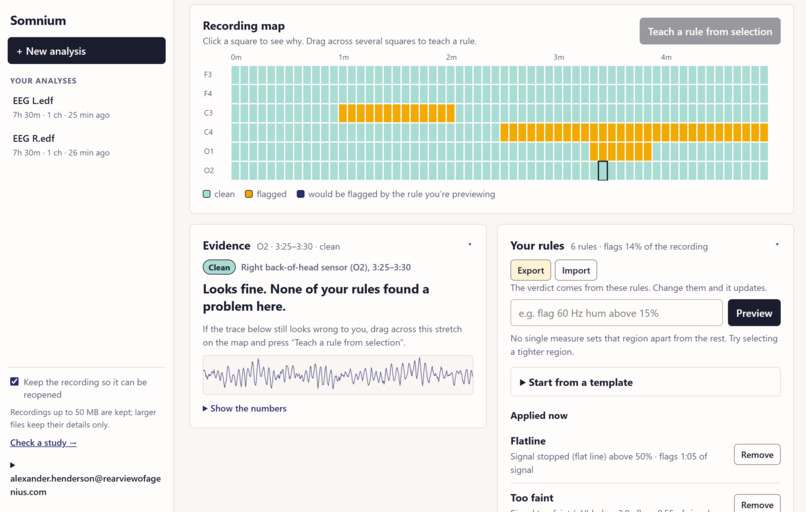
Analysis tools
-
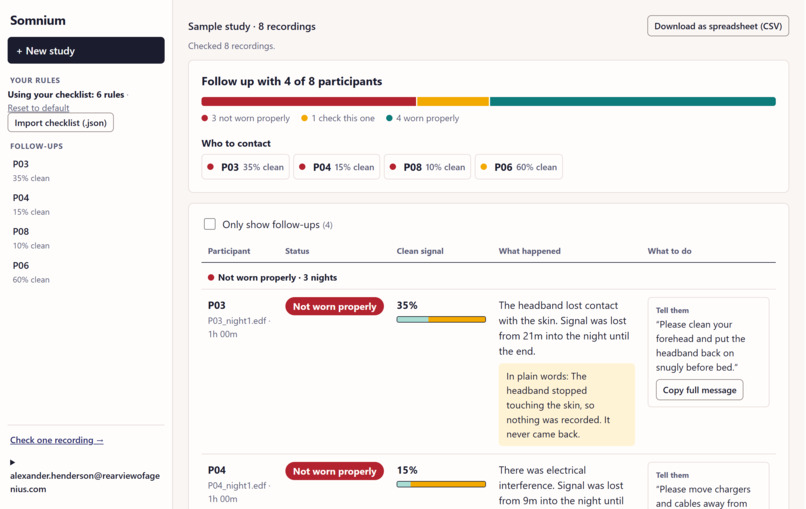
Study Comparison
-
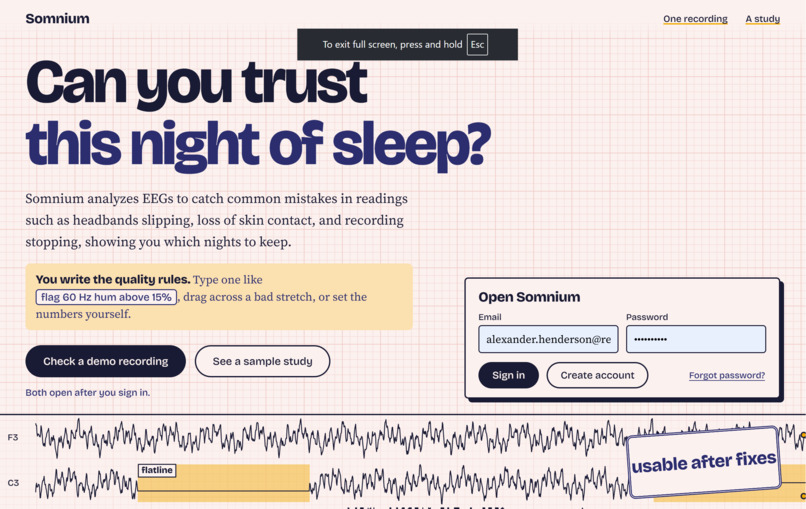
Main Page
-
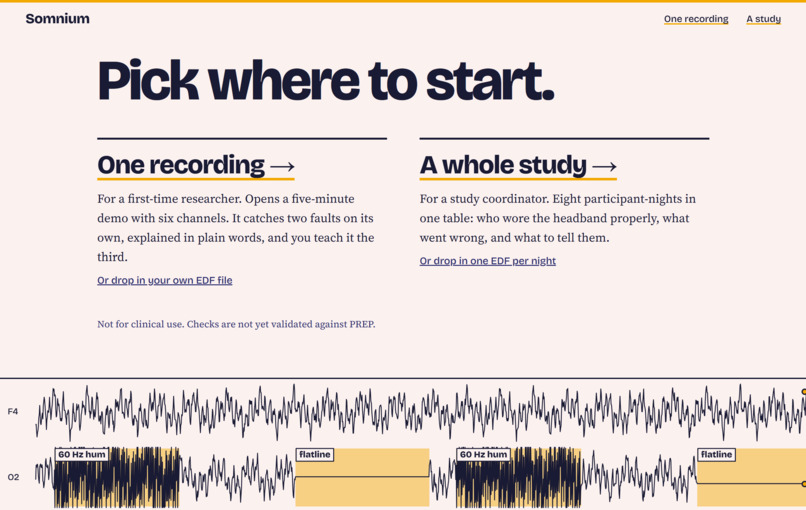
Main Page
OPTIONAL LOGIN ([email protected] : Blank_PAge)
Inspiration
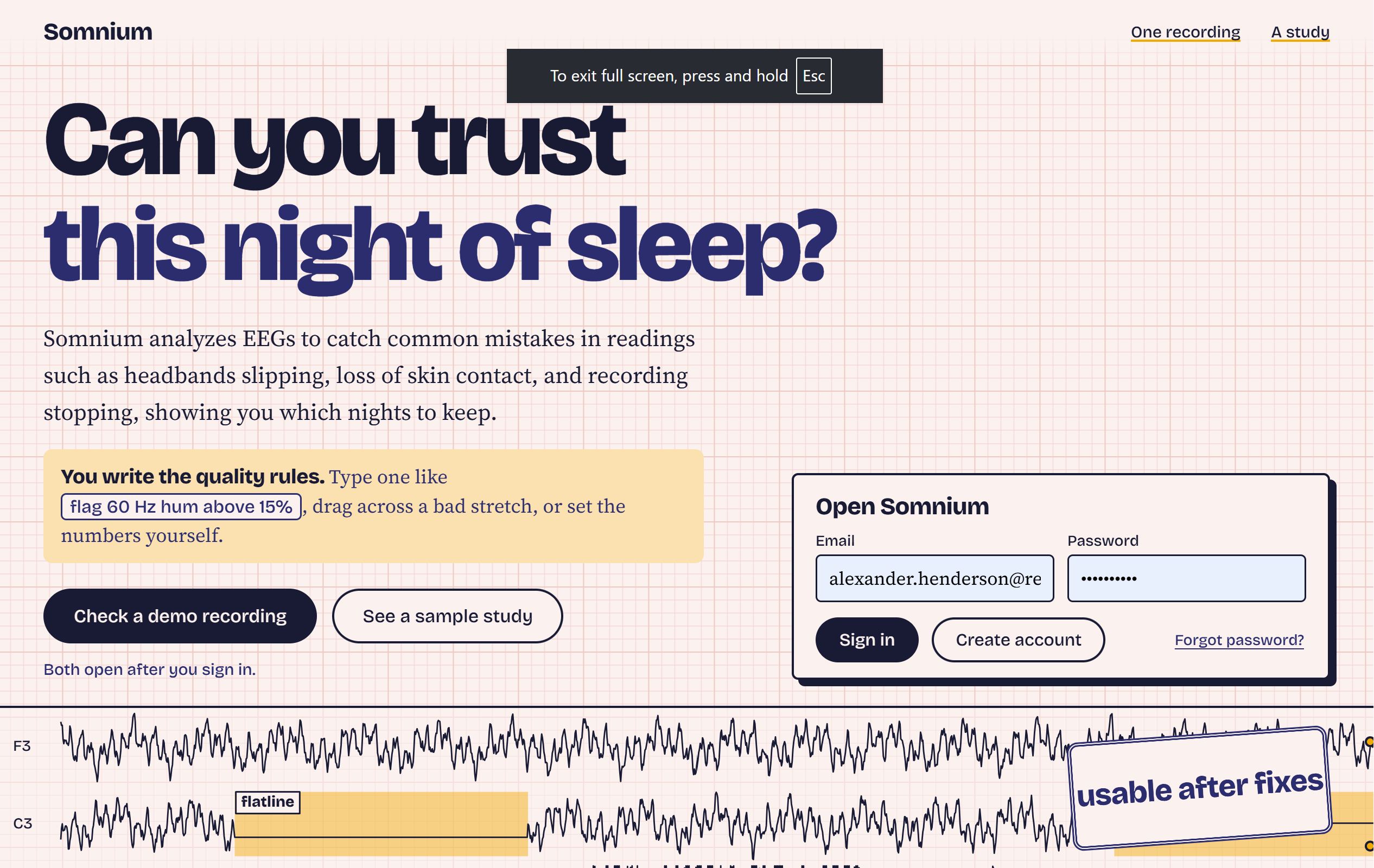
A sleep recording can contain hours of data, but a slipping headband or poor sensor contact can make parts of it unusable. We wanted researchers to understand what went wrong before spending time analyzing those recordings.
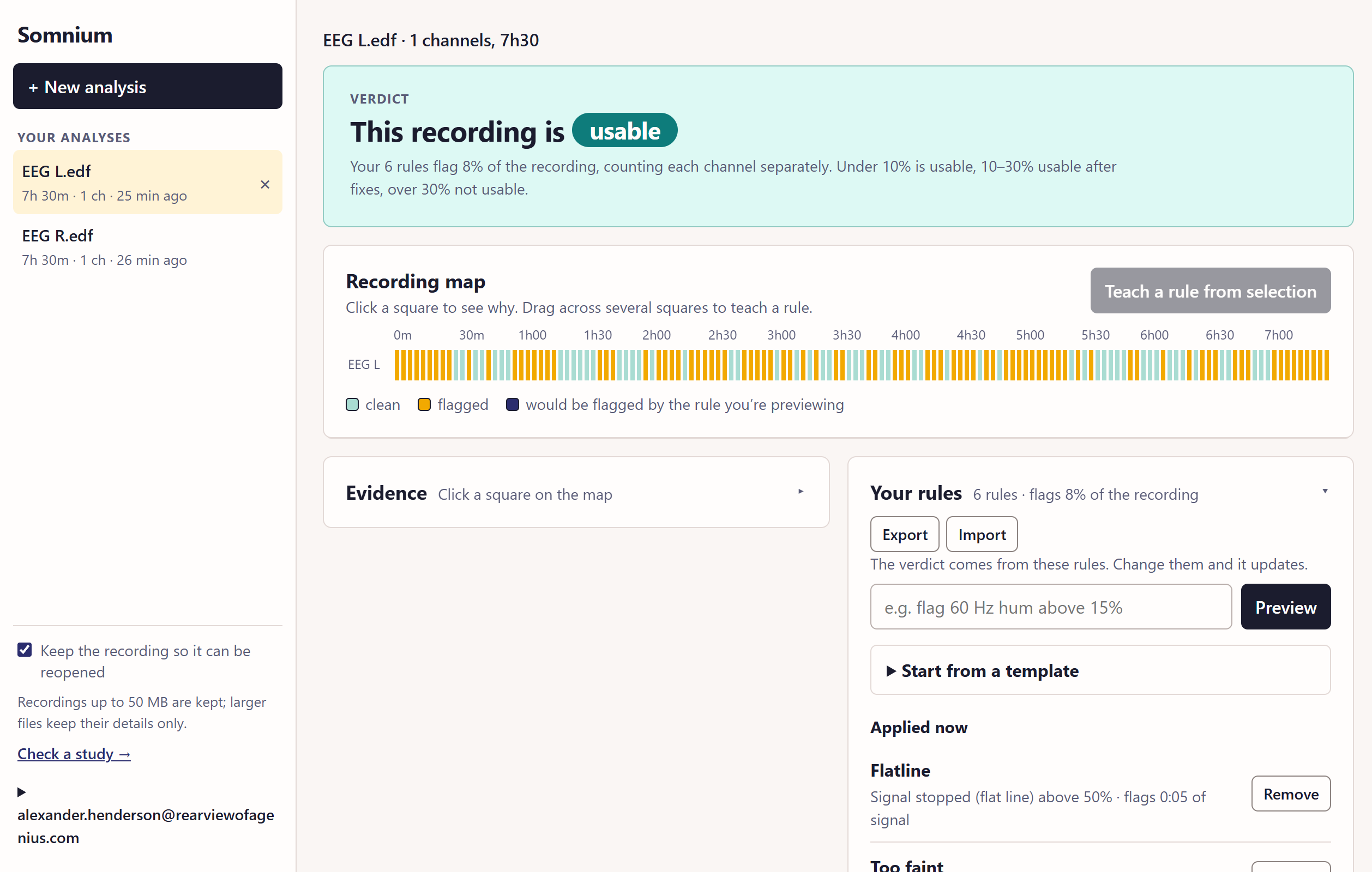
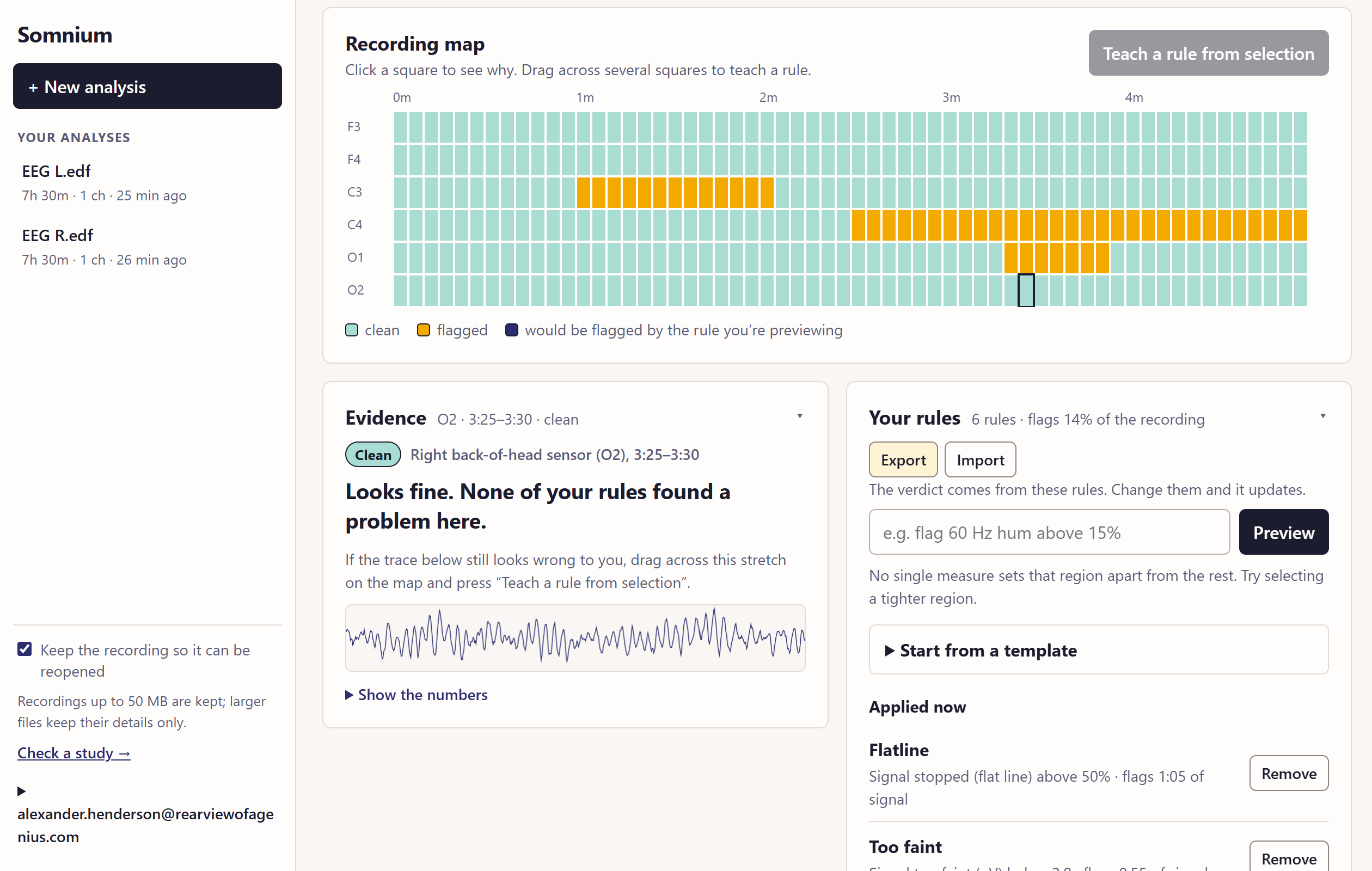
The “meta” theme pushed us to give researchers control over the checker itself. With Somnium, they can describe a quality rule, adjust its threshold, or select a problematic stretch and teach the app what to flag. Their expertise becomes a reusable checklist.
How we built it
We built Somnium with JavaScript, HTML, CSS, and Vite. The browser parses EDF files, calculates signal measurements, and applies the user’s checklist to each recording.
Supabase handles optional authentication, private database records, and recording storage. Guest mode uses IndexedDB to save recordings locally.
We used AI coding assistants during implementation, then reviewed the code and added automated checks for signal processing, storage, account isolation, and the complete browser workflow.
Challenges we ran into
Supabase has rate limiters; unfortunately, we managed to hit them right before our presentation. We added an emergency guest mode at the end to prevent this error from negatively impacting us. Also, at the start of the Hackathon, we ran into "programmer's block", where we had a lack of new niche ideas. We overcame this through a detailed environment scan (looking at market & competitors)
Accomplishments that we're proud of
Our favorite moment is teaching Somnium a rule by selecting a stretch of signal, then watching that rule change the recording’s verdict.
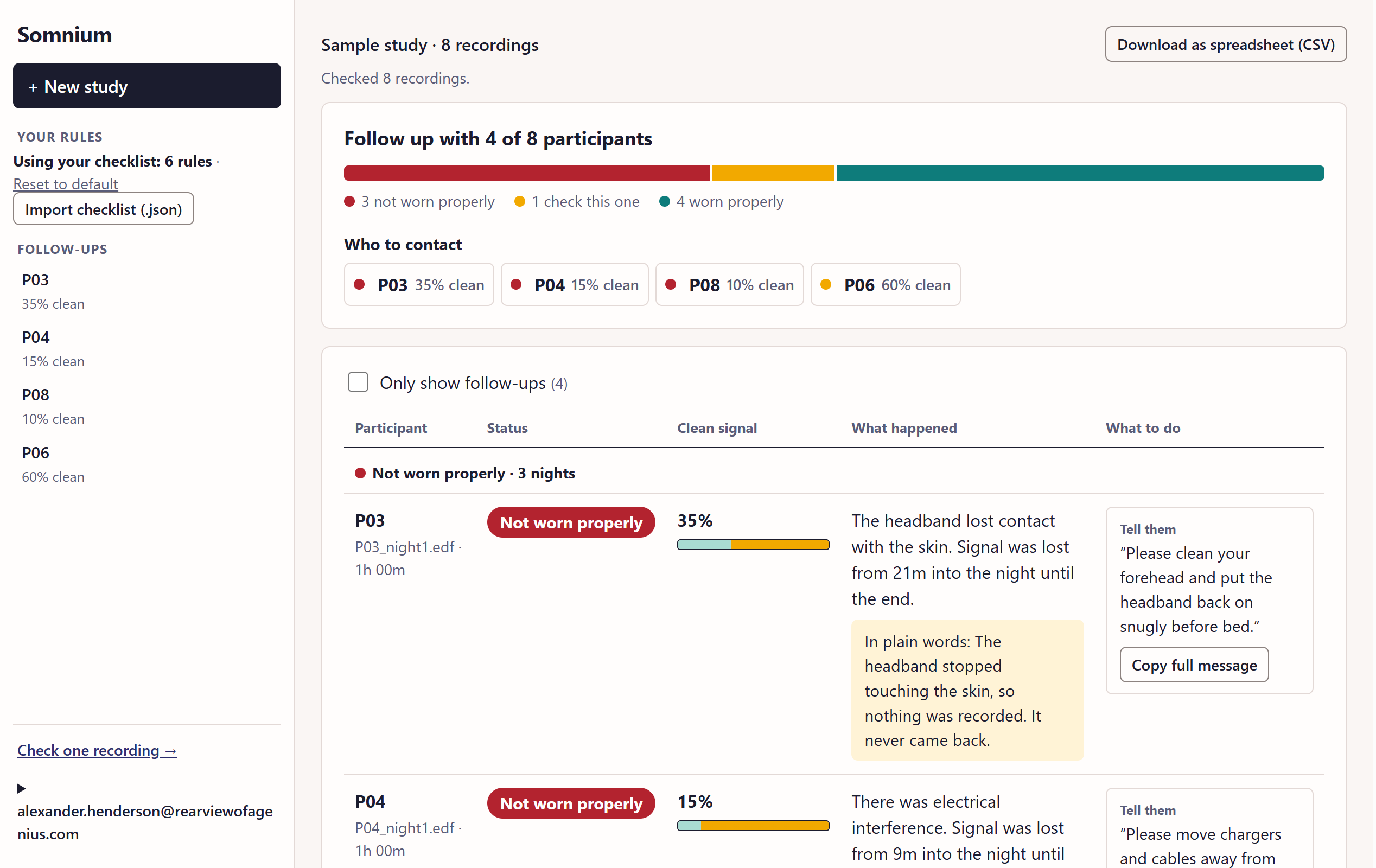
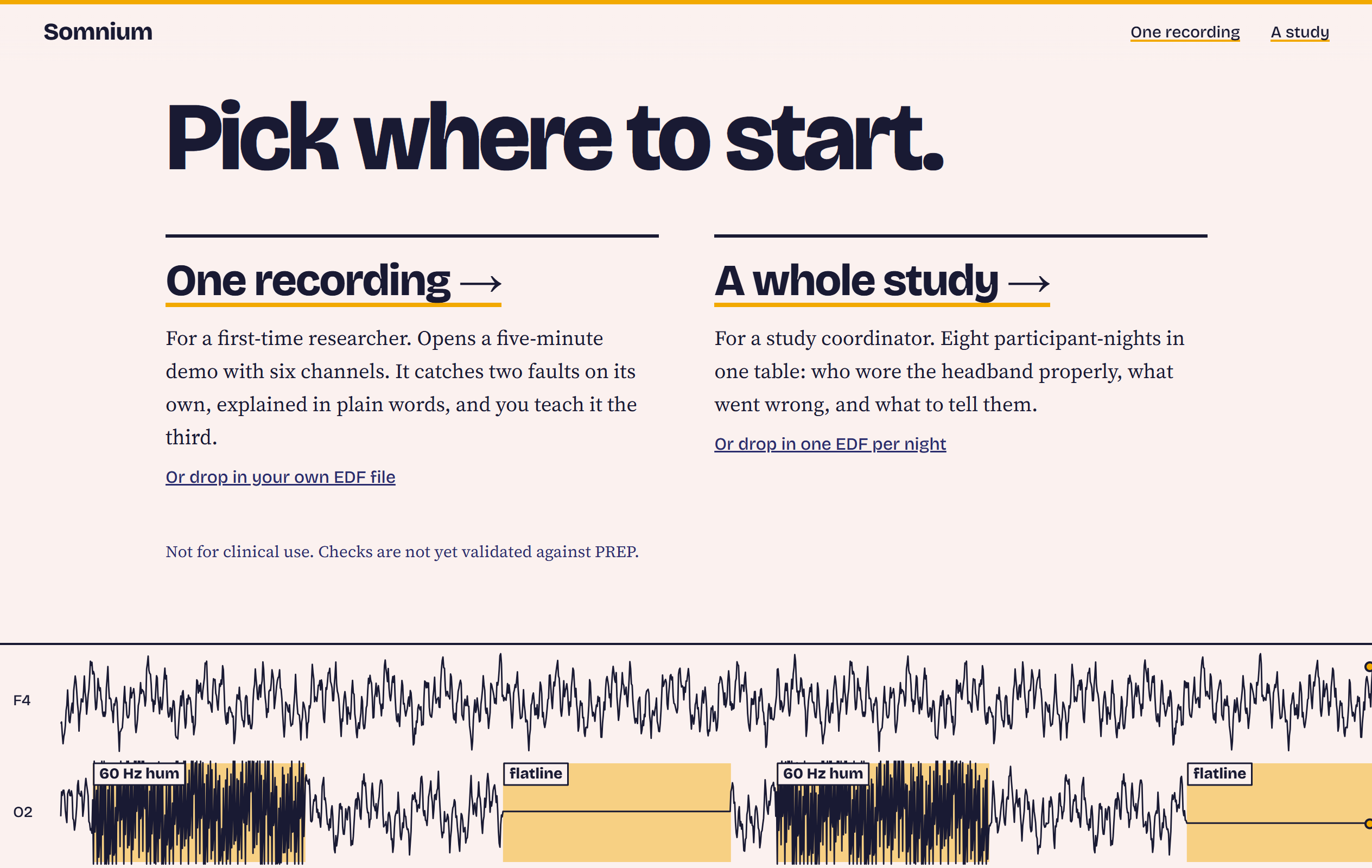
We’re also proud of connecting that interaction to a complete workflow: reusable checklists, saved analyses, private account storage, and a dashboard for checking multiple participants.
What we learned
Making a graph is easier than explaining what someone should do with it. We learned to connect each measurement to an understandable reason and give users control over the assumptions behind the result.
We also learned to test beyond the successful demo path. File units, interrupted saves, and account changes can affect correctness even when the interface looks fine.
What's next for?
Somnium is hopeful to introduce further EEG file types (beyond the EDF standard) as well as continuing to refine our product's workflow and Teach a rule feature to allow for quicker and more effective interpretation.
Additionally we would like to introduce features revolving around finding and classifying more forms of patterns within the data. Not just interruptions or instabilities.
Built With
- claude
- codex
- css
- html
- javascript
- node.js
- postgresql
- vite


Log in or sign up for Devpost to join the conversation.