-
-
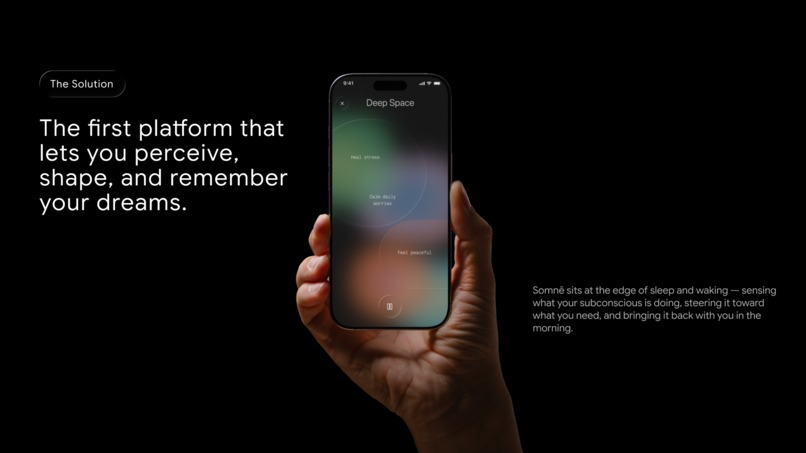
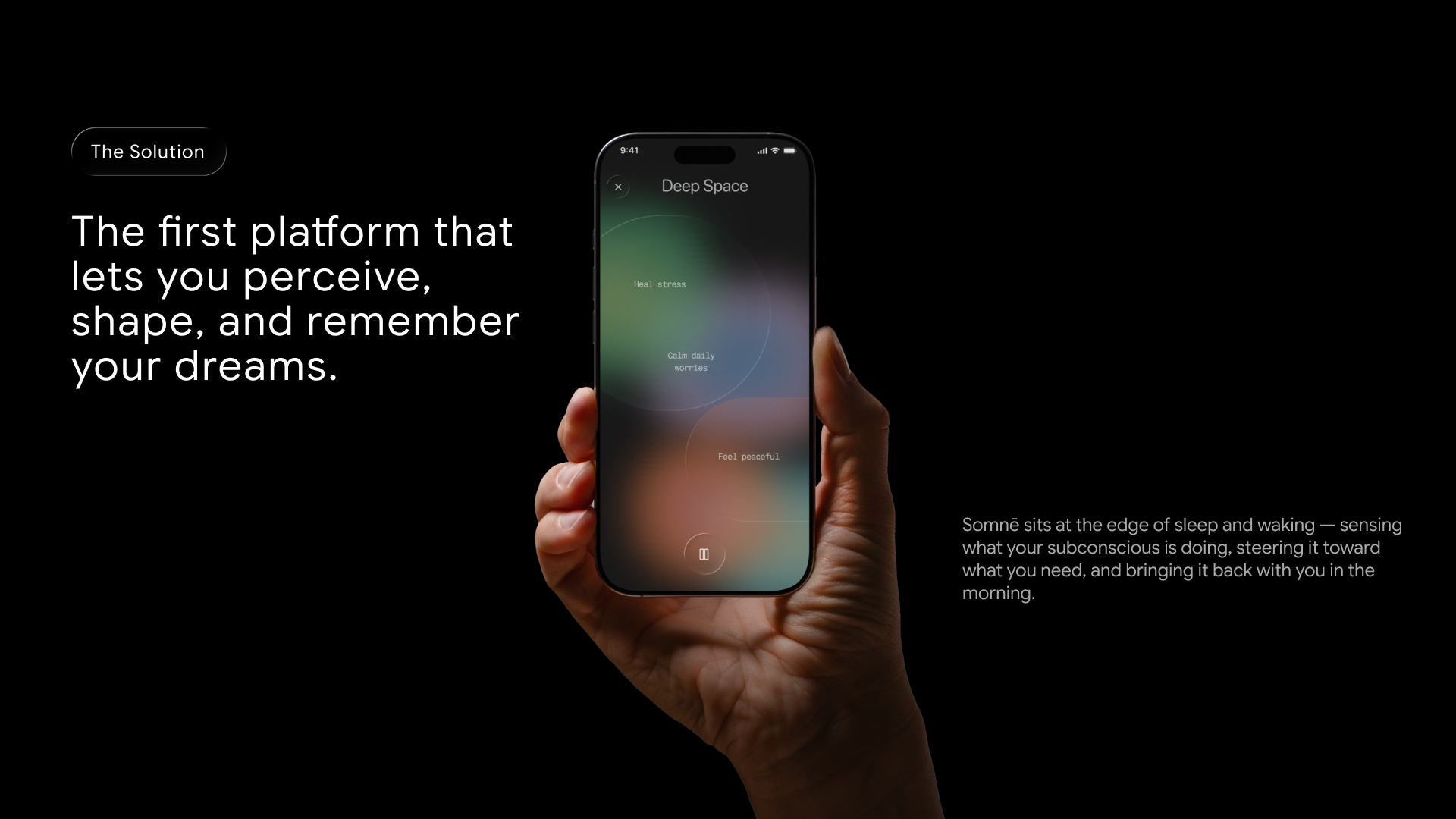
The first platform that lets you perceive, shape, and remember your dreams.
-
-
-
-
Inspiration
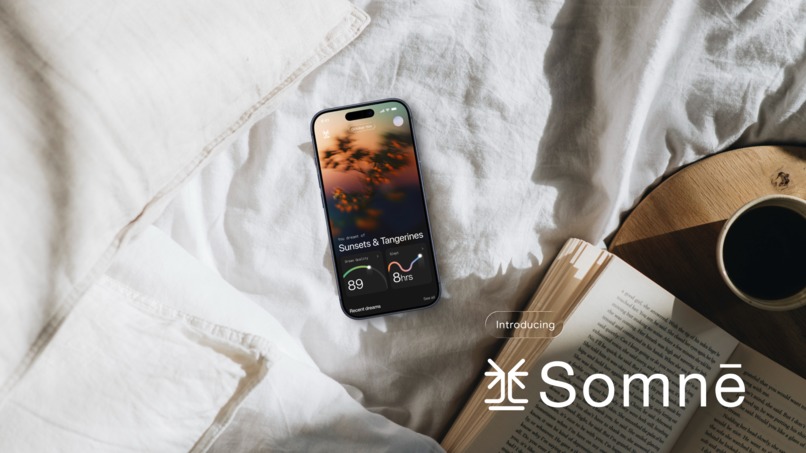
Sleep is the one part of life that's always been invisible. We track everything: steps, mood, heart rate, calories, but the 8 hours we spend dreaming just disappear every morning. We wanted to change that. The inspiration for Somnē came from a simple frustration: why does every part of your waking life get to be understood, remembered, and improved, but not your dreams?
What it does
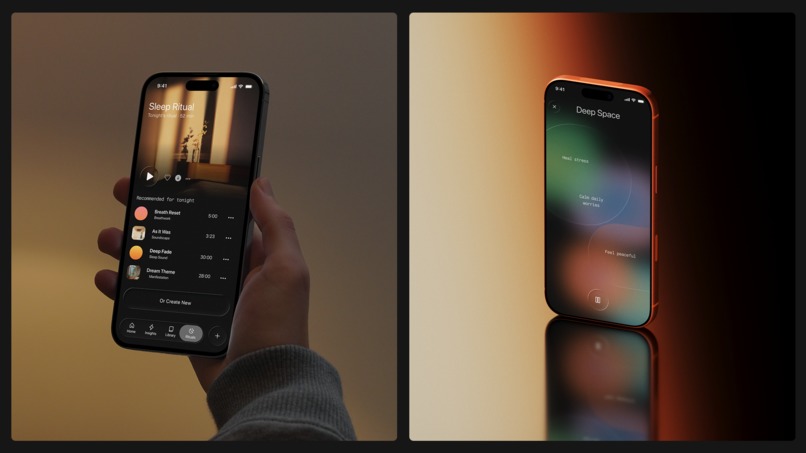
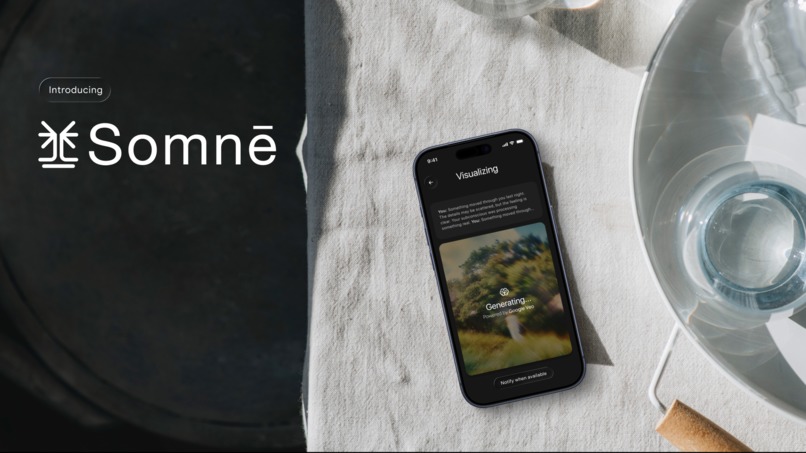
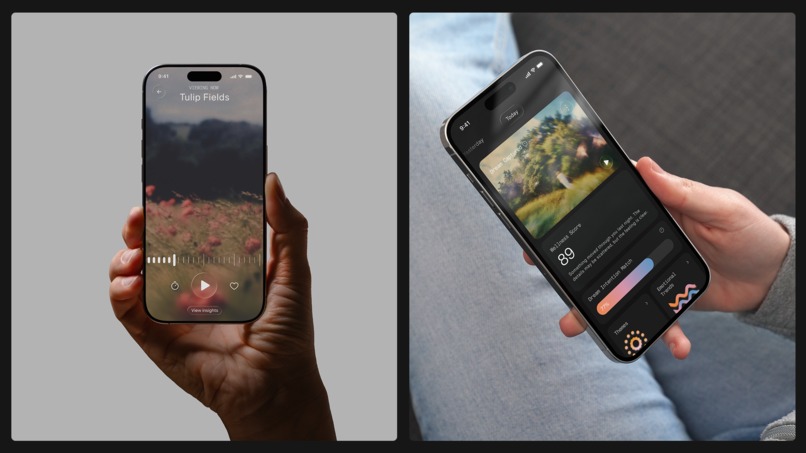
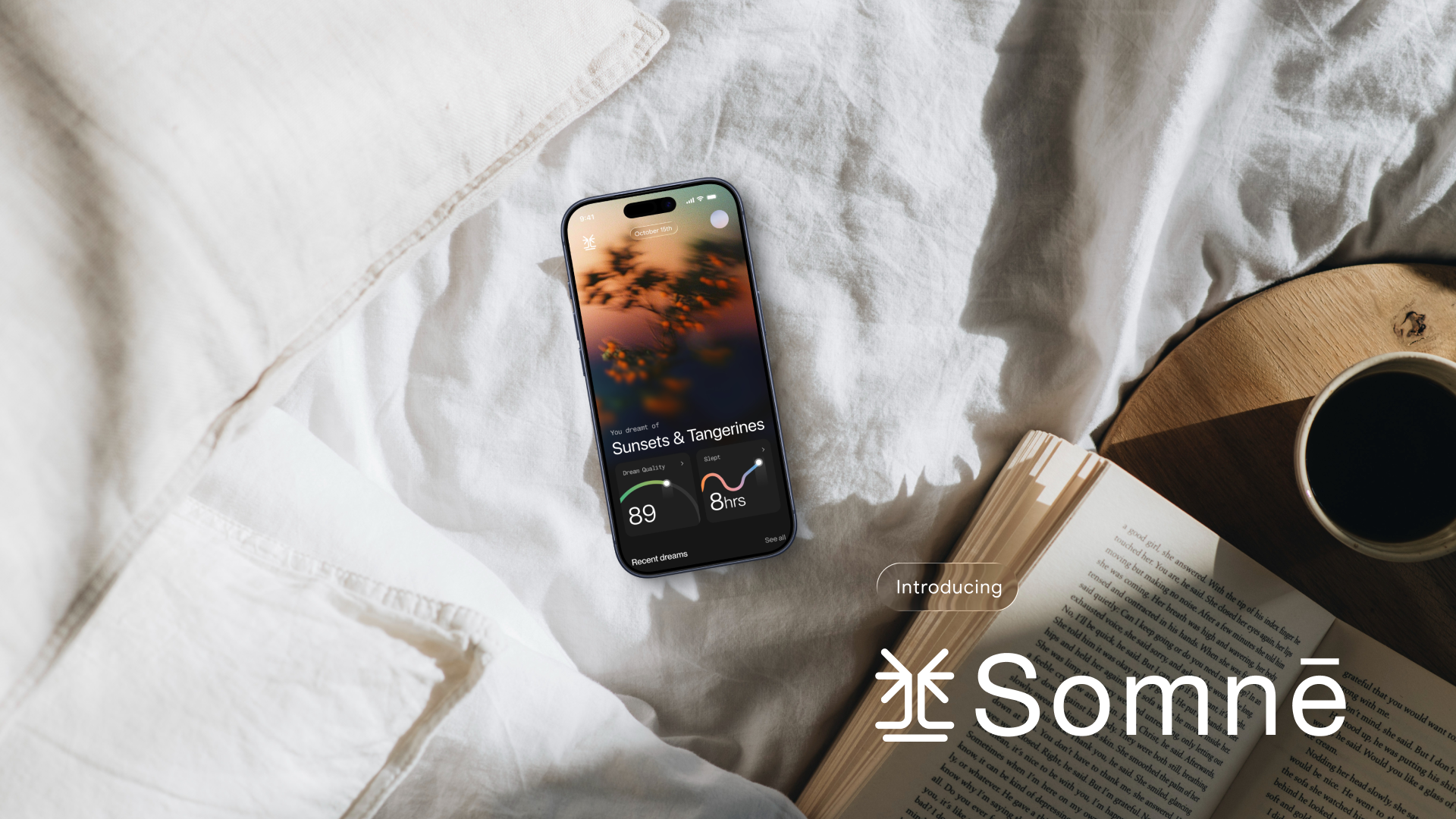
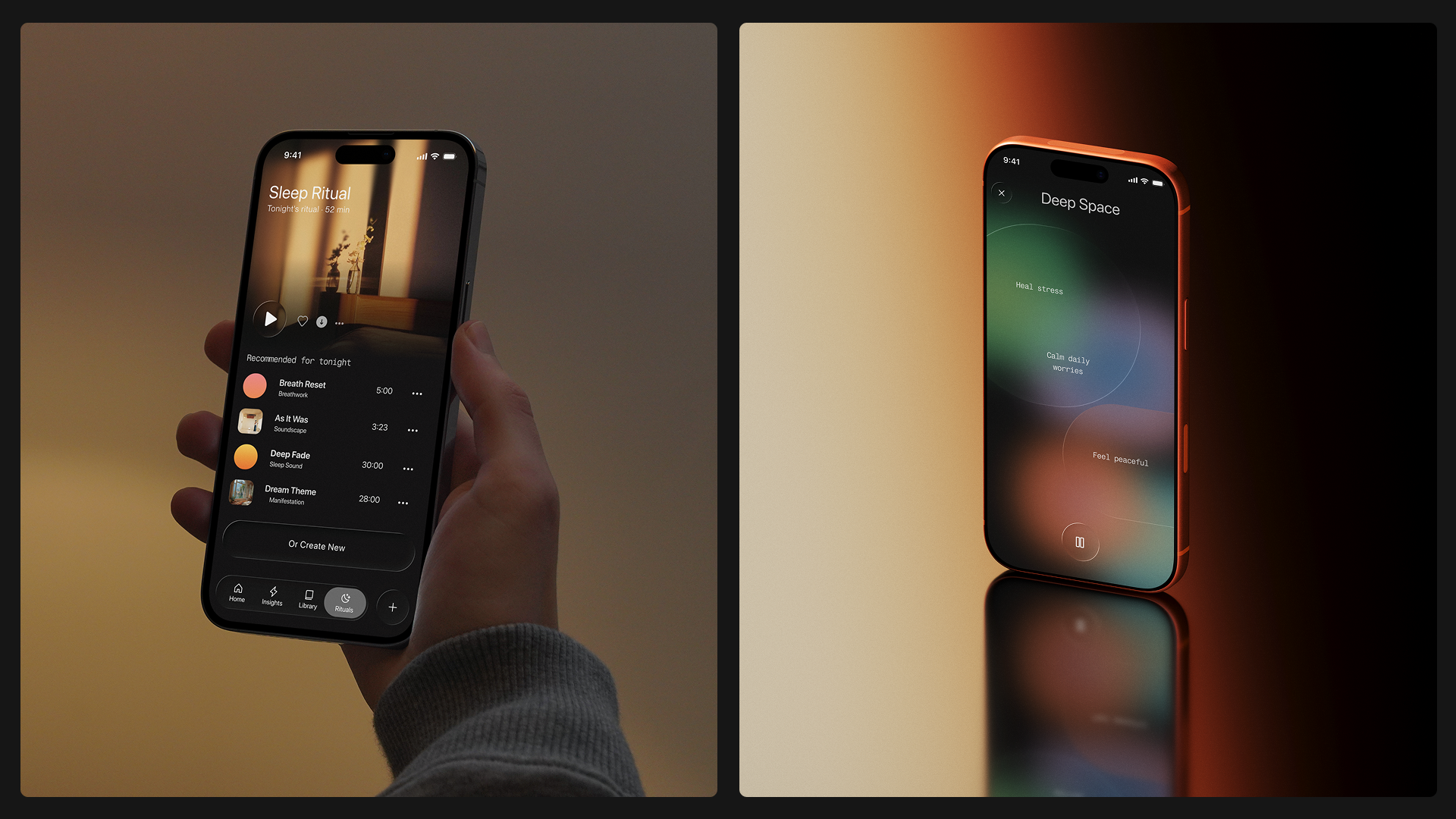
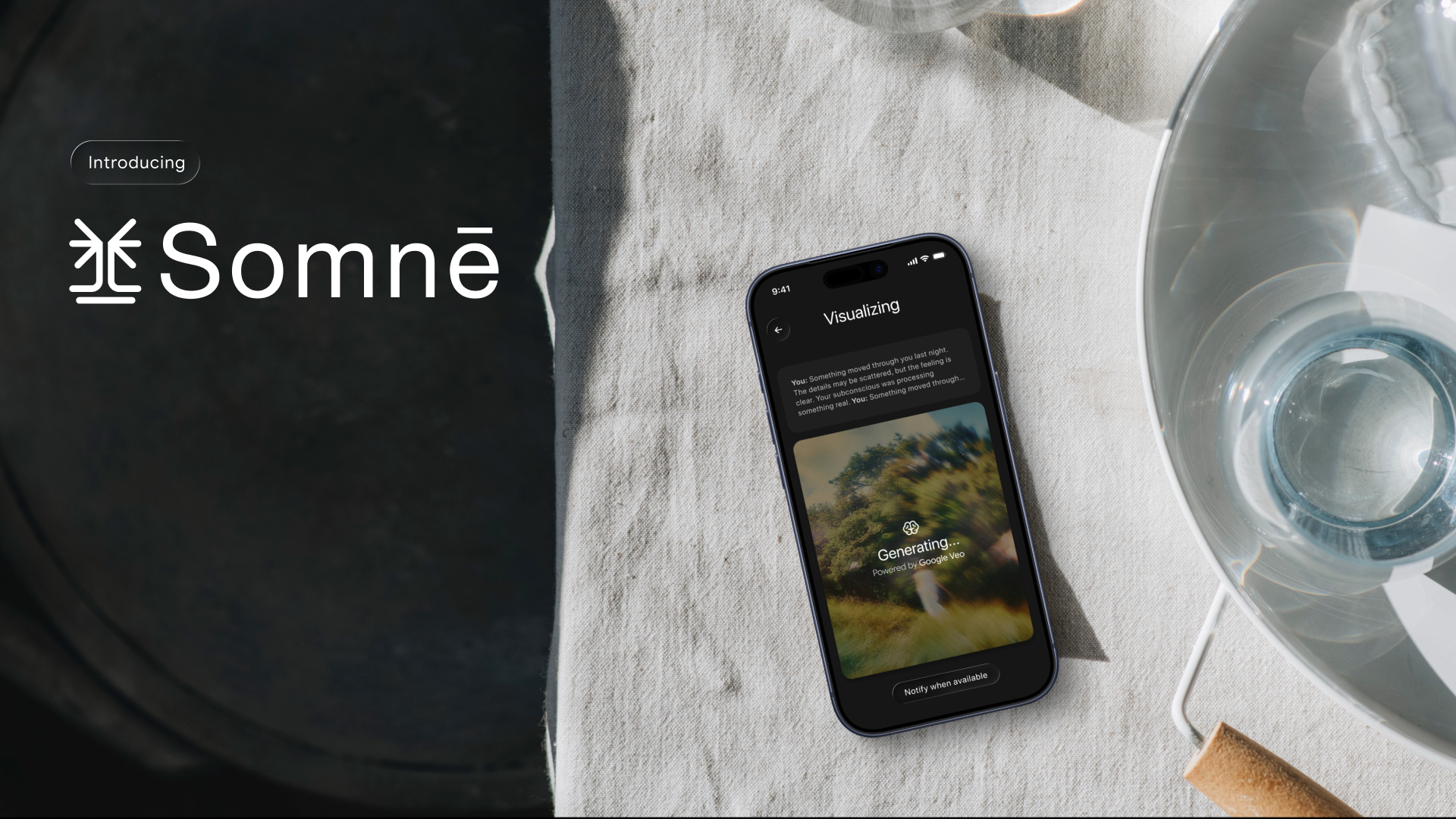
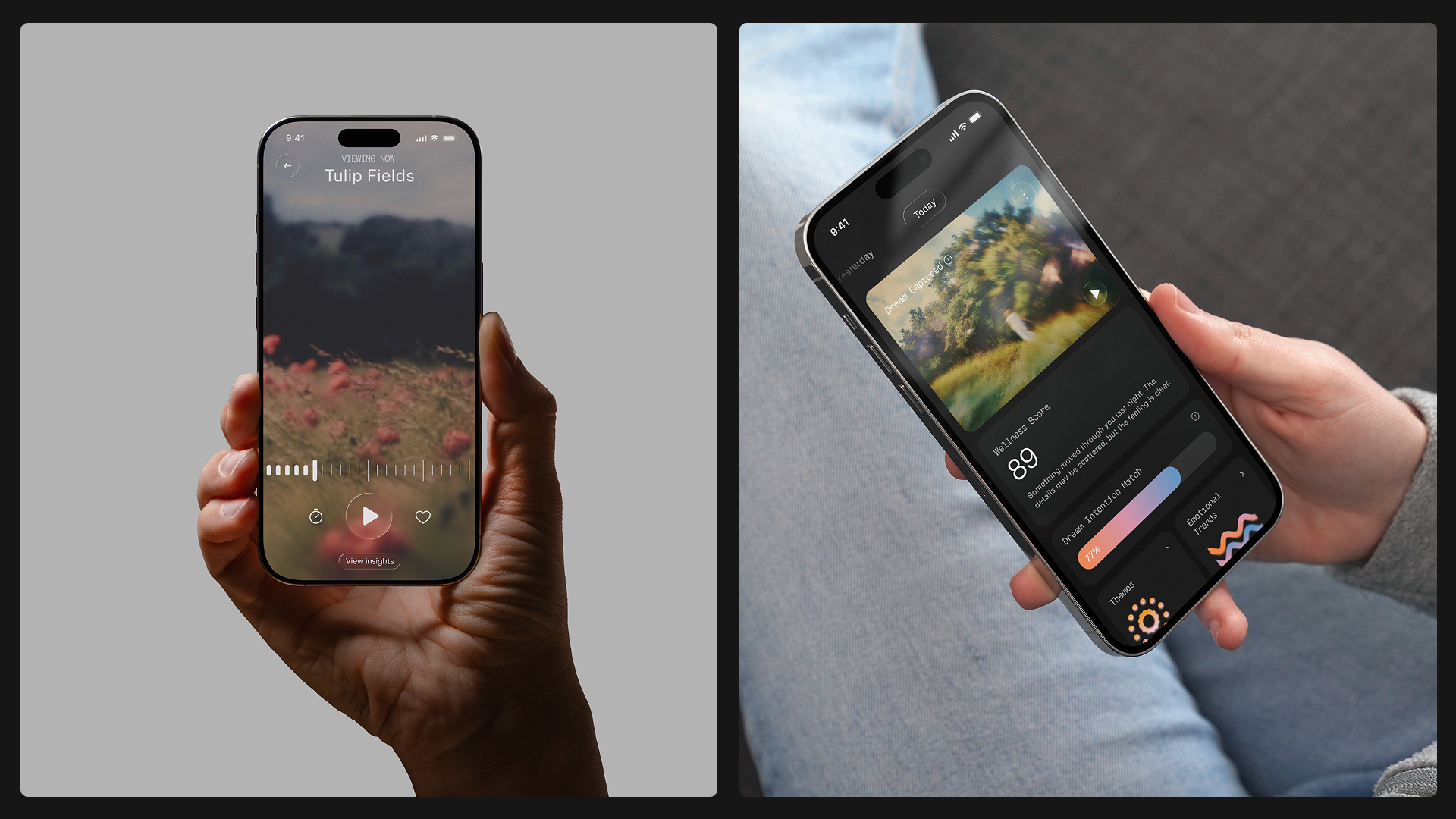
Somnē is a neuro-ambient platform that lets you perceive, shape, and remember your dreams. Before sleep, you set a dream intention: a focus area, an emotion you want to wake up feeling, and a world for your subconscious to explore. A sequenced sleep ritual guides you from awake to asleep using breathwork and ambient audio. While you sleep, Somnē uses ambient cues to gently steer your subconscious toward your intention. In the morning, you record your dream by voice. Somnē transcribes it in real time and generates a visual of what you described, powered by Google Veo. Over time, the Insights page tracks your emotional trends, recurring themes, and how closely your nights aligned with your intentions.
How we built it
We designed the full product in Figma, building out two user journeys, primarily for the before and after sleep stages. Interactive prototypes were built using Figma Design and Figma Make, including a live emotion slider and a working dream recording flow.
Challenges we ran into
The hardest part was designing for a context where the user is half asleep. Every interaction had to feel effortless, low-friction, and almost invisible. We also had to balance the speculative nature of the product with a UI that felt grounded and trustworthy, not sci-fi. Getting the emotional tone right across every screen took a lot of iteration.
Accomplishments that we're proud of
The Deep Space nightstand screen is something we're genuinely proud of. It solves a real UX problem: what does an app show you when you're supposed to be asleep? The answer we landed on feels calm, intentional, and unlike anything we've seen before. We're also proud of how cohesive the full journey feels from setting an intention at night to reviewing your dream visualization in the morning.
What we learned
Designing for sleep taught us a lot about designing for vulnerability. Users in this context are tired, emotionally open, and not looking to think hard. Every word, every interaction, every visual had to earn its place.
What's next for Somnē
The next step is integrating with wearables like Oura to bring real biometric data into the experience. We also want to build out the clinical side, giving therapists a structured way to use dream data as input in sessions. Longer term, Somnē becomes the first platform where your inner life has a real, searchable, visual record.
Built With
- figma


Log in or sign up for Devpost to join the conversation.