-
-
SOMNA
Inspiration
Waking up tired despite getting a full night’s sleep is a common frustration. Traditional alarms ignore how our bodies actually work—they wake us at a fixed time, regardless of whether we’re in deep sleep or a lighter stage. This often leads to grogginess, reduced focus, and a sluggish start to the day.
The idea behind Somna was inspired by the concept of aligning technology with natural biological rhythms. Sleep isn’t uniform; it happens in cycles, and waking up at the wrong point in that cycle can have a noticeable impact on how we feel. By leveraging heart rate data as a proxy for sleep stages, we saw an opportunity to create a smarter, more personalized wake-up experience.
Somna was designed to bridge the gap between sleep tracking and real-world impact—not just telling users how they slept, but actively improving how they wake up. The goal was simple: help people start their day feeling genuinely refreshed by waking them at the right moment, not just the right time.
What it does
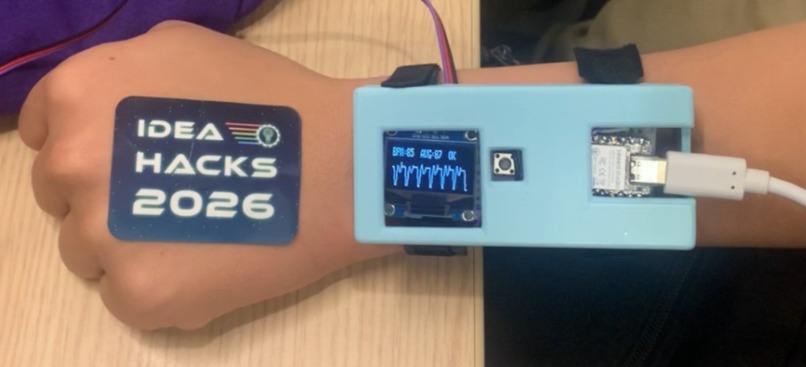
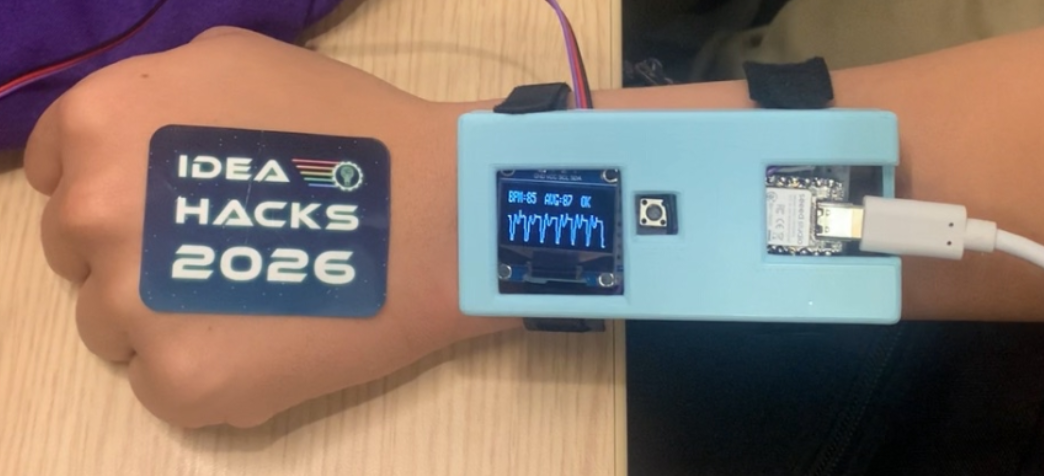
Somna is a smart watch that monitors your heart rate throughout the night to estimate your sleep stages—REM, light, and deep sleep. Instead of triggering an alarm at a fixed time, users set a wake-up window (for example, 7:00–7:30 AM). Within that window, Somna identifies the optimal moment—when the user is in a lighter stage of sleep—and wakes them gently.
This results in a more natural waking experience, reducing sleep inertia and helping users feel more alert and energized in the morning.
How we built it
We built Somna around three core components: data collection, sleep stage estimation, and intelligent wake-up timing.
Data Collection: The smartwatch continuously tracks heart rate using optical sensors. Heart rate variability (HRV) and trends over time serve as key indicators of sleep depth.
Sleep Stage Estimation: We implemented a lightweight model that maps heart rate patterns to sleep stages. While not as precise as clinical EEG data, heart rate and HRV provide a strong proxy for distinguishing between deep and light sleep.
Wake-up Algorithm: Users define a wake-up window, and the system continuously evaluates incoming data to detect transitions into lighter sleep stages. When such a window is detected, the device triggers an alarm within the mobile app.
Challenges we ran into
One of the biggest challenges was the accuracy of sleep stage detection using only heart rate data. Without access to more advanced sensors (like EEG), we had to carefully tune our model to avoid incorrect classifications. We ran into problems with improper readings and had to fine tune the sensors we had to reduce noise and provide readable data. We found out that small changes in the orientation of the wire and exposure to light would generate the smallest amount of interference which would throw all the data off.
Accomplishments that we're proud of
One thing our team is incredibly proud is being able to communicate effectively and professionally with one another, prioritizing the product development. There were many times when the sleep deprivation was causing tension within the team, but we were able to work through it and ultimately create a working prototype. Just 36 hours ago, we were total strangers, but were still capable of implementing an idea, running through potential solutions, establishing a course of action, and executing.
What we learned
This project highlighted how small timing differences can have a big impact on user experience. We learned that users care less about raw data and more about how that data improves their daily lives.
We also gained experience working with biometric signals, understanding their limitations, and designing systems that remain useful even when data is imperfect.
Finally, we learned the importance of human-centered design—building technology that adapts to people, rather than forcing people to adapt to technology.
What's next for SOMNA
Future improvements include integrating additional sensors (like motion tracking and skin temperature) to improve sleep stage accuracy, as well as adding personalized insights and long-term sleep recommendations.
We also plan to refine the wake-up experience with adaptive alarms that adjust intensity based on how easily the user wakes, making mornings even smoother and more natural.

Log in or sign up for Devpost to join the conversation.